Table of Contents
- What Muscles Does the Lat Pulldown Work?
- Understanding the RitFit Five Piece Attachment Set
- Why Coated Cable Attachments Feel Different
- Wide Grip Pulldowns for Back Width
- Narrow Grip and V Bar Variations
- Underhand Versus Overhand Grips
- Why Neutral Grip Pulldowns Often Feel Better
- Multi Grip Bars Versus Separate Attachments
- How Different Bars Feel on Different Machines
- Common Mistakes to Avoid With Lat Bars
- Tips for Beginners Starting With Cable Attachments
- Choosing the Best RitFit Bar for Your Goals
- Storage Solutions for a Tidy Home Gym
- Understanding Weight Limits and Safety
- Buying Advice Without the Hype
Choosing the right lat pulldown attachment changes how your back workout feels, how comfortably your wrists move, and how well you can control each rep. This guide compares wide bars, V bars, neutral grip handles, multi grip bars, and RitFit cable attachments so you can build a smarter home gym setup.
Key Takeaways
- Choose a lat pulldown attachment that lets you pull with control, full range of motion, and no joint irritation.
- Use a moderately wide overhand grip when your main goal is back width and a strong lat focused feel.
- Use a close neutral grip when you want a longer pull path, stronger squeeze, and better mid back connection.
- Neutral grip attachments are often the best starting point because they usually feel easier on wrists, elbows, and shoulders.
- Check the cable ratio, carabiner rating, and attachment capacity before loading heavy weight on any home gym cable station.
What Muscles Does the Lat Pulldown Work?
The lat pulldown mainly trains the latissimus dorsi, with help from the teres major, rhomboids, trapezius, rear delts, biceps, and forearm flexors. EMG research on lat focused training shows that back exercise selection and grip pattern can change how much each muscle contributes during pulling work.[1]
The bar does not magically isolate one section of the back. It changes hand position, elbow path, range of motion, and comfort, which then changes how the movement feels.
| Muscle Group | Primary Role in Pulling | How Attachment Choice Can Affect It |
|---|---|---|
| Latissimus Dorsi | Drives shoulder extension and adduction | Wide and medium grips can create a strong lat focused feel |
| Teres Major | Assists upper arm pulling motion | Controlled elbow drive helps keep tension on the upper back |
| Rhomboids | Pulls the shoulder blades together | Close grip pulls can support a stronger squeeze at the bottom |
| Trapezius | Supports scapular control and mid back stability | Rows and close grip pulldowns often make this area feel more active |
| Biceps | Assists elbow flexion during the pull | Underhand and close grips usually increase arm involvement |
Understanding the RitFit Five Piece Attachment Set
A five piece cable attachment set is useful when you want several pulling angles without buying each handle separately. It gives home gym users more options for pulldowns, seated rows, curls, pushdowns, and unilateral cable work.
The main value is variety. A long bar supports wider pulldowns, while compact handles and V shaped bars help with close grip work and tighter home gym spaces.
| Attachment Attribute | What to Check | Why It Matters |
|---|---|---|
| Core Material | Steel body and weld quality | Supports durability during repeated cable training |
| Outer Coating | Grip texture and palm comfort | Helps reduce slipping and pressure during longer sets |
| Connection Point | Eyelet shape and carabiner fit | Keeps the attachment centered during pulling exercises |
| Length Range | Short, medium, and long handle options | Allows narrow, medium, and wide pulling patterns |
| Storage Needs | Wall hooks, rack pegs, or drawer space | Keeps cable attachments organized and off the floor |
For a dedicated starting point, browse RitFit lat pulldown attachments before choosing a full cable setup. Matching the attachment to your training goal is more useful than buying the largest bundle first.
Why Coated Cable Attachments Feel Different
Coated cable attachments can feel more comfortable because they spread pressure across the hand and reduce the cold feel of bare metal. The main benefit is not just softness, but better grip confidence during controlled pulling.
Traditional knurled steel can be secure, but it may feel rough during high volume training. A coated handle can be a better fit for home gym users who train without gloves or who prefer a smoother grip surface.
- Grip comfort: A coated surface may reduce hand pressure during longer pulldown and row sessions.
- Control: A secure handle helps you focus on elbow drive instead of over squeezing the bar.
- Maintenance: Wipe the coating after sweaty sessions and inspect it for deep cuts or peeling.
- Garage use: Keep attachments dry if your training space has humidity or temperature swings.
Wide Grip Pulldowns for Back Width
A wide grip pulldown is best for lifters who want a classic lat focused pulling pattern and a strong back width stimulus. The safest default is usually a grip slightly wider than shoulder width, not an extreme grip at the end of the bar.
Pull the bar in front of your body toward the upper chest. High density EMG research comparing front and back lat pull down patterns supports using front pulldowns as the more practical option for most training goals.[2]
- Best for: Back width, lat focus, and traditional pulldown training.
- Grip cue: Place your hands wider than your shoulders while keeping your wrists comfortable.
- Elbow cue: Drive your elbows down toward your ribs rather than pulling only with your hands.
- Avoid: Going so wide that your shoulders feel pinched or your range of motion collapses.
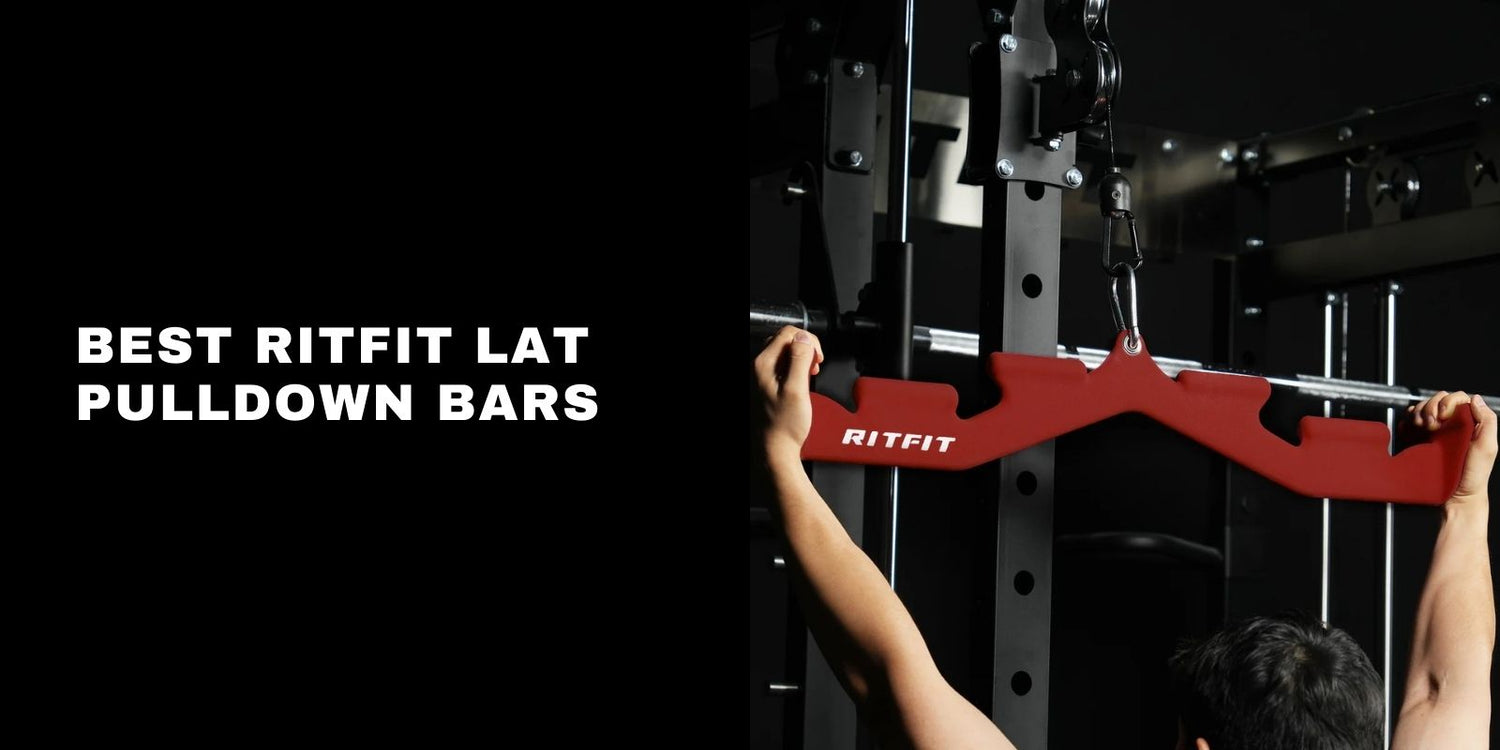
If you prefer multiple neutral and wide options in one tool, the all in one multi grip lat pull down bar can simplify grip changes. It is especially useful when you want one attachment for several back training variations.
Narrow Grip and V Bar Variations
A narrow grip or V bar pulldown is best for lifters who want a longer pulling path and a stronger squeeze through the mid back. The close hand position often makes it easier to pull the attachment lower with control.
This variation usually involves more elbow flexion, so the biceps may contribute more than they do in a wide overhand pulldown. That is not a problem if your goal is a complete upper body pulling session.
| Grip Width | Training Feel | Best Use | Watch Out For |
|---|---|---|---|
| Very Wide | Strong lat stretch and wide elbow path | Back width work | Short range of motion if too wide |
| Shoulder Width | Balanced lat and upper back feel | Most beginners and general training | Loose torso position |
| Narrow V Bar | Deep squeeze and close elbow path | Mid back, lower lat feel, seated rows | Turning the move into a biceps pull |
| Single Handle | One side at a time control | Fixing side to side imbalance | Rotating the torso too much |
For unilateral cable work, pair pulldowns with exercise handles for cable machines. Single handles can help you feel left and right side differences more clearly.
Underhand Versus Overhand Grips
An overhand grip is the standard lat pulldown grip because it supports a strong back focused pulling pattern. It usually feels more demanding because the arms have less leverage than they do with an underhand grip.
An underhand grip uses a supinated hand position and often increases biceps involvement. Recent EMG work on lat pulldown grip and forearm orientation supports the idea that grip choice can meaningfully change muscle activation patterns during the exercise.[3]
- Overhand grip: Use it when you want a classic lat pulldown pattern and a strong upper back feel.
- Underhand grip: Use it when you want more arm assistance and a closer elbow path.
- Rotation strategy: Switch grips across training blocks rather than changing every set without purpose.
- Comfort rule: Stop the set if the grip causes sharp wrist, elbow, or shoulder discomfort.
Why Neutral Grip Pulldowns Often Feel Better
A neutral grip pulldown often feels better because the palms face each other and the wrists stay in a more natural line. This can be a strong default for lifters who dislike straight bar positions.
Neutral grip does not guarantee pain free training. It simply gives many users a more comfortable pulling path, especially when paired with controlled shoulder blade depression and smooth elbow drive.
Shoulder friendly training depends on load, control, range of motion, and recovery, not just the handle. Progressive resistance work has been studied for scapulohumeral strength, which reinforces the value of controlled loading and proper progression in upper body training.[4]
Multi Grip Bars Versus Separate Attachments
A multi grip bar is best when you want several hand positions in one attachment. Separate handles are best when you want the most specific feel for each movement and easier storage in a small home gym.
The right choice depends on your training style. Fast sessions benefit from one versatile bar, while detail focused training benefits from dedicated handles.
| Option | Best For | Main Advantage | Possible Drawback |
|---|---|---|---|
| Multi Grip Bar | Fast grip changes and back variety | Several neutral or angled positions in one bar | Takes more wall or rack space |
| Long Lat Bar | Classic wide grip pulldowns | Simple and familiar feel | Less variety than a multi grip design |
| V Bar | Close grip pulldowns and seated rows | Strong squeeze and compact storage | Less useful for wide grip training |
| Single Handles | One arm cable work | Better side to side control | Requires more setup changes |
If your cable station supports multiple attachment styles, safe cable machine attachments can expand your exercise library without changing the whole machine. Choose based on the movements you repeat most often.
How Different Bars Feel on Different Machines
The same lat bar can feel different on different cable machines because pulley ratio changes real resistance. A 1 to 1 cable usually feels closer to the listed load, while a 2 to 1 cable often feels lighter and smoother.
Machine height also matters. Tall users may need more overhead reach for a full stretch, while low ceiling home gyms may work better with shorter or neutral grip attachments.
| Machine Type | Common Feel | Attachment Tip |
|---|---|---|
| Smith Machine Cable Station | Smooth and controlled depending on pulley ratio | Use medium or neutral grips for repeatable setup |
| Dedicated Lat Tower | Traditional pulldown feel | Use long bars for classic wide pulldowns |
| Functional Trainer | Versatile and angle friendly | Use single handles and rope attachments often |
| Rack Mounted Pulley | Space efficient and compact | Check attachment clearance before training heavy |
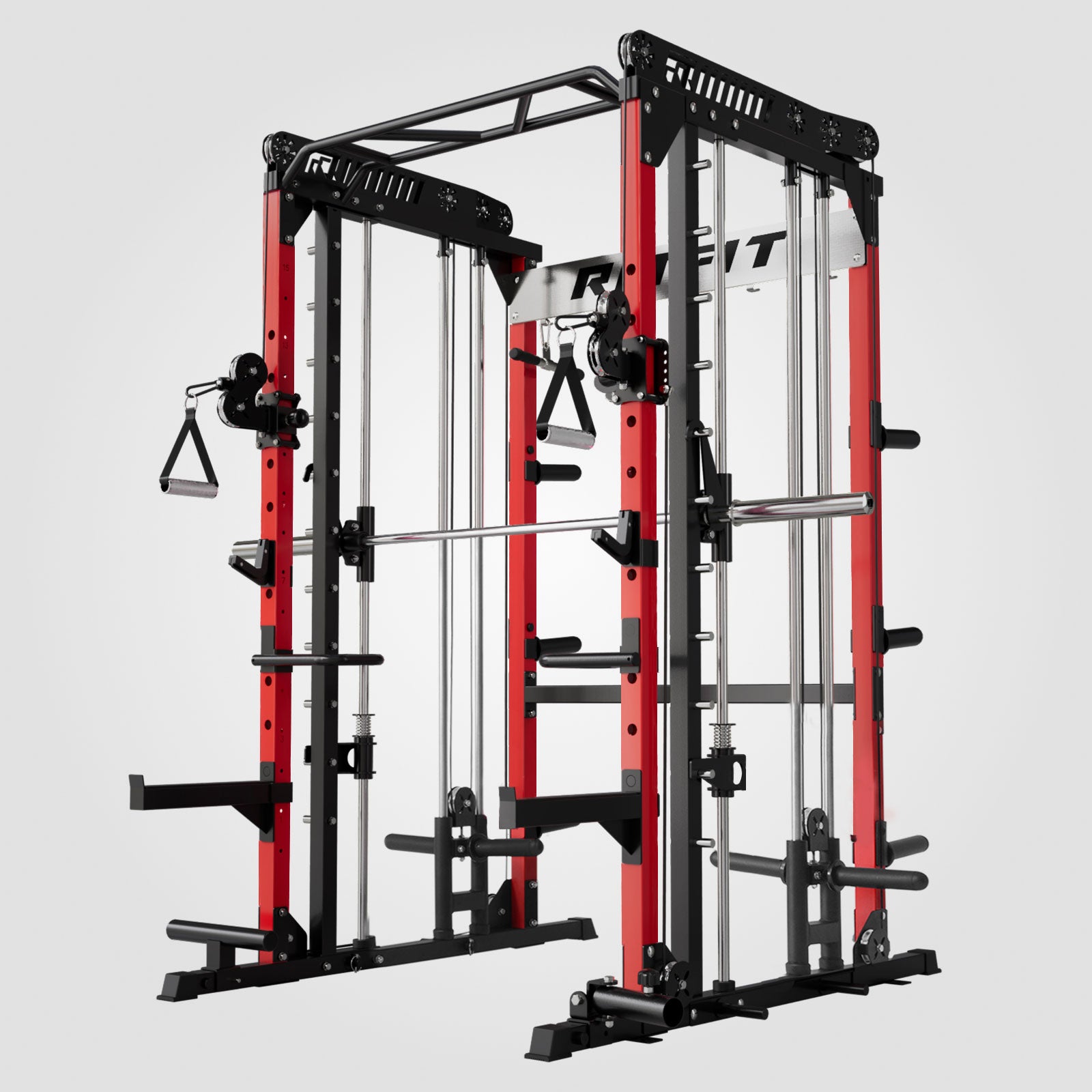
For larger home gym systems, compare the RitFit M1 PRO Smith Machine home gym package with the LPM2 high row pulldown attachment for M2. The best setup is the one that matches your space, cable height, and training frequency.
Common Mistakes to Avoid With Lat Bars
The biggest lat pulldown mistakes are using too much weight, pulling behind the neck, losing torso control, and turning every rep into an arm dominant pull. Better form usually means less load, slower reps, and a stronger back contraction.
- Pulling behind the neck: Pull the bar in front of the body toward the upper chest instead.
- Swinging the torso: Use a stable slight lean rather than throwing your body backward.
- Skipping the squeeze: Depress and retract the shoulder blades at the bottom of the rep.
- Over gripping: Hold the attachment firmly without letting forearms fail before the back.
- Ignoring pain: Change grip, reduce load, or stop if sharp discomfort appears.
Tips for Beginners Starting With Cable Attachments
Beginners should start with one comfortable grip and learn stable pulldown form before rotating through many attachments. A medium overhand or neutral grip is usually easier to control than an extreme wide grip.
- Start light: Use a load that allows a full stretch, clean pull, and controlled return.
- Set the thigh pad: Keep your body stable so the cable does not lift you off the seat.
- Use the same setup: Repeat one attachment for several sessions before changing grips.
- Track effort: Judge the set by control and target muscle tension, not only the weight number.
If you need a compact cable system for more than pulldowns, compare the RitFit cable crossover machine with a rack based pulley setup. Users with limited space may also consider a rack attachment aluminum pulley set.
Choosing the Best RitFit Bar for Your Goals
The best RitFit bar is the one that matches your goal, your joint comfort, and your available storage space. Back width, back thickness, arm assistance, and grip comfort each point toward a different attachment.
| Your Goal | Best Attachment Type | Why It Fits |
|---|---|---|
| Build back width | Long lat bar or multi grip bar | Supports wider overhand or angled grip work |
| Build mid back thickness | V bar or close neutral handle | Allows a deeper pull and stronger squeeze |
| Improve comfort | Neutral grip attachment | Keeps wrists in a more natural position |
| Train one side at a time | Single cable handles | Helps identify side to side strength differences |
| Save space | Small separate handles | Easier to store in a drawer or on rack hooks |
Storage Solutions for a Tidy Home Gym
Cable attachments should be stored off the floor to prevent tripping, scratching, and lost hardware. Wall hooks, rack pegs, and compact drawers are the simplest options for most home gyms.
- Wall hooks: Best for long bars and multi grip attachments.
- Rack pegs: Best when your cable station is built around a power rack.
- Drawer storage: Best for single handles, carabiners, and small V bars.
- Labeling: Useful when several users share the same home gym.
Understanding Weight Limits and Safety
Safe cable training depends on the rated capacity of the attachment, carabiner, cable, pulley, and machine frame. The weakest part of the setup determines the practical working limit.
Check the current product page and user manual before loading heavy weight. Do not assume one attachment has the same rating as another attachment just because both connect to the same cable station.
- Before every set: Confirm the carabiner is fully closed and properly seated through the attachment eyelet.
- Every few weeks: Inspect coating, welds, cable sleeves, pulleys, and carabiner springs.
- When damage appears: Stop using the attachment if you see cracks, deep cuts, rust, or loose hardware.
- When pain appears: Reduce load, change grip, or end the session if discomfort feels sharp or unusual.
Buying Advice Without the Hype
Do not buy every cable attachment at once unless you already know how you will use each one. Start with the grip style you will repeat most often, then add specialized bars as your training becomes more specific.
A long bar and close grip handle cover most pulldown and row needs for beginners. A multi grip bar, single handles, and specialty coated attachments make more sense once you know which movements feel best.
FAQs
What is the best lat pulldown attachment for beginners?
The best lat pulldown attachment for beginners is a medium grip bar or neutral grip handle. It gives enough control to learn elbow drive, shoulder blade movement, and full range of motion before moving to wider bars, V bars, or single handle cable work.
Which lat pulldown grip is best for back width?
A moderately wide overhand grip is usually best for back width. It helps many lifters feel the lats working while keeping the shoulders in a manageable position. Avoid gripping too wide, because extreme width can shorten range of motion and reduce control.
Is a neutral grip lat pulldown better for shoulder comfort?
Yes. A neutral grip lat pulldown often feels better for shoulder comfort because the palms face each other and the wrists stay more natural. It is not a medical fix, but it can be a smart option for lifters who dislike straight bar positions.
Can I use a V bar for pulldowns and seated rows?
Yes. A V bar can work well for both close grip pulldowns and seated rows. The compact shape helps keep the elbows close, improves the bottom squeeze, and makes the attachment easy to store in a small home gym cable setup.
How does pulley ratio affect lat pulldown weight?
Pulley ratio affects how heavy the weight feels in your hands. A 1 to 1 system usually feels close to the listed load, while a 2 to 1 system often feels lighter and smoother. Use control and effort to guide loading.
Should I choose a multi grip bar or separate cable attachments?
Choose a multi grip bar if you want fast grip changes and one versatile tool. Choose separate cable attachments if you want more specific feel, easier storage, and dedicated handles for rows, pulldowns, curls, pushdowns, and one arm cable work.
How often should I inspect cable machine attachments?
Inspect cable machine attachments before heavy sessions and review them more carefully every few weeks. Check the coating, welds, eyelets, carabiners, cable sleeves, and pulley movement. Stop using any attachment that shows cracks, rust, deep cuts, or loose hardware.
Are coated lat pulldown bars better than knurled steel bars?
Coated lat pulldown bars are better for lifters who want a smoother hand feel and less pressure during high volume sets. Knurled steel can feel more aggressive and secure, but coated handles are often more comfortable for home gym users training without gloves.
Conclusion
The best lat pulldown attachment is the one that fits your grip comfort, training goal, cable machine, and home gym space. Use wide grips for lat focused width work, close neutral grips for a deeper squeeze, and multi grip bars when you want several pulling options in one tool.
Disclaimer
This article is for general fitness education and product selection support only. It is not medical advice, physical therapy guidance, or a substitute for working with a qualified professional. Stop any movement that causes sharp pain, review your equipment manual before loading heavy weight, and consult a healthcare or fitness professional if you have shoulder, elbow, wrist, or back concerns.
References
- Lehman GJ, Buchan DD, Lundy A, Myers NE, Nalborczyk A. Variations in muscle activation levels during traditional latissimus dorsi weight training exercises: an experimental study. Dyn Med. 2004;3:4. doi:10.1186/1476-5918-3-4
- Padovan R, Toninelli N, Longo S, Tornatore G, Esposito F, Cè E, Coratella G. High Density Electromyography Excitation in Front vs Back Lat Pull Down Prime Movers. J Hum Kinet. 2024;91(Spec Issue):47-60. doi:10.5114/jhk/185211
- Buonsenso A, Di Fonza D, Di Claudio G, Carangelo M, Centorbi M, di Cagno A, Calcagno G, Fiorilli G. Electromyographic Analysis of Back Muscle Activation During Lat Pulldown Exercise: Effects of Grip Variations and Forearm Orientation. J Funct Morphol Kinesiol. 2025;10(3):345. doi:10.3390/jfmk10030345
- Sharma S, Ghrouz AK, Hussain ME, Sharma S, Aldabbas MM, Ansari S. Progressive Resistance Exercises plus Manual Therapy Is Effective in Improving Isometric Strength in Overhead Athletes with Shoulder Impingement Syndrome: A Randomized Controlled Trial. Biomed Res Int. 2021;2021:9945775. doi:10.1155/2021/9945775