When it comes to building bigger, more defined arms, few exercises are as effective at isolating the muscle as concentration curls. Unlike standing variations where it is easy to inadvertently use your back or shoulders to swing the weight up, this movement locks your body into a position that forces the biceps to do all the work. Whether you are a beginner learning the ropes or an experienced lifter looking to improve your mind–muscle connection, mastering this exercise ensures you get the most out of every rep. By the end of this guide, you will know exactly how to perform concentration curls with perfect form for maximum growth.
Key Takeaways
- Concentration curls build biceps by locking your upper arm in place and removing momentum.
- Use a slow lowering phase and a hard squeeze at the top to make lighter weight feel heavy.
- Keep your wrist neutral and shoulder relaxed to keep tension on the biceps, not the forearm.
- Train both sides evenly to fix imbalances and improve arm symmetry over time.
- Program them as a finisher one to two times weekly with controlled reps and short rest.
Muscles Worked
Understanding which muscles are targeted helps you visualize the movement and contract the right fibers.
- Biceps Brachii: This is the primary driver. The movement is strongest when you focus on a hard squeeze near the top. It is a great choice for practicing peak contraction and strict biceps control.
- Brachialis: Situated beneath the biceps, this muscle contributes to overall arm thickness. A neutral grip variation can increase its emphasis.
- Forearm Flexors: These secondary muscles assist in gripping the dumbbell and stabilizing the wrist throughout the motion. If your forearms take over, reduce weight and reset wrist position.
Benefits of Concentration Curls
Why should you choose this specific variation over others?
- Improved Definition: By strictly isolating the biceps, you can target the muscle with less help from other joints. Over time, that can improve visible shape when paired with progressive overload and nutrition.
- Mind Muscle Connection: The seated one arm setup lets you focus on the contraction without distraction.
- Correction of Imbalances: Each arm works alone so the stronger side cannot steal reps.
- Reduced Cheating: The setup limits momentum so the biceps stays accountable. This also makes it easier to track true progress from week to week.
Equipment Needed
One of the best aspects of concentration curls is their simplicity. You do not need expensive machinery.
- Dumbbell: Choose a weight that allows 8 to 15 controlled reps. If you cannot pause at the top for one second, the load is too heavy.
- Stable Bench or Chair: Any sturdy seat with feet flat works.
-
Optional: A towel or pad on the inner thigh can improve comfort. Comfort matters because discomfort often leads to rushed reps.
Step-by-Step Setup
Proper setup is the foundation of a good lift.
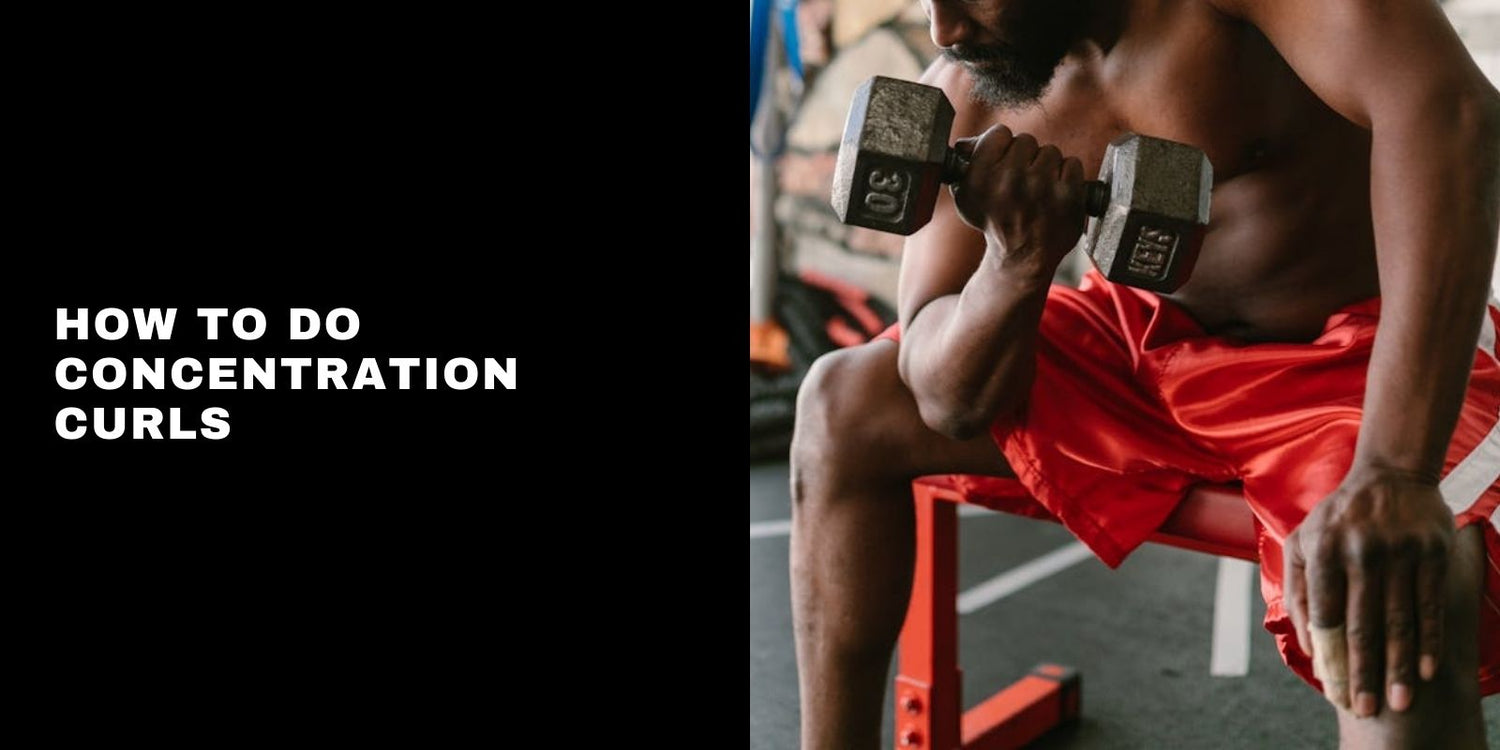
- Bench Position: Sit on the edge of a bench or chair. Feet flat, legs spread enough to let the dumbbell travel freely.
- Dumbbell Grip: Hold one dumbbell with a supinated grip, palm up. Start with a firm but not crushing grip so you do not over tense the forearm.
- Arm Position: Lean forward slightly from the hips. Press the back of your upper arm against the inside of your thigh just above the knee. Aim to pin the triceps area, not the elbow tip.
- Starting Position: Let the arm extend toward the floor with the shoulder relaxed, back neutral, core braced. The dumbbell hangs just off the ground. Keep your shoulder down and away from your ear to avoid turning this into a shoulder curl.
How to Perform a Concentration Curl
Once you are set up, focus on execution mechanics to maximize safety and results.
- Step 1—The Curl: Exhale and curl the dumbbell up toward your shoulder. Keep the upper arm fixed against the thigh. Only the forearm moves. Focus on squeezing the biceps to lift the weight. Think elbow hinge, not shoulder lift. If your shoulder rolls forward, reset and reduce load.
- Step 2—Peak Contraction: At the top, pause for 1 to 2 seconds and squeeze hard. Keep the wrist neutral. Avoid curling the wrist inward because it shifts tension to the forearms. A neutral wrist is your shortcut to more biceps tension and less elbow irritation.
- Step 3—The Lowering: Inhale and lower the dumbbell under control for 2 to 3 seconds. Do not drop it. Reach a full stretch at the bottom without slamming into a hard lockout. Stop when you still feel tension in the biceps and your elbow feels stable.
Repetitions
Complete all prescribed reps on one arm before switching to the other.
- Strength/Size: 6–12 reps.
- Hypertrophy/Endurance: 10–15 reps.
Common Mistakes and How to Fix Them
Small errors can cut results fast.
-
Mistake 1: Swinging or Using Momentum
The Fix: If you swing, the weight is too heavy. Reduce load and slow the lowering. Use a clean rep rule, if you cannot control the last two reps, stop the set. -
Mistake 2: Upper Arm Lifting off the Thigh
The Fix: This becomes a standard curl. Keep the upper arm glued to the thigh. Pretend your triceps is taped in place. -
Mistake 3: Poor Posture
The Fix: Do not round your lower back. Keep chest proud and core braced. Set your ribs over your hips so your spine stays calm. -
Mistake 4: Half Reps
The Fix: Lower to a full stretch with control. The bottom position is where many lifters leave growth on the table. -
Mistake 5: Wrist Bending and Forearm Takeover
The Fix: Keep the wrist straight, lighten the weight, and squeeze the handle only as hard as needed to hold it. If grip limits you, use straps occasionally so the biceps can be the limiter.
Variations of Concentration Curls
Once you master the standard version, rotate variations for new stimulus.
- Standing Concentration Curls: Bent over with the elbow braced against the knee. Useful without a bench.
- Hammer Concentration Curls: Neutral grip shifts focus toward the brachialis and forearms. Great option if supinated curls irritate your wrist.
- Cable Concentration Curls: Low pulley provides steady tension through the range. If you struggle to feel the biceps at the bottom with dumbbells, cables can help.
How to Program Concentration Curls
Because this is an isolation exercise, it usually works best late in the session.
- Placement: Use as a finisher after rows, pull ups, or heavier curls.
- Frequency: 1 to 2 times per week works well for most lifters.
- Sets and Reps: 3 sets of 10 to 12 reps per arm is a solid base. Rest 60 to 90 seconds between arms or sets. Keep the same tempo every week so progress is real.
- Progression Rule: When you hit the top of your rep range on every set with perfect control, add the smallest weight jump next session.
Safety Tips
- Always warm up elbows and shoulders with light movement before heavy sets.
- If you feel sharp pain, numbness, or lingering joint pain, stop and reassess.
- Beginners should prioritize form over weight and build control first.
- If your elbow feels cranky, shorten range slightly, lower load, and use a slower eccentric. If symptoms persist, get professional guidance.
- Avoid training to sloppy failure. End sets with one to two reps left in the tank to keep technique clean.
FAQs
Why do my forearms hurt during a concentration curl?
You are likely bending your wrist inward and using too heavy of a weight. Keeping a straight wrist shifts the tension back to the biceps. You should grip the dumbbell lightly and reduce the load to ensure the primary muscle does all the lifting.
How should I position my arm for concentration curls?
You must press the back of your upper arm against your inner thigh just above the knee. This specific placement locks the arm in place to prevent swinging. Your triceps should remain glued to your torso throughout the entire movement for maximum muscle isolation.
When should I perform the concentration curl during my workout?
You should program this movement at the end of your session as a finisher. It is an isolation exercise that works best after you complete heavy compound lifts like rows and pull-ups. Training them one or two times per week builds great symmetry.
What weight is best for doing concentration curls?
You need a weight that allows eight to fifteen controlled repetitions. If you cannot hold the dumbbell at the top for a full second, you are lifting too heavy. A lighter weight with a slow lowering phase will actually feel heavier and stimulate more growth.
How can I do a concentration curl if standard grips hurt my wrist?
You can easily switch to a neutral hammer grip to relieve joint discomfort. This simple variation points your palm sideways instead of upward. It successfully protects the delicate wrist while shifting the muscular focus toward the brachialis and the forearm flexors for overall arm thickness.
Summary
Concentration curls are a simple, powerful tool for isolating the biceps and practicing strict contractions.
- Anchor the Arm: Keep the upper arm pressed firmly against the inner thigh.
- Control the Weight: Remove momentum and own the lowering phase.
- Full Range of Motion: Stretch at the bottom and squeeze hard at the top.
Build results by pairing clean reps with steady progression, enough protein, and consistent weekly volume.