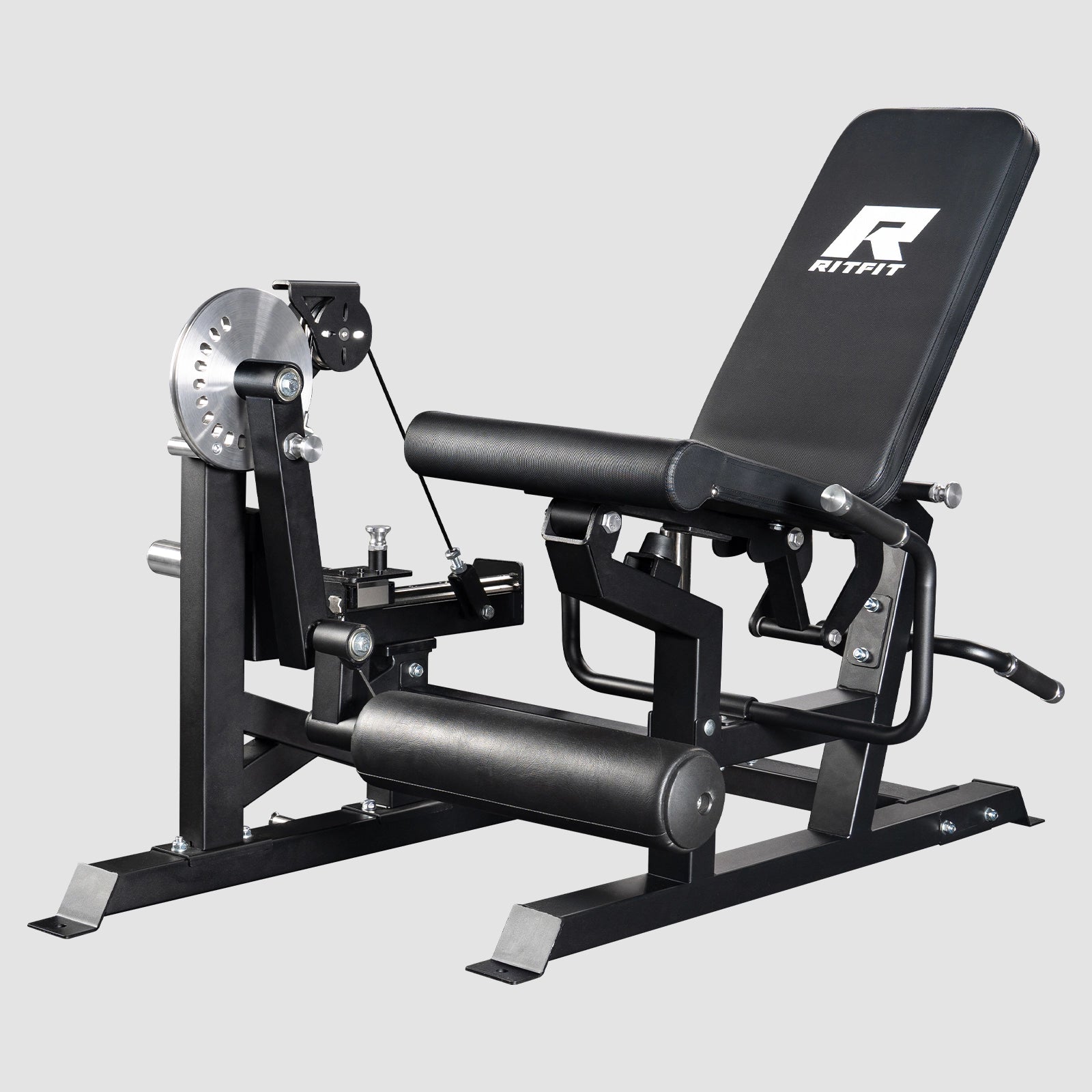
Cable bicep curls on a Smith machine combine the stability of a racked frame with the constant tension of a low pulley to isolate the biceps through a full range of motion. Unlike free weights, where resistance peaks only at horizontal forearm positions, the cable stack maintains mechanical load from full extension to peak contraction[1].
This guide covers setup, correct technique, common mistakes, and programming for both beginners and home gym users. If your Smith machine includes an integrated cable stack, you already have everything you need to build stronger biceps with a controlled tempo and minimized cheating.
Quick Answer: Cable bicep curls on a Smith machine are performed standing at the low pulley with a supinated, shoulder width grip, curling the bar toward your shoulders while keeping elbows pinned. The cable provides constant tension that free weights cannot match, making these curls a reliable isolation movement for long and short biceps heads[1].
Key Takeaways
- Cables keep tension constant: a cable stack loads the biceps from full extension through peak contraction, unlike free weights that only offer maximal tension when the forearm is parallel to the floor[1].
- It is an isolation finisher: cable bicep curls work best after heavy compounds on pull or arm day, at 3 to 4 sets of 8 to 15 reps with 60 to 90 seconds rest.
- Elbow position drives the target: keeping elbows pinned to your ribcage keeps the load on the biceps, while forward elbow drift shifts work to the front deltoids[2].
- The eccentric matters: a controlled 2 to 3 second lowering creates most micro trauma and drives greater biceps growth[3].
- Stability supports form: using the Smith frame for balance helps beginners avoid the swinging and leaning that ruin curl form.
What muscles do cable bicep curls on a Smith machine work?
Cable bicep curls on a Smith machine primarily train the biceps brachii, including both the long and short heads, with brachialis and brachioradialis providing support. The front deltoids and core act as stabilizers during the movement.
Grip width changes where the tension lands. A close grip emphasizes the long head and the peak, while a wider grip shifts emphasis toward the short head and adds thickness.
How do you set up cable bicep curls on a Smith machine?
To set up cable bicep curls on a Smith machine, attach a straight or EZ bar to the low pulley, select a weight you can control, and stand facing the cable stack with feet shoulder width apart. Cables feel heavier than free weights because of continuous drag, so err lighter on your first set.
Use the Smith uprights as a simple visual center guide or rest lightly on one upright for balance without pulling on it. Units such as the M3 Power Rack Cable Crossover Smith Machine pair the bar frame with a dedicated cable stack in a single footprint, which is ideal for a beginner who wants machine stability and cable tension in one station. For seated or varied grips, browse cable machine attachments such as D-handles that swap onto the same low pulley, plus alternating arm curls on the dual cable of a Buffalo Wild Smith Machine.
Before lifting, verify the Smith bar is racked and locked safely aside, inspect the cable, carabiner, and pins for wear, and clear the floor of obstacles.
What is the correct cable bicep curl technique?
Stand tall with a supinated grip at shoulder width, arms extended, elbows tucked, and the cable taut with no slack. Exhale to curl the bar toward your shoulders while keeping elbows pinned to your ribcage, pause 1 to 2 seconds at the top, then inhale and lower slowly over 2 to 3 seconds, stopping before the elbows fully lock.
Forward elbow movement during the concentric shifts load onto the front deltoids and reduces biceps isolation, so keep the upper arms still and control the descent for the full eccentric benefit[2].
What are the most common cable bicep curl mistakes?
Using too much weight, letting the elbows drift forward, leaning back, and curling the wrists are the most common cable bicep curl mistakes. Each one steals tension from the biceps and adds strain to other joints.
- Too much weight: causes swinging. Drop the load and use a strict 2 to 3 second tempo.
- Elbow drift: shifts tension forward to the deltoids. Glue your elbows to your ribcage.
- Excessive leaning: becomes a cheat curl. Brace your core and keep the torso vertical.
- Wrist curling: adds forearm strain. Keep wrists neutral through the whole rep.
If you feel the load dropping onto your deltoids or strains in your wrists, reduce the weight and return to a strict, controlled tempo on your Smith machine.
How can you vary cable bicep curls with a Smith machine?
Swap the bar or your stance to change the stress. A close grip favors the long head and peak, a wide grip builds a wider short head, single-arm work with a D-handle corrects imbalances, a drag style keeps the bar close to the body, and a seated position removes leg drive and momentum.
"Exercises such as preacher curls and concentration curls, where the upper arm is positioned in front of the torso, work more in the short head, as do exercises such as cross cable curls on a high pulley apparatus."
Brad Schoenfeld, PhD, Exercise Science Researcher, The Science of Biceps Training
For single-arm work, attach a cable machine exercise handle to the low pulley so you can focus on the weaker side without the stronger arm compensating.
Where should cable bicep curls fit in your workout?
Place cable bicep curls near the end of a pull or arm day, after heavy compounds, as an isolation finisher when the biceps are already fatigued on a home Smith machine with cable crossover. For hypertrophy progress with 3 to 4 sets of 8 to 15 reps, add reps, slow the eccentric, or shorten rest rather than increasing weight and sacrificing form.
Progressive overload will stall if you chase heavier loads at the cost of technique, so prioritize a smooth, controlled tempo and let the constant cable tension do the work.
FAQs About Cable Bicep Curls on a Smith Machine
Are cable curls better than dumbbell curls for biceps?
Cables provide constant tension across the entire range, while dumbbell curls lose resistance as the forearm approaches vertical. This continuous loading can produce a deeper burn and more consistent stimulus. Both are effective, and many lifters use cables as a training variety step or finisher.
Can you do bicep curls on a Smith machine?
Yes, when the Smith machine includes a low pulley or cable stack. The bar frame stabilizes your position while the cable provides constant tension. Without a pulley system, a Smith machine alone cannot curl against gravity the way a barrel of a plate or band can.
How many reps should you do for cable bicep curls?
For hypertrophy you will usually use 3 to 4 sets of 8 to 15 reps with 60 to 90 seconds of rest. Muscle failure should arrive in that range with strict form. You can also use higher rep sets with lighter weight to chase a pump and mind muscle connection.
Should you go heavy on cable curls?
You should select a weight you can move with total control through the full range. Heavy loads on cables often force swinging and elbow drift that shift tension to the deltoids. A moderate weight with a 2 to 3 second eccentric creates stronger biceps stimulus with less shoulder compensation.
How long should you rest between cable curl sets?
Rest 60 to 90 seconds between sets for hypertrophy of the biceps. Because the biceps are a small muscle group, they recover faster than larger compound movements. Shorter rest keeps overall workout time down while still allowing full effort on the next set.
Conclusion
Mastering cable bicep curls on a Smith machine gives you a reliable isolation tool built on constant tension, strict form, and a controlled eccentric. Keep your elbows pinned, choose a weight you can control, lower for 2 to 3 seconds, and progress by adding reps rather than chasing heavier loads.
For home gym users, a Smith machine with an integrated cable stack streamlines the whole setup into one station, so you can move straight from rack pulls to curls without reconfiguring. Check the RitFit discount guide before you add the attachment your current setup is missing.
Disclaimer
This article is for general fitness information only and does not replace professional medical or training advice. Consult a qualified coach or healthcare provider before starting a new program, and stop immediately if you feel sharp joint or tendon pain.
References
1. Parpa K, et al. An exploratory study of biceps brachii EMG during traditional dumbbell versus Bayesian cable curls. Muscles. 2025;4(4):45. doi:10.3390/muscles4040045. PMCID: PMC9867817
2. Oliveira LF, et al. Effect of shoulder position on biceps brachii EMG in different dumbbell curls. J Sports Sci Med. 2009;8(1):24-29.
3. Hedayatpour N, Falla D. Physiological and neural adaptations to eccentric exercise. Biomed Res Int. 2015;2015:193741. doi:10.1155/2015/193741. PMCID: PMC4295621