Table of Contents
- Muscles Worked
- Equipment and Setup
- Step-by-Step: How to Do Dumbbell Fly (Flat Bench)
- Common Mistakes (and How to Fix Them)
- Safety Tips and Form Cues
- Programming: Sets, Reps, and When to Use It
- Variations of Dumbbell Fly
- Modifications for Different Levels and Needs
- Sample Chest Workout Including Dumbbell Fly
- FAQs About Dumbbell Fly
The dumbbell fly is a classic isolation exercise designed to target and sculpt your chest muscles, specifically the pectoralis major. Unlike pressing movements that also heavily engage your triceps and shoulders, the dumbbell fly focuses on stretching and contracting the chest, helping to build definition and improve your mind-muscle connection. It’s a versatile exercise suitable for everyone from beginners looking to build foundational strength to advanced lifters aiming for detailed chest development and improved shoulder stability when performed with proper form.
Key Takeaways
- The dumbbell fly is a chest isolation move that emphasizes a deep stretch and a strong squeeze, so control matters more than load.
- Keep a small bend in your elbows the whole time and move in a smooth hugging arc to keep tension on your chest.
- Stop the descent when you feel a big chest stretch but before you feel shoulder pinching, sharp pain, or loss of control.
- For most people, flies work best after presses as a higher rep builder for chest shape and mind-muscle connection.
- If your shoulders get cranky, switch to a floor fly or cable fly and shorten the range to stay pain-free.
Muscles Worked
Understanding which muscles the dumbbell fly activates helps you get the most out of the exercise:
- Primary muscles: Pectoralis major. EMG research confirms that the fly isolates the sternal head effectively by minimizing triceps recruitment, though absolute force production is lower than the bench press.
-
Secondary muscles:
- Anterior deltoids (front shoulders), they assist in the movement.
- Biceps, act as stabilizers during the exercise.
- Serratus anterior, often engaged to stabilize your shoulder blades.
This focus on the pectorals makes it excellent for chest isolation, complementing compound pressing movements like the bench press by providing a different stimulus.
Equipment and Setup
Required Equipment:
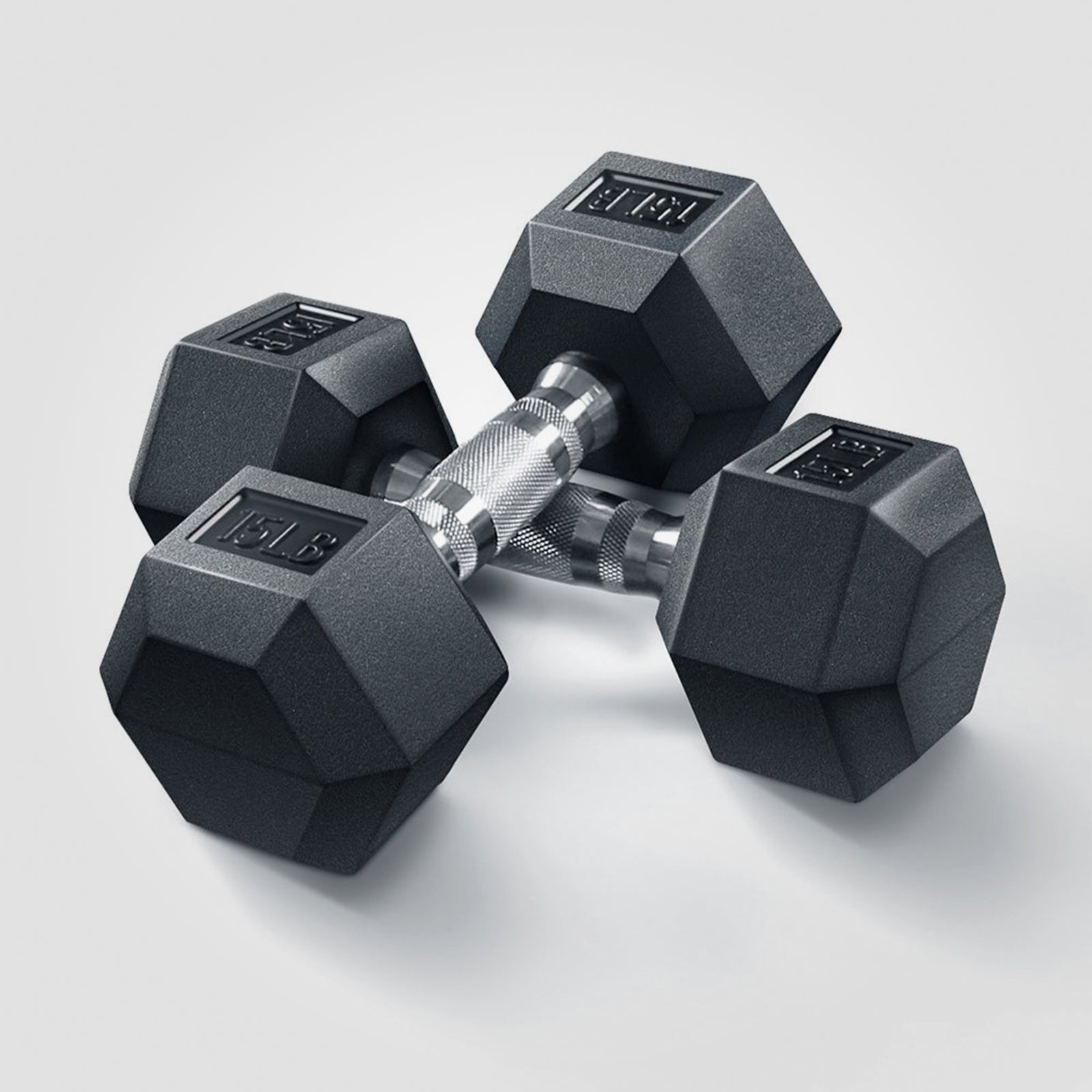
- A pair of dumbbells.
- A flat or adjustable bench.
Choosing the Right Weight:
Prioritize flawless form over lifting heavy. Start with a lighter weight than you might use for a dumbbell press. You should be able to control the dumbbells through the entire range of motion without momentum or straining your shoulders.
Bench Setup:
For a standard dumbbell fly, use a flat bench. Incline or decline variations (covered later) shift emphasis to different regions of the chest.
Quick setup checklist
- Feet flat and stable
- Shoulder blades back and down
- Chest gently lifted
- Elbows softly bent and fixed
- Wrists stacked and straight
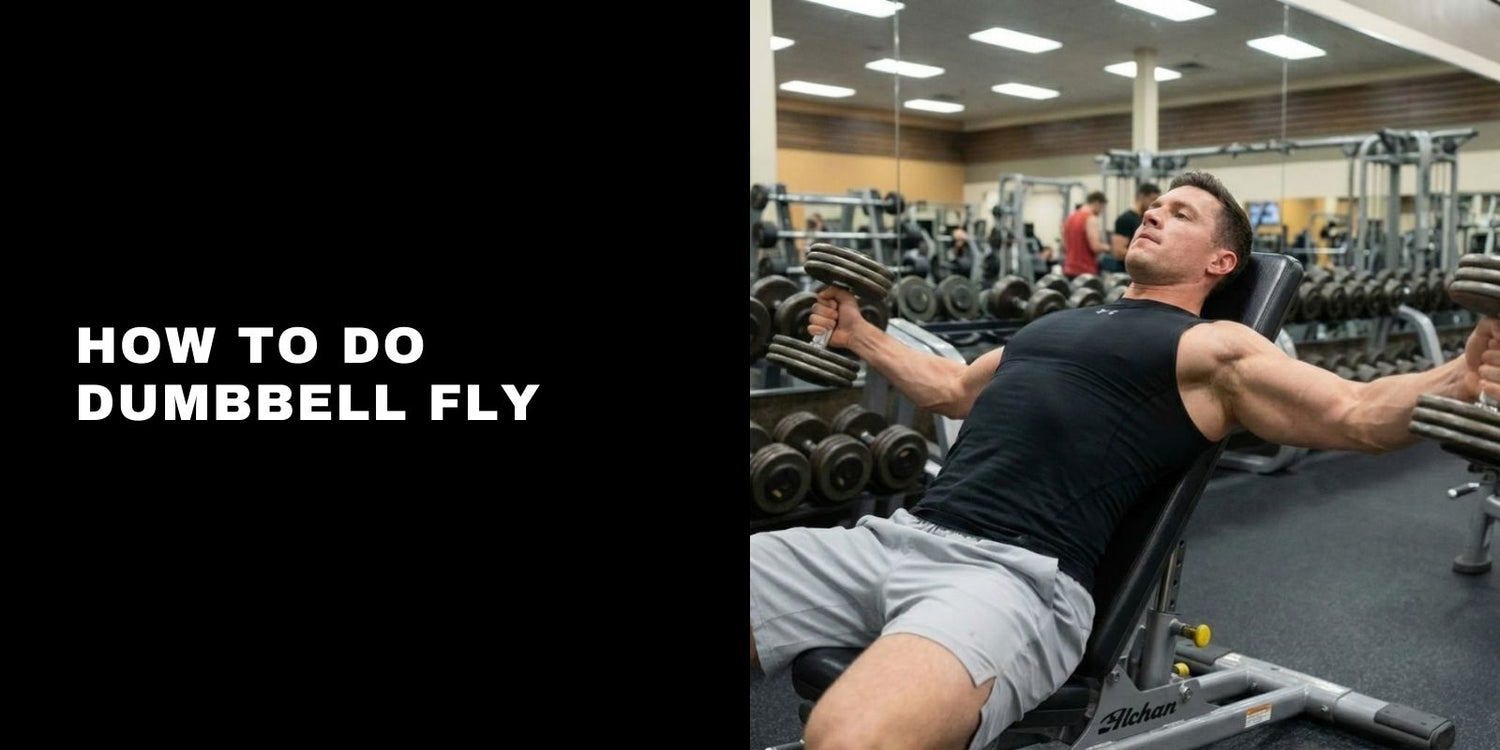
Step-by-Step: How to Do Dumbbell Fly (Flat Bench)
Here’s how to perform the dumbbell fly with perfect form:
Starting Position:
- Lie flat on the bench, ensuring your feet are flat on the floor for stability.
- Hold a dumbbell in each hand directly above your chest, with palms facing each other (neutral grip).
- Maintain a slight, consistent bend in your elbows throughout the entire movement (do not lock out). Keep wrists straight and aligned with forearms.
- Pull your shoulder blades back and down into the bench, and lift your chest slightly. This creates a stable base and protects your shoulders.
Lowering Phase (Eccentric):
- Inhale and lower in a wide arc. This phase is the driver of "Stretch-Mediated Hypertrophy." Research shows that maximizing tension at long muscle lengths is a potent stimulus for growth, but it requires control.
- Keep the elbow bend fixed; do not straighten your arms, and do not turn it into a press.
- Lower until your elbows are roughly level with, or slightly below, your torso. Do not force an extra-deep stretch.
- You should feel a strong stretch across your chest, not a sharp strain or pinch in the shoulders.
Lifting Phase (Concentric):
- Exhale and reverse the motion. Biomechanical Reality Check: As you reach the top, gravity aligns with your arms, and tension on the chest drops. Do not clank the weights; stop just short of vertical to maintain what little tension remains.
- Initiate by squeezing your chest and bringing the upper arms toward the midline; keep the elbow bend unchanged.
- Finish with the dumbbells stacked above the chest without clanging them together (clanging releases tension).
- Maintain control the entire time; no bouncing, jerking, or momentum.
Breathing and Tempo:
- Lowering: 2–3 seconds down (controlled stretch).
- Lifting: 1–2 seconds up (controlled squeeze).
- Keep the motion smooth and continuous to maintain tension on the pecs.
Common Mistakes (and How to Fix Them)
To maximize effectiveness and prevent injury, be aware of these common errors:
-
Using too much weight:
- Problem: Poor control, shoulder strain, and the fly turns into a press.
- Fix: Reduce weight significantly and prioritize smooth control and a safe range.
-
Turning it into a press:
- Problem: Elbows bend too much, converting it into a dumbbell bench press.
- Fix: Keep a small, consistent elbow bend and think “hug,” not “push.”
-
Overstretching at the bottom:
- Problem: Elbows drop too far below the bench, overstressing the shoulder joint.
- Fix: Stop at a big chest stretch before any shoulder discomfort or loss of control. Elbows generally should not drop far below bench height.
-
Flaring ribs / arching excessively:
- Problem: Often a compensation for heavy weight or poor bracing, reducing chest isolation.
- Fix: Keep a slight natural arch, brace the core, and keep ribs “down” (controlled).
-
Rushing the movement:
- Problem: Momentum replaces muscle tension.
- Fix: Slow down, especially on the descent, and keep smooth continuous tension.
Safety Tips and Form Cues
- Warm-up: Begin with 5–10 minutes of light cardio plus dynamic shoulder and chest prep.
- Shoulder health: Sharp pain or joint discomfort is a stop sign; reduce ROM and/or weight immediately.
- Grip and wrist: Use a neutral grip and keep wrists stacked over elbows (no wrist bend-back).
- Range of motion: Your ideal depth is individualized. Stop before shoulder discomfort.
- When to stop: End the set if you lose control, feel sharp pain, or cannot maintain form.
Programming: Sets, Reps, and When to Use It
- For beginners: 2–3 sets of 10–15 reps (light to moderate). Learn control and ROM.
- For hypertrophy (muscle gain): 3–4 sets of 8–15 reps (moderate), stopping 1–2 reps short of failure.
- Where it fits: After compound presses (bench press, dumbbell press, push-ups). Great as a finisher. Typically 1–2 isolation chest moves per session.
- Frequency: 1–2 times per week depending on your split and total volume.
Variations of Dumbbell Fly
Once you’ve mastered the flat bench version, consider these variations to target different parts of your chest or add variety:
- Incline dumbbell fly: More emphasis on upper chest and anterior deltoids.
- Decline dumbbell fly: Targets lower chest fibers.
- Floor dumbbell fly: Limits bottom ROM and is often shoulder-friendlier.
- Cable fly (standing or lying): Constant tension throughout the rep.
- Single-arm dumbbell fly: Adds a core stability challenge.
Modifications for Different Levels and Needs
- For beginners: Use very light dumbbells, reduce ROM, or choose the floor version.
- For shoulder issues: Shorten ROM, consider cables for smoother tension, or avoid if painful. Seek professional guidance if pain persists.
- For advanced lifters: Add slow eccentrics (3–4 seconds), pause near the bottom (without relaxing), or use high-rep finisher sets.
Sample Chest Workout Including Dumbbell Fly
Here’s how you might integrate dumbbell flies into a comprehensive chest workout:
- Barbell Bench Press: 3 sets of 6–8 reps
- Incline Dumbbell Press: 3 sets of 8–10 reps
- Dumbbell Fly: 3 sets of 10–15 reps
- Push-ups or Cable Fly: 2–3 sets to near failure
FAQs About Dumbbell Fly
Is dumbbell fly necessary if I already bench press?
While the bench press is a strong compound lift, the dumbbell fly adds a different stimulus by isolating the chest, emphasizing the stretch, and improving mind-muscle connection. It’s not strictly necessary, but it can be very beneficial.
Is it bad for the shoulders?
With poor form (too heavy, overstretching, locked elbows), flies can irritate shoulders. With controlled motion, appropriate load, and a shoulder-friendly range, they can be safe and effective.
What’s better: dumbbell fly or cable fly?
Dumbbell flies provide a strong stretch and free-weight stability demands. Cable flies provide constant tension. The best choice depends on goals and comfort; many lifters rotate both.
How heavy should I go?
Never sacrifice form for weight. Start light and increase only when you can maintain perfect technique across your rep range.
Should I lock my elbows?
No. Keep a slight, consistent bend in your elbows to protect the joints and keep tension on the chest.
Conclusion
The dumbbell fly is an invaluable tool for enhancing chest development, offering a unique stimulus that complements compound pressing movements. Remember, this is a chest isolation exercise, not a test of maximal strength. The key to its effectiveness lies in prioritizing light to moderate weight and maintaining strict, controlled form throughout every repetition.
As you progress, focus on the mind-muscle connection; feel the stretch and contraction in your chest. Increase weight or reps only when you can maintain clean technique. Add the dumbbell fly to your next chest session using the steps above to build a more developed, sculpted chest.
References
- Solstad TE, Andersen V, Shaw M, Hoel EM, Vonheim A, Saeterbakken AH. A Comparison of Muscle Activation between Barbell Bench Press and Dumbbell Flyes in Resistance-Trained Males. J Sports Sci Med. 2020;19(4):645-651. Published 2020 Nov 19.
- Warneke K, Lohmann LH, Lima CD, et al. Physiology of Stretch-Mediated Hypertrophy and Strength Increases: A Narrative Review. Sports Med. 2023;53(11):2055-2075. doi:10.1007/s40279-023-01898-x
- Pinto RS, Gomes N, Radaelli R, Botton CE, Brown LE, Bottaro M. Effect of range of motion on muscle strength and thickness. J Strength Cond Res. 2012;26(8):2140-2145. doi:10.1519/JSC.0b013e31823a3b15