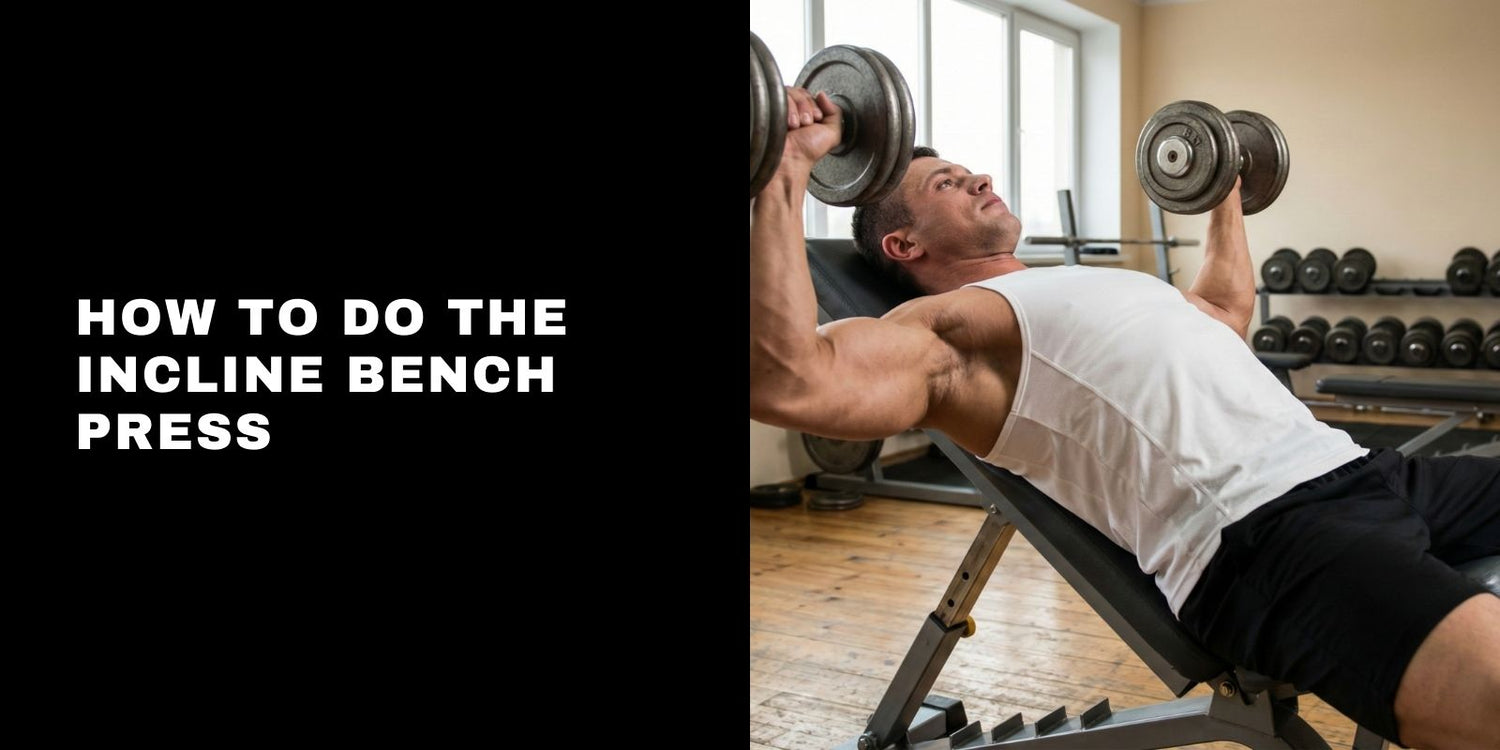
The incline bench press is a chest pressing exercise that emphasizes the upper chest while also training the front delts and triceps. The best results usually come from a moderate bench angle, controlled form, and equipment that lets you press safely through a consistent range of motion.
If your goal is a fuller upper chest, start with a 15 to 30 degree incline, keep your shoulder blades set, and use a load you can control. This guide explains muscles worked, best angles, barbell and dumbbell technique, common mistakes, programming, and safer home gym setup.
Table of Contents
- Anatomical Guide to the Upper Chest and Incline Bench Press
- Best Equipment for Incline Bench Press: Fixed vs. Adjustable
- How to Perform the Barbell Incline Bench Press Perfectly
- Master Class: The Dumbbell Incline Bench Press for Hypertrophy
- Variations: Smith Machine Incline Press and Reverse Grip
- Troubleshooting Common Mistakes in the Incline Bench Press
- Programming Strategy: How to Build a Bigger Upper Chest
- Safety Tips for Longevity in the Incline Bench Press
Key Takeaways
- The incline bench press mainly trains the upper chest, front delts, and triceps.
- A 15 to 30 degree incline is often the most practical starting range for upper chest focus.
- A 45 degree or steeper incline can shift more work toward the anterior deltoids.
- Dumbbells offer more joint freedom, while barbells allow heavier and more stable loading.
- Sharp shoulder pain, numbness, tingling, or pain that worsens during the session means you should stop and adjust the movement.
Anatomical Guide to the Upper Chest and Incline Bench Press
The incline bench press changes the press angle so the clavicular fibers of the pectoralis major contribute more strongly. This makes it a useful movement for lifters who want more upper chest development without turning the exercise into a shoulder press.
The Clavicular Pectoralis Major: The Target
The upper chest is mainly the clavicular portion of the pectoralis major, which helps lift the arm forward and bring it across the body. A moderate incline aligns the press with this function better than a flat press.
- Sternal pec fibers: These fibers dominate more during flat and decline pressing. They still assist during incline pressing, but they are not the main target.
- Clavicular pec fibers: These fibers are more involved when the arm presses upward and inward. This is why a low to moderate incline is useful for upper chest work.
- Anterior deltoids: The front delts help with shoulder flexion. Their involvement increases as the bench gets steeper.
The Synergistic Hierarchy
The incline bench press is a compound lift, so no single muscle works alone. The upper chest drives the press, while the delts, triceps, lats, and upper back help stabilize and finish the movement.
- Upper chest: Provides the main chest emphasis when the bench angle is moderate and the touch point is high on the chest.
- Front delts: Help press the bar upward, especially when the incline becomes steep.
- Triceps: Extend the elbows and finish the lockout.
- Upper back and lats: Create the stable base that keeps the shoulder blades controlled.
The Angle Debate: 15 Degrees vs 30 Degrees vs 45 Degrees vs 60 Degrees
Bench angle is the biggest setup variable because it changes how much work shifts from the chest to the shoulders. Research on five bench inclinations found that 30 degrees produced greater upper pectoralis activity, while angles above 45 degrees increased anterior deltoid activity and reduced pectoralis performance.[1]
| Bench Angle | Main Effect | Muscle Emphasis | Best Use |
|---|---|---|---|
| Flat | More horizontal press path. | Mid chest, triceps, front delts. | Overall chest strength. |
| 15 Degrees | Gentle upper chest shift. | Chest dominant with lower shoulder demand. | Shoulder sensitive lifters. |
| 30 Degrees | Strong upper chest bias. | Upper chest with moderate front delt help. | Upper chest hypertrophy. |
| 45 Degrees | More shoulder flexion. | Upper chest and front delts. | General pressing strength. |
| 60 Degrees | Near shoulder press mechanics. | Front delt dominant. | Shoulder emphasis. |
Practical rule: Use the lowest incline that still lets you feel the upper chest work. For many lifters, that means starting at 30 degrees and adjusting up or down based on shoulder comfort and chest connection.
Best Equipment for Incline Bench Press: Fixed vs. Adjustable
The best incline bench press setup is stable, adjustable, and easy to unrack from without losing shoulder position. For home gyms, an adjustable bench inside a rack or Smith machine gives more control than a fixed commercial incline station.
Fixed Incline Bench Station
A fixed incline station is stable and simple, but it often locks you into one angle. Many fixed stations use a high incline, which may make the lift feel more like a shoulder movement for some lifters.
- Best benefit: The station feels solid and usually includes built in rack supports.
- Main limitation: The angle may be too steep for chest focused training.
- Setup risk: Poor hook height can force the shoulders forward during unracking.
Adjustable Bench and Rack Setup
An adjustable bench lets you choose the incline that matches your body and goal. A stable model such as the RitFit GATOR adjustable weight bench is especially useful when you want flat, low incline, and moderate incline pressing options in one home gym setup.
- Best benefit: You can test 15, 30, and 45 degree settings instead of being locked into one position.
- Home gym value: One adjustable bench can support barbell pressing, dumbbell pressing, rows, and accessory work.
- Safety check: The bench should feel stable before any heavy set begins.
Rack, Smith Machine, and Free Weight Options
A rack setup gives you safeties, while a Smith machine gives a fixed bar path that can be useful for controlled hypertrophy work. For incline pressing at home, choose equipment that lets the bar reach the upper chest without forcing the shoulders into an awkward position.
- Power rack: A rack lets you use adjustable safety arms for solo barbell pressing.
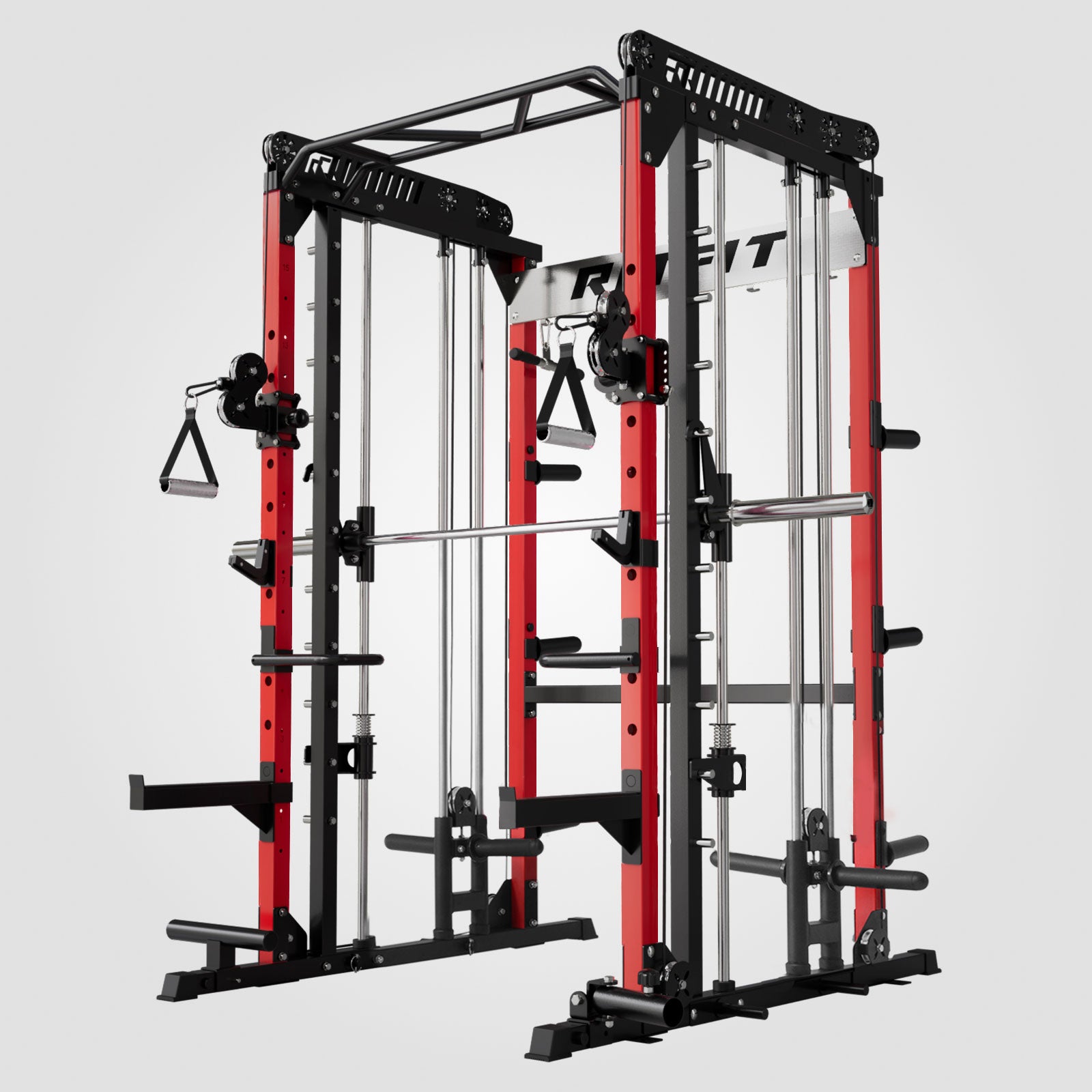
- Smith machine: A machine such as the RitFit M1 Smith Machine can help lifters use a consistent path with safety stops.
- All in one setup: A larger unit such as the RitFit BUFFALO multifunctional Smith machine can support pressing, cable work, and upper body accessories.
Home Gym Equipment Checklist
A safe incline press setup should support both performance and failure protection. Before loading the bar, confirm the bench, rack height, safety stops, and floor position are stable.
- Adjustable bench: Choose a bench with secure incline settings and a pad that supports your upper back.
- Barbell: A standard Olympic bar such as the RitFit 20KG Olympic barbell works well for heavy bilateral pressing.
- Dumbbells: A pair of RitFit hex rubber dumbbells is useful for joint friendly incline press variations.
- Plates: RitFit high grade Olympic bumper plates help build progressive overload for barbell pressing.
- Safety system: Use spotter arms, rack pins, or Smith machine stops when training alone.
How to Perform the Barbell Incline Bench Press Perfectly
The barbell incline bench press is best for building upper chest strength because it allows heavier loading than dumbbells. The tradeoff is that the bar fixes your hand path, so setup and shoulder control must be precise.
Step 1: Set the Bench and Bar Height
Set the bench around 15 to 30 degrees and position your eyes under the bar. The hooks should let you unrack with a small elbow extension, not a shoulder reach.
- Bench position: Center the bench so the bar tracks evenly over your chest.
- Hook height: Avoid hooks that are so high you must shrug or protract to lift the bar out.
- Safety height: Set safeties slightly below your chest touch point.
Step 2: Build Your Pressing Base
Create five contact points with your head, upper back, glutes, and both feet. Keep the glutes on the bench so the incline angle stays honest.
- Upper back: Pull your shoulder blades together and down.
- Chest: Lift the chest toward the bar without overextending the lower back.
- Feet: Keep both feet planted and drive gently into the floor.
Step 3: Grip the Bar Correctly
Use a grip that keeps your forearms near vertical at the bottom of the press. Very wide grip positions can increase shoulder demands, and biomechanical modeling suggests technique changes can meaningfully affect shoulder loading.[2]
- Grip width: Start slightly wider than shoulder width.
- Wrist position: Stack the bar over the heel of the palm.
- Hand cue: Keep your knuckles facing the ceiling.
Step 4: Unrack Without Losing the Shoulders
Pull the bar out of the hooks instead of reaching upward and forward. This helps keep the shoulder blades pinned and reduces energy leaks before the first rep.
- Lat tension: Think about pulling the bar toward your chest before lowering.
- Breath: Take a breath and brace before the bar leaves the hooks.
- Start position: Let the bar settle over the upper chest and shoulder line.
Step 5: Lower to the Upper Chest
Lower the bar under control to the upper chest, not the lower ribs. A 2 to 3 second descent is enough for most lifters to maintain control without turning the set into a slow tempo drill.
- Touch point: Aim below the collarbone and above the nipple line.
- Elbow angle: Keep elbows about 30 to 60 degrees from your torso.
- Bottom position: Touch lightly without bouncing.
Step 6: Press Up and Slightly Back
Press the bar up and slightly back toward the shoulder line. This small J shaped path helps the bar finish stacked over the shoulders instead of drifting too far forward.
- Drive cue: Push the floor away while keeping your glutes down.
- Bar cue: Press up and back, not straight toward your feet.
- Lockout: Finish with straight elbows without letting the shoulders roll forward.
Master Class: The Dumbbell Incline Bench Press for Hypertrophy
The dumbbell incline bench press is often the better hypertrophy choice when comfort, range of motion, and natural joint movement matter. Dumbbells also require more stabilization than a fixed path, so they should be loaded with control rather than ego.
Why Dumbbells Feel Different
Dumbbells let each arm move independently and follow a more natural path. Research comparing different instability conditions in bench pressing suggests that instability changes muscle activation and coordination demands.[3]
- Longer range: Dumbbells can move slightly deeper if your shoulders tolerate the position.
- Natural wrist angle: A neutral or semi neutral grip can reduce wrist and shoulder irritation.
- Converging press path: Pressing inward slightly matches the pec function of bringing the arm across the body.
The Kick Up Technique
Bring dumbbells into position with your legs, not by curling them from the floor. This protects the shoulders and keeps heavy sets from becoming a setup battle.
- Sit tall: Place the dumbbells on your thighs near the knees.
- Kick and lie back: Use one knee and then the other to guide the dumbbells to shoulder level.
- Set the shoulders: Pin your shoulder blades before starting the first rep.
- Dismount safely: Bring the dumbbells back to your thighs before sitting up.
Execution Nuances for Chest Growth
Use dumbbells to chase tension, not random depth. Lower until you feel a controlled chest stretch, then press inward without clanking the dumbbells together.
- Grip: Use a slightly angled grip if a straight pronated grip irritates your shoulders.
- Bottom range: Stop where the shoulder stays controlled and pain free.
- Top range: Stop just short of the dumbbells touching to keep tension on the pecs.
Variations: Smith Machine Incline Press and Reverse Grip
Incline press variations help you train around equipment, shoulder comfort, and specific hypertrophy goals. Choose one main incline press and one accessory variation rather than adding every variation into the same session.
Smith Machine Incline Press
The Smith machine incline press is useful for controlled hypertrophy because the fixed path reduces balance demands. The key is placing the bench so the bar reaches the upper chest without forcing the elbows too far forward or out.
- Bench placement: Test the empty bar first and adjust until the bar touches the upper chest naturally.
- Safety stops: Set stops just below the bottom range of motion.
- Best use: Use it for moderate to high rep sets after your main press.
Reverse Grip Incline Press
The reverse grip incline press can increase upper chest feel for some lifters, but it also increases grip security demands. Use lighter loads, a controlled tempo, and a spotter when learning it.
- Benefit: The grip can encourage a tucked elbow path and upper chest focus.
- Risk: A slipping bar is more dangerous with a reverse grip.
- Safer alternative: Use reverse grip dumbbells or a machine press if barbell control feels uncertain.
Pause Rep Incline Press
Pause reps build control at the most vulnerable point of the lift. They are especially useful for lifters who bounce the bar or lose tightness at the chest.
- How to do it: Pause for 1 to 2 seconds on the upper chest.
- Load choice: Reduce weight because the pause removes momentum.
- Best use: Use pause reps for technique blocks or strength practice.
Troubleshooting Common Mistakes in the Incline Bench Press
Most incline bench press problems come from poor angle choice, loose shoulder position, rushed lowering, or excessive load. Fixing these mistakes usually improves both chest stimulus and shoulder comfort.
Mistake 1: Using Too Steep of an Incline
A steep incline often turns the lift into a front delt dominant press. Lower the bench to 15 or 30 degrees if your shoulders fatigue before your upper chest.
- Common sign: You feel mostly front shoulder burn.
- Fast fix: Lower the bench one setting.
- Form cue: Keep the chest lifted and touch the upper chest.
Mistake 2: Bouncing the Bar
Bouncing the bar reduces control and can increase joint stress. Lower smoothly, touch lightly, and press from tension instead of impact.
- Common sign: The bar sinks into the chest or ribs.
- Fast fix: Use a 2 to 3 second lowering phase.
- Load cue: Reduce weight until every rep looks the same.
Mistake 3: Flaring the Elbows
Flaring the elbows straight out can make the shoulder position less forgiving. Keep the elbows angled slightly down toward the ribs while maintaining a strong chest position.
- Common sign: Shoulder pinch at the bottom.
- Fast fix: Narrow the grip slightly and tuck the elbows.
- Check: Forearms should stay close to vertical at the touch point.
Mistake 4: Letting the Wrists Bend Back
Overextended wrists waste force and can create discomfort. Stack the bar or dumbbells over the forearm so the press line stays strong.
- Common sign: Wrist pain or shaky lockout.
- Fast fix: Place the load lower in the palm.
- Support option: Use wrist wraps for heavy barbell sets if needed.
Mistake 5: Lifting the Hips
Lifting the hips turns the exercise into a flatter press and can increase low back stress. Drive through the feet while keeping the glutes anchored to the bench.
- Common sign: Your hips rise as the bar leaves the chest.
- Fast fix: Move the feet slightly back or lower the load.
- Intent cue: Push the floor forward, not your hips upward.
Programming Strategy: How to Build a Bigger Upper Chest
Upper chest growth needs enough hard sets, consistent progression, and recovery. Research in trained men supports that higher resistance training volume can enhance hypertrophy, although more volume is not automatically better for every lifter.[4]
Use Double Progression
Double progression means you increase reps first, then increase weight. This keeps technique cleaner because load only goes up after you can control the current weight.
- Choose a range: Use 8 to 12 reps for hypertrophy work.
- Build reps: Keep the same load until all sets reach the top of the range.
- Add load: Increase weight slightly, then rebuild reps.
Best Rep Ranges
The best rep range depends on whether the goal is strength, muscle growth, or endurance. Most lifters should keep at least one incline press in the 6 to 12 rep range.
- Strength: Use 3 to 5 sets of 4 to 6 reps with longer rest.
- Hypertrophy: Use 3 to 4 sets of 8 to 12 reps with controlled form.
- Accessory pump work: Use 2 to 3 sets of 12 to 20 reps on dumbbells, cables, or machines.
Weekly Frequency
Most lifters can train upper chest 1 to 2 times per week. If upper chest is a weak point, place incline pressing early in the session when strength and focus are highest.
- Beginner: Start with one incline movement per week.
- Intermediate: Use one heavy incline press and one lighter dumbbell or machine variation.
- Recovery check: Reduce volume if shoulder soreness carries into the next session.
Sample Upper Chest Push Day
This routine prioritizes incline pressing before flat pressing and accessory work. Keep 1 to 3 reps in reserve on most sets unless you are using a safe machine variation.
- Incline Barbell Bench Press: 3 sets of 6 to 8 reps.
- Incline Dumbbell Press: 3 sets of 8 to 12 reps.
- Low to High Cable Fly: 3 sets of 12 to 15 reps.
- Triceps Pressdown: 3 sets of 10 to 15 reps.
Sample Balanced Upper Body Day
This routine keeps incline pressing in the program without overwhelming the shoulders. It works well for lifters who also train back and shoulders on the same day.
- Flat Barbell Bench Press: 3 sets of 5 reps.
- Incline Dumbbell Press: 3 sets of 8 to 10 reps.
- Barbell Row: 3 sets of 8 to 10 reps.
- Lateral Raise: 3 sets of 12 to 20 reps.
Safety Tips for Longevity in the Incline Bench Press
The safest incline bench press is the one you can repeat without pain, panic, or unstable failure. Treat warm ups, shoulder position, safeties, and pain signals as part of the lift rather than optional extras.
Warm Up Before Heavy Pressing
Warm up with light pressing, upper back activation, and shoulder friendly movement before your work sets. The goal is to increase control and comfort, not exhaust the chest before training.
- Band pull apart: Use light reps to wake up the upper back.
- Scap push up: Practice shoulder blade control.
- Ramp sets: Add weight gradually before the first working set.
Use Safeties When Training Alone
Solo barbell incline pressing should use rack safeties or Smith machine stops. The incline position makes emergency escapes harder than on a flat bench.
- Rack setup: Set safety arms just below your controlled bottom position.
- Smith setup: Test the stops with an empty bar before loading.
- Dumbbell setup: Keep feet clear and guide the weights down safely if you must bail.
Know When to Stop
Stop the set if you feel sharp pain, numbness, tingling, sudden weakness, or pain that increases each rep. Switch to a lower incline, lighter dumbbells, neutral grip pressing, or professional evaluation if symptoms persist.
- Shoulder discomfort: Lower the incline and reduce range of motion temporarily.
- Wrist discomfort: Recheck wrist stacking and grip width.
- Persistent pain: Consult a qualified clinician before continuing heavy pressing.
FAQs
What muscles does the incline bench press work?
The incline bench press mainly works the upper chest, front delts, and triceps. The clavicular pec fibers receive more emphasis than in a flat press, while the front delts assist more as the bench angle gets steeper. The upper back and lats stabilize the shoulder blades.
What angle is best for incline bench press?
A 15 to 30 degree angle is usually best for upper chest focus. This range often keeps tension on the clavicular pecs without shifting too much work to the front delts. If your shoulders dominate the lift, lower the bench one setting and reduce the load.
Is dumbbell incline bench press better than barbell incline bench press?
No. Dumbbells are not always better, they are simply different. Dumbbells allow more joint freedom and a deeper controlled stretch, which can help hypertrophy. Barbells allow heavier loading and easier progression. Many lifters benefit from using both across the week.
Can incline bench press cause shoulder pain?
Yes. Incline bench press can cause shoulder pain when the angle is too steep, the elbows flare, the grip is too wide, or the load is uncontrolled. Lower the incline, use a neutral grip dumbbell press, shorten the range, and stop if pain feels sharp or worsening.
Should beginners do incline bench press?
Yes. Beginners can do incline bench press if they start light and learn stable setup first. A moderate incline, controlled lowering, and consistent touch point matter more than heavy weight. Beginners should use safeties, dumbbells, or a Smith machine when training without a spotter.
Where should the bar touch during incline bench press?
The bar should usually touch the upper chest, below the collarbone and above the nipple line. Touching too low can pull the shoulders into a weaker position. Keep the elbows slightly tucked, control the descent, and use the same touch point on every rep.
How many sets of incline bench press should I do?
Most lifters should do 3 to 4 working sets of incline bench press per session. For strength, use 4 to 6 reps with longer rest. For hypertrophy, use 8 to 12 reps with controlled form. Add volume gradually if recovery and shoulder comfort stay strong.
Does incline bench press build upper chest faster than flat bench press?
Yes. Incline bench press can build the upper chest more directly than flat bench press when form and angle are appropriate. Flat bench still builds overall chest strength, but incline pressing better matches the upper pec fiber direction. Use both if you want complete chest development.
Conclusion
The incline bench press is one of the most effective lifts for building the upper chest when the angle, setup, and execution match your body. Start with a 15 to 30 degree incline, press with control, keep your shoulders stable, and progress gradually instead of chasing sloppy heavy reps.
Disclaimer: This article is for general educational purposes only and is not medical advice. If you have shoulder, neck, back, elbow, or wrist pain, recent injury, surgery, numbness, tingling, dizziness, or unexplained weakness, consult a qualified clinician before training. Stop any exercise that causes sharp pain.
References
- Rodríguez-Ridao D, Antequera-Vique JA, Martín-Fuentes I, Muyor JM. Effect of Five Bench Inclinations on the Electromyographic Activity of the Pectoralis Major, Anterior Deltoid, and Triceps Brachii during the Bench Press Exercise. Int J Environ Res Public Health. 2020;17(19):7339. doi:10.3390/ijerph17197339
- Noteboom L, Belli I, Hoozemans MJM, Seth A, Veeger HEJ, Van Der Helm FCT. Effects of bench press technique variations on musculoskeletal shoulder loads and potential injury risk. Front Physiol. 2024;15:1393235. doi:10.3389/fphys.2024.1393235
- Wang L, Qiao M, Tao H, Song X, Shao Q, Wang C, Yang H, Niu W, Chen Y. A comparison of muscle activation and concomitant intermuscular coupling of antagonist muscles among bench presses with different instability degrees in untrained men. Front Physiol. 2022;13:940719. doi:10.3389/fphys.2022.940719
- Schoenfeld BJ, Contreras B, Krieger J, Grgic J, Delcastillo K, Belliard R, Alto A. Resistance Training Volume Enhances Muscle Hypertrophy but Not Strength in Trained Men. Med Sci Sports Exerc. 2019;51(1):94-103. doi:10.1249/MSS.0000000000001764