








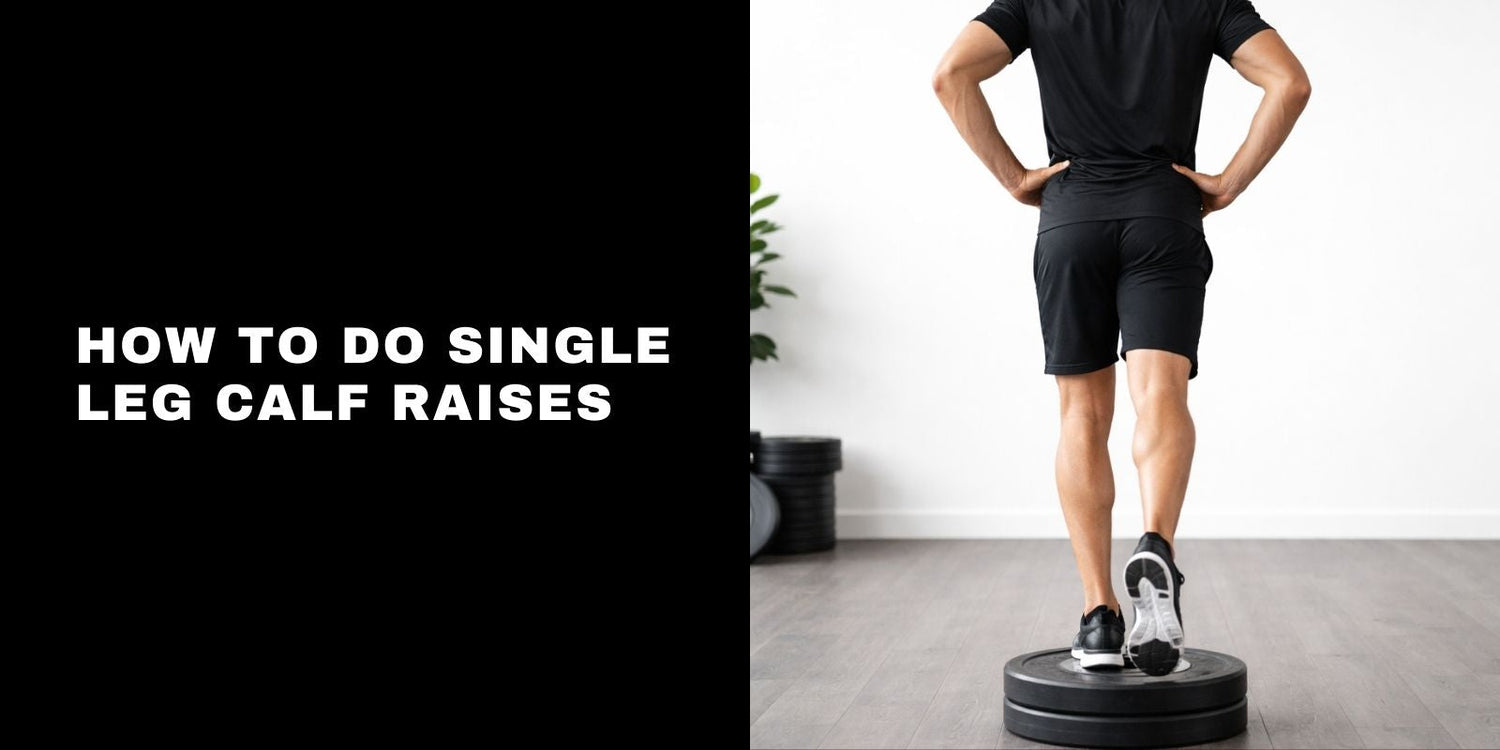
Looking to build stronger, more defined calves and improve your lower body stability? Look no further than single leg calf raises. This powerful unilateral exercise targets each calf individually, making it incredibly effective for developing strength, enhancing balance, and boosting performance in various sports and daily activities. Best of all, you can perform them almost anywhere with minimal equipment, making them a versatile addition to any fitness routine.
What Are Single Leg Calf Raises?
Simply put, a single leg calf raise involves lifting your body by pressing through the ball of one foot, raising your heel as high as possible. It's an isolated movement designed to specifically work the muscles in your lower leg. The primary muscles engaged are the gastrocnemius (the larger, visible calf muscle) and the soleus (a deeper calf muscle that lies beneath the gastrocnemius). Beyond the main calf muscles, you'll also activate smaller foot stabilizers, engage your ankle joint, and challenge your core for balance.
While two-leg calf raises build strength, the single-leg variation is often more challenging and effective because it forces each leg to work independently, addressing potential imbalances and demanding greater stability from your ankle and foot.
Benefits of Single Leg Calf Raises
Incorporating single leg calf raises into your routine offers a wealth of advantages:
- Increased Calf Strength and Size: Directly targets the calf muscles, leading to improved muscular endurance and hypertrophy.
- Improved Ankle Stability and Balance: Unilateral work significantly enhances the stabilizing muscles around the ankle and foot, which is crucial for overall balance and coordination.
- Injury Prevention: Stronger calves and stable ankles can help protect against common lower-leg injuries, especially beneficial for individuals engaged in running, jumping, or dynamic movements.
- Performance Benefits: This exercise translates directly into better performance in sports requiring explosive power, such as sprinting, jumping, and quick changes of direction.
- Functional Strength: Enhances your ability to perform everyday activities with greater ease, like climbing stairs, walking uphill, or maintaining balance on uneven surfaces.
How to Do Single Leg Calf Raises: Step-by-Step
Step 1: Setup
Choose a stable surface. The floor works for beginners, but a step or platform gives you a greater range of motion. Stand tall with feet about hip width apart, then shift your weight onto one leg. Lightly place the toes of your non working foot behind the working leg for balance, or lift it completely off the ground.
Step 2: Get Your Body Position
Brace your core and keep your torso upright. For balance, place your hands on your hips, lightly touch a wall, or hold a sturdy rail or chair. Keep the knee of your working leg slightly bent, not locked.
Step 3: Press Up
Start from a flat foot position. If you are on a step, begin with your heel slightly below the step level. Press through the ball of your working foot and lift your heel as high as you can.
Step 4: Squeeze and Pause
At the top, squeeze your calf hard and hold for 1 to 2 seconds to maximize muscle engagement and control.
Step 5: Lower With Control and Repeat
Slowly lower your heel back to the start. If you are using a step, let your heel dip slightly below the step to get a full calf stretch. Repeat for your target reps, then switch legs.
Breathing Tip
Inhale as you lower. Exhale as you press up and lift your heel.
Common Mistakes and How to Fix Them
To get the most out of your single leg calf raises and avoid injury, watch for these common form issues and fix them fast:
Mistake 1: Bouncing or using momentum
This turns the rep into a “bounce,” reducing calf tension and control.
Fix: Slow down. Rise smoothly, pause at the top, then lower under control through the full range.
Mistake 2: Skipping the full range of motion
Not lifting high enough or not lowering fully (especially on a step) limits growth and mobility benefits.
Fix: Think “heel as high as possible” on the way up and “heel drops fully” on the way down for a full squeeze and stretch.
Mistake 3: Leaning too far forward or backward
This shifts load away from the calf and can create unnecessary strain through your back and hips.
Fix: Keep your shoulders stacked over your hips with a tall, upright torso.
Mistake 4: Rolling the ankle inward or outward
Ankle collapse reduces stability and can irritate the ankle or foot over time.
Fix: Keep pressure centered through the ball of your foot, with weight over the big toe and second toe.
Mistake 5: Locking out the knee
A fully straight knee can add stress to the joint and reduce smooth control of the movement.
Fix: Keep a slight knee bend the entire time, soft and stable, never hyperextended.
Variations of Single Leg Calf Raises
Once you've mastered the basic movement, you can explore various ways to modify single leg calf raises to increase intensity or target different aspects of the calf:
- Bodyweight Floor Single Leg Calf Raise: The foundational version, excellent for beginners learning the movement.
- Single Leg Calf Raises on a Step: Performing the exercise with your forefoot on an elevated surface allows your heel to drop below the step, increasing the range of motion and stretch.
- Weighted Single Leg Calf Raises: For an added challenge, hold a dumbbell or kettlebell in the hand on the same side as your working leg. More advanced individuals might use a barbell or Smith machine.
- Bent-Knee Single Leg Calf Raises: By maintaining a slight bend in your knee throughout the entire movement, you can emphasize the soleus muscle, which is crucial for endurance and walking.
- Assisted Single Leg Calf Raises: If balance is a major challenge, use both hands on a sturdy rail or wall for support, gradually reducing assistance as your balance improves.
Sets, Reps, and Programming
How you integrate single leg calf raises into your routine depends on your goals:
For Beginners
2–3 sets of 8–12 repetitions per leg.
Aim for 2–3 times per week. Focus on mastering the form before adding weight or increasing volume.
For Muscle Growth (Hypertrophy)
3–4 sets of 10–15 repetitions per leg.
Once bodyweight becomes easy, gradually add external weight to increase the challenge.
For Endurance / Runners
3–4 sets of 15–25 repetitions per leg.
Focus on a controlled tempo and maintaining a full range of motion to build resilient calves.
Progression Guidelines
If you're new to calf training, start with both-leg calf raises to build initial strength.
Progress to unassisted single leg calf raises once comfortable.
Then, increase the range of motion by performing them on a step.
Finally, add external load (weights) to continue challenging your muscles.
Safety Tips and Contraindications
Warm Up: Always perform a light cardio warm-up and dynamic stretches for your ankles and calves before beginning.
Gradual Progression: Avoid sudden increases in volume (sets/reps) or weight, as this can lead to strain.
Be Cautious If: You have a history of Achilles tendon issues, ankle instability, or recent lower-leg injuries. It's always wise to ensure you're ready for this type of exercise.
Listen to Your Body: Stop immediately if you feel any sharp pain. Differentiate between normal muscle burn and pain indicating a problem.
How to Add Single Leg Calf Raises to Your Workout
Single leg calf raises are a versatile exercise that can fit into various parts of your training:
Leg Day: Incorporate them as an accessory movement after your main compound lower-body lifts like squats or lunges.
Cardio Sessions: Perform them at the end of a run or other cardio session to add targeted calf work.
Balance/Stability Circuit: They are an excellent addition to any routine focused on improving balance and proprioception.
Frequently Asked Questions (FAQ)
How often should I do single leg calf raises?
2–3 times per week is a good starting point, allowing adequate recovery time for your calf muscles.
Can I do them every day?
While calf muscles can handle frequent training, daily high-intensity work might lead to overtraining. It’s generally better to allow for recovery days.
How long until I see results in calf size or strength?
Consistency is key. With regular training, you may start noticing improvements in strength within a few weeks, and changes in size typically become apparent within 6-8 weeks or more, depending on individual factors.
Are single leg calf raises enough for calf training?
They are highly effective, but incorporating bent-knee variations can target the soleus more comprehensively. Combining both straight-leg and bent-knee calf raises often yields the best results.
Should I do them barefoot or in shoes?
Either is fine, but barefoot can enhance foot proprioception and strengthen intrinsic foot muscles. If wearing shoes, ensure they have a stable, non-cushioned sole for better ground feel.
Conclusion
Single leg calf raises are a highly effective exercise for anyone looking to build stronger, more stable, and more defined calves. By following proper form, understanding the benefits, and progressing gradually, you can significantly enhance your lower body strength, balance, and athletic performance. Make them a consistent part of your routine and watch your calves transform!

RitFit Editorial Team
Learn MoreThis blog is written by the RitFit editorial team, who have years of experience in fitness products and marketing. All content is based on our hands-on experience with RitFit equipment and insights from our users.




