Are you looking to build stronger legs and improve your squat technique without feeling like you might lose your balance or your form at the bottom of the lift? The Smith machine front squat can be your reliable, confidence-building option.
Because the bar travels on fixed rails, you can stay more upright, focus on your quads and glutes, and worry less about the bar drifting forward or backward. That makes this variation especially helpful for home lifters training alone, beginners learning the movement, and experienced lifters who want to safely push their leg training harder.
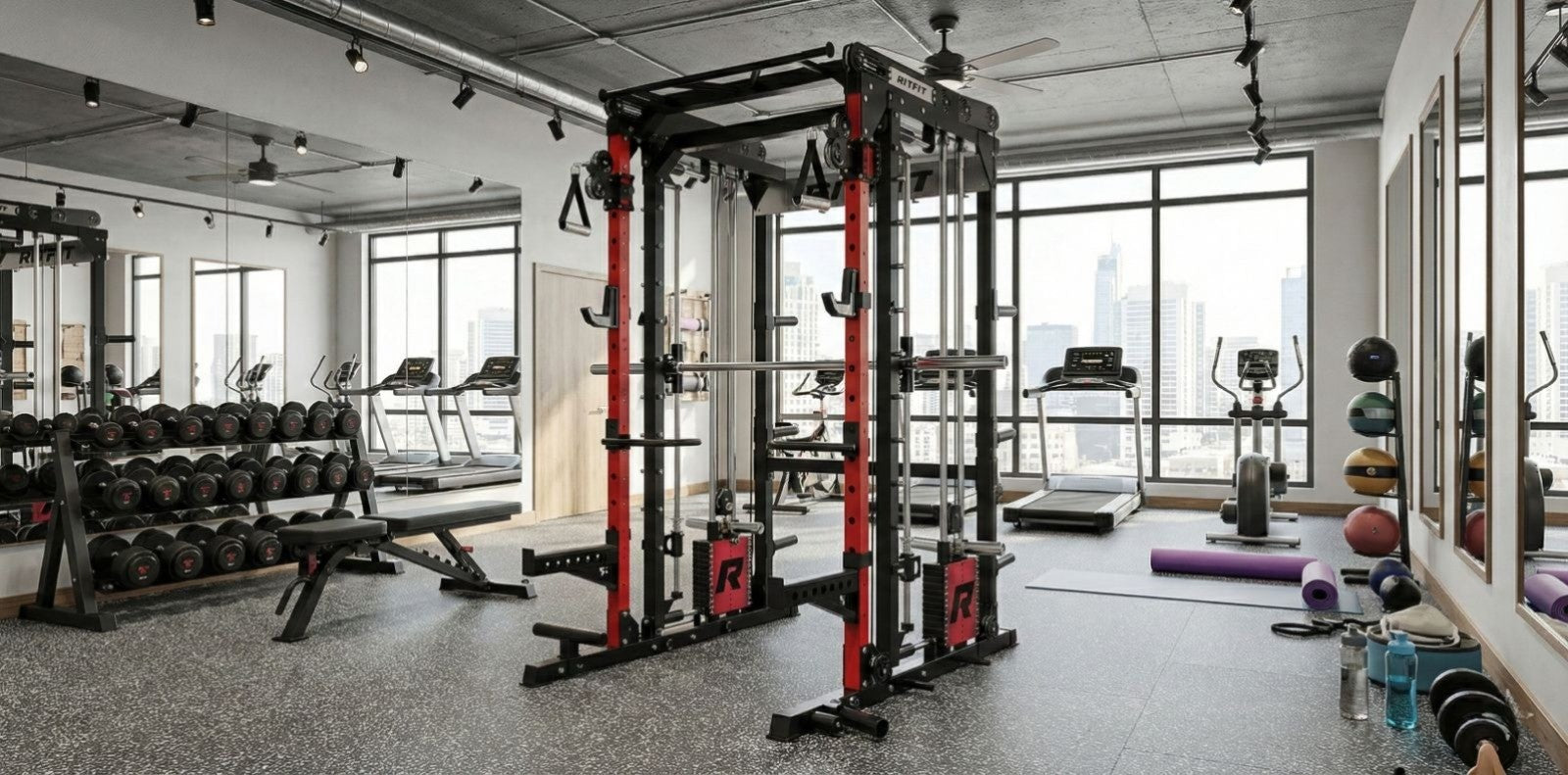
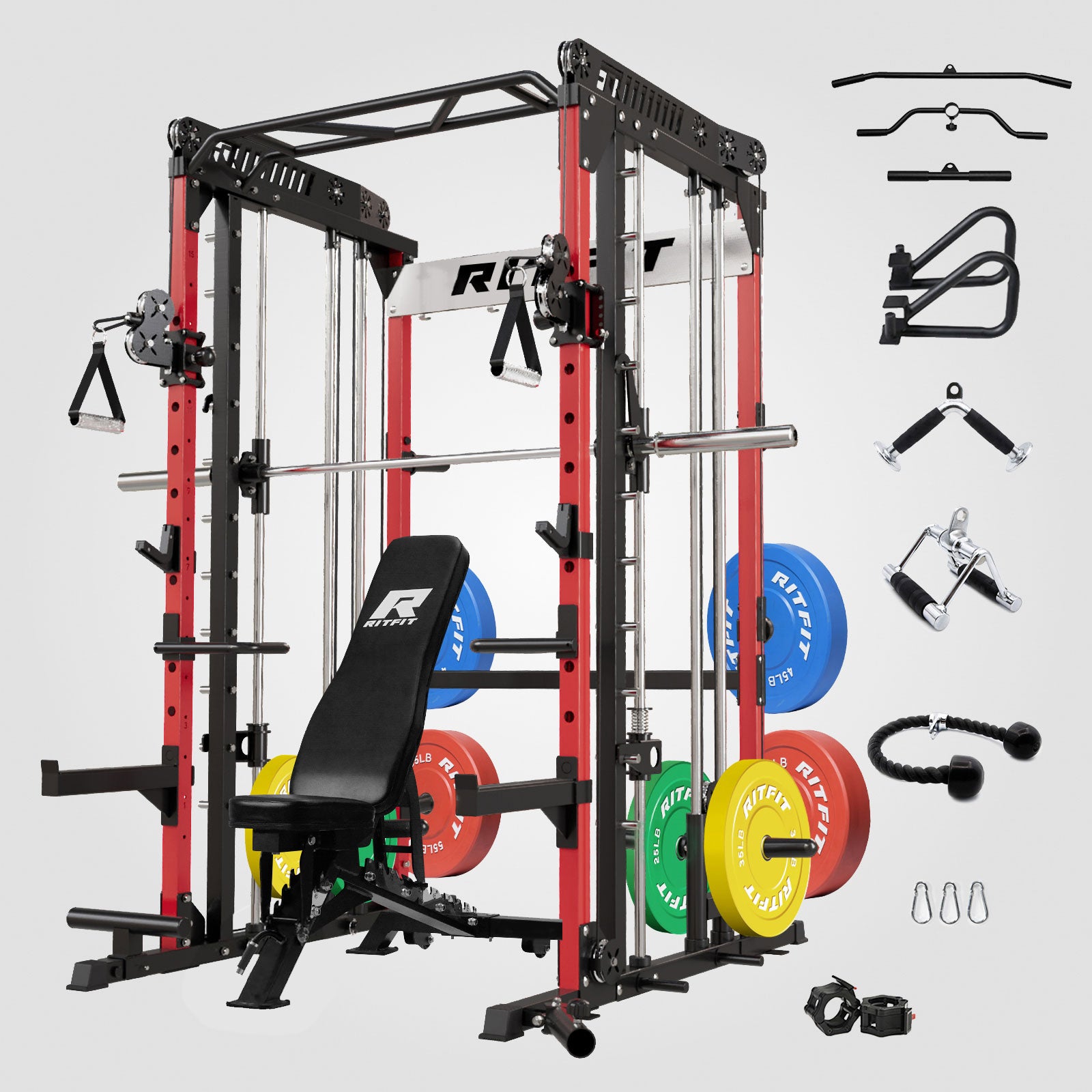
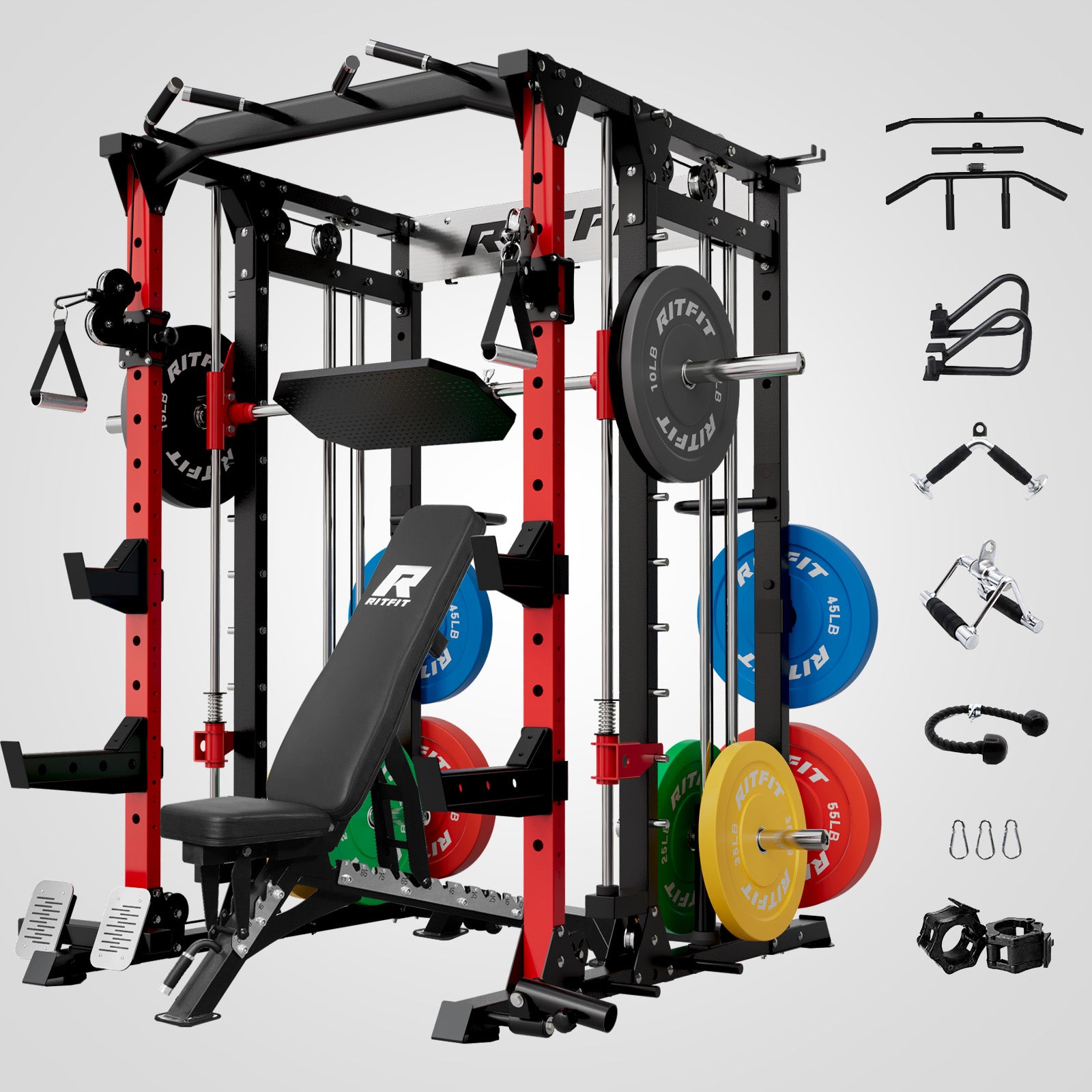
This guide walks you through the benefits, muscles worked, step by step technique, beginner and advanced routines, common mistakes, and how front squats compare to back squats, all from a safety first, coaching style perspective, including how to set up your Smith machine correctly on home systems like the RitFit M1 PRO and BUFFALO.
The Benefits of the Smith Machine Front Squat
Perfect Form, Less Risk
Build muscle and blast your legs
Less Stress on Your Knees
What Muscles Does The Front Squat Work
The Quadriceps Complex
- Vastus Medialis Oblique (VMO): The VMO is in charge of the last few degrees of knee extension and patellar tracking. It is also known as the "teardrop" muscle. The Smith machine lets you go deeper and bend your knees more sharply at the bottom of the movement (if your knees are healthy), which has been shown to make the VMO work harder. Bodybuilding coaches often use this move to work on the distal part of the quad.
- Vastus Lateralis: The vastus lateralis is the biggest head of the quadriceps and gives most of the power. A narrower stance, which the Smith machine's stability often makes easier, can make this outer head more likely to be used, which helps with the "sweep" of the thigh.
- Rectus Femoris: Unlike the vasti muscles, the rectus femoris crosses both the hip and the knee. In a squat where the hips are flexing (shortening the muscle at the hip) and the knees are flexing (lengthening the muscle at the knee), the rectus femoris often maintains a relatively constant length. However, the upright torso of the Smith front squat reduces the degree of hip flexion, potentially allowing the rectus femoris to operate in a more elongated state compared to a low-bar back squat, thereby increasing its contribution.
2. The Posterior Chain (Glutes and Hamstrings)
- Gluteus Maximus: The glutes are the main muscles that extend the hip, but the Smith machine front squat doesn't require as much hip flexion (hinging) as a back squat. In many cases, the lifter is told to keep their hips under their shoulders instead of pushing them back. So, the gluteal contribution is secondary; it only helps to extend the hips at the top of the movement instead of pushing the load out of the hole.
- Hamstrings: In a squat, the hamstrings act primarily as dynamic stabilizers for the knee (counteracting anterior tibial translation). Because the moment arm at the hip is short and the knee flexion is high, the hamstrings are in a mechanically disadvantaged position to contribute to lifting the weight. This "active insufficiency" is pronounced in the Smith front squat, making it a poor choice for hamstring development but an excellent choice for isolating the anterior thigh.
3. Thoracic Extensors and Core
- Thoracic Erector Spinae: The center of mass of the barbell is placed anterior to the spine. Gravity acts to flex the thoracic spine (pull the chest down). The thoracic extensors must contract isometrically with high intensity to maintain an upright posture. Failure here is often the limiting factor of the lift; if the chest drops, the leverage is lost, and the lift fails.
- Abdominal Wall: The rectus abdominis and obliques must brace to create intra-abdominal pressure (IAP). However, EMG studies suggest that the activation of trunk stabilizers is lower in the Smith machine compared to free weights because the machine prevents the torso from swaying.
| Muscle Group | Primary Function | Activation Level | Biomechanical Driver |
| Quadriceps (Vasti) | Knee Extension | Maximal | High degree of knee flexion; long internal moment arm. |
| Rectus Femoris | Knee Extension / Hip Flexion | High | Upright torso reduces active insufficiency at the hip. |
| Thoracic Erectors | Spinal Extension | High (Isometric) | Resisting the anterior load's flexion moment on the spine. |
| Gluteus Maximus | Hip Extension | Moderate | Reduced hip hinge mechanics compared to back squat. |
| Hamstrings | Knee Stabilization | Low | Shortened at the knee, reduced hip flexion demand. |
| Gastrocnemius | Ankle Stabilization | Low/Moderate | Reduced balance requirement compared to free weights. |
| Lumbar Erectors | Spinal Stabilization | Low/Moderate | Vertical torso aligns load with spinal column, reducing shear. |
How To Do Smith Machine Front Squats
Step 0: Set The Bar Height And Safeties
Set the bar so it sits at roughly the middle of your chest when you stand under it. This makes it easy to unrack and rerack without tiptoeing or crouching. Adjust the safety stops so they are just below the depth you plan to squat. When you sit into the bottom, the safeties should be there to catch the bar if you cannot stand back up. Practice rotating the bar forward and backward into the hooks with an empty bar so you know exactly how to lock it back in place if something feels off.
Step 1: Set Up at the Smith Machine
Step 2: Position the Bar
Step 3: Establish Your Stance
Step 4: Descend with Control
Step 5: Drive Back Up
If you're ready to build a stronger, more complete leg routine, don’t miss our guide to the best smith machine squat exercises
Beginners' Smith Machine Front Squat Routine
When you are new to front squats, the goal is clean, repeatable technique with a weight you can control on every single rep. Start lighter than you think you need, build good habits, then slowly increase the load over several weeks.
Beginner Foundation (Weeks 1–4)
Warm-up
- 5 to 10 minutes of light cardio such as brisk walking, cycling, or marching in place.
- 1 to 2 sets of bodyweight squats and hip hinges to wake up your hips and knees.
Main sets
- Smith machine front squat: 3 sets of 10 to 12 reps with a light to moderate weight.
- Rest 60 to 90 seconds between sets.
- Focus on controlled lowering, steady breathing, and consistent depth rather than chasing heavier plates.
Cool-down
- 2 to 3 short stretches for your quads, hamstrings, and glutes, holding each for 20 to 30 seconds.
- Easy walking or gentle movement for a few minutes to let your heart rate settle.
Do this routine 1 to 2 times per week on non-consecutive days. When all sets feel smooth, you can add a small amount of weight the following week.
Muscle-Building Front Squat Routine
If your main goal is muscle size and definition in your quads and glutes, try this structure once you are comfortable with the basic pattern:
- Smith machine front squat: 4 sets of 8 to 10 reps
- Rest 90 to 120 seconds between sets
- Tempo: about 2 to 3 seconds down, 1 second pause, 1 to 2 seconds up
- Frequency: 1 to 2 times per week, paired with leg presses or lunges on the same day
Choose a weight that leaves you with 1 to 2 reps “in the tank” at the end of each set, rather than pushing to complete failure.
Strength-Focused Front Squat Routine
For lifters chasing heavier numbers and stronger legs, you can use slightly lower reps and heavier loads:
- Smith machine front squat: 4 to 5 sets of 3 to 5 reps
- Rest 2 to 3 minutes between sets
- Focus on powerful but controlled drives up from the bottom
- Add accessory posterior-chain work such as Romanian deadlifts or leg curls in the same workout
Make sure your technique stays tight on every rep. If your form breaks down, drop the weight and rebuild. Strength gains come from quality plus consistency, not from grinding ugly reps.
Technique and Joint-Friendly Option
If you are returning from a layoff, have mild joint sensitivity, or simply want a lighter day between heavy sessions, use a technique-focused approach:
- Smith machine front squat: 3 to 4 sets of 6 to 8 reps with a light to moderate load
- Use a slower tempo on the way down and a brief pause at the bottom
- Focus on knee tracking, depth, and a strong brace rather than load
If you have current knee, hip, or back pain, or a recent injury or surgery, talk to a qualified healthcare professional before starting or progressing any squat program.
5 Common Smith Machine Front Squat Mistakes
Bad posture and leaning too far forward
If your chest collapses and you lean forward, the bar tries to roll off your shoulders, forcing your lower back to work harder. This takes tension off your quads and makes the lift feel unstable.
Fix it:
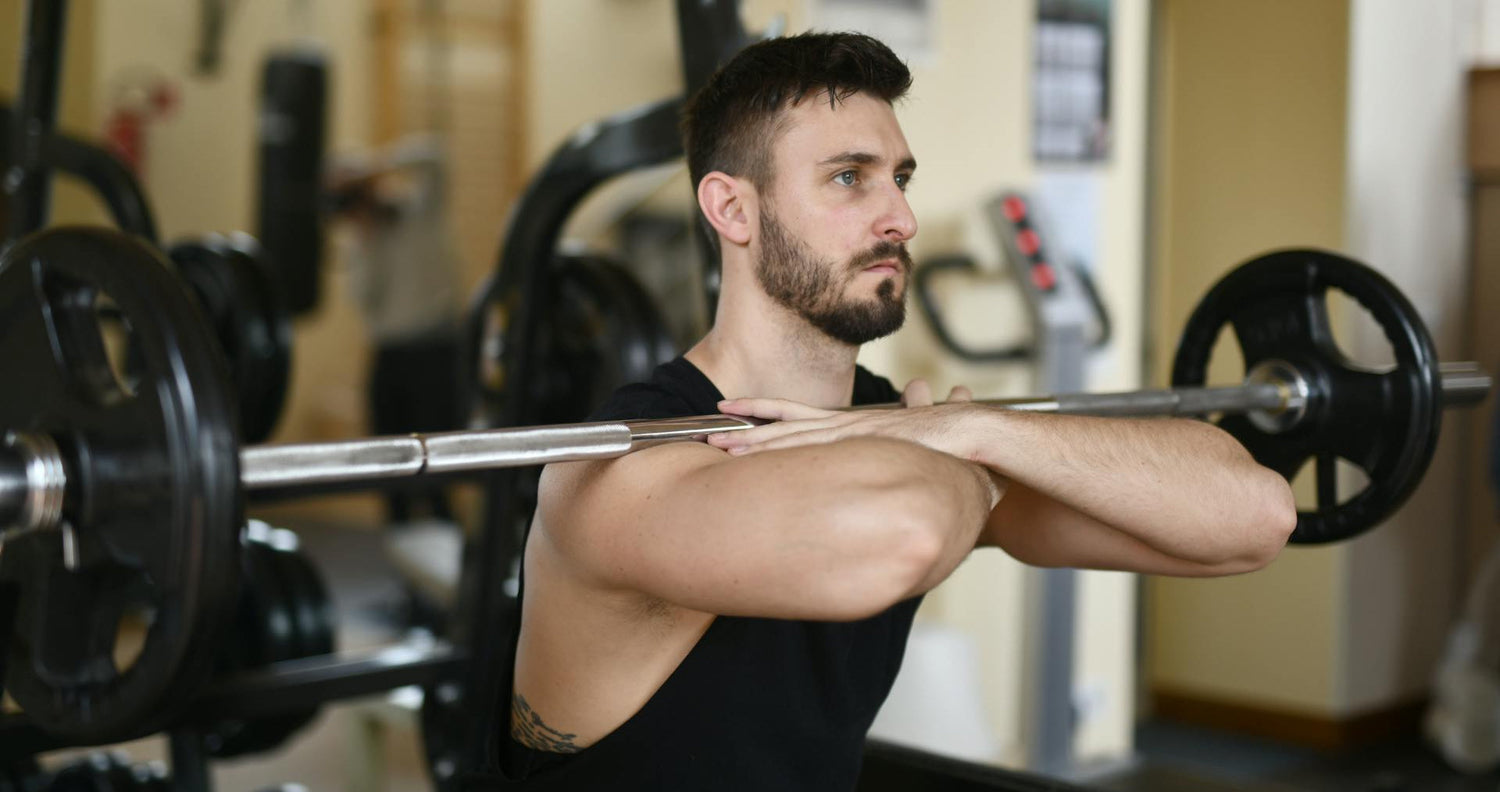
- Keep your elbows pointed forward and high for the entire rep.
- Think “chest up, ribs down” and brace your abs before you move.
- Use a slightly lighter weight until you can keep a tall torso consistently.
Dropping Too Quickly and Rushing the Squat
Crashing into the bottom of the squat may feel easier in the moment, but it spikes stress on the knees and hips and makes it harder to stay tight. It also makes it more likely that you will lose position and need the safeties.
Fix it:
- Use a controlled 2 to 3 second lowering phase.
- Imagine riding an elevator down smoothly, not falling down a flight of stairs.
- If you cannot control the descent, reduce the weight until you can.
Not Going Deep Enough
Cutting your depth too high keeps you away from the toughest part of the movement and shortchanges the quads and glutes. You may move more weight, but your muscles and joints do not get the full benefit.
Fix it:
- Aim for your thighs to reach at least parallel to the floor while keeping your heels down and your knees in line with your toes.
- Set the safeties just below this depth as a visual target.
- If mobility is limiting you, add some ankle and hip mobility work to your warm-up.
Poor Foot Placement and Balance
Feet that are too narrow, too wide, or set directly under the bar can make you feel unstable and can irritate your knees or hips. On a Smith machine, you have the advantage of sliding your feet slightly forward to find a comfortable, repeatable stance.
Fix it:
- Start with feet about shoulder-width apart and toes slightly out.
- Slide your feet a little forward so your shins do not slam forward at the bottom.
- Keep your weight centered over the middle of your foot throughout the rep.
Letting Your Elbows Drop
When your elbows drop, the bar rolls forward, your chest falls, and your lower back picks up extra load. This often happens as you fatigue or when the weight is too heavy for your upper-back strength.
Fix it:
- Think “elbows to the horizon” before every rep.
- Use a grip or strap variation that lets you keep your elbows higher.
- Stop your set one or two reps before your form starts to break down.
Tips for the Better Smith Machine Front Squat
Get your knees and feet in the right position
Keep your elbows up and your torso straight
Keep an eye on how your neck is positioned
Footwear And Heel Elevation
Your shoes matter for front squats. A flat, stable sole or a lifting shoe with a small built in heel can both work well. If your ankles are tight and you struggle to hit depth with an upright torso, try placing a small wedge or a pair of weight plates under your heels. This heel elevation can help you sit deeper while keeping your chest up and your balance over the middle of your foot.
Breathing And Bracing
Good breathing and bracing are your built in weight belt. Before each rep, take a deep breath through your nose into your belly and sides, then gently tighten your midsection as if preparing for a light punch. Hold most of that pressure as you descend and start to stand, then exhale as you pass the hardest point. This simple pattern protects your spine and helps you transfer power from your legs into the bar.
What Makes the Back and Front Squat Different?
Patterns of Muscle Activation
Things to Think About
Joint Health and Safety Factors
How to Make It Work for You
Smith Machine Front Squat Variations
Once you are comfortable with the basic Smith machine front squat, you can use simple variations to target different goals, challenge your muscles in new ways, and keep your training fresh.
Heels Elevated Smith Front Squat
Place a wedge, slant board, or a pair of small plates under your heels and perform your front squats as usual. The extra heel lift lets your knees travel farther forward and puts even more emphasis on your quads, often with a more upright torso. This is a great choice for lifters who want maximum quad development and do not have ankle mobility for deep flat foot squats.
Paused Smith Front Squat
In the paused variation, you lower into the bottom position, then hold for one to two full seconds before driving back up. The pause removes the stretch reflex and forces your muscles to work harder from a dead stop. It also teaches you to stay tight and balanced at the bottom, which carries over to heavier regular front squats.
Tempo Smith Front Squat
With tempo front squats, you deliberately slow down the lowering phase and sometimes the way up. For example, you might use a three second descent, a one second pause, and a two second ascent. This builds control, time under tension, and joint friendly strength, especially for lifters who tend to rush or bounce out of the bottom.
Narrow Stance Smith Front Squat
Bringing your feet a little closer together shifts even more work to the outer quads and can be a good option for lifters who feel more stable in a narrower stance. Keep your toes slightly out and your knees tracking over them. Use lighter weights at first until you know how your hips and knees respond to the new stance.
Final Thoughts
Whether you are learning to squat for the first time or looking for a safer way to chase serious leg gains in your home gym, the Smith machine front squat is a powerful tool. It lets you build your quads, glutes, and core with a stable bar path, adjustable safeties, and less worry about balance, especially on all-in-one systems like the RitFit M1 PRO and BUFFALO.
Important disclaimer: This article is for general educational purposes only and is not medical advice. If you have shoulder, neck, back, elbow, or wrist pain, a recent injury or surgery, numbness or tingling, unexplained weakness, or dizziness, consult a qualified clinician before starting. Stop any exercise that causes sharp pain.
References
- Bautista D, Durke D, Cotter JA, Escobar KA, Schick EE. A comparison of muscle activation among the front squat, overhead squat, back extension and plank. Int J Exerc Sci. 2020;13(1):714-722. doi:10.70252/BTUH3630
- Schwanbeck S, Chilibeck PD, Binsted G. A comparison of free weight squat to Smith machine squat using electromyography. J Strength Cond Res. 2009;23(9):2588-2591. doi:10.1519/JSC.0b013e3181b1b181
Smith Machine Front Squat FAQ
Which way to face on Smith machine for front squat?
Face outward (away from the machine) for most setups, because it usually lets the bar track more naturally over your midfoot and keeps your torso tall. If the rails are angled and the bar drifts away from your body, turn around and use the direction that keeps the bar closest to your throat-to-midfoot line with a stable, pain-free squat.
Is the Smith machine front squat good for beginners?
Yes. The fixed bar path and built in safeties make the Smith machine front squat a friendly way for beginners to learn the squat pattern. You can focus on your stance, depth, and breathing without worrying as much about balance or reracking a free barbell.
Is the Smith machine front squat bad for your knees?
Not if you use good technique and appropriate loads. Keep your knees tracking over your toes, control the lowering phase, and avoid bouncing at the bottom. If you already have knee pain or a recent injury, check with a healthcare professional before you start or increase your squat work.
Can I replace back squats with Smith machine front squats?
You can build strong, muscular legs with Smith machine front squats as your main squat, especially if you also do hip dominant exercises like Romanian deadlifts or hip thrusts. Back squats are still valuable, but they are not mandatory for every lifter or every training phase.
How often should I do Smith machine front squats each week?
Most lifters progress well with 1 to 2 Smith machine front squat sessions per week. Beginners may start with one day to practice technique, while more experienced lifters might use a heavier day and a lighter, higher rep or tempo focused day.
What is the difference between Smith machine and free barbell front squats?
Free barbell front squats require more balance and overall stability. Smith machine front squats reduce the balance demands and allow you to focus more on driving through your legs and refining technique. Both can be effective. The best choice depends on your equipment, skill level, and comfort.
Do I need lifting shoes for Smith machine front squats?
You do not need lifting shoes, but many lifters enjoy the stable base and slight heel lift they provide. If you squat in flat shoes and struggle with depth, you can also try placing a small wedge or plates under your heels to see if that improves your position.