Table of Contents
- What Is the Smith Machine Overhead Press?
- Setup: How to Position Yourself Correctly
- Step-by-Step: How to Do the Smith Machine Overhead Press
- Common Mistakes and How to Fix Them
- Programming the Smith Machine Overhead Press
- Variations of the Smith Machine Overhead Press
- How to Warm Up for the Smith Machine Overhead Press
- Safety Tips and Who Should Be Cautious
- How to Integrate It into Your Workout
Important disclaimer: This article is for general educational purposes only and is not medical advice. If you have shoulder, neck, back, elbow, or wrist pain, a recent injury or surgery, numbness or tingling, unexplained weakness, or dizziness, consult a qualified clinician before starting. Stop any exercise that causes sharp pain.
Ready to build strong, sculpted shoulders with precision and control? The smith machine overhead press is a fantastic exercise that offers a unique blend of stability and effectiveness, making it a valuable addition to almost any workout routine. Whether you're a beginner looking to learn the movement safely or an experienced lifter aiming for targeted muscle growth, understanding how to properly execute this press can unlock significant gains.
In this comprehensive guide, we'll break down everything you need to know about the smith machine overhead press – from correct setup and step-by-step execution to common mistakes and how to program it for your specific goals. Get ready to elevate your shoulder training!
Key Takeaways
- The smith machine overhead press is best suited for lifters who want stable, repeatable shoulder loading with reduced balance demands.
- It primarily targets the front and side deltoids, with triceps assisting through elbow extension.
- Proper setup matters more than load; incorrect bar position or excessive lower-back arching are the most common mistakes.
- Compared with free-weight overhead presses, the Smith version excels for hypertrophy, technique practice, and training alone.
- If you experience sharp shoulder pain, pinching, or worsening discomfort, this movement should be modified or avoided.
What Is the Smith Machine Overhead Press?
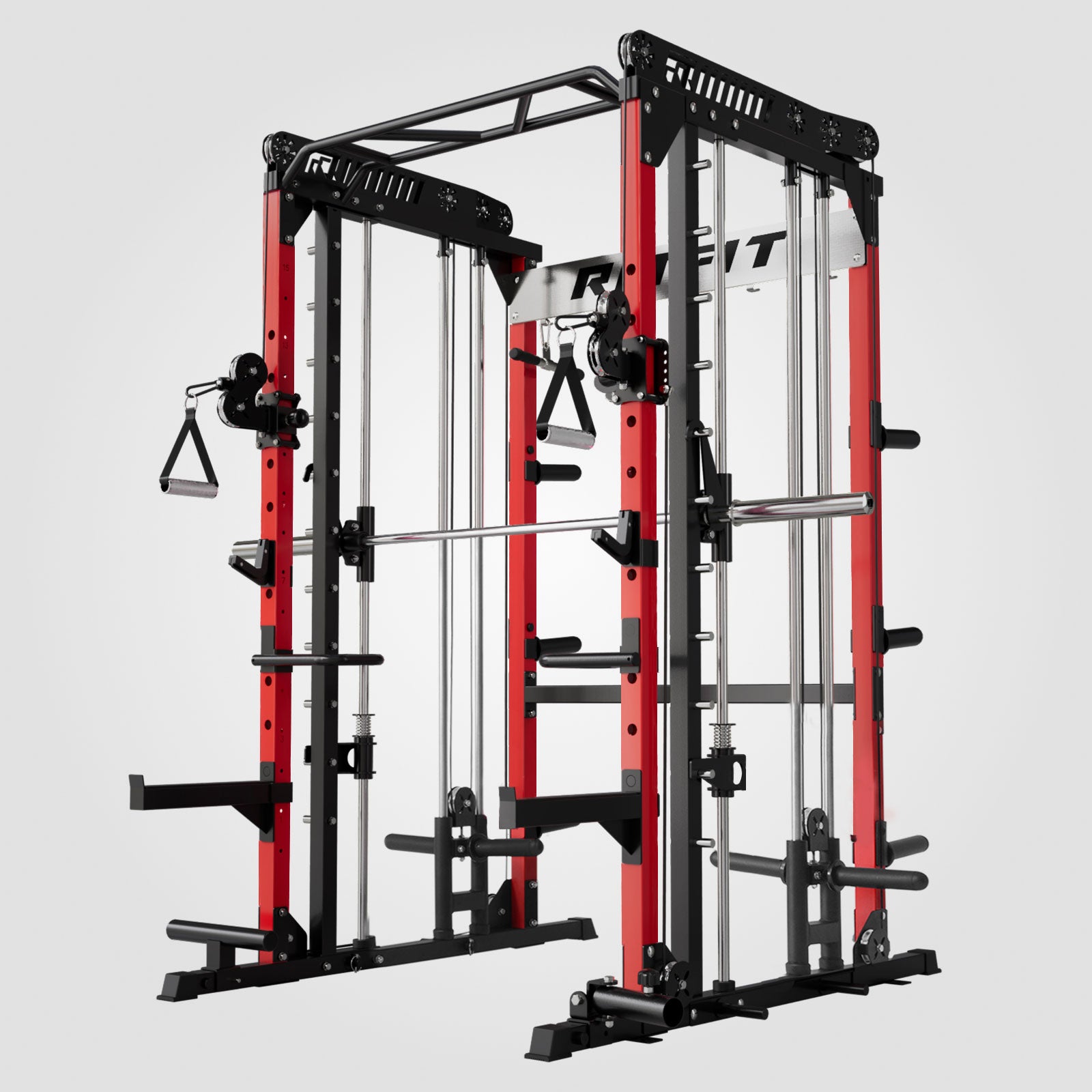
The smith machine overhead press is a vertical pressing exercise performed using a Smith machine, which features a barbell fixed within steel rails, allowing only vertical movement. This guided path is its defining characteristic, offering a consistent and predictable bar path.
Primary Muscles Worked:
- Deltoids: Primarily targets the anterior (front) and medial (side) deltoids, which are crucial for shoulder width and definition.
- Triceps: Act as secondary movers, assisting in extending the arms overhead.
- Upper Chest: Engaged to a lesser extent, especially at the bottom of the movement.
Benefits vs. Free-Weight Overhead Press:
While free-weight overhead presses (like with dumbbells or barbells) demand more stabilizer muscle engagement, the smith machine overhead press shines in other areas:
- Guided Bar Path: Provides exceptional stability, making it easier to focus on muscle activation and technique without worrying about balancing the bar. This is particularly beneficial for beginners or those training alone.
- Easier to Re-Rack: The Smith machine's hooking system allows for quick and safe re-racking at any point in the movement, reducing the risk of being pinned by the weight.
- Useful for Technique and Hypertrophy: The controlled movement allows for precise targeting and constant tension. Additionally, research shows the fixed path can increase triceps activation during the lockout phase compared to free-weight variations.
Setup: How to Position Yourself Correctly
Proper setup is paramount for the effectiveness and safety of the smith machine overhead press. Take your time to get each element right.
Equipment and Machine Settings
- Smith Machine Bar Height: Adjust the bar so that it's around your upper chest or shoulder height when you're in your starting position (seated or standing). You should be able to unrack it with a slight upward push and twist.
-
Bench or Standing:
- Seated Variation: Use an upright bench set at a 90° angle. Position it so the bar is directly above or slightly in front of your shoulders.
- Standing Variation: Stand with a stable stance, positioning yourself so the bar is aligned with your mid-foot when looking down.
- Safety Stoppers (if available): Always set the safety stoppers just below the bottom of your intended range of motion. This provides a critical safety net if you fail a rep.
Grip and Hand Placement
- Grip Width: A good rule of thumb is slightly wider than shoulder width. When you're at the bottom of the press, your forearms should be roughly perpendicular to the floor.
- Grip Type: Use an overhand (pronated) grip, ensuring your thumbs are wrapped securely around the bar. This is essential for safety.
- Wrist and Forearm Alignment: Keep your wrists stacked directly over your elbows throughout the movement. Maintain a neutral wrist position to avoid excessive bending, which can cause discomfort or injury.
Body Position
- Head and Torso: Maintain a neutral spine, keeping your chest up and your core braced. Avoid excessive arching or rounding of your back.
- Shoulder Position: Keep your shoulders "packed" – pulled down and back slightly. Avoid shrugging your shoulders upwards at the start of the movement.
-
Lower Body:
- Seated: Plant your feet flat on the floor, creating a stable base. Avoid letting your feet dangle or push off the floor.
- Standing: Position your feet about hip-width apart, with a slight bend in your knees. Balance your weight evenly across your feet.
Step-by-Step: How to Do the Smith Machine Overhead Press
Executing the smith machine overhead press with precision will maximize its benefits. Follow these steps for a perfect press.
Starting Position
- Position Yourself: Sit or stand under the bar, ensuring it's directly over your upper chest or collarbone line.
- Grip and Unrack: Grip the bar with your pre-determined width. To unrack, push the bar up slightly and rotate it to unlock the safety hooks.
- Brace and Stabilize: Take a deep breath, brace your core tightly as if preparing for a punch, and stabilize your shoulder blades by pulling them down and back.
The Press (Concentric Phase)
- Press Upward: Press the bar straight up along the Smith machine's guided track. Focus on driving the bar directly overhead.
- Elbow Position: Keep your elbows tracking under the bar and avoid letting them flare excessively out to the sides.
- Exhale: Exhale steadily as you push the bar through the movement.
- Top Position: Press until your arms are nearly fully extended. You can stop just before locking out to maintain continuous tension on the shoulders, depending on your goal.
The Lowering (Eccentric Phase)
- Inhale and Lower: Inhale as you slowly and deliberately lower the bar back down to the starting position. Control the weight throughout the entire descent.
- Bar Depth: Bring the bar down to approximately chin to upper-chest level, or within a comfortable range of motion that doesn't cause shoulder discomfort.
- Maintain Form: Keep your forearms vertical and avoid letting your elbows drift too far forward or back.
- Repeat: Briefly pause at the bottom without bouncing, then initiate the next rep.
Re-Racking the Bar
- At the End of Your Set: After completing your final rep, press the bar all the way to the top of its path.
- Re-Engage Hooks: Rotate the bar in the opposite direction to re-engage the safety hooks securely onto the frame.
- Release Grip: Only release your grip once you are certain the bar is safely racked.
Common Mistakes and How to Fix Them
Even with the guided path of the Smith machine, certain errors can reduce effectiveness or increase injury risk. Be aware of these common pitfalls when performing the smith machine overhead press.
-
Using Too Much Weight
- Problem: Leads to a compromised range of motion, often causing excessive arching in the lower back or struggling to complete full reps.
- Fix: Reduce the load significantly. Prioritize performing full, controlled repetitions with perfect form over lifting heavy weight.
-
Excessive Lower-Back Arching
- Problem: Compensating for weak shoulders or poor core stability by hyperextending the lumbar spine, which can lead to lower back pain.
- Fix: Actively brace your core, squeeze your glutes, and try to keep your ribcage stacked over your pelvis. Focus on maintaining a neutral spine throughout the movement.
-
Bar Path Too Far in Front or Behind
- Problem: Although guided, some setup issues can still create an inefficient or unsafe bar path, leading to unnecessary shoulder strain.
- Fix: Adjust your bench position carefully. Because the Smith machine lacks a "natural" J-curve bar path, incorrect bench alignment can disrupt the scapulohumeral rhythm, leading to shoulder impingement.
-
Flaring Elbows Too Wide
- Problem: Puts increased stress on the shoulder joint and can reduce the target muscle activation.
- Fix: Keep your elbows slightly tucked and in front of the bar, rather than letting them go directly out to the sides. Imagine your elbows pointing slightly forward.
-
Partial, Uncontrolled Reps
- Problem: Limits muscle activation and growth, and increases the risk of injury due to lack of control.
- Fix: Use a controlled tempo on both the pressing and lowering phases, ensuring a consistent and pain-free range of motion for every repetition.
Programming the Smith Machine Overhead Press
How you integrate the smith machine overhead press into your routine depends on your specific training goals.
For Strength
- Sets/Reps: 3–5 sets of 3–6 repetitions.
- Rest: 2–3 minutes between sets to allow for adequate recovery and maximal effort on each set.
- Load: Aim for 75–90% of your estimated one-repetition maximum (1RM).
For Muscle Growth (Hypertrophy)
- Sets/Reps: 3–5 sets of 6–12 repetitions.
- Rest: 60–90 seconds between sets to create a metabolic stress suitable for growth.
- Focus: Concentrate on a controlled tempo and pushing to near-muscular-failure within the target rep range.
For Endurance or Light/Recovery Days
- Sets/Reps: 2–3 sets of 12–20 repetitions.
- Rest: 45–60 seconds.
- Load: Use a light to moderate load, prioritizing perfect form and higher volume.
Variations of the Smith Machine Overhead Press
The stability of the Smith machine allows for various subtle adjustments that can shift emphasis or increase challenge.
-
Seated Smith Machine Overhead Press
- This variation further isolates the shoulders by minimizing leg drive and core involvement, allowing for a more focused attack on the deltoids.
-
Standing Smith Machine Overhead Press
- While still guided, the standing version requires more core engagement and full-body stabilization compared to seated, making it a more athletic press.
-
Behind-the-Neck Smith Machine Press (Advanced, Optional)
- This variation places more emphasis on the medial deltoid but requires significant shoulder mobility. Clinical evidence suggests this variation significantly increases external rotation stress and subacromial impingement risk compared to pressing in front of the face.
-
Wide-Grip vs. Narrow-Grip
- Wide Grip: Tends to place more emphasis on the lateral (side) deltoids.
- Narrow Grip: Can slightly increase activation of the front deltoids and triceps.
How to Warm Up for the Smith Machine Overhead Press
A proper warm-up prepares your body, reduces injury risk, and improves performance.
-
General Warm-Up:
- Begin with 5–10 minutes of light cardiovascular activity like cycling, treadmill walking, or rowing to increase blood flow and core body temperature.
-
Shoulder Mobility/Activation:
- Perform dynamic movements such as arm circles (forward and backward), band pull-aparts, and face pulls to activate the rotator cuff and improve shoulder mobility.
- Light dumbbell shoulder rotations can also be beneficial.
-
Specific Warm-Up Sets:
- Do 2–3 light sets on the Smith machine, gradually increasing the weight until you reach your working sets. For example, 10-12 reps with just the bar, then 8-10 reps with a light weight, then 5-6 reps with a moderate weight before your first working set.
Safety Tips and Who Should Be Cautious
Safety should always be your top priority when performing the smith machine overhead press.
- Use Safety Stops: If your Smith machine has adjustable safety stoppers, always use them. Set them just below your lowest point of motion to prevent the bar from crushing you if you fail a rep.
- Listen to Your Body: Never press through sharp pain in your shoulders, neck, or elbows. Stop the exercise immediately if you feel any acute discomfort.
- Existing Shoulder Injuries: If you have pre-existing shoulder injuries or mobility limitations, proceed with caution. You might need to limit your range of motion, opt for neutral-grip dumbbell pressing, or use other machine press alternatives. Consulting with a qualified professional is always recommended in such cases.
How to Integrate It into Your Workout
The smith machine overhead press can be a cornerstone of your upper-body training.
-
As a Main Compound Movement:
- On dedicated upper-body days.
- As part of a "push" day, focusing on chest, shoulders, and triceps.
- In shoulder-focused sessions, often after heavier free-weight presses or as a primary movement itself.
-
Example Push Day Order:
- Bench press or incline press (e.g., barbell or dumbbell)
- Smith machine overhead press
- Lateral raises (for side deltoids)
- Triceps isolation work (e.g., triceps pushdowns or overhead extensions)
Summary
The smith machine overhead press is an excellent exercise for developing strong and well-defined shoulders, offering a unique blend of stability, safety, and focused muscle activation. By following the guidelines for proper setup, execution, and programming, you can effectively incorporate this movement into your training regimen.
Remember to always start with a light weight, prioritize impeccable form, and progressively increase the load over time as your strength and confidence grow. With consistent effort and attention to detail, the smith machine overhead press can become a powerful tool in your pursuit of impressive shoulder development.
References
- Haugen ME, Vårvik FT, Larsen S, Haugen AS, van den Tillaar R, Bjørnsen T. Effect of free-weight vs. machine-based strength training on maximal strength, hypertrophy and jump performance - a systematic review and meta-analysis. BMC Sports Sci Med Rehabil. 2023;15(1):103. Published 2023 Aug 15. doi:10.1186/s13102-023-00713-4
- Krishnan R, Björsell N, Gutierrez-Farewik EM, Smith C. A survey of human shoulder functional kinematic representations. Med Biol Eng Comput. 2019;57(2):339-367. doi:10.1007/s11517-018-1903-3
- Ishii D, Kenmoku T, Tazawa R, et al. Limitation of the external glenohumeral joint rotation is associated with subacromial impingement syndrome, especially pain. JSES Int. 2021;5(3):430-438. Published 2021 Mar 29. doi:10.1016/j.jseint.2021.01.015