The Zercher squat is a front loaded barbell squat that builds strong legs, a braced core, and a powerful upper back. It is useful for lifters who want a tough squat variation without using a back squat or traditional front rack position.
This guide explains Zercher squat benefits, muscles worked, proper form, common mistakes, programming tips, and how to set it up safely in a home gym.
Key Takeaways
- The Zercher squat is a front loaded squat variation: The bar sits in the crooks of your elbows, so your legs, core, and upper back must work together.
- It is not just a leg exercise: Your quads, glutes, adductors, abs, obliques, spinal erectors, and upper back all contribute to the lift.
- It can be shoulder friendly: Zercher squats avoid the shoulder external rotation required by back squats and the wrist mobility required by front squats.
- It requires careful progression: Start light, use a stable rack setup when possible, and increase weight only when your bracing and elbow position stay consistent.
- It works best as a secondary squat variation: Most lifters should use Zercher squats to support back squats, front squats, deadlifts, or strongman style training.
What Is a Zercher Squat?
A Zercher squat is a barbell squat where the bar is held in the crooks of the elbows instead of on the back or shoulders. This position places the load in front of the body and forces the torso to stay braced and upright.
The movement is commonly linked to Ed Zercher, a St. Louis strongman from the 1930s. Today, it is used by strength athletes, home gym lifters, and strongman style trainees who want a front loaded squat that also challenges the core and upper back.
Why the Zercher Squat Feels Different
The Zercher squat feels different because the load sits in front of the torso and below the shoulders. This creates a strong anti flexion demand, meaning your core and upper back must resist being pulled forward throughout the rep.
Squat mechanics can change based on trunk position, stance, depth, and load placement, so the Zercher squat should be treated as its own movement rather than a direct copy of the back squat or front squat.[1]
Benefits of Zercher Squats
1. Strong Core Bracing
The Zercher squat trains your core to resist forward collapse under a front loaded bar. This makes it useful for lifters who want stronger bracing during squats, deadlifts, carries, and loaded home gym training.
2. Upright Squat Position
The front loaded bar often encourages a more upright torso than a traditional back squat. This can help many lifters feel the quads more clearly, but it still requires strong bracing and should not be treated as a low risk lower back exercise.
3. Quad, Glute, and Adductor Development
The Zercher squat can build the quads, glutes, and adductors because it combines deep knee flexion with strong hip extension. Hypertrophy focused resistance training depends on sufficient mechanical tension, progressive overload, and appropriate volume over time.[2]
4. Shoulder Friendly Loading
Zercher squats avoid the shoulder position needed for a back squat and the wrist position needed for a front squat. This makes the movement useful for lifters who cannot comfortably hold those bar positions.
5. Strong Carryover to Real World Lifting
The Zercher position resembles carrying a heavy object in front of the body. This can make it useful for strongman style training, odd object lifting, and athletes who need full body tension under awkward loads.
6. Useful for Home Gym Training
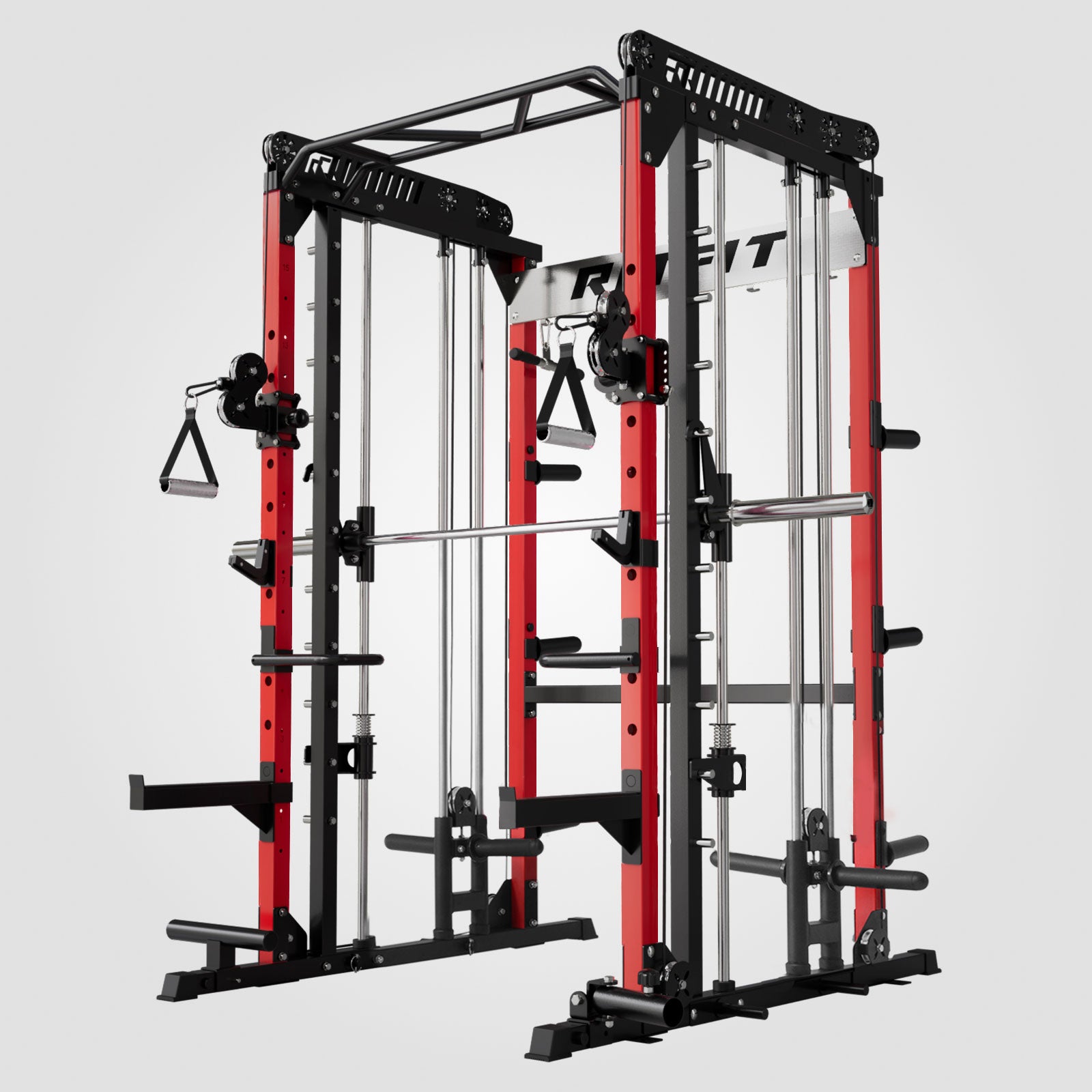
The Zercher squat needs only a barbell, plates, and ideally a rack. If you train alone, a stable power cage for barbell squats gives you a more repeatable setup than pulling every set from the floor.
Who Should Do Zercher Squats?
Zercher squats are best for lifters who want a front loaded squat that challenges the legs, core, and upper back at the same time. They are especially useful for home gym users, strongman style training, and lifters who dislike the front rack position.
- Good fit for: Lifters who want stronger quads, glutes, adductors, and core bracing.
- Good fit for: Home gym users with a barbell, plates, and an adjustable rack setup.
- Good fit for: Athletes who need front loaded carrying strength and trunk control.
- Use caution if: You have current elbow, biceps, wrist, shoulder, hip, knee, or lower back pain.
- Use caution if: You cannot keep your torso stable during goblet squats or front loaded carries.
Zercher Squat Muscles Worked
The Zercher squat works the lower body, trunk, and upper back together. The front loaded position increases the demand on bracing and posture while the squat pattern trains the hips, knees, and ankles.
- Quadriceps: The quads extend the knees and are heavily involved as you stand out of the bottom position.
- Glutes: The gluteus maximus helps extend the hips, especially when you squat deep and drive up from the bottom.
- Adductors: The inner thigh muscles assist hip extension and help control the legs in a wider stance.
- Hamstrings: The hamstrings assist hip extension and help stabilize the lower body during the lift.
- Core: The abs, obliques, and deep trunk muscles resist forward flexion under the front loaded bar.
- Spinal erectors: The erectors help keep the torso from rounding during the descent and ascent.
- Upper back: The traps, rhomboids, and rear shoulder muscles help hold the chest tall and the elbows high.
- Biceps and forearms: The arms hold the bar isometrically, but they should not curl the bar during the squat.
How to Do the Zercher Squat
Proper Zercher squat form starts with a stable setup and a load you can control. Use a rack based setup first if you are new to the movement.
- Step 1: Set the bar height: Place the bar around lower chest to upper abdomen height so you can wedge your elbows under it without rounding your back. If the bar is too low, the unrack will feel like a deadlift instead of a squat setup.
- Step 2: Cradle the bar: Position the bar in the crooks of your elbows and keep your forearms close together. You can clasp your hands, hold fist to fist, or keep one hand over the other.
- Step 3: Brace before unracking: Take a deep breath into your torso, tighten your abs, and stand tall to lift the bar out of the rack. Heavy resistance training often uses increased trunk pressure and bracing strategies to support high force efforts.[3]
- Step 4: Set your stance: Stand with your feet around shoulder width or slightly wider. Turn your toes out slightly if that helps your knees track comfortably.
- Step 5: Squat under control: Bend at the knees and hips while keeping the chest tall and elbows lifted. Descend until you reach a stable depth without losing your brace.
- Step 6: Drive up smoothly: Push through the midfoot and stand by extending the knees and hips together. Keep the bar close to your body and avoid letting your elbows drop forward.
Proper Zercher Squat Setup
A good setup makes the Zercher squat safer, cleaner, and easier to repeat. You need a barbell, weight plates, stable flooring, and preferably adjustable J hooks inside a rack.
- Rack height: Set the bar so you can get under it without shrugging or rounding. The right height lets you stand up with the bar in one controlled motion.
- Bar comfort: Use a towel, bar pad, or long sleeve layer if the pressure on your arms limits your form. Padding is optional, but it can help beginners tolerate the movement.
- Safety space: Keep the area around your feet clear before unracking. This matters more in compact garage gyms where plates, benches, and storage racks can crowd the lifting zone.
- Load selection: Start lighter than your back squat or front squat. The limiting factor is often bracing and elbow comfort, not leg strength.
- Training tools: Pair a 7FT Olympic barbell with Olympic weight plates for consistent loading.
Zercher Deadlift Variation
The Zercher deadlift starts with the bar on the floor instead of in a rack. It is more advanced than the rack based Zercher squat because you must wedge the arms under the bar while keeping the spine stable.
Use this variation only if you can hinge, squat, brace, and stand without rounding aggressively. If the floor setup feels forced, return to a rack setup or use a lighter front loaded exercise such as a goblet squat.
Common Zercher Squat Mistakes
1. Letting the Elbows Drop
Dropping the elbows usually pulls the torso forward and makes the squat harder to control. Keep your elbows lifted and think about holding the bar against your body instead of letting it drift away.
2. Starting Too Heavy
Going too heavy too soon often turns the Zercher squat into a rounded, uncomfortable grind. Start with light sets and build only when every rep looks the same.
3. Treating Elbow Pain as Normal
Pressure on the arms is common, but sharp joint pain is not something to ignore. Add padding, adjust the bar position, reduce load, or stop the exercise if pain persists.
4. Losing Core Tension
A weak brace lets the bar pull your upper body forward. Reset your breath before each rep and stop the set when your torso can no longer stay stable.
5. Pulling With the Arms
The arms should hold the bar in place, not curl it. Keep the hands connected and let the legs and hips drive the squat.
Zercher Squat vs Back Squat vs Front Squat vs Belt Squat
The Zercher squat is not better than every other squat variation. It is best understood as a front loaded tool that fills the gap between heavy barbell squats, front squats, and lower body accessories.
| Exercise | Best For | Main Challenge | Equipment Needed |
|---|---|---|---|
| Zercher Squat | Core bracing, quads, glutes, upper back, front loaded strength | Elbow pressure and torso stability | Barbell, plates, rack recommended |
| Back Squat | Maximum lower body strength and heavy loading | Shoulder mobility and spinal loading tolerance | Barbell, plates, rack |
| Front Squat | Quad strength, upright posture, Olympic lifting carryover | Wrist, lat, and front rack mobility | Barbell, plates, rack |
| Belt Squat | Leg training with reduced spinal loading | Requires a belt squat machine or rack attachment | belt squat attachment or dedicated machine |
If you want more guided lower body training, a hack squat rack attachment can complement Zercher squats by adding a more supported quad focused pattern.
Zercher Squat Programming
The Zercher squat works best when it has a clear job in your program. Use it as a secondary squat, strongman style lift, or bracing accessory instead of forcing it into every leg day.
- Strength accessory: Use 3 to 5 sets of 3 to 6 reps after your main squat or deadlift. Keep 1 to 3 reps in reserve so your brace stays strong.
- Hypertrophy work: Use 3 to 4 sets of 8 to 12 reps with controlled tempo. Moderate and heavy loads can both build muscle when effort and total training quality are managed well.[4]
- Core and conditioning: Use 2 to 4 sets of 10 to 15 reps with lighter weight. Stop the set as soon as your elbows drop or your torso folds forward.
- Strongman style training: Pair Zercher squats with carries, sandbag work, and deadlift variations. Keep technical quality high because awkward loaded positions can raise injury risk when fatigue is unmanaged.
- Beginner block: Practice once per week for 4 to 6 weeks using light loads. Progress by adding small weight jumps only after form stays consistent.
Sample Zercher Squat Workouts
Use these sample workouts as templates, not fixed prescriptions. Adjust load, volume, and exercise choice based on your experience, recovery, and available equipment.
Workout A: Strength Focus
Zercher squat 4 sets of 5, Romanian deadlift 3 sets of 8, Bulgarian split squat 3 sets of 10 per leg, plank 3 sets of 45 seconds.
Workout B: Posterior Chain Focus
Zercher deadlift 4 sets of 5, hip thrust 3 sets of 10, leg curl 3 sets of 12, farmer carry 3 rounds of 40 yards.
Workout C: Hypertrophy Focus
Zercher squat 3 sets of 10 to 12, goblet squat 3 sets of 12, walking lunge 3 sets of 20 steps, calf raise 3 sets of 15.
Equipment for Zercher Squat Training at Home
The best home gym setup for Zercher squats is a barbell, plates, and a power rack with adjustable J hooks. This lets you start from a controlled height instead of lifting every set from the floor.
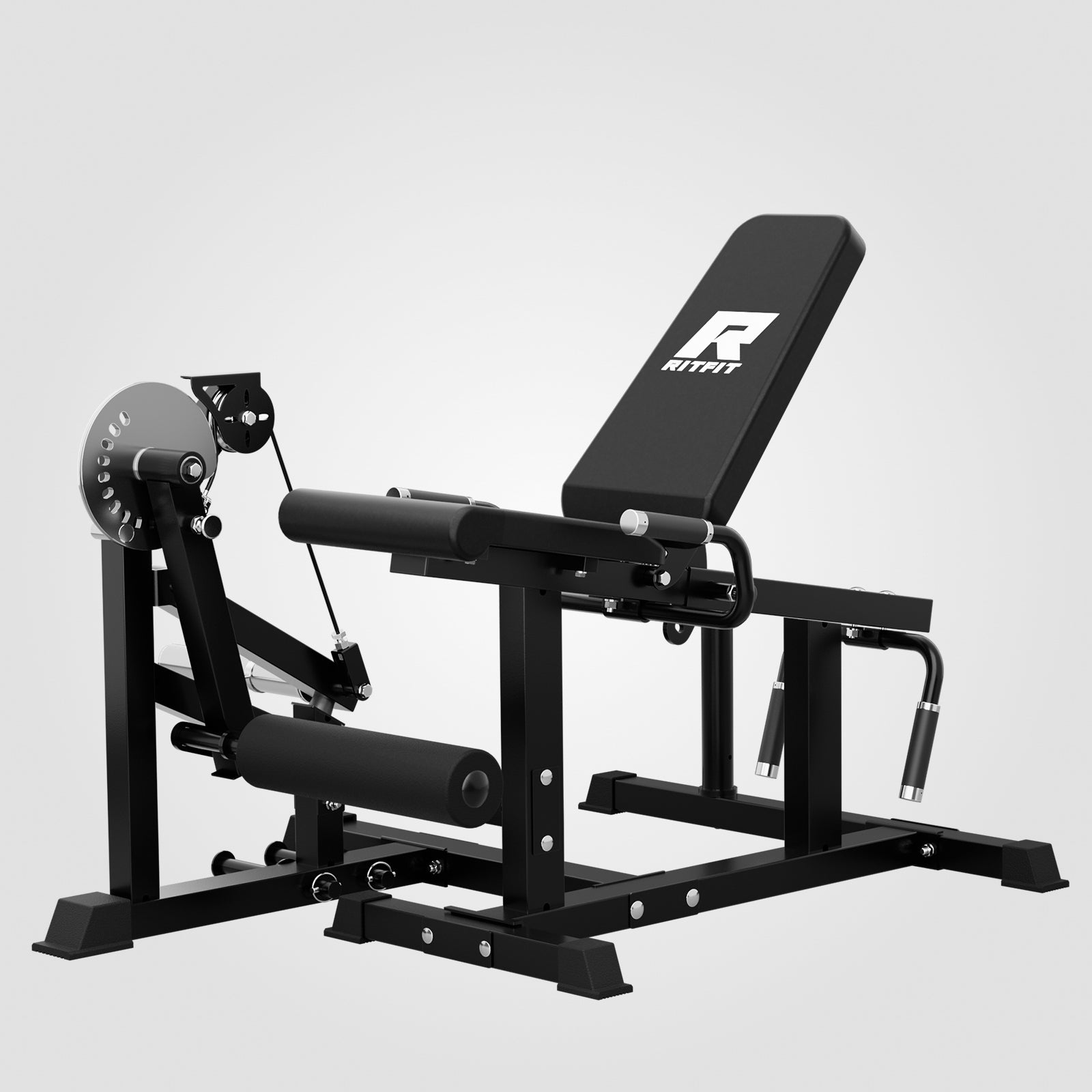
If you are building a complete strength space, pair your rack with rack attachments for home gyms, a stable adjustable weight bench, and organized plate storage so the lifting area stays clear.
A Smith machine for home gyms can support other squat and accessory patterns, but a classic Zercher squat is normally performed with a free barbell. Choose the setup that matches your space, training style, and comfort with solo barbell lifting.
Resistance training is generally safe when matched to the lifter, coached properly, and progressed intelligently, but injury patterns vary by training style and intensity.[5]
FAQs
Is the Zercher squat safe for beginners?
Yes. The Zercher squat can be safe for beginners when the load is light, the rack height is correct, and bracing stays solid. Beginners should master basic squat control first, then add weight slowly while keeping elbows high and the torso stable.
What muscles does the Zercher squat work?
The Zercher squat mainly works the quadriceps, glutes, adductors, core, and upper back. The front loaded bar position also challenges the biceps and forearms isometrically, because the arms must hold the bar in place while the trunk resists forward collapse.
How do I stop Zercher squats from hurting my elbows?
Use a bar pad, towel, or long sleeve layer, and keep the bar slightly above the elbow crease if direct pressure feels sharp. Start with lighter loads so your arms adapt gradually, and stop if you feel joint pain rather than normal pressure discomfort.
Can Zercher squats replace back squats?
No. Zercher squats can support a lower body program, but they should not automatically replace back squats for every lifter. Back squats usually allow heavier loading, while Zercher squats add more front loaded bracing demand and upper back challenge.
Should I do Zercher squats from the floor or a rack?
Most lifters should start from a rack because it gives a safer and more repeatable setup. Lifting from the floor requires more mobility, trunk control, and comfort in the elbow cradle, so it is better used after the rack version feels stable.
How much weight should I use for Zercher squats?
Start with the empty bar or a light load you can control for clean reps. Many lifters use less weight than their back squat, but the right load is the one that lets you keep your elbows high, brace hard, and stand without torso collapse.
Are Zercher squats good for home gyms?
Yes. Zercher squats are useful for home gyms because they need only a barbell, plates, and ideally a power rack. A rack based setup lets you train the movement safely without pulling every set from the floor or relying on a spotter.
Which is better, Zercher squat or front squat?
Neither exercise is universally better, because each solves a different training problem. Front squats are cleaner for Olympic lifting carryover, while Zercher squats are useful when wrist mobility limits the front rack and you want stronger bracing under a front loaded bar.
Conclusion
The Zercher squat is a tough front loaded squat that builds legs, core strength, and upper back tension in one movement. Use it as a smart accessory lift, start light, set the bar at a safe height, and treat clean technique as the first goal.
For home gym training, the safest path is a stable rack setup, a quality barbell, enough open floor space, and patient progression.
Disclaimer: This article is for general fitness education only and is not medical advice. If you have back, elbow, hip, knee, shoulder, blood pressure, pelvic floor, or cardiovascular concerns, consult a qualified healthcare or fitness professional before performing heavy Zercher squats or breath holding under load.
References
- Straub RK, Powers CM. A biomechanical review of the squat exercise, implications for clinical practice. International Journal of Sports Physical Therapy. 2024;19(4):490-501. doi:10.26603/001c.94600.
- Krzysztofik M, Wilk M, Wojdała G, Gołaś A. Maximizing muscle hypertrophy, a systematic review of advanced resistance training techniques and methods. International Journal of Environmental Research and Public Health. 2019;16(24):4897. doi:10.3390/ijerph16244897.
- Blazek D, Stastny P, Maszczyk A, Krawczyk M, Matykiewicz P, Petr M. Systematic review of intra abdominal and intrathoracic pressures initiated by the Valsalva manoeuvre during high intensity resistance exercises. Biology of Sport. 2019;36(4):373-386. doi:10.5114/biolsport.2019.88759.
- Schoenfeld BJ, Grgic J, Van Every DW, Plotkin DL. Loading recommendations for muscle strength, hypertrophy, and local endurance, a re examination of the repetition continuum. Sports. 2021;9(2):32. doi:10.3390/sports9020032.
- Serafim TT, de Oliveira ES, Maffulli N, Migliorini F, Okubo R. Which resistance training is safest to practice, a systematic review. Journal of Orthopaedic Surgery and Research. 2023;18(1):296. doi:10.1186/s13018-023-03781-x.