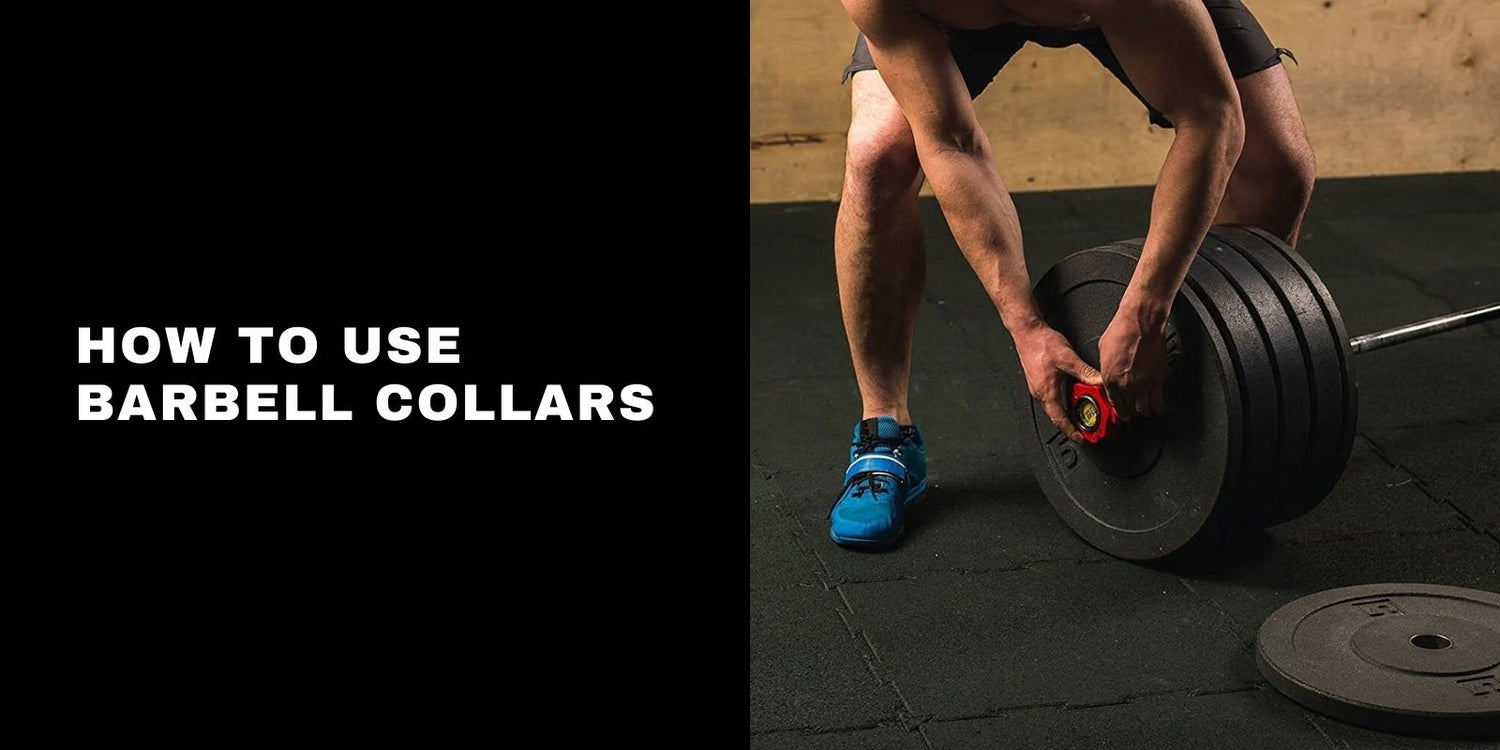
Barbell collars clamp weight plates onto a barbell's sleeves, and knowing how to use barbell collars safely keeps every lift stable and free of slipping plates. This guide covers the collar types, when to use them, and the step-by-step method for applying and removing them.
This guide is for home gym owners and general lifters training on Olympic or standard barbells. It covers spring, lock-jaw, screw-lock, and competition collars, the lifts where they are essential, common mistakes to avoid, and how to choose the right pair.
Quick Answer: To use barbell collars safely, match them to your bar sleeve, load plates evenly, slide each collar flush against the outermost plate, lock it fully, and tug-test both sides before lifting. Clamp and lock-jaw collars give the most secure hold for working sets, while spring collars are fine for light loads and quick changes.
Key Takeaways
- Bar stability: Barbell collars lock plates in place and stop them sliding, tipping, or falling off the bar mid-rep.
- Use them often: Fit collars on both sides for bench, overhead press, squats, deadlifts, and Olympic lifts.
- Sleeve match: Choose Olympic 2-inch (50 mm) collars for Olympic bars and 1-inch (25 mm) collars for standard bars.
- Clamp advantage: Lock-jaw clamp collars are the best all-around choice because they are fast to fit and very secure.
- Tug test: Before a heavy set, pull each collar and plate stack outward to confirm nothing moves.
What Are Barbell Collars and Why Do You Need Them?
Barbell collars are simple clamping devices that hold weight plates firmly against the sleeves of a barbell so the plates cannot slide, tilt, or fly off during an exercise. You need them because loose plates change the balance of the bar, make a lift feel unstable, and can drop off the end of the bar and injure you or anyone nearby.

Collars are used in every lifting environment, from home gyms to commercial fitness centers and official weightlifting competitions, because they are essential for maintaining balance and safety across a wide range of movements. A collar that fits correctly grips the sleeve tightly, spreads the clamping force across the plates, and stays put through the whole set.
Before buying or using collars, confirm they match your bar. Olympic barbells have a 2-inch (50 mm) sleeve diameter and need Olympic barbells compatible collars, while standard barbells use a 1-inch (25 mm) sleeve.
Specialty bars can have unusual diameters, so check the exact spec before you load. For technical details, see our Olympic barbell collar technical specification page.
What Types of Barbell Collars Are There?
There are four main types of barbell collars: spring collars, lock-jaw clamp collars, screw-lock collars, and competition collars, and they differ mainly in how secure they hold plates and how fast they are to apply. Clamp collars are the best all-around choice for most lifters, while competition collars are reserved for sanctioned lifting.
All of these styles fall under the broader category of barbell accessories, which also includes clips, clamps, and other bar hardware that keeps your training equipment working together safely.
| Collar Type | Best Use | Ease of Use | Security |
|---|---|---|---|
| Spring Collars | Light to moderate loads and quick plate changes | High | Moderate |
| Lock-Jaw Clamp | General training with moderate to heavy loads | High | High |
| Screw-Lock Spin | Threaded bars, maximum hold, fewer changes | Low to Moderate | Very High |
| Competition | Powerlifting and Olympic weightlifting meets | Moderate | Exceptional |
Comparison reflects common training use; always verify collar fit against your specific bar sleeve diameter.
Spring collars are the most common and cheapest option. You squeeze two handles to expand the coiled spring, slide it onto the sleeve, and release it to clamp down.
They are quick and inexpensive, but they offer less security than other types and can loosen during dynamic or heavy lifts.
Lock-jaw clamp collars use a hinged body and a locking lever. You open the lever, place the collar around the bar, and close it for a firm clamp.
They are very secure, durable, and still fast to use, which makes them the most popular choice for general lifting. The main downsides are a higher cost and the possibility that cheaper plastic models crack over time.
Screw-lock or spin-lock collars are built for threaded barbells, usually standard bars. You slide the collar on and twist a knob that presses it against the sleeve.
They deliver exceptional hold, but they are slower to fit and remove, and over-tightening can damage the bar threads.
Competition collars are the specialized, precision collars used in Olympic weightlifting and powerlifting. They are heavier, such as the 2.5 kg collars used in Olympic lifting, and are built to hold under extreme loads to federation standards.
They are the most secure and durable, but also the most expensive and rarely necessary for home or general fitness training.
When Should You Use Barbell Collars?
You should use barbell collars on almost every working set, because they prevent plates from shifting on any lift where the bar tilts, rotates, or is dropped. Fit collars on both sides for bench presses, overhead presses, squats, deadlifts, and Olympic lifts, and skip them only for very light warm-up sets when you still want to practice the habit.
- Bench press: Stops plates sliding off if the bar tilts, which can cause serious injury.
- Overhead press: Keeps the bar stable and plates in place during dynamic pressing.
- Squats: Prevents sudden weight shifts when you rack or unrack the bar.
- Deadlifts: Keeps plates snug so they do not rattle or slide during pulls and controlled drops.
- Olympic lifts (cleans, snatches, jerks): Essential because the explosive motion can easily dislodge plates. See our guide to the barbell snatch for technique details.
Research on resistance-training injuries reports that dropped weights and loose plates are a leading cause of gym accidents, which is why secure collars are central to safe barbell work [1][2]. Structured and supervised resistance training consistently shows low injury rates, and securing your equipment is part of that discipline [3][4].
Most gyms require collars for working sets, and every official weightlifting and powerlifting competition does too. If you train with a standard or barbells collection bar, always pair it with matching collars so the whole setup works as one safe unit.
One advanced exception is solo heavy squatting without safeties, where some lifters intentionally leave collars off to dump plates in an emergency, but this carries real risk and is not recommended for most people.
If you change loads often during a session, a fast collar makes a difference. Our guide to clips for barbell training explains how quick-release clips compare with standard collars for speed and security.
How Do You Use Barbell Collars Safely?
Using barbell collars safely is a five-step routine: check your bar and collar fit, load plates evenly, seat each collar flush against the outer plate, lock it fully, and pull-test both sides before your set. Follow the same sequence every time so it becomes automatic and you never miss a collar.

General Preparation
- Check sleeve diameter and collar compatibility: Olympic collars go on Olympic bars, and standard collars go on standard bars, so the fit is snug before you load anything.
- Inspect collars for damage or wear: Look for cracks, bent springs, and worn locking mechanisms that could fail mid-lift.
- Confirm plate center holes are sound: Worn plates with oversized holes will not be held securely even with collars.
Loading the Bar Correctly
- Place the bar on a stable rack or platform: A secure base makes loading balanced and safe.
- Slide plates on evenly from both sides: Load symmetrically so the bar stays balanced.
- Seat the first plate against the bar shoulder: There should be no gap between the inner plate and the sleeve's shoulder.
Applying Spring Collars
- Stand to the side of the bar for control.
- Squeeze the handles to open the spring wide enough to slide on.
- Push the collar in until it is firmly against the outermost plate.
- Release pressure so the spring clamps onto the sleeve.
- Pull the collar and plates outward to confirm nothing moves.
Applying Lock-Jaw Clamp Collars
- Open the hinge or release lever to expand the opening.
- Position the collar around the bar, flush with the outer plate.
- Close the lever until it clicks and locks fully.
- Tug on the collar and plates to confirm a tight fit.
- Adjust lever tension if your collar allows fine-tuning.
Applying Screw-Lock Collars
- Slide the collar onto the threaded end of the bar.
- Turn the screw or knob to press the collar against the outer plate.
- Tighten until snug, but never force it past comfortable resistance.
- Do a light test lift to confirm the plates stay put.
Removing Barbell Collars Safely
- Return the bar to the rack or floor with control after your set.
- Release the collar by type: squeeze spring handles, open a clamp lever, or unscrew a spin-lock knob.
- Remove collars before unloading, one side at a time: this stops plates sliding off unexpectedly or the bar becoming unbalanced.
"Collars are designed to keep the plates from sliding off of the barbell sleeves. That's all they are for. If the plates are not sliding off, you don't need collars."
Mark Rippetoe, Strength Coach and Author of Starting Strength, Starting Strength
What Mistakes Should You Avoid With Barbell Collars?
Even with the right collars, small errors can ruin their grip, so avoid these common mistakes: mismatched diameters, gaps between the collar and plates, one-sided collars, relying on tight plates alone, and over-tightening screw collars. Correct each of these before you start your set.
- Using the wrong bar diameter: An Olympic collar on a standard bar, or the reverse, will not grip and offers no security.
- Leaving a gap between collar and plates: The collar must sit flush against the outer plate for maximum hold.
- Securing only one side: Loading both sides but clamping one creates a dangerous imbalance.
- Relying on friction instead of collars: Even tight plates can shift when the bar is dropped or tilted.
- Skipping collars on explosive lifts: Cleans and snatches absolutely require them.
- Over-tightening screw collars: Tighten until snug, not until the threads are stressed.
- Using cracked or damaged plastic collars: A failed collar mid-lift can cause plates to drop. Inspect them regularly.
How Do You Choose the Right Barbell Collars?
Choose barbell collars by matching your training style, your bar and plate sizes, and your budget, with clamp collars as the most reliable default for general lifting. If you compete, match the collar type required by your federation, and if you change weights frequently, favor quick-release styles.
- Training style: Powerlifters should prioritize maximum security with clamp or competition collars; Olympic lifters need quick release plus strong grip; general fitness lifters can use spring or clamp collars.
- Bar and plate types: Verify compatibility with the barbells you use most often, such as a 7 ft Olympic barbell or a shorter women's Olympic barbell.
- Budget and durability: Higher-quality collars last longer and hold more securely, especially for heavy home gym use.
- Speed of change: If you swap weights often, spring or clamp collars are faster than screw-lock types.
- Competition rules: If you compete, check whether a specific approved collar type is required.
For heavy deadlift and squat sessions, pair your collars with a RitFit deadlift jack barbell stand to load and unload plates safely, and keep your plate storage organized with barbells and weight plates from the same collection.
FAQs About Using Barbell Collars Safely
Do I really need barbell collars for every set?
Yes, for almost every working set.
Collars keep plates from sliding and dropping, which protects you and anyone nearby.
Use them on both sides for bench presses, squats, deadlifts, overhead presses, and Olympic lifts.
For very light warm-up sets you can skip them, but making the habit automatic is the safest approach.
Can spring collars slip during heavy lifts?
Yes, spring collars can slip on heavy or dynamic lifts.
Their coiled grip is moderate, so hard drops, racking, or bar tilt can loosen them over time.
For heavy working sets, a lock-jaw clamp collar or screw-lock collar holds more securely.
Reserve spring collars for lighter loads and quick plate changes.
How tight should barbell collars be?
Each collar should be locked fully so it cannot slide along the sleeve, but not forced beyond its design.
A clamp collar clicks into its locked position, while a screw collar is tightened until snug.
Always tug the collar and plate stack outward to confirm there is no movement before you start the set.
Are barbell collars safe to use with bumper plates?
Yes, collars are safe and recommended with bumper plates.
Bumper plates can still slide slowly inward or outward during deadlifts, cleans, and snatches, so collars hold them in position.
Fit the collar flush against the outer plate and test the fit before lifting to keep the bar stable.
Can I mix different types of barbell collars?
No, it is not recommended. Different collar types offer different grip strength, so one side may hold while the other slips, creating a dangerous imbalance.
For consistent, balanced plate retention, always use two identical collars on the same bar in every session.
How do I know if my collar fits my barbell?
Check the sleeve diameter and collar label.
Olympic bars need 2-inch (50 mm) collars, and standard bars need 1-inch (25 mm) collars.
Slide the collar on and lock it, then tug it.
If it slides, rocks, or feels loose, choose the correct size before you load any plates.
Conclusion
Using barbell collars safely is one of the simplest habits that keeps your training stable and protected. Match collars to your bar sleeve, load plates evenly, seat each collar flush, lock it fully, and pull-test both sides before every working set.
Start with a pair of lock-jaw clamp collars and make the collar check part of your setup routine today. For more equipment and guides to support your home gym, visit the RitFit sales page.
Disclaimer
This article provides general training information and does not replace professional coaching or medical advice. Always inspect your equipment and confirm proper technique with a qualified trainer before heavy lifting.
References
1. Kawa O, Zywiec W, Czyzewski B, et al. Most Common Injuries in Resistance Training: Mechanisms, Therapeutic Interventions, and Preventive Strategies. Cureus. 2025;17(10):e94035. doi:10.7759/cureus.94035. PMCID: PMC12591260
2. Nishida C, Lee PM, Kim N, et al. Weightlifting-Associated Lower Extremity Injuries Among Pediatric and Adult Patients: A National Analysis From 2014 to 2023. Orthop J Sports Med. 2025;13(12):23259671251397390. doi:10.1177/23259671251397390. PMCID: PMC12698984
3. Tung MJ, Lantz GA, Lopes AD, Berglund L. Injuries in weightlifting and powerlifting: an updated systematic review. BMJ Open Sport Exerc Med. 2024;10(4):e001884. doi:10.1136/bmjsem-2023-001884. PMCID: PMC11624822
4. Serafim TT, de Oliveira ES, Maffulli N, Migliorini F, Okubo R. Which resistance training is safest to practice? A systematic review. J Orthop Surg Res. 2023;18(1):296. doi:10.1186/s13018-023-03781-x. PMCID: PMC10099898