You can build strong hamstrings without a leg curl machine by pairing one direct curl pattern with one hip hinge. Sliding leg curls, stability ball curls, cable curls, band curls, Romanian deadlifts, and Nordic curls can cover the main hamstring functions when programmed correctly.
The best choice depends on your equipment, training level, joint comfort, and goal. If you want the closest machine replacement, choose an exercise that curls your heel toward your glutes under control.
Key Takeaways
- The closest machine free substitutes are sliding leg curls, stability ball leg curls, cable hamstring curls, and band hamstring curls. These options train knee flexion more directly than most hip hinge exercises.
- Romanian deadlifts and good mornings are excellent complements, not exact replacements. They train the hamstrings through hip extension and loaded lengthening.
- Bodyweight options can be highly effective when progressed slowly. Nordic curls, sliding curls, and single leg bridge variations can work well for home training.
- The best hamstring program pairs one curl pattern with one hip hinge. This combination covers both major hamstring roles and usually works better than relying on one exercise type.
- Progress matters more than equipment. Add reps, slow the lowering phase, increase range of motion, or add load over time.
Why Strong Hamstrings Matter
Strong hamstrings help bend the knee, extend the hip, decelerate the leg, support sprinting, and stabilize the lower body. The hamstring muscle group crosses both the hip and knee, which is why a complete program should train both joint actions.[1]
Hamstring strength also supports better posterior chain balance. When the hamstrings lag far behind the quadriceps, lower body control and force transfer can suffer.
What Makes a Good Leg Curl Alternative?
A good leg curl alternative should train knee flexion, hip extension, or both while allowing safe progression. The best option also matches your available equipment, strength level, and recovery capacity.
If you want the closest replacement for a seated or lying leg curl, prioritize heel to glute curl patterns. If you want complete hamstring development, pair a curl movement with a hinge movement such as an RDL.
Best Leg Curl Alternatives by Training Goal
The fastest way to choose a leg curl alternative is to match the exercise to your goal. Use this guide before building your hamstring workout.
| Goal | Best Alternatives | Why They Work |
|---|---|---|
| Closest machine replacement | Sliding curls, stability ball curls, cable curls, band curls | They directly train knee flexion. |
| Home workouts | Sliders, bands, dumbbell RDLs, glute bridges | They need little space and simple equipment. |
| Strength | RDLs, good mornings, Nordic curls, glute ham raises | They load the hamstrings harder. |
| Beginners | Glute bridges, short range sliding curls, light band curls | They are easier to control. |
| Athletic performance | Nordic curls, single leg RDLs, kettlebell swings | They build eccentric strength and hip power. |
Bodyweight Alternatives to Hamstring Curls
Bodyweight hamstring exercises are useful when you train at home, travel often, or do not have a dedicated machine. They can build control, stability, and eccentric strength when progressed carefully.
Glute Bridge and Hip Thrust Variations
Glute bridges and hip thrusts train hip extension and can involve the hamstrings more when your feet are slightly farther from your hips. Use a bench for hip thrusts if you want more range of motion, and explore the RitFit adjustable weight benches collection if your home gym needs a stable setup for bridge and thrust variations.
- Glute Bridge: Place your feet slightly farther away to increase hamstring involvement. Push through your heels and avoid arching your lower back.
- Single Leg Glute Bridge: Train one side at a time to improve unilateral control. This is useful when one hamstring feels weaker or less stable.
- Hip Thrust: Use a bench to raise your shoulders and increase range of motion. Keep the ribs down and control the lowering phase.
Nordic Hamstring Curl
The Nordic hamstring curl is a demanding bodyweight exercise that emphasizes eccentric knee flexor strength. Reviews suggest Nordic hamstring exercise can improve eccentric strength and may reduce hamstring injury risk in athletic populations, but beginners should scale it with assistance.[2]
- Best for: Athletes, advanced lifters, and people who already control basic hamstring curls well.
- Progression: Start with band assistance, a short range of motion, or slow negatives only.
- Common mistake: Do not drop forward quickly or lose trunk control.
Sliding Leg Curls
Sliding leg curls are one of the closest at home substitutes for a lying leg curl. Keep your hips elevated so the hamstrings stay loaded as your legs extend and curl back in.
- Best for: Home gym users with sliders, towels, or a smooth floor surface.
- Progression: Begin with partial reps, then use full range reps, slow eccentrics, and single leg versions.
- Common mistake: Letting the hips drop turns the exercise into a low tension slide instead of a hamstring curl.
Stability Ball Leg Curls
Stability ball leg curls train knee flexion while forcing the glutes and core to stabilize the pelvis. They are a strong choice when floor sliders feel too easy or too friction dependent.
- Best for: Lifters who want a dynamic curl pattern without a machine.
- Progression: Move from two legs to single leg reps, or add slower lowering phases.
- Common mistake: Pulling the ball in with momentum instead of curling with control.
Band and Cable Alternatives
Bands and cables work well when you want a direct hamstring curl pattern without a leg curl machine. They also help keep tension on the hamstrings through a controlled range of motion.
Standing Band Hamstring Curl
A standing band hamstring curl is simple, joint friendly, and easy to adjust. Anchor the band low, stand tall, brace your core, and curl your heel toward your glutes without swinging the hip forward.
- Best for: Beginners, warmups, higher rep work, and home workouts.
- Progression: Increase band tension, slow the lowering phase, or pause at the top.
- Common mistake: Moving the thigh forward instead of keeping the curl focused at the knee.
Prone or Seated Band Hamstring Curl
Prone and seated band curls can feel closer to machine curls because your body is more supported. The seated version often feels especially natural if the band is anchored low and tension stays constant.
- Best for: Direct knee flexion training with minimal equipment.
- Progression: Use a stronger band, more reps, or a longer top squeeze.
- Common mistake: Leaning back or shifting the hips to finish the rep.
Cable Hamstring Curl Variations
Cable hamstring curls are among the closest gym based alternatives to a leg curl machine. Use an ankle strap and control the squeeze instead of chasing momentum.
- Best for: Lifters with access to a cable system or compact functional trainer.
- Progression: Add load gradually and keep the final reps smooth.
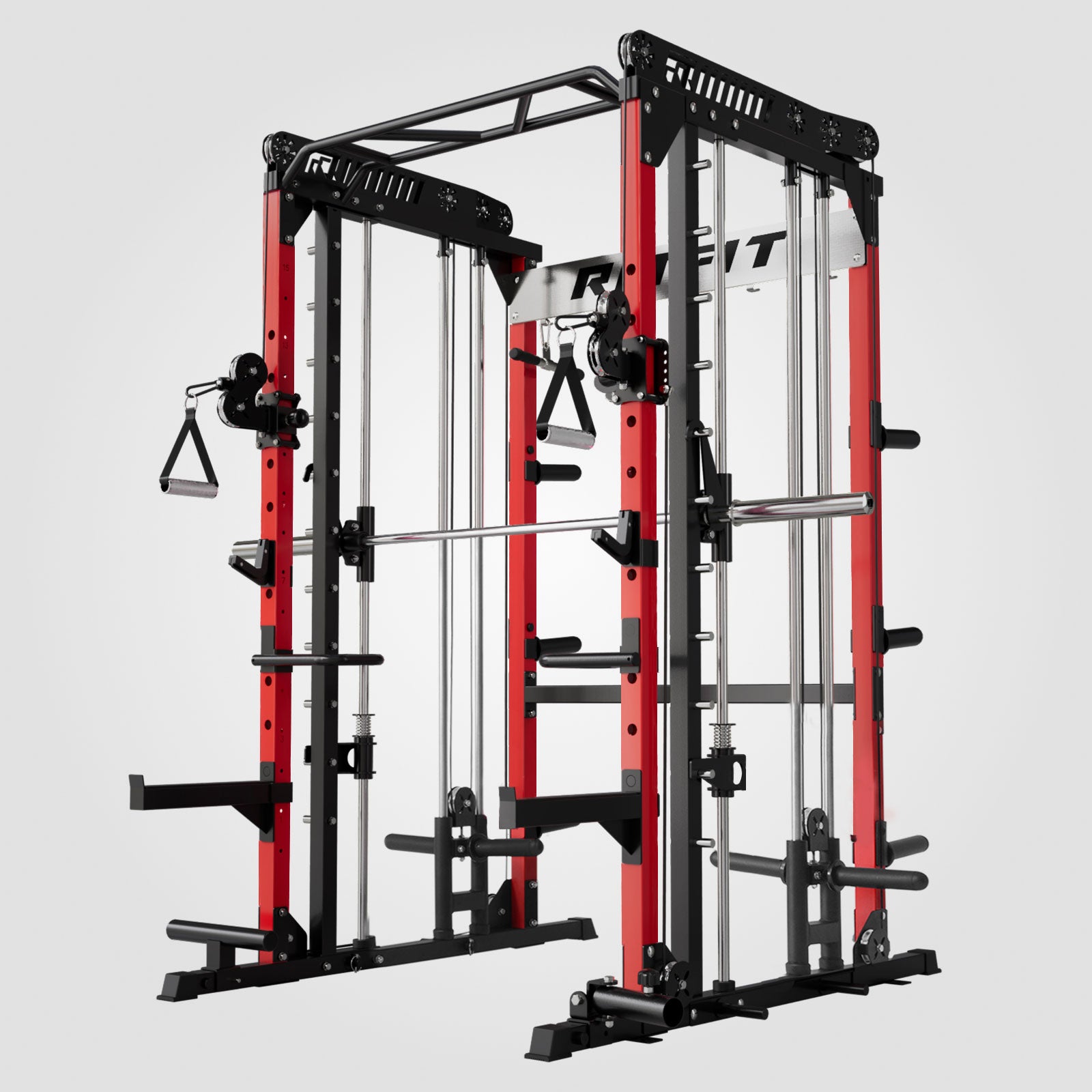
- Home gym note: A compact cable setup such as the RitFit cable crossover machine can support direct hamstring curls and upper body cable work in the same training space.
Dumbbell and Free Weight Alternatives
Free weight hamstring exercises are excellent when you want loaded stretching, unilateral balance, or powerful hip extension. They are not all direct curl replacements, so use them with at least one knee flexion movement when possible.
Dumbbell Leg Curl
A dumbbell leg curl can work when no machine is available and you still want a direct curl pattern. Use a light dumbbell, squeeze it firmly between your feet, and move slowly so the setup never breaks.
- Best for: Home lifters who own dumbbells but not a cable system.
- Progression: Add reps first, then increase load only when control is stable.
- Equipment path: If you need loading options for RDLs and direct curl substitutes, browse the RitFit dumbbells collection.
Romanian Deadlift
The Romanian deadlift is one of the best hamstring exercises for loaded lengthening and hip extension. It does not fully replace a curl pattern because the movement emphasizes the hip rather than direct knee flexion.
- Best for: Hamstring hypertrophy, posterior chain strength, and heavy hinge training.
- Progression: Add load slowly while keeping the spine and pelvis controlled.
- Technique resource: For a fixed path variation, read RitFit's guide on how to do a Smith machine Romanian deadlift.
Good Morning
The good morning trains a hinge pattern similar to the RDL but places the load higher on the body. Start light because the longer lever can create a strong hamstring and lower back demand.
- Best for: Experienced lifters who already understand bracing and hip hinging.
- Progression: Increase range and tempo before adding heavy load.
- Common mistake: Turning the exercise into a rounded back bow instead of a controlled hip hinge.
Single Leg RDL
The single leg RDL builds hamstring strength, balance, and hip stability at the same time. It is especially useful for finding left to right differences that bilateral lifts can hide.
- Best for: Unilateral control, balance, and home gym training.
- Progression: Start with bodyweight or a wall supported version before using dumbbells.
- Research note: Remote hamstring prevention research has compared Nordic hamstring exercise with single leg Romanian deadlift programs, showing both movements are relevant in practical prevention settings.[3]
Kettlebell Swings
Kettlebell swings are not direct leg curl substitutes, but they train explosive hip extension and posterior chain power. Use them as a performance focused complement rather than your only hamstring exercise.
Can Romanian Deadlifts Fully Replace Leg Curls?
Romanian deadlifts can replace part of the hamstring training effect, but they do not fully replace leg curls. RDLs load the hamstrings in a stretched hip hinge position, while leg curls directly train knee flexion.
For complete hamstring development, use RDLs for loaded stretch and add sliding curls, cable curls, band curls, or dumbbell curls for direct knee flexion. Eccentric hamstring programs have been associated with reduced lower extremity injury rates in meta analytic research, but the best exercise choice still depends on goal, tolerance, and progression.[4]
Machine Alternatives When a Hamstring Curl Machine Is Not Available
Some gyms do not have a seated or lying leg curl machine, but other fixed path tools can still support productive hamstring training. Choose movements that let you control range, tempo, and load.
Smith Machine RDL and Good Morning
A Smith machine can make RDLs and good mornings feel more stable because the bar path is fixed. For more lower body training options in a home gym, compare systems in the RitFit Smith machine collection.
Glute Ham Developer Variations
A glute ham developer can train the hamstrings through both knee flexion and hip extension. Full range glute ham raises are advanced, so most lifters should start with partial or assisted reps.
Leg Extension Curl Machine
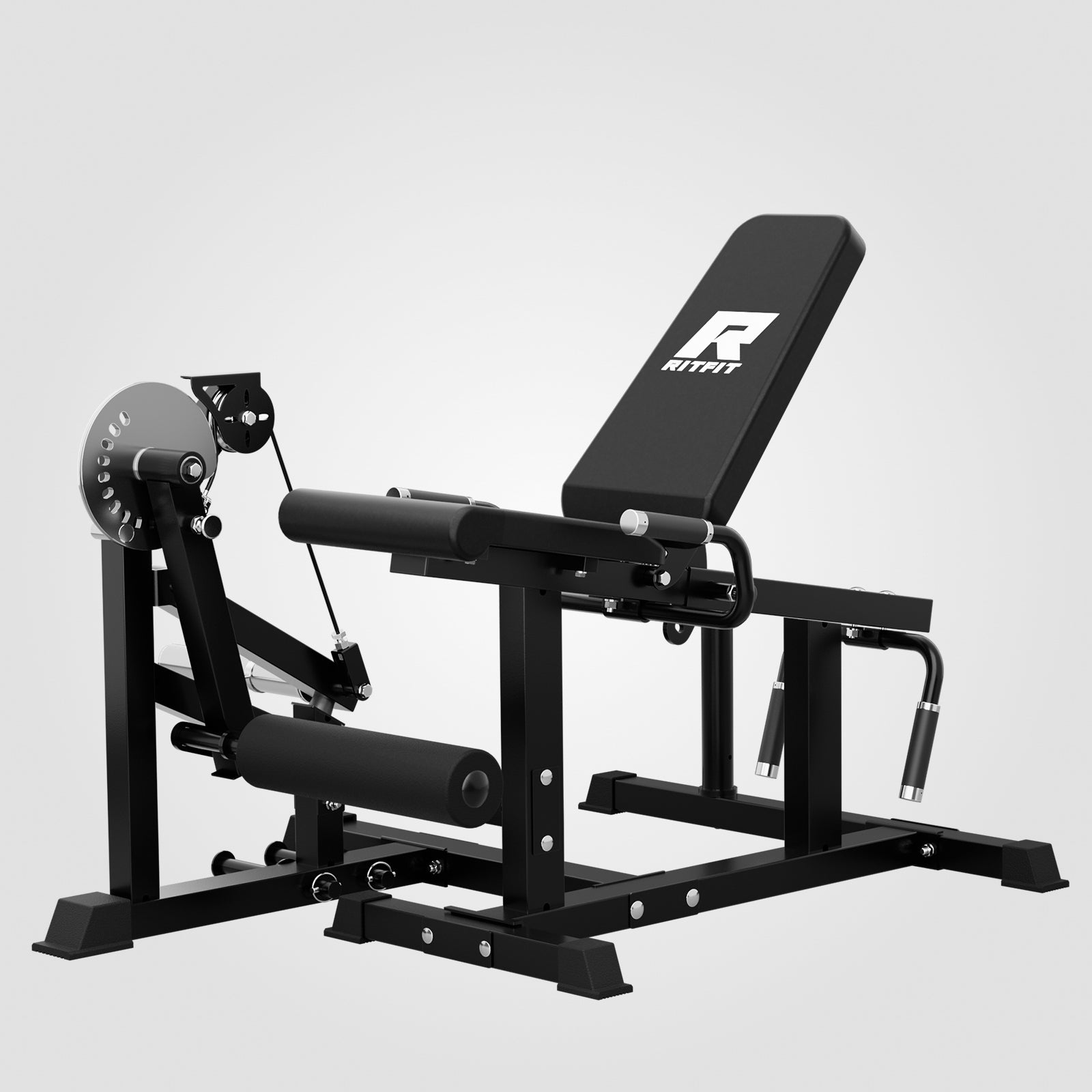
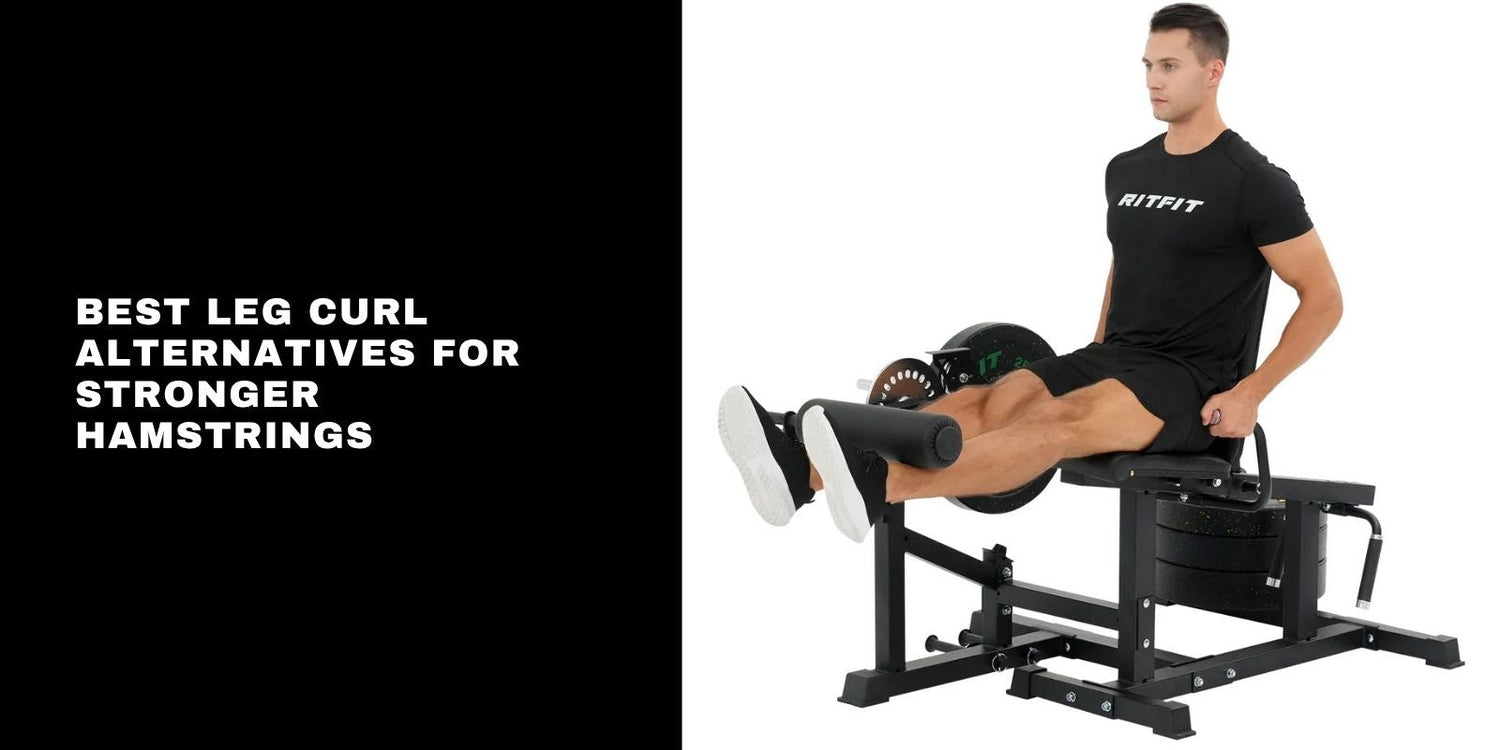
A leg extension curl machine is the most direct option if you want both quad extension and hamstring curl training in one home gym unit. The RitFit PLC01 Leg Extension Curl Machine is the most relevant RitFit product path for readers who prefer a machine based hamstring curl setup.
If you are building a broader lower body station, you can also review the RitFit strength machines collection. This creates a cleaner path from learning alternatives to choosing the right home gym equipment.
Sample Hamstring Focused Workouts
The best hamstring routine depends on your equipment, skill level, and recovery. Each template below includes one curl pattern and one hinge or hip extension pattern.
Beginner Bodyweight Routine
This routine is best for learning hamstring tension without heavy equipment. Use a pain free range and stop before technique breaks.
- Glute Bridges: 3 sets of 12 to 15 reps. Focus on heel drive and a controlled top position.
- Sliding Leg Curls: 3 sets of 8 to 12 reps. Keep your hips up and move slowly on the way out.
- Bodyweight Single Leg RDL: 3 sets of 8 reps per leg. Use a wall or rack for balance if needed.
Dumbbell and Home Gym Routine
This routine works well when you have dumbbells and a bench but no leg curl machine. It combines loaded hinging with direct knee flexion and unilateral control.
- Dumbbell RDL: 4 sets of 8 to 10 reps. Lower until you feel a deep hamstring stretch without losing spinal position.
- Dumbbell Leg Curl: 3 sets of 10 to 15 reps. Use slow reps and stop before the setup becomes sloppy.
- Single Leg Glute Bridge: 3 sets of 10 to 12 reps per leg. Pause briefly at the top of each rep.
Gym Based Routine
This routine is best for lifters who have barbells, cables, or assisted Nordic curl options. Keep the heavy hinge first and the direct curl work controlled.
- Barbell RDL: 4 sets of 6 to 8 reps. Use controlled eccentrics and keep the bar close to your legs.
- Nordic Curls or Glute Ham Raises: 3 sets near technical failure. Use assistance if full range reps break down too early.
- Standing Cable Hamstring Curls: 3 sets of 12 to 15 reps per leg. Squeeze at peak contraction and avoid torso movement.
How to Replace Hamstring Curls in Your Existing Program
If your program says 3 sets of 10 hamstring curls, choose a replacement that keeps the same training purpose. Sliding curls, cable curls, band curls, and dumbbell leg curls are usually the best direct swaps.
- Replace lying leg curls: Use sliding leg curls, stability ball curls, or dumbbell leg curls for 3 sets of 8 to 15 reps.
- Replace seated leg curls: Use seated band curls or cable curls with constant tension and a controlled top squeeze.
- Replace heavy machine curl work: Pair RDLs with a lighter direct curl pattern in the same session.
- Replace curls in a compact home gym: Use bands, sliders, dumbbells, or a compact curl machine if you want a dedicated setup.
Programming Tips for Stronger Hamstrings
Strong hamstrings usually respond best to repeated exposure, clean technique, and gradual overload. Avoid jumping from easy bridge work directly into high volume Nordic curls.
- Train hamstrings 2 to 3 times per week: Most lifters progress well with repeated exposure and manageable weekly volume.
- Use both low and moderate rep work: Heavy hinges often work well in the 5 to 8 rep range, while direct curls often fit the 8 to 15 rep range.
- Apply progressive overload consistently: Add load when possible, but also use tempo, pauses, range, and cleaner control.
- Balance curl patterns and hinge patterns: Direct curls train knee flexion, while hinges train hip extension and loaded stretch.
- Respect fatigue and recovery: Hamstrings often tighten quickly when volume rises too fast.
Lengthened state eccentric strength is often discussed in hamstring rehabilitation because the hamstrings are stressed when the hip is flexed and the knee extends. This supports the practical value of controlled RDLs, single leg RDLs, and long range eccentrics when they are scaled appropriately.[5]
Safety, Technique, and Common Mistakes
Warm up with light hinges, bodyweight bridges, leg swings, and easy practice reps before your working sets. The goal is to raise tissue temperature and improve control, not to exhaust the hamstrings early.
- Do not replace every curl with hinges only: Hinge lifts are excellent, but direct knee flexion work fills an important gap.
- Do not chase load before control: Nordics, dumbbell leg curls, and sliding curls work best when the lowering phase is stable.
- Keep your spine neutral during hinges: If your brace breaks and your lower back rounds, reduce range or load.
- Scale advanced exercises: Beginners should use assisted Nordics, partial sliders, and light band curls before harder versions.
- Stop sharp pain immediately: Muscle fatigue is normal, but sharp knee, hip, or lower back pain is not a training goal.
Best Home Gym Setup for Hamstring Training
A strong home gym hamstring setup should cover both direct curl work and loaded hip hinge work. You do not need every machine, but you should have enough equipment to train different angles.
- Adjustable bench: Useful for hip thrusts, single leg bridge variations, supported rows, and stable setup work.
- Dumbbells: Useful for RDLs, single leg RDLs, dumbbell leg curls, and progressive loading.
- Cable system or bands: Useful for standing, prone, and seated hamstring curls.
- Smith machine or rack: Useful for stable RDLs, good mornings, and controlled lower body strength work.
- Dedicated curl machine: Useful when you want a direct machine based hamstring curl pattern at home.
FAQs
What is the best leg curl alternative at home?
Sliding leg curls are usually the best at home leg curl alternative. They closely match the heel to glute curl pattern, need very little equipment, and can be progressed with slower lowering phases, longer range of motion, or single leg reps.
Can Romanian deadlifts replace leg curls?
No. Romanian deadlifts can replace part of the hamstring training effect, but they do not fully replace leg curls. RDLs train hip extension and loaded stretch, while leg curls train direct knee flexion more specifically.
Are Nordic curls better than leg curls?
No. Nordic curls are not automatically better than leg curls. They are excellent for eccentric strength, but they are also harder to control, so beginners often do better with sliders, band curls, cable curls, or assisted Nordic variations first.
Which leg curl alternative is best for beginners?
Glute bridges, light band curls, and short range sliding leg curls are usually best for beginners. These exercises are easier to control than Nordic curls or heavy good mornings, and they let you build hamstring strength gradually.
How do I replace 3 sets of hamstring curls?
Replace 3 sets of hamstring curls with 3 sets of sliding curls, cable curls, band curls, or dumbbell leg curls. Keep the rep range similar, control the lowering phase, and stop each set before your form breaks.
Do leg curl alternatives build bigger hamstrings?
Yes. Leg curl alternatives can build bigger hamstrings when they are progressed over time. Use enough weekly volume, train both knee flexion and hip extension, and increase reps, load, range, or tempo as your strength improves.
Should I do hamstring curls or RDLs first?
Most lifters should do heavy RDLs first and direct curl alternatives afterward. If your goal is activation, rehab style control, or knee flexion strength, you can place lighter curls earlier and keep the hinge work controlled.
Is a cable hamstring curl a good leg curl substitute?
Yes. A cable hamstring curl is one of the best gym based leg curl substitutes. It gives smoother resistance than many bands, allows small load changes, and trains the heel to glute curl pattern directly.
Conclusion
You do not need a leg curl machine to build strong hamstrings. Choose one direct curl variation and one hip hinge, progress them over time, and match each movement to your equipment, recovery, and training goal.
For the best results, use curls for knee flexion and RDL style movements for loaded hip extension. That combination gives your hamstrings a more complete training stimulus than either pattern alone.
Disclaimer
This article is for general educational purposes only and is not medical advice. Stop any exercise that causes sharp pain, instability, numbness, or radiating discomfort, and consult a qualified medical professional or physical therapist if you have a current injury, recent surgery, or ongoing knee, hip, or lower back symptoms.
References
- Hickey JT, Opar DA, Weiss LJ, Heiderscheit BC. Hamstring strain injury rehabilitation. J Athl Train. 2022;57(2):125-135. doi:10.4085/1062-6050-0707.20. PMCID: PMC8876884.
- Nunes H, Fernandes LG, Martins PN, Ferreira RM. The effects of Nordic hamstring exercise on performance and injury in the lower extremities: an umbrella review. Healthcare. 2024;12(15):1462. doi:10.3390/healthcare12151462. PMCID: PMC11311354.
- Behan FP, van Dyk N, Rane L, Thorne E, Banaghan A, Gilsenan K, Whyte EF. Implementing hamstring injury prevention programmes remotely: a randomised proof of concept trial. BMJ Open Sport Exerc Med. 2024;10(1):e001728. doi:10.1136/bmjsem-2023-001728. PMCID: PMC10824055.
- Hu C, Du Z, Tao M, Song Y. Effects of different hamstring eccentric exercise programs on preventing lower extremity injuries: a systematic review and meta-analysis. Int J Environ Res Public Health. 2023;20(3):2057. doi:10.3390/ijerph20032057. PMCID: PMC9916392.
- Schmitt B, Tyler T, McHugh M. Hamstring injury rehabilitation and prevention of reinjury using lengthened state eccentric training: a new concept. Int J Sports Phys Ther. 2012;7(3):333-341. PMCID: PMC3362981.