








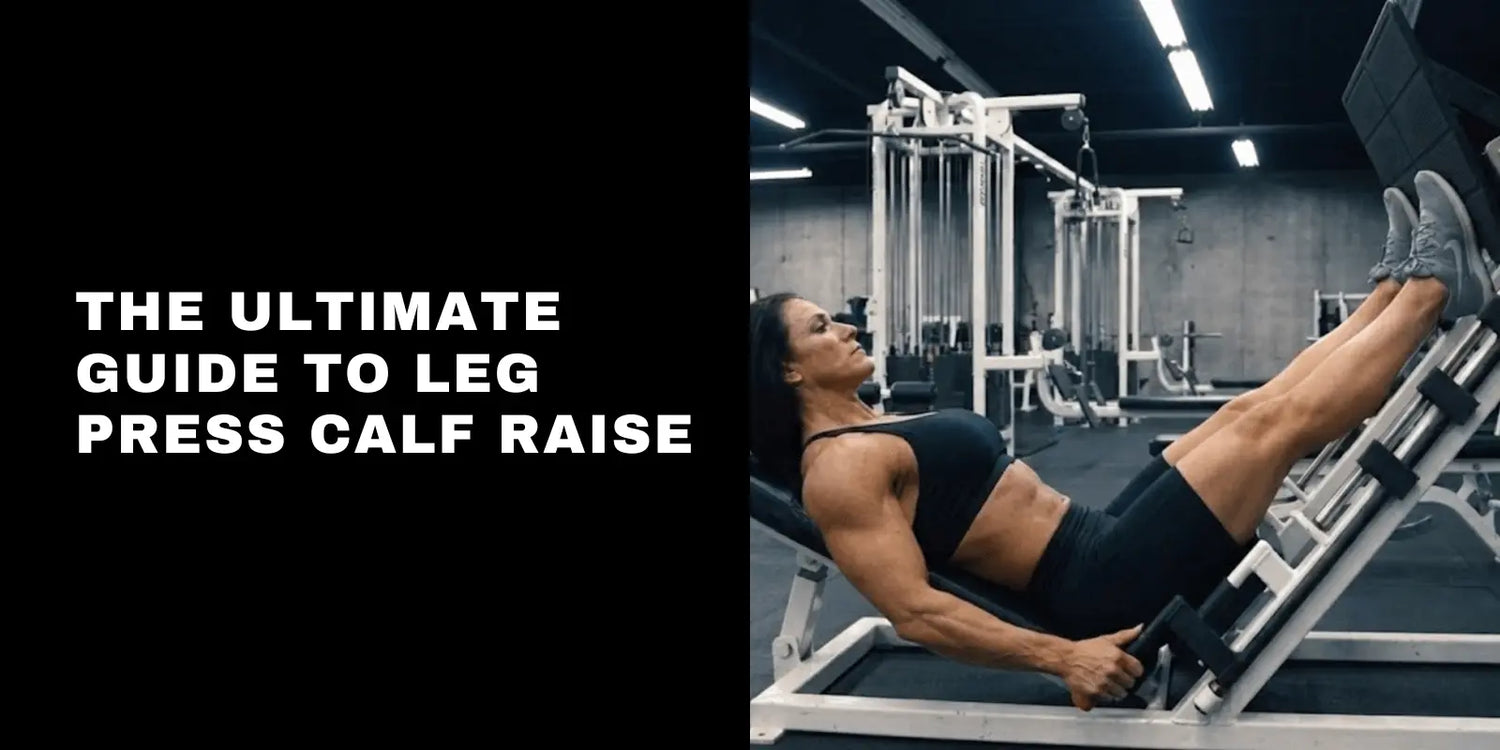
A leg press calf raise trains the calves by moving through the ankle, not by bending and extending the knees. It is a stable machine based calf exercise that lets you load the gastrocnemius and soleus while reducing balance demands.
This guide explains setup, form, muscles worked, safety cues, common mistakes, variations, and weekly programming. It is designed for lifters who want stronger calves with controlled reps and a clear progression plan.
Table of Contents
- What Is a Leg Press Calf Raise?
- Muscles Worked
- Why Add Leg Press Calf Raises to Your Routine?
- Who This Exercise Is For
- Safety SOP: Set Up the Leg Press Correctly
- How to Perform the Leg Press Calf Raise
- Foot Placement: What Actually Matters
- Common Mistakes and Fixes
- Best Variations to Keep Progress Moving
- Leg Press Calf Raise vs. Standing and Seated Calf Raises
- How Often Should You Do Leg Press Calf Raises?
- Programming: Sets, Reps, Rest, and Intensity
- Progression Rules
- Warm Up and Prep
- What Type of Leg Press Machine Works Best?
- Troubleshooting: If Something Feels Off
- Sample Add On: Calves After Leg Day
Key Takeaways
- Best use case: The leg press calf raise is best for stable, machine based calf training with repeatable loading.
- Main muscles: It primarily trains the gastrocnemius and soleus, with extra demand on ankle and foot control.
- Key form cue: Move through ankle plantarflexion and dorsiflexion while keeping the knees softly bent and steady.
- Growth focus: Use a controlled bottom stretch, a strong top squeeze, and progressive overload instead of bouncing.
- Best frequency: Most lifters can train calves 2 to 3 times per week when recovery and Achilles comfort are managed.
What Is a Leg Press Calf Raise?
A leg press calf raise is a calf exercise performed on a leg press machine by pressing through the balls of the feet. Unlike a standard leg press, the movement should come from the ankles rather than the hips and knees.
You place the balls of your feet on the lower edge of the platform, let your heels move slightly below neutral, then rise onto your toes. This setup creates a stable way to train ankle plantarflexion with heavier loading than many free standing variations.
Muscles Worked
The leg press calf raise mainly works the gastrocnemius and soleus, which together form the triceps surae complex. Research comparing leg press and calf raise exercises shows that plantar flexor activation is relevant in both multi joint and single joint lower body training contexts.[1]
- Gastrocnemius: This is the larger visible calf muscle that crosses the knee and ankle. A more extended knee position tends to make it a major contributor during calf raise patterns.
- Soleus: This deeper calf muscle sits under the gastrocnemius and supports ankle extension, posture, and endurance. It remains important during higher rep calf work and bent knee calf variations.
- Foot and ankle stabilizers: These smaller muscles help keep the foot steady on the platform. They work harder when you control the stretch instead of bouncing.
Why Add Leg Press Calf Raises to Your Routine?
Add leg press calf raises when you want to train the calves hard without balance being the limiting factor. The supported torso and fixed machine path make it easier to focus on ankle range of motion and load control.
Heavy Loading With More Stability
The leg press lets you train calves with stable resistance while your back stays supported. This can be useful after squats, hack squats, or leg press sets when you still want focused calf work.
Better Control Through the Stretch
A controlled bottom stretch can help you train the calves at longer muscle lengths without forcing the ankle. Current evidence suggests that mechanical tension at longer muscle lengths may support hypertrophy when programmed carefully.[2]
Easy Integration Into Leg Day
The exercise fits naturally after lower body machine work because the setup is already close to a leg press pattern. You can pair it with a leg extension and curl machine session for a more complete lower body accessory block.
Who This Exercise Is For
The leg press calf raise is useful for lifters who want stable calf training, clear progression, and less balance demand. It is especially practical for home gym users with access to a machine that supports a safe foot position.
Best For
- Calf growth goals: Use it when you want a repeatable calf movement that can be progressed over time.
- Balance limited lifters: Use it when standing calf raises feel unstable or distracting.
- Machine based leg days: Use it after leg press, hack squat, or other supported lower body training.
- Home gym setups: Use it when your equipment allows stable foot placement and reliable safety stops.
Modify or Avoid
- Active Achilles pain: Choose a smaller range and lighter load, or avoid the exercise until symptoms are assessed.
- Recent ankle sprain: Rebuild control with bodyweight calf raises before adding machine load.
- Sharp foot or heel pain: Stop the movement and avoid training through pain that changes your gait.
- Unstable machine setup: Do not perform calf raises if the platform edge does not support the forefoot securely.
Safety SOP: Set Up the Leg Press Correctly
Proper setup keeps the ankle moving safely while preventing the sled from forcing an uncontrolled stretch. Before loading heavy, confirm the seat, platform, safety stops, and foot contact are stable.
- Choose the right machine: Use a 45 degree sled or horizontal leg press that lets the balls of your feet sit securely on the platform edge.
- Adjust the seat: Set the seat so your hips stay down and your lower back stays supported. Do not chase extra ankle depth by letting the pelvis lift.
- Set the safety stops: Use the machine stops so the sled cannot push you into an extreme ankle stretch. This is especially important for beginners and heavy sets.
- Start lighter than expected: Begin with a load you can control for the full range. Calves respond better to strict reps than rushed heavy reps.
- Use stable flooring: Keep the machine on a firm surface such as rubber high density interlocking gym flooring mats to support home gym stability.
How to Perform the Leg Press Calf Raise
Correct form means the ankles do the work while the knees and hips stay steady. Use a light warm up set first so you can feel the range before adding working weight.
Step 1: Get Into Position
Sit in the leg press with your back fully supported and place the balls of your feet on the lower platform edge. Keep your heels slightly off the platform and your knees softly bent.
Step 2: Set Your Starting Range
Unrack the sled and begin from a stable ankle position. Your feet should feel secure, your hips should stay down, and your toes should stay relaxed.
Step 3: Lower Under Control
Lower your heels slowly by moving into ankle dorsiflexion. Stop at the deepest stretch you can control without pain or bouncing.
Step 4: Press Through the Balls of the Feet
Drive the sled upward by pressing through the balls of your feet and rising onto your toes. Keep the knees steady so the movement does not become a small leg press.
Step 5: Squeeze and Repeat
Pause briefly at the top and squeeze the calves before lowering again. A useful cadence is 2 to 3 seconds down, 1 second in the stretch, 1 to 2 seconds up, and 1 second at the top.
Foot Placement: What Actually Matters
Foot placement matters most when it improves stability and ankle control. Instead of chasing exact inner or outer calf targeting, choose a stance that lets you press through the ball of the foot without rolling.
- Foot contact: Keep the balls of the feet on the platform edge. Do not let the forefoot slide or collapse inward.
- Heel position: Let the heels move slightly below neutral during the lower phase. Do not force a painful stretch.
- Toe angle: Start with toes straight or slightly turned out. Use the angle that keeps your ankles smooth and pain free.
- Single leg option: Use single leg reps to find side to side differences. Start lighter because balance and foot control become more demanding.
Common Mistakes and Fixes
Most leg press calf raise mistakes happen when the load is too heavy or the knees begin to move. Use these fixes to keep tension on the calves instead of the quads, feet, or joints.
Mistake 1: Locking the Knees Hard
Keep a soft knee bend instead of forcing a hard lockout. A steady knee angle helps you focus on the calves while avoiding uncomfortable joint pressure.
Mistake 2: Turning It Into a Mini Leg Press
Reduce the load if your knees start pumping forward and back. The main motion should be ankle plantarflexion, not knee extension.
Mistake 3: Bouncing at the Bottom
Pause briefly in the bottom stretch instead of rebounding. Bouncing can irritate the Achilles tendon and reduce useful calf tension.
Mistake 4: Cutting the Range Short
Use the largest range you can control without pain. A full controlled lower and strong top position are more useful than partial rushed reps.
Mistake 5: Curling the Toes
Keep the toes relaxed and press through the ball of the foot. Toe gripping often shifts fatigue into the foot before the calves are trained well.
Best Variations to Keep Progress Moving
Use variations when progress slows or when you need a new stimulus without changing the whole workout. Keep the same safety rules, controlled range, stable knees, and smooth ankle motion.
Single Leg Leg Press Calf Raise
This variation helps address side to side differences and improves foot control. Use less load and slower reps than your two leg version.
Tempo Leg Press Calf Raise
Slow the lowering phase to 3 to 5 seconds to increase time under tension. This is useful when you need more stimulus without adding more weight.
Pause Rep Leg Press Calf Raise
Pause at the bottom and top to remove momentum. Research on loaded inter set stretch in plantar flexor training suggests that stretch based methods may influence muscular adaptations, but they should be applied conservatively.[3]
High Rep Pump Set
Use 15 to 25 reps after heavier sets when you want extra volume. Keep the same full range and stop before form breaks down.
Leg Press Calf Raise vs. Standing and Seated Calf Raises
The leg press calf raise is not automatically better than standing or seated calf raises. It is one stable option, while each variation changes body position, balance demands, and knee angle.
| Variation | Best Use | Main Note |
|---|---|---|
| Leg Press Calf Raise | Stable loaded calf training | Best when the platform allows safe forefoot placement. |
| Standing Calf Raise | More upright calf training | A study found greater triceps surae hypertrophy after standing versus seated calf raise training.[4] |
| Seated Calf Raise | Bent knee calf work | Often used to emphasize the soleus because the knees stay flexed. |
If you train at home, pairing calf work with a lower body machine can make the session more efficient. A 3 in 1 leg press, hack squat, and calf raise machine is especially relevant when calf raises are part of your regular lower body plan.
How Often Should You Do Leg Press Calf Raises?
Most lifters can train leg press calf raises 2 to 3 times per week. Leave at least 48 hours between hard calf sessions if your Achilles, feet, or lower legs feel tender.
Calves often tolerate frequent training, but tendons still need gradual progression. Add volume slowly before adding more weekly sessions.
Programming: Sets, Reps, Rest, and Intensity
Program leg press calf raises with enough volume to create stimulus without irritating the Achilles tendon. A review on resistance training volume suggests that weekly set volume can influence hypertrophy outcomes, so calf training should be progressed across the week rather than overloaded in one rushed session.[5]
For Calf Size
Use 3 to 5 sets of 8 to 15 reps with 1 to 3 reps in reserve. Rest 60 to 120 seconds and keep every rep controlled.
For Calf Endurance
Use 2 to 4 sets of 15 to 25 reps. Rest 45 to 75 seconds and stop when your range starts shrinking.
For Strength Emphasis
Use 4 to 6 sets of 6 to 10 reps with longer rest. Keep the tempo strict because heavier loading does not justify bouncing.
Progression Rules
Progression should happen only when your range, tempo, and ankle control stay consistent. Use one method for 4 to 6 weeks before changing the plan.
- Double progression: Choose a rep range such as 10 to 15. Add weight only after you can complete the top end with strict form.
- Add reps first: Add 1 to 2 reps per set before increasing load. This works well for calves because volume tolerance is often high.
- Add a set: Build from 3 sets to 5 sets over several weeks. Reduce volume if Achilles soreness increases.
- Use equipment support: For broader lower body training, a 3 in 1 leg press and hack squat machine can support machine based leg training variety.
Warm Up and Prep
A short warm up helps the ankles, calves, and Achilles tendon tolerate loaded calf raises better. Use 2 to 4 minutes before your first hard set.
- Bodyweight calf raises: Perform 15 to 20 slow reps. Focus on smooth ankle motion.
- Ankle circles: Do 10 circles each direction per ankle. Keep the movement controlled and pain free.
- Light machine set: Do 10 to 15 easy reps on the leg press. Gradually earn the bottom stretch instead of forcing it.
- Optional bench support: Use a stable adjustable weight bench for seated mobility or warm up drills if your setup allows it.
What Type of Leg Press Machine Works Best?
The best machine for leg press calf raises has a stable platform edge, adjustable safety stops, and enough range for a controlled ankle stretch. The machine should let you train calves without your feet slipping or your lower back lifting.
- Platform edge: Choose a platform that gives the forefoot secure contact. Avoid setups where the foot slides or the heel cannot move freely.
- Safety stops: Use stops that prevent excessive ankle depth. This matters most during heavy sets and fatigue.
- Home gym footprint: Choose equipment that fits your available space and training goals. A Smith machine with leg press and hack squat package can support users building a broader home gym system.
- Lower body pairing: Combine calf raises with hack squats, leg presses, or leg extensions for balanced leg training. This helps connect calf isolation with full lower body strength work.
Troubleshooting: If Something Feels Off
Small technique changes usually fix most comfort issues during leg press calf raises. Sharp pain, swelling, numbness, or symptoms that persist after training should be treated more cautiously.
My Calves Cramp
Reduce the load, slow the tempo, and warm up more gradually. Cramps often appear when the first hard set is too aggressive or the range is rushed.
My Achilles Feels Tender
Shorten the bottom range and remove bouncing immediately. Use moderate loads, slower reps, and less weekly volume until tenderness settles.
I Feel It in My Feet
Relax the toes and press through the ball of the foot. If the arch or forefoot fails first, reduce the weight and check that the platform edge is stable.
My Knees Feel Pressure
Use less load and keep a soft fixed knee angle. Knee motion usually means the exercise has turned into a small leg press.
Sample Add On: Calves After Leg Day
This 10 minute add on works well after squats, leg press, or hack squat training. Keep the first block heavier and the second block more pump focused.
- Leg Press Calf Raise Heavy Block: Perform 3 to 4 sets of 8 to 12 reps. Rest 90 seconds and keep the bottom stretch controlled.
- Leg Press Calf Raise Pump Block: Perform 2 sets of 15 to 25 reps. Rest 45 to 60 seconds and stop before the range shortens.
- Optional lower body pairing: Add quad and hamstring accessory work with a leg extension curl machine if your goal is a complete home leg day.
FAQs
What is a leg press calf raise good for?
Leg press calf raises are good for training the calves with stable, heavy loading. They reduce balance demands, keep the torso supported, and make it easier to focus on ankle motion, a controlled bottom stretch, and a strong top squeeze without turning the movement into a full leg press.
How should I place my feet during leg press calf raises?
Place the balls of your feet on the lower platform edge, with your heels slightly off the surface. Keep pressure centered through the forefoot, relax your toes, and avoid rolling toward the big toe or pinky toe edge as the ankle moves.
Can beginners do leg press calf raises safely?
Yes. Beginners can do leg press calf raises safely when they start light, use a smaller range, and keep the machine stops set. The goal is controlled ankle movement, not maximum load, so stop the set if the Achilles, ankle, knee, or foot feels sharp pain.
Is the leg press calf raise better than standing calf raises?
No. The leg press calf raise is not automatically better, it is simply more stable and easier to load. Standing calf raises still train the calves well, but they require more balance and full body tension, so both movements can fit a complete calf program.
Should my knees be locked during leg press calf raises?
No. Keep the knees softly bent and steady rather than forcefully locked. A small fixed bend helps you avoid turning the exercise into a mini leg press, while still keeping the gastrocnemius involved through a mostly extended knee position. Use less load if the knees drift.
How many sets and reps should I do for leg press calf raises?
Most lifters can start with 3 to 5 sets of 8 to 15 controlled reps. Use 1 to 3 reps in reserve, rest 60 to 120 seconds, and add reps or load only when the bottom stretch and top squeeze stay consistent.
Why do my feet hurt during leg press calf raises?
Foot pain often comes from curling the toes, loading too heavy, or placing the feet on an unstable edge. Reduce the weight, center pressure through the ball of the foot, warm up gradually, and stop if pain feels sharp or continues after training.
How often should I do leg press calf raises?
Train leg press calf raises 2 to 3 times per week if recovery feels good. Leave at least 48 hours between hard calf sessions, especially when you are new to loaded calf work or when your Achilles feels tender after training. Reduce volume before adding frequency.
Conclusion
The leg press calf raise is a practical way to train calves with stability, load, and clear ankle range of motion. Use controlled reps, steady knees, a safe bottom stretch, and gradual progression to build stronger calves without relying on momentum.
Important disclaimer: This article is for general educational purposes only and is not medical advice. If you have ankle, Achilles tendon, calf, knee, hip, lower back, or foot pain, a recent injury or surgery, swelling, numbness, or unexplained weakness, consult a qualified clinician before starting. Stop any exercise that causes sharp pain.
Editorial note: This guide was created by the RitFit editorial team to help home gym users understand leg press calf raise form, programming, and safety. It was reviewed for clarity, equipment relevance, and general exercise safety.
References
- Gentil P Souza D Santana M Alves RR Campos MH Pinto RS Bottaro M. Multi and Single Joint Resistance Exercises Promote Similar Plantar Flexor Activation in Resistance Trained Men. Int J Environ Res Public Health. 2020;17(24):9487. doi:10.3390/ijerph17249487
- Warneke K Lohmann LH Lima CD et al. Physiology of Stretch Mediated Hypertrophy and Strength Increases: A Narrative Review. Sports Med. 2023;53(11):2055-2075. doi:10.1007/s40279-023-01898-x
- Van Every DW Coleman M Rosa A et al. Loaded inter set stretch may selectively enhance muscular adaptations of the plantar flexors. PLoS One. 2022;17(9):e0273451. doi:10.1371/journal.pone.0273451
- Kinoshita M Maeo S Kobayashi Y Eihara Y Ono M Sato M Sugiyama T Kanehisa H Isaka T. Triceps surae muscle hypertrophy is greater after standing versus seated calf raise training. Front Physiol. 2023;14:1272106. doi:10.3389/fphys.2023.1272106
- Baz-Valle E Balsalobre-Fernández C Alix-Fages C Santos-Concejero J. A Systematic Review of The Effects of Different Resistance Training Volumes on Muscle Hypertrophy. J Hum Kinet. 2022;81:199-210. doi:10.2478/hukin-2022-0017





