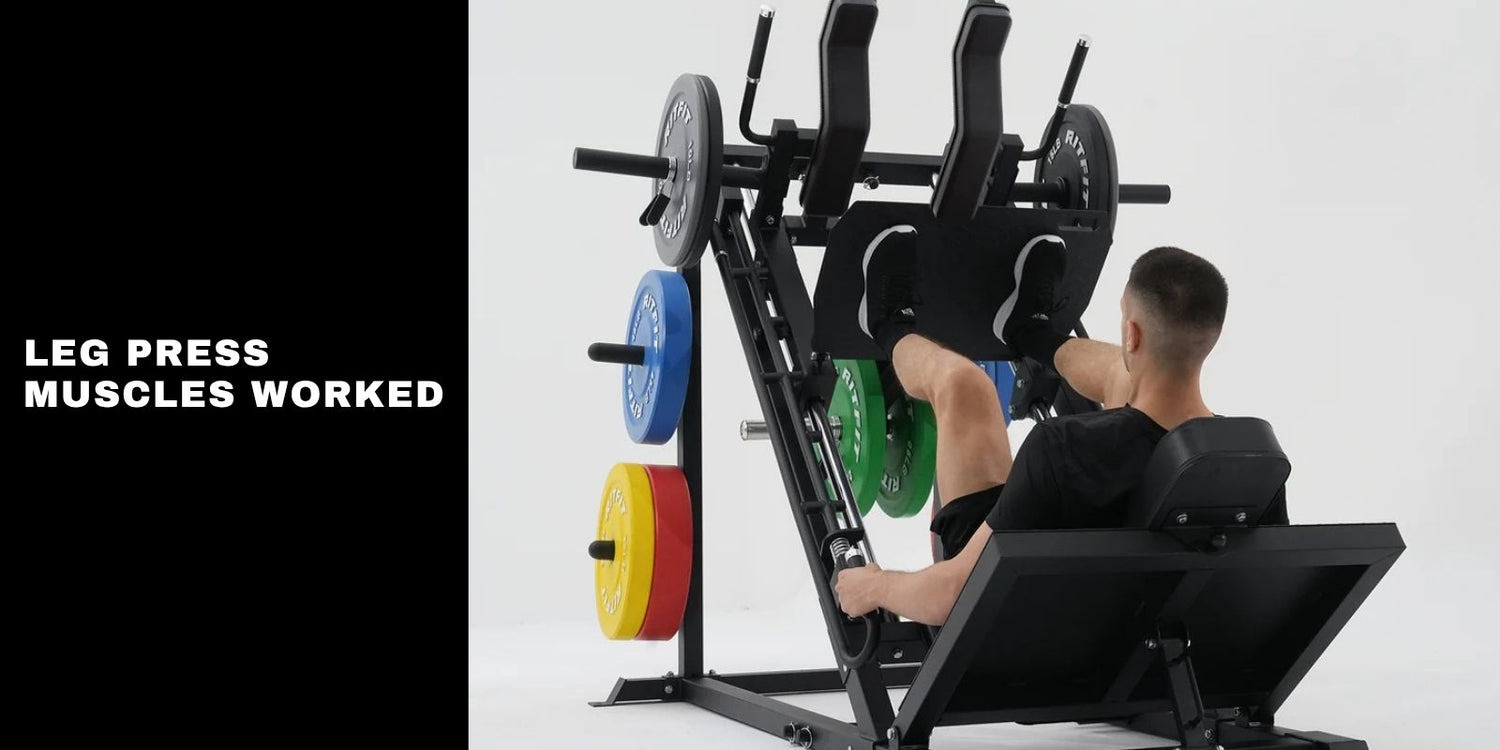
The leg press mainly works your quadriceps, glutes, and hamstrings, while your calves, adductors, and core help stabilize the movement. On the RitFit GAZELLE PRO, foot position, depth, and training intent can shift the emphasis toward muscle growth, strength, or more joint friendly lower body training.
Key Takeaways
- The leg press is a compound lower body exercise that primarily trains the quads, glutes, and hamstrings.
- Foot placement changes muscle emphasis, with lower placements biasing the quads and higher placements increasing glute and hamstring involvement.
- Proper depth matters more than ego loading, because range of motion drives better tension and better technique.
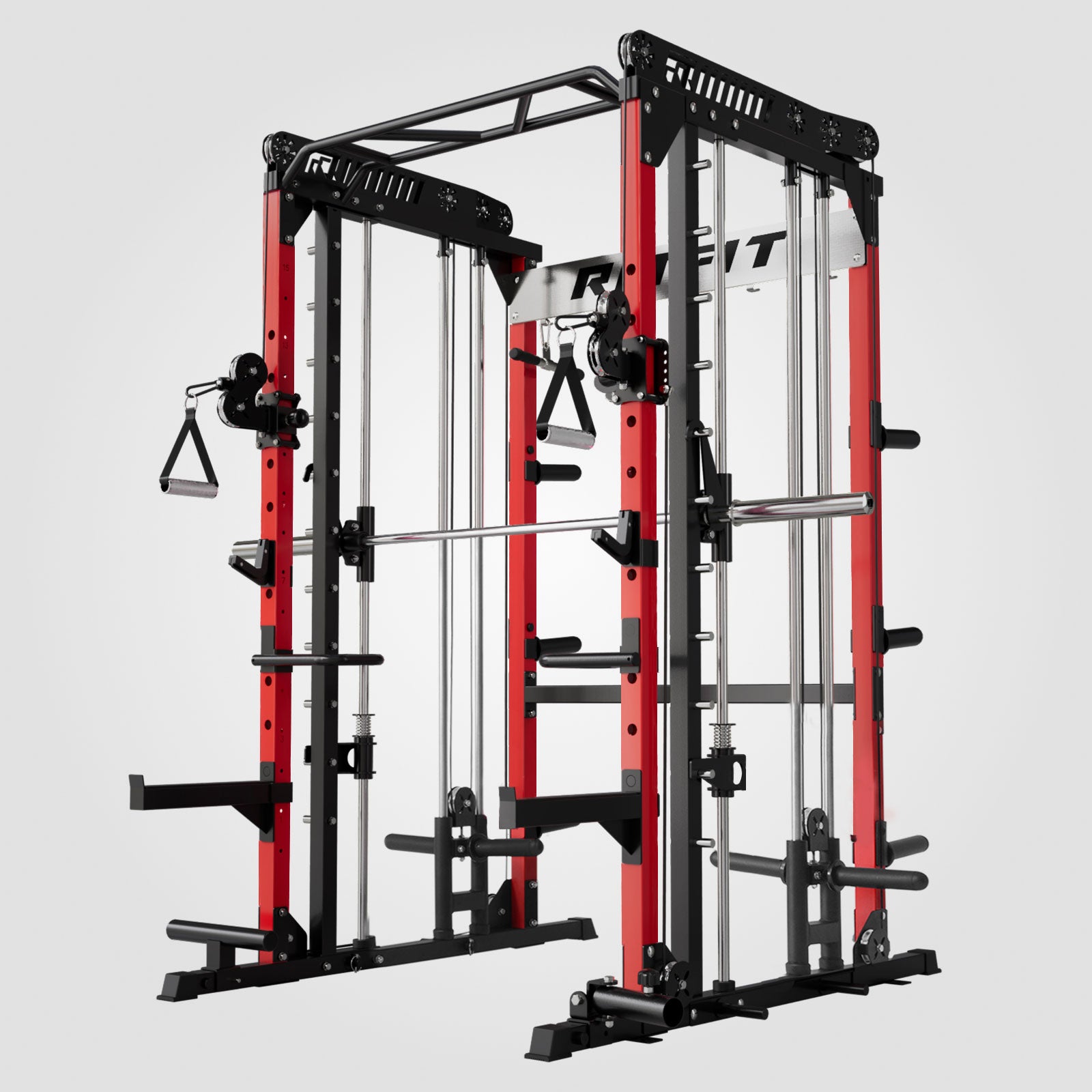
- The RitFit GAZELLE PRO can support leg press focused training, hack squat work, and lower body progression in one station.
- Most lifters get better results by matching stance, volume, and loading to their real goal instead of using one fixed setup every leg day.
Leg Press Basics: What Is Pressing Legs?
Pressing legs means driving a loaded platform away from your body with your lower body in a supported machine path. It is a compound exercise that trains knee extension and hip extension with more stability than most free weight leg movements.
The main leg press styles include horizontal models, angled sled machines, selectorized units, and plate loaded systems. The RitFit GAZELLE PRO fits the home gym user who wants a plate loaded setup that can handle progressive lower body training in a compact strength station.
The leg press and the barbell squat both build strong legs, but they challenge the body differently. Squats demand more balance, more trunk control, and more full body coordination, while the leg press lets you push hard with less skill demand and less balance limitation.
Muscles Worked on the Leg Press
The leg press trains multiple lower body muscles at the same time, which is why it works well for both hypertrophy and strength focused leg days. The exact emphasis changes with your stance, depth, and how much hip and knee flexion you create on each rep.
Primary Muscles
Your quadriceps do most of the work during knee extension, your glutes contribute more as hip flexion increases at the bottom, and your hamstrings support hip mechanics and knee stability throughout the lift. This makes the leg press a strong option for lifters who want more lower body volume without relying only on squats or lunges.
Secondary and Stabilizing Muscles
Your calves help control ankle position, your adductors help stabilize the hips and knees, and your core helps you stay braced against the pad. Even though the machine supports your torso, stable bracing still matters because it helps transfer force into the platform and keeps your position consistent.
How Foot Placement Changes Which Muscles Work Most
Foot placement changes the joint angles of the lift, so it changes which muscles carry more of the load. On a machine like the RitFit GAZELLE PRO, this is one of the easiest ways to turn one exercise into a more quad focused, glute focused, or adductor heavier variation.
- Standard Shoulder Width Stance:A shoulder width stance creates the most balanced recruitment across the quads, glutes, and hamstrings. It is the best default option for most lifters because it makes depth, knee tracking, and even force production easier to control.
- High Foot Placement:A higher foot placement usually increases hip demand and shifts more of the work toward the glutes and hamstrings. It is useful for lifters who want more posterior chain bias or who feel lower placements too much in the knees.
- Low Foot Placement:A lower foot placement usually increases knee flexion demands and puts more emphasis on the quadriceps. It works well for quad focused training, but only if you can keep your heels planted and your pelvis stable at the bottom.
- Wide Stance:A wider stance can increase adductor involvement while still training the quads and glutes hard. It is often a strong choice for lifters who want more inner thigh contribution and a stance that feels more open through the hips.
- Narrow Stance:A narrow stance often increases tension through the quads, especially the outer quad sweep many lifters want to build. It also requires cleaner knee tracking and ankle mobility, so lighter loads and controlled reps usually work better than chasing numbers.
Pressing Legs on the RitFit GAZELLE PRO: Setup and Technique
Good setup makes the leg press more effective and more repeatable. On the RitFit GAZELLE PRO, the goal is to create a stable body position first so the quads, glutes, and hamstrings can do the work instead of your joints trying to rescue the rep.
Correct Machine Setup
Set your back and hips firmly against the pad, place your feet in the stance that matches your goal, and make sure your knees track in line with your toes through the full rep. Before you add load, confirm that you can reach a useful depth without your lower back rounding or your hips rolling off the pad.
Step by Step Technique Guide
- Step 1: Brace and plant: Sit down, grip the handles, and brace your core before you unrack the sled. Keep your head, upper back, and hips connected to the pad from the first rep to the last.
- Step 2: Unlock with control: Press the weight just enough to clear the safety mechanism, then begin the descent under control. Do not rush the lowering phase, because this is where position usually breaks down.
- Step 3: Lower to your usable depth: Bring the sled down until your knees and hips reach a strong working range without your pelvis tucking under. The best depth is the deepest position you can own, not the deepest position your body can barely survive.
- Step 4: Drive through the full foot: Press the platform away by driving through your midfoot and heel while keeping the knees tracking cleanly. Think about pushing the platform rather than snapping the knees straight.
- Step 5: Finish without slamming lockout: Stop just short of an aggressive knee lockout and keep constant tension on the working muscles. Reset your breath and brace before the next rep instead of bouncing into the bottom.
Common Form Mistakes and Fixes
- Knees collapsing inward: Lower the load and actively drive the knees in line with the toes. This usually improves when stance width, foot angle, and load selection are matched better to your mobility.
- Half reps with too much weight: Use a load you can control through a meaningful range of motion. More depth with slightly less weight usually produces better muscle stimulus than short reps done for ego.
- Hips lifting off the pad: Reduce depth until your pelvis stays stable against the pad. Once the hips roll, the lower back usually takes stress you do not want.
- Pushing only through the toes: Keep pressure across the full foot, with emphasis on the midfoot and heel. This helps distribute force better and usually improves both glute contribution and knee comfort.
Programming the Leg Press for Different Goals
The best leg press program depends on whether you want size, strength, endurance, or a more joint friendly main movement. The RitFit GAZELLE PRO works best when you treat the leg press as a goal specific tool rather than repeating the same sets and reps every week.
For Muscle Growth
Use 3 to 5 sets of 8 to 15 reps and keep most sets close to failure with solid form. A controlled lowering phase and a full working range usually do more for hypertrophy than simply piling on more plates.
For Strength
Use 4 to 6 sets of 4 to 8 reps with longer rest periods and a load you can move powerfully without losing depth. Strength focused leg press work should still look clean, because grinding through ugly reps teaches bad positions and weakens long term progress.
For Endurance and Conditioning
Use 2 to 4 sets of 15 to 25 reps with shorter rests and steady tempo. This approach builds local muscular endurance, keeps tension high, and can add productive volume without needing maximal loading.
Where to Place Leg Press on Leg Day
Put the leg press after squats if your session starts with a free weight priority, or make it your first heavy movement if you want more support and less balance demand. For many home gym lifters, it also works well as the main lower body driver on days when fatigue, recovery, or lower back tolerance limit barbell work.
Safety, Mobility, and Joint Friendly Tips
A good warm up, honest load selection, and controlled depth are what make the leg press feel smooth on the knees, hips, and lower back. Start with light ramp up sets, open the ankles and hips, and only train as deep as you can while keeping your torso and pelvis stable.
If you feel sharp pain in the knees, hips, or lower back, stop and adjust the setup before continuing. The RitFit GAZELLE PRO can offer a more stable lower body training environment, but safe training still depends on your mobility, your technique, and your ability to control the load.
Comparing the GAZELLE PRO Leg Press to Other Leg Day Tools
The leg press, hack squat, and Smith machine squat all train the lower body, but they create different demands and different limitations. The GAZELLE PRO stands out for lifters who want heavy plate loaded lower body work with more support, less balance demand, and the versatility to build a broader home gym leg day around one machine.
Sample Leg Day Workouts Using RitFit GAZELLE PRO
A good routine should match your training age, recovery ability, and primary goal. These sample leg days keep the leg press central while still leaving room for unilateral work, hamstring work, and calf development.
Beginner Pressing Legs Routine
- Warm up: 5 to 10 minutes of light cardio and dynamic lower body mobility.
- GAZELLE PRO Leg Press: 3 sets of 10 to 12 reps with a standard shoulder width stance.
- Goblet Squat: 3 sets of 10 to 12 reps with controlled depth.
- Leg Curl: 3 sets of 12 reps to add direct hamstring work.
- Calf Raise: 3 sets of 12 to 15 reps with a pause at the top.
Intermediate Muscle Building Leg Day
- Barbell Back Squat: 4 sets of 6 to 8 reps as the first compound lift.
- GAZELLE PRO Leg Press: 4 sets of 8 to 12 reps, rotating stance emphasis over time.
- Romanian Deadlift: 3 sets of 8 to 10 reps for hip hinge strength.
- Walking Lunge: 3 sets of 10 to 12 steps per leg for unilateral balance.
- Standing Calf Raise: 4 sets of 12 to 15 reps for lower leg development.
Joint Friendly and Back Safe Leg Day
- Warm up: Light bike work plus hip and ankle mobility.
- GAZELLE PRO Leg Press: 4 sets of 10 to 15 reps as the primary lower body movement.
- Step Up: 3 sets of 8 to 10 reps per leg with controlled tempo.
- Hamstring Curl: 3 sets of 12 reps for knee flexion support.
- Hip Thrust or Calf Raise: 2 to 3 additional sets based on comfort and recovery.
FAQs
Is the leg press enough for leg growth?
Yes, the leg press can build impressive lower body size when you train hard, use progressive overload, and take sets through a useful range of motion. It becomes even more effective when paired with hamstring and unilateral work.
Does the leg press work glutes or only quads?
It works both, but foot placement and depth change the emphasis. A higher foot position and deeper controlled reps usually bring more glute involvement.
Can pressing legs replace squats?
It can replace squats for some lifters, especially when safety, skill demand, or back tolerance are the limiting factors. That said, many programs benefit from using both because each movement offers a different training stimulus.
How low should I go on the leg press?
Go as low as you can while keeping your hips and lower back stable against the pad. The right depth is the one that gives you strong muscle tension without losing pelvic control.
How often should I use the RitFit GAZELLE PRO for leg press training?
Most lifters do well with 1 to 2 sessions per week depending on recovery, total lower body volume, and whether the leg press is primary or secondary in the program.
What is a good starting weight for beginners?
Start with a very manageable load and learn the path, stance, and depth first. Add weight gradually only after every rep looks controlled and consistent.
Conclusion
The leg press is one of the most practical ways to train the quads, glutes, and hamstrings hard, especially when your setup, stance, and depth match your goal. Used well, the RitFit GAZELLE PRO can help you build a stronger, more complete leg day with more support, more progression options, and less wasted effort.
Disclaimer:This guide is for general educational purposes only and does not replace medical advice, diagnosis, or personalized training guidance. If you have pain, a recent injury, or a health condition that affects exercise, consult a qualified medical or fitness professional before training.