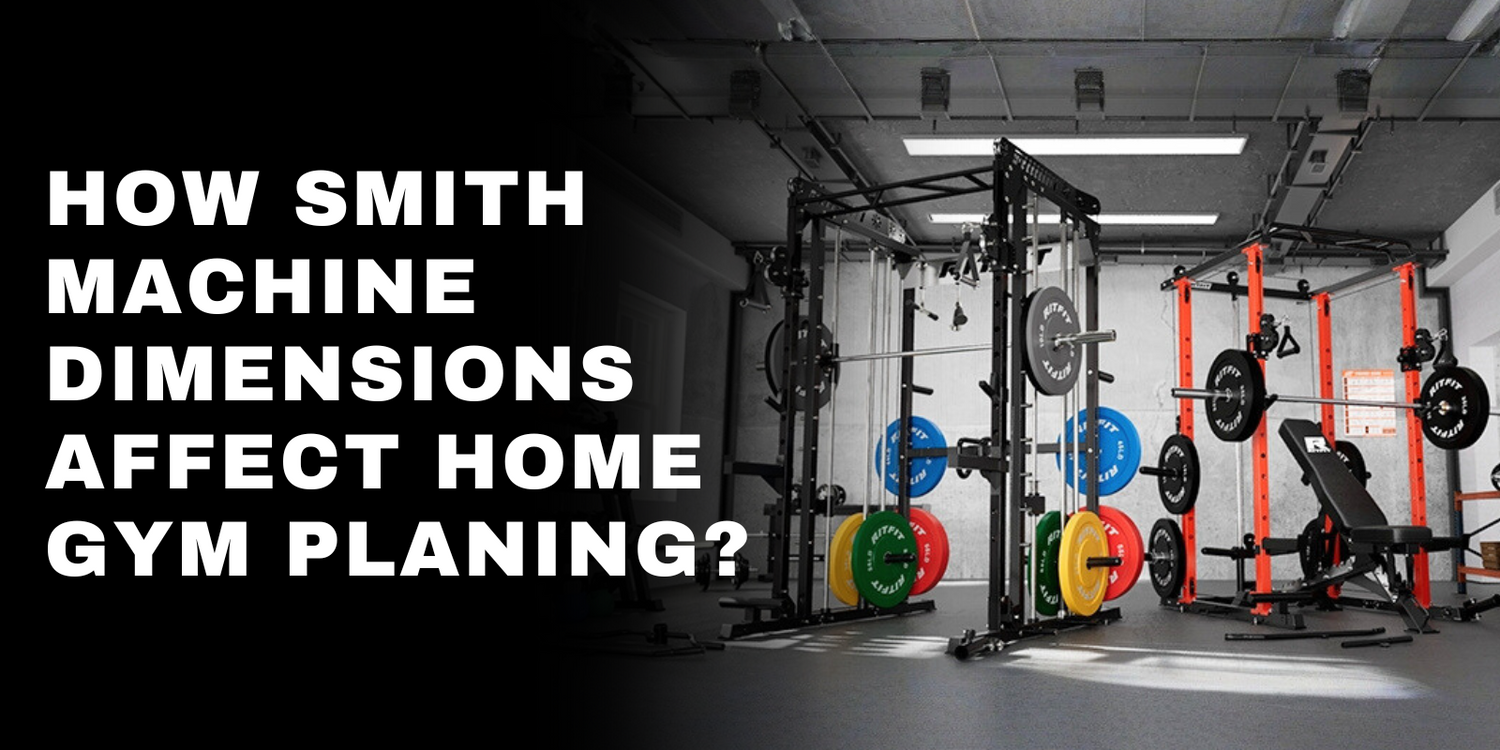
A low ceiling does not stop you from building a serious home gym. The key is to measure true clearance, choose equipment that fits your room, and replace tall standing movements with seated, kneeling, cable, or adjustable bar variations.
This guide explains how to plan a low ceiling home gym, what equipment works best, and how to train around pull up and overhead press limitations without wasting space.
Key Takeaways
- Measure true clearance: Measure from the finished floor to the lowest ceiling point, then subtract mat thickness and any raised platform height.
- Choose compact equipment first: Dumbbells, resistance bands, adjustable benches, and compact Smith machines usually work better than tall racks in tight rooms.
- Check movement clearance: Product height alone is not enough because your height, arm reach, pull up path, and overhead press path also matter.
- Use smart exercise swaps: Seated presses, Smith bar pull ups, lat pulldowns, cable rows, and incline bench work can replace taller movements.
- Keep safety first: Always confirm bar lockout, rack stability, flooring level, and attachment height before loading equipment heavily.
How Much Ceiling Height Do You Need for a Home Gym?
You need enough ceiling height for both the equipment and the movement above it. A safe low ceiling home gym starts with true clearance, not the room height listed on a floor plan.
Simple measurement rule: True clearance equals ceiling height minus flooring thickness minus platform height minus the extra movement space needed above the equipment.
- Measure the lowest point: Use the lowest beam, duct, garage door rail, pipe, or light fixture as your real ceiling limit. Do not measure only the tallest part of the room.
- Account for flooring: Rubber mats can reduce usable height after installation. This matters when a rack or Smith machine is already close to the ceiling.
- Check your own reach: Stand in the room and raise your arms overhead before choosing overhead exercises. If your hands touch the ceiling, standing presses and kettlebell snatches need safer alternatives.
- Plan installation clearance: Some machines need space above the frame during assembly. Confirm the current product page and manual before purchase.
Resistance training can improve strength and hypertrophy when programmed consistently, so a low ceiling should change the setup rather than remove strength training from the plan.[1]
Best Equipment for Low Ceiling Home Gyms
The best low ceiling home gym equipment is compact, adjustable, and useful across many exercises. Start with tools that do not require full overhead clearance before adding taller machines.
| Equipment | Low Ceiling Fit | Best Use | RitFit Link |
|---|---|---|---|
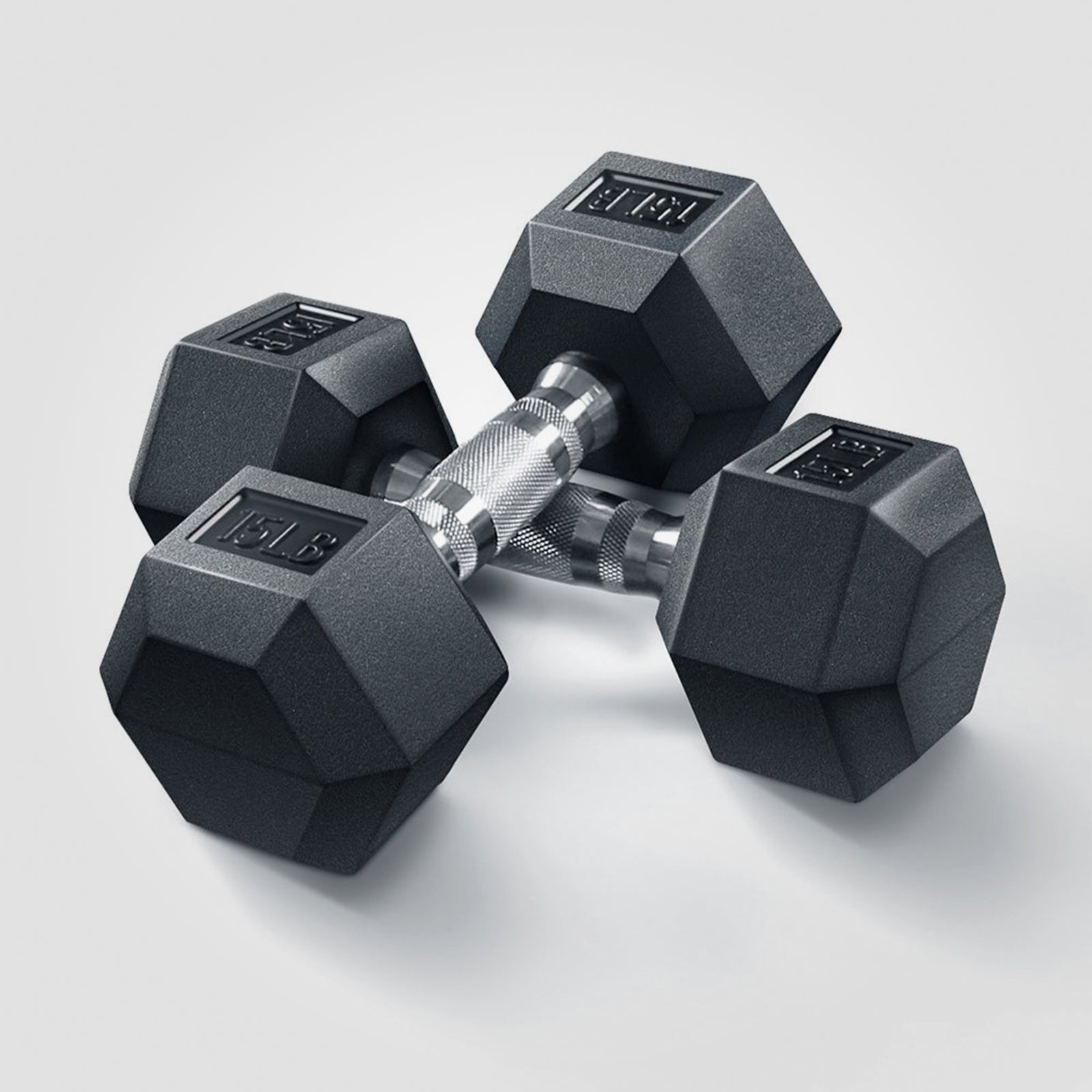
| Dumbbells | Excellent | Rows, presses, lunges, curls, carries | RitFit hex rubber dumbbells |
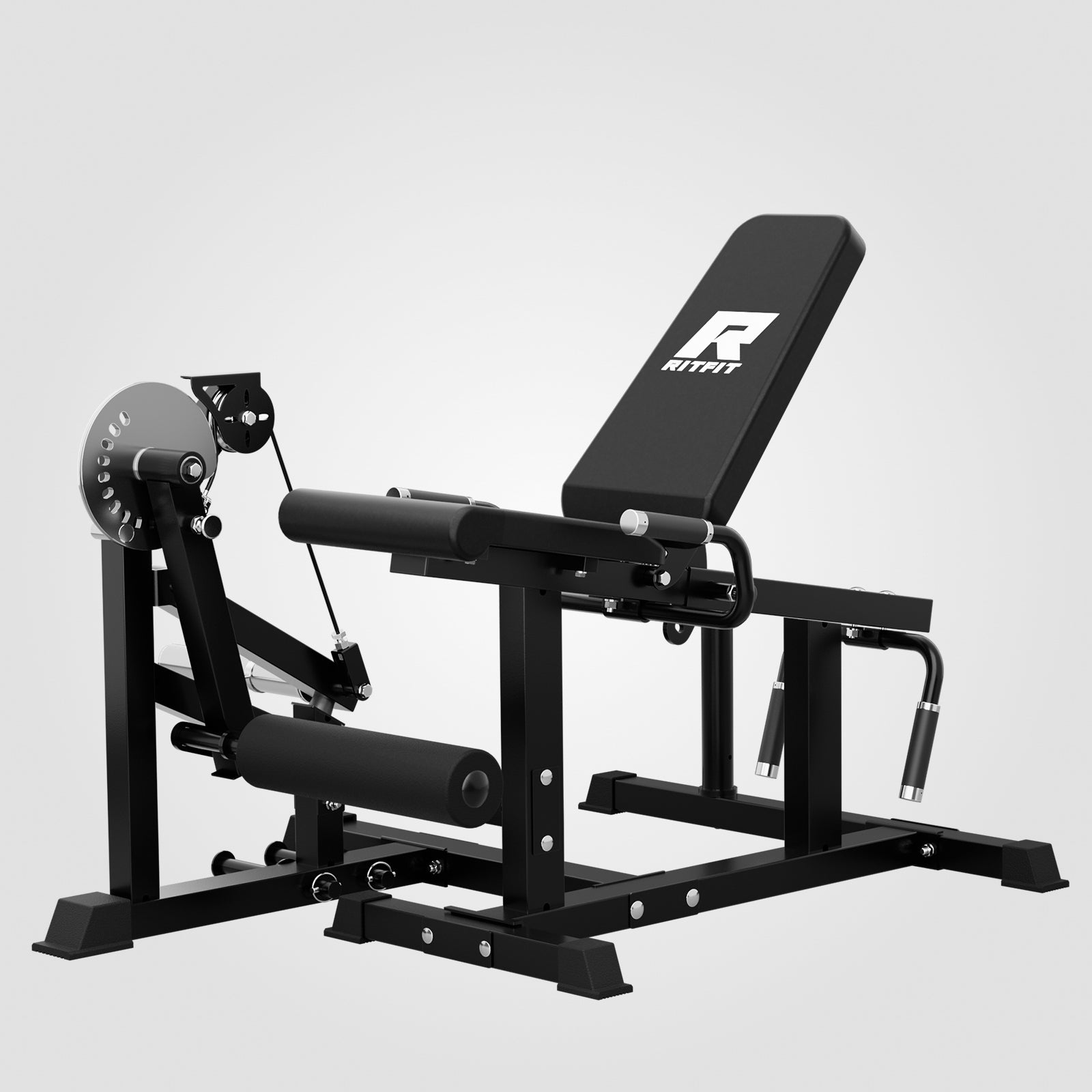
| Adjustable bench | Excellent | Seated presses, incline presses, supported rows | RitFit adjustable benches |
| Resistance bands | Excellent | Warm ups, assisted work, accessory movements | RitFit accessories |
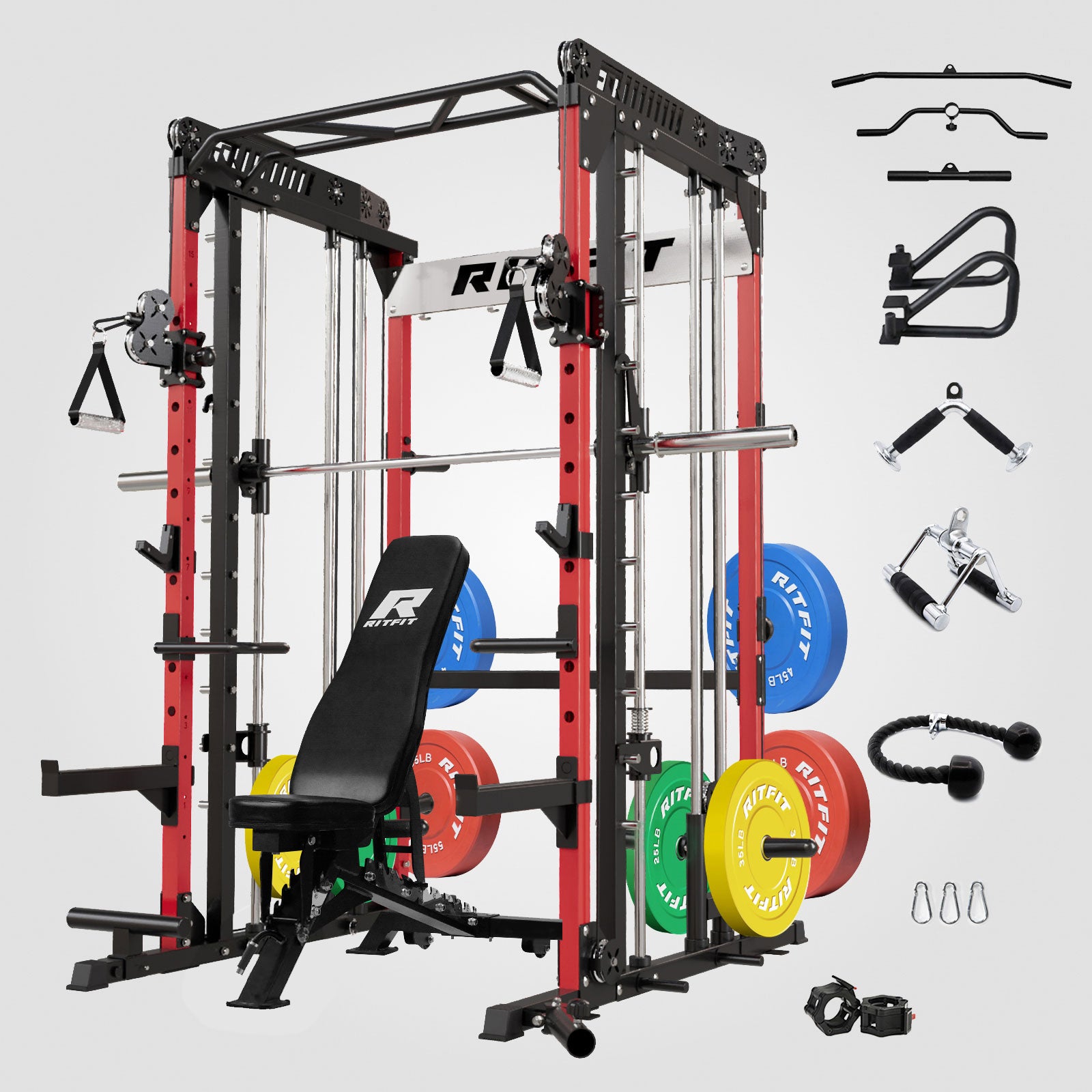
| Smith machine | Depends on listed height | Squats, presses, rows, cables, assisted pull up variations | RitFit Smith machines |
| Cable system | Good when height fits | Lat pulldowns, cable rows, triceps pressdowns, curls | Smith machine with cable system guide |
For low ceiling spaces, dumbbells and benches create the least height conflict, while a Smith machine or cable system can add more full body training if its listed dimensions fit your room.
How to Choose a Smith Machine for Low Ceilings
A Smith machine can work in a low ceiling home gym if the frame height, attachment height, and exercise path all fit your true clearance. Do not buy based on product height alone.
- Step 1: Measure the finished room: Measure after flooring plans are finalized. Include mats, platforms, ceiling beams, ducts, lights, and garage door tracks.
- Step 2: Compare current product dimensions: Check the latest product page and manual before purchasing. Version updates, attachments, and packages may change the effective height.
- Step 3: Match features to training needs: Choose a machine with the features you will actually use. A cable system may matter more than a high pull up bar in a low basement.
- Step 4: Confirm exercise clearance: Test your seated press path, pull up path, and bar travel before loading heavily. Your body size changes the amount of usable overhead room.
If your room has limited height but you still want an all in one strength station, compare the latest dimensions across the RitFit M1 Smith Machine, RitFit PSR05 Smith Machine, and RitFit Buffalo Smith Machine.
For a deeper product comparison, read the dedicated guide to the best Smith machine for low ceilings.
Low Ceiling Home Gym Hacks
The two biggest low ceiling training limits are pull ups and standing overhead presses. Both can be solved with adjustable bar positions, seated variations, cable alternatives, or carefully selected exercise substitutions.
Smith Bar Pull Ups
Smith bar pull ups let you train a vertical pulling pattern without needing a full height pull up station. Securely rack the Smith bar at a height that lets you kneel or bend your knees while keeping your head clear of the ceiling.
- Setup: Lock the Smith bar into a stable position before starting. Do not pull from a bar that is not fully seated or secured.
- Body position: Kneel under the bar and keep your lower legs tucked behind you. This reduces the vertical space needed for each rep.
- Training purpose: Use this as a pull up or chin up alternative when a full overhead bar is too close to the ceiling. Pull ups involve shoulder and scapular motion, so use controlled technique and avoid painful ranges.[2]
Towel Pull Ups
Towel pull ups can train grip and upper back strength in a low ceiling room, but they require more caution than regular pull ups. Only use a stable structure and a towel that will not slip, tear, or shift during the set.
- Clearance: Use a towel length that allows your head to stay below the top frame. Longer towels reduce the chance of hitting the ceiling at the top of the rep.
- Grip demand: Start with assisted reps or partial reps if your grip is not ready. Towel pull ups can feel harder because the hands must squeeze continuously.
- Safety check: Stop if the towel slides, the frame shifts, or your shoulders feel unstable. Research comparing towel pull ups with other pull up variations shows that grip style changes muscle activation and should be treated as a distinct variation.[3]
Seated Presses
Seated presses are the simplest way to keep overhead strength work in a low ceiling home gym. Sit on a stable bench and press dumbbells, a barbell, or a Smith bar only through the range that clears the ceiling safely.
- Bench setup: Use a sturdy adjustable bench and set the back pad to a supportive angle. Keep your feet planted to reduce excessive leaning.
- Best variations: Use seated dumbbell presses, seated Smith machine presses, incline presses, or landmine style presses where available. Shoulder press variations can produce meaningful deltoid activation, especially for the anterior and medial deltoid portions.[4]
- Space check: Test the top position with unloaded or light weight before training hard. Low ceilings make end range clearance more important than usual.
Cable and Bench Alternatives
Cables and benches help replace tall movements with lower height exercises that still train the target muscles. A lat pulldown, seated cable row, incline press, or chest supported row can keep training productive without forcing unsafe overhead clearance.
- Back training: Use lat pulldowns, seated rows, chest supported rows, and dumbbell rows when a full pull up is not practical.
- Shoulder training: Use seated presses, lateral raises, incline presses, and cable raises when standing overhead work is blocked.
- Full body training: Use squats, Romanian deadlifts, split squats, hip thrusts, rows, and presses that fit inside your room. You can also review the Smith machine safety guide before building heavier workouts.
Low Ceiling Exercise Swaps
Use the exercise swap table when a movement feels limited by ceiling height. The best alternative should train the same main muscles while reducing overhead travel.
| Limited Movement | Low Ceiling Alternative | Why It Works |
|---|---|---|
| Standing overhead press | Seated dumbbell press or seated Smith press | Reduces vertical travel while keeping shoulder training in the program |
| Full hanging pull up | Kneeling Smith bar pull up | Uses an adjustable bar height and avoids head clearance issues |
| Door frame pull up | Lat pulldown or seated cable row | Trains the back without needing full overhead clearance |
| Kettlebell snatch | Kettlebell swing or dumbbell clean | Preserves hip power work while avoiding overhead lockout |
| Standing barbell press | Incline bench press | Targets shoulders and upper chest with less ceiling demand |
Progression still matters in a low ceiling room, but progression does not always require adding more load. Research suggests that increasing repetitions can also support muscular adaptations when load progression is limited.[5]
Low Ceiling Home Gym Mistakes to Avoid
Most low ceiling gym problems come from measuring the room too late or buying equipment before testing the movement path. Avoid these mistakes before installing heavy equipment.
- Ignoring floor thickness: Mats and platforms reduce usable height. Measure after accounting for the floor you plan to install.
- Only checking machine height: Equipment height does not tell you whether pull ups, presses, attachments, or cable arms will move safely.
- Placing tall equipment under obstacles: Beams, ducts, light fixtures, and garage rails can make one side of the room unusable.
- Choosing pull up bars too early: Low ceilings often make pull up bars less useful than adjustable Smith bar pull ups or cable pulldowns.
- Skipping stability checks: Racks, benches, and cable stations must sit level and stable before heavy training. Recheck bolts and lock points after assembly.
What Should You Buy First for a Low Ceiling Home Gym?
Start with equipment that gives the most training value with the least height conflict. For most low ceiling rooms, that means dumbbells, an adjustable bench, flooring, and then a compact Smith machine or cable system if the measurements work.
- Smallest setup: Dumbbells, bands, and an adjustable bench can cover pressing, rowing, squatting, hinging, and arm work.
- Fuller strength setup: Add a Smith machine or compact rack only after confirming true ceiling clearance and exercise clearance.
- Best space saving upgrade: A cable system can replace many tall bodyweight movements with pulldowns, rows, pressdowns, and curls.
When the room is short but your training goals are serious, prioritize equipment that lets you train safely through repeatable movement paths. A measured setup will usually beat a taller setup that forces you to cut reps short.
FAQs
What ceiling height do I need for a low ceiling home gym?
Most low ceiling home gyms need enough clearance for the equipment plus your movement path. Measure the lowest ceiling point, subtract flooring thickness, then test your overhead reach, because presses, pull ups, and tall attachments usually need more room than the frame alone.
Can I put a Smith machine in a basement with low ceilings?
Yes. A Smith machine can fit in a low ceiling basement if its current listed height, attachment height, and exercise path fit your true clearance. Always confirm the latest product page and manual, because flooring, beams, and cable attachments can reduce usable space.
Is 84 inches enough for a home gym with a Smith machine?
It can be enough for some compact equipment, but it is not enough for every Smith machine or pull up setup. Check the exact machine height, account for mats, and test seated pressing and kneeling pull up clearance before deciding that 84 inches works.
How can I do pull ups in a low ceiling home gym?
Use kneeling Smith bar pull ups, towel pull ups, assisted pull ups, lat pulldowns, or seated cable rows. These options reduce head clearance problems while still training the lats, upper back, arms, and grip when a full hanging pull up is not practical.
What exercises should I avoid in a low ceiling home gym?
Avoid exercises that force your hands, head, or weight overhead into the ceiling. Standing overhead presses, high pull ups, kettlebell snatches, wall balls, and jump movements often need modification, while seated presses, rows, swings, and controlled cable work are usually better choices.
Should I buy dumbbells or a Smith machine first for low ceilings?
Start with dumbbells and an adjustable bench if your space is very short or uncertain. Add a Smith machine after measuring true clearance, because a compact machine can expand training options, but only when its height and attachments fit safely in the room.
Conclusion
A low ceiling does not ruin your home gym plan. It simply makes measurement, equipment selection, and exercise substitution more important.
Build around true clearance, choose compact tools first, and use seated presses, Smith bar pull ups, cable rows, and lat pulldowns when tall movements do not fit. When the setup fits your room and your body, a low ceiling home gym can still support serious strength training.
Disclaimer
This article is for general fitness and equipment planning only. Always confirm current product dimensions, installation requirements, and safety instructions on the official product page and manual before purchasing or training. If you have injuries, pain, balance limitations, or medical concerns, consult a qualified health or fitness professional before starting a new strength training program.
References
- Currier BS Mcleod JC Banfield L et al. Resistance training prescription for muscle strength and hypertrophy in healthy adults: a systematic review and Bayesian network meta-analysis. Br J Sports Med. 2023;57(18):1211-1220. doi:10.1136/bjsports-2023-106807.
- Prinold JAI Bull AMJ. Scapula kinematics of pull-up techniques: avoiding impingement risk with training changes. J Sci Med Sport. 2016;19(8):629-635. doi:10.1016/j.jsams.2015.08.002.
- Snarr RL Hallmark AV Casey JC Esco MR. Electromyographical comparison of a traditional, suspension device, and towel pull-up. J Hum Kinet. 2017;58:5-13. doi:10.1515/hukin-2017-0068.
- Campos YAC Vianna JM Guimarães MP Oliveira JLD Hernández-Mosqueira C da Silva SF Marchetti PH. Different shoulder exercises affect the activation of deltoid portions in resistance-trained individuals. J Hum Kinet. 2020;75:5-14. doi:10.2478/hukin-2020-0033.
- Plotkin D Coleman M Van Every D et al. Progressive overload without progressing load? The effects of load or repetition progression on muscular adaptations. PeerJ. 2022;10:e14142. doi:10.7717/peerj.14142.