Important disclaimer: This article is for general educational purposes only and is not medical advice. If you have shoulder, neck, back, elbow, or wrist pain, a recent injury or surgery, numbness or tingling, unexplained weakness, or dizziness, consult a qualified clinician before starting. Stop any exercise that causes sharp pain.
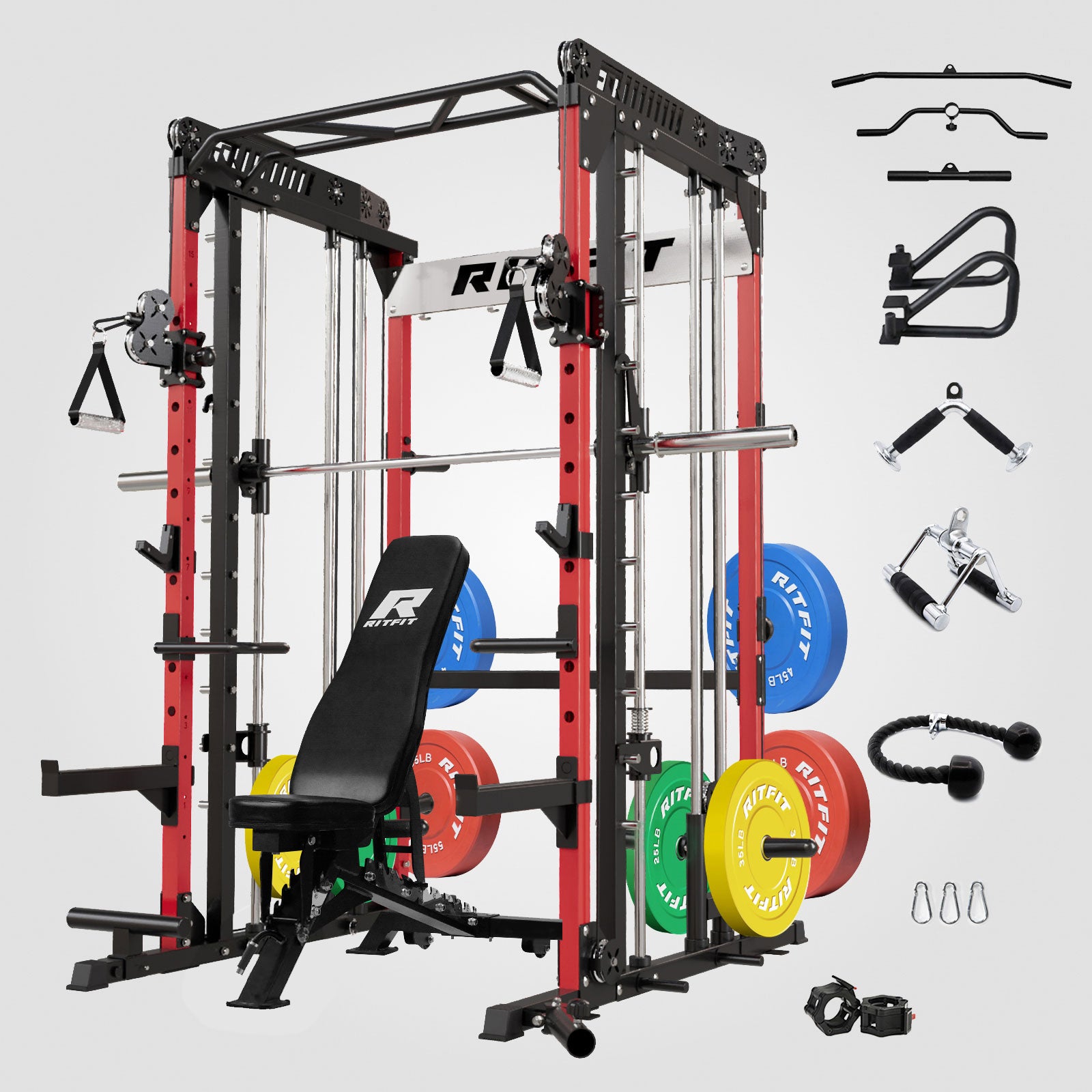
If you're like most gym goers, you've probably had to adjust your workouts before due to an overabundance of patrons lined up for the Smith Machine. As annoying as this can be, it probably conveyed two very important messages to you:
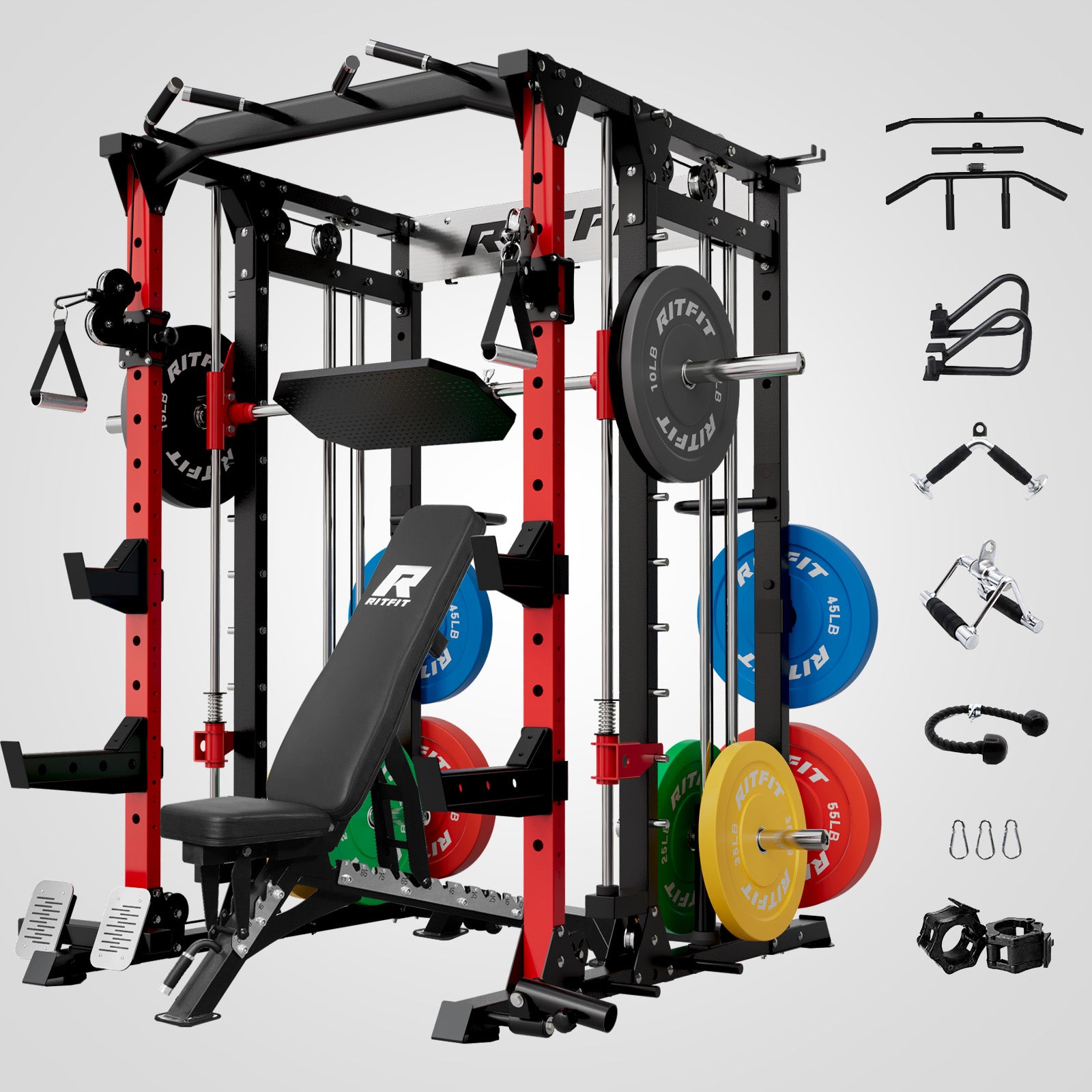
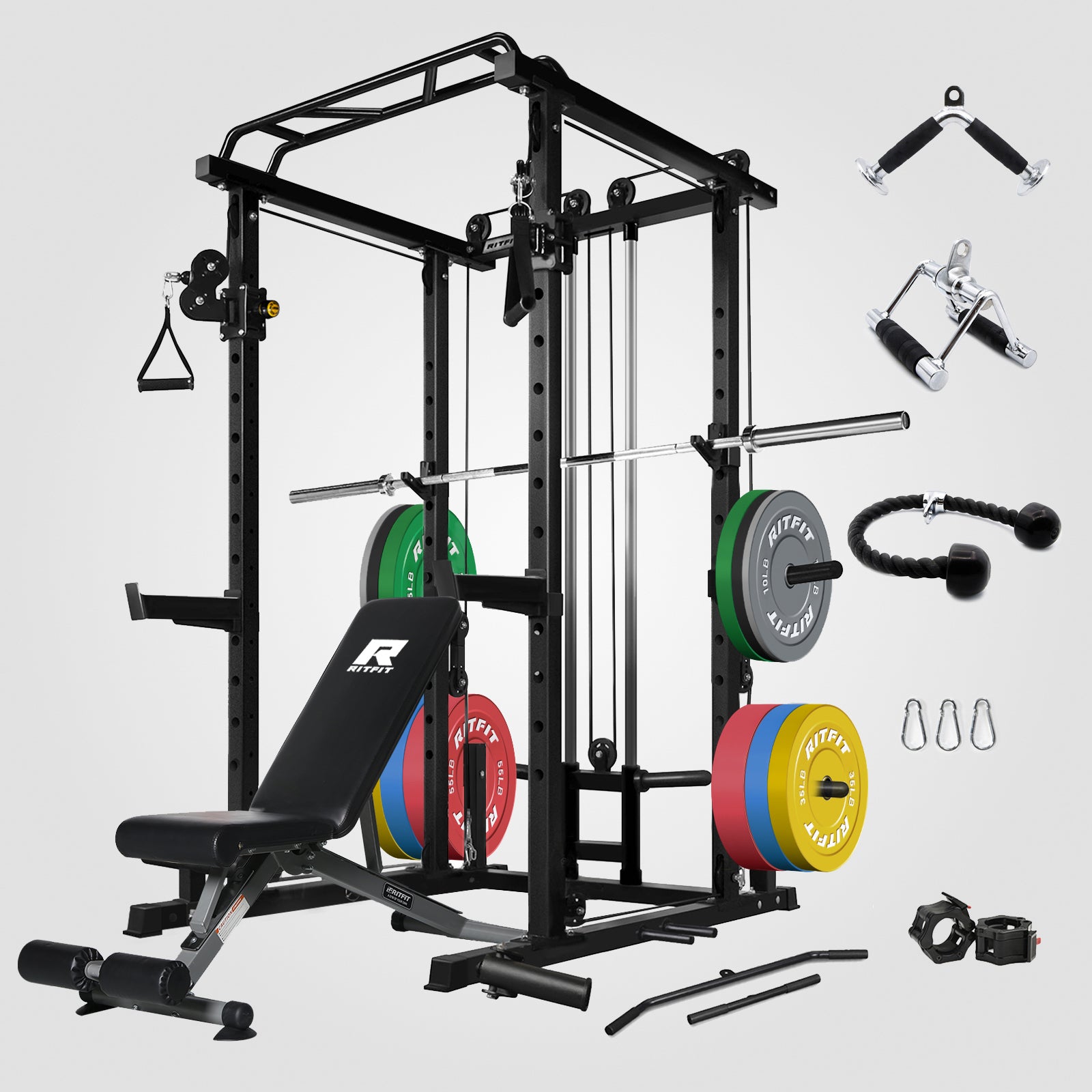
- It wouldn’t hurt to invest in your own Smith Machine (the PSR05, M1, and Buffalo all make excellent options).
- If the machine is that popular, there must be a lot of legitimate exercises to perform on it.
You'll be happy to know that we agree with both of these statements! However, is it really possible to get a full body workout in with only a Smith Machine…?
We are going to go with “yes” on this one.
While it is possible, you'll probably find that your development is slightly uneven. Smith Machine exercises lend themselves more to heavy, compound lifts that work multiple muscles (especially the legs) more than they do to isolation exercises (especially those involving arms).
Don't worry, though; we have some arm work planned for you! Just consider our choices for the 10 must-do Smith Machine exercises to be the “leg day” workout you've been neglecting:
Key Takeaways
- A Smith machine is best used for high effort sets on big compound patterns like squat hinge press and row, plus a few controlled accessories.
- Your results improve fastest when each exercise includes clear setup cues, safety stop placement, and an easy progression rule.
- Most people need only six to eight Smith machine movements to cover the whole body well, not twenty.
- Safety stops and a repeatable range of motion matter more than adding weight too fast.
- Pair lower body and upper body patterns across the week, then add one to two isolation moves only if recovery is strong.
The 10 Must-do Smith Machine Exercises
Smith Machine Squat:
The “King of Exercise” movement transfers pretty well to the Smith Machine as this is the most popular Smith Machine exercise out there. Due to the machine's ability to keep the bar constantly balanced and the bar's fixed range of motion, don't hesitate to load a bit more weight on when performing this squat variation.
Muscles Worked:
- Primary: Quadriceps and glutes.
- Secondary: Adductors and hamstrings.
- Stabilizers: Core and spinal erectors, upper back for bar position.
Step by Step:
- Step1: Set the safety stops just below your deepest squat depth.
- Step2: Set your stance so your full foot stays down and knees can track over toes.
- Step3: Unrack the bar, brace your core, and keep your ribs down.
- Step4: Sit down between your hips under control until you reach your target depth.
- Step5: Drive up by pushing the floor away and stand tall, then rerack with control.
Smith Machine Leg Press:
If you can get a little creative, it's not difficult to turn your Smith Machine into a vertical leg press machine. Simply lie on the floor, arrange the bar to a level where it is easy to unrack with your feet, and press out. If this seems a bit too complex for you, we suggest opting for a machine like our Buffalo that has an easy-to-use leg press attachment, simplifying the process while maximizing safety.
Muscles Worked:
- Primary: Quadriceps and glutes.
- Secondary: Hamstrings and adductors depending on foot height.
- Stabilizers: Core and hip stabilizers to keep knees tracking.
Step by Step:
- Step1: Set the safety stops high enough that the bar cannot contact your hips or ribcage.
- Step2: Lie under the bar and place your feet on the bar with mid-foot contact and heels supported.
- Step3: Unrack with your feet and lower slowly until knees bend to a controllable depth.
- Step4: Press the bar away smoothly while keeping knees tracking over toes.
- Step5: Stop short of locking out hard, control the return, then rerack safely.
Safety note: Always set the safety stops high enough so the bar cannot drop onto your hips or ribcage, and avoid letting your knees collapse inward at the bottom of the press.
Smith Machine Hip Thrust:
Hip thrusts are arguably at their best when performed in a Smith Machine. Don't be afraid to load up the weight since the machine's weight balancing abilities, combined with the relatively high strength output of the glute muscles, allows you to push hard on this exercise. If the feeling of the bar against your body is a little bit too uncomfortable, throw a yoga mat across your lap to maximize your comfort.
Muscles Worked:
- Primary: Glutes.
- Secondary: Hamstrings and adductors.
- Stabilizers: Core and spinal erectors to keep a neutral torso, hip stabilizers.
Step by Step:
- Step1: Place your upper back on a stable bench and set the bar across your hip crease with padding.
- Step2: Set safety stops so you can rerack at the top position without moving the bench.
- Step3: Unrack, brace, and lower your hips under control with shins close to vertical at the bottom.
- Step4: Drive hips up until your torso is near parallel to the floor and squeeze glutes at the top.
- Step5: Pause briefly, lower with control, then rerack cleanly when the set is done.
Smith Machine Deadlift:
Although the deadlift has some leg-building qualities, we classify this as more of a back exercise. We also suggest taking a more upright posture with chest held high due to the bar's fixed path (which ensures that it stays as close to the legs as possible throughout the duration of the lift). This setup may be a little different from your usual approach to deadlifting, but will open up a whole new range of muscle development.
Muscles Worked:
- Primary: Glutes, hamstrings, and spinal erectors.
- Secondary: Lats and upper back for bar control.
- Stabilizers: Core and grip, hip stabilizers.
Step by Step:
- Step1: Set safety stops slightly below your bottom position so you can stop safely if form breaks.
- Step2: Stand with mid-foot under the bar, then hinge back to grip the bar just outside your thighs.
- Step3: Brace hard, pull your shoulders down and back, and keep the bar close to your legs.
- Step4: Stand up by pushing the floor away and locking out with glutes, not by leaning back.
- Step5: Hinge back first on the way down, then bend knees, return to the start, and repeat.
Smith Machine Rows:
Bent-over rows are excellent at building middle and upper back muscle and strength. Like many other Smith Machine exercises, the ability to quickly rerack the weight (in any one of 9 settings, if you have a machine like the M1 to work on) allows you to use a little bit more weight than you would if you opted for free weight rows.
Muscles Worked:
- Primary: Lats and mid back (rhomboids and middle traps).
- Secondary: Rear delts and biceps.
- Stabilizers: Core and spinal erectors to hold your hinge position.
Step by Step:
- Step1: Set the bar height around knee to mid-thigh level and set safeties for an easy rerack.
- Step2: Hinge to a strong torso angle and keep your spine neutral with a tight brace.
- Step3: Pull the bar toward lower ribs or upper stomach by driving elbows back.
- Step4: Pause for a brief squeeze without standing up or shrugging.
- Step5: Lower under control to straight arms, keep torso still, and repeat.
Smith Machine Bench Press:
One of the most popular gym exercises is also one of the most popular Smith Machine exercises. This is a fun exercise, but be mindful that it is impossible to dump the plates off either side during a failed attempt. However, like many of the other previously mentioned movements, the ability to quickly rerack the weight when you're about to fail a rep is a valuable safety feature that makes up for this.
Muscles Worked:
- Primary: Chest (pectoralis major).
- Secondary: Triceps and front delts.
- Stabilizers: Upper back and core to keep a stable pressing base.
Step by Step:
- Step1: Center the bench under the bar and set safety stops so the bar stops slightly above your chest.
- Step2: Plant feet firmly, retract shoulder blades, and keep wrists stacked over forearms.
- Step3: Unrack and lower the bar to a consistent touch point with control.
- Step4: Press up smoothly while keeping shoulders packed and feet driving into the floor.
- Step5: Finish the rep, then rerack by rotating the hooks with control, not by rushing.
Incline Smith Machine Press:
Lifters looking to work on upper chest development exercises will particularly enjoy doing incline presses in the Smith Machine. The initial unracking of the barbell in this exercise can be especially tricky and usually requires the assistance of a spotter. This makes the Smith Machine version much more appealing.
Muscles Worked:
- Primary: Upper chest (clavicular head of the pecs).
- Secondary: Front delts and triceps.
- Stabilizers: Upper back and core to keep ribs down and shoulders stable.
Step by Step:
- Step1: Set the bench to a moderate incline and align it so the bar lands on upper chest level.
- Step2: Set safety stops so the bar cannot drop into a painful shoulder position.
- Step3: Unrack, brace, and lower slowly with elbows at a comfortable angle.
- Step4: Press up and slightly back toward the rack line while keeping ribs down.
- Step5: Lock out under control, then rerack cleanly with the hooks.
Smith Machine Shoulder Press:
The “traditional” shoulder press movement can be particularly difficult due to lifters having to contend with a serious “sticking point” at the beginning of the movement. By setting the bar height just above this point, you can enjoy almost all of the benefits of this movement while minimizing the initial difficulty.
Muscles Worked:
- Primary: Deltoids (anterior and medial heads).
- Secondary: Triceps and upper chest.
- Stabilizers: Core, upper back, and scapular stabilizers.
Step by Step:
- Step1: Sit on a bench with back support and set the bar just above your hardest start position.
- Step2: Set safety stops so the bar cannot drop below a safe chin or upper chest height.
- Step3: Unrack, brace glutes and core, and keep ribs down.
- Step4: Press overhead in a smooth line, letting your head move slightly back then return under the bar.
- Step5: Lower to the same start point with control, repeat, then rerack safely.
RELATED: How To Do Smith Machine Shoulder Press
Smith Machine Upright Row
The upright row is an effective, front deltoid-building exercise that, even with lower weights, requires significant control to properly perform. The Smith Machine helps to keep the bar perfectly balanced throughout the lift, simplifying the lift and requiring less focus on stabilizing the bar for the duration of each rep.
Muscles Worked:
- Primary: Deltoids and upper traps.
- Secondary: Biceps and forearms.
- Stabilizers: Core and scapular stabilizers to control shoulder motion.
Step by Step:
- Step1: Choose a grip slightly wider than shoulders and set safeties for a quick rerack.
- Step2: Stand tall, brace, and keep the bar close to your thighs at the start.
- Step3: Pull the bar up the torso by leading with elbows until it reaches upper chest height.
- Step4: Pause briefly with control, avoiding a shruggy, rushed top position.
- Step5: Lower slowly to the start, keep posture tall, and repeat.
Smith Machine Close Grip Bench Press
There was no way we were going to finish off our workout without including an arm-blaster exercise! Despite its name, the close grip version of the bench press directly targets the triceps, stimulating growth and strength development. Performing these in a Smith Machine, minimizes the need for a spotter and maximizes the amount of weight that can be used.
Muscles Worked:
- Primary: Triceps.
- Secondary: Chest and front delts.
- Stabilizers: Upper back and core for pressing stability, forearms for wrist control.
Step by Step:
- Step1: Set the bench under the bar and set safety stops slightly above your chest at the bottom.
- Step2: Take a grip slightly inside shoulder width with wrists stacked and elbows tucked slightly.
- Step3: Unrack and lower to a consistent touch point under control.
- Step4: Press up by driving through the palms while keeping shoulders packed.
- Step5: Lock out smoothly, then rerack with control and reset for the next set.
Smith Machines: From “Must-do” to “Do it All”
As comprehensive as this list looks, it wouldn't be unreasonable to do 2 or 3 sets of each exercise in a single session, effectively giving you a full-body workout…albeit with a slight bias for your lower body muscles.
The good news is, a little extra leg work never hurt anyone!
Want even more good news to finish things out on? If you pushed us, we could pretty easily have made this a list of the “Top 20 Must-Do Smith Machine exercises” or even the “Top 30 Must-Do Smith Machine exercises”.
There are literally that many safe, easy-to-perform, and, most importantly, effective movements to do with a Smith Machine. Whether you would prefer to lift on a more basic model like the PSR05, a middle-of-the-line, but multifunctional option like the M1, or a truly premium machine like the Buffalo, the sky is the limit when it comes to “must-do Smith Machine exercises”!
Now that you've mastered these essential exercises, ensure you're lifting with proper form and precaution by reading our guide on how to train safely on the Smith machine at home gym