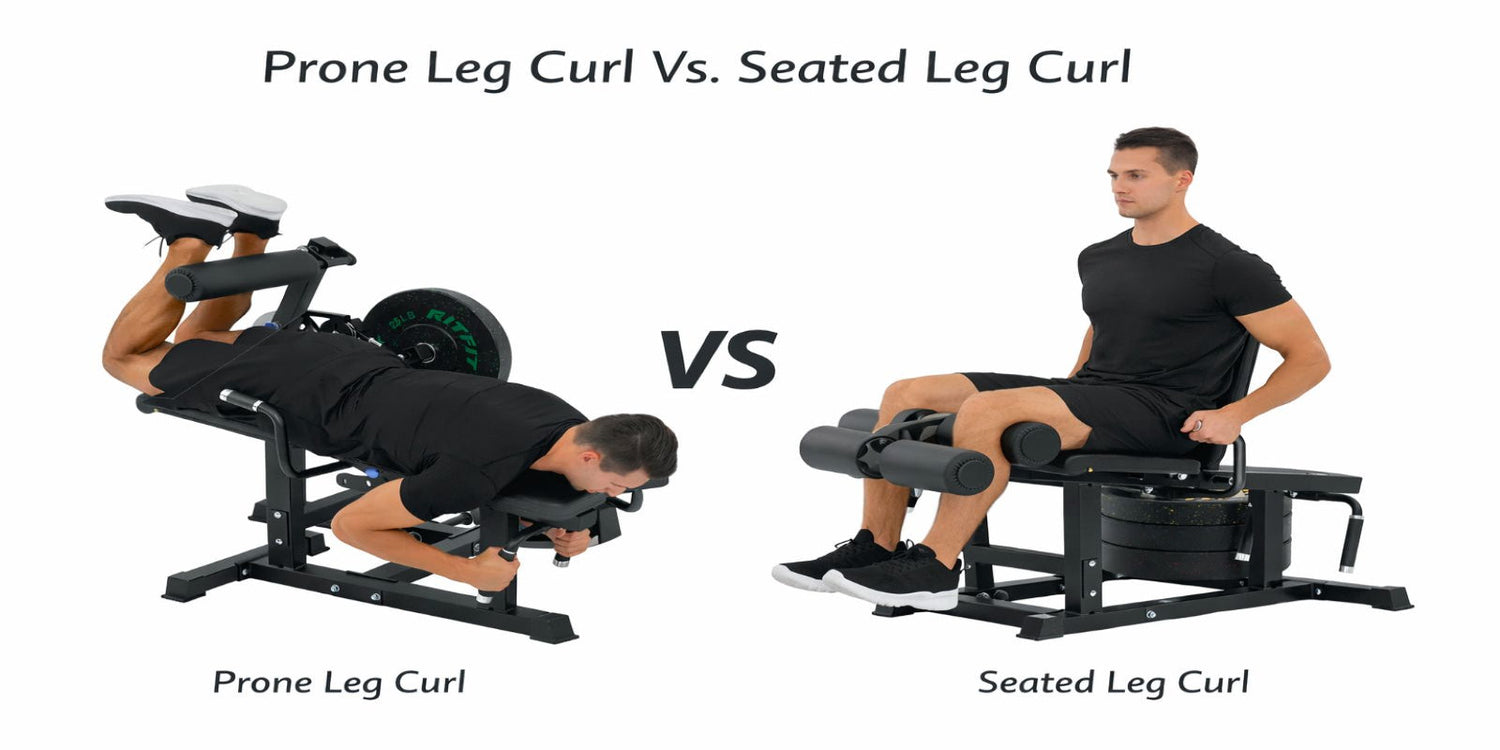
The seated leg curl is usually the better first choice for hamstring growth because it trains the hamstrings in a more lengthened position. The prone leg curl still works well for isolation, variety, and lifters who feel a stronger contraction lying face down.
If you can use both machines, place seated leg curls earlier in your workout and use prone leg curls later for added volume. If you only have one machine, consistent setup, full range of motion, controlled tempo, and progressive overload matter more than the variation itself.
Table of Contents
- Quick Overview: Prone vs. Seated Leg Curl
- Anatomy and Biomechanics of the Hamstrings
- Prone Leg Curl: Deep Dive
- Seated Leg Curl: Deep Dive
- Direct Comparison: Prone vs. Seated Leg Curl
- Programming: How to Use Each in Your Training
- Technique Tips for Any Hamstring Curl Machine
- So Which Is Better?
- Practical Recommendations and Sample Hamstring Curl Plan
Key Takeaways
- Best default for growth: The seated leg curl is usually the better first choice for hamstring hypertrophy.
- Main reason: The seated version places the hips in flexion, which lengthens the hamstrings before knee flexion begins.
- Prone curl value: The prone leg curl remains useful for isolation, peak contraction, machine variety, and higher rep accessory work.
- Form priority: Joint alignment, pad setup, controlled eccentrics, and pain free range of motion matter more than small machine debates.
- Complete training: Leg curls work best when paired with hip hinges such as Romanian deadlifts, not used as the only hamstring movement.
Quick Overview: Prone vs. Seated Leg Curl
The seated leg curl generally offers the stronger hypertrophy case, while the prone leg curl is still a valuable isolation tool. The table below shows the practical differences most lifters notice first.
| Feature | Prone Leg Curl | Seated Leg Curl |
|---|---|---|
| Body Position | Lying face down with hips extended | Seated upright with hips flexed |
| Hamstring Length | Shorter starting length | Longer starting length with more stretch |
| Main Training Feel | Strong top squeeze and isolation | Stretch loaded tension and stable execution |
| Best Use | Secondary volume, pump work, contraction focus | Main hamstring curl sets for growth |
| Home Gym Fit | Good if you prefer a lying curl setup | Good if your machine supports seated knee flexion |
Anatomy and Biomechanics of the Hamstrings
The hamstrings are the main knee flexors on the back of the thigh and also assist hip extension. The group includes the biceps femoris, semitendinosus, and semimembranosus, and most of these muscles cross both the hip and knee joints.
This biarticular structure is why hip position changes the training stimulus. A seated leg curl flexes the hips and lengthens the hamstrings before the rep begins, while a prone leg curl keeps the hips more extended and starts the hamstrings shorter.
Hamstring force and tension can change across joint angles, so the same knee flexion movement can feel different when the hip angle changes.[3] This is the core reason seated and prone curls should not be treated as identical exercises.
Prone Leg Curl: Deep Dive
What It Is and How It Works
The prone leg curl trains knee flexion while you lie face down with the ankle pad against the lower calves. You curl your heels toward your glutes while keeping your hips pressed into the bench.
Muscles Worked and Biomechanics
The prone curl primarily targets the hamstrings, with some help from the gastrocnemius because it also crosses the knee. Since the hips are extended, many lifters feel this version most strongly near the top of the curl.
Benefits of Prone Leg Curl
The prone leg curl is useful when you want a strict isolation movement with a clear top contraction. It also works well as a secondary exercise after heavier seated curls or posterior chain work.
- Isolation: It can help lifters feel the hamstrings contract without heavy spinal loading.
- Body feedback: The bench gives clear feedback if your hips lift or your lower back starts compensating.
- Exercise variety: It gives the hamstrings a different joint position and resistance feel from the seated version.
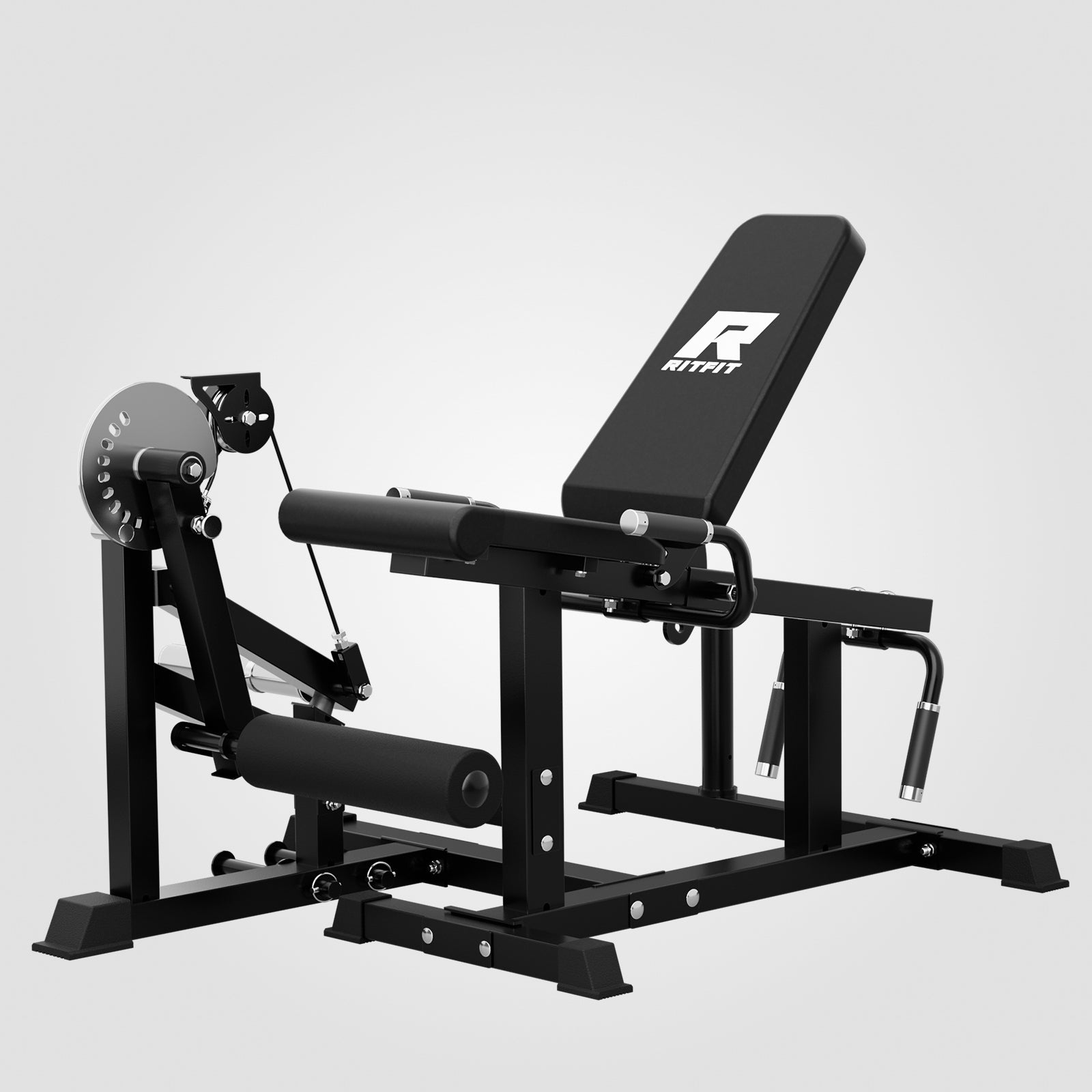
- Home gym relevance: A compact leg extension and curl machine can support focused knee flexion work in a home training setup.
Common Mistakes
The biggest prone curl mistake is using the lower back and hips to move a weight that the hamstrings cannot control. Keep your hips down, lower the load slowly, and avoid turning each rep into a swing.
- Hips lifting: Press your hips into the pad so the hamstrings perform the curl.
- Short reps: Use a full pain free range instead of cutting off the stretch or the contraction.
- Fast lowering: Lower the pad under control instead of letting the weight stack drop.
- Too much load: Choose a weight that allows clean reps without arching your spine.
Who It Is Best For
The prone curl is best for lifters who feel a strong hamstring contraction lying down or who want a second curl pattern after seated work. It is also useful when a seated machine does not fit your body comfortably.
Seated Leg Curl: Deep Dive
What It Is and How It Works
The seated leg curl places you upright with your thighs secured and your lower legs against the lever pad. You curl the pad down and back while keeping the hips, thighs, and torso stable.
Muscles Worked and Biomechanics
The seated curl also targets the hamstrings through knee flexion, but the hips stay flexed during the movement. This places the hamstrings under tension at a longer starting length, which is the main reason it often wins for hypertrophy.
Benefits of Seated Leg Curl
The seated leg curl is usually the best starting point for lifters focused on hamstring size. It is stable, repeatable, and easier to standardize from workout to workout.
- Hypertrophy advantage: A 12 week comparison found greater hamstring growth after seated leg curl training than prone leg curl training.[1]
- Better stability: The thigh pad helps reduce body movement and keeps tension on the target muscles.
- Repeatable setup: Seat depth, lap pad pressure, and lever position can be matched more easily between sessions.
- Leg day integration: A home setup such as the BLP01 and PLC01 leg day package can combine compound lower body work with curl based isolation.
Common Mistakes
The biggest seated curl mistake is rushing the stretched position and bouncing into the next rep. Tighten the lap pad, align your knee with the pivot, and control the first half of every rep.
- Poor knee alignment: Line your knee joint with the machine pivot before loading the exercise.
- Loose lap pad: Secure your thighs so your hips do not slide forward during the curl.
- Rounded lower back: Sit tall and keep your torso supported without forcing an aggressive arch.
- Bottom bounce: Pause briefly near the stretched position instead of rebounding out of it.
Who It Is Best For
The seated curl is best for lifters who want a stable hamstring isolation exercise with a strong growth stimulus. It is especially useful for beginners, hypertrophy focused trainees, and anyone who can set it up pain free.
Direct Comparison: Prone vs. Seated Leg Curl
Muscle Growth Potential
The seated leg curl usually has the stronger case for hamstring growth because it trains the hamstrings at longer muscle lengths. This does not make the prone curl ineffective, it simply makes the seated version the better default when hypertrophy is the main goal.
Muscle Activation and Training Feel
The prone leg curl often feels like a stronger squeeze at the top, while the seated leg curl often feels more challenging in the stretched position. For bodybuilding, both sensations can be useful because they expose the hamstrings to different tension profiles.
Joint Stress and Comfort
Both variations can be safe when the machine fits your body and the load is controlled. If a curl causes sharp knee pain, hip discomfort, or lower back irritation, reduce the range, adjust the machine, or stop the movement.
Machine Design and Practical Factors
The best hamstring curl machine is the one you can adjust correctly and repeat consistently. Pad angle, seat depth, lever length, and resistance curve can change how the movement feels more than the name of the machine.
For a complete home leg training area, many lifters pair curl work with a larger lower body machine such as the GAZELLE PRO 3 in 1 Leg Press and Hack Squat Machine. This creates a more complete setup for quads, glutes, calves, and hamstrings.
Programming: How to Use Each in Your Training
For Muscle Growth
Use the seated leg curl for your main working sets, then use the prone leg curl for extra volume if available. A practical target is 3 to 4 seated sets of 8 to 15 reps, followed by 2 prone sets of 12 to 20 reps.
For Strength and Performance
Use leg curls as accessory work rather than the foundation of your posterior chain training. Pair them with hip hinges such as Romanian deadlifts using a stable barbell like the RitFit 7FT Olympic Barbell.
For Returning From Injury or Managing Discomfort
Use light loads, slow reps, and pain free ranges if you are returning from a hamstring issue. Hamstring strain rehabilitation should be individualized and guided by a qualified clinician when symptoms are recent, severe, or recurring.[5]
Technique Tips for Any Hamstring Curl Machine
Good curl technique starts with joint alignment, body stability, and controlled tempo. Research on resistance training technique supports using meaningful range of motion, long muscle length emphasis, and controlled reps when hypertrophy is the goal.[4]
- Align your knee: Place your knee joint in line with the machine pivot before the first set.
- Secure your body: Use the lap pad, bench, and handles to stop your hips from shifting.
- Control the eccentric: Lower the weight over 2 to 3 seconds rather than letting it fall.
- Use full clean range: Extend the knee under control without forcing hyperextension.
- Avoid calf takeover: Keep your feet neutral or slightly pointed if your calves dominate the curl.
- Pause in the stretch: Own the stretched position before curling the pad back in.
Fuller range resistance training often produces similar or greater lower body hypertrophy than shorter range training, although exercise selection and individual comfort still matter.[2] This is why clean range of motion should be prioritized before adding load.
So Which Is Better?
The seated leg curl is better for most people whose main goal is hamstring hypertrophy. It lengthens the hamstrings more at the start of the movement, is easier to stabilize, and usually fits progressive overload well.
The prone leg curl is still worth using if it feels better, matches your machine access, or gives you a stronger contraction. A strong program can use seated curls for the main growth stimulus and prone curls for secondary volume.
Practical Recommendations and Sample Hamstring Curl Plan
Build your hamstring plan around one hip hinge and one knee flexion exercise. This covers both major hamstring functions and gives you a better training effect than curls alone.
- Compound foundation: Start with Romanian deadlifts or stiff legged deadlifts for 3 sets of 6 to 10 reps.
- Primary isolation: Follow with seated leg curls for 3 sets of 10 to 12 reps with a slow negative.
- Secondary isolation: Add prone leg curls for 2 sets of 12 to 20 reps if you have access to the machine.
- Supportive setup: Use a stable surface such as the RitFit GATOR Adjustable Weight Bench when your workout also includes dumbbell hip hinges, split squats, or supported accessory work.
- Floor protection: Add rubber high density interlocking gym flooring mats if your leg day includes heavy hinges, machines, or plate loaded movements at home.
If your gym only has one curl machine, do not overcomplicate the choice. Use the available version consistently, improve your setup, progress slowly, and keep every rep controlled.
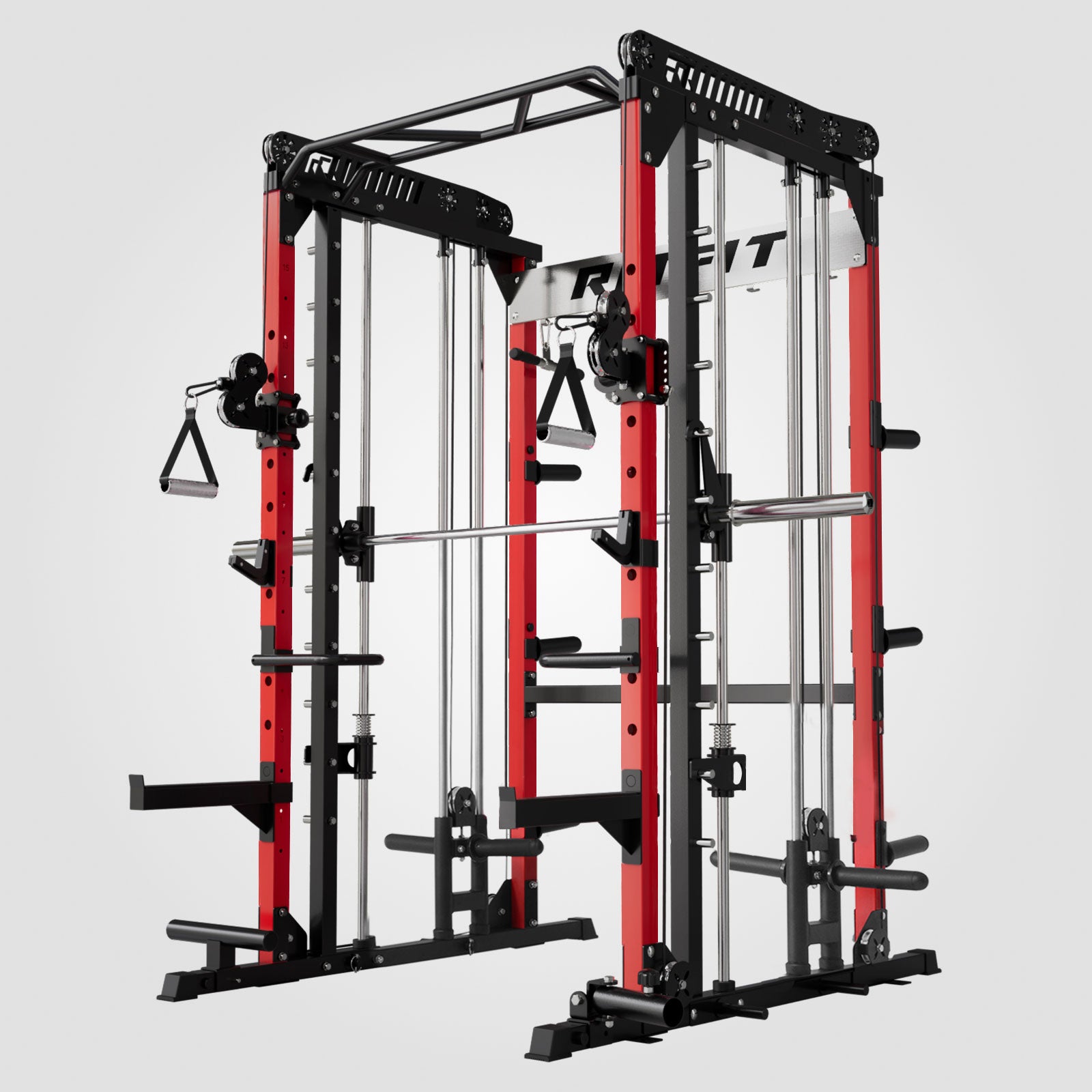
Lifters building a full strength station can also connect hamstring curl work with an all in one training system such as the RitFit M1 PRO Smith Machine with Cable Crossover and BLP01 Package. This helps bridge hamstring isolation, compound leg training, and cable based accessory work in one home gym layout.
FAQs
Which leg curl is better for hamstring growth?
The seated leg curl is usually better for hamstring growth because it trains the hamstrings from a longer starting position. This creates more stretch based tension during knee flexion, which may support hypertrophy better than the shorter starting position used in the prone leg curl.
Is the prone leg curl still worth doing?
Yes. The prone leg curl is still worth doing because it isolates the hamstrings well and often creates a strong top contraction. It works best as a secondary movement after seated curls, hip hinges, or heavier lower body training when you want extra volume.
Can seated leg curls replace Romanian deadlifts?
No. Seated leg curls should not fully replace Romanian deadlifts because they train different hamstring functions. Leg curls focus on knee flexion, while Romanian deadlifts train hip extension, glutes, spinal erectors, and total posterior chain strength more completely.
How should beginners choose between prone and seated leg curls?
Beginners should usually start with the seated leg curl because it is stable, easy to set up, and simple to repeat. If the seated machine feels uncomfortable, the prone leg curl is a good alternative when performed with light weight and strict control.
What causes lower back pain during prone leg curls?
Lower back pain during prone leg curls often comes from arching the spine, lifting the hips, or using too much load. Press your hips into the pad, reduce the weight, slow the eccentric, and stop the set if pain continues.
How many sets of hamstring curls should I do?
Most lifters can start with 3 to 6 total sets of hamstring curls per week. Use 8 to 15 reps for main seated curl work, then use 12 to 20 reps for lighter prone curls if you want extra volume.
Should I do seated leg curls before prone leg curls?
Yes. Do seated leg curls before prone leg curls if hamstring size is your main goal. This lets you train the lengthened position while fresh, then use prone curls later for contraction focused volume, higher reps, and added training variety.
Conclusion
Choose the seated leg curl first if your main goal is bigger hamstrings, then use the prone leg curl as a valuable secondary option. Both exercises can build muscle when your setup is consistent, your reps are controlled, and your program includes progressive overload.
The best hamstring routine combines knee flexion work with hip hinge training. Use the machine that fits your body, control the eccentric, and keep your training pain free.
Disclaimer: This article is for general educational purposes only and is not medical advice. If you have a recent hamstring strain, knee injury, back pain, post surgical limitation, or persistent discomfort during leg curls, consult a qualified healthcare professional before training.
References
- Maeo S, Huang M, Wu Y, Sakurai H, Kusagawa Y, Sugiyama T, et al. Greater hamstrings muscle hypertrophy but similar damage protection after training at long versus short muscle lengths. Med Sci Sports Exerc. 2021;53(4):825-837. doi:10.1249/MSS.0000000000002523
- Schoenfeld BJ, Grgic J. Effects of range of motion on muscle development during resistance training interventions: a systematic review. SAGE Open Med. 2020;8:2050312120901559. doi:10.1177/2050312120901559
- Kellis E, Blazevich AJ. Hamstrings force-length relationships and their implications for angle-specific joint torques: a narrative review. BMC Sports Sci Med Rehabil. 2022;14(1):166. doi:10.1186/s13102-022-00555-6
- Androulakis Korakakis P, Wolf M, Coleman M, Burke R, Piñero A, Nippard J, et al. Optimizing resistance training technique to maximize muscle hypertrophy: a narrative review. J Funct Morphol Kinesiol. 2024;9(1):9. doi:10.3390/jfmk9010009
- Hickey JT, Opar DA, Weiss LJ, Heiderscheit BC. Hamstring strain injury rehabilitation. J Athl Train. 2022;57(2):125-135. doi:10.4085/1062-6050-0707.20