Table of Contents
- Quick Overview: Prone vs. Seated Leg Curl
- Anatomy & Biomechanics of the Hamstrings
- Prone Leg Curl: Deep Dive
- Seated Leg Curl: Deep Dive
- Direct Comparison: Prone vs. Seated Leg Curl
- Programming: How to Use Each in Your Training
- Technique Tips to Get the Most from Any Hamstring Curl Machine
- So Which Is Better?
- Practical Recommendations & Sample Hamstring Curl Plan
Key Takeaways
- For most lifters chasing bigger hamstrings, the seated leg curl is usually the better first choice.
- The seated version challenges the hamstrings at longer muscle lengths, which may improve hypertrophy outcomes.
- The prone version remains useful for strong peak contraction, exercise variety, and lifters who dislike the seated setup.
- Machine setup, joint alignment, and eccentric control matter more than small exercise-selection debates.
- For best results, combine leg curls with compound hip hinges such as Romanian deadlifts instead of replacing them.
Quick Overview: Prone vs. Seated Leg Curl
| Feature | Prone Leg Curl | Seated Leg Curl |
|---|---|---|
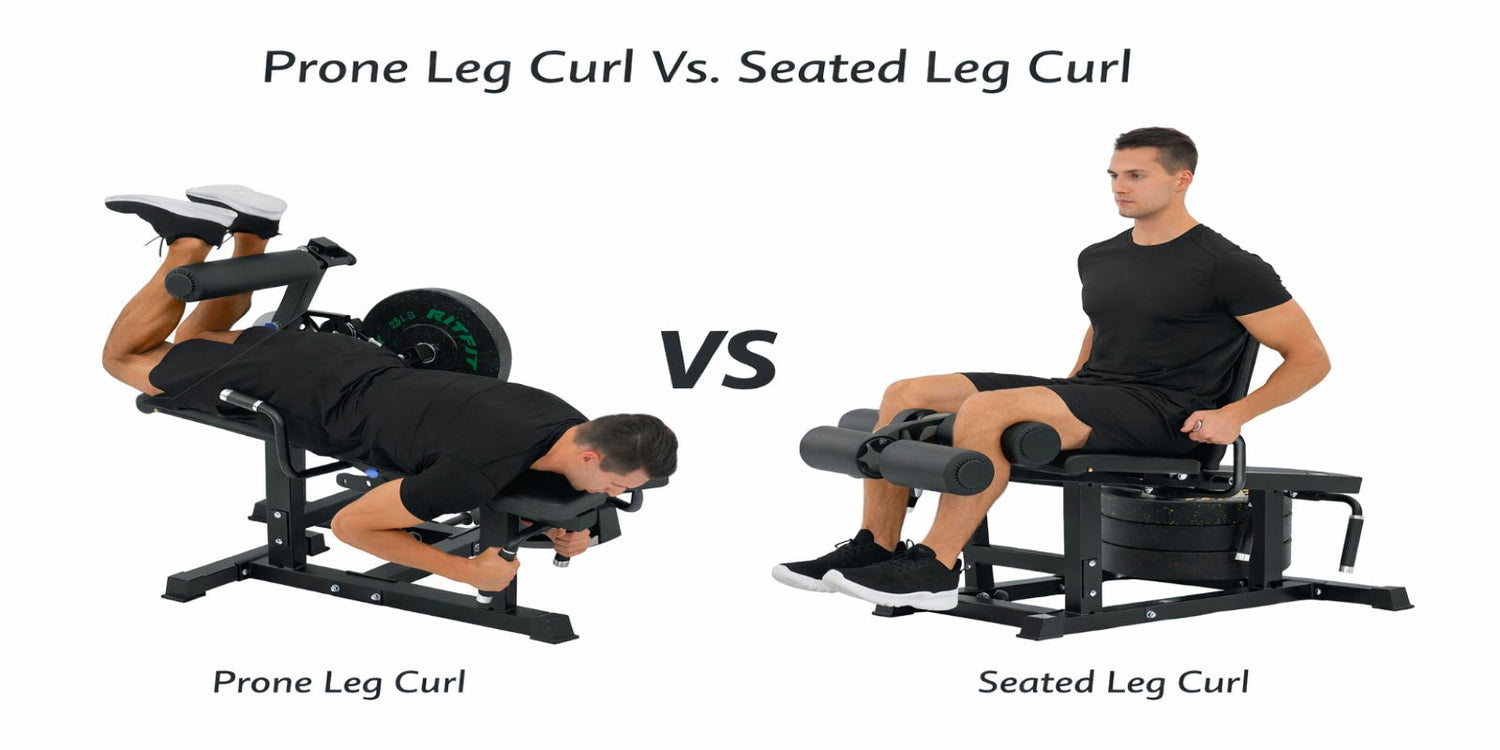
| Body Position | Lying face down with hips extended | Seated upright with hips flexed |
| Muscle Length | Shorter starting length | Longer starting length with more stretch |
| Primary Focus | Peak contraction and isolation | Hypertrophy emphasis and stretch-loaded training |
| Comfort | Can feel awkward for chest or lower back | Generally more comfortable and accessible |
| Best For | Isolation work, variety, contraction focus | Most lifters focused on muscle growth and clean execution |
Anatomy & Biomechanics of the Hamstrings
To understand the difference between these machines, we need a brief look at anatomy. The hamstrings are composed of three main muscles: the biceps femoris, semitendinosus, and semimembranosus. Their primary functions are knee flexion and hip extension. The crucial biomechanical difference lies in hip position.Prone Leg Curl: Deep Dive
What It Is & How It Works
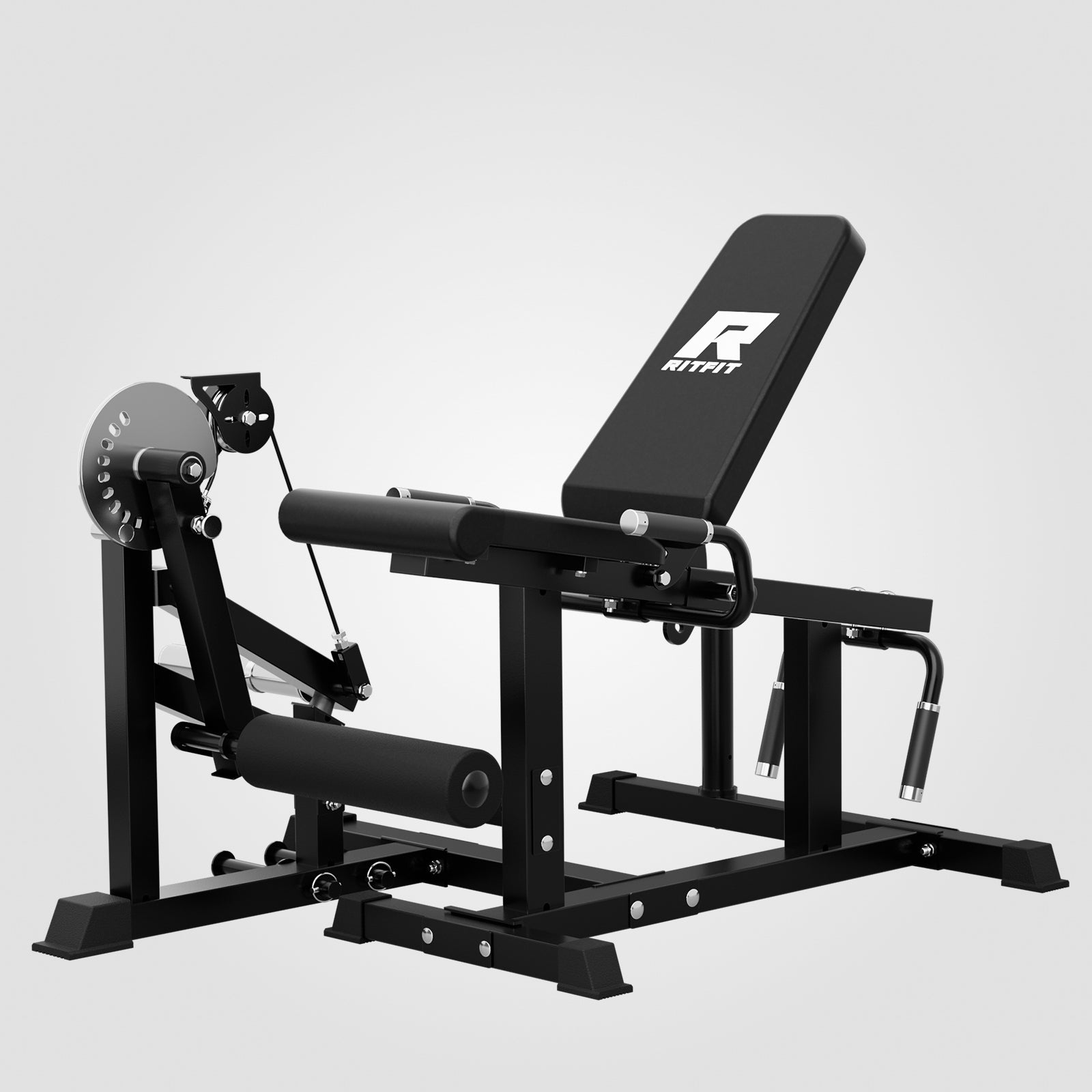
The prone leg curl involves lying face down on a bench with a lever pad resting against your lower calves. You curl your heels toward your glutes while keeping your hips pressed into the bench.Muscles Worked & Biomechanics
While the primary movers are the hamstrings, the prone curl also involves the calves, especially the gastrocnemius, and requires trunk stability to keep the pelvis in position. Since the hips are extended, the hamstrings start from a shorter length. This setup often creates a very strong squeezing sensation at the top of the rep.Benefits of Prone Leg Curl
- Isolation: It can create a strong contraction that improves mind-muscle connection for many lifters.
- Hip feedback: Lying on the bench can help some users feel whether their hips are staying down.
- Variety: It provides a different stimulus from the seated curl and works well as a secondary movement.
Common Mistakes
- Lifting the hips off the pad to create momentum
- Cutting the rep short and skipping the hardest range
- Lowering the weight too quickly
- Using more load than you can control through a full range of motion
Who It’s Best For
This variation is excellent for bodybuilders who want more exercise variety and for lifters who simply feel a better contraction in the lying position. It is also a practical option when the seated machine setup feels awkward or uncomfortable.Seated Leg Curl: Deep Dive
What It Is & How It Works
The seated leg curl places you upright with your legs extended in front of you. A lap pad secures your thighs while you curl the lever down and back under the seat.Muscles Worked & Biomechanics
By sitting with hips flexed at about 90 degrees, you place the hamstrings in a more lengthened position before the rep begins. Biomechanically, muscles can often produce high tension and a strong growth response when trained at longer lengths.Benefits of Seated Leg Curl
- Hypertrophy advantage: Current evidence suggests the seated leg curl may produce greater hamstring growth for many lifters.
- Stability: The lap pad helps lock the thighs in place and reduces cheating.
- Accessibility: It is usually easier to enter, adjust, and repeat consistently.
- Consistency: It is often easier to standardize setup, range of motion, and tempo from session to session.
Common Mistakes
- Misaligning the knee joint with the machine pivot point
- Letting the lap pad sit too loosely
- Rounding the lower back
- Rushing the bottom stretch and turning the rep into a bounce
Who It’s Best For
The seated leg curl is a strong option for evidence-minded trainees focused on hypertrophy, beginners who need stability, and athletes who want more work in a lengthened hamstring position.Direct Comparison: Prone vs. Seated Leg Curl
Muscle Activation & Strength Potential
When we look at the science, the seated leg curl often comes out ahead for hamstring size. A commonly cited 12-week comparison found greater hamstring growth in the seated version than in the prone version. That does not mean the prone curl is ineffective. It means the seated curl is often the better first choice when hypertrophy is the priority.The real-world takeaway is simple: if both machines are available, do your hardest working sets on the seated curl first. Then use the prone curl later for extra volume, a different feel, or higher-rep burnout work.
Joint Stress & Injury Considerations
Both machines are generally safe when adjusted correctly. The prone curl can bother the lower back if you hyperextend your spine to move the load. The seated version is often more forgiving because the torso is supported, but it still requires proper setup and a pain-free range of motion. If you have a recent hamstring strain, knee injury, post-surgical limitation, or persistent back pain, stay within a pain-free range and follow guidance from a qualified clinician or physical therapist.Comfort, Machine Design & Practical Factors
Practically, the best hamstring curl machine is the one you can access and use well. Some gyms only offer one version. If you have both, the seated version is usually the better option for heavy, controlled sets, while the prone version works well for lighter, higher-rep training and contraction-focused finishers. Machine design also matters. Pad angle, resistance curve, seat depth, and lever length can all change how a curl feels. A great machine with a smooth setup will usually outperform a theoretically better exercise done poorly.Programming: How to Use Each in Your Training
For Muscle Growth
Based on current evidence, prioritize the seated leg curl for your main working sets. Aim for 3 to 4 sets of 8 to 15 reps. The prone curl still has value as a secondary movement to add volume and expose the hamstrings to a different stimulus. A simple rule works well: use seated curls for progressive overload, then use prone curls for additional fatigue, pump work, or a different contraction profile.For Strength & Performance
While curls are useful, remember they are isolation exercises. They do not replace foundational compound lifts. Romanian deadlifts, stiff-legged deadlifts, and good mornings place a much larger total demand on the posterior chain. Use the leg curl machine as an accessory, not a substitute.For rehab, prehab & injury prevention
If you are returning from injury, start light and focus on smooth, pain-free reps. The stability of the seated machine often makes it a better starting point, but the right choice still depends on your symptoms, anatomy, and professional guidance.Technique Tips to Get the Most from Any Hamstring Curl Machine
- Align your joints: Ensure your knee lines up with the machine’s pivot point.
- Lock it down: Tighten the lap pad on the seated machine or grip the handles hard on the prone machine to keep your body stable.
- Control the eccentric: Lower the weight over 2 to 3 seconds instead of letting it drop.
- Use full range of motion: Extend fully without forcing the knee into hyperextension, then curl as far as you can with clean form.
- Keep your toes neutral or slightly plantar-flexed if you want to reduce calf dominance and keep more focus on the hamstrings.
- Pause briefly in the stretched position and earn the rep instead of bouncing out of the bottom.
So Which Is Better?
For most people focused on muscle growth, the seated leg curl is better. It usually offers a stronger hypertrophy case because the hamstrings are trained from a more lengthened position. That said, there is no universal winner for everybody. If the seated setup aggravates your hips, knees, or back, the prone curl is still an excellent option.The best exercise is the one you can perform consistently, pain-free, and with high-quality reps over time. Ideally, a complete hamstring program can use both variations to target the muscles through slightly different joint positions and resistance profiles.
Practical Recommendations & Sample Hamstring Curl Plan
To maximize hamstring development, try this structure:- Compound foundation: Start leg day with Romanian deadlifts or stiff-legged deadlifts for 3 sets of 6 to 10 reps.
- Primary isolation: Follow with seated leg curls for 3 sets of 10 to 12 reps, focusing on controlled stretch and a slow negative.
- Secondary isolation: Add prone leg curls for 2 sets of 12 to 20 reps for extra fatigue, peak contraction, and variety.