Push up workouts can build total body strength when you train them with proper form, progressive variations, and balanced accessory exercises. This guide shows you how to use push ups to strengthen your chest, shoulders, triceps, core, and full body control at home or in a gym.
Key Takeaways
- Best for: Beginners, home gym users, busy lifters, and athletes who want efficient upper body and core training.
- Main muscles trained: Chest, shoulders, triceps, serratus anterior, abs, obliques, glutes, and quadriceps.
- Best beginner path: Start with wall push ups or incline push ups, then progress to knee, negative, and standard push ups.
- Best strength method: Increase difficulty through tempo, range of motion, leverage, elevation, and harder variations.
- Best home gym support: Use an adjustable bench, dumbbells, power cage, and gym flooring to expand push up workouts safely.
- Are Push Ups Good for Total Body Strength?
- The Science Behind Push Ups
- Muscles Worked During Push Ups
- How to Do a Push Up With Perfect Form
- Common Push Up Mistakes
- Push Up Progression From Beginner to Advanced
- Best Push Up Variations by Training Goal
- Complete Push Up Workout Programs
- How to Build a Full Body Workout Around Push Ups
- Home Gym Equipment for Better Push Up Workouts
- Recovery and Nutrition for Push Up Strength
- Push Up Goals and Challenges
- Push Ups for Sports Performance
Are Push Ups Good for Total Body Strength?
Yes, push ups are good for total body strength because they combine upper body pressing, core bracing, shoulder stability, and lower body tension. They are not a complete workout by themselves, but they become highly effective when paired with lower body and pulling exercises.
A good push up workout trains more than your chest. It teaches your body to create one strong line from head to heels while your arms press, your core resists sagging, and your legs stay active.
The Science Behind Push Ups
Push ups are a compound bodyweight exercise that can be scaled for beginners or advanced athletes. Research on active adult men found that higher baseline push up capacity was associated with lower future cardiovascular disease events, although this was an association and not proof that push ups directly prevent disease.[1]
A Compound Pressing Pattern
The push up is a horizontal pressing movement that uses your chest, shoulders, triceps, core, and scapular stabilizers at the same time. This makes it useful for building practical strength for getting up from the floor, bracing during sport, and improving upper body control.
Muscle Activation Evidence
Research comparing push up variations found that different hand positions and body angles change activation across the shoulder, trunk, and arm muscles.[2] This is why a complete push up plan should include more than one variation instead of relying only on high rep standard push ups.
Shoulder Stability Value
A scoping review of shoulder EMG activity reported that push up variations can meaningfully involve the pectoralis major, triceps, serratus anterior, and shoulder stabilizers.[3] This supports using push ups as a strength and control exercise when form is strict and pain free.
Muscles Worked During Push Ups
Push ups mainly train the chest, shoulders, and triceps, but the movement also requires strong core and lower body tension. The exact muscle emphasis changes based on hand width, foot elevation, tempo, and range of motion.
Primary Movers
The pectoralis major, anterior deltoids, and triceps brachii produce most of the pressing force. These muscles work together to lower your body under control and push the floor away.
- Chest: The pectoralis major drives horizontal pressing and helps bring the upper arm across the body.
- Front shoulders: The anterior deltoids assist pressing and become more active when the feet are elevated.
- Triceps: The triceps extend the elbows and work harder during narrow grip and diamond push ups.
Stabilizing Muscles
The abs, obliques, glutes, quadriceps, serratus anterior, and rotator cuff stabilize your body during every rep. These muscles keep the push up from turning into a sagging or twisted pressing motion.
- Core: The rectus abdominis and obliques help maintain a firm plank position.
- Serratus anterior: This muscle helps the shoulder blades move smoothly around the rib cage.
- Rotator cuff: These smaller shoulder muscles help control the shoulder joint through each rep.
- Glutes and quads: These muscles lock the lower body into a straight and stable line.
Which Push Up Variation Targets Which Muscle?
Each push up variation changes the training emphasis by altering leverage, hand placement, or body angle. Use this simple guide to match the variation to your goal.
- Standard push ups: Best for balanced chest, shoulder, triceps, and core strength.
- Wide push ups: Best for more chest emphasis when shoulder comfort is maintained.
- Diamond push ups: Best for triceps strength and close grip pressing control.
- Decline push ups: Best for upper chest and front shoulder demand.
- Spiderman push ups: Best for core rotation control and hip involvement.
- Scapular push ups: Best for serratus anterior activation and shoulder blade control.
How to Do a Push Up With Perfect Form
Proper push up form protects your shoulders and makes each rep more effective. The goal is to move your body as one solid unit while your elbows bend and extend under control.
Step 1: Set Your Hands
Place your hands slightly wider than shoulder width with your fingers pointing forward or slightly outward. Keep your palms active and spread your fingers to create a stable base.
Step 2: Brace Your Body
Extend your legs behind you and form a straight line from head to heels. Tighten your abs, squeeze your glutes, and keep your ribs from flaring.
Step 3: Lower Under Control
Bend your elbows and lower your chest toward the floor with control. Keep your elbows roughly 30 to 60 degrees from your torso instead of flaring them straight out.
Step 4: Press the Floor Away
Push through your palms until your arms are straight again. Finish tall through the upper back without shrugging your shoulders toward your ears.
Step 5: Reset Before the Next Rep
Check your body line before starting the next repetition. Stop the set if your hips sag, your neck drops, or your elbows flare uncontrollably.
Common Push Up Mistakes
Most push up problems come from losing body tension or choosing a variation that is too difficult. Fixing these mistakes often improves strength faster than adding more reps.
- Sagging hips: Brace your abs and squeeze your glutes before every rep. Use incline push ups if you cannot hold a straight line on the floor.
- Piking hips: Keep your hips in line with your shoulders and heels. This usually means your upper body is not ready for the current difficulty.
- Flared elbows: Keep your elbows angled back slightly. Excessive flare can increase shoulder stress for many lifters.
- Partial reps: Lower only as far as you can control without pain. Gradually build depth instead of forcing a range your shoulders cannot manage.
- Dropped head: Keep your neck neutral and look slightly ahead of your hands. Your head should move with your spine, not ahead of it.
- Rushing reps: Use a controlled lowering phase. Fast reps often hide weak positions and reduce training quality.
Push Up Progression From Beginner to Advanced
The best push up progression starts with a version you can control perfectly. Progress only when you can complete every rep without sagging, twisting, or shoulder pain.
How to Choose Your Starting Level
Choose the easiest variation that lets you complete clean reps with a straight body line. If your form breaks before the target reps, stay at that level for another week.
- Wall push ups: Choose this level if floor push ups feel impossible or uncomfortable.
- Incline push ups: Choose this level if you can hold a plank but cannot press from the floor.
- Knee push ups: Choose this level if you need less load but can control upper body pressing.
- Negative push ups: Choose this level if you can lower slowly but cannot push back up yet.
- Standard push ups: Choose this level when you can maintain a straight body line through the full rep.
Level 1: Wall Push Ups
Wall push ups build the basic pressing pattern with the least bodyweight load. Stand facing a wall, place your hands at chest height, lower under control, and push back to the start.
- Best for: Complete beginners, older adults, and people rebuilding confidence.
- Progression goal: Complete 3 sets of 15 to 20 clean reps.
Level 2: Incline Push Ups
Incline push ups are the best bridge between wall push ups and floor push ups. Place your hands on a bench, counter, or sturdy elevated surface and lower the incline over time.
- Best for: Beginners who can brace well but cannot yet handle floor loading.
- Progression goal: Complete 3 sets of 12 to 15 reps on a low incline.
Level 3: Knee Push Ups
Knee push ups reduce the amount of bodyweight you must press while still training a floor based pattern. Keep your body straight from knees to head and avoid bending at the hips.
- Best for: Lifters who need a lower load but want to train near the floor.
- Progression goal: Complete 3 sets of 10 to 15 reps with strict control.
Level 4: Negative Push Ups
Negative push ups build strength through the lowering phase. Start at the top of a full push up, lower for 3 to 5 seconds, then reset from your knees.
- Best for: Lifters who can control descent but cannot press up from the bottom.
- Progression goal: Complete 3 sets of 5 to 8 slow negative reps.
Level 5: Standard Push Ups
Standard push ups are the foundation for intermediate and advanced training. Keep your body rigid, lower under control, and press back up without losing alignment.
- Best for: Lifters who can brace their body and complete full range reps.
- Progression goal: Complete 3 sets of 15 clean reps before moving to harder variations.
Best Push Up Variations by Training Goal
The best push up variation depends on whether your goal is strength, muscle, power, endurance, or shoulder control. Use one main variation and one support variation in each workout instead of doing every variation at once.
Wide Push Ups for Chest Emphasis
Wide push ups place more emphasis on the chest when performed with shoulder control. Keep the hands only moderately wide and avoid forcing the elbows straight out.
Diamond Push Ups for Triceps Strength
Diamond push ups increase triceps demand because the hands are close together. Start with a narrow push up before using a full diamond hand position if your wrists feel strained.
Decline Push Ups for Upper Chest and Shoulders
Decline push ups raise your feet and increase the pressing demand on the upper chest and front shoulders. Start with a low elevation before using a higher bench.
Tempo Push Ups for Muscle Control
Tempo push ups increase time under tension and reduce momentum. Try a 3 second lower, 1 second pause, and controlled press up for clean strength work.
Pause Push Ups for Bottom Position Strength
Pause push ups build control where many lifters are weakest. Hold the bottom position for 1 to 3 seconds while keeping your ribs, hips, and shoulders aligned.
Spiderman Push Ups for Core Challenge
Spiderman push ups add hip and oblique involvement to the pressing motion. Bring one knee toward the same side elbow as you lower, then alternate sides.
Archer Push Ups for Advanced Strength
Archer push ups shift more bodyweight toward one arm. Use them as a stepping stone toward assisted one arm push ups.
Plyometric Push Ups for Power
Plyometric push ups train explosive pressing strength. Start with small hand lifts before progressing to clapping reps.
Scapular Push Ups for Shoulder Blade Control
Scapular push ups train the shoulder blades without bending the elbows. Studies on push up plus variations suggest this pattern can support serratus anterior and shoulder stabilization training.[5]
Complete Push Up Workout Programs
The best push up workout matches your current strength level and gives your body enough recovery. Use clean reps, controlled rest, and gradual progression instead of testing maximum reps every session.
Program 1: Beginner 4 Week Foundation
This beginner plan builds the strength needed for standard push ups. Train 3 days per week with at least one rest day between sessions.
- Week 1 and 2: Wall push ups, 3 sets of 12 to 15 reps.
- Week 1 and 2: High incline push ups, 3 sets of 8 to 10 reps.
- Week 1 and 2: Knee push ups, 2 sets of 6 to 10 reps.
- Week 1 and 2: Plank hold, 3 sets of 20 to 30 seconds.
- Week 3 and 4: Low incline push ups, 3 sets of 10 to 12 reps.
- Week 3 and 4: Knee push ups, 3 sets of 10 to 12 reps.
- Week 3 and 4: Negative push ups, 2 sets of 5 reps.
- Week 3 and 4: Plank hold, 3 sets of 30 to 45 seconds.
Program 2: Intermediate 4 Week Builder
This intermediate plan builds volume, control, and variation strength. Train 4 days per week and stop each set 1 to 2 reps before form failure.
- Week 1 and 2: Standard push ups, 4 sets of 12 to 15 reps.
- Week 1 and 2: Wide push ups, 3 sets of 10 to 12 reps.
- Week 1 and 2: Diamond push ups, 3 sets of 8 to 10 reps.
- Week 1 and 2: Decline push ups, 3 sets of 8 to 10 reps.
- Week 3 and 4: Standard push ups, 4 sets of 15 to 20 reps.
- Week 3 and 4: Tempo push ups, 3 sets of 8 reps.
- Week 3 and 4: Spiderman push ups, 3 sets of 8 reps per side.
- Week 3 and 4: Pause push ups, 3 sets of 6 reps.
Program 3: Advanced 4 Week Power Plan
This advanced plan is for lifters who already own standard push ups. Train 4 days per week and keep explosive reps low quality never high fatigue.
- Week 1 and 2: Decline push ups, 4 sets of 12 to 15 reps.
- Week 1 and 2: Archer push ups, 3 sets of 6 to 8 reps per side.
- Week 1 and 2: Plyometric push ups, 3 sets of 6 to 8 reps.
- Week 1 and 2: Scapular push ups, 3 sets of 12 reps.
- Week 3 and 4: Assisted one arm push up progressions, 4 sets of 3 to 5 reps per side.
- Week 3 and 4: Clapping push ups, 3 sets of 5 to 8 reps.
- Week 3 and 4: Tempo push ups, 3 sets of 6 reps.
- Week 3 and 4: Planche lean holds, 3 sets of 15 to 20 seconds.
How to Build a Full Body Workout Around Push Ups
Push ups become a better total body workout when you pair them with squats, lunges, rows, carries, and core training. This prevents your program from becoming too push dominant.
Push Up Full Body Circuit
This circuit trains pressing strength, legs, and core in one short session. Rest 60 to 90 seconds after each round and repeat 3 to 5 rounds.
- Push ups, 8 to 12 reps.
- Bodyweight squats, 12 to 15 reps.
- Reverse lunges, 8 to 10 reps per leg.
- Plank hold, 30 to 45 seconds.
- Incline or inverted rows, 8 to 12 reps.
Pair Push Ups With Pulling Exercises
Every push focused program should include pulling work to support balanced shoulder development. Pair push ups with dumbbell rows, inverted rows, lat pulldowns, or pull ups.
Home gym users can pair push ups with rows using RitFit hex rubber dumbbells or a rack based setup. A balanced push and pull routine helps your shoulders feel stronger and more stable over time.
Pair Push Ups With Lower Body Work
Push ups do not replace leg training, so include squats, lunges, step ups, or hip hinge movements. This makes the workout more complete and improves total body conditioning.
For lifters building a compact home gym, the RitFit strength machines collection can support lower body and accessory work that bodyweight push up training does not fully cover.
Home Gym Equipment for Better Push Up Workouts
You do not need equipment to start push ups, but the right home gym setup makes progression smoother and safer. A bench, dumbbells, rack, and floor protection can turn a simple push up plan into a complete strength program.
Adjustable Bench for Incline and Decline Push Ups
An adjustable bench helps beginners scale push ups and lets advanced lifters perform decline variations. The RitFit GATOR adjustable weight bench is a natural fit for incline push ups, decline push ups, dumbbell rows, and pressing accessories.
Power Cage for Pull Ups and Inverted Rows
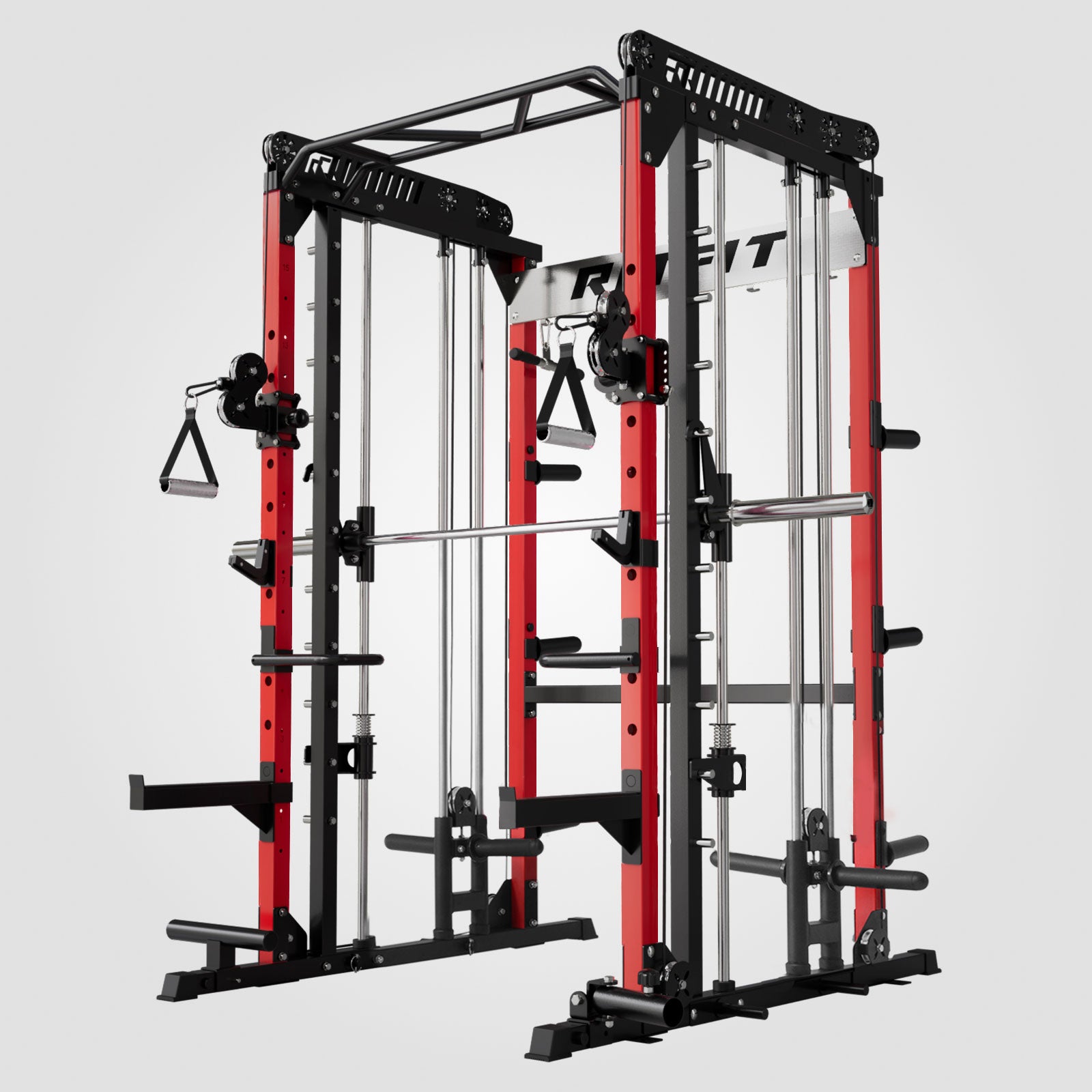
A power cage helps balance push up training with vertical and horizontal pulling. The RitFit P3 power cage with smooth cable system can support pull ups, cable rows, and full body strength training.
Dumbbells for Balanced Accessory Work
Dumbbells help train the pulling and shoulder support muscles that push ups do not fully overload. A simple pair of RitFit dumbbells can add rows, lateral raises, curls, presses, and loaded lower body work.
Gym Flooring for Wrist and Body Control
Stable flooring helps your hands and feet stay planted during push up sessions. RitFit rubber interlocking gym flooring mats can protect your training area and create a more secure surface for home workouts.
Rack Attachments for Training Variety
Rack attachments can expand a push up based program into a broader home gym routine. Explore RitFit rack attachments if you want more cable, lever arm, and accessory options around your main strength setup.
Recovery and Nutrition for Push Up Strength
Push up strength improves when training stress is matched with recovery. Most lifters make faster progress with 3 to 4 focused push up sessions per week than with sloppy daily max testing.
Protein and Calories
Protein supports muscle repair after hard push up workouts. Many active adults benefit from spreading protein across several meals, but exact needs depend on body size, training volume, and health status.
Rest Between Push Sessions
Allow 48 hours between hard push focused workouts when soreness or performance drop is noticeable. You can train legs, light cardio, mobility, or pulling exercises on non push days.
Sleep and Progress
Sleep supports recovery, motor learning, and training consistency. Poor sleep often shows up as weaker reps, slower recovery, and lower motivation.
Pain Warning Signs
Sharp shoulder, wrist, elbow, chest, or back pain is a signal to stop and adjust. Use easier variations and seek qualified guidance if pain persists.
Push Up Goals and Challenges
Push up goals are useful when they improve form and consistency. Avoid chasing numbers if your body line breaks or your joints feel irritated.
The 20 Clean Push Up Goal
Twenty clean push ups is a strong early milestone for many beginners. Use incline, knee, and negative push ups until full reps are consistent.
The 50 Consecutive Push Up Goal
Fifty consecutive push ups shows strong upper body endurance and core control. Build toward it with submaximal sets rather than constant failure testing.
The 100 Total Rep Session
A 100 rep session means completing 100 total push ups across multiple sets. Break the reps into clean sets and rest long enough to preserve form.
The One Arm Push Up Goal
The one arm push up is an advanced long term strength goal. Build toward it with archer push ups, assisted one arm variations, and strong anti rotation core training.
Push Ups for Sports Performance
Push ups can support sports performance by improving pressing strength, trunk stiffness, and shoulder control. Athletes should choose variations that match their sport demands instead of doing random high rep sets.
For Soccer Players
Soccer players benefit from push ups because upper body strength helps with shielding, balance, falls, and throw ins. Spiderman push ups and plyometric push ups are useful for athletes who need core control and fast force production.
For Basketball Players
Basketball players can use push ups to support passing, rebounding, and upper body contact strength. Decline push ups and explosive push ups are good options when standard reps become easy.
For Combat Sports
Combat athletes need pressing power, shoulder endurance, and full body tension. Plyometric push ups, archer push ups, and tempo push ups can support punching and grappling strength when paired with pulling and rotation work.
FAQs
How many push ups should I do in one workout?
Start with 3 to 5 sets of clean push ups that stop before form breaks. Beginners may use 5 to 10 reps per set, while stronger lifters may use 12 to 25 reps, harder variations, or slower tempo work.
Can push up workouts build total body strength?
Yes. Push up workouts can build total body strength when you brace your core, keep your legs active, and progress the movement over time. For complete development, pair push ups with rows, squats, lunges, and hip hinge exercises.
What is the best push up workout for beginners?
The best beginner push up workout uses wall push ups, incline push ups, knee push ups, and plank holds. Train 3 days per week, keep every rep controlled, and move to a harder level only when your body line stays solid.
Should I do push ups every day?
No. Most lifters progress better with 3 to 4 focused push up sessions per week. Daily push ups can work for light practice, but hard sets every day may slow recovery and increase wrist, elbow, or shoulder irritation.
How can I make push ups harder without weights?
Make push ups harder by slowing the tempo, adding pauses, elevating your feet, narrowing your hand position, or using archer push ups. These methods increase tension and leverage demand without needing extra equipment or a weight vest.
Can push ups replace bench press training?
Yes. Push ups can replace some bench press training when you scale them hard enough and track progression. However, bench press work is easier to load precisely, so many strength focused lifters benefit from using both movements.
What equipment helps with push up progression at home?
An adjustable bench, stable gym flooring, dumbbells, and a power cage can all improve push up progression at home. A bench helps with incline and decline push ups, while dumbbells and a rack help balance pushing with pulling work.
Why do my wrists hurt during push ups?
Wrist pain during push ups often comes from too much extension, poor hand pressure, weak support muscles, or too much volume. Try incline push ups, spread your fingers, warm up your wrists, and stop any variation that causes sharp pain.
Are incline push ups better than knee push ups?
Incline push ups are often better for learning full body alignment because your body stays straight from head to heels. Knee push ups are still useful, especially when you need lower load, but they should not replace incline progression entirely.
Conclusion
Push ups are one of the most practical ways to build upper body strength, core control, and total body tension. Start with the variation you can control, progress gradually, and pair push ups with pulling and lower body exercises for a balanced program.
For home gym training, tools like an adjustable bench, dumbbells, gym flooring, and a power cage can make push up workouts more scalable and complete.
Disclaimer: This article is for general educational purposes only and is not medical advice. If you have shoulder, wrist, elbow, back, chest, or cardiovascular concerns, consult a qualified healthcare professional or certified trainer before starting a new exercise program.
References
- Yang J, Christophi CA, Farioli A, Baur DM, Moffatt S, Zollinger TW, Kales SN. Association between push up exercise capacity and future cardiovascular events among active adult men. JAMA Netw Open. 2019;2(2):e188341. doi:10.1001/jamanetworkopen.2018.8341
- Marcolin G, Petrone N, Moro T, Battaglia G, Bianco A, Paoli A. Selective activation of shoulder, trunk, and arm muscles: a comparative analysis of different push up variants. J Athl Train. 2015;50(11):1126-1132. doi:10.4085/1062-6050-50.9.09
- Kowalski KL, Connelly DM, Jakobi JM, Sadi J. Shoulder electromyography activity during push up variations: a scoping review. Shoulder Elbow. 2022;14(3):326-340. doi:10.1177/17585732211019373
- van den Tillaar R. Comparison of kinematics and muscle activation between push up and bench press. Sports Med Int Open. 2019;3(3):E74-E81. doi:10.1055/a-1001-2526
- Cho SH, Baek IH. Effect of the push up plus exercise at different shoulder rotation angles on shoulder muscle activities. J Phys Ther Sci. 2014;26(11):1737-1740. doi:10.1589/jpts.26.1737