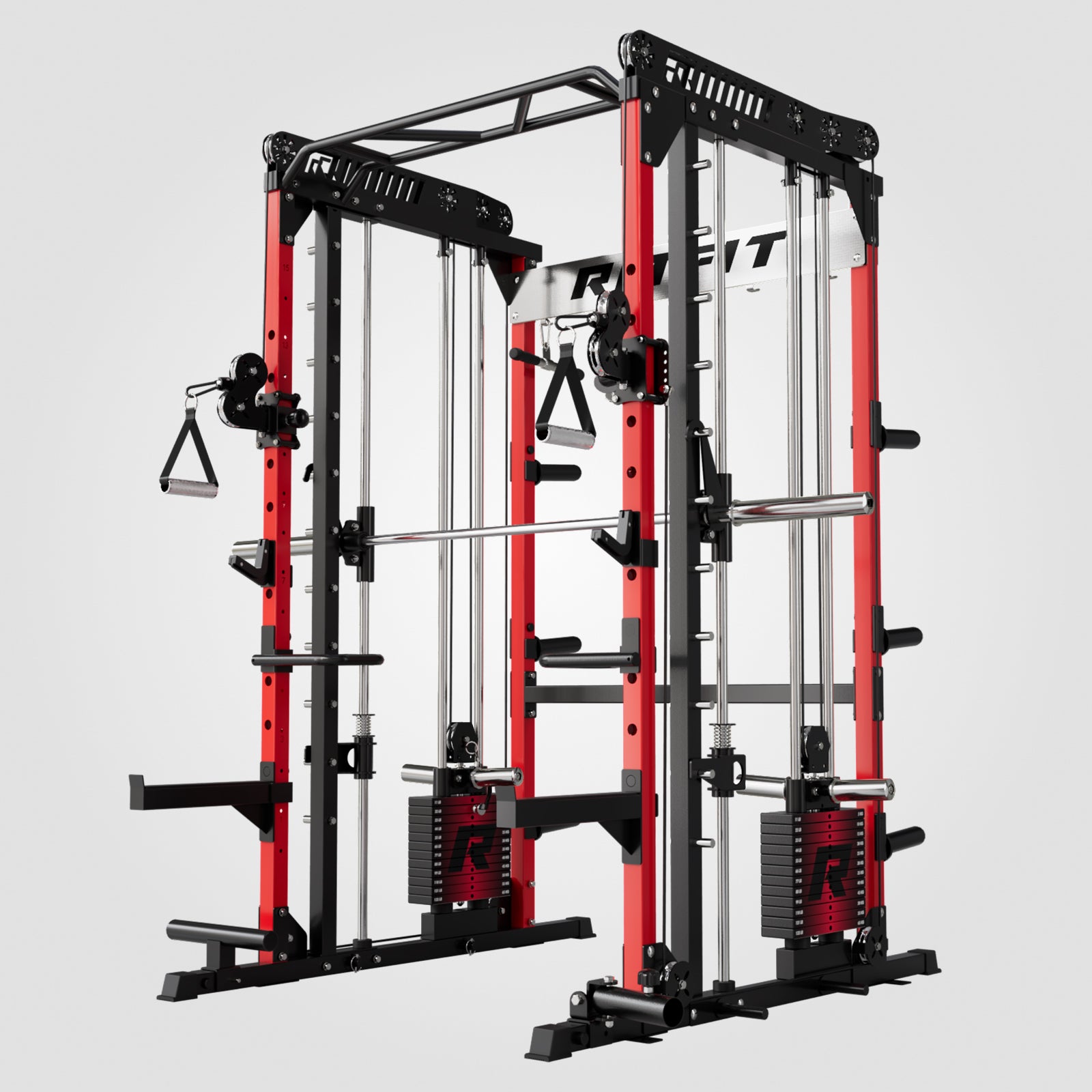
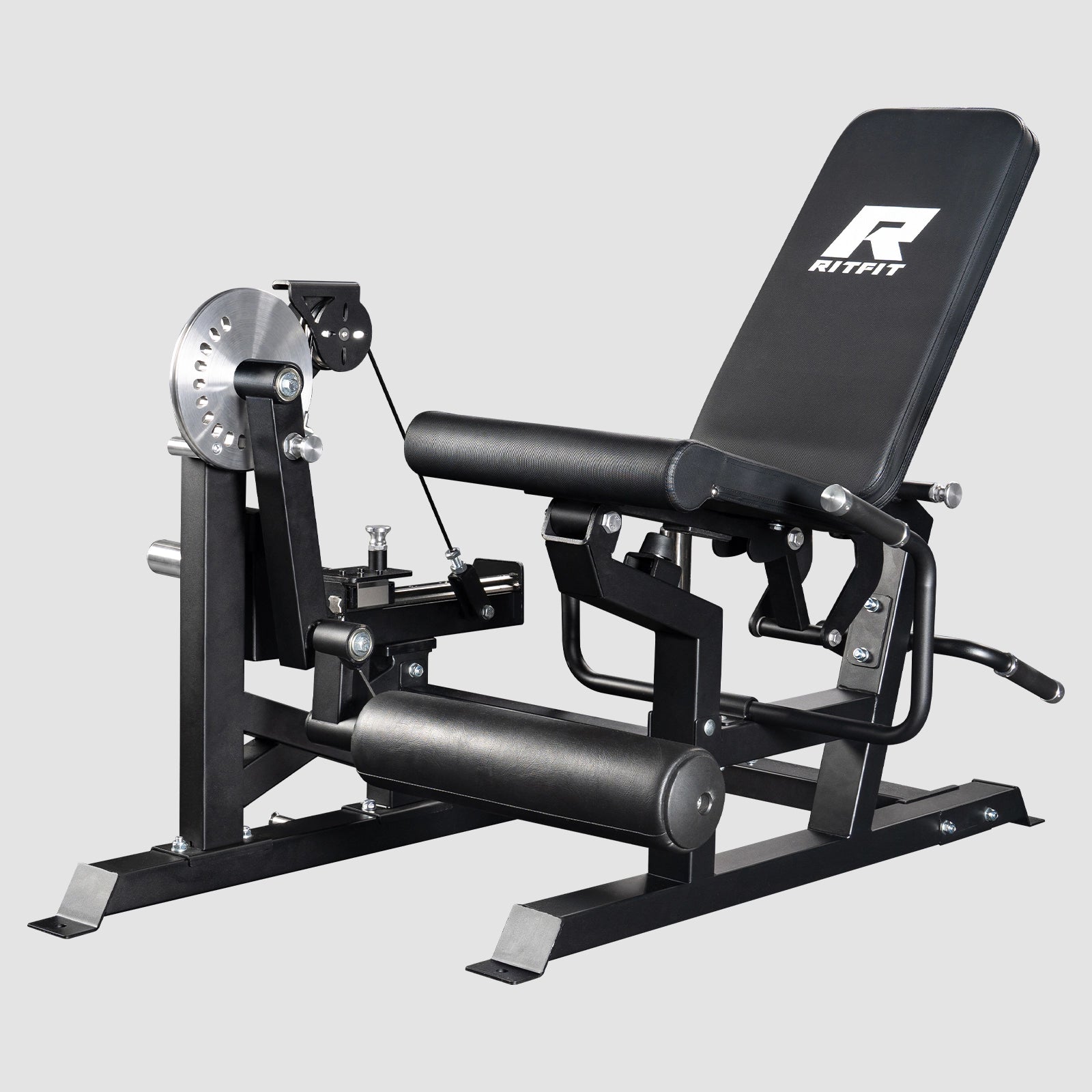
Building a complete home gym often means choosing between versatility and floor space. The RitFit AT03 Belt Squat Attachment turns your existing power rack into a compact lower-body station that removes the spinal compression of a barbell squat.
This guide is written for home gym owners, powerlifters, and lifters managing back or shoulder issues. You will learn the AT03's rack compatibility, step-by-step setup, safe belt squat technique, and flexible programming options, plus maintenance and troubleshooting tips.
Quick Answer: The RitFit AT03 Belt Squat Attachment is a lever-arm rack attachment that lets you train your quads, glutes, and hamstrings with the weight suspended from your hips instead of your shoulders. That removes most spinal compression, fits most 2x2, 2x3, and 3x3 power racks, supports up to 350 lbs, and mounts in about thirty minutes.
Key Takeaways
- Reduced spinal loading: The AT03 carries the load at your hips, so you can train heavy legs with far less compression on your spine.
- Space-saving lower-body station: It converts your power rack into a belt squat station without the footprint of a standalone machine.
- Fit comes down to rack specs: Confirm your upright size, hole spacing, and pin diameter before mounting.
- Setup quality matters: Stable rack placement, secure dual-pin mounting, and a dry run prevent wobble and injury.
- Flexible programming: Use it as a main squat substitute for lower-back relief or as a high-rep finisher for quad and glute hypertrophy.
What Is the RitFit AT03 Belt Squat Attachment?
The RitFit AT03 is a lever-arm belt squat attachment that mounts to your power rack uprights and suspends the load from a hip belt instead of your shoulders.
Overview of the Attachment
The AT03 mounts directly to your rack uprights and uses a loading pin, a durable lever arm, and a hook system for a belt or handle. It is designed to fit a wide range of rack dimensions, so it works in most personal gyms.
Benefits of Belt Squats
The primary benefit of the belt squat is load redistribution. By hanging the weight from your hips rather than your shoulders, you remove most axial spinal compression.
- Lifters with back or shoulder issues: You can train legs heavily even if you cannot hold a barbell comfortably on your back.
- Hypertrophy-focused training: It allows high-volume isolation of the quads, glutes, and hamstrings without upper body fatigue becoming the limiting factor.
- Accessory work: It serves as a burnout exercise after heavy squats or deadlifts.
Who Should Use the AT03
This attachment suits a broad range of trainees. Beginners can learn squat mechanics without balancing a bar, advanced athletes can add heavy accessory volume, and home gym users can maximize the utility of every piece of equipment they own.
Unboxing and Parts Checklist
Unboxing the AT03 means confirming every component is present and undamaged before you begin assembly.

What's Included with the RitFit AT03
When you receive your AT03, the package typically includes these parts.
- The Main Lever Arm: The core structural component.
- Attachment Bracket: Featuring the dual-pin design for secure mounting.
- Weight Loading Pin: Where you slide on your bumper or iron plates.
- Belt and Chain: Essential for connecting yourself to the machine immediately.
- Hardware Pack: Bolts, nuts, washers, and locking pins.
Tools You'll Need
Have these ready to ensure smooth assembly.
- Two adjustable wrenches or a socket set (sizes may vary, so a set is best).
- Rubber mallet (optional, for tapping pins into tight tolerances).
Inspecting for Damage or Missing Parts
Lay out all parts on a clear floor space and check the welds on the lever arm. Make sure the semi-circular discs designed to prevent plate sway are intact.
If any hardware is missing, refer to the included manual and contact customer support immediately. The product typically ships within 2-3 days, so support turnaround is generally prompt.
Compatibility and Setup Preparation
The AT03 fits power racks with 50x50mm, 50x75mm, or 75x75mm uprights, 1-inch holes, and hole spacing between 3.54 and 4.33 inches.

Rack/Frame Compatibility
One of the strongest selling points of the AT03 is its optimized dual adapter for various rack specs. Confirm these criteria before purchasing or installing.
- Tubing Dimensions: Compatible with 50x50mm, 50x75mm, and 75x75mm uprights.
- Hole Spacing: Fits racks with hole spacing in the range of 3.54 to 4.33 inches.
- Pin Size: Designed for standard 1-inch holes.
Choosing the Setup Location
You need clearance in front of the rack for the lever arm to move up and down freely. Make sure nothing obstructs the floor where the plates will touch down, and use rubber mats to protect both the floor and the plates.
Safety Checks Before Installation
Anchor or weight down your power rack before use. The belt squat keeps the weight low, but leverage forces can shift a lightweight, free-standing rack, so check that your uprights are straight and all bolts are tight.
Step-by-Step Installation Guide
Installing the AT03 takes about thirty minutes and requires only basic hand tools plus a clear space in front of your rack.

Assembling the Base/Main Structure
Attach the mounting bracket to your rack upright at a low height, typically near the floor for belt squats. Insert the dual pins through the bracket and the rack holes so the attachment cannot twist under load.
Attaching the Lever Arm or Loading Mechanism
Connect the lever arm to the mounting bracket with the provided pivot bolt and confirm it moves smoothly. Slide the loading pin into position so the two semi-circular discs keep your plates snug and prevent wobble during reps.
Setting the Starting Height
Adjust the chain length or starting stopper so you can stand up comfortably to unrack the weight. The arm should sit low enough for full range of motion without forcing you to round your back.
Attaching the Belt
Clip the provided chain to the attachment point on the lever arm, then attach your belt to the chain. Position the belt comfortably on your hips, not your lower back or stomach.
Final Safety and Function Check
Perform a few reps with the empty arm before loading plates. Listen for grinding noises, confirm the movement is smooth, and double-check that the mounting pins are fully inserted and locked.
How to Perform a Belt Squat Using the AT03
The AT03 belt squat starts by hooking the belt to the lever arm chain and then driving through your feet while your hips track down and back.
Basic Belt Squat Setup
Straddle the lever arm and stand on platforms or boxes if the arm hits the floor before you reach full depth. Set your feet in your preferred squat stance and wear flat-soled shoes for a stable base.
Step-by-Step Belt Squat Technique
- Stance: Set your feet shoulder-width apart or slightly wider.
- Connect: Hook the belt to the lever arm chain and stand tall to lift the weight off its resting point.
- Brace: Hold the rack uprights for stability so you can sit back further than in a free squat.
- Descend: Lower your hips down and back, keeping your shins relatively vertical or letting knees track over toes for your target muscle.
- Depth: Go as deep as your mobility allows.
- Ascend: Drive through your feet to return to the start and squeeze your glutes at the top.
Common Technique Mistakes
Avoid valgus collapse, where your knees fall inward, and do not round your upper back even without a bar. Use your legs to drive the movement rather than pulling yourself up with the rack handles.
Safety Tips During Use
Start with manageable weights while you learn the leverage curve. The AT03 has a 350 lb load capacity, but always confirm your rack is stable before approaching that limit.
"Get some Chuck Taylors or wrestling shoes to see how a flat sole feels, and get some cheap weightlifting shoes to see how you like a raised heel."
Greg Nuckols, MA, Strength Researcher and Coach, "How to Squat" article, Stronger By Science
For another belt squat example, see our guide on how to do the Mammoth belt squat.
How to Program the AT03 Belt Squat in Your Training
The AT03 belt squat works as a main lower-body lift or as a hypertrophy finisher, depending on your goals and how much spinal relief you need.
Using It as a Main Lower-Body Lift
For those avoiding spinal loading, the belt squat can replace the barbell back squat. Perform 3-5 sets of 5-8 reps, and you may push closer to failure safely because you can stabilize with your hands.
Accessory and Hypertrophy Work
The belt squat is known for strong quad pumps. Try sets of 12-20 reps with controlled eccentrics as a leg day finisher.
Sample Training Templates
- Leg Day A: Barbell Squats (Heavy) + Belt Squats (3 sets of 15 reps).
- Leg Day B: Deadlifts (Heavy) + Belt Squats (4 sets of 10 reps) to minimize spinal fatigue.
For more lower-body programming ideas, read our hack squat rack attachment guide.
What Variations Can You Do with the AT03?
The AT03 supports far more than squats, including guided deadlifts, rows, and curls, by adjusting your stance, handles, or belt setup.
Stance and Target-Muscle Variations
The rack handles give you stability, so you can adjust your foot position freely. A narrow stance targets the quadriceps, while a wide sumo stance engages the adductors and glutes more heavily.
Additional Exercise Uses
The AT03 extends beyond squats with the included belt and chain or with different handles.
- Guided Deadlifts: Simulating a deadlift pattern with the lever arm.
- Rows: Bend over and use a handle attachment for back rows.
- Bicep Curls: Stand facing the rack and curl the lever arm for a strict, isolated movement.
Using the AT03 with Other Attachments
Combining the AT03 with resistance bands alters the strength curve and makes the lockout harder, which is excellent for explosive power. RitFit also sells compatible rack attachments such as the AT02A Hack Squat Rack Attachment, the LAM2 Lever Arm Attachment, and the Safe Cable Machine Attachments, while the RitFit 3-in-1 Leg Press and Hack Squat Machine is a dedicated lower-body machine if you prefer no rack attachment.
How Do You Maintain the AT03 Belt Squat Attachment?
The AT03 stays smooth when you wipe the loading pin, tighten the pivot bolt regularly, and lubricate the pivot point if it squeaks.
Routine Maintenance
Wipe down the chrome loading pin periodically to prevent rust. Check the pivot bolt for tightness every few weeks, since vibration can loosen hardware.
Noise and Smoothness Issues
If the pivot point squeaks, a small amount of silicone lubricant restores smooth operation. Make sure the semi-circular discs do not rub against the rack uprights.
Common Problems and Fixes
If the attachment feels wobbly, recheck the dual-pin connection. For rack holes slightly larger than 1 inch, tighten the locking mechanism or add a rubber washer to remove play.
FAQs About the RitFit AT03 Belt Squat Attachment
Will this fit my non-RitFit rack?
Yes, it is highly likely if your rack has 50x50mm, 50x75mm, or 75x75mm tubing, 1-inch holes, and hole spacing between 3.54 and 4.33 inches. Measure your uprights and hole spacing before ordering, because the mounting bracket must align with your rack holes.
What is the maximum weight capacity?
The RitFit AT03 is rated for up to 350 lbs of plates on the loading pin.
Always anchor or weight down your rack before loading the attachment toward that limit, since leverage forces can shift a lightweight, free-standing rack.
Stay below the rated capacity to protect both the attachment and your rack.
Does it come with a warranty?
Yes, the AT03 typically comes with a 1-year warranty against manufacturing defects.
Contact RitFit customer support with proof of purchase if any hardware fails, and the included manual explains the exact claim process.
Keep your order receipt and register the product to make any future claim quicker.
Can I do upper body exercises with it?
Yes, the AT03 works well for rows, curls, and shrugs when you swap the belt for a handle attachment.
The stable lever arm keeps the movement path fixed, so you can isolate the target muscle without holding the weight free.
This makes it a practical all-in-one rack tool.
Is the belt squat safe for a sensitive lower back?
Yes, the belt squat is generally easier on the lower back than a barbell squat because the load hangs from your hips instead of compressing your spine. Start light, brace your torso, and ask a professional before training if you have a diagnosed condition.
Conclusion
The RitFit AT03 Belt Squat Attachment is a powerful, space-saving way to train your lower body without the spinal loading of a barbell squat. It suits lifters with back or shoulder issues, high-volume hypertrophy work, and home gym owners who want more from an existing rack.
Measure your rack, mount the attachment securely, and start light to learn the leverage curve. Browse RitFit deals to complete the rest of your home gym.
Disclaimer
Always consult a qualified professional before starting a new exercise program, and never exceed the AT03's 350 lb capacity. While the belt squat reduces spinal loading, it still places stress on your hips and knees, so use sound technique and a stable, well-anchored rack.