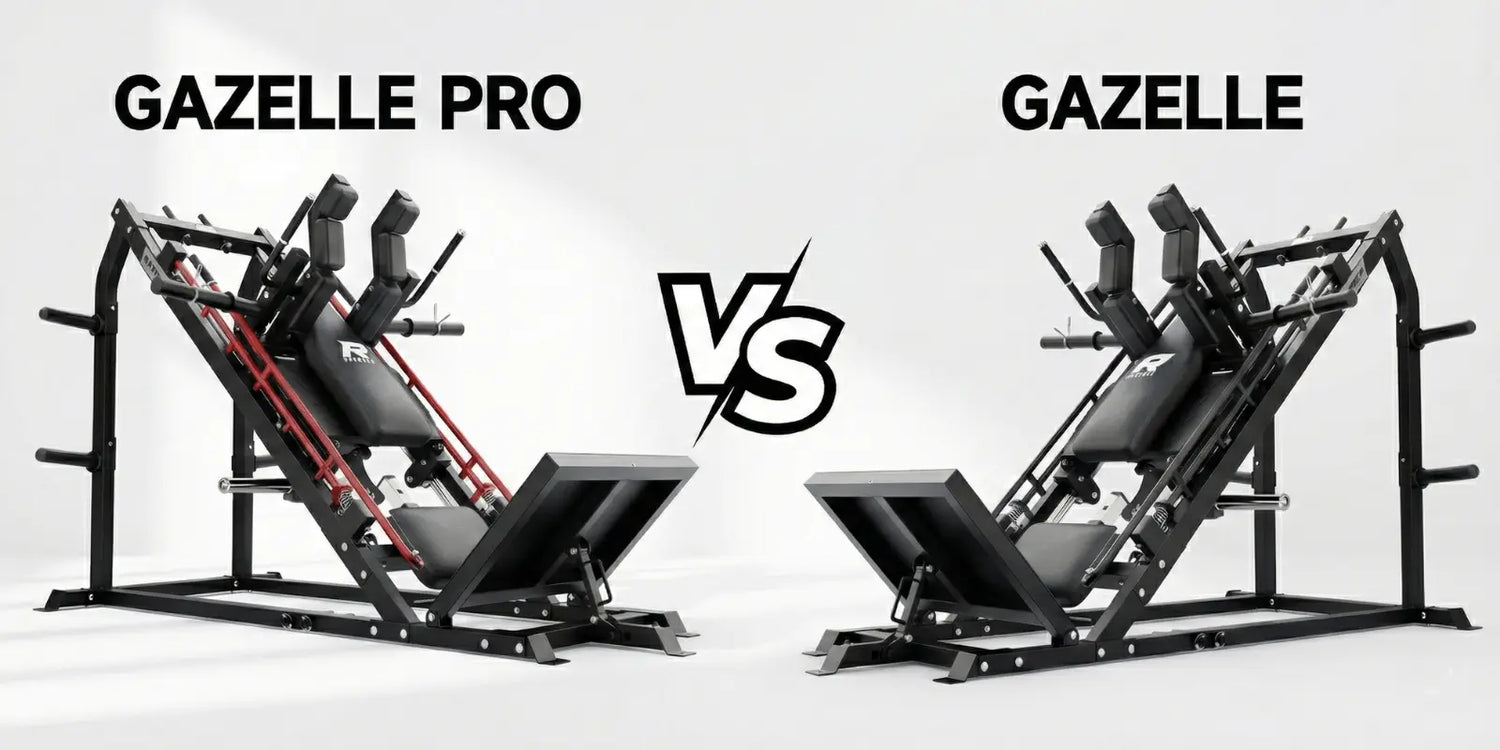
Choose the Gazelle Pro if you want higher load capacity, thicker padding, and more room for long term strength progression.
Choose the Gazelle if you want a smaller footprint, more safety stop levels, and a practical 3 in 1 leg press machine for most home gym training.
Table of Contents
- Quick Verdict
- Gazelle Pro vs Gazelle Comparison Chart
- How We Compared These Machines
- Dynamic Load Capacity
- Static Load Capacity
- Steel Thickness
- Back Pad Thickness
- Dimensions and Footprint
- Safety Stop Levels
- Bearing System
- Lifter Height Range
- Who Should Choose the Gazelle Pro
- Who Should Choose the Gazelle
- Buying Checklist Before You Decide
Key Takeaways
- Gazelle Pro is better for heavy progression: Its higher listed dynamic and static load capacities make it the stronger choice for users who expect to train heavier over time.
- Gazelle is better for tighter spaces: Its smaller listed footprint makes it easier to fit into compact garage gyms, basement gyms, and multi use workout rooms.
- Both machines support the same core movement family: Each machine is designed for leg presses, hack squats, and reverse hack squats.
- Comfort favors the Gazelle Pro: Its thicker listed back pad may feel better during higher volume hack squat and reverse hack sessions.
- Safety setup matters more than specs alone: The best choice is the machine that fits your body, your space, your plate collection, and your training goals.
Quick Verdict

The RitFit Gazelle Pro 3 in 1 leg press and hack squat machine is the better choice for lifters who want more load capacity and a more cushioned training feel.
The RitFit Gazelle 3 in 1 leg press hack squat machine is the better choice for users who want a smaller footprint, more safety stop positions, and a strong value focused setup.
Gazelle Pro vs Gazelle Comparison Chart
This chart shows the most important differences for home gym buyers who are comparing capacity, comfort, space, and safety setup.
| Feature | Gazelle Pro | Gazelle | Best Fit |
|---|---|---|---|
| Dynamic Load Capacity | 1300 lb | 900 lb | Gazelle Pro for heavier training goals |
| Static Load Capacity | 2000 lb | 1500 lb | Gazelle Pro for larger plate storage needs |
| Steel Thickness | 11 gauge steel | 11 gauge steel | Tie |
| Back Pad Thickness | 3.15 in | 2.8 in | Gazelle Pro for extra cushioning |
| Footprint | About 29 sq ft | About 26 sq ft | Gazelle for smaller rooms |
| Height | 57.8 in | 57.5 in | Tie for most ceiling situations |
| Safety Stop Levels | 4 levels | 5 levels | Gazelle for more stop height options |
| Core Movements | Leg press, hack squat, reverse hack | Leg press, hack squat, reverse hack | Tie |
How We Compared These Machines
We compared the Gazelle Pro and Gazelle by the factors that matter most in a home leg press machine, including load capacity, frame build, pad comfort, floor space, safety stops, bearing system, and user height range.
Research on leg press variations shows that setup details can influence lower body muscle activation, so this comparison also looks beyond raw specs and considers real training use.[1]
Dynamic Load Capacity
The Gazelle Pro wins on dynamic load capacity because it is listed at 1300 lb, while the Gazelle is listed at 900 lb.
This makes the Gazelle Pro the stronger option for advanced lifters, long term strength progression, and users who want more room before reaching the machine limit.
- Choose Gazelle Pro: You train heavy, own many plates, or want a machine that leaves more room for future progression.
- Choose Gazelle: You want serious lower body training capacity, but you do not expect to approach extremely high leg press loads.
- Training note: Load capacity is only one part of progress, because hypertrophy and strength also depend on effort, volume, repetition range, and consistency.[4]
Static Load Capacity
The Gazelle Pro also wins on static load capacity because it is listed at 2000 lb, compared with 1500 lb for the Gazelle.
Static capacity matters most if you plan to keep plates on the machine instead of using a separate storage rack.
- For larger plate collections: The Gazelle Pro gives more storage headroom for users who own multiple pairs of Olympic plates.
- For moderate home gyms: The Gazelle still offers a high listed static capacity that should be practical for many home setups.
- Useful pairing: If you are building a plate loaded lower body station, consider pairing either machine with RitFit high grade color bumper plates for a cleaner loading setup.
Steel Thickness
Both the Gazelle Pro and Gazelle are listed with 11 gauge steel, so this category is a tie.
For home gym buyers, this matters because frame stability affects confidence during heavy leg presses, hack squats, and reverse hack movements.
- Build confidence: A stable frame helps the sled feel more controlled during repeated lower body sessions.
- Buyer takeaway: Since both machines list the same steel gauge, your decision should focus more on capacity, space, padding, and safety stop layout.
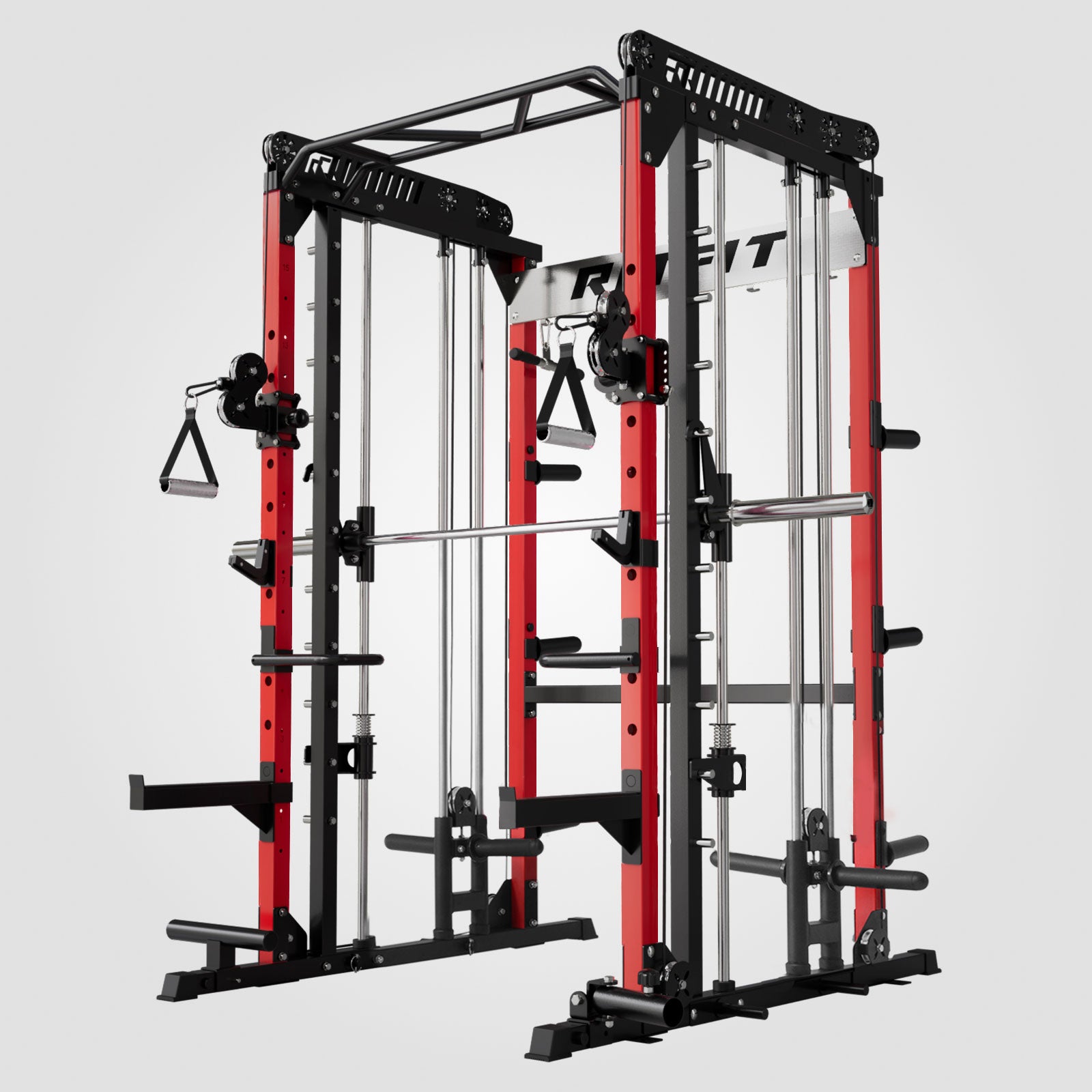
- Home gym context: If you are planning a broader strength setup, the RitFit M1 PRO with BLP01 leg press hack squat package may suit users who want a more complete lower body and full body training station.
Back Pad Thickness
The Gazelle Pro has the thicker listed back cushion at 3.15 in, while the Gazelle is listed at 2.8 in.
This gives the Gazelle Pro an advantage for users who prioritize comfort during hack squats, reverse hacks, and higher volume lower body work.
- Comfort focused buyers: Choose the Gazelle Pro if you expect long hack squat sessions or prefer extra padding against the shoulders and back.
- Value focused buyers: Choose the Gazelle if 2.8 in of listed padding is enough for your routine and you prefer a more compact machine.
- Training note: Comfort can improve consistency because users are more likely to repeat sessions when setup and contact points feel stable.
Dimensions and Footprint
The Gazelle is the more compact choice because it is listed at 83 in by 45 in, or about 26 sq ft.
The Gazelle Pro is still home gym friendly at about 29 sq ft, but it needs slightly more floor space.
- Measure working space: Do not measure only the frame, because you also need room to load plates, walk around the sled, and exit safely.
- Check floor protection: Heavy plate loaded machines are best used on stable flooring, and rubber high density interlocking gym flooring mats can help protect the workout area.
- Ceiling note: The Pro is listed at 57.8 in tall and the Gazelle is listed at 57.5 in tall, so ceiling height should not be the main limiting factor for most rooms.
Safety Stop Levels
The Gazelle wins this category because it is listed with 5 safety stop levels, while the Gazelle Pro is listed with 4.
Safety stop levels matter because they help limit sled travel if you cannot complete a rep or need to set a controlled bottom position.
- Choose Gazelle: You want more stop height options for different exercises, body sizes, and range of motion preferences.
- Choose Gazelle Pro: You are comfortable with 4 stop levels and care more about higher listed load capacity.
- Setup rule: Test the stop position with light weight before heavy sets, because squat and hack squat mechanics can shift hip and knee demands based on position and depth.[3]
Bearing System
Both machines are described with industrial grade roller bearing systems, so this category is another tie.
The bearing system matters because it affects sled smoothness, noise, and how controlled the machine feels during repeated reps.
- For daily use: A smoother sled can make warmups, working sets, and back off sets feel more consistent.
- For shared spaces: Lower machine noise can matter if the equipment is used in a garage, basement, or room near living areas.
- Training note: Foot position and movement velocity can affect leg press muscle activation and kinematics, so smooth movement should support controlled form rather than rushed reps.[2]
Lifter Height Range
The Gazelle has the broader listed height range, especially for very short or very tall users.
The Gazelle Pro still covers a wide range of users, but the Gazelle may be the safer choice if you fall near the outer edges of the stated height ranges.
- Choose Gazelle: You are roughly between 4 ft 5 in and 4 ft 7 in, or between 6 ft 8 in and 6 ft 11 in.
- Choose Gazelle Pro: You fall comfortably inside its listed range and want the higher capacity profile.
- Fit note: User height fit can vary by exercise, stance width, foot position, and preferred range of motion.
Who Should Choose the Gazelle Pro
Choose the Gazelle Pro if your priority is heavier long term training, thicker cushioning, and higher listed storage capacity.
It is the better match for advanced lifters, strength focused users, and home gym owners who want a lower body machine that can grow with their plate collection.
- Best for heavy lifters: The 1300 lb listed dynamic load capacity gives more room for progression.
- Best for comfort focused users: The 3.15 in listed back pad offers more cushioning during hack squat patterns.
- Best for larger plate collections: The 2000 lb listed static capacity can support more plate storage on the machine.
- Best for upgraded leg day setups: Users who want an expanded lower body station can also compare the RitFit BLP01 full leg workout package.
Who Should Choose the Gazelle
Choose the Gazelle if your priority is compact space, more safety stop positions, and strong lower body training value.
It is the better match for small home gyms, first time leg press buyers, and users who want practical performance without chasing the highest possible capacity.
- Best for compact rooms: The 83 in by 45 in listed footprint is easier to place in tighter spaces.
- Best for safety stop flexibility: The 5 listed safety stop levels give users more setup options.
- Best for wide user fit: The listed user height range is slightly broader than the Pro.
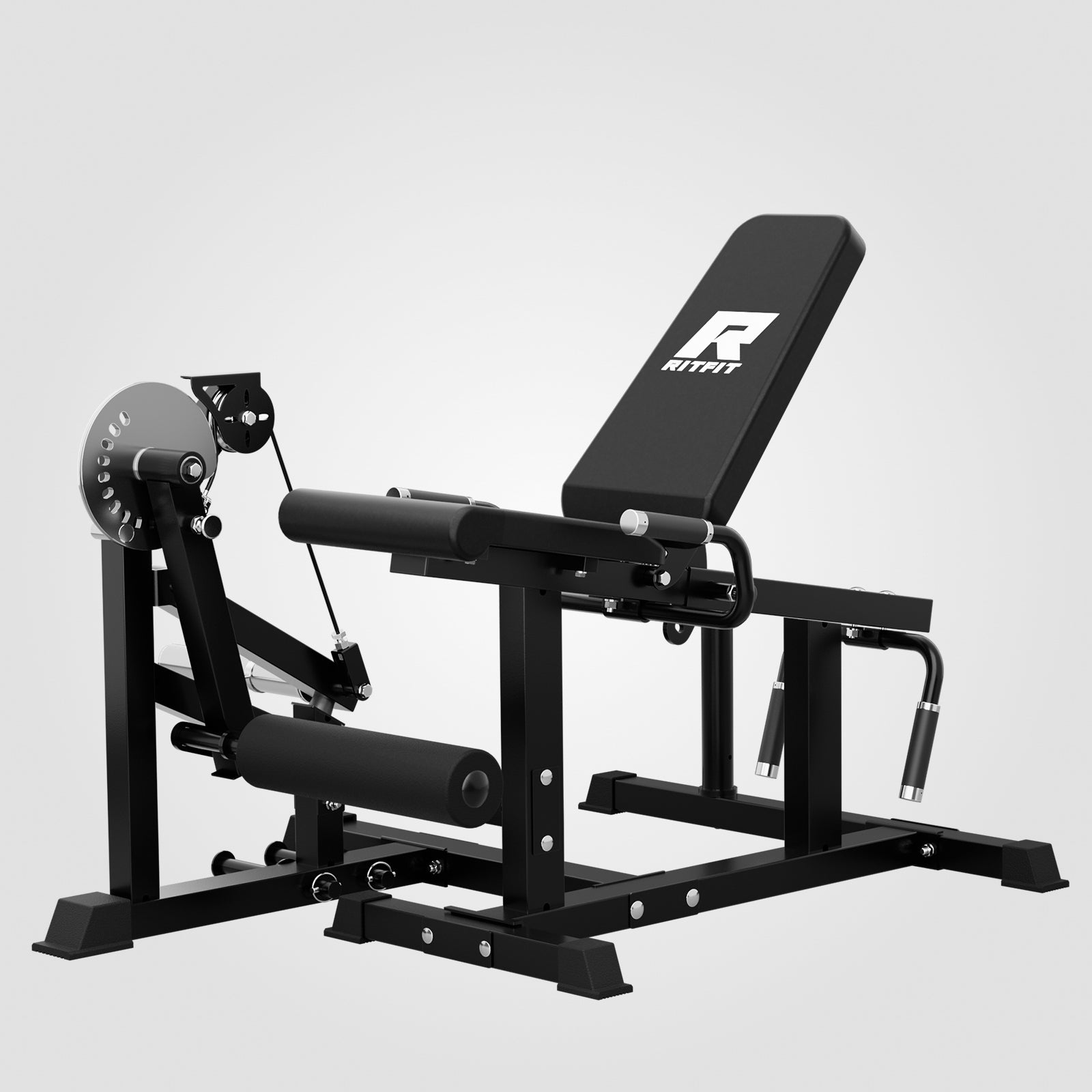
- Best for balanced leg training: Users who want additional knee flexion and extension work can also compare the RitFit PLC01 leg extension curl machine.
Buying Checklist Before You Decide
The best home leg press machine is the one that fits your body, your room, your loading plan, and your long term training goal.
Use this checklist before choosing between the Gazelle Pro and Gazelle.
- Measure the full training zone: Include the machine footprint, plate loading clearance, walking space, and room for safe entry and exit.
- Match capacity to your future goal: Choose more headroom if you want years of heavy leg press progression.
- Plan your accessories: Olympic plates, collars, floor mats, and a stable bench area can make your setup cleaner and easier to use.
- Think about range of motion: Training through a controlled and appropriate range may support lower body development, but comfort and joint tolerance should guide your setup.[5]
- Build the rest of your station: A stable RitFit GATOR adjustable weight bench can help complete pressing, rowing, and accessory work outside lower body machine training.
- Add free weight support: A RitFit 7 ft Olympic barbell can support squats, deadlifts, hip hinges, and other strength work around your leg press routine.
FAQs
Which is better, Gazelle Pro or Gazelle?
Choose the Gazelle Pro if higher load capacity and thicker padding matter most. Choose the Gazelle if a smaller footprint, more safety stop levels, and a wider stated user height range matter more for your room and training style. Both machines support leg press, hack squat, and reverse hack training.
What is the main difference between Gazelle Pro and Gazelle?
The main difference is training headroom versus space efficiency. Gazelle Pro has higher listed dynamic and static load capacities, plus thicker padding. Gazelle has a smaller listed footprint, one additional safety stop level, and a broader stated user height range for very short or very tall lifters.
Is the Gazelle Pro worth it for a home gym?
Yes. The Gazelle Pro is worth it if you want a heavier duty home leg press machine with more room for long term progression. Its higher listed load capacity and thicker back pad make it especially useful for lifters who expect to train hard and keep adding plates over time.
Is the Gazelle better for small home gyms?
Yes. The Gazelle is better for small home gyms because its listed footprint is about 26 sq ft, compared with about 29 sq ft for the Gazelle Pro. You should still measure plate loading space, walking clearance, and safe entry space before choosing the final layout.
Can beginners use the Gazelle Pro or Gazelle safely?
Yes. Beginners can use either machine safely when they start light, learn the setup, and test the safety stops before hard sets. The machine choice matters, but safe training also depends on controlled range of motion, proper loading, smooth tempo, and stopping before form breaks down.
Does the Gazelle Pro take up much more space than the Gazelle?
No. The Gazelle Pro is only slightly larger based on the listed footprints, about 29 sq ft versus about 26 sq ft for the Gazelle. The bigger difference is not height, but total floor planning, including plate loading room, storage space, and walking clearance around the machine.
Which machine is better for heavy leg press training?
The Gazelle Pro is better for heavy leg press training because it has the higher listed dynamic load capacity. That extra headroom matters most for advanced lifters, larger users, and anyone planning long term progressive overload. The Gazelle still offers plenty of capacity for many home gym users.
Should I choose Gazelle Pro or Gazelle for hack squats?
Choose the Gazelle Pro for hack squats if comfort and heavier progression are your top priorities. Choose the Gazelle if more safety stop positions and a smaller footprint matter more. In both cases, test the bottom position first and keep the movement controlled before adding heavy weight.
Conclusion
The Gazelle Pro is the stronger choice for heavier training, thicker padding, and larger plate collections.
The Gazelle is the smarter choice for smaller rooms, more safety stop levels, and practical home gym value.
Disclaimer
This article is for general fitness education and product comparison only. Always follow the product manual, test safety stops with light weight first, use controlled form, and consult a qualified professional if you have knee, hip, back, balance, or injury concerns before heavy lower body training.
References
- Martín-Fuentes I Oliva-Lozano JM Muyor JM. Evaluation of the Lower Limb Muscles' Electromyographic Activity during the Leg Press Exercise and Its Variants: A Systematic Review. Int J Environ Res Public Health. 2020;17(13):4626. doi:10.3390/ijerph17134626
- Martín-Fuentes I Oliva-Lozano JM Muyor JM. Influence of Feet Position and Execution Velocity on Muscle Activation and Kinematic Parameters During the Inclined Leg Press Exercise. Sports Health. 2022;14(3):317-327. doi:10.1177/19417381211016357
- Straub RK Powers CM. A Biomechanical Review of the Squat Exercise: Implications for Clinical Practice. Int J Sports Phys Ther. 2024;19(4):490-501. doi:10.26603/001c.94600
- Schoenfeld BJ Grgic J Van Every DW Plotkin DL. Loading Recommendations for Muscle Strength, Hypertrophy, and Local Endurance: A Re-Examination of the Repetition Continuum. Sports. 2021;9(2):32. doi:10.3390/sports9020032
- Schoenfeld BJ Grgic J. Effects of range of motion on muscle development during resistance training interventions: A systematic review. SAGE Open Med. 2020;8:2050312120901559. doi:10.1177/2050312120901559