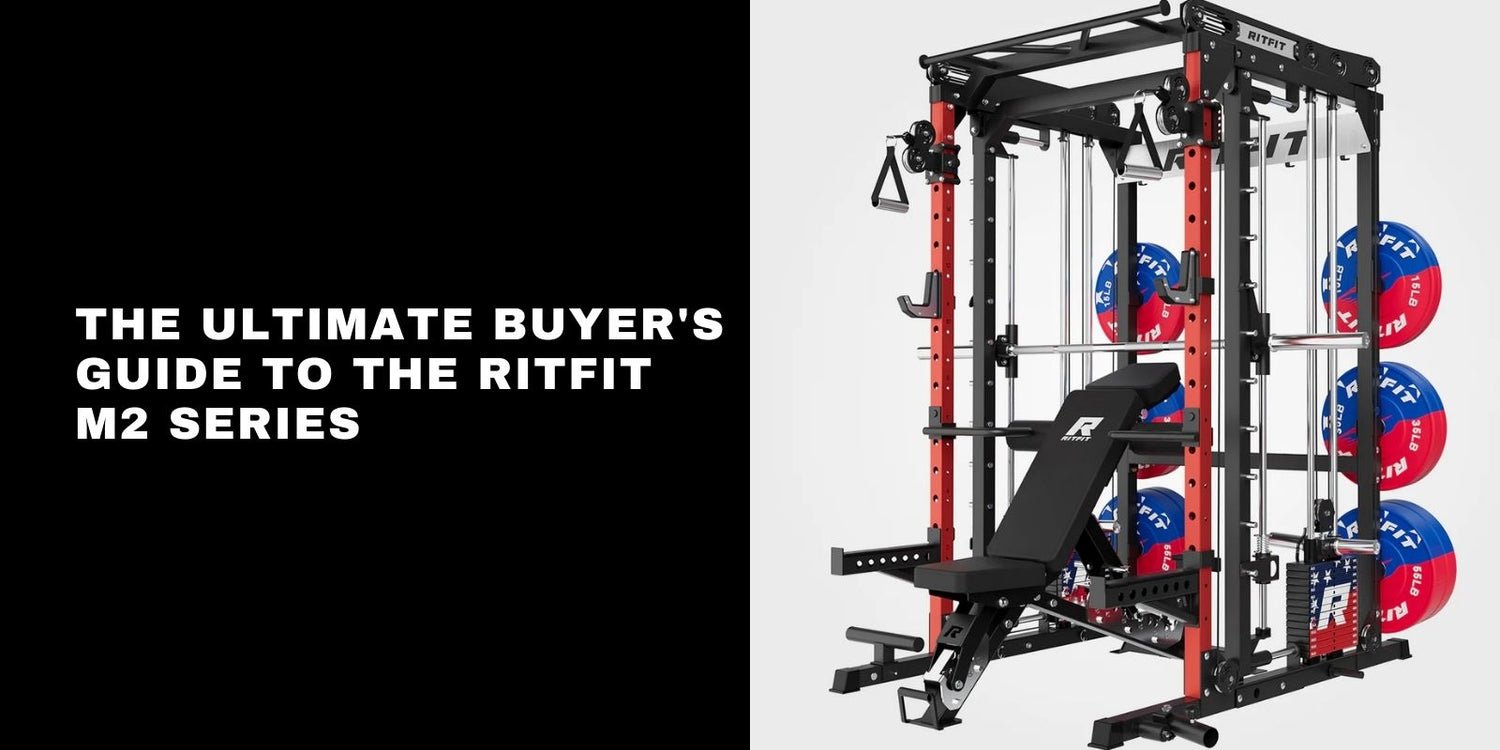
The best RitFit M2 Series package depends on whether you want 3D guided bar movement, built in weight stacks, or both. This guide compares the M2 3D, M2 Pro, and M2 Pro 3D so you can choose the right home gym package for your space, training style, and budget.
The RitFit M2 Series Multi Functional Modular Home Gym Package is designed for lifters who want a compact Smith machine, power rack, cable crossover, pull up station, and attachment ready training system in one frame.
Key Takeaways
- Choose the M2 3D: Pick this package if you want 3D guided bar movement and already own weight plates for cable resistance.
- Choose the M2 Pro: Pick this package if you want fast cable weight changes with built in dual weight stacks.
- Choose the M2 Pro 3D: Pick this package if you want both 3D guided bar movement and built in weight stacks.
- Measure your room first: Check ceiling height, side clearance, front clearance, flooring, and delivery path before buying.
- Plan your upgrade path: Confirm attachment compatibility before adding lever arms, high row pulldown, or leg hold down accessories.
Table of Contents
- Quick Answer: Which RitFit M2 Package Should You Choose?
- M2 3D vs M2 Pro vs M2 Pro 3D Comparison
- What Makes the 3D Guided Bar Different?
- Built In Weight Stacks vs Plate Loaded Cables
- Core Training Stations Included In Every Package
- Before You Buy the RitFit M2 Series
- Growing Your Setup With Compatible Attachments
- Room Size and Floor Space Planning
- Assembly Tips and Common Mistakes
- A Simple Weekly Routine for the M2 Series
- Long Term Care and Cleaning
Quick Answer: Which RitFit M2 Package Should You Choose?
Choose the M2 3D if you want a more flexible guided bar path and prefer using weight plates for cable resistance. Choose the M2 Pro if you want faster cable changes, and choose the M2 Pro 3D if you want the most complete package in the lineup.
- M2 3D: Best for users who already own plates and want 3D guided bar movement.
- M2 Pro: Best for users who want built in weight stacks and simple pin selected cable resistance.
- M2 Pro 3D: Best for users who want 3D bar travel plus built in weight stacks in one machine.
M2 3D vs M2 Pro vs M2 Pro 3D Comparison
The three packages mainly differ in guided bar movement and cable resistance style. Use this table as the first filter before checking final specifications on the current product page.
| Package | Guided Bar Type | Cable Resistance | Best For | Check Before Buying |
|---|---|---|---|---|
| M2 3D | 3D guided bar movement | Plate loaded cable system | Lifters who already own Olympic plates and want a more natural guided bar path | Plate loading time, plate storage, and available side clearance |
| M2 Pro | Vertical guided bar movement | Built in dual weight stacks | Users who want faster cable workouts and easier weight changes | Whether a fixed vertical bar path fits your preferred lifting style |
| M2 Pro 3D | 3D guided bar movement | Built in dual weight stacks | Serious home gym users who want flexible bar travel and fast cable adjustments | Budget, ceiling height, delivery access, and attachment needs |
What Makes the 3D Guided Bar Different?
The 3D guided bar is designed to move vertically while also allowing limited forward and backward travel. This can feel more natural for some lifters because squats, presses, and rows rarely follow a perfectly straight vertical path.
Squat mechanics can change based on stance, trunk angle, joint mobility, and load position, so a guided bar path should support good setup rather than force one rigid pattern.[1]
- More flexible movement: The bar can travel with your body instead of staying locked to one vertical line.
- Guided support: The bar still stays connected to the frame, which helps users train without a spotter.
- Better fit for some lifts: The 3D path may feel especially useful for squats, hip hinges, rows, and pressing variations.
- Form still matters: A 3D track does not replace proper setup, controlled reps, and conservative loading.
Built In Weight Stacks vs Plate Loaded Cables
Your cable resistance system changes how fast and convenient each workout feels. Built in weight stacks are faster, while plate loaded cables are useful if you already own a large plate collection.
Machine based and free weight training can both improve strength, but exercise choice should match the goal, the lifter, and how the strength will be used.[2]
- Built in weight stacks: Weight stacks let you change resistance with a pin, which is useful for supersets, drop sets, and short workouts.
- Plate loaded cables: Plate loaded systems require more setup time, but they work well for lifters who already use Olympic plates.
- Workout speed: Weight stacks are usually better for fast cable circuits because you do not need to move plates between exercises.
- Long term flexibility: Plate loaded systems can grow with your plate collection, but you must account for plate storage and loading clearance.
If you choose a stack based setup, review the current RitFit WSM2 Weight Stack Set for M2 and M2 3D details before purchase. Package contents and compatibility should always be checked against the latest product listing.
Core Training Stations Included In Every Package
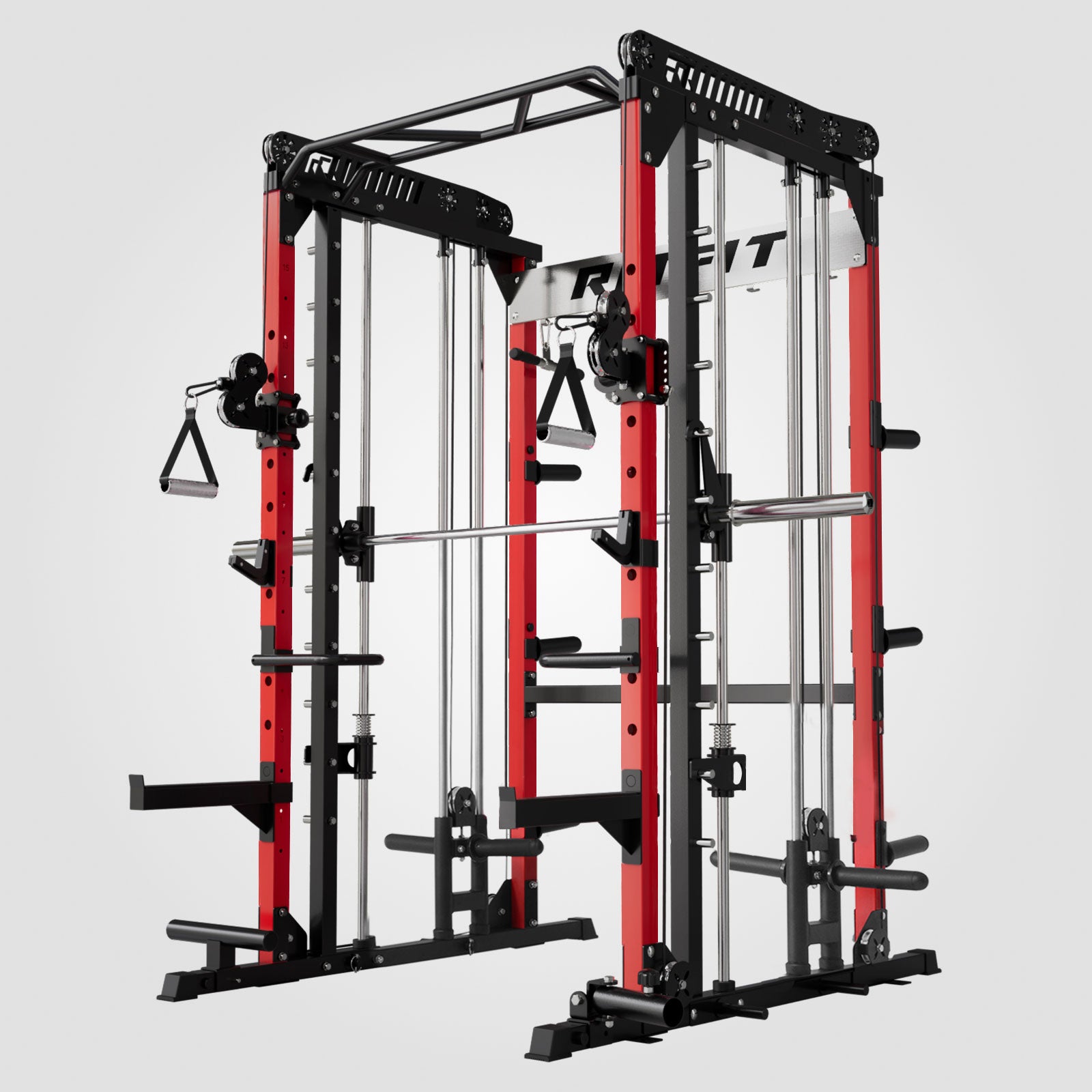
Every RitFit M2 Series package is built around a multi station frame that can replace several separate pieces of equipment. The main value is space efficiency, because one frame can support guided bar training, free weight rack work, cable training, pull ups, rows, and landmine exercises.
- Power rack function: The front uprights allow traditional barbell work with compatible hooks and safeties. This is useful for squats, bench presses, overhead presses, and rack pulls.
- Guided bar system: The guided bar gives solo lifters a controlled path for pressing, squatting, and rowing. Choose 3D movement if you want more bar path flexibility.
- Cable crossover: Adjustable cable pulleys support flys, rows, curls, face pulls, triceps work, and unilateral accessory exercises. Use the RitFit cable machine attachments page to match handles with your training needs.
- Pull up station: The top bar supports bodyweight back and arm training. It also helps build grip strength when used with controlled reps.
- Low row station: The low cable setup supports seated rows and other back focused pulling movements. It is useful when you want cable resistance without buying a separate row machine.
- Landmine attachment: The landmine station supports angled barbell training for rows, presses, rotations, and lower body variations. It adds athletic movement options without requiring a second machine.
Before You Buy the RitFit M2 Series
Before choosing a package, confirm how you plan to train, how much space you have, and whether you want plate loaded or pin selected resistance. This step prevents the most common home gym mistakes.
- Measure ceiling height: Account for the machine height and extra head clearance for pull ups.
- Measure side clearance: Leave enough space to load a barbell and reach plate storage without hitting a wall.
- Plan bench movement: Make sure you can move an adjustable bench in and out of the rack without scraping nearby equipment.
- Choose your resistance style: Select weight stacks for speed or plate loaded cables for plate collection flexibility.
- Protect the floor: Add durable gym flooring under the frame and barbell area to reduce impact and slipping.
- Check delivery path: Confirm that boxes can move through your doorway, hallway, garage, basement, or stair path.
For floor protection, consider placing the machine on rubber high density interlocking gym flooring mats. A stable floor surface helps protect the room and keeps the training area easier to clean.
Growing Your Setup With Compatible Attachments
The M2 Series is useful as a base system because it can support an upgrade path over time. Start with the package that matches your current training style, then add attachments only when you know which movements you use most.
- Lever arms: The RitFit LAM2 Lever Arm Attachment for M2 adds fixed path pressing, rowing, and lower body options. It is best for users who want machine style strength work on the main frame.
- High row pulldown: The RitFit LPM2 High Row Pulldown Attachment for M2 can expand back training options. It is useful for users who want more dedicated pulldown and high row angles.
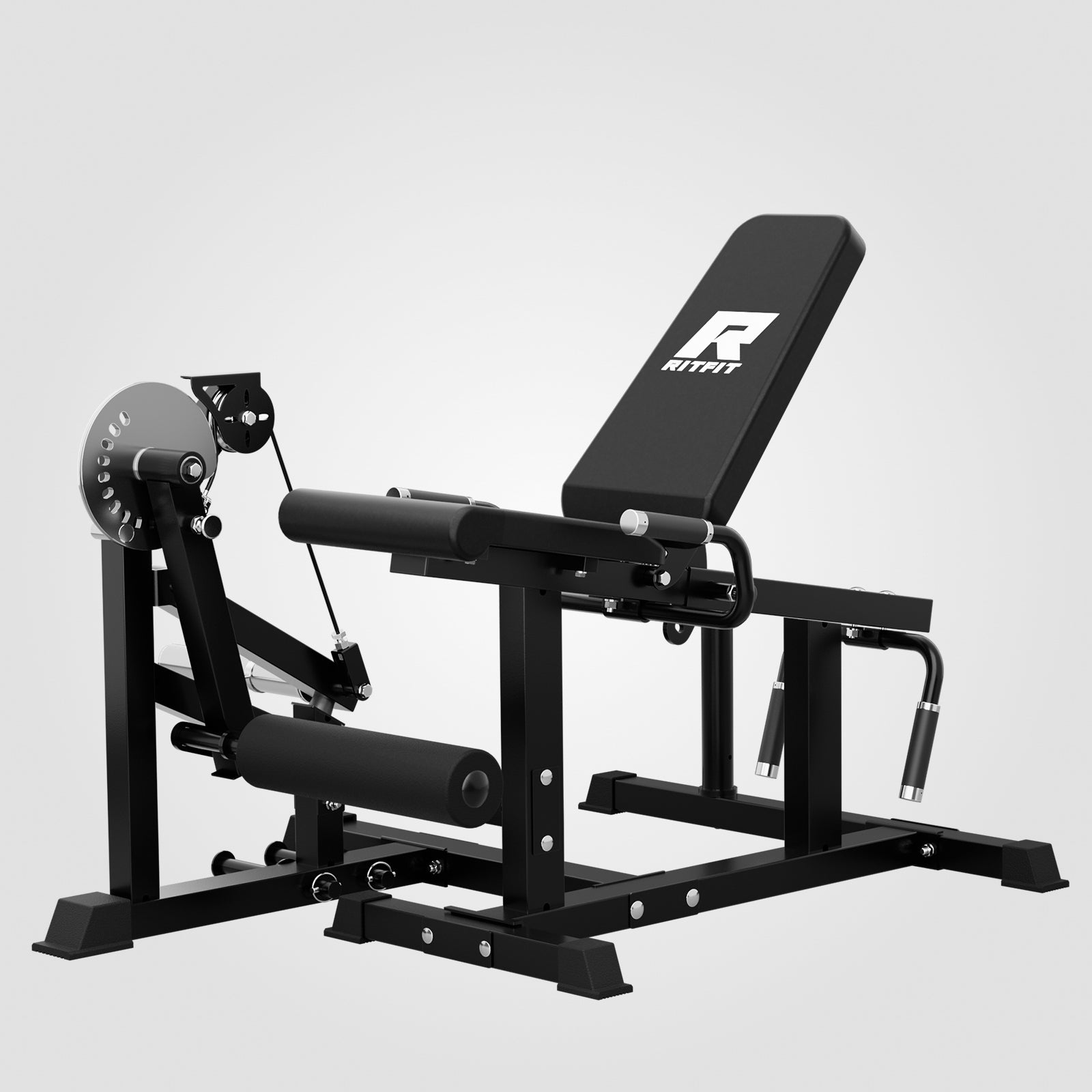
- Leg hold down seat: The RitFit ASM2 Adjustable Integrated Leg Hold Down Attachment With Seat for M2 helps anchor the body during heavier pulldown work. It is most relevant for users who train back frequently with cables.
- Bench pairing: A stable adjustable bench improves pressing, rows, split squats, and seated cable work. The RitFit GATOR Adjustable Weight Bench is a relevant option for users building a complete M2 training area.
Attachment fit depends on upright size, hole diameter, hole spacing, and attachment design. Confirm compatibility with the current official product page before using any attachment with heavy loads.
Room Size and Floor Space Planning
A home gym machine only works well when the room gives you space to train safely. Measure the frame footprint, ceiling height, front clearance, side clearance, and bench path before ordering.
- Base footprint: Use the current product page dimensions as your final source before purchase. Do not rely only on photos because wide angle images can distort size.
- Front clearance: Leave open floor space in front of the machine for cable flys, rows, lunges, bench movement, and setup changes.
- Side clearance: Leave room on both sides for loading plates, reaching storage pegs, and moving around the frame.
- Ceiling clearance: Add extra headroom above the top frame if you plan to perform pull ups. Low ceilings may limit bodyweight training even if the frame fits.
- Plate storage: If you choose the M2 3D, make sure your Olympic weight plates and barbells have a clear storage area. Good storage reduces clutter and improves training flow.
Assembly Tips and Common Mistakes
Assembly is easier when you sort parts first and keep the frame slightly loose until all major pieces are aligned. Heavy steel frames are best assembled with two capable adults and enough open floor space.
- Sort hardware first: Group bolts, washers, and nuts by size before building. This prevents mistakes that are hard to fix later.
- Keep bolts loose: Finger tighten hardware during early frame assembly. Final tightening should happen after the frame is square and aligned.
- Level the frame: Use a level if your garage or basement floor slopes. A twisted frame can make guided movement and cable operation feel uneven.
- Check cable routing: Follow the manual carefully when routing cables. Incorrect cable paths can create friction, uneven resistance, or premature wear.
- Recheck after break in: Inspect bolts, pulleys, and cable tension after the first few workouts. New assemblies can settle slightly after initial use.
A Simple Weekly Routine for the M2 Series
A simple weekly plan helps you use the M2 Series without overcomplicating training. Start with controlled reps, moderate loads, and repeatable movement patterns before adding intensity.
Resistance training volume can influence muscle growth, but more work is not automatically better if recovery, form, and consistency are poor.[3]
- Day 1 Lower body: Use guided squats, cable pull throughs, split squats, and calf raises. Keep the first sessions light enough to learn foot position and bar path.
- Day 2 Push: Use guided bench press, incline press, cable flys, triceps pushdowns, and cable lateral raises. Keep shoulders controlled and avoid forcing painful ranges.
- Day 3 Pull: Use guided rows, low rows, pulldowns, face pulls, and cable curls. Focus on full control instead of swinging through each rep.
- Optional Day 4 Full body: Use lighter cable circuits, landmine presses, rows, and core work. This day should support recovery rather than turn into another max effort session.
Progressive overload can come from adding weight, adding reps, improving control, or increasing training quality over time.[4]
Long Term Care and Cleaning
Long term care is simple when you inspect the machine regularly and keep the moving parts clean. A monthly check can help cables, guide rods, pulleys, grips, and pads last longer.
- Wipe guide rods: Remove dust, chalk, and sweat with a clean dry cloth. Use only lubricant types recommended by the manufacturer.
- Inspect cables: Look for fraying, peeling coating, unusual slack, or rough cable movement. Stop using the machine if a cable appears damaged.
- Check pulleys: Make sure pulleys spin smoothly and do not rub against the frame. Uneven pulley movement can affect cable feel.
- Tighten hardware: Recheck bolts and attachment pins periodically. This is especially important after moving the machine or adding attachments.
- Clean contact surfaces: Wipe pads, handles, pull up grips, and bench surfaces after hard workouts. This helps reduce odor, sweat buildup, and surface wear.
FAQs
Which RitFit M2 Series package is best for most home gym users?
The M2 Pro 3D is best for users who want the most complete setup. It combines 3D guided bar movement with built in weight stacks, so it fits lifters who want natural bar travel, fast cable changes, and fewer compromises in one home gym package.
What is the main difference between the M2 3D and M2 Pro?
The main difference is bar path and resistance setup. The M2 3D uses a 3D guided bar with plate loaded cable resistance, while the M2 Pro uses a vertical guided bar with built in weight stacks for faster cable adjustments.
Can the RitFit M2 Series replace a power rack and cable machine?
Yes. The RitFit M2 Series can replace several separate stations for many home gym users. It combines a guided bar, power rack functions, cable crossover, pull up station, low row setup, and landmine training into one compact frame.
How much room do I need for the RitFit M2 Series?
You need enough room for the frame, bench movement, plate loading, and pull up clearance. Measure the machine footprint, then leave open space in front and on both sides so cable work, barbell loading, and bench setup remain safe and practical.
Do I need weight plates for the RitFit M2 3D package?
Yes. The M2 3D package uses plate loaded cable resistance, so you need compatible weight plates for cable exercises. It is a better fit for buyers who already own Olympic plates or plan to build a free weight collection.
Should I choose weight stacks or plate loaded cables?
Choose weight stacks if you want faster workouts and easy pin changes. Choose plate loaded cables if you already own plates, want a lower starting package cost, or prefer a setup that can grow with your available weight plate collection.
Is the 3D guided bar safer than a standard Smith machine?
It can feel more natural for some users, but safety still depends on setup, load selection, and form. The 3D guided bar allows forward and backward travel, while the hooks and frame still provide controlled support during guided bar exercises.
Conclusion
The RitFit M2 Series is best understood as three different solutions for three different home gym priorities. Choose the M2 3D for flexible guided bar movement, the M2 Pro for faster cable weight changes, or the M2 Pro 3D if you want both in one complete setup.
The right choice should fit your room, training style, plate collection, attachment plans, and long term strength goals.
Disclaimer
This article is for general educational purposes only and is not medical advice, rehabilitation guidance, or a substitute for coaching from a qualified professional. If you have pain, an injury history, a medical condition, or concerns about loaded exercise, consult a licensed clinician or certified trainer before starting a new training program.
References
- Straub RK, Powers CM. A biomechanical review of the squat exercise: implications for clinical practice. Int J Sports Phys Ther. 2024;19(4):490-501. doi:10.26603/001c.94600
- Wirth K, Keiner M, Hartmann H, Sander A, Mickel C. Effect of 8 weeks of free weight and machine based strength training on strength and power performance. J Hum Kinet. 2016;53:201-210. doi:10.1515/hukin-2016-0023
- Schoenfeld BJ, Contreras B, Krieger J, Grgic J, Delcastillo K, Belliard R, Alto A. Resistance training volume enhances muscle hypertrophy but not strength in trained men. Med Sci Sports Exerc. 2019;51(1):94-103. doi:10.1249/MSS.0000000000001764
- Plotkin DL, Coleman M, Van Every DW, Maldonado J, Oberlin DJ, Israetel M, Feather J, Alto A, Vigotsky AD, Schoenfeld BJ. Progressive overload without progressing load? The effects of load or repetition progression on muscular adaptations. PeerJ. 2022;10:e14142. doi:10.7717/peerj.14142