For glute focused training, sumo squats place more direct emphasis on the glutes and inner thighs, while smith machine squats let you adjust foot position to target glutes with added stability. The best choice depends on your goal and setup.
This guide compares both squats for glute growth, explains how each works, and shows how to combine them. You will learn which suits beginners, which builds more glute focus, and how to avoid common errors.
Table of Contents
Key Takeaways
- Sumo for direct glute focus: A wide stance with toes out shifts more work to the glutes and inner thighs.
- Smith for control: The guided bar removes balance demand and lets you tweak foot position to bias glutes.
- Neither is simply better: Both train glutes, quads, hamstrings, and adductors, so they suit different goals.
- Foot position matters: On an angled smith machine, where you face and stand changes the glute and quad split.
- Combining works best: Using both over a week gives broad, balanced glute development.
Smith vs Sumo Squats: Quick Answer
If your only goal is direct glute and inner thigh focus, the sumo squat usually wins. If you want stability and easy load control, the smith machine squat is the better tool.
- Sumo squat: Wide stance, toes out, strong glute and adductor emphasis with a free range of motion.
- Smith machine squat: Guided bar path, less balance demand, adjustable foot position to shift the focus.
- Best of both: You can perform a sumo stance on a smith machine to blend the benefits.
Trainers note that both styles train the glutes effectively. The right pick depends on your experience, equipment, and what you want to feel working.
How Smith Machine Squats Train Glutes
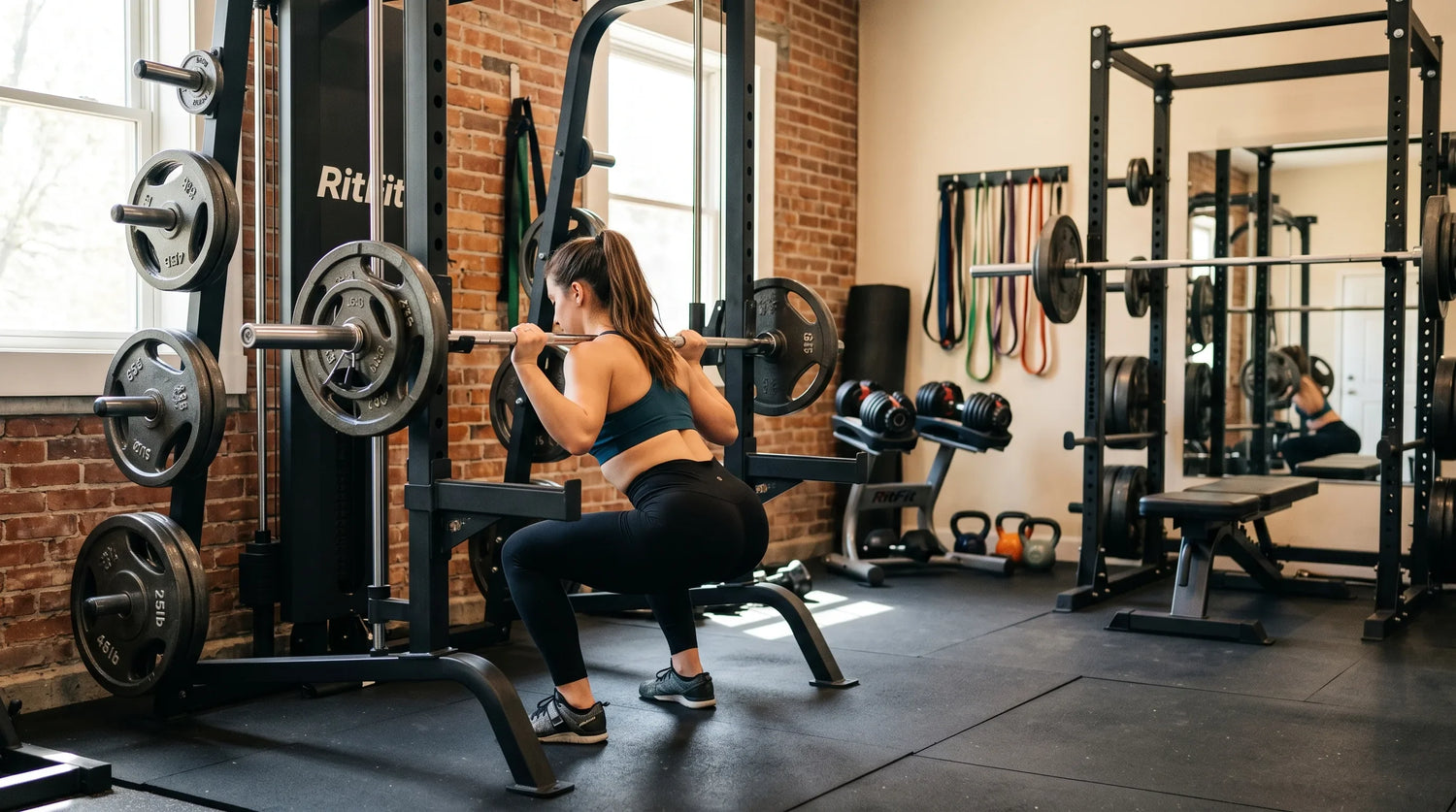
The smith machine guides the bar on a fixed path, which removes much of the balance demand. Trainers and exercise guides explain that this lets you adjust foot position to bias the glutes or quads.
- Step the feet forward: Placing your feet slightly ahead shifts more load onto the glutes.
- Use the angle: On an angled machine, coaches demonstrate that facing one way favors quads while the other favors glutes.
- Lighter stabilizers: With balance removed, you can focus effort on driving through the hips.
The demonstration below shows how foot placement on the smith machine shifts the work between quads and glutes. It is a neutral coaching clip, not a sponsored review.
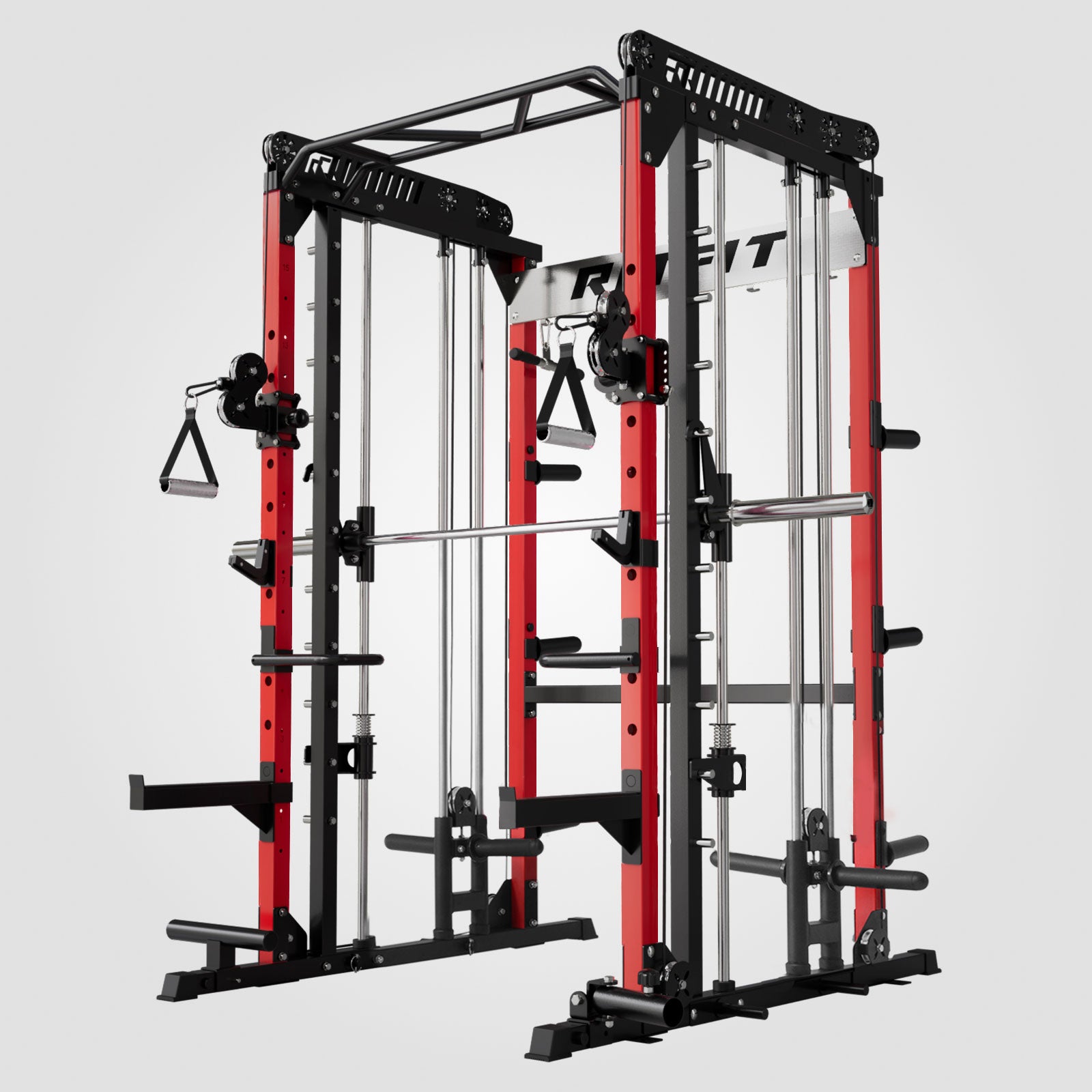
A guided setup is helpful for beginners learning hip drive. For machine options, see our M1 multi functional smith machine.
How Sumo Squats Train Glutes
The sumo squat uses a wide stance with toes turned out. Exercise guides describe how this shifts more emphasis to the glutes and inner thigh adductors while allowing a more upright torso.
- Wide stance: Feet set well outside shoulder width open the hips for deeper glute engagement.
- Toes turned out: Pointing the toes outward recruits the adductors and outer glutes.
- Upright torso: The position can feel friendlier on the lower back for many lifters.
You can load a sumo squat with a barbell, dumbbells, or a kettlebell. For a guided wide stance option, the M1 smith machine with cable crossover also supports added core and balance work.
Smith vs Sumo Side by Side
This table sums up the main differences for glute training. Use it to match the squat to your goal.
| Factor | Smith Machine Squat | Sumo Squat |
|---|---|---|
| Glute emphasis | Adjustable by foot position | High from wide stance |
| Balance demand | Low, guided path | Higher, free movement |
| Best for beginners | Yes, easy to control | Yes, with light load |
| Inner thigh work | Moderate | High |
Both squats earn a place in a glute program. The table simply helps you pick a starting point.
Which Should You Choose for Glutes
Choose based on your equipment and what you want to feel. Each option has a clear best use.
- Pick sumo if: You want the most direct glute and inner thigh emphasis with a free range of motion.
- Pick smith if: You want stability, simple load changes, and a guided path to learn hip drive.
- Pick smith sumo if: You want wide stance glute focus with the support of a fixed bar path.
For a home setup that covers squats and more, compare options in our smith machine vs squat rack guide. A guided rack suits glute training at any level.
How to Combine Both for Glute Growth
You do not have to choose only one squat. Combining them gives broad, balanced glute development across a week.
- Step 1: Start your session with smith machine squats for controlled, heavier hip work.
- Step 2: Follow with sumo squats for direct glute and inner thigh emphasis.
- Step 3: Keep reps moderate and focus on squeezing the glutes at the top of each rep.
- Step 4: Train glutes 2 to 3 times per week with rest days for recovery.
A complete home gym makes this easy to program. Explore full setups like our M1 smith machine home gym package or the best power rack and smith machine combo.
Common Squat Mistakes to Avoid
Both squats lose glute focus when form slips. Exercise guides warn against a few repeated errors.
- Knees caving in: Push the knees out over the toes to keep tension on the glutes.
- Rounding the back: Brace the core and keep the chest up to protect the spine.
- Too much weight: Master depth and control before loading heavy on either squat.
- Shallow depth: Squat until the hip crease drops near the knees for full glute engagement.
Fixing these issues protects your joints and improves your results. Quality reps build glutes faster than heavy, sloppy ones.
FAQs About Smith and Sumo Squats for Glutes
Which is better for glutes, smith machine squats or sumo squats?
Sumo squats give more direct glute and inner thigh emphasis from the wide stance. Smith machine squats offer stability and let you adjust foot position to bias the glutes. Neither is simply better, since both train glutes well. The best choice depends on your goal and equipment.
How do sumo squats target the glutes more?
Sumo squats use a wide stance with toes turned out, which opens the hips and recruits the glutes and inner thigh adductors. This position also lets the torso stay more upright. The wider setup shifts emphasis away from the quads and toward the glutes and adductors.
Can I do a sumo squat on a smith machine?
Yes. A smith machine sumo squat blends a wide stance with the guided bar path. You get strong glute and inner thigh focus while the fixed path removes much of the balance demand. It suits lifters who want heavy wide stance work without the stabilization challenge.
Are smith machine squats good for beginners?
Yes. The guided bar path removes most of the balance demand, so beginners can focus on depth and hip drive. The fixed path also makes load changes simple and predictable. Start with light weight, learn the movement, then progress gradually as your control and confidence improve.
How do I make smith machine squats work my glutes more?
Step your feet slightly forward of the bar to shift load onto the glutes. On an angled machine, facing the right direction also biases the hips. Squat to a depth where the hip crease drops near the knees, then squeeze the glutes hard at the top of each rep.
Do sumo squats build inner thighs?
Yes. The wide stance with toes turned out recruits the inner thigh adductors strongly alongside the glutes. This makes sumo squats useful for people who want both glute and inner thigh development. Keep the knees tracking over the toes to feel the adductors and glutes working together.
How often should I train squats for glute growth?
Train glutes 2 to 3 times per week for most people. Leave rest days between hard sessions so the muscles recover and grow. Combining smith and sumo variations across the week gives broad coverage. Consistency over time matters more than any single heavy session for steady glute development.
Should I use heavy weight for glute focused squats?
Use a weight you can control with full depth and clean form. Heavy load helps growth, but only when you reach proper depth and squeeze the glutes. Master the movement first, then add weight gradually. Sloppy heavy reps shift work away from the glutes and raise injury risk.
What mistakes reduce glute activation in squats?
Knees caving inward, rounding the back, and stopping short of depth all reduce glute work. Pushing the knees out, bracing the core, and squatting until the hip crease drops near the knees fix these. Squeezing the glutes at the top of each rep also improves engagement and control.
Can I build glutes with squats at home?
Yes. A guided smith machine or a loaded sumo squat both build glutes effectively at home. Choose a setup that fits your space and goals, then train with good depth and progression. Adding variety across the week helps your glutes develop in a balanced, consistent way.
Conclusion
For direct glute and inner thigh focus, the sumo squat leads, while the smith machine squat offers control and adjustable targeting. Neither is simply better, since both build strong glutes when done well.
Beginners can start with a guided smith squat, then add sumo work as confidence grows. Combining both across the week gives the most balanced glute development over time.
Disclaimer
This article is for general educational purposes only and is not medical advice. Squatting and strength training carry inherent risks. Consult a qualified healthcare or fitness professional before starting any new routine, especially if you have a knee, hip, or back condition or any injury.
References
- Yoon JG. The correlation between the muscle activity and joint angle of the lower extremity according to the changes in stance width during a lifting task. J Phys Ther Sci. 2013;25(8):1023-1025. https://pmc.ncbi.nlm.nih.gov/articles/PMC3820211/
- Larsen S, Kristiansen E, Helms E, van den Tillaar R. Effects of stance width and barbell placement on kinematics, kinetics, and myoelectric activity in back squats. Front Sports Act Living. 2021;3:719013. https://pmc.ncbi.nlm.nih.gov/articles/PMC8440835/
- Lubahn AJ, Kernozek TW, Tyson TL, Merkitch KW, Reutemann P, Chestnut JM. Hip muscle activation and knee frontal plane motion during weight bearing therapeutic exercises. Int J Sports Phys Ther. 2011;6(2):92-103. https://pmc.ncbi.nlm.nih.gov/articles/PMC3109897/