Table of Contents
The best home weight machine is the one that matches your training goal, available space, budget, and long-term strength needs. For most home users, the right choice is not the biggest or most expensive machine, but the setup that gives you enough exercise variety, safe resistance progression, and a practical footprint for consistent use.
Key Takeaways
- The best home weight machine depends on your goal, not just your budget.
- Functional trainers and Smith machine combos usually offer the best long-term versatility for home gyms.
- Beginners often do best with guided systems that are easy to adjust and safe to use alone.
- Small spaces call for compact, foldable, or smart resistance options, but these often reduce loading capacity.
- The true cost includes floor space, attachments, plates, delivery, assembly, and future upgrade potential.
Quick Comparison: Best Home Weight Machines at a Glance
If you are looking for a fast answer to the "best home weight machine?" query, here is a quick breakdown of the main types you will encounter:
| Type of Machine | Best For | Key Features | Approx. Price Range |
|---|---|---|---|
| All-in-One Multi-Gym | Beginners, safety-focused users | Fixed motion paths, weight stacks, guided exercises | $300 - $1,500 |
| Functional Trainer | Busy professionals, intermediate lifters | Dual adjustable pulleys, versatile movement patterns | $800 - $3,000+ |
| Smart Trainer | Tech-lovers, space-saving needs | Digital resistance, guided classes, wall-mounted | $1,500 - $3,500+ (plus subscription) |
| Power Rack Combo | Serious lifters, heavy strength training | Free-weight feel, plate-loaded, high weight capacity | $1,000 - $4,000+ |
| Compact / Foldable | Apartments, budget-conscious users | Foldable design, resistance bands or bodyweight | $150 - $600 |
How to Choose the Best Home Weight Machine
1. Start With Your Fitness Goal
Your training goal should decide the category first.
If your priority is muscle growth and long-term strength progression, look for a machine with a higher resistance ceiling, stable construction, and room to grow with attachments or heavier loading. If your goal is general fitness, toning, or returning to exercise, a guided machine with easier setup and smoother motion may be the better fit.
A good buying question is simple: do you want convenience, maximum strength potential, or the best balance of both?
2. Measure Your Space Before You Shop
Do not buy based on photos alone. Measure floor space, ceiling height, and the clearance you need around the machine for loading plates, adjusting benches, and moving safely.
Many buyers focus only on machine dimensions and forget real use space. A home weight machine may technically fit in the room but still feel cramped once you add plates, a bench, or overhead movements such as lat pulldowns and pull-ups.
3. Choose the Right Resistance Type
Different resistance systems create very different ownership experiences.
- Weight Stack Systems: These are fast, convenient, and beginner-friendly. They work especially well for households with multiple users because changing resistance takes only seconds.
- Plate Loaded Systems: These often offer a higher loading ceiling and stronger long-term progression. They can also be more cost-effective if you already own weight plates, but they take more time to adjust.
- Resistance Band-Based Systems: These are compact and affordable, but they usually feel less stable and less consistent than traditional machines for serious strength work.
- Digital Resistance Systems: These save space and can deliver guided programming, automatic adjustments, and performance tracking. They are attractive for modern homes, but subscription costs and lower hardware simplicity may not suit every buyer.
4. Think About User Fit and Daily Comfort
The best machine should fit your body and your routine.
Look for adjustable seats, pulley positions, handle options, and smooth resistance changes. If more than one person will use the machine, quick adjustments matter even more. A machine that is annoying to set up often becomes a machine that gets ignored.
Noise also matters. Smooth pulleys, stable frames, and controlled cable travel are especially important in apartments, shared living spaces, and early morning training environments.
5. Prioritize Safety and Build Quality
Training at home often means training alone, so build quality matters more than buyers sometimes realize.
Look for a stable base, strong steel construction, reliable safety catches, secure pulleys, and clear weight capacity information. A lower price is not a good value if the machine wobbles, binds during movement, or limits safe progression.
Warranty coverage, replacement part availability, and brand support also matter because a home gym machine is a long-term purchase, not a short-term accessory.
6. Compare Total Value, Not Just Sticker Price
The machine price is only part of the real cost.
You may also need plates, benches, cable handles, flooring, delivery, professional assembly, or a recurring subscription. In many cases, a slightly higher upfront investment gives you better stability, better movement quality, and a longer useful lifespan.
A better way to judge value is this: how many years of effective full-body training can this setup realistically provide?
Types of Home Weight Machines: Which Is Best for You?
All in One Multi Gym
This is the classic home gym format. It usually includes a selectorized weight stack and fixed stations for pressing, pulldowns, leg work, and basic upper-body training.
It is one of the best options for beginners because it reduces setup friction and offers a predictable movement path. It also works well for families, older users, and anyone who wants a straightforward, less intimidating training environment.
Best for:
- Beginners
- Families with multiple users
- People who want simple setup and guided motion
Less ideal for:
- Advanced lifters who want more natural movement freedom
- Buyers who want the highest strength ceiling
Functional Trainer and Cable Machine
A functional trainer uses adjustable pulleys that let you train from high, mid, and low positions. This makes it one of the most versatile home gym options for full-body workouts, unilateral training, core work, and movement variety.
It is especially strong for buyers who want one machine to cover strength training, accessory work, mobility, and athletic patterns. For many households, this is the best balance of versatility and space efficiency.
Best for:
- Full body training
- Exercise variety
- Intermediate users
- Households sharing one machine
Less ideal for:
- Lifters who care most about very heavy barbell-style loading
- Buyers who want the simplest possible setup
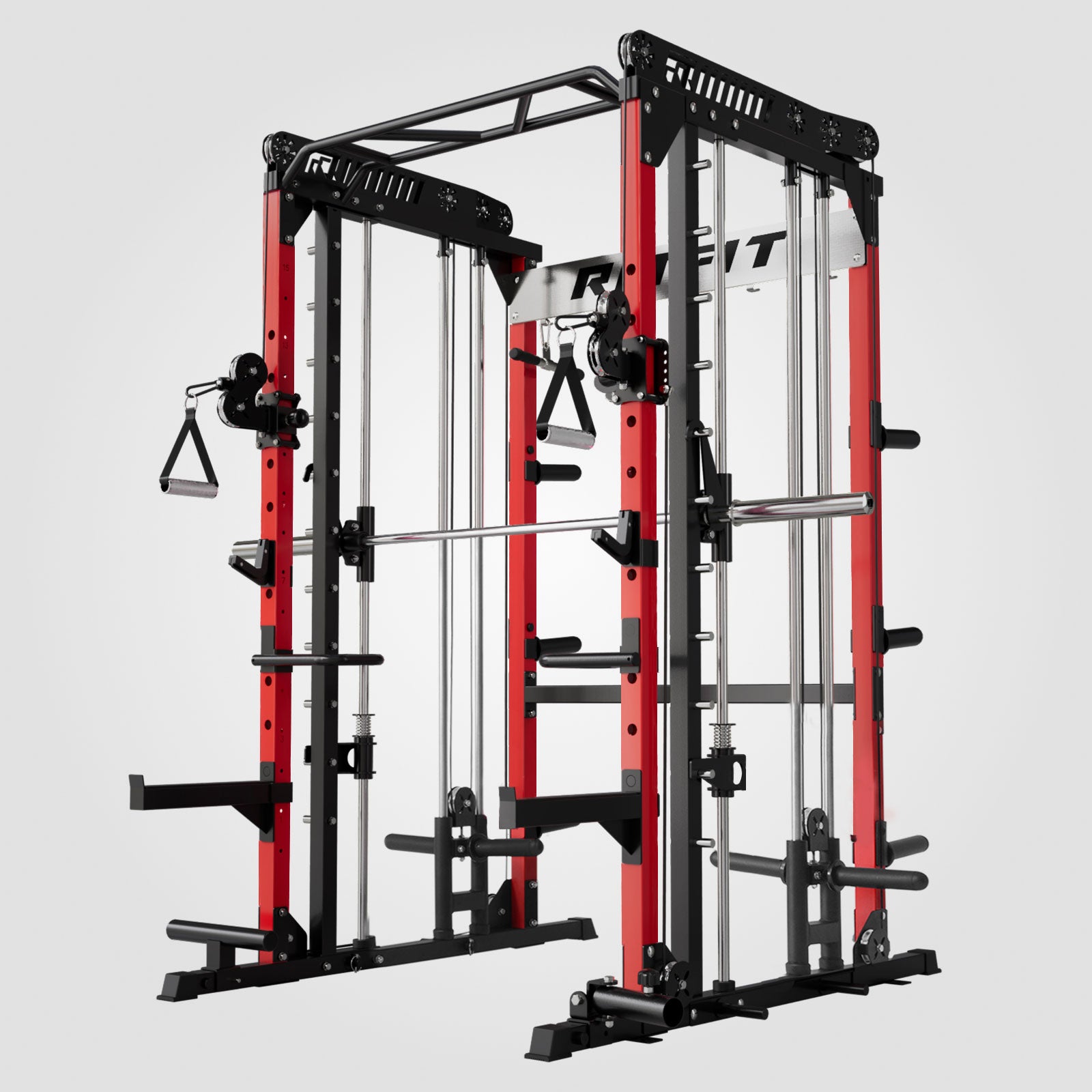
Smith Machine and Power Rack With Attachments
This category is often the best fit for serious strength-focused home gyms. These machines combine guided bar work, free weight-style training, and added cable or rack functions depending on the model.
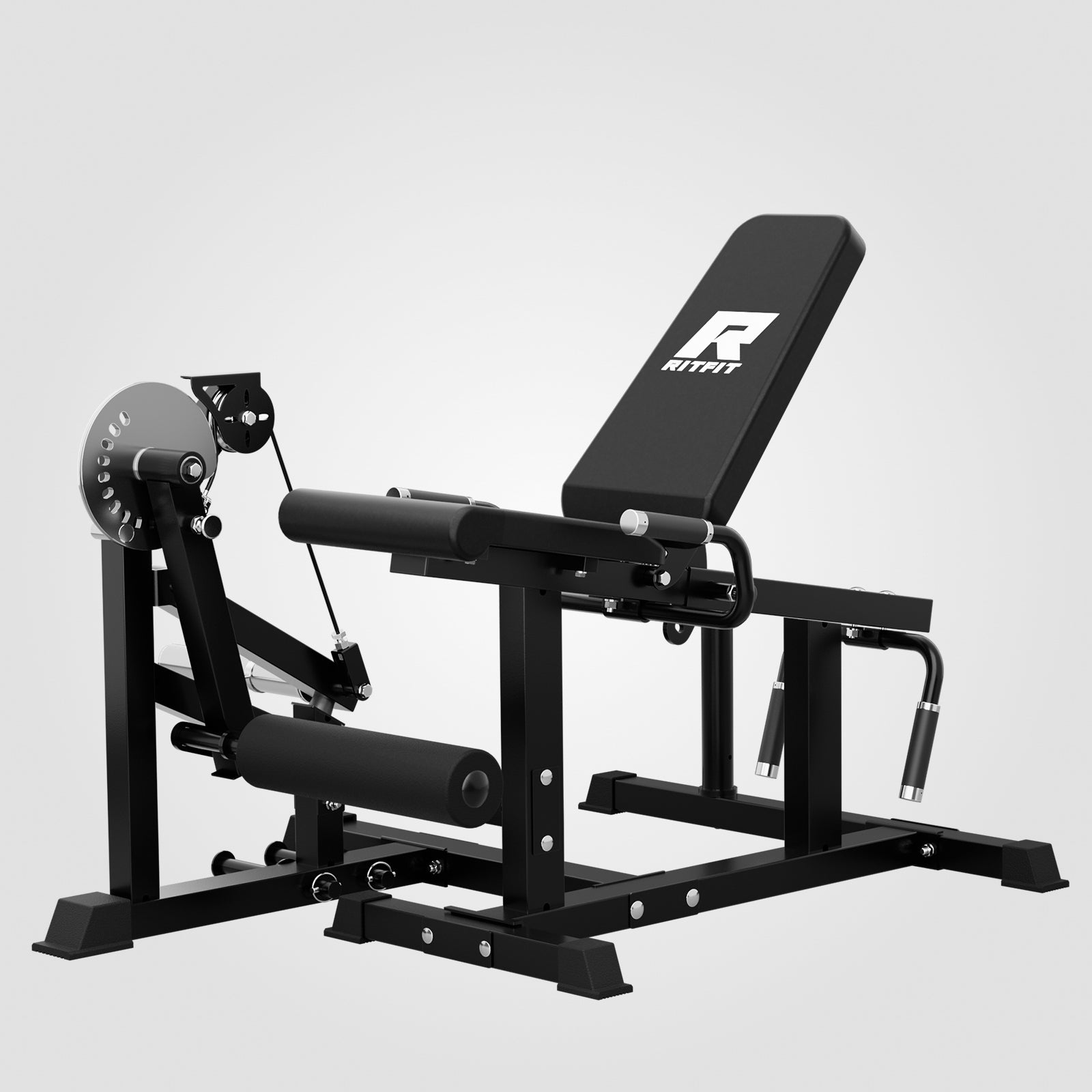
They are excellent for squats, presses, rows, lunges, pull-ups, and progressive overload over time. They also provide stronger upgrade potential through benches, dip handles, jammer arms, leg developers, and plate storage.
Best for:
- Serious lifters
- Buyers who want long-term progression
- Home gym users who train multiple movement patterns
Less ideal for:
- Small rooms
- Buyers with very limited budgets
- Users who want the fastest and easiest weight changes
Smart Home Weight Machines
Smart machines use digital resistance and guided software to deliver a streamlined training experience. Their biggest strengths are convenience, coaching, tracking, and small space efficiency.
They appeal to users who want structure and minimal visual clutter. Still, buyers should consider whether they are comfortable with app dependence, subscription fees, and a different feel from traditional plate or stack resistance.
Best for:
- Small spaces
- Guided workouts
- Tech-focused users
- Design conscious homes
Less ideal for:
- Buyers who prefer a traditional iron feel
- Anyone avoiding recurring costs
Compact and Foldable Home Weight Machines
These machines focus on space savings and convenience. They can work well in apartments, guest rooms, or hybrid office spaces where the gym cannot stay fully set up all day.
Their main compromise is usually lower stability, lower loading potential, or less exercise variety than larger systems. That does not make them bad. It simply means they are best for lighter training, beginner use, and practical home fitness rather than heavy long-term strength development.
Best for:
- Tight spaces
- Entry-level buyers
- Casual training needs
Less ideal for:
- Heavy lower body training
- Advanced strength progression
Best Home Weight Machines by Category
Best Overall Home Weight Machine
For most people, the best overall choice is a well-built functional trainer or a balanced all-in-one cable system. It offers enough exercise variety for upper body, lower body, and core work without demanding the footprint of a large rack-based setup.
This category works especially well for people who want long-term usability, moderate-to-high training variety, and a machine that fits more than one user.
Best Budget Home Weight Machine
The best budget option is usually a basic multi-gym or compact resistance-based machine that covers the main movement patterns without extra complexity. Budget buyers should focus less on flashy attachments and more on stability, usable resistance, and smooth operation.
A smaller but well-built machine is often a smarter purchase than a larger low-quality unit with poor motion and weak construction.
Best Compact Home Weight Machine for Small Spaces
For limited rooms, the best choice is often a smart trainer, a foldable resistance system, or a narrow profile cable setup. The key is not only whether the machine fits but also whether you can train comfortably around it without limiting movement quality.
The best small space machine is the one you can use consistently without turning every workout into a setup problem.
Best Home Weight Machine for Beginners
A traditional multi-gym is often the best beginner option because it keeps exercise selection simple and movement patterns controlled. This makes it easier to learn resistance training, progress safely, and build confidence without managing plates, racks, or complex adjustments.
Clear setup, simple resistance changes, and guided movement often matter more than advanced features in the early stages.
Best Home Weight Machine for Serious Lifters
A Smith machine or rack combo is usually the strongest option for serious lifters who want heavier compound work and long-term progression. It supports a wider range of strength-focused training and often grows with the user through add-ons and attachments.
If your goal is to build a true home gym rather than just add a fitness machine, this is often the strongest category to consider.
Best Smart Home Weight Machine
The best smart machine is the one that combines reliable digital resistance, effective coaching, and a training experience that keeps you consistent. Its real value comes from convenience, guided progression, and space efficiency rather than maximum loading.
This category makes the most sense for users who value coaching, metrics, and clean room design as much as raw strength potential.
Best Home Weight Machine for Families and Multiple Users
For shared households, adjustability is the main priority. Look for machines with fast pin changes, clear seat adjustments, broad resistance ranges, and handle options that work for different body sizes and training styles.
A family-friendly machine should reduce friction between users, not create more setup time between every exercise.
Sample Workouts Using a Home Weight Machine
Full Body Beginner Routine
Train three nonconsecutive days per week. Use 2 to 3 sets of 8 to 12 reps per exercise and focus on controlled form.
- Seated chest press
- Lat pulldown
- Leg press or leg extension
- Seated row
- Cable lateral raise
- Cable crunch or woodchop
Keep one or two reps in reserve on most sets. The goal is consistent practice, not maximum fatigue.
Upper and Lower Split for Muscle Gain
A split routine works well once you want more total training volume.
Upper Body Day
- Chest press or cable press
- Seated row
- Lat pulldown
- Shoulder press
- Triceps pushdown
- Cable curl
Lower Body Day
- Smith squat or machine squat
- Romanian deadlift pattern
- Leg extension
- Leg curl
- Standing calf raise
- Core rotation or anti-rotation work
Use progressive overload over time by adding reps, resistance, or total sets while keeping technique stable.
Setup, Maintenance, and Safety Tips
Assembly and Installation
Most home weight machines arrive in several heavy boxes and take time to assemble correctly. Read the full instructions before starting, check the hardware carefully, and make sure the final setup leaves enough training clearance around the machine.
For large rack combos, heavy cable systems, or wall-mounted units, professional installation may be worth the cost if it improves safety and saves time.
Ongoing Maintenance
Basic upkeep protects both performance and safety.
- Wipe down pads, grips, and frames regularly
- Inspect cables, pulleys, and bolts each month
- Lubricate guide rods only when recommended by the manufacturer.
- Tighten hardware if movement or noise appears
- Replace worn parts before they become safety issues
A machine that feels rough, unstable, or unusually noisy should be checked before the next hard session.
Safe Training Practices
Warm up before heavy sets and start each new movement with a manageable load. Use controlled reps, set safeties correctly, and never assume a guided machine removes all risk.
If you train alone, conservative progression is a strength advantage, not a weakness. Good setup and repeatable form matter more than chasing a load too fast.
FAQ: Finding the Best Home Weight Machine
Is a home weight machine better than free weights?
A machine is not automatically better, but it is often easier to learn, safer for solo training, and more convenient for structured workouts at home. Free weights usually offer more movement freedom, while machines offer more built-in stability.
How much should I spend on a home weight machine?
A basic but usable machine may start around $300 to $800, while stronger long-term setups often fall between $1,000 and $3,000 or more. The better question is whether the machine supports your needs for the next several years.
Can one machine really train the whole body?
Yes, if the machine includes enough movement options for pushing, pulling, leg work, and core training. Functional trainers, all-in-one gyms, and well-equipped Smith combos are often the strongest full-body choices.
What hidden costs should I expect?
Common extra costs include delivery, assembly, plates, benches, handles, flooring, maintenance parts, and subscriptions for smart machines. These costs can meaningfully change the real value of the purchase.
How long will a good home weight machine last?
A well-built machine can last many years with regular maintenance. Higher quality frames, pulleys, guide systems, and support parts usually translate into a longer service life and better long-term value.
Do I need a smart machine?
No. A smart machine can improve convenience, coaching, and motivation, but a traditional machine is still fully capable of building strength and muscle. Smart features are useful, not essential.
Conclusion
The best home weight machine is the one you can use safely, consistently, and progressively within your real space and budget. Choose based on your training goal, resistance preference, room size, and long-term upgrade path, then invest in the option that gives you the best mix of usability, stability, and value over time.