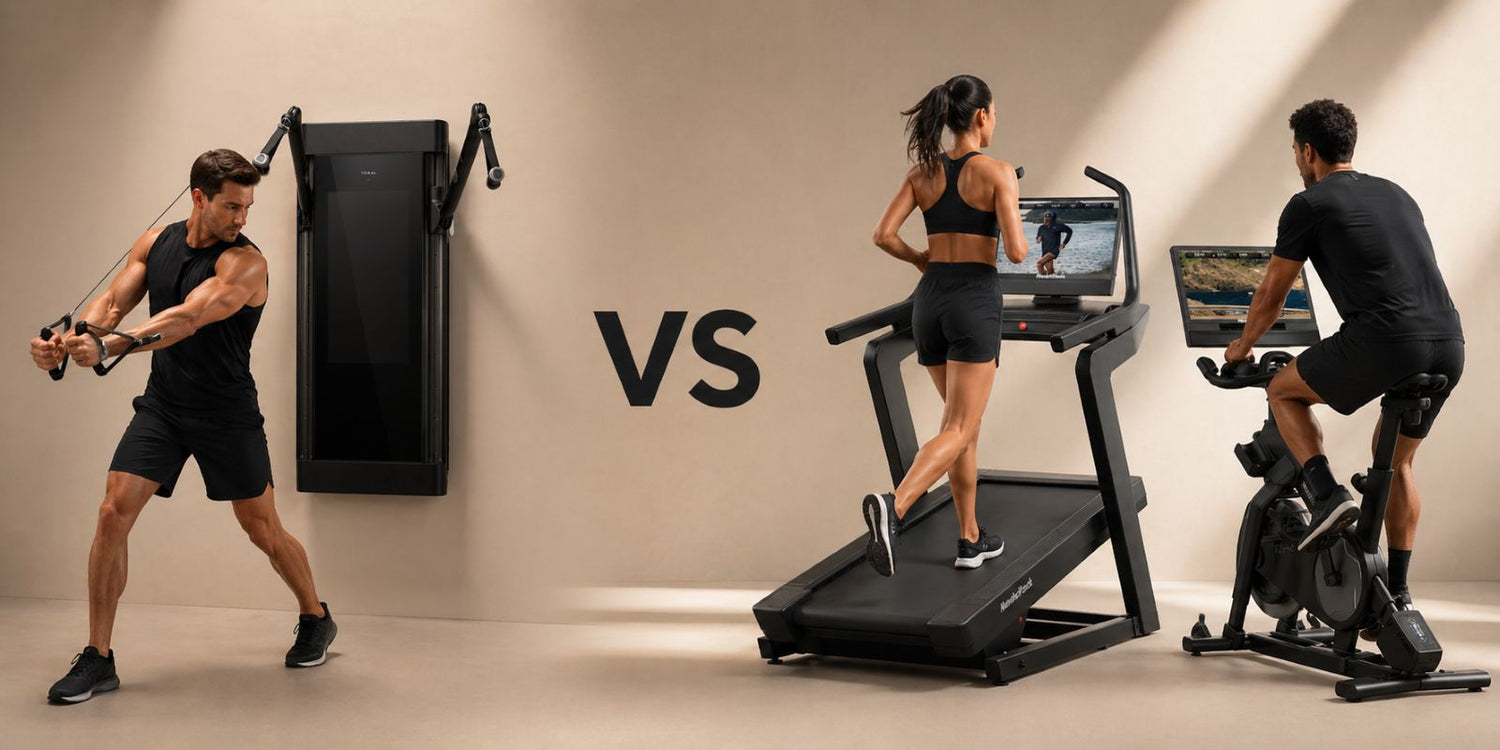
Tonal is usually the stronger smart garage gym pick if you want compact, wall mounted, strength focused training, while NordicTrack makes more sense if you want a freestanding setup or a mirror led experience. The better choice depends less on hype and more on your space, installation tolerance, coaching preferences, and willingness to keep paying for software.
Key Takeaways
- Tonal usually wins on footprint, because its wall mounted format keeps more floor space open for a small garage gym.
- NordicTrack is usually easier to place, because freestanding options avoid stud based installation and major wall work.
- Software matters more than most buyers expect, because the smart features are a large part of the value on both platforms.
- Long term ownership is not just the hardware price, because subscriptions, support, and future usefulness all affect the real cost.
- The best option is the one you will actually use consistently, because convenience and adherence often matter more than a feature list.
Quick Answer
Choose Tonal if you want a sleek strength first system with adaptive resistance, compact wall use, and deeper guided lifting features. Choose NordicTrack if you want a freestanding option, less invasive setup, or a mirror centered training style that feels more like a connected class experience.
At a Glance
| Decision Area | Tonal | NordicTrack |
|---|---|---|
| Floor Space | Usually better for tight spaces | Usually needs more open floor area |
| Installation | More demanding | Usually simpler |
| Strength Progression | Stronger adaptive strength experience | Varies more by model and format |
| Class Style | Strength and coaching focused | Broader connected fitness feel |
| Offline Value | Reduced without premium features | Also more limited without full ecosystem use |
| Best Fit | Space conscious strength users | Freestanding setup seekers |
Space and Installation Matter First
Space is the first filter because a smart garage gym fails fast when the room cannot support safe movement, cable angles, or daily access. If your garage has tight clearance, awkward wall conditions, or low ceilings, the installation burden can matter more than the training software.
- Tonal advantage: It usually suits buyers who want a cleaner footprint and less equipment spread across the floor.
- NordicTrack advantage: It usually suits buyers who want to avoid wall mounting, stud checks, and more permanent setup decisions.
- Garage planning tip: Before choosing either route, review home gym flooring and compare your clearance needs with this guide to the best Smith machine for low ceilings.
Training Feel and Strength Progression
Resistance training remains one of the most practical ways to improve strength, function, and long term physical capacity, so the better machine is the one that supports repeatable progression for your body and goals.[1] Tonal usually feels more purpose built for progressive strength work, while NordicTrack often feels broader and more format dependent across its connected fitness lineup.
- Tonal strength case: It usually appeals to users who want tighter load progression, more lifting focused coaching, and a more premium digital resistance experience.
- NordicTrack strength case: It usually appeals to users who care more about mixed modality training, screen led sessions, or a more flexible wellness feel than a pure strength platform.
- Buyer reality: If your garage gym goal is mostly serious strength training, Tonal usually has the clearer value proposition.
Coaching, Feedback, and Adherence
Digital support can change the home training experience because home based exercise delivered through digital health tools has been associated with better physical function and quality of life in older adults.[2] That does not mean more technology is always better, but it does mean coaching quality and ease of use deserve real weight in this comparison.
- Tonal fit: Better for users who want guided strength progression, clearer resistance logic, and coaching that feels built around lifting.
- NordicTrack fit: Better for users who want a more class oriented experience with broader workout categories.
- Form factor insight: Mirror based training can feel more natural for some beginners, while strength first interfaces can feel more efficient for committed lifters.
Subscriptions Change the Real Value Equation
Adherence is a real ownership factor because digital interventions can improve short term adherence to home exercise programs, which helps explain why many buyers keep paying for software after the hardware arrives.[3] At the same time, recurring fees can become the main reason a smart garage gym feels expensive or restrictive over time.
- Tonal concern: Buyers should be comfortable with paying for the premium experience, because much of the appeal comes from guided programming and smart strength features.
- NordicTrack concern: Buyers should also assess whether the connected class layer will remain valuable after the novelty period ends.
- Budget check: If you are price sensitive, compare these systems against best home gym equipment under 2000 before locking into a subscription based ecosystem.
Garage Gym Fit Is Bigger Than a Feature List
Recent home exercise reviews suggest digital ecosystems work best when they reduce friction, support feedback, and make the routine easier to repeat in the real home environment.[4] That is why smart garage gym fit comes down to how well the machine matches your room, your habits, and your tolerance for maintenance and software reliance.
- Tonal usually fits best: Small garage gyms, strength first households, and users who value compact design more than easy placement.
- NordicTrack usually fits best: Buyers who want a freestanding path, a mirror centered setup, or less permanent installation work.
- Better comparison lens: Ask whether you want a smart cable strength system or a connected training station, because those are not the same buying priorities.
Who Should Buy Tonal
Tonal is usually the better buy for the user who wants a compact, premium, strength centered smart garage gym and is willing to accept the installation demands that come with it. It is especially attractive for households where open floor space is limited but daily guided strength training is a real priority.
- Best for: Space conscious lifters, tech forward households, and buyers who want strength progression without a room full of plates and dumbbells.
- Less ideal for: Renters, buyers who dislike software lock in, and anyone who wants the most flexible offline ownership.
- Related reads: See the best Smith machine for a garage gym and this breakdown of whether a Smith machine is worth it.
Who Should Buy NordicTrack
NordicTrack is usually the better buy for the user who wants a freestanding connected fitness experience and values setup simplicity more than maximum strength specificity. It can also make more sense for buyers who prefer mirror based visual training or a broader class library feel.
- Best for: Users who want less wall commitment, more general connected fitness energy, and a more furniture like smart training station.
- Less ideal for: Buyers who want the clearest strength first progression path and the smallest possible footprint.
- Key filter: If serious lifting is your main goal, NordicTrack can still work, but it is often not the most direct route to a classic garage gym feel.
A Strong Alternative If You Want Fewer Smart Tradeoffs
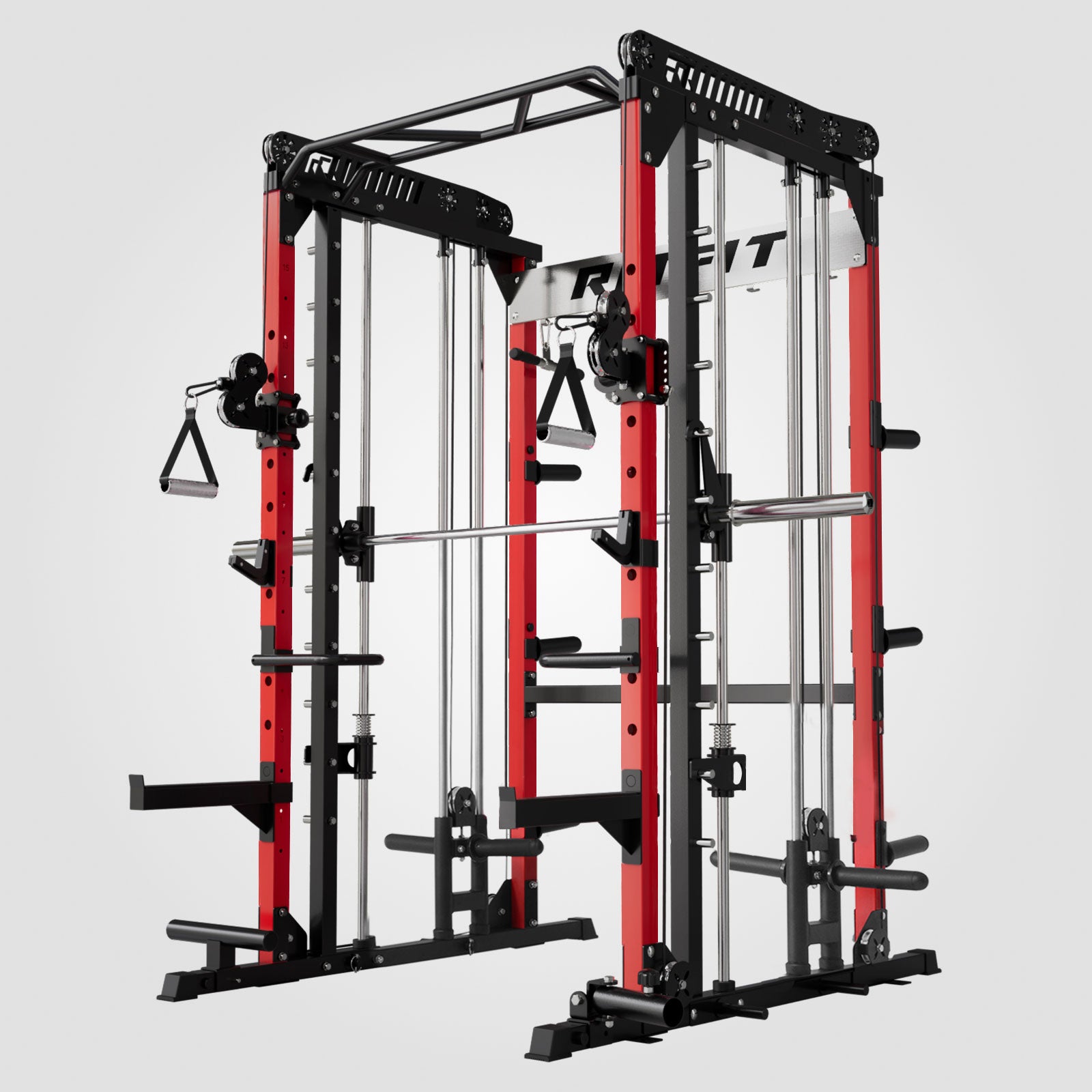
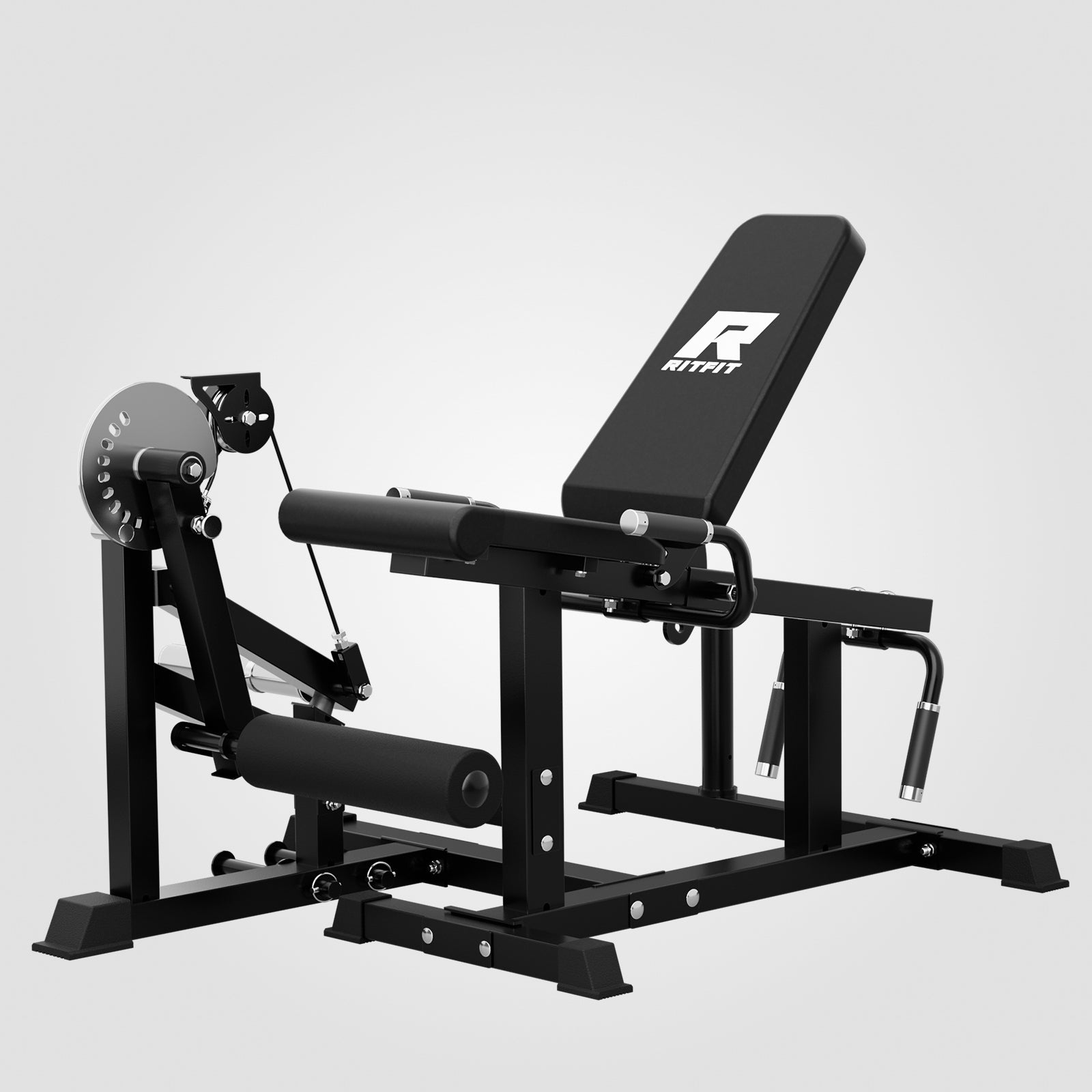
If you like the idea of guided home strength training but dislike recurring software dependence, a more traditional all in one setup may be the better long term value. That is where a strong rack based system can outperform both smart categories for buyers who want ownership flexibility, upgrade freedom, and a more classic garage gym training feel.
- Garage gym path: Browse the RitFit Smith machine collection if you want a more traditional strength setup with fewer smart ecosystem tradeoffs.
- Product path: The RitFit M1 multi functional home gym Smith machine is a useful benchmark if you are comparing smart convenience against more traditional garage gym ownership.
FAQs
What makes Tonal better than NordicTrack for a smart garage gym?
Tonal is usually the better fit when wall space is available and floor space is limited. Its wall mounted design, adaptive resistance, and built in coaching suit buyers who want strength focused training in a tighter footprint, but the installation requirements and software dependence are bigger tradeoffs.
Is NordicTrack better than Tonal if I do not want wall installation?
Yes. NordicTrack is usually easier to consider if you want a freestanding setup and do not want to mount hardware into studs. That convenience can come with more floor space use, and the best choice still depends on whether you value mirror workouts, cable training, or bundled accessories more.
Can you use Tonal without a membership in a smart garage gym?
Yes. Tonal can still function in a more basic lifting mode without an active membership, but the guided programs, advanced coaching tools, and richer progress features are reduced. Buyers who dislike recurring software costs should factor that into the purchase before choosing it.
Which smart garage gym works better for small spaces, Tonal or NordicTrack?
Tonal usually works better in small spaces because the trainer mounts to the wall and keeps the floor clearer when not in use. NordicTrack freestanding options can still work well, but they generally need more room for the unit itself and for comfortable training around it.
Should beginners choose Tonal or NordicTrack for guided strength training?
Beginners often lean toward the option that gives the clearest coaching and the lowest setup friction. Tonal is stronger for adaptive resistance and structured strength guidance, while NordicTrack can appeal more to people who prefer mirror based classes, broader workout variety, or bundled free weight style training.
Are Tonal and NordicTrack good long term alternatives to a traditional garage gym?
They can be, but only if their training style matches how you actually like to work out. Traditional garage gym equipment still offers more flexibility, easier upgrade paths, and fewer software restrictions, while smart systems can win on convenience, coaching, and consistency for the right user.
Conclusion
Tonal is usually the better smart garage gym choice for compact, strength first, wall based training, while NordicTrack is usually better for buyers who want a freestanding and more class oriented connected fitness setup. If your top priorities are ownership flexibility, traditional strength progression, and fewer software tradeoffs, a more conventional garage gym system may still be the stronger long term answer.
Disclaimer: Product lineups, memberships, warranties, and feature access can change over time. Always confirm the current official product pages, support terms, and installation requirements before publishing or making a purchase decision.
References
- Steele J Fisher J Skivington M, et al. A higher effort-based paradigm in physical activity and exercise for public health, making the case for a greater emphasis on resistance training. BMC Public Health. 2017;17:300. doi:10.1186/s12889-017-4209-8
- Solís-Navarro L Gismero A Fernández-Jané C, et al. Effectiveness of home-based exercise delivered by digital health in older adults, a systematic review and meta-analysis. Age Ageing. 2022;51(11):afac243. doi:10.1093/ageing/afac243
- Lang S McLelland C MacDonald D Hamilton DF. Do digital interventions increase adherence to home exercise rehabilitation, a systematic review of randomised controlled trials. Arch Physiother. 2022;12:24. doi:10.1186/s40945-022-00148-z
- Zhou T Zhang S Liu S Yu J. Digital technology integration in home-based exercise, a systematic review of research evolution, applications, and impact mechanisms. BMC Public Health. 2025;25:3528. doi:10.1186/s12889-025-24679-9
- Lee K. Home-based exergame program to improve physical function, fall efficacy, depression and quality of life in community-dwelling older adults, a randomized controlled trial. Healthcare. 2023;11(8):1109. doi:10.3390/healthcare11081109