The Cindy CrossFit WOD is a 20 minute AMRAP of 5 pull ups, 10 push ups, and 15 air squats. It is a classic bodyweight benchmark that tests muscular endurance, aerobic capacity, pacing control, and repeatable movement quality.
Cindy works best when you choose a version that lets you keep moving with clean reps for the full 20 minutes. This guide explains the workout standards, scaling options, score targets, pacing strategy, home setup, and safety points you need before you start.
Table of Contents
- What Is the Cindy CrossFit WOD?
- Cindy CrossFit WOD: Workout Details
- Cindy WOD Movement Standards
- Muscles Worked in Cindy
- How to Perform Each Movement Correctly
- Scaling Options for Cindy
- Strategy and Pacing for the Cindy WOD
- Cindy Score Levels and Benchmarks
- Warm Up and Preparation
- Home Gym Setup for Cindy
- Safety Tips and Common Mistakes
- How to Track and Improve Your Cindy Score
- Cindy Variations and Related Workouts
- Sample Training Plan to Prepare for Cindy
Key Takeaways
- Cindy is a 20 minute bodyweight AMRAP built around 5 pull ups, 10 push ups, and 15 air squats.
- The best Cindy score usually comes from steady pacing, clean movement standards, and controlled transitions.
- Beginners should scale pull ups and push ups before form breaks or long rest periods take over.
- Push ups are the most common limiter, so planned small breaks are usually smarter than early unbroken sets.
- Retest Cindy every 3 to 6 months with the same standards to measure progress accurately.
What Is the Cindy CrossFit WOD?
Cindy is a CrossFit benchmark workout performed as many rounds as possible in 20 minutes. The workout uses simple bodyweight movements, but the long time domain makes pacing and muscular endurance the deciding factors.
High intensity functional training often combines multi joint movements that can be modified for different fitness levels, which is why Cindy can work for beginners and advanced athletes when scaled correctly.[1]
Cindy CrossFit WOD: Workout Details
The standard Cindy workout is 20 minutes of continuous work for total rounds and reps. Your final score is the number of complete rounds plus any extra reps finished when the timer reaches 20 minutes.
- Time Domain: 20 minutes.
- Format: AMRAP, as many rounds as possible.
- Round Structure: 5 pull ups, 10 push ups, 15 air squats.
- Score: Total completed rounds plus extra reps.
- Primary Goal: Maintain repeatable reps with minimal wasted rest.
CrossFit training is commonly built around varied functional movements performed at high intensity, and Cindy fits that pattern through gymnastics style pulling, bodyweight pressing, and lower body endurance work.[2]
Cindy WOD Movement Standards
Use the same movement standards every time you perform Cindy so your score remains comparable. Small changes in pull up style, push up depth, or squat range can change the final result.
- Pull Ups: Start each rep with arms fully extended and finish with the chin clearly above the bar.
- Push Ups: Touch the chest to the floor and press back to full elbow extension while keeping the body moving as one unit.
- Air Squats: Squat until the hip crease passes below the top of the knee, then stand to full hip and knee extension.
- Rep Counting: Count only reps that meet the standard you chose before the workout.
- Scaling Consistency: If you use a scaled version, record the exact version so your next retest is fair.
Muscles Worked in Cindy
Cindy trains the upper body, lower body, core, grip, and aerobic system in one simple benchmark. The workout feels easy early because each round is short, but fatigue accumulates quickly across hundreds of total reps.
- Pull Ups: Train the lats, upper back, biceps, forearms, grip, and trunk control.
- Push Ups: Train the chest, triceps, shoulders, serratus anterior, and core.
- Air Squats: Train the quads, glutes, hamstrings, calves, hips, and trunk position.
- Conditioning Demand: Challenge aerobic capacity, local muscular endurance, breathing control, and transition speed.
Push up variations can meaningfully change shoulder and upper body muscle activation, so your scaling choice should match your current strength and control level.[3]
How to Perform Each Movement Correctly
Good technique makes Cindy safer and easier to repeat. The goal is not just to move fast, but to keep the same standard from minute 1 to minute 20.
- Pull Up Setup: Start from a stable hang with active shoulders and a tight midline. Use strict, kipping, butterfly, banded, or ring row variations only if you can control the movement under fatigue.
- Pull Up Finish: Pull until your chin clearly passes the bar. Avoid short reps because they make your score less useful for future comparison.
- Push Up Setup: Begin in a firm plank with hands under or slightly outside the shoulders. Keep the ribs, hips, and head aligned before the first rep.
- Push Up Finish: Lower the chest to the floor and press to full elbow extension. Scale to elevated push ups before your hips sag or your chest rises before your hips.
- Air Squat Setup: Stand with feet around shoulder width and keep the full foot planted. Choose a stance that lets your knees track in the same direction as your toes.
- Air Squat Finish: Reach consistent depth and stand tall at the top. Squat research shows that stance width and foot angle can affect hip, knee, and trunk loading, so use a position you can control consistently.[4]
Scaling Options for Cindy
The right Cindy scale lets you keep working for most of the 20 minutes without losing position. If you spend more time resting than moving, the version is too difficult for the intended stimulus.
- Pull Up Scaling: Use ring rows, banded pull ups, jumping pull ups, or low rep pull ups. Ring rows are often the best first option because they preserve pulling mechanics with less load.
- Push Up Scaling: Use elevated push ups, knee push ups, or reduced push up reps. Elevated push ups usually preserve better plank mechanics than repeated failed floor reps.
- Air Squat Scaling: Use a target squat if depth changes under fatigue. A box, bench, or medicine ball can help keep each rep consistent.
- Volume Scaling: Try 3 pull ups, 6 push ups, and 9 air squats if the full 5, 10, 15 version breaks down too early.
- Time Scaling: Try 10 or 15 minutes if you are new to high volume bodyweight training. Build consistency first, then return to the full 20 minute benchmark.
If you train at home, avoid unstable improvised pulling setups. A secure pull up station, stable row option, or compatible power rack setup is safer than a structure that may slip or tip.
Strategy and Pacing for the Cindy WOD
The best Cindy strategy is to start at a pace you can repeat. You should feel controlled through the first half, not desperate by minute 6.
- First 5 Minutes: Stay relaxed and avoid racing the clock. Your breathing should feel controlled enough to speak a short phrase.
- Minutes 5 to 15: Hold a repeatable round rhythm and break push ups before failure. Small planned breaks beat long unplanned rests.
- Final 5 Minutes: Increase transition speed only if movement quality is still clean. Squats are often the safest place to recover breathing while still moving.
- Push Up Plan: Break 10 push ups into 5 and 5, or 4, 3, 3 if pressing fatigue builds early. Do this before you fail, not after.
- Transition Plan: Move directly from station to station and keep chalk use minimal. A few saved seconds per round can add up across the full workout.
Cindy Round Pace Chart
Use round pace to estimate your target score before the workout starts. A realistic target helps prevent the common mistake of sprinting early and crashing late.
- 1 Round Every 2 Minutes: 10 total rounds.
- 1 Round Every 90 Seconds: About 13 rounds plus extra reps.
- 1 Round Every 75 Seconds: 16 total rounds.
- 1 Round Every 60 Seconds: 20 total rounds.
- 1 Round Every 48 Seconds: 25 total rounds.
Cindy Score Levels and Benchmarks
A good Cindy score depends on movement standards, pull up style, push up strictness, and whether the workout is Rx or scaled. Use score ranges as training context, not as fixed rules.
- Beginner: 7 to 10 rounds with clean scaled or Rx movement.
- Recreational Athlete: 11 to 14 rounds with steady pacing and manageable breaks.
- Intermediate Athlete: 15 to 19 rounds with strong push up endurance and efficient transitions.
- Advanced Athlete: 20 or more rounds with consistent one minute rounds or faster.
- Elite Level: 25 or more rounds with excellent bodyweight capacity and minimal drop off.
Warm Up and Preparation
A proper warm up prepares the shoulders, wrists, hips, ankles, and breathing pattern for high rep bodyweight work. Keep it short enough to stay fresh but specific enough to test your chosen scale.
- General Warm Up: Do 5 to 8 minutes of light jogging, rowing, cycling, or jump rope. The goal is to raise body temperature without causing fatigue.
- Shoulder Prep: Use scapular pull ups, band pull aparts, and controlled arm circles. If you need bands, explore fitness accessories that support warm up work.
- Push Up Prep: Perform plank holds, wrist circles, and easy push up reps. Stop each prep set before fatigue builds.
- Squat Prep: Use deep squat holds, reverse lunges, and controlled air squats. Choose a stance you can repeat for every round.
- Practice Round: Perform 1 or 2 easy rounds of your chosen version. This confirms that your pull up option, push up scale, and squat depth are realistic.
Home Gym Setup for Cindy
You can do Cindy at home if your setup supports safe pulling, pressing, squatting, and transitions. The main priorities are a stable pull up or row station, clear floor space, a visible timer, and safe footing.
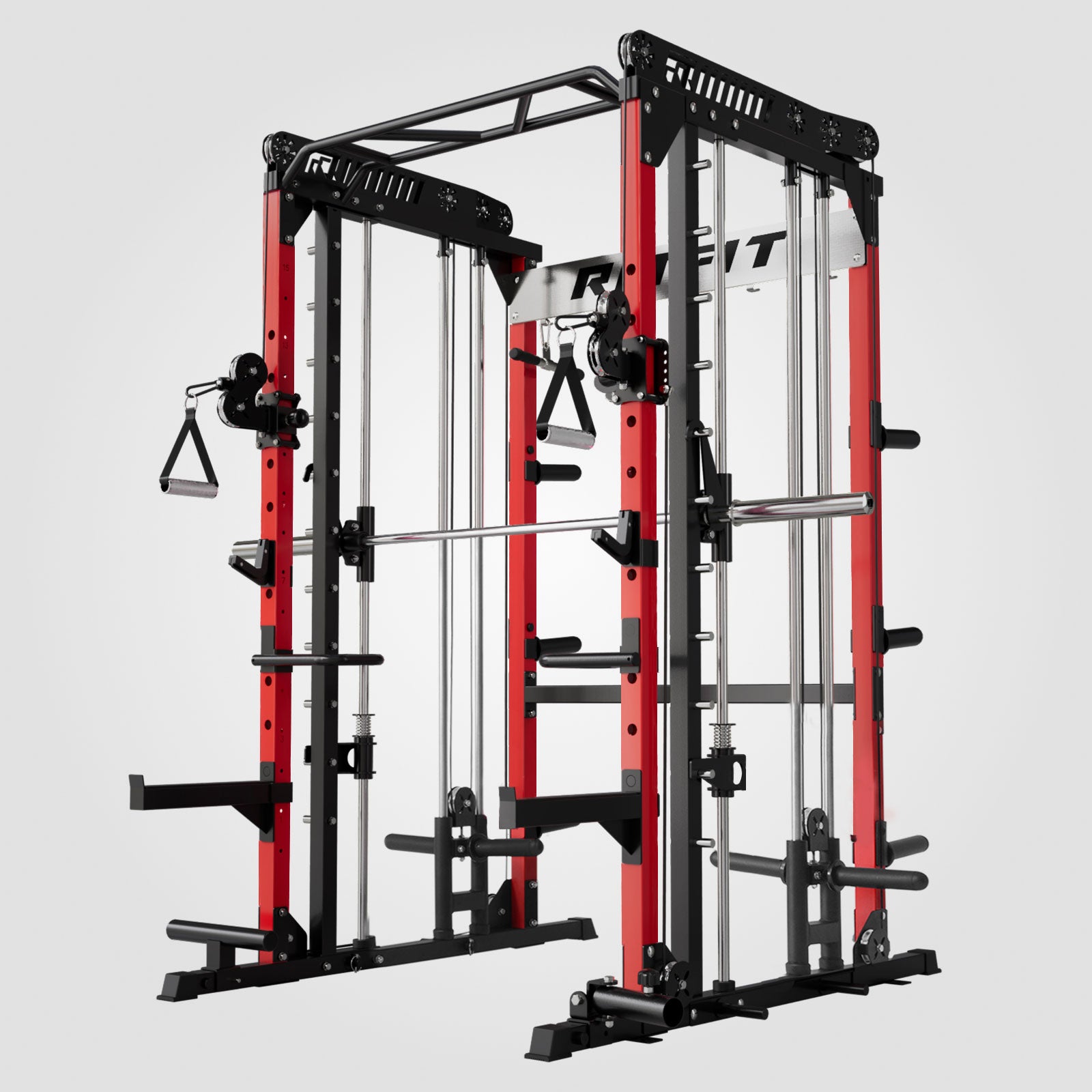
- Pulling Station: Use a secure pull up bar, ring row setup, or rack based option. RitFit rack attachments can help expand a home gym when compatible with your rack.
- Floor Space: Keep enough room for push ups and squats without stepping over equipment. Protective gym flooring mats can improve comfort and help define your training area.
- Bench Option: Use a stable bench for elevated push ups if floor push ups break down. See RitFit adjustable benches if you need a broader strength training setup.
- Progression Tools: Add dumbbells later if you want strength accessories around Cindy prep. RitFit dumbbells can support rows, presses, and accessory strength work outside benchmark day.
- Storage: Keep plates, bands, bars, and accessories out of your transition path. Organized weight storage helps reduce clutter in small home gyms.
Safety Tips and Common Mistakes
Cindy becomes risky when fatigue turns clean reps into rushed compensations. Scale early, protect your hands, and stop any movement that causes sharp pain.
- Starting Too Fast: Do not sprint the first few rounds. Early speed often creates push up failure and long rests later.
- Learning Kipping Under Fatigue: Do not use Cindy to learn kipping pull ups for the first time. Build the skill separately before using it in a high volume benchmark.
- Sagging Push Ups: Scale immediately if your hips drop or your lower back arches. Elevated push ups are better than repeated poor reps.
- Short Squats: Keep depth consistent from start to finish. A target can help if your depth changes when tired.
- Hand Tears: Manage calluses, use chalk lightly, and avoid death gripping the bar. Torn hands can interrupt training long after the workout ends.
- Ignoring Pain: Stop if you feel sharp shoulder, elbow, wrist, back, hip, or knee pain. Fatigue is expected, but sharp pain is not a training goal.
How to Track and Improve Your Cindy Score
Track Cindy by recording total rounds, extra reps, movement version, pull up style, push up scale, and any major breaks. This turns one hard workout into useful training data.
- Record the Exact Version: Write down Rx, banded pull ups, ring rows, elevated push ups, or time scaled. A score is only comparable when the version is clear.
- Track Round Drop Off: Note whether your pace faded in the final 5 minutes. A smaller drop off usually signals better pacing.
- Build Strict Strength: Improve strict pull ups, push ups, rows, and pressing capacity outside Cindy. Strength and endurance adaptations develop with repeated training exposure over time.[5]
- Practice EMOM Rounds: Try one round every minute for 8 to 15 minutes. This teaches pacing without the full fatigue of a 20 minute test.
- Retest Occasionally: Repeat Cindy every 3 to 6 months. Retesting too often can crowd out the strength and skill work that actually raises your score.
For broader home training support, connect Cindy prep with home gym equipment that fits your space, strength goals, and weekly training plan.
Cindy Variations and Related Workouts
Cindy variations should match your training age and recovery capacity. A small change in load, time, or movement difficulty can make the workout much more demanding.
- Half Cindy: Perform the same workout for 10 minutes. This is useful for beginners or deload weeks.
- Partner Cindy: Alternate full rounds with a partner for 20 or 30 minutes. This creates an interval style workout with more rest between efforts.
- Weighted Cindy: Use a weight vest only if you already handle Rx Cindy well. Added load greatly increases stress on pull ups, push ups, and squats.
- Mary: Perform 20 minutes of 5 handstand push ups, 10 pistols, and 15 pull ups. This is a more advanced benchmark and should not replace Cindy for beginners.
Sample Training Plan to Prepare for Cindy
A focused 2 to 4 week block can improve your Cindy score without repeating the full workout every week. Build strict strength first, then add pacing practice.
- Day 1 Pulling Strength: Practice strict pull ups, negatives, assisted pull ups, or rows. Stop each set before your technique breaks.
- Day 2 Push Up Volume: Accumulate clean push ups in small sets. Stay 2 to 3 reps away from failure so you can recover.
- Day 3 Squat Endurance: Perform controlled air squats, lunges, and tempo squats. Keep depth and knee tracking consistent.
- Day 4 Cindy Intervals: Practice short 5 to 10 minute AMRAPs or EMOM rounds. Focus on transition rhythm rather than maximum effort every session.
FAQs
What is a good Cindy CrossFit WOD score?
A good Cindy CrossFit WOD score depends on your level, standards, and scaling choice. Beginners often finish 7 to 10 rounds, intermediate athletes often finish 13 to 17 rounds, and advanced athletes often exceed 20 rounds with steady pacing and clean reps.
How should beginners scale the Cindy CrossFit WOD?
Beginners should scale Cindy so they can keep moving for most of the 20 minutes. Ring rows, banded pull ups, elevated push ups, knee push ups, target squats, shorter time caps, or reduced rep rounds can preserve the intended conditioning stimulus.
Can I do Cindy CrossFit WOD at home?
Yes. You can do Cindy at home if you have a safe pulling option, enough floor space, and a visible timer. Use ring rows or another stable row variation if you do not have a secure pull up station.
Why do my push ups fail early during Cindy CrossFit WOD?
Push ups usually fail early because the opening pace is too aggressive or the sets are taken too close to failure. Break push ups from the first few rounds, use short rests, and scale to elevated push ups before your plank position breaks.
Should I do Cindy CrossFit WOD Rx or scaled?
Choose Rx only if you can maintain clean pull ups, push ups, and air squats for the full workout. Scaling is better when Rx reps force long rests, missed standards, shoulder discomfort, or push up failure before the halfway point.
How often should I retest Cindy CrossFit WOD?
Retest Cindy every 3 to 6 months if your goal is to measure progress. This gives enough time to improve strict strength, pressing endurance, squat stamina, and pacing without turning the benchmark into repeated high volume fatigue.
What muscles does Cindy CrossFit WOD work?
Cindy works the lats, upper back, biceps, grip, chest, triceps, shoulders, core, quads, glutes, hamstrings, and calves. It also challenges aerobic capacity because the repeated rounds keep your heart rate elevated for the full 20 minutes.
How can I improve my Cindy CrossFit WOD score?
Improve your Cindy score by building strict pull up strength, increasing clean push up volume, practicing air squat rhythm, and using EMOM rounds for pacing. The biggest gains usually come from fewer push up failures and steadier round times.
Conclusion
The Cindy CrossFit WOD is simple, repeatable, and demanding because it combines pulling, pressing, squatting, and aerobic pacing in one 20 minute test. Choose the right scale, protect your movement standards, and log your score so each retest gives useful training feedback.
Important disclaimer: This article is for general educational purposes only and is not medical advice. If you have pain, a recent injury, surgery history, dizziness, numbness, or unexplained weakness, consult a qualified clinician before training. Stop any exercise that causes sharp pain or symptoms that feel abnormal.
References
- Feito Y, Heinrich KM, Butcher SJ, Poston WSC. High intensity functional training HIFT: definition and research implications for improved fitness. Sports. 2018;6(3):76. doi:10.3390/sports6030076
- Claudino JG, Gabbett TJ, Bourgeois F, Souza HS, Miranda RC, Mezencio B, et al. CrossFit overview: systematic review and meta analysis. Sports Med Open. 2018;4:11. doi:10.1186/s40798-018-0124-5
- Kowalski KL, Connelly DM, Jakobi JM, Sadi J. Shoulder electromyography activity during push up variations: a scoping review. Shoulder Elbow. 2022;14(3):326-340. doi:10.1177/17585732211019373
- Lorenzetti S, Ostermann M, Zeidler F, Zimmer P, Jentsch L, List R, Taylor WR, Schellenberg F. How to squat? Effects of various stance widths, foot placement angles and level of experience on knee, hip and trunk motion and loading. BMC Sports Sci Med Rehabil. 2018;10:14. doi:10.1186/s13102-018-0103-7
- Hughes DC, Ellefsen S, Baar K. Adaptations to endurance and strength training. Cold Spring Harb Perspect Med. 2018;8(6):a029769. doi:10.1101/cshperspect.a029769