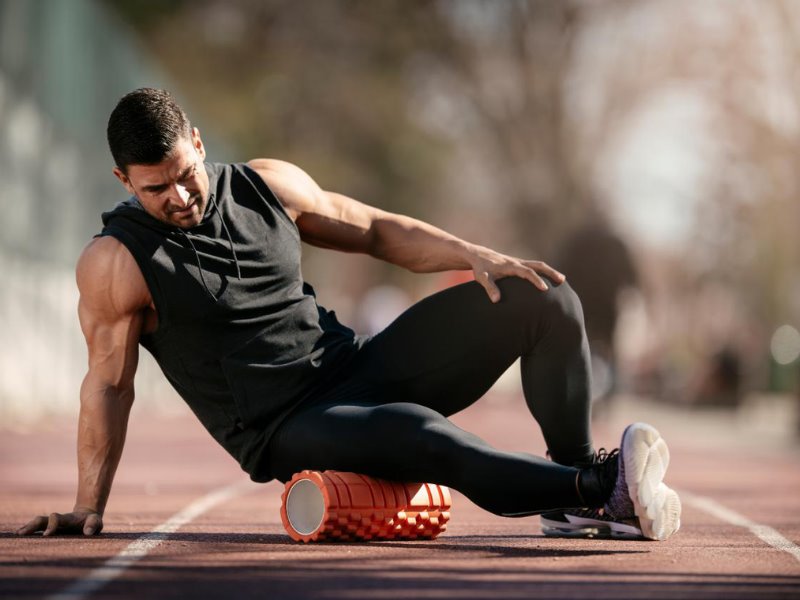
A roller stick for workout recovery is a handheld tool that delivers deep tissue massage through self-administered myofascial release, or SMR. It smooths out knots, restores blood flow, and helps you bounce back faster after hard training.
This guide explains what a roller stick does, why recovery matters, and how to use the tool correctly. You will also get a full cooldown routine for calves, glutes, thighs, and upper back, plus tips for choosing the right roller stick.
Quick Answer: A roller stick for workout recovery is a handheld massage tool that uses self-administered myofascial release to break up muscle knots, boost blood flow, and ease soreness. Roll slowly over each tender area after training, breathe steadily, and follow a short cooldown routine to speed recovery and prevent injury.
Key Takeaways
- Fast relief: A roller stick targets trigger points and knots that slow recovery after exercise.
- Better blood flow: Rolling helps restore circulation to tired muscles after training.
- Easy technique: Roll slowly over each tender spot, hold on sensitive points, and breathe throughout.
- Full body value: A compact stick reaches calves, glutes, thighs, and upper back with one tool.
- Portable design: An adjustable roller stick packs small, so recovery can happen at home or in the gym.
What Is a Roller Stick for Workout Recovery?
A roller stick for workout recovery is a handheld tool designed for deep tissue massage and self-administered myofascial release, or SMR. It places pressure on tight muscle surfaces to release tenderness, break up painful knots, and stimulate blood flow for faster recovery.
- Handheld design: Smaller than a foam roller, the stick targets isolated muscle groups with precise pressure.
- Core concept: Muscle rolling, or SMR, means pressing the stick over stiff areas and rolling through the full length of the muscle.
Today, with multiple functions and a small size, the handheld roller for muscles is common among athletes and fitness enthusiasts. For a closer look at what consistent rolling can do, read the 10 benefits of using a massage body stick roller.

Why Is Workout Recovery Important?
Muscle soreness is normal after strenuous workout activity, especially when you are starting a new program. Without proper recovery, tight fascia dehydrates, forms sore spots or knots, and leaves you more prone to injury or chronic pain.
Fascia is a connective tissue that surrounds your muscles and organs like a web, and it has nerves that make it as sensitive as skin. Repetitive motion makes it stiffen and tighten, which creates a blockage that limits your ability to recover and heal.
Even experienced strength coaches treat recovery as a non-negotiable part of any training plan.
"When people start to see a drop off of 10% or so of their grip output, you really should skip the gym that day."
Jeff Cavaliere, MSPT, CSCS, Physical Therapist and Strength Coach, Athlean-X
How Does a Roller Stick Improve Recovery?
A roller stick improves workout recovery in three main ways: it alleviates soreness, improves blood circulation, and helps prevent injury. Each rolling session refuels tense muscle and fascia so you perform better on your next training day.
- Alleviate soreness and increase flexibility: Rolling smooths out knots and reduces muscle tightness, which keeps you prepared for later activities.
- Improve blood circulation: A study in the Journal of Strength and Conditioning Research (Hotfiel et al. 2017) found that 30 minutes of muscle rolling improved blood flow in the lateral thigh compared with resting conditions.
- Prevent injury and accelerate recovery: Rolling refuels fluid to tense muscles and fascia, which matters after hard sessions such as metcon workouts or a 5x5 workout program.
This makes a roller stick a smart addition for anyone who trains at high intensity.

How to Use a Roller Stick After a Workout
Use a roller stick for workout recovery within 10 to 15 minutes after training, when muscles are warm and most responsive. Keep each roll slow and controlled, and stop if you feel sharp pain.
- Find the sore spot: Roll slowly until you locate the tender or stiff area of the muscle.
- Stay on target: Roll back and forth over the area with steady, even pressure.
- Hold on hot spots: Pause for 20 to 30 seconds on any knot before moving on.
- Keep breathing: Breathe steadily throughout so your muscles stay relaxed.
- Move through each group: Work through the whole muscle group before shifting to the next one.
If your plan includes core work like an ab roller workout, roll right after the last set to keep the midsection loose. A short rolling block also makes a calm finish to a heavy day.
Cool-Down Routine with a Roller Stick
Finish every workout with a short rolling circuit that flushes tension and boosts energy for faster recovery. Target the muscles that work hardest, starting with the lower body and finishing with the back.
Glutes: Tight glutes can pull on your hips and lower back after training, so rolling them is a smart part of any cooldown. Sit and roll slowly across the muscle to release the tension.
- Sit on the roller stick with your knees bent.
- Lift your hips with your hands for support.
- Cross the left leg over the right and roll over the glutes.
- Switch legs and repeat on the other side.

Calves: Calf stretches are vital for runners, because strong calves drive power and speed. Rolling them primes your legs for the next run and helps prevent injury.
- Sit on the floor and place the stick under both ankles.
- Support your weight with your hands.
- Roll forward until the stick reaches the back of your knees.
- Roll slowly from below the knee to the ankle about 15 times.
- Hold on any tender spot for 20 to 30 seconds.

Outer thighs: Weak abductors can cause poor coordination, lack of stability, and injuries. Rolling the outer thigh relaxes the muscles between your hips and knees.
- Lie on your side with the stick under the side of your quad muscle.
- Place the other foot on the floor in front, with the knee bent.
- Support your upper body with the arm closest to the ground.
- Roll from above the knee to just below the hip.
- Pause on tender spots for 20 to 30 seconds.

Upper back: Roll the upper back to release pain and recover from stiffness after training. This pairs well with upper body days from a bench workout guide.
- Lie down with the stick just below your shoulder blades, perpendicular to the spine.
- Place your hands behind your neck or cross your arms.
- Bend your knees, lift your hips, and roll from mid back to below the neck.

You may feel slight discomfort while rolling, and that is normal as the stick breaks up muscular adhesion and reduces tightness. Stop immediately if you feel sharp or shooting pain.
What to Look For in a Roller Stick
The best roller stick for workout recovery is portable, adjustable, and easy to store. Look for a design that expands to fit your body and compresses for travel.
- Adjustable length: A stick that expands from about 5.3 inches to 13.8 inches reaches every major muscle group in one tool.
- Portable frame: A collapsible design stores in a drawer or fits easily in your gym bag.
- Interlocking surface: A smooth interlocking surface glides over muscle without catching your skin.
- Color options: Multiple colors let you pick a stick that suits your gear.
The RitFit Portable, Collapsible and Adjustable Body Roller is a muscle roller stick that is adjustable and portable, with four color options to choose from. It expands in a snap, takes little space, and travels anywhere you train.


FAQs About Roller Stick for Workout Recovery
How long should you roll with a roller stick after a workout?
Aim for 5 to 10 minutes after training, spending 20 to 30 seconds on each tender spot.
Roll slowly and breathe steadily for the best results.
Short frequent sessions beat one long aggressive pass, because hard pressure can overwork muscles that are already tired and sore.
Can a roller stick replace stretching?
No.
A roller stick adds myofascial release, but stretching still matters for range of motion.
Use the stick to break up knots and relieve soreness, then follow it with light stretching.
Together the two keep muscles flexible and ready for the next session.
What muscles can you target with a roller stick?
You can target the calves, glutes, outer thighs, quads, hamstrings, and upper back with one stick.
Roll each area slowly and hold on any tender spot for 20 to 30 seconds.
This makes the tool useful for runners, lifters, and desk workers alike.
How do you choose the right roller stick for recovery?
Look for a stick with a smooth interlocking surface, an adjustable length, and a portable frame.
A model that expands from about 5.3 inches to 13.8 inches reaches every major muscle group with one tool.
A collapsible design stores easily at home, travels well in a gym bag, and stays ready for use anywhere.
When should you avoid using a roller stick?
Skip rolling over open wounds, bruises, varicose veins, or areas with sharp pain.
Stop if rolling makes symptoms worse or causes numbness.
If you have a recent injury or a medical condition, ask a doctor or physical therapist before you start self massage.
Conclusion
A roller stick for workout recovery is a simple tool that delivers deep tissue massage, boosts blood flow, and eases soreness after training. Roll slowly over your calves, glutes, thighs, and upper back, hold on tender spots, and breathe steadily to get the most from every session.
Pair your rolling with recovery friendly training such as a barre workout on rest days. If you want to upgrade your recovery kit, explore RitFit recovery gear on the RitFit sales page.
Disclaimer
This article is for general information only and does not replace professional medical advice. Stop rolling if you feel sharp pain, and consult a doctor or physical therapist before use if you are injured, pregnant, or managing a medical condition.