Yes, many lifters can train with lower back pain when symptoms are mild, stable, and not nerve related, but the safest path is controlled movement, lighter loads, and clear stop rules.
This guide explains how to lift more safely at home, which exercises to prioritize, which movements need caution, and how RitFit home gym equipment can support more controlled training.
Key Takeaways
- Start with safety: Do not lift through sharp pain, spreading leg symptoms, numbness, weakness, or bowel and bladder changes.
- Train around symptoms: Choose supported rows, goblet squats, split squats, glute bridges, and light dumbbell work before heavy barbell loading.
- Progress slowly: Add weight, range of motion, or volume one variable at a time.
- Use support wisely: Benches, dumbbells, safety arms, and Smith machines can help home lifters control position and reduce failed rep risk.
- Do not chase pain relief claims: Strength training can support function, but it should not replace medical care when symptoms suggest a more serious issue.
Can You Lift Weights With Lower Back Pain?
You may be able to lift weights with lower back pain if the pain is mild, localized, and does not worsen during or after training. Clinical guidelines for low back pain emphasize screening for serious symptoms before exercise decisions are made.[1]
The goal is not to test toughness, the goal is to keep moving while avoiding positions, loads, and fatigue levels that increase symptoms.
Before You Lift, Use This Safety Check
Stop lifting and seek medical guidance if pain travels down the leg, causes numbness or weakness, follows a fall or accident, comes with fever, or changes bowel or bladder control.
If your pain stays local and mild, use low load strength work, short sets, and a slow tempo before returning to heavy squats, deadlifts, or bent over rows.
| Pain Signal | What It Means | Best Action |
|---|---|---|
| Mild stiffness | Often manageable with careful movement | Use light loads and controlled range |
| Sharp pain | Possible irritation or overload | Stop that movement and regress |
| Pain down the leg | Possible nerve involvement | Pause lifting and seek professional advice |
| Pain worse the next day | Training dose may be too high | Reduce load, sets, or range next session |
Safer Weight Lifting Rules For Lower Back Pain
The safest strength training plan for lower back pain uses controlled positions, gradual loading, and exercise variations that reduce unnecessary spinal stress. Exercise therapy has evidence for improving pain and function in chronic low back pain, but no single exercise type is best for every person.[2]
- Keep the first sets easy: Begin with a load that feels controlled for every rep. Stop with several reps in reserve instead of training to failure.
- Brace before you move: Create gentle abdominal tension before squats, rows, presses, and hip hinges. This helps you control trunk position without forcing a stiff or painful posture.
- Use a neutral spine: Keep your ribs, pelvis, and head stacked during loaded movement. Avoid rounding or over arching when symptoms are sensitive.
- Shorten the range when needed: A box squat, rack pull, or elevated dumbbell Romanian deadlift can be easier to control than a full range barbell version.
- Progress one thing at a time: Increase weight, reps, sets, or range, but do not increase all of them together.
Best Weight Lifting Exercises For Lower Back Pain
The best choices are exercises that strengthen the legs, hips, trunk, and upper body without forcing the lower back to stabilize heavy loads too early. Motor control exercise can help reduce pain and disability in chronic nonspecific low back pain, especially when the exercise plan matches the individual lifter.[3]
| Training Goal | Better Starting Exercises | Why It Helps |
|---|---|---|
| Core control | Dead bug, bird dog, plank variation | Builds trunk control without heavy spinal loading |
| Lower body strength | Goblet squat to box, split squat, step up | Allows lighter loading and easier depth control |
| Glutes and posterior chain | Glute bridge, hip thrust, supported Romanian deadlift | Strengthens hips while reducing unnecessary bending |
| Upper back strength | Chest supported row, bench supported dumbbell row | Reduces the need to hold a bent over position |
Exercises To Be Careful With
These exercises are not automatically bad, but they demand more trunk control, hip mobility, and load tolerance. Add them back only when symptoms are stable and your warm up sets feel smooth.
- Heavy barbell deadlift: Start with hip hinge drills, elevated pulls, or light dumbbell Romanian deadlifts before pulling from the floor.
- Heavy back squat: Use goblet squats, box squats, split squats, or a controlled Smith machine squat before returning to maximal free weight squats.
- Good morning: Save this for later stages because it places a long lever demand on the lower back.
- Bent over row: Use a chest supported row or one arm dumbbell row with bench support first.
- Fast twisting lifts: Avoid high speed rotation when pain is irritable because control matters more than intensity.
A 3 Stage Return To Lifting Plan
A safer return plan moves from mobility and control to light strength, then to heavier resistance. Resistance training may be effective and safe for some people with low back related leg pain, but current evidence still leaves uncertainty about ideal long term dosage.[4]
| Stage | Goal | Training Focus | Progress When |
|---|---|---|---|
| Stage 1 | Calm symptoms | Walking, dead bug, bird dog, light mobility | Daily movement feels stable |
| Stage 2 | Rebuild control | Goblet squat, glute bridge, supported row, split squat | Next day pain does not increase |
| Stage 3 | Restore strength | Progressive dumbbell lifts, Smith machine patterns, controlled hip hinge | Technique remains consistent under load |
Home Gym Setup For Back Friendly Lifting
A good home gym setup helps you control body position, load selection, and failed rep risk. For many lifters, the best starting point is simple equipment that supports controlled movement rather than chasing the heaviest barbell setup.
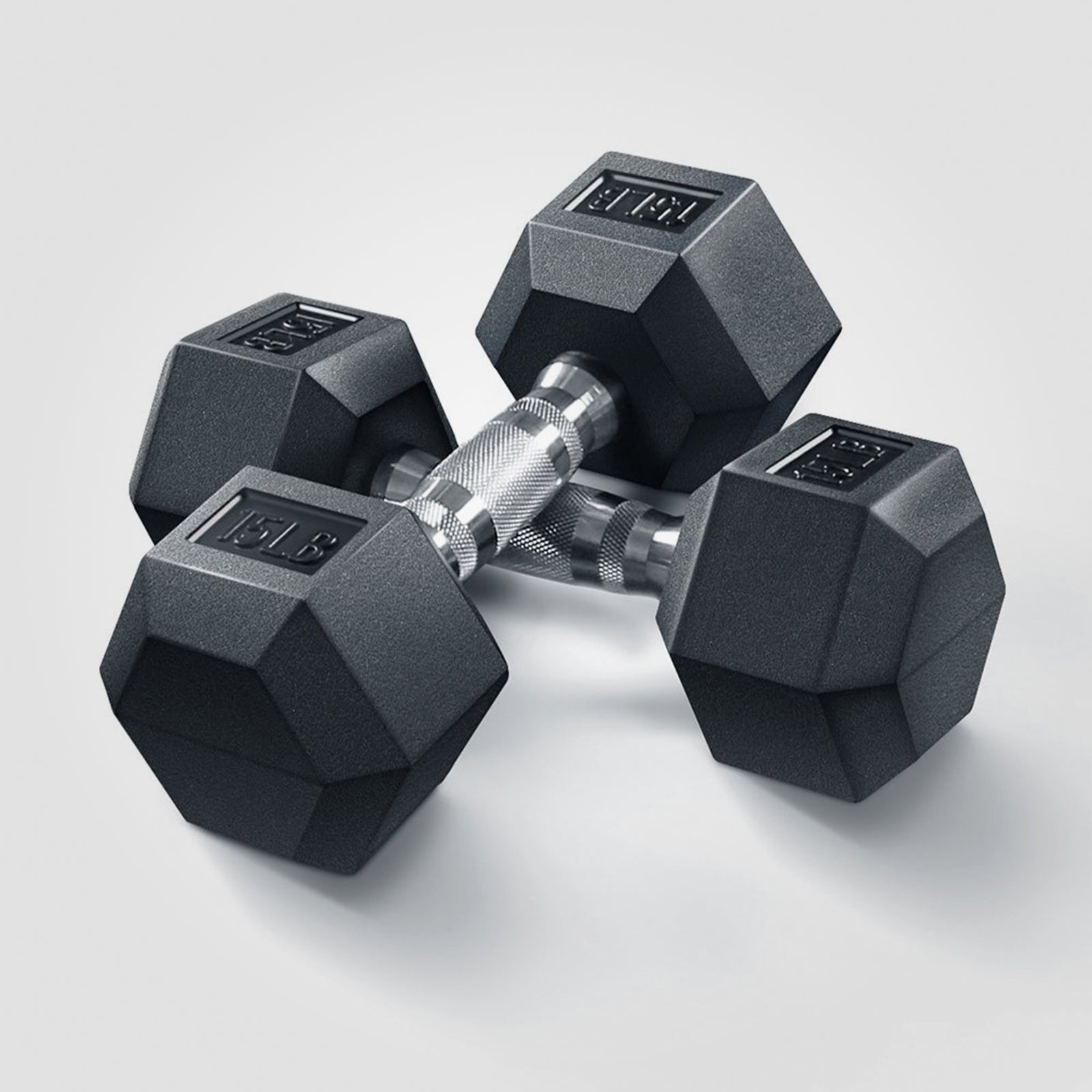
- Dumbbells: A lighter pair of RitFit dumbbells can help you train one side at a time and scale load in smaller steps.
- Adjustable bench: Adjustable weight benches make chest supported rows, incline presses, and seated exercises easier to set up.
- GATOR bench: The RitFit GATOR adjustable weight bench is a useful option when the workout needs stable support for upper body and dumbbell training.
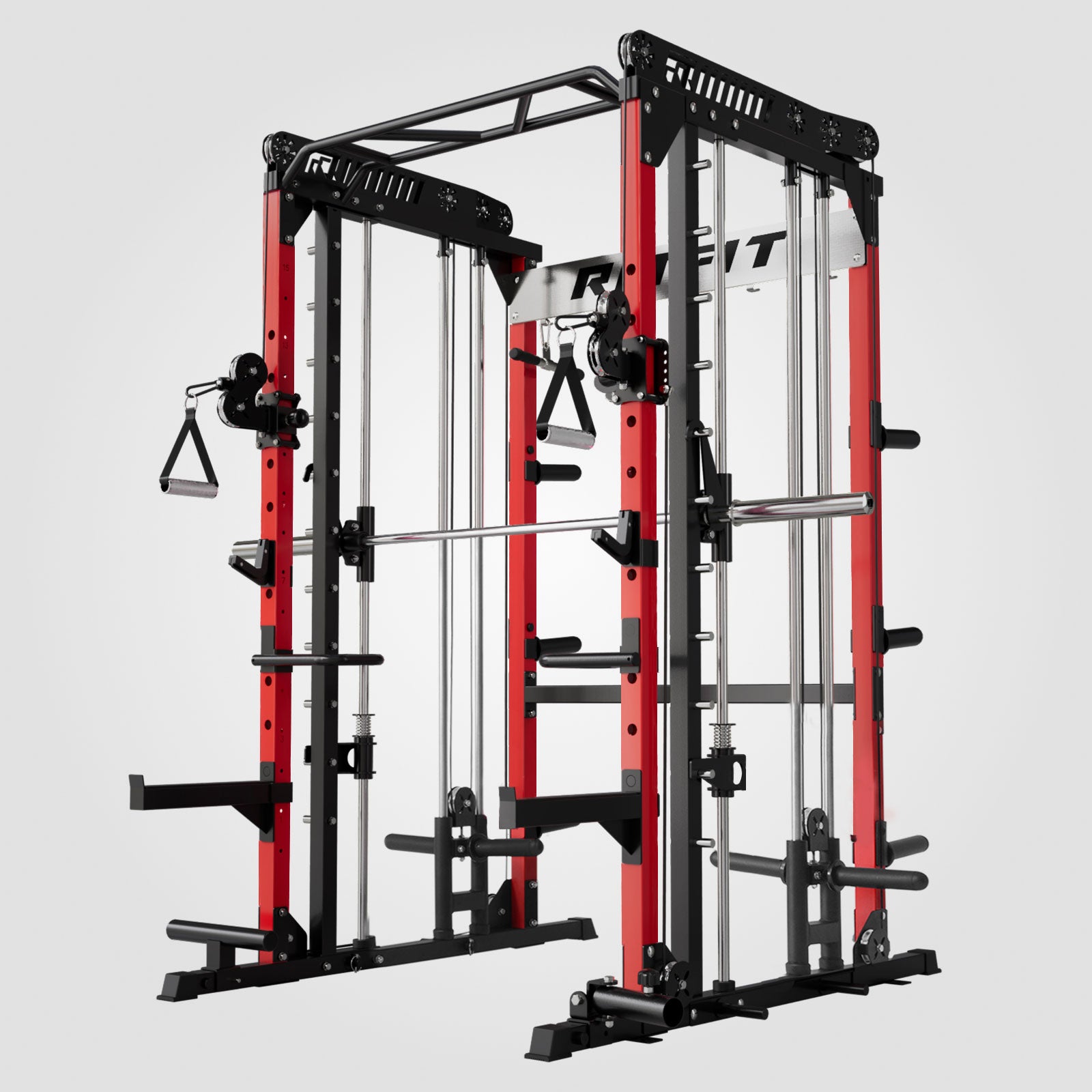
- Smith machine: The RitFit Smith machine collection can support controlled bar path practice when the lifter uses conservative loading and proper setup.
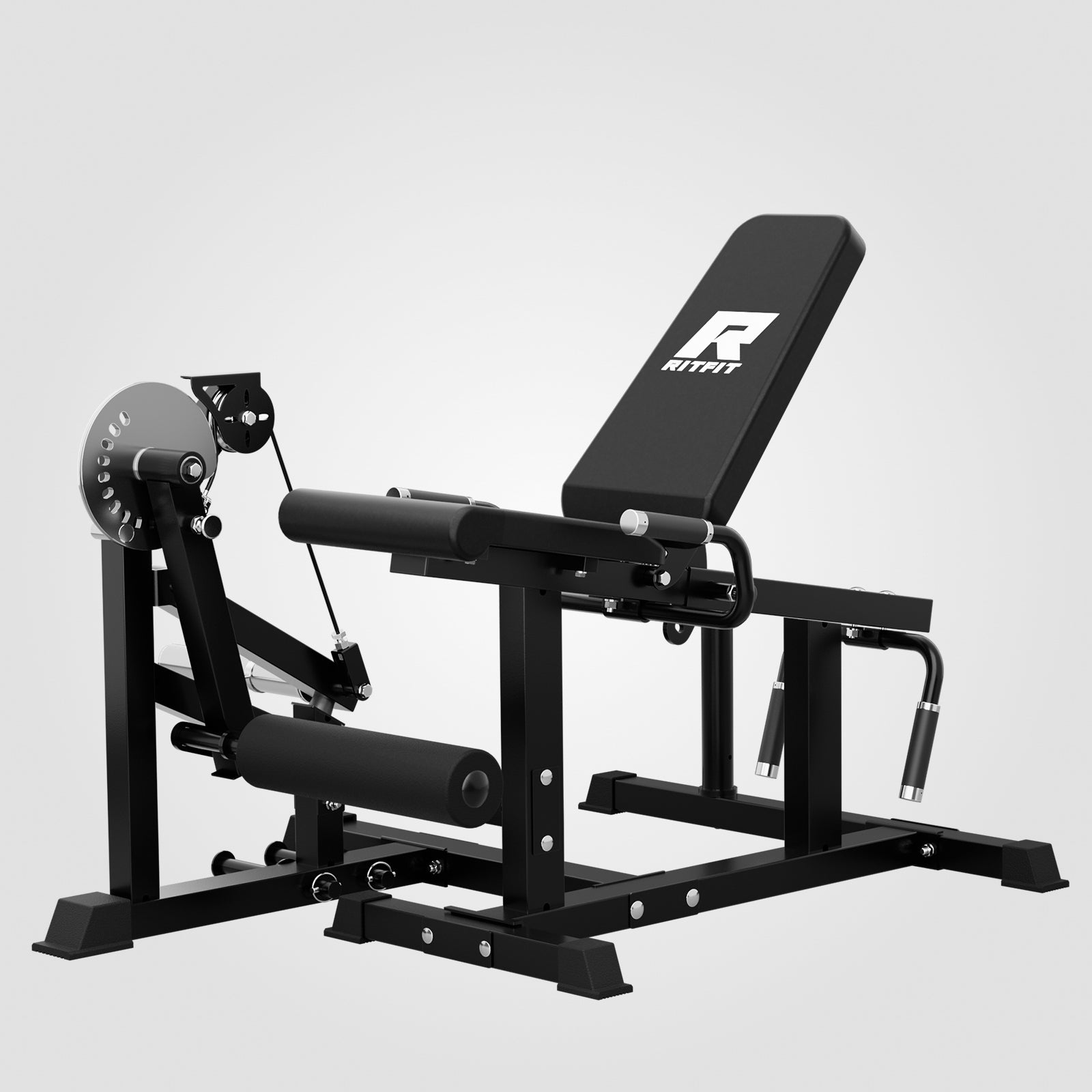
- Rack system: RitFit rack packages can help lifters set safety points before squats, presses, or rack pull variations.
How To Build A Lower Back Friendly Workout
A lower back friendly workout should train the full body while limiting positions that make symptoms flare. Core strength training may help chronic low back pain, especially when it emphasizes deep trunk control and consistent practice.[5]
- Warm up: Walk for 5 to 8 minutes, then do bird dogs, glute bridges, and bodyweight squats.
- Lower body: Choose goblet squats, split squats, step ups, or light Smith machine squats.
- Upper body pull: Use chest supported rows or bench supported dumbbell rows instead of heavy bent over rows.
- Upper body push: Use seated dumbbell presses, incline presses, or machine supported pressing with a stable torso.
- Core finish: Use dead bugs, side planks, or carries with light loads and clean posture.
Sample Home Gym Workout
This sample workout is for lifters with mild, stable symptoms and no red flag signs. Keep every set smooth and stop any exercise that causes sharp pain or spreading symptoms.
| Exercise | Sets | Reps | Coaching Note |
|---|---|---|---|
| Bird dog | 2 | 6 each side | Move slowly and keep hips level |
| Goblet squat to box | 3 | 8 | Use a depth that feels controlled |
| Bench supported dumbbell row | 3 | 10 each side | Support the torso and avoid twisting |
| Glute bridge | 3 | 10 | Squeeze glutes without over arching |
| Dead bug | 2 | 6 each side | Keep ribs down and breathe steadily |
Common Mistakes To Avoid
Most setbacks happen when lifters return to heavy loading before symptoms and technique are ready. Treat the first few weeks as rebuilding time, not proof of your old max strength.
- Testing one rep max too soon: Max attempts create more risk than benefit during a return phase.
- Ignoring next day pain: A workout can feel fine during the session but still be too much if symptoms flare the next morning.
- Using fatigue as the goal: Train for clean reps, not exhaustion.
- Skipping supported variations: Chest support, bench support, and rack height adjustments can keep training productive.
- Copying advanced routines: Your best plan is the one your back tolerates consistently.
Helpful RitFit Training Resources
Use related guides to build a safer training path before returning to advanced lifts. Start with core workouts for beginners, then review safe Smith machine training at home before heavier barbell patterns.
When hip hinge work becomes appropriate again, use the Smith machine Romanian deadlift guide as a technique reference, not as a reason to rush loading.
FAQs
Can I lift weights with lower back pain?
Yes. You can lift weights with lower back pain when symptoms are mild, local, and stable. Start with light loads, supported positions, and controlled reps. Stop if pain becomes sharp, travels down the leg, or feels worse after training.
What weight lifting exercises are safest for lower back pain?
The safest choices are usually supported and low load exercises. Start with dead bugs, bird dogs, glute bridges, goblet squats, split squats, and bench supported rows. These movements train strength and control without forcing the lower back to stabilize heavy loads too soon.
Should I avoid deadlifts with lower back pain?
No. You do not need to avoid deadlifts forever, but heavy floor deadlifts are often too demanding early on. Rebuild the hip hinge first with light Romanian deadlifts, elevated pulls, or technique drills, then progress only if symptoms stay stable.
Is a Smith machine good for lower back pain training?
Yes. A Smith machine can help some lifters practice a controlled bar path at home. It is not a treatment for back pain, but it can support conservative squats, presses, and hip hinge variations when load, range, and setup are managed carefully.
How should beginners start weight lifting after lower back pain?
Beginners should start with short full body workouts two or three times per week. Use light dumbbells, bodyweight movements, supported rows, and core control drills. Add weight only after the same workout feels comfortable during training and the next day.
What pain level is acceptable during lower back pain workouts?
Mild discomfort may be acceptable if it stays stable and does not change your form. Sharp pain, spreading pain, numbness, weakness, or next day worsening is not acceptable. Use pain response as feedback and reduce load, range, or volume when needed.
Which home gym equipment helps with lower back pain workouts?
The most useful equipment is simple, adjustable, and easy to control. Dumbbells, an adjustable bench, a rack with safety points, and a Smith machine can all support safer training choices. Equipment should help position control, not encourage heavy loading too soon.
When should I stop lifting and see a doctor?
You should stop lifting and seek medical guidance if pain travels down the leg, causes numbness or weakness, follows trauma, or affects bowel or bladder control. These signs need professional evaluation before you continue strength training or increase workout intensity.
Conclusion
Weight lifting for lower back pain works best when the goal is controlled progress, not heavy loading at all costs. Start with supported exercises, monitor symptoms, build trunk and hip control, and use home gym equipment to make each rep more stable and repeatable.
Disclaimer: This article is for general fitness education only and does not diagnose, treat, or replace medical care. If your lower back pain is severe, spreading, worsening, trauma related, or linked with numbness, weakness, fever, or bowel and bladder changes, stop training and consult a qualified healthcare professional.
References
- Delitto A, George SZ, Van Dillen LR, Whitman JM, Sowa G, Shekelle P, Denninger TR, Godges JJ. Low back pain: clinical practice guidelines linked to the International Classification of Functioning, Disability, and Health from the Orthopaedic Section of the American Physical Therapy Association. J Orthop Sports Phys Ther. 2012;42(4):A1-A57. doi:10.2519/jospt.2012.42.4.A1
- Hayden JA, Ellis J, Ogilvie R, Stewart SA, Bagg MK, Stanojevic S, Yamato TP, Saragiotto BT. Exercise therapy for chronic low back pain. Cochrane Database Syst Rev. 2021;9(9):CD009790. doi:10.1002/14651858.CD009790.pub2
- Saragiotto BT, Maher CG, Yamato TP, Costa LOP, Menezes Costa LC, Ostelo RWJG, Macedo LG. Motor control exercise for chronic non-specific low-back pain. Cochrane Database Syst Rev. 2016;(1):CD012004. doi:10.1002/14651858.CD012004
- Barbari V, Carbone MM, Storari L, Testa M, Maselli F. The effectiveness and optimal dose of resistance training in patients with subacute and persistent low back-related leg pain: a systematic review. Cureus. 2024;16(3):e57278. doi:10.7759/cureus.57278
- Chang WD, Lin HY, Lai PT. Core strength training for patients with chronic low back pain. J Phys Ther Sci. 2015;27(3):619-622. doi:10.1589/jpts.27.619