The best home gym is the one you can use consistently, so your setup should fit your goals, space, and budget before it tries to impress anyone. Home based exercise works best when friction stays low, which is why a practical starter setup usually beats an oversized room full of equipment you rarely touch.
Key Takeaways
- Start with function first: Flooring, a bench, and adjustable resistance usually give the best value at the beginning.
- Match equipment to your goal: General fitness, muscle building, and serious barbell training do not require the same starting setup.
- Buy for your room, not your wishlist: Ceiling height, walking clearance, and storage matter as much as budget.
- Upgrade in phases: A home gym should grow with your training, not force you to overspend on day one.
- Choose versatile categories first: Dumbbells, benches, barbells, plates, and guided strength systems cover the most useful ground.
Define Your Home Gym Goals
General Fitness and Weight Loss
If your goal is general fitness and weight control, start with equipment that supports regular full body strength work and simple conditioning. A bench, adjustable dumbbells, bands, and one compact cardio option cover both muscle strengthening and aerobic work without overbuilding the room.
Strength and Muscle Building
If you want to build muscle, choose equipment that supports progressive overload across presses, rows, squats, hinges, and accessory work. A bench, dumbbells, and either a rack or a Smith machine cover most of what you need because sensible resistance training can improve both strength and hypertrophy across a range of loading strategies.
Powerlifting and Performance
If your priority is maximal squatting, pressing, and pulling, build around a stable rack, an Olympic barbell, enough plates, and strong floor protection. Heavier loading matters most when pure strength is the goal, so your setup should feel stable enough for repeatable barbell progression.
Mobility, Rehab, and Active Aging
If your focus is movement quality, joint friendly training, or long term independence, choose equipment that is easy to enter, easy to control, and easy to progress. Bands, lighter dumbbells, a stable bench, and guided resistance options can support physical function and confidence over time.
Assess Your Space and Budget
Small Spaces
If you are working with an apartment corner, a guest room, or a compact office, prioritize equipment that earns its footprint every session. Adjustable dumbbells, a foldable or compact bench, bands, and floor mats are usually the smartest starting point.
Medium Spaces
A spare room or garage bay gives you enough room to train seriously without turning the entire area into a commercial style gym. This is where a bench, a barbell path, and a compact rack or all in one strength station begin to make sense.
Full Home Gym Rooms
A dedicated garage, basement, or training room gives you room to build around both primary lifts and accessories. That kind of space can support a fuller setup with guided strength, free weights, storage, and a separate cardio zone.
Budget Under $300
This budget works best for a minimalist starter gym focused on movement, beginner strength, and consistency. Keep your first purchases simple, useful, and durable rather than spreading the money across too many low value accessories.
Budget From $300 to $800
This range is usually enough to create a well rounded beginner to intermediate setup. You can cover pressing, rowing, lower body work, and conditioning if you buy versatile pieces in the right order.
Budget Above $800
This is the range where a home gym starts to feel much more complete and much more specific to your training style. It also gives you room to choose between a free weight path, a guided strength path, or a hybrid setup that blends both.
Core Essentials for Any Home Gym
Adjustable and Fixed Dumbbells
Dumbbells are one of the easiest ways to unlock full body training in a small footprint, which is why they are often the first category worth buying. RitFit dumbbells make sense for presses, rows, split squats, carries, curls, and general strength work without demanding a large room.
Weight Benches
A bench multiplies the value of almost every strength tool because it supports presses, rows, step ups, seated work, and many single leg movements. RitFit benches are a smart category to shop early because a stable bench improves both exercise variety and training comfort.
Floor Protection and Safety
Flooring is not optional if you want your space to stay quieter, safer, and easier to maintain. Rubber gym flooring mats help protect the subfloor, reduce noise, and create a more secure base under benches, dumbbells, and barbell work.
Resistance Bands and Mobility Tools
Bands are inexpensive, portable, and useful for warm ups, assisted pull work, lighter strength sessions, and mobility training. They also fill important gaps when your main setup is still small and growing.
Strength Training Foundation: Racks, Bars, and Plates
Power Racks and Smith Machines
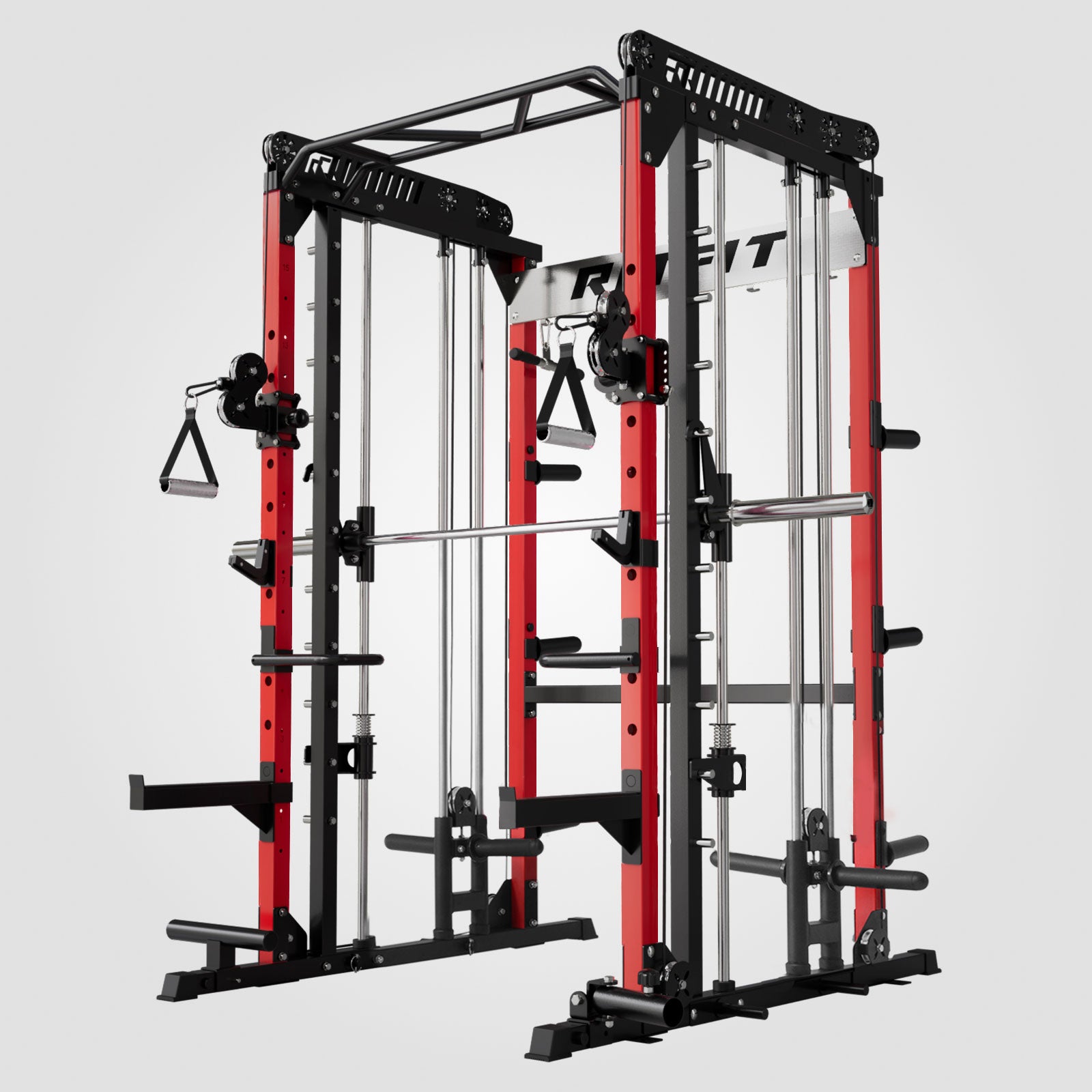
If your goal includes long term strength progression, a rack or Smith machine usually becomes the centerpiece of the room. RitFit Smith machines are especially useful for home training because they combine guided strength, solo lifting confidence, and broader exercise variety in one footprint.
Barbells and Weight Plates
A barbell path matters most when you want to train compound lifts with heavier loading and straightforward progression. RitFit barbells and weight plates are the category to prioritize once you are ready for squats, deadlifts, presses, and heavier rows.
Adjustable Benches for Pressing and Support
A flat bench can work well, but an adjustable bench gives your home gym more room to grow because it supports incline pressing, seated shoulder work, and more angle based variations. That added flexibility becomes even more valuable when every square foot needs to do more than one job.
Storage and Attachments
Storage is what keeps a usable gym from becoming a cluttered one, especially after plates, dumbbells, and cable handles start piling up. Simple storage decisions often improve workout flow more than another accessory purchase.
Functional and Versatile Add Ons
Cable Systems and Attachments
Cables add variety, smoother tension, and easier isolation work once your main setup is already covered. They are especially useful when you want to train back, shoulders, arms, and higher repetition work without building a room full of separate machines.
Kettlebells and Specialty Weights
Kettlebells are helpful when you want dynamic lower body work, carries, conditioning, and simpler grab and go training. They also make sense in small spaces because they store easily and support a wide range of movement patterns.
Core and Bodyweight Tools
Pull up bars, dip options, ab wheels, and simple push up tools can add a lot of value without adding much footprint. These tools work best after your main strength foundation is already in place.
Cardio Options for a Home Gym
Space Saving Cardio
If you need conditioning without giving away half the room, choose tools that store easily and start quickly. Jump ropes, step platforms, kettlebell circuits, and bodyweight intervals work well when your space is limited.
Larger Cardio Machines
A rower, bike, or treadmill makes more sense when you know you will use it regularly and you already have the floor plan for it. The best machine is the one that matches your preferences closely enough to become part of your weekly routine.
How to Choose Cardio Based on Goals and Space
If you want broader health benefits, your home gym should make room for both strength work and some form of aerobic work rather than forcing a choice between the two. Combined training is usually the better long term path for a more complete setup.
Sample Home Gym Setups Using RitFit Equipment
Minimalist Starter Home Gym
This setup works best for apartments, spare rooms, and cautious first purchases. Start with flooring, adjustable dumbbells, a compact bench, bands, and a simple conditioning tool so you can train the whole body without crowding the room.
Balanced Strength and Fitness Home Gym
This setup works best for medium spaces and people who want both general fitness and steady strength progression. A bench, dumbbells, a barbell path, floor protection, and a compact rack or guided strength option create a strong middle ground.
Advanced Strength and Power Home Gym
This setup works best for garages, dedicated rooms, and lifters who want heavier loading plus more exercise variety. Build around a Smith machine or rack, a barbell, enough plates, an adjustable bench, and storage that keeps the floor clear.
How to Prioritize Your Purchases
Start With Safety and Versatility
Your first purchases should solve the biggest training problems with the fewest items. In most cases that means flooring, a bench, and a flexible resistance option before you chase more specialized equipment.
Add Accessories Over Time
Accessories are most useful after your main training pattern is stable and repeatable. Once you know how you actually train at home, it becomes easier to add attachments, storage, or specialty tools with confidence.
Buying Bundles Versus Individual Items
Bundles can save time and reduce compatibility guesswork when you already know the type of setup you want. Individual purchases are better when your room is unusual, your budget is tight, or your training priorities are still evolving.
Tips for Setting Up and Maintaining Your Home Gym
Layout and Organization
Plan your room around movement first, not around appearance. You need enough clearance to load weight, walk safely, and complete each lift without turning every session into a furniture puzzle.
Safety Check and Maintenance
Check bolts, pads, handles, collars, and storage points regularly so the room stays dependable over time. A well maintained home gym feels safer, trains better, and usually lasts much longer.
Tracking Progress and Staying Motivated
A home gym becomes far more valuable when you actually log your sessions and let the setup grow around real progress. Consistency, not room size, is what turns equipment into results.
FAQs
What equipment do I need first for a home gym?
Start with the equipment that gives you the most training options per square foot, usually flooring, an adjustable bench, and adjustable dumbbells. If your goal is heavier barbell training, add a rack, barbell, and plates after you confirm your room dimensions and lifting clearance.
How much space do I need for a home gym?
You can build a useful home gym in a very small area if you choose compact equipment and keep the layout simple. A bench, adjustable dumbbells, bands, and a mat fit many small spaces, while racks and Smith machines need extra width, height, and bar movement clearance.
Can I build a home gym on a small budget?
Yes. A small budget home gym can still handle full body training if you buy versatile pieces first. Prioritize floor protection, a bench, adjustable dumbbells, and bands, then expand only after you know your training habits, strength level, and available storage are working well.
Is a Smith machine good for a beginner home gym?
Yes. A Smith machine can be a practical beginner home gym choice when you want guided bar paths, easier solo training, and cable based exercise options in one station. It is especially useful for people who want versatility and convenience without managing several separate machines.
Should I buy adjustable dumbbells or a rack for a home gym?
Choose adjustable dumbbells first if your home gym is tight on space, budget, or both. Choose a rack first if your main goal is barbell squats, presses, pull ups, and long term strength progression, because a rack creates a stronger foundation for heavier compound lifting.
What flooring is best for a home gym?
Rubber flooring is usually the best home gym option because it protects the floor, reduces noise, and improves equipment stability. Foam may work for light mobility zones, but heavier strength training setups usually need denser rubber mats or tiles under benches, dumbbells, and barbell stations.
Which home gym setup is best for strength training?
A strength focused home gym works best when it includes a stable bench, a rack or Smith machine, a barbell, and enough plates to progress over time. That setup supports the biggest compound lifts first, then you can add cables, specialty attachments, and storage as needed.
Will a home gym save money over time?
Yes. A home gym can save money over time if you train consistently and avoid buying equipment you will not use. The best return usually comes from a phased setup, because you solve your main training needs first and upgrade only when your routine clearly demands it.
Conclusion
You do not need to recreate a commercial gym to build an effective training space at home. Start with the equipment that matches your goal, fits your room, and supports consistent use, then let your setup expand only after your routine proves what deserves more space and more budget.
Disclaimer: This guide is educational and product focused, not medical advice. Choose loads, exercise selection, and setup details according to your experience, mobility, and available space, and get qualified professional guidance if you have pain, injury history, or specific rehabilitation needs.