Table of Contents
- What Is a Smith Machine?
- Choosing the Right Equipment: RitFit Smith Machine Series
- How a Smith Machine Works
- Pros of Using a Smith Machine
- Cons of Using a Smith Machine
- Who Is the Smith Machine Best For?
- Smith Machine Workout Routine Examples
- Technique Tips for Safe and Effective Smith Machine Training
- Programming Considerations
- FAQs About the Smith Machine
You've probably noticed that machine-based training is becoming more and more popular if you've ever been to a gym. The Smith machine is one piece of equipment that stands out from the rest. But what is a Smith machine, and how is it different from a regular squat rack or free weights? More importantly, what is the Smith machine good for, and should you use it in your workouts?
This article will cover everything you need to know, from what it is and what it's made of to its pros and cons and who it's best for. We'll also give you examples to help you make a good Smith machine workout plan, like a full-body workout plan that uses the Smith machine.
Key Takeaways
- A Smith machine uses a bar fixed to rails, which improves stability and makes solo lifting easier and safer for many exercises.
- It is excellent for hypertrophy, controlled pressing, split squats, calf raises, hip thrusts, and other setup-sensitive movements.
- It reduces stabilizer demands compared with free weights, so it works best as a complement to barbells, dumbbells, cables, and bodyweight training.
- Rail angle, foot placement, bench position, and bar height all affect comfort, so correct setup matters more than many lifters expect.
- For home gym users, the best Smith machine depends on your space, goals, attachment needs, and whether you want maximum versatility, compact efficiency, or heavy-duty stability.
What Is a Smith Machine?
Basic Definition
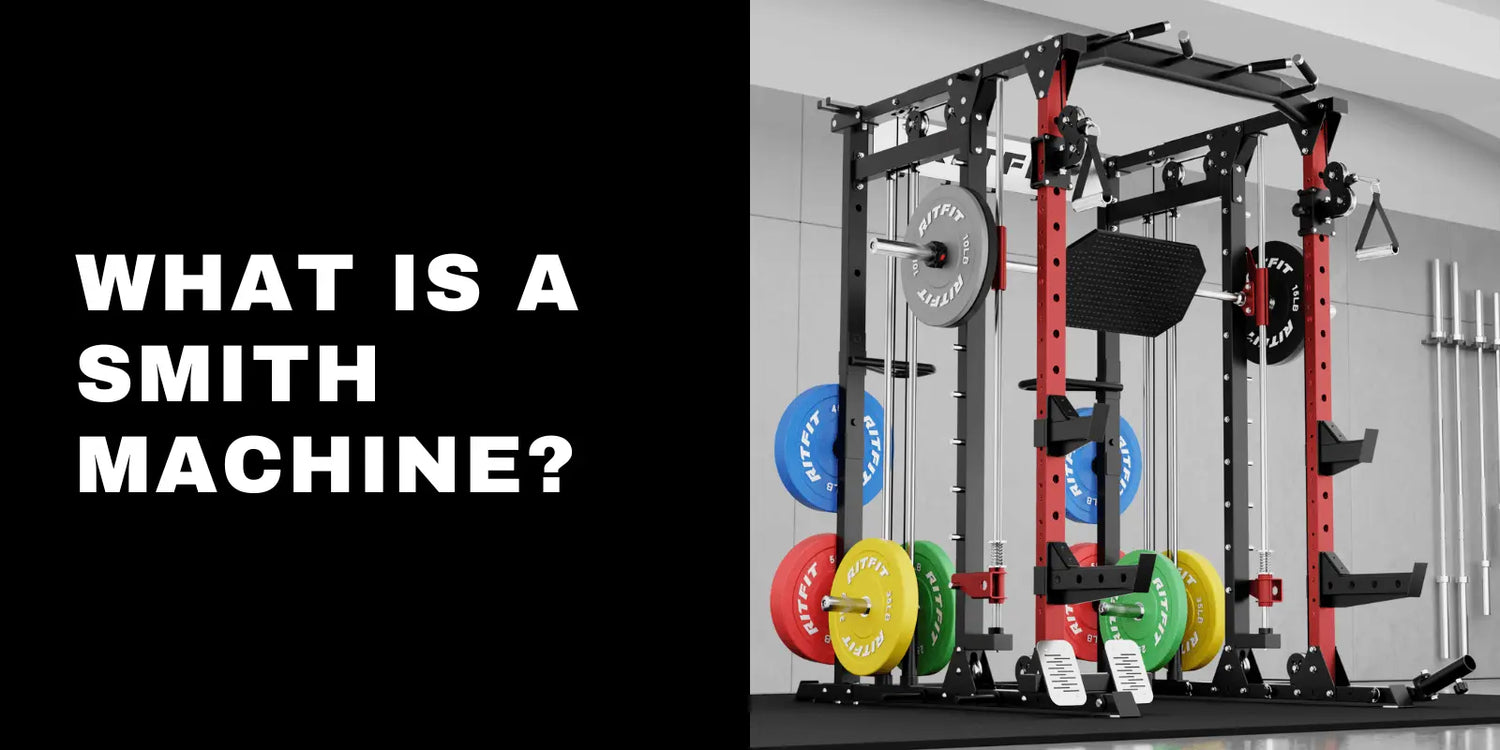
A Smith machine is a barbell fixed to steel rails so it moves on a guided track (typically vertical, sometimes slightly angled depending on the model). Instead of controlling the bar in 3D space like you would with free weights, you move within the machine’s path. Most Smith machines also include built-in locking hooks and adjustable safety stops, so you can rerack quickly at almost any point in a rep—making solo training feel more secure.
Key difference vs. a squat rack: a squat rack holds a free barbell that you must stabilize and balance yourself. The Smith machine reduces stabilization demands by guiding the bar.
Main Components
- Barbell and Guide Rails: The defining feature, where the barbell is attached to vertical tracks.
- Safety Stops / Locking Hooks: Adjustable pins or hooks that prevent the bar from dropping below a certain point, allowing for safer solo training.
- Adjustable Supports/Pegs: Holes along the rails where the safety stops can be positioned.
- Counterbalanced vs. Non-Counterbalanced Bars: Some Smith machines feature a counterbalanced bar, meaning internal weights make the bar feel significantly lighter (e.g., 5-15 lbs instead of a standard 45 lbs), which is crucial to remember when calculating your total lift.
A Brief History of the Smith Machine
The Smith machine traces back to mid-20th-century gym innovation. The concept is widely associated with Jack LaLanne, who helped develop the idea of a guided bar system for safer training, and with gym manager Rudy Smith, whose name became attached to the machine after it was installed and popularized in health clubs. Over time, the Smith machine evolved from a simple guided bar into a multi-use training station with safeties, counterbalance systems, cable attachments, pull-up bars, and plate storage.
Its popularity grew because it solved a practical problem. Many people wanted to squat, press, and lunge with a barbell but did not always have a spotter, a coach, or the confidence to manage a free bar. The Smith machine offered a more controlled way to learn patterns, train close to failure, and lift in tighter spaces. Today, it remains common in both commercial gyms and home gyms because it blends convenience, perceived safety, and exercise variety in one footprint.
Choosing the Right Equipment: RitFit Smith Machine Series
How to Choose Any Smith Machine (Quick Checklist)
Use these criteria to compare any brand—not just ours:
- Rail style: Vertical vs. angled (changes setup and how “natural” lifts feel).
- Stability: Wider base, thicker uprights, and smoother bearings usually feel better under load.
- Safety system: Easy-to-use hooks + reliable safeties you’ll actually set every time.
- Range & adjustments: Enough rack points and safety positions for your height and preferred exercises.
- Attachments: Pull-up options, landmine compatibility, cable ratio (2:1 vs 1:1), and usable pulley height.
- Space planning: Footprint, ceiling height, and plate storage clearance.
- Transparency note: The models below are from our lineup. Use the checklist above to evaluate what fits your space, goals, and budget.
If you're looking to bring the versatility of a Smith machine into your home gym, RitFit offers several high-performance models designed to fit different spaces, goals, and budgets. Here’s a breakdown of our flagship models:
RitFit M1 Pro: The All-in-One Powerhouse
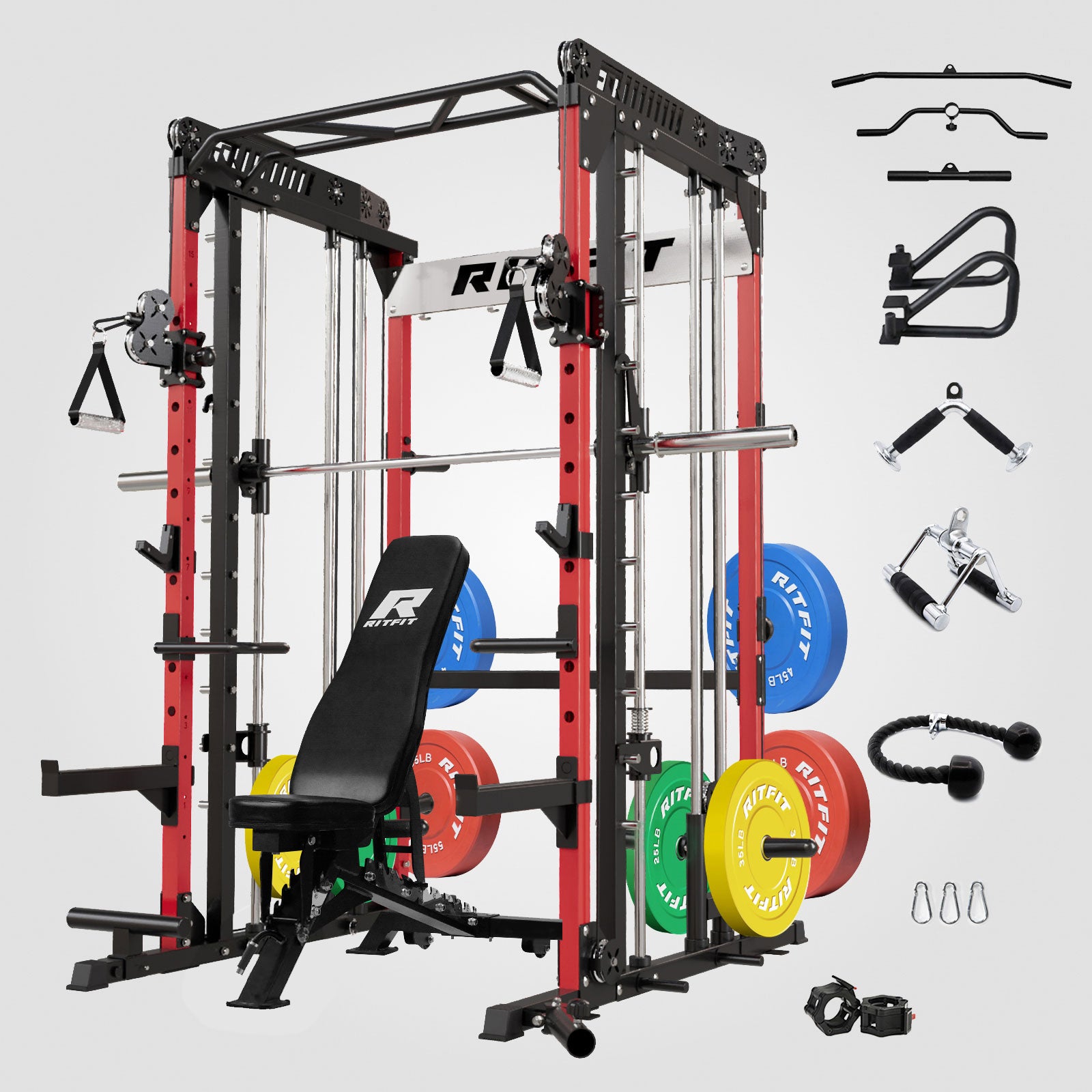
The M1 Pro is more than just a Smith machine; it’s a complete home gym solution. It combines a Smith machine, a power rack, and a cable crossover system into a single footprint.
- Best For: Lifters who want the "Total Package" and don't want to buy separate pieces of equipment.
- Key Features: Integrated pull-up station, landmine attachment, and 2:1 ratio cable system. It allows you to transition seamlessly from guided Smith machine presses to free-weight squats.
- Best use case: If your priority is “one station that does almost everything,” the M1 Pro is typically the most time-efficient setup for a home gym.
RitFit M2: The Space-Saving Functional Trainer
The M2 focuses on smooth, functional movement. It is designed for those who prioritize the fluidity of a Smith machine and high-quality cable work for isolation and accessory movements.
- Best For: Intermediate lifters and those focused on bodybuilding or physique sculpting.
- Key Features: A highly stable Smith bar and a dual-pulley system that is perfect for lat pull-downs, cable rows, and tricep extensions. Its design is sleek and optimized for smaller home gym spaces.
- Best use case: If you care most about accessories, isolation work, and efficient supersets, the M2-style setup tends to shine.
RitFit Buffalo: The Heavy-Duty Workhorse
Named for its strength and durability, the Buffalo is built for the "heavy hitters." It features a more robust frame and a higher weight capacity, designed to handle intense, high-volume training sessions.
- Best For: Advanced lifters, powerlifters, and anyone who wants a "commercial-grade" feel in their garage or basement.
- Key Features: Upgraded steel construction, extra-smooth linear bearings for the Smith bar, and high-capacity storage pegs for your Olympic plates. It’s built to withstand the heaviest loads you can throw at it.
- Best use case: If you regularly train heavy, value a “solid rack feel,” and want maximum rigidity, Buffalo-style builds are often the best match.
Quick Comparison: Which One Should You Choose?
| Feature | RitFit M1 Pro | RitFit M2 | RitFit Buffalo |
| Primary Focus | Maximum Versatility | Functional Training | Stability & Heavy Loads |
| Footprint | Moderate | Compact/Efficient | Robust |
| Ideal User | General Fitness/Home Gym Beginners | Bodybuilders/Isolation Work | Advanced Strength Athletes |
| Hybrid Capability | Smith + Power Rack | Smith + Functional Trainer | Smith + Heavy-Duty Rack |
How a Smith Machine Works
Because the bar travels on a fixed track, your body must “fit” the machine’s line of motion. That can make some lifts feel simpler (less balance required), but it can also change joint angles and muscle emphasis compared to free weights.
Research comparing Smith vs. free-weight versions of common lifts shows meaningful differences in muscle activation patterns, especially for stabilizers and certain supporting muscle groups.
That’s why Smith machine technique is “setup-dependent”: small changes in foot position, bench position, or bar height can make an exercise feel great—or feel rough on your joints.
Vertical vs. Angled Smith Machines (Why Setup Changes)
Not all Smith machines move straight up and down—some rails are slightly angled.
- Vertical rails: The bar path is closer to straight up/down, so your setup often resembles a traditional barbell pattern.
- Angled rails: The bar may travel slightly forward/back as it moves, so you may need to adjust foot placement or bench position to keep the movement comfortable.
- Quick test: With an empty bar unlocked, gently guide it up and down—if it “wants” to drift forward/back, treat it as angled and set up accordingly.
Common Uses of the Smith Machine
You can do a lot of different exercises on the Smith machine. You can change a lot of traditional free-weight exercises to work well on the Smith machine.
Lower Body Exercises
- Smith machine squats (back squats, front squats, box squats)
- Smith machine split squats / lunges
- Smith machine Romanian deadlifts / stiff-leg deadlifts
- Smith machine calf raises
- Smith machine hip thrusts / glute bridges
Upper Body Exercises
- Smith machine bench press (flat, incline, decline)
- Smith machine shoulder press (overhead press, military press)
- Smith machine bent-over rows
- Smith machine upright rows
- Smith machine shrugs
Other Smith Machine Exercises
- Smith machine inverted rows
- Close-grip bench press
- Overhead triceps extensions
Pros of Using a Smith Machine
The biggest advantages of a Smith machine are safer solo training, greater stability, and easier muscle-focused work. It also simplifies setup, reduces coordination demands, and makes many common exercises more approachable for beginners and busy lifters.
- Safety and Convenience: The built-in hooks and safety catches make it easier to train without a spotter, especially on squats, presses, split squats, and hip thrusts. This added security often helps lifters push closer to muscular fatigue with more confidence and less setup stress than a free barbell.
- Stability for Beginners: The fixed bar path lowers the coordination barrier and makes early strength training feel less intimidating. Beginners can spend more attention on stance, depth, tempo, and control instead of trying to balance the bar in space.
- Targeted Muscle Isolation: The guided path helps keep tension on the working muscles by reducing the balance demands that often limit effort in free weight training. This makes the Smith machine especially useful for hypertrophy-focused exercises such as squats, split squats, calf raises, hip thrusts, and incline presses.
- More Control for Some Lifters: The fixed motion can make range of motion and exercise setup easier to manage for some people returning to training or working around mild limitations. Even so, comfort is highly individual, so exercise selection and setup still need to be adjusted carefully.
- Practical Gym Efficiency: The Smith machine makes loading, reracking, and changing between exercises faster and more convenient in many settings. It can be especially useful when the free-weight area is crowded or when you want one station to handle several movements in the same workout.
Cons of Using a Smith Machine
The main drawbacks of a Smith machine are lower stabilizer involvement and less transfer to free-weight skill. While the guided path improves control, it can also reduce the balance, coordination, and motor control demands that help build more complete strength.
- Reduced Stabilizer Activation: The fixed bar path decreases the need for your core, hips, shoulders, and other stabilizing muscles to work as hard as they do with free weights. Over time, relying too heavily on Smith machine training can leave gaps in overall strength, joint control, and movement quality.
- Less Transfer to Free-Weight Strength: Strength built on a Smith machine does not always carry over fully to barbells, dumbbells, or real-world lifting tasks. Because the machine guides the bar for you, it develops less balance, bar control, and full-body coordination than comparable free-weight exercises.
Who Is the Smith Machine Best For?
The Smith machine is best for beginners, physique-focused lifters, home gym users, and experienced trainees who want a stable accessory tool. It works especially well when the goal is controlled training, efficient setup, and targeted muscle work rather than maximum free-weight skill development.
- Beginners: The Smith machine is a practical starting point for learning squats, presses, lunges, and hinges with more control and less balance demand. It helps new lifters build confidence under load while focusing on basic technique, body position, and tempo.
- Intermediate and Advanced Lifters: More experienced lifters usually benefit most from using the Smith machine as a supplement rather than a complete training system. It is especially effective for hypertrophy phases, high-rep work, drop sets, and pushing close to failure with less setup complexity.
- Physique-Focused Lifters: Bodybuilders and physique-focused users often prefer the Smith machine for its repeatable setup and ability to keep tension on a target muscle. It is especially useful for finishers, controlled tempo work, and high-tension sets where stability helps maintain better muscular focus.
- People with Joint Limitations or Returning to Training: Some lifters find the Smith machine easier to control than a free barbell because the guided path reduces movement variables. Even so, it is not automatically a rehab tool, and anyone dealing with pain, recent injury, surgery, numbness, or weakness should train under qualified guidance.
- Home Gym Owners and Time-Crunched Lifters: A Smith machine can cover many exercises in one station, which makes it appealing for smaller home gyms and efficient workouts. Models with cables, safeties, pull-up options, and storage can make one footprint far more versatile for everyday training.
Full Body Smith Machine Workout (Beginner-Friendly)
This Smith machine full-body workout is perfect for beginners or those looking for an efficient session. Perform 2-3 times per week on non-consecutive days.
- Smith Machine Squat or Box Squat: 3 sets of 8-12 reps
- Smith Machine Bench Press (Flat): 3 sets of 8-12 reps
- Smith Machine Bent-Over Row: 3 sets of 8-12 reps
- Smith Machine Shoulder Press: 3 sets of 10-15 reps
- Smith Machine Romanian Deadlift: 3 sets of 10-15 reps
- Smith Machine Standing Calf Raises: 3 sets of 15-20 reps
- Optional Core Work: Planks or hanging knee raises (from the Smith machine frame)
Upper/Lower Smith Machine Workout Plan (Intermediate)
Perform Upper Day and Lower Day once or twice per week each, with rest days in between.
Upper Day:
- Smith Machine Incline Bench Press: 3-4 sets of 8-12 reps
- Smith Machine Shoulder Press: 3-4 sets of 8-12 reps
- Smith Machine Bent-Over Row: 3-4 sets of 8-12 reps
- Smith Machine Upright Row or Shrug: 3 sets of 10-15 reps
- Triceps Extensions (using bar or rope on cable if available): 3 sets of 10-15 reps
- Biceps Curls (if Smith/cable setup allows or superset outside the machine): 3 sets of 10-15 reps
Lower Day:
- Smith Machine Back Squat or Front Squat Variation: 3-4 sets of 8-12 reps
- Smith Machine Split Squats/Lunges: 3 sets of 10-15 reps per leg
- Smith Machine RDL: 3 sets of 10-15 reps
- Smith Machine Hip Thrust: 3 sets of 12-15 reps
- Smith Machine Standing Calf Raise: 3-4 sets of 15-20 reps
Smith Machine Accessory Day (For Free-Weight Lifters)
Integrate these Smith machine exercises after your main barbell lifts or on a separate day for targeted hypertrophy.
- Smith Machine Front-Foot Elevated Split Squats: 3 sets of 10-12 reps per leg
- Smith Machine Close-Grip Bench Press: 3 sets of 8-12 reps
- Smith Machine Inverted Rows: 3 sets to failure
- Smith Machine Hip Thrusts / Glute Bridges: 3 sets of 12-15 reps
- Smith Machine Standing Calf Raises: 3 sets of 15-20 reps
Technique Tips for Safe and Effective Smith Machine Training
General Setup Guidelines
- Correct Bar Height: Set the bar at a height that allows you to easily unrack and rerack without excessive movement.
- Foot Placement and Body Alignment: Experiment with foot placement. A common mistake is to stand too far forward or back during squats; find a position that feels natural and puts no undue stress on your joints.
- Proper Unrack and Rerack: Learn how to properly twist the bar to unlock and lock it into the safety hooks. Always ensure it's securely locked before beginning a set and after finishing.
Exercise-Specific Cues (Brief)
- Squats: Focus on maintaining a neutral spine, letting your knees track in line with your toes, and adjusting foot position to prevent knee pain.
- Bench Press: Ensure your shoulder blades are retracted and tucked under you, maintain a slight arch in your lower back, and control the bar path.
- Pressing and Rowing: Pay attention to grip width and aim for a full range of motion that doesn't cause shoulder impingement.
Programming Considerations
To maximize benefits and minimize drawbacks, integrate Smith machine exercises with free weights, other machines, and cable exercises. Use the Smith machine for specific purposes (e.g., hypertrophy, safety) rather than as your sole training tool. Adjust volume and intensity based on your overall training experience and goals.
A practical rule is simple. Use free weights when you want to build coordination, balance, and athletic bar control. Use the Smith machine when you want more stability, easier setup, safer near-failure work, or more direct tension on the target muscle.
Common Mistakes to Avoid
- Treating Smith Machine Form Identical to Free Barbell Form: The fixed path changes biomechanics. Adjust your setup (e.g., foot position for squats) to match the machine's path rather than forcing your body into an unnatural position.
- Letting the Bar Path Dictate Posture: Instead of conforming to the machine, find a comfortable, joint-friendly position that allows for smooth movement.
- Excessively Heavy Loading: While safer, don't mistake security for immunity from injury. Improper form with heavy weight can still be detrimental.
- Relying Solely on Smith Machine Workouts: Neglecting free weights and functional movements can limit overall strength development and stability. Use it as a complement, not a replacement.
FAQs
How much does a Smith machine bar weigh?
The bar usually weighs between 5 and 15 pounds due to internal counterbalancing. This system makes the equipment feel much lighter than a standard 45 pound free weight barbell. You must remember this specific weight difference when you calculate your total lifted load for accurate and consistent training progression.
Why do squats feel different on a Smith machine?
The fixed track forces your body to fit the rigid line of motion. This guided path reduces your need to balance the weight and alters your joint angles. You often need to adjust your foot placement further forward to match the vertical or angled rails for a comfortable movement.
Who benefits the most from using a Smith machine?
Beginners and physique focused lifters gain the most advantages from this equipment. The guided path provides essential stability that helps new users build confidence safely without a spotter. Advanced bodybuilders also use it for targeted muscle isolation and pushing sets close to failure with highly controlled setups.
How does a Smith machine compare to free weight exercises?
The machine serves as a supplement rather than a complete replacement for free weights. The guided bar significantly reduces the activation of your stabilizing muscles and limits overall coordination. Relying solely on guided paths leaves gaps in your functional strength and real world lifting skills over time.
What makes the Smith machine safe for solo training?
The built in locking hooks and adjustable safety stops provide reliable protection when you train alone. You can quickly twist the bar to rerack it at almost any point during a repetition. This design prevents the heavy weight from dropping below a specific height if you fail.
Conclusion
The Smith machine is a valuable training tool with clear strengths and clear limitations. It offers more stability, faster setup, and greater solo-training confidence, which makes it especially useful for beginners, hypertrophy-focused lifters, home gym owners, and anyone who wants more controlled barbell training. Its best role is not as a replacement for every other tool, but as a strategic option within a complete strength program.
Used intelligently, the Smith machine can help you build muscle, train harder with less setup friction, and make many common exercises more accessible. Used carelessly, it can encourage poor setup habits and over-reliance on a fixed path. The difference comes down to exercise selection, body position, and training intent.
If you are considering a Smith machine workout plan or thinking about adding one to your home gym, start with your real needs. Look at your space, goals, training style, desired attachments, and whether you want maximum versatility, compact efficiency, or heavy-duty strength capacity. That approach will help you choose a machine that improves your training rather than just taking up room.
Important disclaimer: This article is for general educational purposes only and is not medical advice. If you have shoulder, neck, back, elbow, or wrist pain, a recent injury or surgery, numbness or tingling, unexplained weakness, or dizziness, consult a qualified clinician before starting. Stop any exercise that causes sharp pain.