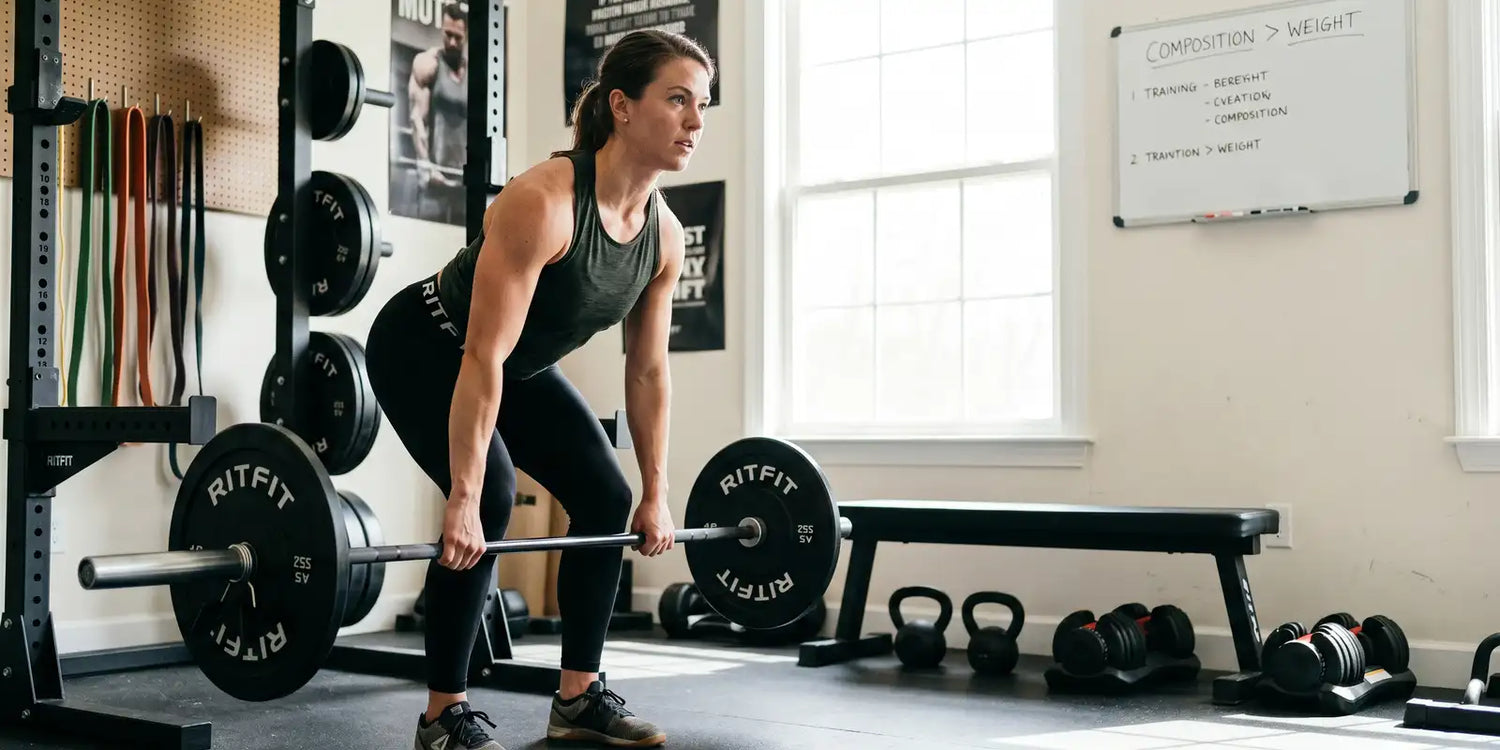
Bulking is a deliberate phase where you eat slightly more calories than you burn while training hard, giving your body the extra fuel it needs to build muscle. This guide explains what bulking really means, how it works, and how to do it without piling on unwanted fat.
It is general fitness education for beginner to intermediate lifters, not medical or supplement advice. By the end you will know how big a surplus to run, how long to bulk, and whether you even need to.
Table of Contents
Key Takeaways
- Bulking is a muscle-gain phase: you eat in a controlled calorie surplus while doing resistance training so your body can build muscle faster than at maintenance.
- Training and nutrition are the two pillars: a surplus alone does not build muscle without a progressive resistance stimulus and enough protein.
- Clean beats dirty for most lifters: a modest surplus on whole foods limits fat gain, while eating with no limits mostly adds fat you must later cut.
- Gain slowly: many coaching guides suggest about 200 to 400 extra calories a day and roughly 0.25 to 0.5 percent of body weight gained per week.
- Not everyone needs it: beginners and those carrying extra fat can often grow at maintenance, while a surplus helps most once you are lean and stalled.
What Is Bulking in Fitness?
Bulking is an intentional phase of eating in a calorie surplus while doing resistance training to maximize muscle growth. The extra energy gives your body the raw materials and fuel to add muscle faster than it could at maintenance.
Lifters bulk because building muscle is easier when energy is plentiful rather than scarce. A bulk is usually followed later by a cutting phase to reveal the muscle gained underneath.
- The surplus: you deliberately eat more calories than you burn each day, but the amount is controlled rather than unlimited.
- The stimulus: consistent resistance training tells your body to direct those extra calories toward muscle rather than fat.
- The goal: add size and strength over weeks and months, accepting a small amount of fat gain as part of the trade-off.
Understanding what RM (rep max) means helps you program the progressive overload that makes a bulk productive.
How Bulking Builds Muscle
Muscle growth comes down to two pillars working together, not calories alone. A review describes resistance training plus targeted nutrition, especially adequate protein, as the foundation for stimulating muscle protein synthesis and growth.[2]
A calorie surplus supports this process by ensuring your body is not short on energy while it repairs and builds tissue. Without a training stimulus, though, those extra calories simply become fat.
The Role of Protein and Progressive Overload
Progressive overload means gradually increasing the demand on your muscles over time, which is the signal that drives adaptation. An umbrella review of meta-analyses found that a training volume of at least roughly 10 sets per week per muscle group is associated with optimizing hypertrophy.[1]
- Protein: supplies the amino acids your body uses to repair and add muscle tissue during a surplus.
- Progressive load: adding reps, sets, or weight over time keeps the growth signal strong as you adapt.
- Tracking effort: gauging intensity with RIR (reps in reserve) helps you push hard enough to grow without burning out.
In short, the surplus is fuel and the training is the blueprint. Muscular strength and size also sit within the components of fitness that shape overall conditioning.
Clean Bulk vs Dirty Bulk
The two approaches differ mainly in how aggressive the surplus is and how much fat gain you accept. Guides describe a clean bulk as a controlled surplus built on minimally processed whole foods to minimize fat gain, while a dirty bulk uses a larger surplus with few food restrictions and accepts more fat.
Neither is clinically proven superior, but the common practitioner view favors a clean approach for most people. A dirty bulk can add weight fast, yet much of that weight tends to be fat you later have to diet off.
| Factor | Clean (Lean) Bulk | Dirty Bulk |
|---|---|---|
| Surplus size | Modest and controlled | Large and loosely tracked |
| Food choices | Mostly whole, nutrient dense | Few restrictions |
| Fat gain | Kept low | Higher, accepted |
| Best suited to | Most lifters | Rare, hard gainers only |
How to Run a Clean (Lean) Bulk
Set a small surplus, prioritize protein and whole foods, and track your weekly weight so you can adjust if fat gain accelerates. Consistency over months matters far more than any single perfect day of eating.
How Big Should Your Calorie Surplus Be?
Bigger is not better when it comes to a bulking surplus. Many coaching guides suggest a conservative surplus of roughly 200 to 400 extra calories per day, aiming to gain about 0.25 to 0.5 percent of your body weight per week to limit fat gain.
This slow pace matters because faster weight gain tends to add fat without speeding up muscle growth. A small pilot study in trained male bodybuilders found that a higher energy intake produced more muscle but also markedly more body fat than a moderate intake.[3]
- Start conservative: a modest daily surplus gives muscle the fuel it needs without an unnecessary fat surge.
- Watch the scale trend: use a weekly average rather than reacting to daily fluctuations from water and food.
- Adjust slowly: if you are not gaining at all after a few weeks, nudge calories up a little rather than jumping ahead.
The video below breaks down how to set up a science-based bulk and gain at a sensible rate.
How Long Should a Bulk Last?
A bulk should last long enough to make meaningful progress but end before fat gain outpaces muscle gain. Coaches often suggest a phase of about 3 to 4 months, or 12 to 16 weeks, as a common approach.
You stop when progress stalls and fatigue accumulates, then move to maintenance or a cut. Watching your lifts and weight trend tells you when the phase has run its course.
- Exit signals: stalled strength, rising fatigue, or fat gain climbing faster than you are comfortable with.
- Track everything: keeping a fitness log makes it obvious when gains slow and a transition makes sense.
Bulking vs Cutting vs Maintenance
These three phases differ by their calorie balance and goal. Bulking uses a surplus to build muscle, cutting uses a deficit to lose fat, and maintenance holds your weight steady while you recover or hold gains.
Many lifters cycle between them over time, bulking to add mass and then cutting to reveal a leaner look. The right phase depends on your current body composition and goals.
| Phase | Calorie Balance | Primary Goal |
|---|---|---|
| Bulking | Surplus | Build muscle and strength |
| Cutting | Deficit | Lose fat, keep muscle |
| Maintenance | Balanced | Hold weight and recover |
Who Should Bulk and Who Should Not
A dedicated bulk is most useful once you are relatively lean, well trained, and have stalled at maintenance. At that point, extra calories help raise the ceiling on how much muscle you can add.
Not everyone needs one, though. Beginners and people carrying extra body fat can often build muscle at maintenance or even a small deficit, since untrained muscle responds strongly to training.
- Good candidates: lean, experienced lifters who have plateaued at their current intake.
- Can usually skip it: beginners and those with higher body fat who still have room to recomposition.
- Consider your context: resources like fitness for women address surplus and gain-rate nuances for different lifters.
Common Bulking Mistakes to Avoid
Most failed bulks come from a handful of avoidable errors. The biggest is treating a bulk as permission to eat without limits, which trades a little extra muscle for a lot of extra fat.
- Gaining too fast: a runaway surplus adds fat that does not speed up muscle growth.
- Neglecting training: calories without progressive overload mostly become fat.
- Skipping protein: low protein limits the muscle your surplus can actually build.
- Never tracking: without a weight trend you cannot tell muscle from fat gain.
If you want a more guided start, exploring interactive fitness training can help you stay consistent through a phase.
FAQs About Bulking in Fitness
What is bulking in fitness?
Bulking is a deliberate training and nutrition phase where you eat slightly more calories than you burn while doing resistance training, so your body has the extra energy needed to build muscle faster than at maintenance. It usually lasts several months and is later followed by a cutting phase to reveal the muscle gained underneath.
Is bulking just eating whatever you want?
No. That describes dirty bulking, which often leads to excess fat gain. A smarter clean or lean bulk keeps the surplus modest, prioritizes protein and whole foods, and tracks your weekly weight so most of the gain is muscle. Eating with no limits rarely speeds growth and usually just adds fat you must later cut.
How much weight should you gain while bulking?
Many coaching guides suggest aiming for a slow gain of roughly 0.25 to 0.5 percent of your body weight per week, fueled by a conservative surplus of about 200 to 400 extra calories per day. Gaining faster tends to add more body fat without meaningfully increasing the rate of muscle growth, so patience generally pays off.
Do beginners need to bulk?
Not necessarily. Beginners and people carrying extra body fat can often build muscle at maintenance calories or even a small deficit, because untrained muscle responds strongly to training. A dedicated surplus becomes most useful once you are relatively lean, well trained, and have stalled at maintenance, where extra calories raise the ceiling on gains.
How is bulking different from cutting?
Bulking uses a calorie surplus to build muscle size and strength, accepting a little fat gain along the way, while cutting uses a calorie deficit to strip away fat while preserving muscle. Many lifters alternate between the two phases over time, bulking to add mass and then cutting to reveal a leaner physique.
Conclusion
Bulking is simply a controlled surplus paired with progressive resistance training, designed to build muscle while keeping fat gain in check. Done patiently, it lets you add size you can later reveal through a cut.
If you are lean, trained, and stalled, a modest bulk may be your next step. If you are newer or carrying extra fat, you can likely build muscle at maintenance first.
Disclaimer
This article is general fitness education and does not replace personalized medical, nutritional, or training advice. Consult a qualified professional before making significant changes to your diet or exercise routine.
References
1. Bernárdez-Vázquez R, Raya-González J, Castillo D, Beato M. Resistance Training Variables for Optimization of Muscle Hypertrophy: An Umbrella Review. Frontiers in Sports and Active Living. 2022;4:949021. https://pmc.ncbi.nlm.nih.gov/articles/PMC9302196/
2. Chen W. Nutritional interventions in muscle hypertrophy research: a scientometric analysis within the context of resistance training (1992-2025). Journal of Health, Population and Nutrition. 2025;44(1):272. https://pmc.ncbi.nlm.nih.gov/articles/PMC12317481/
3. Ribeiro AS, Nunes JP, Schoenfeld BJ, Aguiar AF, Cyrino ES. Effects of Different Dietary Energy Intake Following Resistance Training on Muscle Mass and Body Fat in Bodybuilders: A Pilot Study. Journal of Human Kinetics. 2019;70:125-134. https://pmc.ncbi.nlm.nih.gov/articles/PMC6942464/