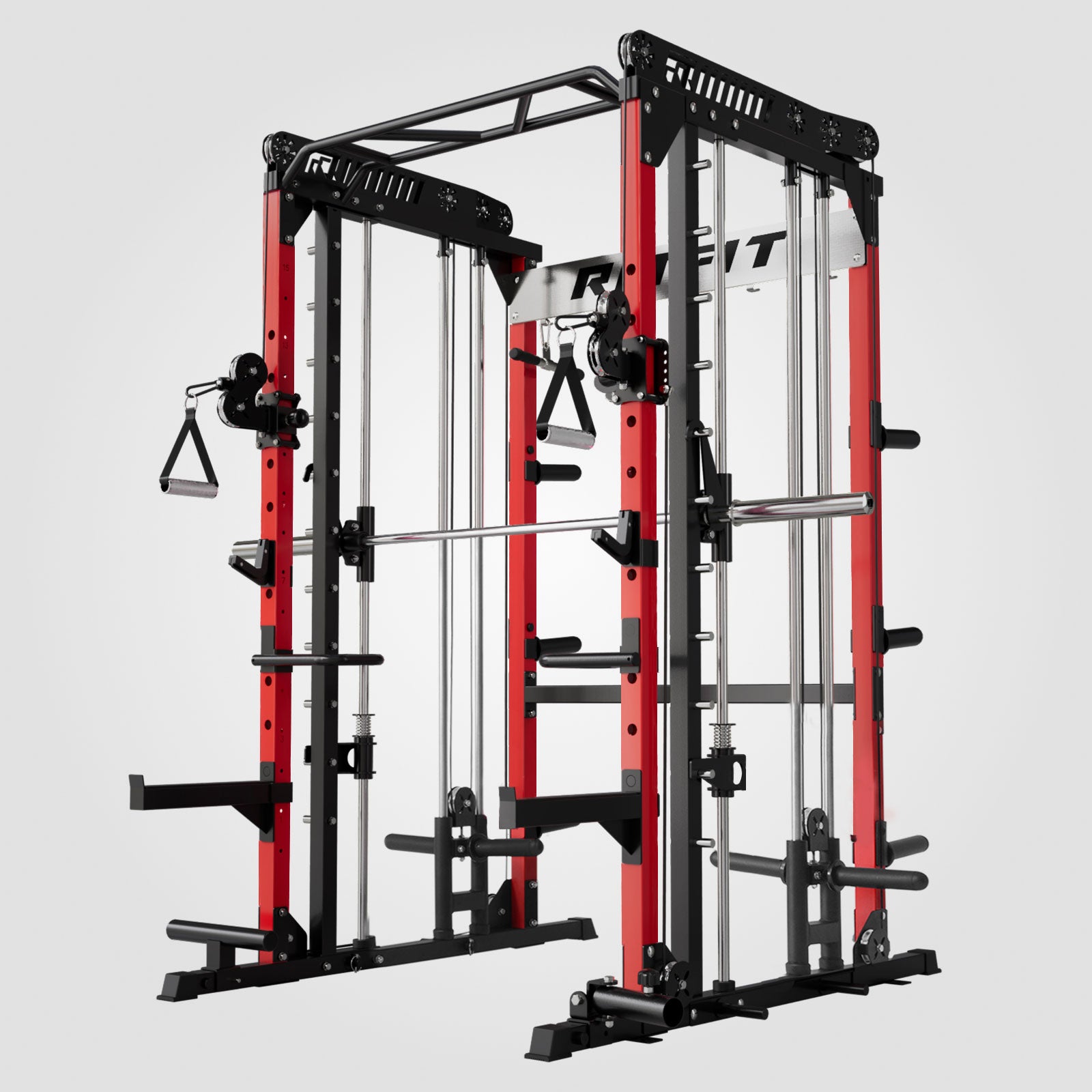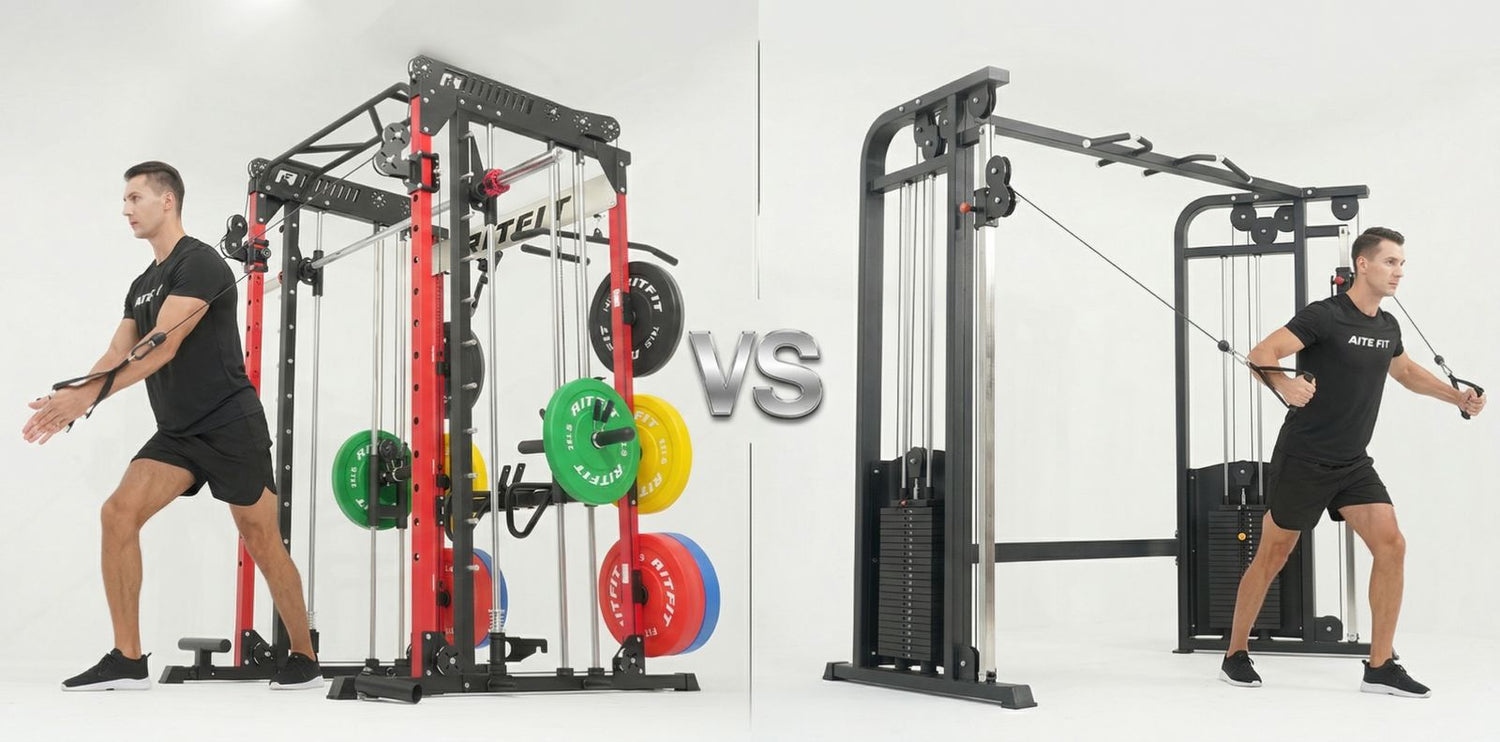
A smith machine with cables is the better choice for most home gyms because it combines guided barbell lifting and cable training in one compact station. A separate cable crossover gives you more freedom of movement and wider cable angles, but it usually needs more floor space and does not replace a rack or Smith machine for heavy compound lifting.
Building a home or garage gym means balancing space, budget, safety, and exercise variety. Understanding where each machine excels will help you choose the setup that fits your room, your training style, and your long-term equipment plan.
Key Takeaways
- A Smith machine with cables is usually the best all-in-one choice for small home gyms.
- A separate cable crossover offers better movement freedom and wider cable angles for isolation work.
- Beginners and solo lifters often benefit more from the stability and safety of a Smith machine.
- Lifters who already own a rack usually gain more by adding a dedicated cable crossover.
- The right machine is the one that matches your space, current setup, training goals, and budget.
Quick Definitions and Overview
What is a Smith Machine with Cables?
A smith machine with cables is a hybrid strength station that combines a guided barbell with one or more pulley systems. It is designed to support heavy presses, squats, rows, pulldowns, and accessory work all in one frame.
Many models also function like a compact functional trainer by adding dual adjustable pulleys, a low row, a lat pulldown, plate storage, and attachment compatibility. That makes it attractive for garage gyms, basements, and other space-limited training areas.
What is a cable crossover?
A cable crossover is a dedicated cable station built around two uprights with adjustable pulleys and an open center working area. It is designed for free path resistance, constant tension, unilateral work, and wide-angle movements such as chest flyes and standing cable presses.
Some crossovers use selectorized weight stacks, while others are plate-loaded. Their main advantage is movement freedom, not guided barbell lifting.
Structural and Mechanical Differences
Design and Footprint
A smith machine with cables usually has a deeper but more consolidated footprint. It stacks multiple training functions into one frame, which makes it easier to place against a wall or inside a compact garage gym layout.
A separate cable crossover usually needs more lateral space because the two pulley columns sit farther apart. That open width is useful for training, but it can dominate a smaller room and limit where you place other equipment.
Movement Path: Fixed vs. Free
The biggest difference is that a Smith machine includes a fixed bar path, while a cable crossover only provides free-path cable resistance. The guided bar reduces balance demands and helps users lift in a more controlled pattern.
Cable resistance moves in multiple directions and allows your joints to follow a more natural path. That makes crossovers strong for rotational work, unilateral training, and exercises that benefit from three-dimensional movement.
Exercise Versatility and Training Options
Exercises on a Smith Machine with Cable Attachments
A smith machine with cables covers more categories of training in one machine. You can use the guided bar for squats, bench presses, incline presses, shoulder presses, hip thrusts, lunges, and calf raises, then switch to cables for pulldowns, low rows, triceps pushdowns, curls, face pulls, lateral raises, and core work.
This is why many buyers treat it as the centerpiece of a complete home gym. It can replace several separate stations for users who want full body coverage without filling the room with individual machines.
Exercises on a Cable Crossover
A cable crossover is strongest for isolation work, cable bodybuilding movements, and functional strength patterns. It shines in cable flyes, standing presses, rear delt work, wood chops, lateral raises, split-stance pulling, and single-arm movements that benefit from uninterrupted tension.
What it does not do well is replace a smith machine, squat rack, or other guided pressing station. If your goal includes heavy barbell-style compounds with built-in safeties, a cable crossover alone will leave a gap in your setup.
Training Experience: Stability, Skill, and Safety
Stability and Learning Curve
A smith machine with cables is usually easier for beginners to use safely. The fixed bar path and integrated safeties reduce coordination demands and make solo training less intimidating during presses, squats, and other heavy sets.
A cable crossover demands more stabilization and body control because the movement path is not fixed. That can be excellent for experienced lifters, but it may feel less forgiving for someone still learning basic pressing and squatting mechanics.
Muscle Activation and Natural Movement
Cable crossovers generally allow more natural joint motion because the resistance path is not locked into rails. This can feel smoother for flies, presses, and rotational patterns where shoulder and scapular movement matters.
Smith machines reduce stabilization demands and can help users focus on target muscle loading and hypertrophy. That makes them useful for controlled volume work, but some lifters still prefer the freer movement pattern of cables for chest, shoulders, and athletic training.
Space, Budget, and Use Case Considerations
Space and Layout
If your room is small, a smith machine with cables usually delivers more training value per square foot. It is especially practical in single-car garages, basement corners, and home gyms where one machine must cover pressing, pulling, and lower body work.
If you already have a rack, bench, and barbell area, a cable crossover can be a strong expansion piece. In that case, the wider footprint may be worth it because it adds movement options you do not already have.
Cost and Value
A hybrid Smith and cable machine often costs more upfront, but it can reduce the need to buy multiple separate stations. For buyers starting from zero, that often makes it the stronger total value choice.
A standalone cable crossover may look cheaper at first, but it usually does not complete a full strength setup by itself. If you still need a rack, safeties, or guided pressing options, your total spend can end up higher.
Target User Profiles
- Best for home gym beginners: A smith machine with cables is usually the smarter first purchase because it covers compound lifts, cable accessories, and solo safety in one machine.
- Best for lifters with an existing rack: A separate cable crossover often adds more new training value because it expands cable freedom without duplicating your main barbell station.
- Best for compact spaces: A hybrid unit is usually easier to justify when every square foot matters.
- Best for chest flyes and cable isolation: A true crossover often feels better because the wider pulley spacing can create better stretch and angle options.
- Best for all-purpose training: A Smith machine with cables wins for users who want one machine to handle strength training, hypertrophy work, and general home gym efficiency.
Pros and Cons Summary
Smith Machine with Cable
- Pros: Combines guided lifting and cable resistance in one compact station. It is excellent for solo training, beginner-friendly strength work, and full-body coverage in limited space.
- Cons: Some hybrid designs also offer narrower cable spacing than a dedicated crossover.
Separate Cable Crossover
- Pros: Provides wide cable angles, smooth movement freedom, strong constant tension, and excellent support for unilateral and functional training. It is especially effective for cable flies, shoulder work, and athletic movement patterns.
- Cons: Does not provide guided barbell lifting, and it usually needs more side-to-side floor space. It also works best as a complement to existing equipment rather than a complete gym solution.
How to Decide Which is Right for You
Your best option depends on what equipment you already own and how much room you have. If you are building from scratch and want one machine that can handle presses, squats, pulldowns, rows, and accessory work, a Smith machine with cables is usually the better investment.
A separate cable crossover makes more sense when your free weight setup is already covered. In that situation, the crossover adds more specialized cable training, wider movement options, and better isolation variety without paying again for bar-based mechanics you already have.
FAQs
Which machine is better for a small home gym?
A smith machine with cables is the ideal choice for limited home spaces. This hybrid setup stacks multiple training functions into one deep frame. It allows you to perform heavy compound lifts and accessory work while saving more floor area than a dedicated cable crossover.
Does a cable crossover replace a smith machine with cables?
No, a separate cable crossover does not replace a guided barbell station. The crossover only provides free path resistance for isolation work and wide angle movements. You will still need a separate rack or guided pressing machine for heavy compound lifting with built in safeties.
Why should a beginner choose a smith machine with cables?
A beginner should choose this hybrid machine because it provides more stability and safety. The fixed bar path reduces coordination demands while you learn basic squatting and pressing mechanics. Integrated safeties make solo training much less intimidating compared to using an open cable crossover system.
Can a cable crossover build a complete home gym setup?
No, a standalone cable crossover usually leaves a gap in your strength training setup. It is excellent for isolation movements and constant tension exercises, but it lacks the guided barbell mechanics required for heavy compound lifts. It works best when paired with another main rack.
What is the main structural difference between the two machines?
The primary difference is the fixed bar path versus free movement resistance. A smith machine uses guided rails to assist with balance during heavy presses. A crossover features wider pulley columns that offer uninterrupted tension and allow your joints to move in a natural direction.
Conclusion
The main difference is simple: a smith machine with cables prioritizes integration, while a separate cable crossover prioritizes cable freedom and specialization. If you need one efficient station for strength training in a compact space, choose the hybrid option, but if you already have your primary lifting setup and want better cable movement, choose the crossover.