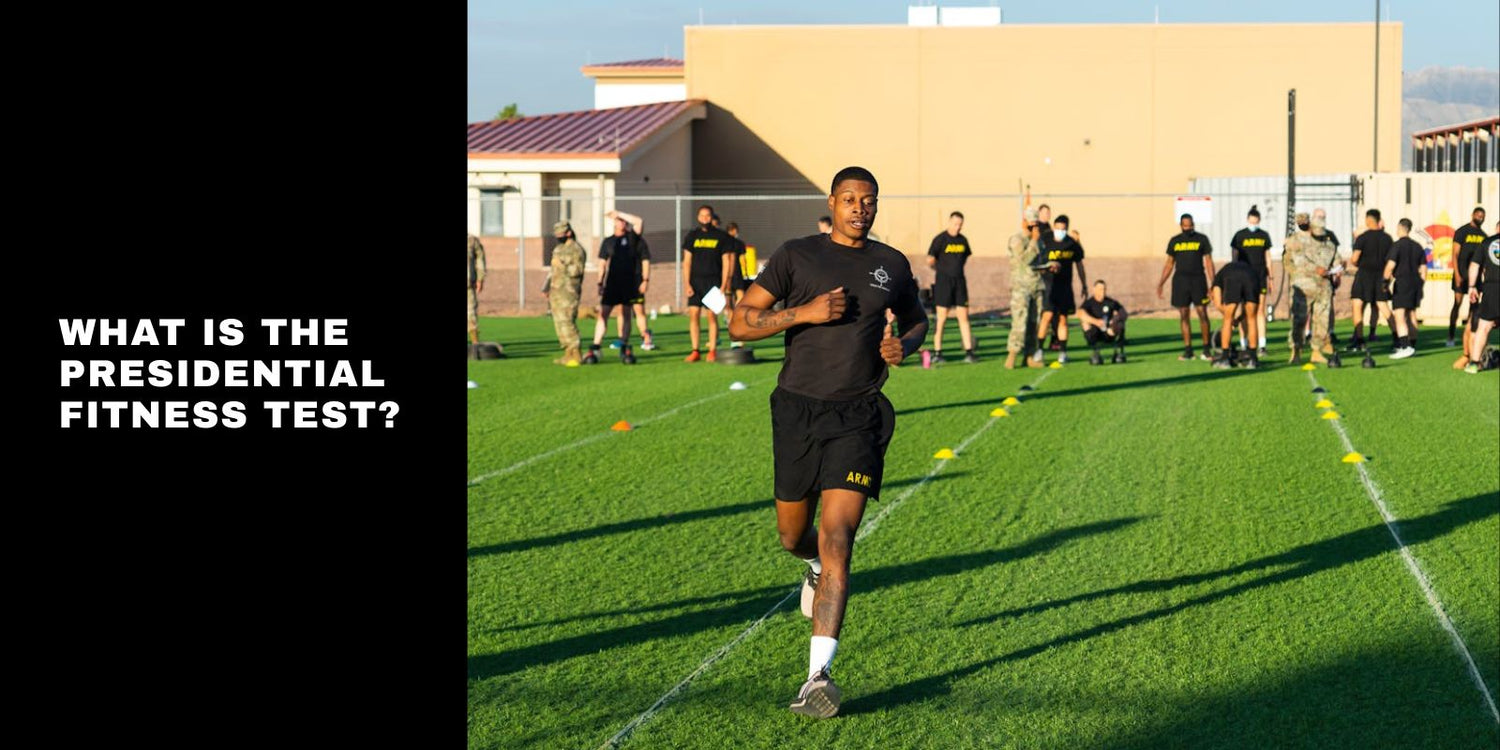
The Presidential Fitness Test is back, and in 2026 it comes with official age-by-age standards that parents, students, and PE teachers need to know. This guide covers the complete history from Eisenhower to Trump, every benchmark table for boys and girls ages 6 through 17, and practical training tips for each event.
Whether you are preparing a student for the test or simply curious how the 2026 standards compare to the original 1958 format, you will find the data and context here in one place.
Quick Answer: The Presidential Fitness Test is a school-based physical fitness assessment reinstated by executive order in July 2025 and formally re-established in May 2026. Students must meet age- and gender-specific benchmarks in three categories, core, cardio, and upper body, to earn the Presidential Physical Fitness Award.
Key Takeaways
- Reinstated in 2026: President Trump signed an executive order in July 2025 reinstating the Presidential Fitness Test, with official 2026 standards released by the White House in May 2026.
- Three paired categories: The 2026 test covers core (curl-ups or plank), cardio (one-mile run or 20m PACER), and upper body (right-angle push-ups or pull-ups), with students choosing one event per category.
- Award threshold: Students who meet the age- and gender-specific benchmark in all three categories earn the Presidential Physical Fitness Award, set at the 85th percentile historically.
- Standards rise with age: Benchmarks increase progressively from age 6 to 17 for both boys and girls, and differ by gender at every age group.
- Limited mandatory rollout so far: As of mid-2026, the test is required in 161 DoD K-12 schools across 30 military installations; civilian public schools follow individual state and district policy.
What Is the Presidential Fitness Test?
The Presidential Fitness Test is a standardized school-based physical fitness assessment for students ages 6 through 17, designed to measure physical fitness across core strength, cardiovascular endurance, and upper-body strength. Students who reach the award-level benchmark in all three categories receive the Presidential Physical Fitness Award.
Three Categories, Pick One Per Category
According to the official 2026 White House standards, the test is organized into three paired categories, and students select one event from each pair.
- Core: Curl-ups (timed repetitions) or plank hold (seconds).
- Cardio: One-mile run (time) or 20-meter PACER beep test (laps completed), also known as the multi-stage fitness test.
- Upper Body: Right-angle push-ups (repetitions) or pull-ups (repetitions) using a lat pull-down bar or pull-up station.
A 2021 study found that across 16 states, 92-100% of schools already used the PACER/mile run, curl-up, and push-up as standard components of school-based physical fitness assessments, meaning the 2026 test aligns closely with existing PE practice.[1]
A Brief History of the Presidential Fitness Test (1956-2026)
The Presidential Fitness Test traces its origins to a 1955 study that revealed alarming gaps between American and European youth fitness, prompting direct action from the White House. Understanding this history helps explain both the test's enduring legacy and the controversies that led to its 2012 cancellation and 2026 reinstatement.
The Kraus-Weber Study That Shocked Eisenhower (1955-1956)
A 1955 study found that 58% of American children failed at least one element of the six-part Kraus-Weber fitness test, compared to just 8.7% of European children tested with the same protocol. Those findings were shared at a White House luncheon, prompting President Eisenhower to sign an executive order in 1956 creating the President's Council on Youth Fitness.
JFK and the National Campaign (1960-1963)
President Kennedy expanded the program's visibility and public profile, writing a famous 1960 Sports Illustrated article challenging American youth to prioritize fitness. Kennedy's administration invested heavily in PE teacher training and national awareness campaigns that brought the test into mainstream school culture.
LBJ Formalizes the Award (1966)
In 1966, President Lyndon B. Johnson added the Presidential Physical Fitness Award for students who scored in the 85th percentile or higher on all test events, giving the program a concrete goal that students and schools could rally around.
The Original 1958 Events
The 1958 test included the shuttle run, 50-yard dash, 600-yard run/walk, pull-ups, standing long jump, sit-ups, and a softball throw, all designed to measure broad athletic capacity rather than specific health-related fitness components.
Evolution Through the 1970s-1990s
The test underwent several revisions across four decades, shifting away from pure athletic performance toward health-related fitness components including the one-mile run and body composition measures as guidelines from exercise science evolved.
Obama Phases Out the Test (2012)
The Obama administration phased out the Presidential Fitness Test after the 2012-2013 school year, replacing it with the voluntary Presidential Youth Fitness Program. The new program shifted focus from competitive norm-referenced scoring to personal health improvement, and was developed as an organizational-level capacity framework to motivate student achievement and promote lifestyle physical activity.[2]
Trump Reinstates It (2025-2026)
In July 2025, President Trump signed an executive order reinstating the Presidential Fitness Test and revitalizing the President's Council on Sports, Fitness and Nutrition. In May 2026, the White House released the official 2026 standards PDF and Trump signed a proclamation re-establishing the awards, with the Pentagon announcing the test as mandatory at 161 DoD K-12 schools across 30 military installations.
What Are the Events in the 2026 Presidential Fitness Test?
The 2026 Presidential Fitness Test features three paired categories where students choose one event per category, a simpler structure than the pre-2012 five-event fixed format. Students must meet the benchmark in all three chosen events to earn the Presidential Physical Fitness Award.
How to Earn the Presidential Physical Fitness Award
Earning the 2026 Presidential Physical Fitness Award requires meeting the age- and gender-specific benchmark in all three categories. Benchmarks rise progressively with age from 6 to 17 and differ for boys and girls at every level.
- Core category: Curl-ups or plank hold. A student picks whichever event they are better prepared for.
- Cardio category: One-mile run time or 20-meter beep test laps. Schools may offer both options depending on available space and equipment.
- Upper body category: Right-angle push-ups or pull-ups. Right-angle push-ups require arms to reach 90 degrees, not a full range push-up.
- All three required: Meeting the benchmark in only two of three categories does not qualify for the Presidential Award.
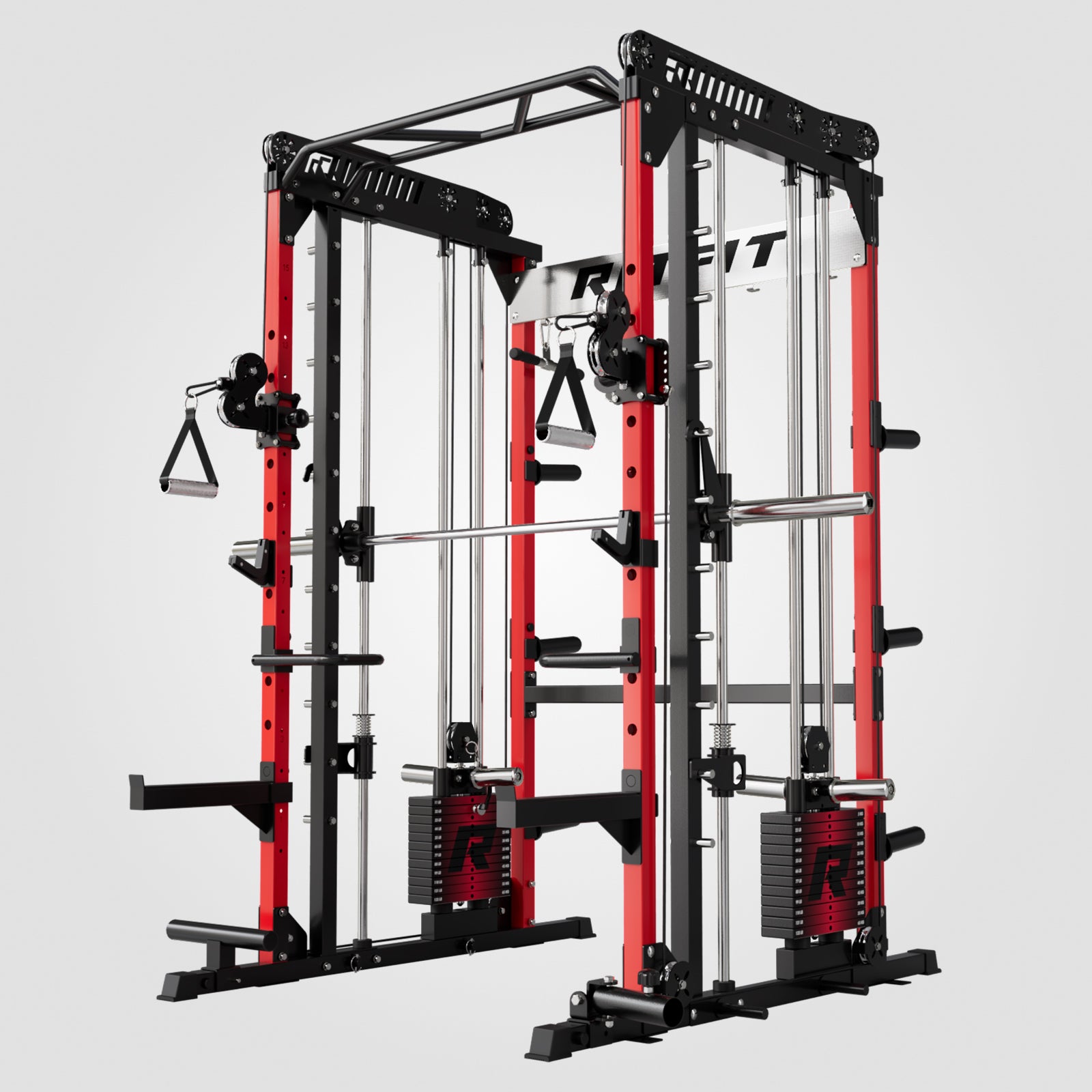
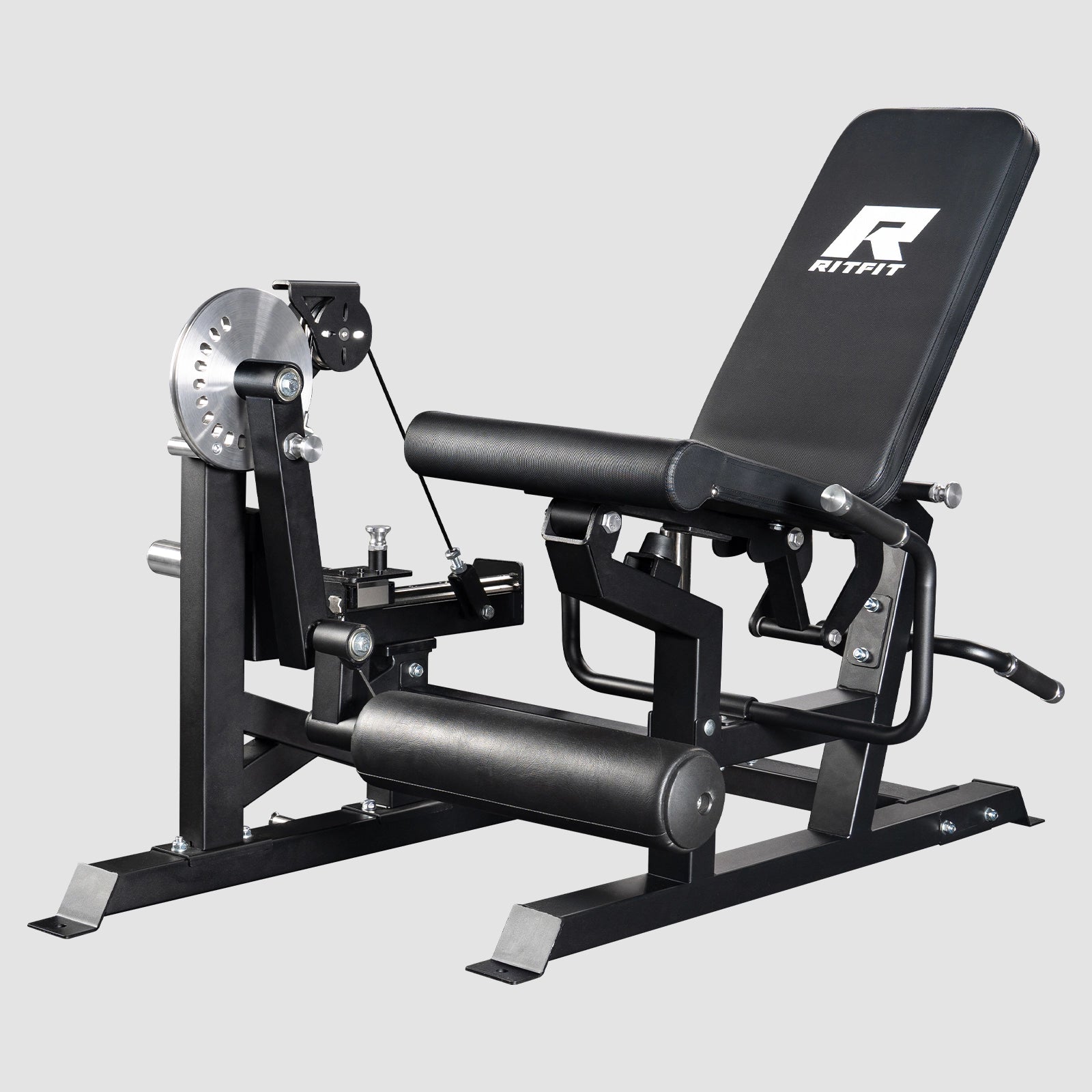
Explore functional training equipment designed to support core, cardio, and upper-body conditioning for school-age athletes and home gym users alike.
What Are the 2026 Presidential Fitness Test Standards by Age?
According to the official 2026 White House standards, benchmarks for the Presidential Physical Fitness Award differ by age and gender across all six events. The tables below show the award-level targets, not average performance, for students from age 6 through 17.
Boys Standards Table (Ages 6-17+)
| Age | Curl-Ups | Plank (sec) | Mile Run | PACER (laps) | Push-Ups | Pull-Ups |
|---|---|---|---|---|---|---|
| 6 | 33 | 73 | 10:15 | 27 | 9 | 2 |
| 7 | 36 | 90 | 9:22 | 32 | 14 | 4 |
| 8 | 40 | 95 | 8:48 | 39 | 17 | 5 |
| 9 | 41 | 109 | 8:31 | 47 | 18 | 5 |
| 10 | 45 | 119 | 7:57 | 55 | 22 | 6 |
| 11 | 47 | 119 | 7:32 | 60 | 27 | 6 |
| 12 | 50 | 127 | 7:11 | 65 | 31 | 7 |
| 13 | 53 | 134 | 6:50 | 70 | 39 | 7 |
| 14 | 56 | 134 | 6:26 | 75 | 40 | 10 |
| 15 | 57 | 156 | 6:20 | 81 | 42 | 11 |
| 16 | 57 | 156 | 6:08 | 84 | 44 | 11 |
| 17+ | 57 | 156 | 6:06 | 84 | 53 | 13 |
Source: Official 2026 White House Presidential Physical Fitness Test standards PDF.
Girls Standards Table (Ages 6-17+)
| Age | Curl-Ups | Plank (sec) | Mile Run | PACER (laps) | Push-Ups | Pull-Ups |
|---|---|---|---|---|---|---|
| 6 | 32 | 71 | 11:20 | 22 | 9 | 2 |
| 7 | 34 | 92 | 10:36 | 25 | 14 | 2 |
| 8 | 38 | 92 | 10:02 | 29 | 17 | 2 |
| 9 | 39 | 105 | 9:30 | 35 | 18 | 2 |
| 10 | 40 | 105 | 9:19 | 41 | 20 | 3 |
| 11 | 42 | 105 | 9:02 | 46 | 20 | 3 |
| 12 | 45 | 127 | 8:23 | 49 | 20 | 3 |
| 13 | 46 | 127 | 8:13 | 50 | 21 | 3 |
| 14 | 47 | 134 | 7:59 | 50 | 21 | 3 |
| 15 | 48 | 145 | 7:59 | 50 | 21 | 3 |
| 16 | 48 | 145 | 7:59 | 50 | 24 | 3 |
| 17+ | 48 | 145 | 7:59 | 50 | 25 | 3 |
Source: Official 2026 White House Presidential Physical Fitness Test standards PDF.
Among adolescents studied across diverse populations, age was the only independent predictor of Presidential Fitness Challenge performance, regardless of BMI, body composition, or gender, reinforcing why the 2026 standards are calibrated by single-year age groups.[3]
What Were the Historical Presidential Fitness Test Standards?
The pre-2012 Presidential Fitness Test used population percentile norms rather than fixed benchmarks, with the Presidential Physical Fitness Award going to students at or above the 85th percentile and the National Award to those at or above the 50th percentile. The tables below show selected historical benchmarks for reference.
Presidential Award (85th Percentile) for Boys
| Age | Curl-Ups | Shuttle Run (sec) | Mile Run | Pull-Ups | Push-Ups |
|---|---|---|---|---|---|
| 10 | 45 | 10.3 | 7:57 | 6 | 22 |
| 12 | 50 | 9.8 | 7:11 | 7 | 31 |
| 14 | 56 | 9.1 | 6:26 | 10 | 40 |
| 17 | 55 | 8.7 | 6:06 | 13 | 53 |
Presidential Award (85th Percentile) for Girls
| Age | Curl-Ups | Shuttle Run (sec) | Mile Run | Pull-Ups | Push-Ups |
|---|---|---|---|---|---|
| 10 | 40 | 10.8 | 9:19 | 3 | 20 |
| 12 | 45 | 10.4 | 8:23 | 2 | 20 |
| 14 | 47 | 10.1 | 7:59 | 2 | 20 |
| 17 | 44 | 10.0 | 8:15 | 1 | 25 |
The 2026 format removes the shuttle run and sit-and-reach events entirely and introduces the plank as an alternative to curl-ups, making direct year-by-year comparison between formats imprecise.
How Should Students Train for the Presidential Fitness Test Events?
Training for the 2026 Presidential Fitness Test comes down to building targeted strength and endurance in each of the three categories over several weeks, rather than cramming workouts in the final days before testing.
Curl-Ups and Plank
Both core events reward consistent core endurance training more than raw strength. Aim for 3 sets of 15-20 curl-ups and a 30-60 second plank hold 3 times per week, progressing every two weeks.
- Form tip: For curl-ups, keep feet flat and fingers touching ears, raising only until shoulder blades clear the floor.
- Plank progression: Start with a knee plank and work to a full plank as coordination in fitness and stability improve.
- Avoid: Rushing repetitions, which reduces time-under-tension and limits endurance gains for testing conditions.
Right-Angle Push-Ups and Pull-Ups
Upper-body training for this category should focus on both pushing and pulling mechanics, since students can choose their event on test day. Practicing burpees alongside push-up progressions helps build the full-body coordination needed for explosive upper-body efforts.
- Push-up form: Right-angle push-ups require the upper arm to reach parallel to the floor at the bottom position, not a full chest-to-floor rep.
- Pull-up progression: Use assisted pull-ups or band-assisted variations to build pulling strength before attempting unassisted reps.
- Frequency: 2-3 upper-body sessions per week with at least one rest day between sessions supports safe adaptation for school-age athletes.
One-Mile Run and PACER (20m Beep Test)
Both cardio events test cardiovascular fitness and aerobic capacity, so training carries over between them. Run 2-3 times per week at a steady conversational pace, with one faster interval session per week to build race-pace tolerance.
- Mile run pacing: Students who go out too fast in the first lap lose significant time in laps three and four, so practice even-split pacing.
- PACER strategy: The beep test accelerates incrementally, so building a strong aerobic base matters more than raw sprint speed.
- Overtraining risk: Avoid adding new cardio volume too quickly, since a fitness plateau can result from too much volume without recovery.
- Complement training: Tracking total daily movement alongside structured workouts helps younger students build broader aerobic foundations beyond single-session runs.
FAQs About the Presidential Fitness Test
What are the 2026 Presidential Fitness Test standards for a 10-year-old boy?
According to the official 2026 White House standards, a 10-year-old boy must complete 45 curl-ups or hold a plank for 119 seconds, run one mile in 7 minutes 57 seconds or complete 55 PACER laps, and perform 22 right-angle push-ups or 6 pull-ups to earn the Presidential Physical Fitness Award.
What are the 2026 Presidential Fitness Test standards for a 10-year-old girl?
A 10-year-old girl must complete 40 curl-ups or hold a plank for 105 seconds, run one mile in 9 minutes 19 seconds or complete 41 PACER laps, and perform 20 right-angle push-ups or 3 pull-ups to earn the 2026 Presidential Physical Fitness Award, according to the official White House standards.
What exercises are in the 2026 Presidential Fitness Test?
The 2026 test includes three paired categories, and students pick one from each pair: curl-ups or plank for core, one-mile run or 20-meter PACER for cardio, and right-angle push-ups or pull-ups for upper body. Students must meet the benchmark in all three categories to earn the Presidential Physical Fitness Award.
Why was the Presidential Fitness Test discontinued in 2012?
The Obama administration phased out the test after the 2012-2013 school year, replacing it with the voluntary Presidential Youth Fitness Program. Critics argued the competitive, norm-referenced format humiliated lower-scoring students in front of peers and failed to motivate lasting physical activity habits in the students who needed improvement most.
When was the Presidential Fitness Test created?
The Presidential Fitness Test traces its origins to 1956, when President Eisenhower signed an executive order after a study found 58% of American children failed a basic fitness test. The first formal national test standards were introduced in 1958, and President Johnson added the Presidential Physical Fitness Award in 1966.
How do you earn the Presidential Physical Fitness Award in 2026?
To earn the 2026 award, a student must meet the age- and gender-specific benchmark in all three categories: one core exercise, one cardio exercise, and one upper-body exercise. Standards differ for boys and girls and increase progressively from age 6 to 17, according to the official 2026 White House standards.
What is the difference between the old and new Presidential Fitness Test?
The pre-2012 test required all five fixed events and scoring at the 85th percentile in each for the Presidential Award. The 2026 version introduces three paired categories where students choose one event per pair, and the shuttle run and sit-and-reach events are no longer included in the format.
Is the Presidential Fitness Test required in all US schools in 2026?
As of mid-2026, the test is required in 161 DoD K-12 schools across 30 military installations. President Trump signed an executive order in July 2025 encouraging all public schools to reinstate it, but mandatory participation in civilian public schools depends on individual state and district policy.
Conclusion
The Presidential Fitness Test 2026 standards give students, parents, and PE teachers a clear, official benchmark for core, cardio, and upper-body fitness by age and gender. With the test now mandatory in DoD schools and encouraged across civilian districts, knowing the exact targets is the first step toward intentional preparation.
Start by identifying which paired event in each category plays to your student's current strengths, then build a consistent 2-3 day training routine around those events several weeks before test day.
Disclaimer
This article is intended for general informational purposes only and does not constitute medical, clinical, or professional fitness advice. Consult a qualified healthcare or physical education professional before beginning any new exercise program, particularly for children with existing health conditions.
Save on your next RitFit order
Tap the button to copy your code, then paste it at checkout.
References
1. Rochman MP, Cooper DM, Radom-Aizik S, Lu KD. US School-Based Physical Fitness Assessments and Data Dissemination. J Sch Health. 2021;91(9):722-729. doi:10.1111/josh.13050. https://pmc.ncbi.nlm.nih.gov/articles/PMC9291210/
2. Cance JD, Calvert HG, et al. Development of the Presidential Youth Fitness Program Index: A Scale of Organizational-Level Capacity. Res Q Exerc Sport. 2019;91(1):172-178. https://pmc.ncbi.nlm.nih.gov/articles/PMC7183731/
3. Ehrhart MD, Shah V, et al. Predictors of Physical Fitness among Southwestern Native American Adolescents at Risk for Diabetes. J Pediatr Endocrinol (Jersey City). 2017;2(1):1013. https://pmc.ncbi.nlm.nih.gov/articles/PMC5722221/