Bumper plates are best when you may drop the bar, while traditional weight plates are usually better for controlled strength work, tighter budgets, and heavier sleeve loading. The right choice depends on your training style, floor protection needs, noise limits, storage space, and whether you use Olympic lifts, deadlifts, or plate loaded machines.
Key Takeaways
- Bumper plates protect floors better: They are built for repeated impact and are the safer pick for Olympic lifting or any workout where dropping the bar may happen.
- Traditional weight plates load more efficiently: Iron and steel plates are thinner, so they usually let you fit more total weight on the bar.
- Noise matters more than many buyers expect: Bumper plates are noticeably quieter in garages, basements, and shared living spaces.
- Most home gyms do not need all bumper plates: If your lifts stay controlled, traditional plates may be the more practical and affordable choice.
- A mixed setup can work well: Many lifters use bumper plates for deadlifts or dynamic work, then use steel plates for heavier controlled loading.
What Are Weight Plates?
Weight plates are the discs you load onto a barbell for resistance training, but in everyday gym language the term often means iron or steel plates rather than thick rubber plates. They are the standard choice for general strength training, bodybuilding, and many home gyms built around controlled barbell work.
- Common materials: Traditional plates are usually cast iron, machined steel, or metal plates with a thin rubber or urethane coating. The coating helps with durability and handling, but the plate is still fundamentally a metal plate.
- Common sizes: Standard plates fit 1 inch bars, while Olympic plates fit 2 inch Olympic barbell sleeves. Most serious home gym setups use Olympic plates because they match modern barbells and attachments.
- Best use cases: Traditional plates work well for squats, presses, rows, and controlled deadlifts. For general strength training, free weight and machine training can both be effective, so equipment choice should match the movement goal rather than a one size fits all rule.[1]
What Are Bumper Plates?
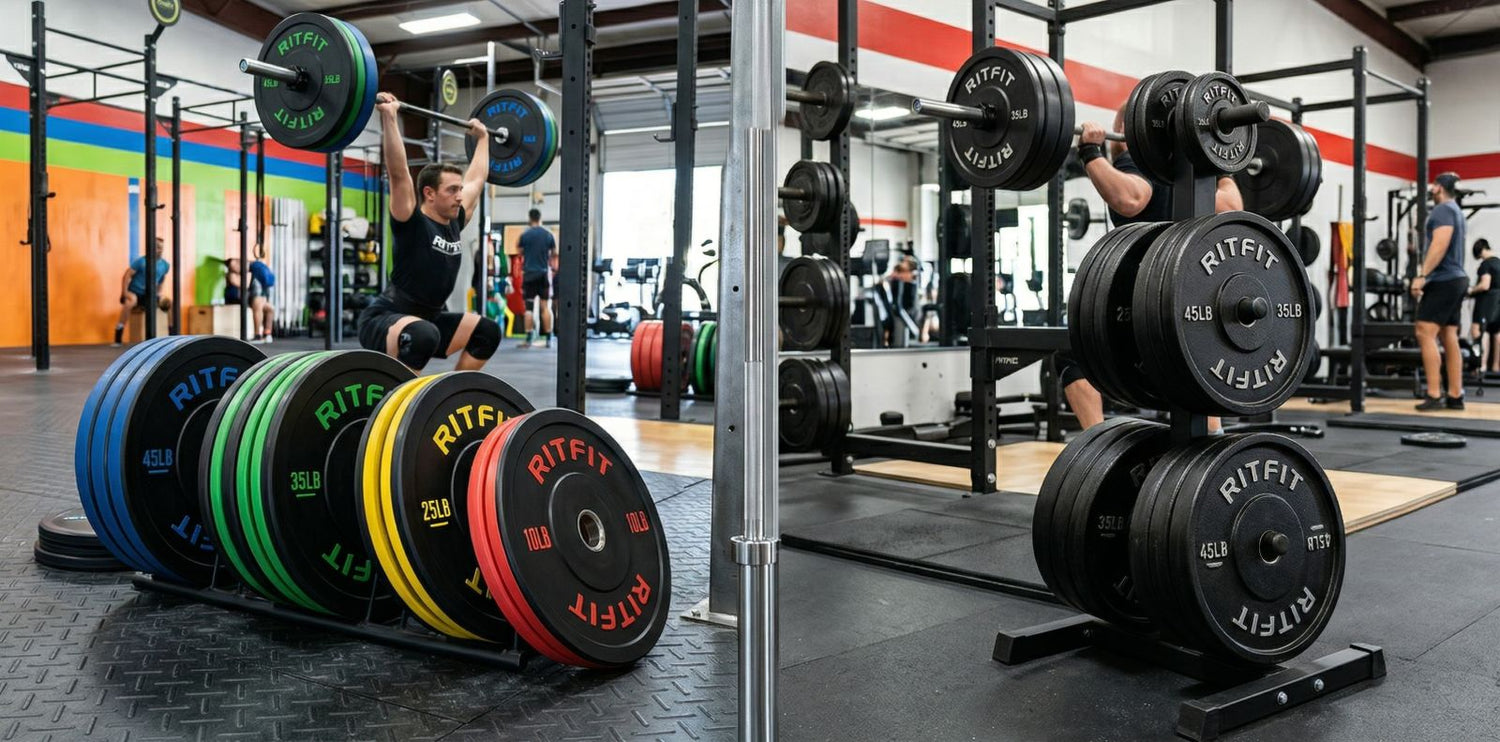
Bumper plates are thick rubber Olympic plates made to handle impact better when a loaded barbell is dropped. They usually share the same full diameter across most major weights, which keeps bar height more consistent for pulls from the floor.
- Core construction: Most bumper plates use dense rubber around a steel insert or hub. The exact rubber blend affects bounce, smell, durability, and how the plate feels on the bar.
- Why lifters buy them: Bumper plates are the standard pick for Olympic lifts, high velocity barbell work, and training spaces where floor protection matters. Weightlifting based training is closely associated with power focused adaptations, so bumper plates make more practical sense when that style of lifting is part of the plan.[3]
- Where they help most: They are especially useful in garage gyms, basement gyms, and apartment adjacent training spaces. They also make deadlifts and fast barbell work less disruptive for other people nearby.
Key Differences Between Bumper Plates and Weight Plates
The main differences come down to material, thickness, impact tolerance, and how you actually train. Those differences affect safety, noise, sleeve space, and long term practicality more than looks do.
- Material: Bumper plates are mainly rubber with a steel insert. Traditional weight plates are mainly iron or steel, sometimes with a thin protective coating.
- Thickness: Bumper plates are much thicker for the same weight. Traditional steel plates are thinner, which matters when you want to load heavier totals or use plate loaded machines.
- Drop tolerance: Bumper plates are designed to handle repeated drops better than iron or steel plates. Traditional plates are better treated as controlled lift equipment, not impact equipment.
- Noise: Bumper plates reduce impact noise more effectively. Traditional plates produce more clang and transmit more force into the floor.
- Handling: Many lifters find grip style iron plates easier to move around. Thick bumper plates can feel bulky and awkward, especially in small home gyms.
- Cost: Traditional plates usually cost less per pound. Bumper plates generally cost more because of material and manufacturing demands.
| Feature | Bumper Plates | Traditional Weight Plates |
|---|---|---|
| Primary material | Dense rubber with steel insert | Iron or steel, sometimes coated |
| Best for | Olympic lifts, dynamic training, quieter spaces | Controlled strength work, bodybuilding, heavier loading |
| Bar drops | Better suited for repeated impact | Not ideal for repeated drops |
| Sleeve space | Lower efficiency because plates are thicker | Higher efficiency because plates are thinner |
| Noise level | Lower | Higher |
| Typical price | Higher | Lower |
Pros and Cons of Bumper Plates
Bumper plates are the better option when impact tolerance, floor protection, and noise reduction matter more than loading density. Their downside is that they take up more room, cost more, and can feel less efficient for purely controlled strength work.
- Main advantages: They are quieter, safer for repeated bar contact with the floor, and easier to justify in a garage gym with shared walls or delicate flooring. They also give a more consistent starting height for many pulls.
- Main tradeoffs: They are thicker, usually more expensive, and less sleeve efficient. That becomes a bigger issue for stronger lifters or anyone loading plate based machines heavily.
- Smart shopping angle: If you want a practical starting point, compare a dedicated bumper plate set with your actual training needs instead of assuming every home gym needs a full bumper collection.
Pros and Cons of Traditional Weight Plates
Traditional plates are the better option when you want lower cost, easier loading, and more total weight on the sleeve. Their biggest limitation is that they are a worse match for repeated drops and louder home gym environments.
- Main advantages: They are more compact, more affordable, and often easier to carry or store. They also make more sense when your training centers on squats, presses, and controlled pulls.
- Main tradeoffs: They pass more force into the bar and floor during contact. They are also less forgiving if your training includes Olympic lifting or sloppy bar descents.
- Smart shopping angle: If your plan is mostly controlled barbell work, compare vintage color coded steel Olympic plates with thin steel plates to see how compact loading can change the feel of a home setup.
Which Should You Choose for Your Training?
Your best choice depends less on what looks more professional and more on how you actually lift. Most buyers make a better decision when they sort the problem by training style, space, and budget.
- Choose bumper plates if: You train Olympic lifts, perform dynamic barbell work, want less noise, or need better floor protection. They are also the better fit if you lift early, share walls, or plan to set the bar down hard on deadlifts.
- Choose traditional weight plates if: You mainly squat, bench, row, and deadlift under control. They are also the more practical choice when budget, storage, and sleeve efficiency are major concerns.
- Choose a mixed setup if: You want the benefits of both categories without buying everything twice. Many home gym owners use bumpers for deadlift height and impact control, then add steel plates as strength levels rise.
- Think about skill level honestly: Beginners can make progress with either free weights or machines, but free weight work usually demands more coordination and stabilization. That matters when deciding how much impact protection and handling forgiveness you want in your setup.[2]
- Protect the room, not just the bar: If flooring is part of the equation, pair your plates with gym flooring mats instead of assuming the plates alone solve every impact issue.
Using Bumper Plates and Weight Plates Together
Yes, you can use both types on the same barbell if the lift stays controlled and you do not plan to drop it. Mixing becomes riskier when small iron plates sit outside bumper plates and the bar lands hard, because that setup concentrates force in a way bumpers are not meant to absorb.
- Good use case: Mixed loading works well for heavy deadlifts, rack pulls, squats, and presses that stay under control. It is also a cost effective way to build a home gym over time.
- Poor use case: Do not treat a mixed bar like a true drop setup for overhead work. If the bar may be dropped from height, keep the loading choice simple and safer.
How to Identify Quality Barbell Plates
Good plates feel consistent, fit the sleeve cleanly, and hold up under normal training without wobble or obvious finish failure. Cheap plates often give themselves away through poor fit, inconsistent thickness, harsh odor in low grade rubber, or sloppy finishing around the center hole.
- For bumper plates: Check the insert, rubber finish, odor, and visible consistency from plate to plate. Better plates usually feel more uniform on the bar and more predictable on the floor.
- For traditional plates: Check machining quality, finish durability, and how tightly they fit the sleeve. Better plates also tend to stack, store, and load more cleanly.
- For comparison shopping: Browsing a focused barbells and weight plates collection makes it easier to compare plate style, finish, and intended use without losing the training context.
FAQs
What are bumper plates best for in a home gym?
Bumper plates are best for lifts that may involve dropping the bar, loud deadlift lockouts, or training in shared spaces. They also help protect flooring and reduce noise, which makes them especially useful in garage gyms, basements, and apartments with noise limits.
Can you deadlift with regular weight plates instead of bumper plates?
Yes. You can deadlift with regular weight plates if the plates are the correct diameter, the bar is controlled, and the floor is protected. If you plan to drop the bar, bumper plates are the safer option because they handle repeated impact better.
Are bumper plates better than iron plates for beginners?
No. Bumper plates are not automatically better for every beginner. They are better for beginners who want more floor protection, less noise, or Olympic lift practice, while iron plates often make more sense for controlled strength training and lower upfront cost.
Do bumper plates take up more bar sleeve space than steel plates?
Yes. Bumper plates usually take up more sleeve space because rubber is thicker than steel for the same weight. That matters more for stronger lifters, plate loaded machines, and home gyms where you want to fit more total load on the bar.
Can you mix bumper plates and weight plates on the same barbell?
Yes. You can mix bumper plates and weight plates when the lift is controlled and you do not plan to drop the bar. The safest setup is to keep bumper plates inside and avoid placing small iron plates outside them for dynamic or overhead work.
Which weight plates are more practical for most home gyms?
For most home gyms, the more practical choice depends on your training style, floor protection needs, and budget. Iron or steel plates usually win on price, handling, and sleeve efficiency, while bumper plates win on noise control and drop tolerance.
Conclusion
Bumper plates are the better choice for bar drops, quieter training, and floor protection, while traditional weight plates are usually the better choice for compact loading, lower cost, and controlled strength work. If you train like a general home gym lifter rather than an Olympic lifter, the smartest answer is often a practical mix, not an all or nothing purchase.
Disclaimer: This guide is for general equipment education, not medical or coaching advice. Always match your plate choice to your barbell, flooring, training style, and technical skill, and use proper mats, safeties, or platforms when impact and noise are concerns.
References
- Haugen ME, Vårvik FT, Larsen S, Haugen AS, van den Tillaar R, Bjørnsen T. Effect of free-weight vs. machine-based strength training on maximal strength, hypertrophy and jump performance: a systematic review and meta-analysis. BMC Sports Sci Med Rehabil. 2023;15(1):103.
- Aerenhouts D, D'Hondt E. Using Machines or Free Weights for Resistance Training in Novice Males? A Randomized Parallel Trial. Int J Environ Res Public Health. 2020;17(21):7848.
- Morris SJ, Oliver JL, Pedley JS, et al. Comparison of Weightlifting, Traditional Resistance Training and Plyometrics on Strength, Power and Speed: A Systematic Review with Meta-analysis. Sports Med. 2022;52:1533-1554.