The best affordable home gym equipment is the gear that gives you the most exercises, the best long-term value, and the safest training options for your space and goals. For most people, that means starting with adjustable dumbbells, resistance bands, a mat, and one or two compact upgrades instead of buying bulky single-use machines too early.
Home gym equipment does not need to be expensive to be effective. If you choose versatile, durable pieces that match your training goals and available space, you can build an affordable home gym that supports real strength, muscle gain, fat loss, and consistency at home.
Key Takeaways
- Adjustable dumbbells and resistance bands deliver the best mix of value, versatility, and progression for most home gym beginners.
- The best cheap home gym is not the one with the lowest upfront price, but the one you will actually use consistently for full-body training.
- Small spaces benefit most from compact equipment such as bands, dumbbells, a pull-up bar, and a foldable bench.
- Budget gear should still be judged by stability, durability, comfort, safety, and exercise variety.
- A smart home setup can support strength training, conditioning, mobility, and recovery without requiring a full garage gym.
How to Choose Affordable Home Gym Equipment
- Define Your Fitness Goals: Start with the result you want most, because the right equipment depends on how you plan to train. Adjustable dumbbells and benches are better for strength and hypertrophy; kettlebells and jump ropes fit conditioning; and bands and mats work especially well for mobility, warm-ups, and light resistance training.
- Set a Realistic Budget: A clear budget helps you prioritize equipment that does more than one job. Under $100 can cover basic essentials, $100 to $300 can build a strong beginner setup, and $300 to $800 can create a more complete home gym for the money with better long-term progression.
- Consider Space and Storage Constraints: Your training space should shape every buying decision. Apartments and small rooms usually need compact, foldable, or easy to store gear, while garages and spare rooms can support larger equipment such as benches, barbells, racks, or cable systems.
- Key Buying Criteria: Focus on versatility first, then durability, safety, comfort, and upgrade potential. The best affordable home workout equipment should let you train multiple movement patterns, handle repeated use, and fit your current routine without limiting future progress.
Best Affordable Home Gym Essentials
- Adjustable Dumbbells: Adjustable dumbbells are the best value purchase for most home gym users because they support presses, rows, squats, lunges, Romanian deadlifts, curls, shoulder work, and core training in one compact format. They also save space and money compared with buying a full fixed dumbbell set.
- Resistance Bands: Resistance bands are one of the cheapest and most useful tools you can own because they work for full-body training, warm-ups, mobility, recovery, and travel. Loop bands, mini bands, and tube bands each add value, especially for beginners, apartment users, and anyone building a low-cost starter gym.
- Kettlebells: A single kettlebell can cover swings, goblet squats, presses, carries, deadlifts, and conditioning circuits with very little floor space. It is one of the best affordable home gym add-ons for people who want athletic, full-body training with one simple tool.
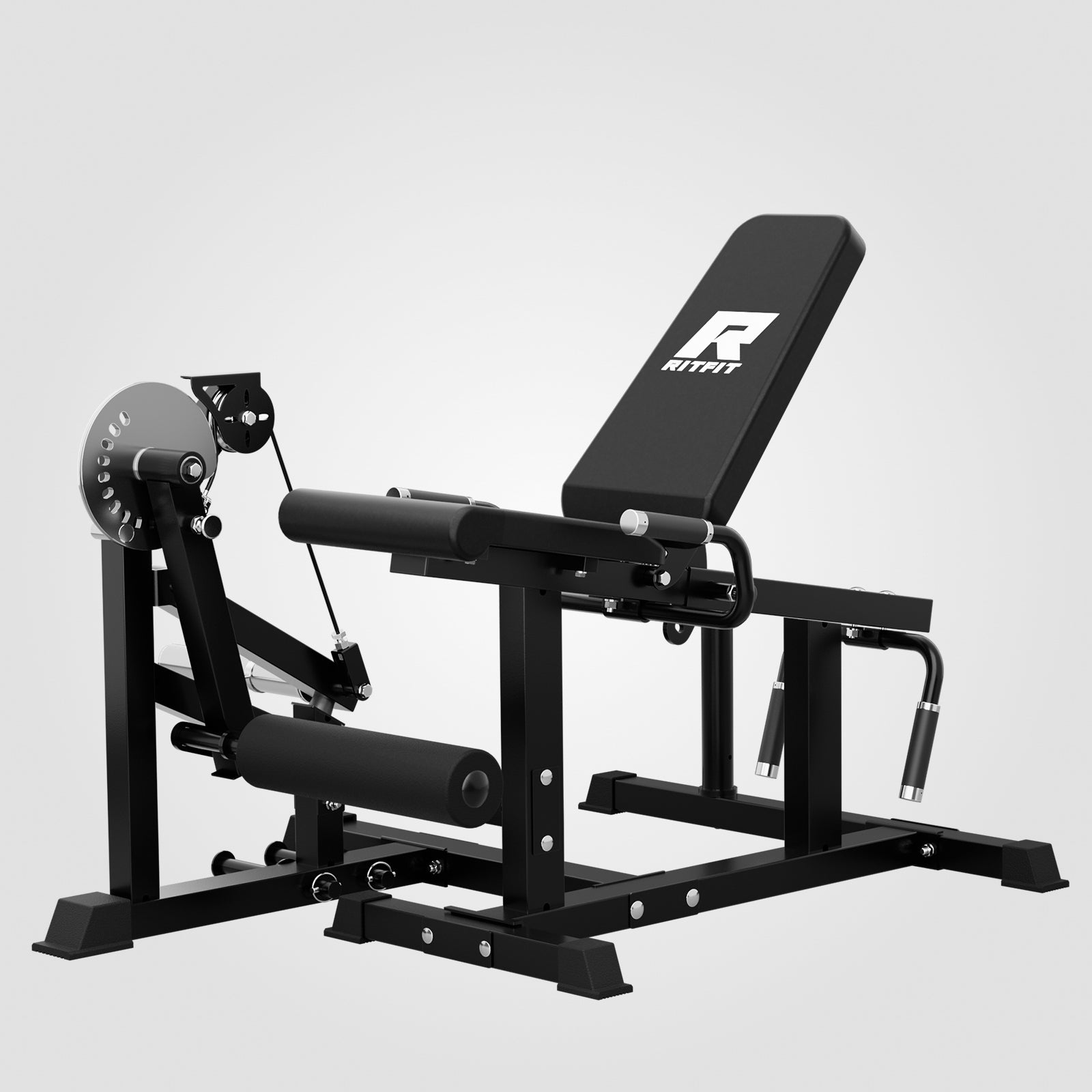
- Adjustable Bench: An adjustable bench expands what you can do with dumbbells by opening flat, incline, seated, and supported variations for chest, shoulders, back, arms, and core work. Look for solid padding, stable footing, and a weight capacity that supports both your body weight and the loads you plan to use.
- Pull-Up Bar: A pull-up bar is a high-value way to train your back, arms, grip, and core without taking up much room. Doorway models can work well, but only if the frame is secure, the fit is correct, and the bar is rated for your body weight and movement style.
Best Cheap Home Gym Add-Ons
- Yoga or Exercise Mat: A mat improves comfort, protects your flooring, and makes bodyweight work, stretching, and core training easier to perform consistently. It is a low-cost upgrade that supports both workouts and recovery.
- Suspension Trainer: A suspension trainer adds rows, presses, squats, lunges, planks, and core work while using your body weight as resistance. It is one of the most space-efficient options for people who want more exercise variety without buying a large machine.
- Jump Rope: A jump rope is one of the cheapest ways to improve conditioning, footwork, and workout density at home. It works especially well for small budgets, short workouts, and people who do not want to invest in a treadmill or bike yet.
- Foam Roller and Mobility Tools: Recovery tools help you stay more comfortable and consistent, which matters in any home fitness routine. A basic foam roller, massage ball, or mobility band can improve warm-ups, cooldowns, and general movement quality.
Best Affordable All in One Home Gym Options
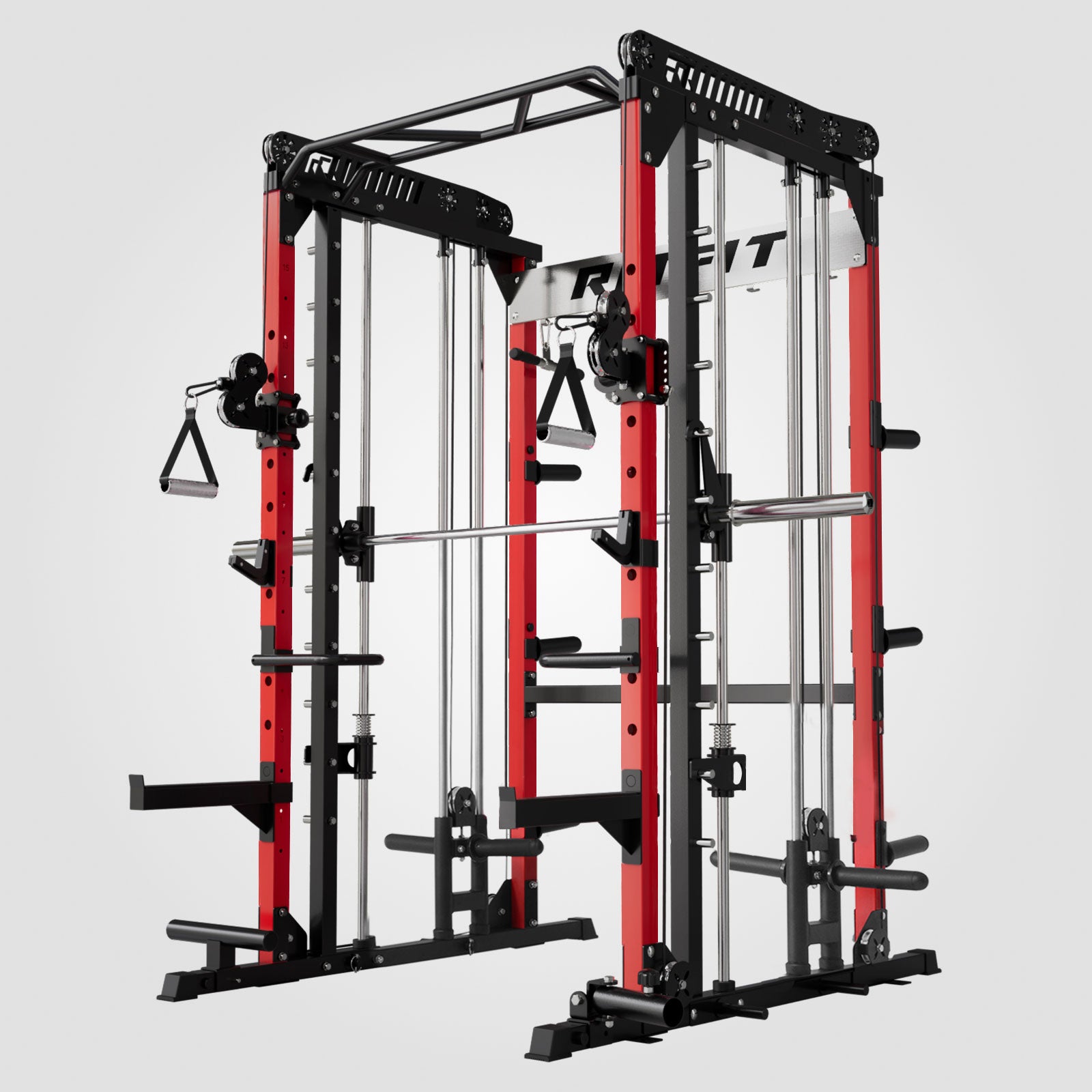
- Budget Power Rack Setups: A basic rack, barbell, and plate setup offers excellent long-term value for people with enough space and a higher starting budget. It gives you room to build around squats, presses, pulls, and progressive overload, but safety features such as spotter arms, stable uprights, and solid hardware matter more than chasing the cheapest frame.
- Compact Cable Machines: Compact cable systems can be a smart choice for users who want smoother resistance for rows, flys, pulldowns, curls, triceps work, and other accessory movements. They are especially useful for people who prefer guided resistance or want more exercise variety in a small training footprint.
- Foldable Cardio Machines: A foldable treadmill, bike, or rower can make sense if indoor cardio is a non-negotiable part of your routine. Still, if your budget is tight, it is usually smarter to build around versatile strength tools first and use walking, outdoor running, or jump rope for conditioning.
Sample Affordable Home Gym Setups by Budget
| Budget | Best Core Equipment | Best For | Main Benefit |
|---|---|---|---|
| Under $100 | Resistance bands, mini bands, mat, jump rope | Beginners, mobility, conditioning | Lowest cost and smallest footprint |
| $100 to $300 | Adjustable dumbbells, bands, mat, pull up bar | General fitness, strength, fat loss | Best starter balance of load and versatility |
| $300 to $800 | Adjustable dumbbells, bench, pull up bar, kettlebell, suspension trainer | Well rounded home training | Strong long term value and exercise variety |
Ultra Budget SetEquipment
UndeFor Main Benefit Underu$100 oom to build a simple and effea mat, and ae trairope base. A resistance bconditioning i bands, a mat, and a jumfootprint: $100full$300 y circuits, mobility work, lia mat, and astren-up bar ining, and conditioning with alloss no storage demands.
Starter Strversatility. $300tion$800 Setup
Cost: $100 to $a bench, a pull-upet spoa kettlebell, and abeginners whtrainer real-roundedg progtraining hout oversp-termg. Adjustable dumbbells, bands, a mat, and a doorway pull up bar create a flexible setup for pressing, pulling, lower body work, warm-ups, and accessory exercises.
Well-Rounded Home Gym Setup
Cost: $30-body$800 can build a strong home gym that supports both muscle building and general fitness. Adding an adjustable bench, a kettlebell, and a suspension trainer to your core setup gives you much more exercise variety and better long-term progression.
How to Get the Most Out of Your Setup
- Programming Basics: -up your equipment around simple movement patterns such as squat, hinge, push, pull, carry, and core work. Full-body training three times per week or a basic upper-lower split is often enough to build muscle, improve fitness, and make steady progress at home.
- Safety Tips: Check weight ratings, locking systems, floor stability, band condition, and pull-up bar installation before training hard. Budget equipment can work very well, but safe setup, good form, and progressive loading matter more than trying to do too much too soon.
- Maintenance and Longevity: Wipe down benches and mats, inspect bands for cracks, tighten hardware when needed, and store equipment away from moisture or direct sun. Simple maintenance protects performance, extends product life, and helps affordable gear stay reliable over time.
Mistakes to Avoid When Building an Affordable Home Gym
- Buying Single-Purpose Devices: Skip novelty machines that do one exercise and take up too much space. The best home gym for the money is built around equipment that supports many movement patterns and adapts as your training level improves.
- Ignoring Space and Noise Constraints: Measure your room, ceiling height, storage areas, and floor surface before buying larger equipment. A setup that looks cheap online can become expensive fast if it does not fit your space, disrupts your household, or forces awkward training compromises.
- Chasing the Lowest Price Only: The cheapest option is not always the best value. Unstable benches, weak hardware, poor grips, limited adjustability, and low durability often cost more in the long run because they reduce confidence, shorten lifespan, and limit training quality.
Conclusion
The best affordable home gym equipment is the equipment that fits your goals, your space, and your budget while giving you the widest range of safe, repeatable exercises. Start with versatile basics, build around consistency, and add larger pieces only when your training needs and available space truly justify them.
Frequently Asked Questions
Can I get fit with just bands and bodyweight?
Yes, especially if your goal is general fitness, beginner strength, conditioning, mobility, or home workouts in a small space. Bands and bodyweight training can be very effective when you use progressive overload, controlled tempo, and consistent programming.
Is a cheap home gym better than a gym membership?
It can be, especially for people who value convenience, privacy, and long-term savings. A home gym removes commute time, lowers recurring costs, and makes it easier to train regularly, which is often the biggest factor behind results.
How much should I spend to get started?
Many people can start effectively with less than $100 if they focus on bands, a mat, and a jump rope. If your priority is strength training, spending more on adjustable dumbbells is often the smartest first upgrade.
What is the most cost-effective home gym equipment to buy first?
Adjustable dumbbells and resistance bands usually offer the best return because they support the widest range of exercises for the most common goals. They also fit small spaces better than large machines and leave room to expand later.
What should I avoid buying for a cheap home gym?
Avoid bulky machines with very limited exercise options, unstable low-quality benches, and oversized cardio equipment you are unlikely to use consistently. A compact setup with better fundamentals usually delivers better results than a room full of cheap equipment.