








Finding 45 lb plates for sale is easy. Knowing which type to buy, how many you need, and whether 100 lb plates deserve a spot in your home gym is the hard part.
This guide breaks down bumper, cast iron, and grip plates, the exact plate math for every lifting level, and the specs that separate a smart buy from an expensive mistake, so you can build a set that grows with your training.
Quick Answer: Most home lifters should build their set around pairs of 45 lb plates, choosing bumper plates for Olympic lifting and dropping, or cast iron plates for maximum loading per dollar. A 100 lb plate only makes sense for plate-loaded machines, heavy leg training, and advanced lifters.
Key Takeaways
- Start with 45s: Pairs of 45 lb plates are the backbone of barbell training, covering 135 lb, 225 lb, and 315 lb milestones.
- 100 lb plates are niche: They shine on plate-loaded machines and heavy leg work, not on a barbell for most lifters.
- Type follows training: Bumpers for Olympic lifts and drops, cast iron for maximum loading per dollar, grip plates for easy handling.
- Check the hole: Olympic plates use a 2-inch center hole and fit any Olympic barbell sleeve, while standard 1-inch plates do not.
- Buy per pound: One expert-tested guide pegs average bumper pricing near $2.49 per pound, with strong value picks around $1.79 to $2.19.
Should You Buy 45 lb or 100 lb Plates?
A 45 lb plate is the workhorse of any barbell setup, while 100 lb plates serve narrower roles like plate-loaded machines and very heavy lower body training. Most home gyms need several pairs of 45s before they ever need a single 100.
- When 45 lb plates are enough: Squats, bench press, deadlifts, rows, and overhead press all load fine in 45 lb jumps for beginners and intermediates.
- When 100 lb plates earn their keep: Leg press machines, plate-loaded stations, and advanced lifters who run out of sleeve space with 45s.
- The mixed approach: Many home gyms pair 45 lb plates for barbell work with one or two 100 lb plates reserved for machine loading.
If you are starting from zero, browsing a full weight plates collection helps you compare sizes and materials in one place before committing.
What Is the Difference Between Bumper, Iron, and Grip Plates?
Bumper plates are rubber coated plates built to be dropped, cast iron plates are thinner and cheaper per pound, and grip plates add handles for easy carrying and functional work. As one industry buying guide explains, all bumper plates share the same 450 mm diameter and are typically color coded for fast weight identification.
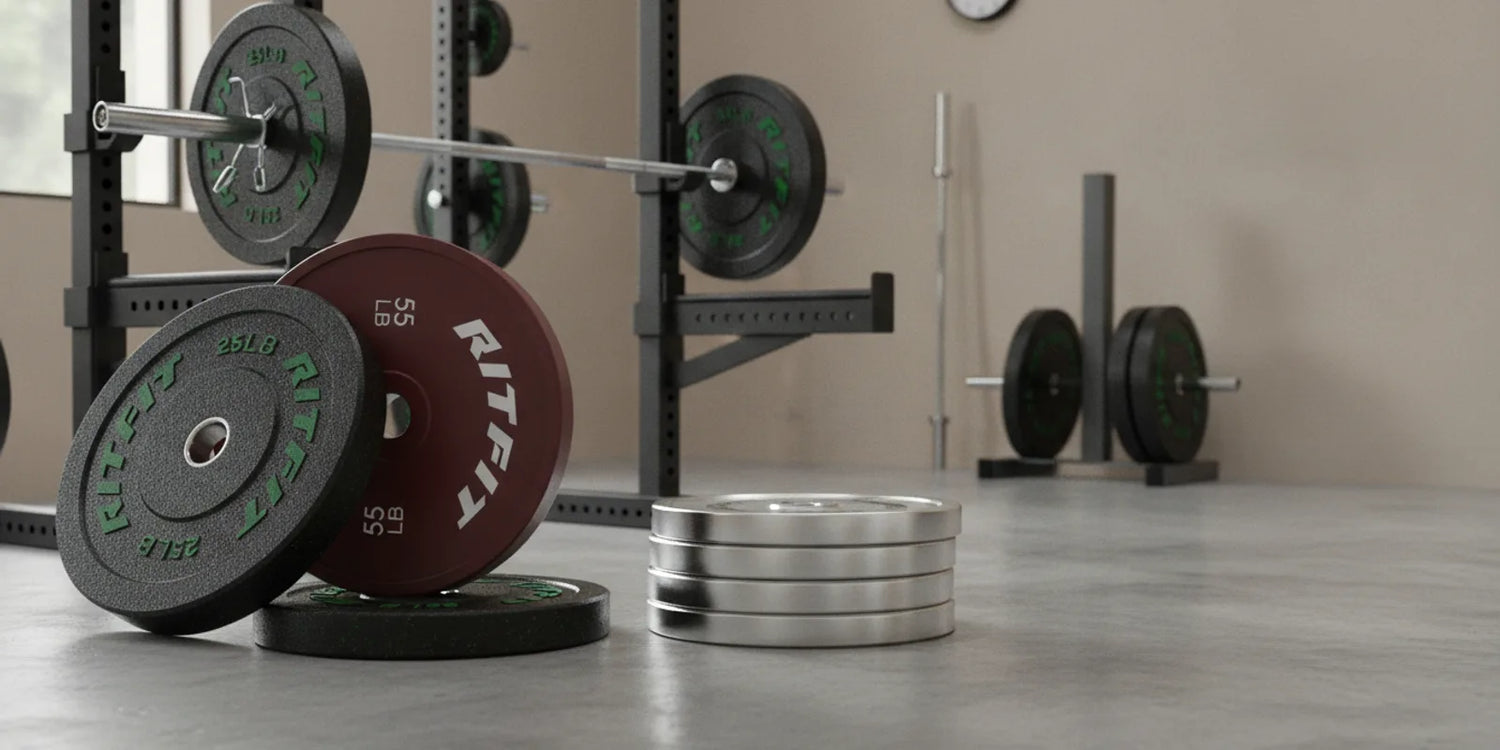
- Bumper plates: Rubber over a steel core, uniform 450 mm diameter, safe to drop during cleans and snatches, and quieter on garage floors. A dedicated bumper plates lineup covers every common increment.
- Cast iron plates: Slimmer profile, lower cost per pound, and more total weight fits on the sleeve, but they are louder and should not be dropped. Lifters who prioritize loading often start with iron plates.
- Grip plates: Built-in handles make plates easy to carry, load, and use off the bar for functional and core work. Adjustable resistance meaningfully shifts core muscle demand, and one study found that changing resistance on a core training platform increased rectus abdominis and internal oblique activity during basic exercises[1].
For most home gym owners, the decision comes down to training style, noise tolerance, and whether you plan to drop the bar.
How Many 45 lb Plates Do You Actually Need?
One pair of 45 lb plates on a standard 45 lb Olympic bar gets you to 135 lb, two pairs reach 225 lb, and three pairs reach 315 lb. One home gym guide suggests most beginners start with roughly 200 to 250 lb of total plate weight, then add pairs as their lifts grow.
- The starter math: A pair each of 45s, 25s, 10s, 5s, and 2.5s covers every load from an empty bar to 185 lb in 5 lb steps.
- Why progression demands more plates: A study found that muscle activity in the chest, shoulders, and triceps rises significantly as bench press load climbs from 70% to 100% of 1RM[2], so your set needs room to keep adding weight.
- Where 100 lb plates fit: A 2020 systematic review found the leg press strongly activates the quadriceps, especially the vastus lateralis and vastus medialis[3], and heavy leg training on plate-loaded machines is exactly where a single 100 lb plate replaces a stack of 45s.
Buy for where your lifts are now, and add the next pair of 45s when you consistently hit the top of your current loading.
What Should You Check Before Buying Plates?
Before buying any plates for sale, confirm the center hole matches your barbell, then compare diameter, weight tolerance, rubber hardness, and warranty. One home gym guide notes that standard 1-inch plates max out around 45 lb per plate and will not fit Olympic barbells, while Olympic plates use a 2-inch center hole.
- Hole size: A 2-inch hole fits every standard Olympic barbell sleeve, so it is the default for serious training.
- Diameter and thickness: Bumpers share a 450 mm diameter across weights, while iron plates get wider as they get heavier and pack more pounds per inch of sleeve.
- Tolerance and durometer: Tighter weight tolerance means truer loading, and a higher durometer rating means firmer rubber with less bounce.
- Warranty and finish: Quality rubber, stainless inserts, and machined iron finishes all extend plate life in a garage environment.
Curious how quality bumpers hold up under real abuse? This durability test from the RitFit team drops and slams a set so you can see what solid construction survives.
Which RitFit Plates Match Your Training?
The right RitFit plate depends on how you train: bumpers for Olympic lifting and drops, slim iron for maximum loading, and grip plates for functional work and easy handling. Use this matrix to match your training style to the right line.
| Your training | Recommended plates | Why it fits |
|---|---|---|
| Olympic lifts and drop-heavy training | RitFit Black Bumper Plates | Rubber bumpers with a uniform 450 mm diameter that handle repeated drops |
| Circuits and fast weight changes | RitFit Color Bumper Plates | Color coding makes every load easy to identify at a glance |
| Functional training and easy carrying | RitFit AuraSpin Grip Plates | Built-in handles let each plate double as a handheld training tool |
| Powerlifting and maximum sleeve loading | RitFit Silver Steel Strip Olympic Plates | Slim cast iron profile lets you stack more total weight on the bar |
| Garage and outdoor setups | RitFit Fleck Bumper Plates | Fleck rubber construction built for durable everyday use |
All lines above use a 2-inch Olympic center hole and fit standard Olympic barbell sleeves.

Are 45 lb and 100 lb Plates Worth the Price?
Weight plates are worth the price when you buy by the pound and build in stages instead of overbuying on day one. One expert-tested guide reports average bumper plate pricing around $2.49 per pound, with strong value options near $1.79 to $2.19 per pound.
- Sets beat singles: Bundles almost always price better per pound than buying one plate at a time.
- The expansion path: Start with roughly 200 to 250 lb of plates, add a second pair of 45s when you approach 225 lb, and only add 100 lb plates when machines or heavy leg work demand them.
- Where deals hide: Seasonal events like Black Friday and the current deals section often drop per pound pricing well below average.
Plates hold value for decades, so money spent on quality rubber or machined iron is rarely wasted.
How Do You Load and Store Heavy Plates Safely?
Safe plate handling comes down to balanced loading, secure sleeves, and smart storage. These habits matter even more once 45 lb and 100 lb plates enter the rotation.
- Load evenly: Match plates on both sleeves and seat the largest diameters closest to the collar.
- Use collars when plates can slide: Any lift where the bar tilts, like Olympic lifts, calls for collars.
- Carry heavy plates with care: Hug a 100 lb plate close to your torso, keep a neutral spine, and set it down with your legs.
- Store off the floor: Plate trees and storage pegs prevent tripping hazards and protect rubber from moisture.
- Protect your floors: Lifting mats under iron plates and deadlift work save concrete and reduce noise.
A complete bars and plates setup with the right storage keeps a small garage gym safe and organized.
"You get a plate-and-a-quarter weight that you absolutely own... As you get stronger, you claim the next increment. Then the next. Then the next. It's sort of like a psychological placeholder that makes the weight seem like it's never getting any heavier."
Greg Nuckols, MA, Strength Researcher and Coach, Stronger By Science
FAQs About 45 lb and 100 lb Plates
Are 100 lb plates worth it for a home gym?
For most barbell training, 45 lb plates cover everything up to very heavy lifts. A 100 lb plate mainly makes sense for plate-loaded machines, leg press work, or advanced lifters who regularly move past four plates per side. Beginners should build pairs of 45s, 25s, and 10s first.
How many 45 lb plates do I need?
One pair of 45 lb plates gets a standard bar to 135 lb. Two pairs reach 225 lb, a common intermediate milestone, and three pairs reach 315 lb for advanced lifting. One home gym guide suggests about 200 to 250 lb of total plate weight for most beginners.
What is the difference between 45 lb bumper plates and iron plates?
Bumper plates are rubber-coated, all share a 450 mm diameter, and can be dropped safely, which suits Olympic lifts and garages. Iron plates are thinner, cheaper per pound, and let you load more weight on the sleeve, but they are louder and should not be dropped.
Will 45 lb plates fit my barbell?
Olympic plates have a 2-inch center hole and fit any standard Olympic barbell sleeve. Standard plates use a roughly 1-inch hole, max out around 45 lb, and will not fit Olympic bars. Check your bar sleeve diameter before ordering any plates for sale online.
How much should I pay per pound for weight plates?
One expert-tested guide puts average bumper plate pricing near $2.49 per pound, with strong value options around $1.79 to $2.19 per pound. Cast iron plates usually cost less per pound than rubber bumpers. Sets and bundles almost always beat single-plate pricing, so compare the per pound math before you check out.
Can I mix bumper plates and iron plates on the same bar?
Yes, you can mix them because both share the 2-inch Olympic hole. Load the largest diameter plates closest to the collar so they touch the ground first, keep total weight balanced on both sleeves, and use collars when lifting anything heavy overhead.
Conclusion
Shopping for 45 lb plates for sale comes down to three decisions: pick bumper or iron based on how you train, buy enough pairs to cover your current lifts with room to grow, and add 100 lb plates only when machines or heavy leg work demand them. Build the set in stages and let progression, not impulse, set the pace.
Ready to build your set? Check the latest plate deals on the RitFit sales page and start with the pairs that match your training today.
Disclaimer
This article is for general informational purposes only and does not replace professional fitness, safety, or equipment advice. Consult a qualified trainer or professional before starting a new training program or lifting heavy loads.
Save on your next RitFit order
Tap the button to copy your code, then paste it at checkout.
References
1. Kim HJ, Sung JH, Ryu JK, Jung HC, Wang J. Effect of Reformer Spring Resistance Modifications on Core Muscle Activity During Basic Core Muscle Exercises. Healthcare (Basel). 2024;12(23). PMCID: PMC11641042
2. Krol H, Golas A. Effect of Barbell Weight on the Structure of the Flat Bench Press. J Strength Cond Res. 2017;31(5):1321-1337. PMCID: PMC5400411
3. Martínez-Fuentes I, Oliva-Lozano JM, Muyor JM. Evaluation of the lower limb muscles' electromyographic activity during the leg press exercise and its variants: a systematic review. Int J Environ Res Public Health. 2020;17(13):4626. PMCID: PMC7369968





