Have you ever exercised using a plyometric box? Do you know how you can practice several moves using a plyo box? If you want a simple tool that builds explosive power, leg strength, and conditioning in short sessions, a plyo box is a smart place to start. If you are new to plyo box exercises and are searching for unique ways to use a plyo box, continue reading this guide until the end.
Here we will let you know what a plyometric box is and what exercises you can perform using this box. So, without further delay, let's start the discussion by discovering what a plyo box is?
Key Takeaways
- Plyo box training builds fast power, better balance, and strong legs with minimal equipment.
- Start low, land softly, and progress slowly to protect knees, ankles, and hips.
- Use simple beginner moves first, then add jump variations when control is solid.
- Short sessions one to two times weekly improve conditioning without overuse.
- Good form beats height. Quiet landings and stable knees matter most.
What is A Plyo Box?
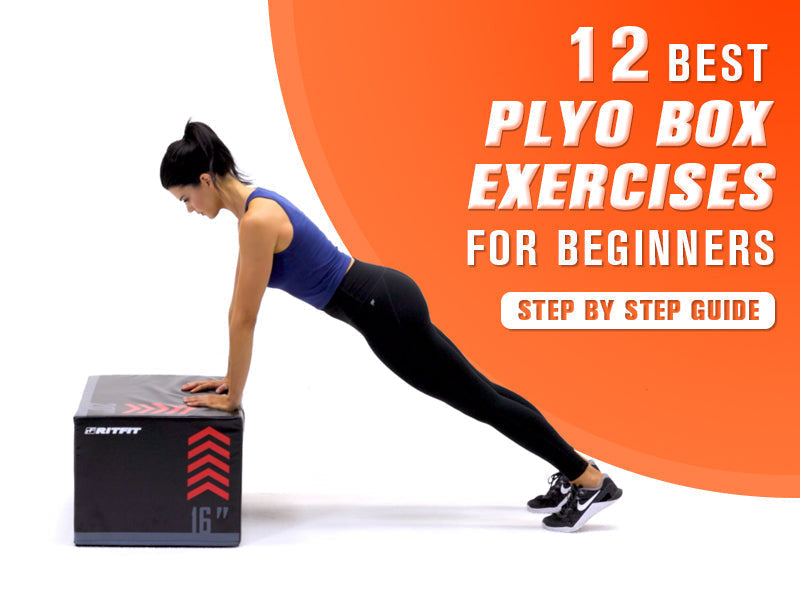
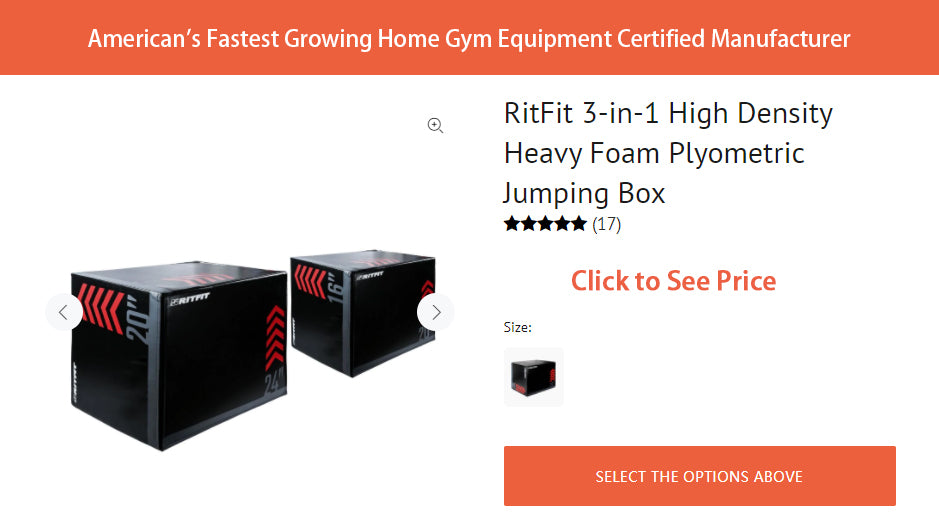
A plyo jumping box is a simple rectangle box made of durable and high-strength materials. It is used to perform various raised exercises, ranging from jumping to incline push-ups. Usually, a plyo box is made of high-strength wood or a steel frame. It is covered by foam. The box is available in various sizes, shapes, and types.
Beginner setup tips
Choose a box height you can step onto without wobbling, usually 6 to 12 inches for most beginners. Keep your full foot on the surface, brace your core, and keep your knees tracking in the same direction as your toes. For jumping moves, aim for quiet landings, soft knees, and a stable torso. Train one to two times per week and keep sessions short at first.
What are Plyometric Exercises?
Plyometric exercises focus on building explosive power, i.e., moving a muscle from extension to contraction in a repetitive manner. One of the most common examples of this exercise is, performing a jump from the ground up to a step.
Plyometric exercises include repetitive jumping, stepping, scrambling, and other similar movements, usually performed over a plyo box. This plyo box serves to be the platform for performing plyometric exercises.

Benefits of Plyo Box Jump Exercises
As a typical plyometric exercise, plyo box jumps offer numerous benefits. Let’s discuss a few of them.
The Best 12 Plyo Box Exercises for Beginners
Having understood the benefits of plyo box exercises, you might be interested in knowing some of the best plyo box exercises for beginners. Search no more. Here we have listed a few best plyo box exercises that beginners can easily perform.
Beginner training template
Warm up 5 to 8 minutes with easy squats, hip hinges, calf raises, and light step ups. Pick 3 to 5 moves below. Do 2 to 4 sets each. Use 6 to 10 controlled reps for strength moves and 3 to 6 reps for jump moves. Rest 60 to 90 seconds. Stop a set if landings get loud or form breaks.

Plyo Box Exercises 1. Plyo Box Step-Ups
Repetitive plyo box step-up and step-down exercise targets your thighs, glutes, hips, and core. This plyo box exercise is best for those who want to tone and lift their underbutt and improve cracky hips.

How to Perform Step-ups?
- Place your foot on the box with the knee slightly out and over the ankle
- Drive-up using your heel while tucking your ribs and squeezing the butt
- Stand tall and finally return to the floor while leaning your chest forward. This will help in counterbalancing the weight
- While returning, drag your back foot against the box to achieve stability
- Complete ten repetitions for each leg and perform at least 20 repetitions
Note:
Do not place the box too high, especially if you are a beginner. Otherwise, it will get difficult for you to control the movements.
Plyo Box Exercises 2. Box Jumps
The second plyo box exercise you can perform is the box jump. This plyo box exercise targets your quads, glutes, calves, hips, and hamstrings. A box jump is an excellent exercise for improving the functioning of your heart.

How to Perform Box Jump?
- As a beginner, you can choose a box 8-10 inches high and gradually increase the height.
- With your feet hip or shoulder-width apart, stand at about 25-30 cm in front of the box.
- Place your arms at the side and slightly bend your knees
- Squat down and use your arms to drive your body upward so that both feet land on the box
- Jump backward and get down to the floor
- Perform multiple repetitions
Plyo Box Exercises 3. Bulgarian Split Squats
The next plyo box exercise you should be performing is the Bulgarian split squats. This is the best single-leg exercise and helps grow glutes, quads, and hamstrings. This plyo box exercise is slightly challenging, so don't lose motivation if you do not succeed at your first attempts if you are a beginner.

How to Perform Bulgarian Split Squats?
- Move away from the box and place your left toes on the top of the box behind you.
- While keeping your feet shoulder-width apart, lower your body until you reach a 90-degree angle with both the knees.
- With your body weight evenly distributed, you should be putting most of the force on your right heel as you reach back to the standing position.
- Complete multiple repetitions on one leg and then switch to the other leg.
- Perform the same procedure while placing your right toes on the box.
Plyo Box Exercises 4. Box Glute Bridge
The box glute bridge is somewhat similar to a regular glute bridge; however, the difference is your feet are on the box instead of the floor. Hence, by performing this plyo box exercise, you target your hamstrings and the glutes.

How to Perform Plyometric Glute Bridge?
- Lie down while placing your feet on the box
- Place your hands on the floor
- While engaging your glutes, press up so that your hips are in the air
- Stay in this position for a few seconds and gradually lower down
- To make this exercise more challenging, you can place a dumbbell on your hips
- Complete multiple repetitions
Plyo Box Exercises 5. Box Hip Thrust
Box hip thrust helps improve hip extension as it engages the hamstrings and gluteal muscles. This plyo box exercise generates more power and is considered a safe option for individuals searching for a safer squat alternative. Let's see how you can perform box hip thrust.

How to Perform Box Hip Thrust?
- Sit on the floor with your knees bent and feet slightly wider than hip distance apart.
- Rest your upper back at the edge of the box. The box should be supporting your mid-scapula area.
- Squeeze the glutes and reach a position where your hips are in line with your shoulder and knees.
- Gradually lower your glutes until the hips are just a few inches above the floor.
- Squeeze the glutes and perform the same exercise again
- Complete multiple sets of repetition
Plyo Box Exercises 6. Box Pistol Squat
Pistol squat or single leg squat is a challenging plyo box exercise requiring flexibility, body control, and strength. Let's see how you can perform this plyo box exercise.

How to Perform Box Pistol Squat?
- Stand on the box with one foot at the edge of the box and the other in the air.
- While extending your arms forward, gradually squat down by keeping one leg on the box and the other slightly above the floor.
- Get back to your original position and perform multiple sets of repetition
Note:
It is recommended to use a higher plyo box for this exercise (nearly 20-30 inches). You can choose the height depending on your ability to perform a pistol squat.
Plyo Box Exercises 7. Single Leg Step Up Jump
Single leg step-up box jump targets your lower body muscles, including glutes, hamstrings, quadriceps, and calves. This plyo box exercise helps in building strength in the entire body. Furthermore, the explosiveness of this plyo box exercise increases your heart rate and helps in burning calories, and activates your muscles to their full power in a short time. If performed correctly, single-leg box jumps can improve your jumping ability and improve cardiovascular health.

How to Perform Single-Leg Step-up Box Jumps?
- Stand roughly 1 ft away from the box with your feet shoulder-width apart. Maintain a slight bend in your knees. Make sure your shoulders are directly over your hips, and your head and neck are in a neutral position.
- Lift your right leg off the floor and place it on the box. Your left leg should be behind you.
- Your arms should remain at your sides with a slight bend in the elbows.
- Start your upward movement by pushing your right foot onto the box and jumping vertically.
- Swing your arms as forward while approaching the box. Bend your hip and knee and land on the box safely.
- Land softly with your right foot on the box and your left foot on the floor. Allow your knee and hip to bend to absorb the force.
- The landing position should be the same as your jumping position.
- Step down the box with one leg at a time and reach the starting position
- Perform multiple sets of repetition
Plyo Box Exercises 8. Bulgarian Split Squat Jump
Bulgarian split squat is a relatively difficult yet effective box workout. In this plyo box exercise, you elevate your rear leg to perform the single-legged squat with an extra range of motion. You can perform this plyo box exercise either free of load, with light weights, or with a heavy barbell or set of dumbbells, depending on your experience level.
This plyo box exercise is best for growing your glutes, quads, and hamstrings. Also, the depth needed to perform this exercise appropriately increases the flexibility of your hips.

How to Perform Bulgarian Split Squat Jump?
- Place one leg in line with the hip and bend the other leg back with the top of the foot supported on the plyo box.
- Dip towards the ground while allowing your rear knee to drop towards the floor.
- Your front knee should stay in its place
- Descent to a 90-degree angle
- Raise back up while pushing through the front leg. Jump vertically when once your leg gets straight
- Swaps legs and repeat the exercise multiple times
Plyo Box Exercises 9. Lateral Step Up
Lateral step-up exercise is somewhat similar to front step-ups. This plyo box exercise differs from front step-ups in the way that lateral step-ups are more effective at targeting glutes. You can perform this plyo box exercise either or without adding weight plates or dumbbells. Lateral step up is incredibly beneficial for knee stability and hip health.

How to Perform Lateral Step up?
- Stand perpendicular to the plyo box with the foot of the working leg onto the box.
- Drive yourself upwards to a fully extended posture
- Maintain a standing position without resting your other foot on the ground
- Lower yourself gradually onto the ground on the other side of the plyo box
- Make sure you drop your full weight onto the free leg
- Repeat this exercise 3 times
Plyo Box Exercises 10. Single-Leg Bridge
A single leg or hamstring bridge is a great plyo box exercise to strengthen your hamstrings without any complex gym equipment. You can comfortably perform this plyo box exercise which will increase the load and make it challenging compared to doing it on a floor.
The plyo box exercise is completely safe to perform and, if performed in a controlled way, can lead to even more functional plyo box exercises down the track. Furthermore, single leg bridge exercise involves the trunk and core muscles and enhances stability throughout the body.

How to Perform Single-Leg Bridge?
- Lay down on the floor in front of a plyo box
- Place one heel on the box and keep the other leg in the air
- Push your heel into the box while lifting your buttocks off the floor
- Reach as high as possible
- Squeeze your buttock at the highest point and hold the contraction while staying as still as possible
- Hold the contraction as long as possible.
- Perform multiple sets of repetition with alternating feet
Plyo Box Exercises 11. Single-Leg Hip Thrust
This plyo box exercise is perfect for those who want to strengthen their glutes, develop strength, and improve lower-body performance. Single leg hip thrust is a unilateral exercise in which you are working on one leg at a time.
This plyo box exercise has a lower risk of injury and requires minimal equipment to get started. It is regarded as an excellent activity for all fitness enthusiasts. However, several variations can be used for resistance, making the exercise more challenging, especially for advanced trainees.

How to Perform Single Leg Hip Thrust?
- Lay down on the floor by placing your upper back on the box.
- Bend one of your knees at 90 degrees and place the foot of the same leg on the floor. This will be your working leg.
- Lift your non-working leg while bending your knee. Make sure your hip and knee form a 90-degree angle.
- Bend your elbows and place them on the box. You can use your elbows to create the force and drive the upward movement.
- Contract the glute of your working leg while lifting your hips. Make sure they are in line with your torso.
- Maintain this position while continuing to squeeze your glute.
- Finally, return to the original position.
- Repeat the exercise for other glutes until an agreed number of repetitions are performed.
Plyo Box Exercises 12. Triceps Push Up
Triceps box push-up or incline push-up is a great plyo box exercise to target your chest muscles. This plyo box exercise puts much less stress on your elbows and reduces the bodyweight you are lifting.
This plyo box exercise targets your chest muscles, the pectoralis major and minor. Furthermore, this activity engages your shoulders, arms, and a long list of muscles throughout the hips, back, abs, and legs.

How to Perform Triceps Push-ups?
- Stand a few feet away from the box.
- Place your hands on the edge of the plyo box slightly wider than your shoulder width.
- Your arms should be straight, but elbows should not be locked
- Align your feet in such a way that your arms and body are completely straight
- While inhaling, bend your elbows to lower your chest to the edge of the box.
- Make sure your body is straight and rigid throughout the movement
- Push your body away from the box until your elbows are extended; however, not locked. Exhale while pushing
- Continue doing this exercise with slow and steady repetitions
FAQs
What size plyo box a beginner should use is important?
You should choose a box height of 6 to 12 inches. This low level helps you step up without wobbling. You can keep your full foot on the surface and maintain good balance. Starting small protects your joints and builds confidence for future jumping movements.
How often you should perform plyometric box exercises each week is important.
Beginners should train one to two times per week. This schedule provides enough time for your muscles and tendons to recover. Short and infrequent sessions prevent overuse injuries while still improving your cardiovascular health. You can increase the frequency later as your conditioning improves.
Why are quiet landings important during plyo box jumps?
Soft and quiet landings protect your knees and ankles from heavy impact. Landing quietly ensures you use your muscles to absorb the force instead of your joints. You should always bend your knees and hips slightly as your feet touch the box to stay safe.
What exercises can you do if you cannot jump yet?
You can start with simple step-ups and lateral step-ups. These controlled movements build leg strength and improve your balance without the stress of jumping. Practicing single-leg glute bridges on the box is another safe way to build power before attempting explosive jumps.
How does plyometric box training help you burn more calories?
Box exercises demand fast and explosive effort that requires significant energy. This high intensity raises your heart rate quickly and burns calories efficiently in a very short time. You achieve better cardiovascular health while toning your leg muscles through these repeated bursts of powerful movement.
Final Words
By starting slowly and maintaining consistency, you can easily incorporate plyo box exercises into your daily workout routine. These exercises are a great addition to your daily routine as they improve your cardiovascular health and offer countless other benefits. You will observe an increase in your strength, power, and endurance within a few weeks after plyo box exercises. That’s how these plyo box exercises make it easier for you to achieve your fitness goals.