








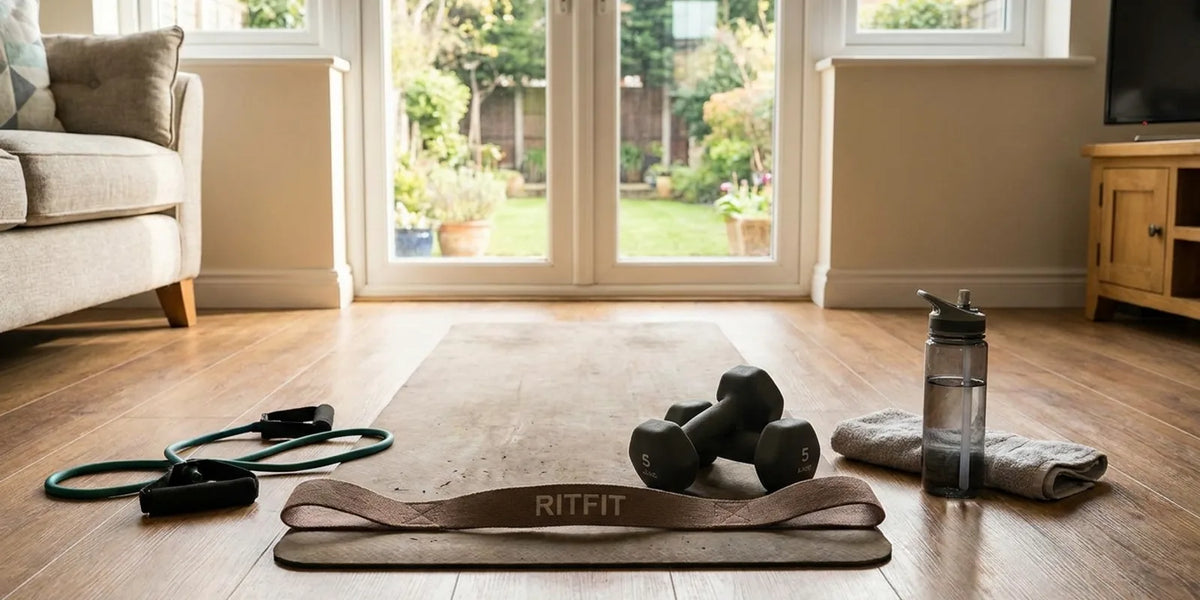
A 15 minute workout for beginners at home is one of the most realistic ways to start training, even on the busiest day. This guide covers the best 15-minute beginner routines, the equipment levels that make sense for your space, and the exact form and progression steps to follow.
Whether you have no equipment or a full home gym, you will find a plan you can start today. Every move below includes a beginner version and a clear safety note, so you can train with confidence from day one.
Quick Answer: The best 15 minute workout for beginners at home is a full-body bodyweight circuit of six to eight moves at 30 seconds each, repeated two to three times. Squats, push-ups, lunges, and glute bridges cover your whole body with zero equipment, so you can start today in any room.
Key Takeaways
- Duration: A focused 15-minute session builds the workout habit and raises your effort without needing a full hour.
- Circuit: Six to eight bodyweight moves at 30 seconds each, repeated two to three times, cover your whole body.
- Equipment: Bodyweight is enough to start, and light dumbbells or an adjustable home gym add resistance later.
- Warmup: Spend 3 to 5 minutes warming up to protect your joints and improve range of motion.
- Progress: Add reps, add a session, or add light resistance once the current level feels easy.
Can You Really Get a Good Workout in 15 Minutes?
Yes, a 15 minute workout for beginners at home can improve strength and conditioning when it is done consistently with honest effort. A study of untrained adults found similar gains in strength and muscle thickness between split and full-body routines after eight weeks when weekly set volume was equal [1].
For a new exerciser, the biggest wins come from training regularly with clean form.
Short sessions fit a busy schedule and lower the barrier to showing up.
A full-body circuit also lets you hit every major muscle group in one compact block, which is ideal when your time is short.
- Consistency beats length: A shorter workout you actually complete beats a longer one you skip.
- Full-body efficiency: One circuit covers legs, chest, back, and core, so nothing gets left out.
- Fast fatigue reset: Fifteen focused minutes raise your heart rate and challenge muscles without draining your whole day.
If you enjoy a higher-intensity format, pair this with our best HIIT workouts for beginners for another 15-minute option.
What Is the Best 15-Minute Bodyweight Workout for Beginners?
The best 15 minute workout for beginners at home is an eight-move bodyweight circuit done at 30 seconds per move for three rounds. A trainer-designed beginner circuit uses moves such as squats, push-ups, lunges, and glute bridges with a 3 to 5 minute warmup and cooldown.
Perform each move for 30 seconds, rest about 15 seconds, then move to the next one. After you finish all eight moves, rest for one minute and repeat for a total of three rounds.
- Squat: Stand with feet shoulder-width apart, send your hips back, and lower until your thighs are near parallel.
- Push-up: Keep a straight line from head to heels. Drop to your knees for an easier version.
- Forearm side plank: Stack your feet and hold your hips high to build core stability.
- Lunge: Step forward, lower your back knee toward the floor, and press back up through the front heel.
- Glute bridge: Lie on your back, press your heels into the floor, and lift your hips until your body forms a line.
- High knees: March or jog in place, driving your knees toward your hips at a steady pace.
- Shoulder taps: In a high plank, tap each shoulder with the opposite hand while keeping your hips still.
- Dead bug: Lie on your back and lower opposite arms and legs while pressing your lower back into the floor.
This structure mirrors the full-body circuit training for beginners format. Women who want a weekly structure can follow the beginner workout plan for females as their training base.
How to Choose Your Equipment Level for a 15-Minute Workout?
You can start with bodyweight only, then add light dumbbells, and finally an adjustable home gym as you get stronger. The right level depends on your space, budget, and how quickly you want to add resistance.
All three levels work for a 15 minute workout for beginners at home. Start where you are today and upgrade when the current level stops challenging you.
Bodyweight Only
Bodyweight is the easiest starting point because it needs zero equipment and works in a small living room.
Light Dumbbells
Dumbbells add resistance to moves like goblet squats and rows without taking up much space. Browse the adjustable dumbbells range if you want one pair that grows with you.
Adjustable Home Gym Machines
An all-in-one station such as the M1 Multi-Functional Home Gym supports presses, rows, squats, and cable work in one footprint, ideal for a garage or spare room. The Home Gym Guide helps you plan the layout, and the best home gym equipment for beginners guide compares the options.
"If your space is limited, a good set of adjustable dumbbells might be your better option. They will allow you to progress to heavier weight as you get stronger."
Jeff Cavaliere, MSPT, CSCS, Physical Therapist and Strength Coach, Creator of ATHLEAN-X, Athlean-X
How Should Beginners Warm Up and Cool Down?
Warm up for 3 to 5 minutes before a 15 minute workout for beginners at home so your muscles and joints are ready to move. March in place, swing your arms, and do a few easy squats to raise your heart rate and open your range of motion.
- March in place: Start easy and speed up gradually for about a minute.
- Arm circles: Move your arms in small circles, then larger ones, to open the shoulders.
- Leg swings: Hold a wall and swing one leg forward and back to loosen the hips.
- Easy squats: Do 5 to 8 shallow squats to rehearse the main movement pattern.
After the workout, cool down with 3 to 5 minutes of gentle stretching. Hold each stretch for 20 to 30 seconds without bouncing, and focus on the muscles you just trained.
Exercise Modifications: Easier and Harder Versions
Every move can be made easier or harder so the workout grows with you. For an easier version, drop push-ups to your knees, step back for lunges instead of jumping, and hold planks on your forearms.
For a harder version, add a jump to squats and lunges, slow down the lowering phase of each rep, or add a light dumbbell to carries and rows. The best core workouts for beginners guide shows how to scale plank and core variations too.
How to Progress Your 15-Minute Workout Over Time?
Progress a 15 minute workout for beginners at home by adding a few repetitions each week, then adding a session, and finally adding light resistance. A published case report shows a simple full-body routine can be progressed by adding a few repetitions each week [2].
Progression does not have to be complicated. Change one variable at a time, and only move on when the current level feels controlled and comfortable.
How Often Should Beginners Train
Three sessions per week with at least one rest day between them is a solid starting point. A study of untrained trainees found that splitting the same weekly volume across three sessions built more strength than one session with less fatigue [3].
Take a rest day after each session so your body can recover. Walking or light stretching on off days is fine and helps you stay active.
When to Increase Reps, Sets, or Resistance
Add one or two reps to each move when you finish the full circuit without struggling through the last round. Increase the weight once you can complete every rep with clean form.
When you want a longer session, try the 30-minute chest and tricep workout or the beginner kettlebell workout guide. A piece like the RitFit BE01 Adjustable Back Extension Machine can add lower-body work as you progress.
What Are the Most Common Mistakes Beginners Make in Short Workouts?
The most common mistakes in a 15 minute workout for beginners at home come from rushing form, skipping the warmup, and resting too long. Fix these first and your short sessions will work much better.
- Skipping the warmup: Jumping straight into intense moves raises injury risk and lowers performance.
- Sacrificing form for speed: A fast squat with poor depth trains less muscle and stresses the knees.
- Resting too long: Long rests shrink the workout into a few loose sets, so keep rests to 15 to 30 seconds.
- Repeating the same routine forever: Your body adapts, so add reps, resistance, or new moves every few weeks.
- Ignoring pain: Sharp or joint pain is a signal to stop and adjust, not a challenge to push through.
Short workouts reward attention to detail. When you keep effort high and form clean, 15 minutes genuinely feels like a complete session.
When Should Beginners Stop or Take a Break?
Stop a 15 minute workout for beginners at home if you feel sharp joint pain, dizziness, chest discomfort, or shortness of breath that does not settle. Muscle burn is normal, but sharp pain is not.
Take a break and reassess your form before you continue. If the pain returns, end the session early and rest that movement for a few days.
Feeling sore after a new workout is expected and usually passes within a day or two. You do not need to train through injury, and listening to your body protects your long-term progress.
FAQs About 15-Minute Workouts for Beginners
Can you really get a good workout in 15 minutes?
Yes.
A focused 15-minute session with short rests is enough for a beginner to raise their heart rate, challenge their muscles, and build a habit.
Short sessions are easier to repeat consistently, and that consistency drives most of the early progress you will see.
Keep your form clean.
What is the best 15-minute workout for beginners at home?
A full-body bodyweight circuit is the best place for most beginners to start.
Pick six to eight moves that cover your legs, chest, back, and core, such as squats, push-ups, lunges, and glute bridges.
Do each move for about 30 seconds with short rests, and repeat the circuit two to three times.
Do I need equipment for a 15-minute workout?
No.
You can complete an effective 15-minute beginner workout using only your body weight.
Squats, lunges, push-ups, planks, and glute bridges need no equipment and work in a living room or bedroom.
A mat adds comfort for floor moves.
Later, dumbbells or an adjustable home gym let you add resistance as you get stronger.
How often should a beginner do a 15-minute workout?
Start with three days per week and take at least one rest day between sessions so your body can recover.
Spreading consistent short workouts across the week builds strength and habit more reliably than occasional long sessions.
Once three days feel comfortable, you can add a fourth day, lengthen a session, or increase the resistance.
Should I warm up before a 15-minute workout?
Yes, always.
Spend three to five minutes warming up so your muscles and joints are ready to move.
Simple marching in place, arm circles, leg swings, and a few easy squats raise your heart rate and improve your range of motion.
A short warmup also lowers your risk of strain.
How many times a week should a woman do a 15-minute workout?
Three sessions per week is a sensible starting point for most beginners, with a rest day in between. This gives your muscles time to recover while still building a steady routine. If three days feel too easy after a few weeks, add a fourth session or make existing sessions harder with more reps.
Conclusion
Fifteen minutes is enough for a beginner to build strength, confidence, and a lasting routine when you train consistently with good form. Start with a bodyweight circuit three days per week, warm up properly, and add reps or light resistance as you improve.
Pick the equipment level that fits your space today. When you are ready to upgrade, explore the RitFit sale page to build your home gym without overspending.
Disclaimer
Always consult a qualified health professional before starting a new exercise program, especially if you have an existing condition or injury. Stop any movement that causes sharp pain and adjust the routine to your current fitness level.
References
1. Evangelista AL, Braz TV, La Scala Teixeira CV, et al. Split or full-body workout routine: which is best to increase muscle strength and hypertrophy?. Einstein (Sao Paulo). 2021;19:eAO5781. doi:10.31744/einstein_journal/2021AO5781. PMCID: PMC8372753
2. Ravara B, Giuriati W, Maccarone MC, Kern H, Masiero S, Carraro U. Optimized progression of Full-Body In-Bed Gym workout: an educational case report. Eur J Transl Myol. 2023;33(2). doi:10.4081/ejtm.2023.11525. PMCID: PMC10388607
3. Ochi E, Maruo M, Tsuchiya Y, Ishii N, Miura K, Kasaki S. Higher Training Frequency Is Important for Gaining Muscular Strength Under Volume-Matched Training. Front Physiol. 2018;9:744. doi:10.3389/fphys.2018.00744. PMCID: PMC6036131





