









If you want stronger, rounder glutes, you do not need heavy gym machines or a full rack of dumbbells. A weighted body bar trains your hips, legs, and core in a joint-friendly way, especially at home.
This guide covers six lower-body body bar exercises that target your glutes while also challenging your quads, hamstrings, and core. You will find safety tips, a quick warm-up, and beginner-to-intermediate workout templates so you can build your backside with confidence.
Quick Answer: Six weighted body bar exercises, including squats, lunges, deadlifts, Romanian deadlifts, snatches, and good mornings, can build stronger glutes at home in a joint-friendly way. Start light, warm up for 3-5 minutes, and train 2-3 times per week with 10-12 controlled reps per exercise.
Key Takeaways
- Six exercises: Squats, lunges, deadlifts, Romanian deadlifts, snatches, and good mornings cover the full glute and posterior chain in one routine.
- Joint friendly: A weighted body bar keeps the load close to your center of mass, which protects your knees and lower back.
- Warm up first: A 3-5 minute warm-up with leg swings and bodyweight squats prepares your hips and spine before you load the bar.
- Start light: Choose a bar you can control for 10-12 clean reps, then progress by about 5 percent once your form stays solid.
- Train consistently: 2-3 sessions per week with at least one rest day between workouts gives your glutes time to recover and grow.
How Should You Warm Up for Body Bar Glute Exercises?
A 3-5 minute warm-up of light marching, bodyweight squats, and leg swings prepares your hips, knees, and spine before you load the bar.
Before loading your hips and spine, take 3-5 minutes for a simple warm-up:
- 1 minute of light marching or brisk walking in place
- 10-15 bodyweight squats or sit-to-stands from a chair
- 10 leg swings per leg, front-to-back and side-to-side
- 10 hip hinges with hands on hips, pushing your hips back
Run a quick safety check before you train:
- If you have a history of hip, knee, or lower-back pain, talk to a healthcare or fitness professional before starting any new program.
- Stop immediately if you feel sharp pain, numbness, tingling, chest pain, or dizziness. Muscle burn and mild fatigue are normal; joint pain is not.
- Start lighter than you think you need. You can always add load once you know you can control each movement.
How Do You Structure a Glute-Focused Body Bar Workout?
A glute-focused body bar workout uses 10-12 controlled reps per exercise, 20-40 seconds of rest, and 1-3 total circuits depending on your experience level.
Use these general guidelines to structure your session:
- Do 10-12 controlled reps of each exercise. If form breaks down before that, stop and reduce the weight next time.
- Rest 20-40 seconds between exercises. If you are brand new, take up to 60 seconds.
- Begin with 1-2 circuits if you are a beginner and 2-3 circuits if you are more experienced.
- Train this glute-focused circuit 2-3 times per week, leaving at least one rest day between sessions.
Beginner Plan (Total Time: 15-20 minutes)
- Circuit: Squat, lunge, deadlift, Romanian deadlift, snatch, good morning
- Sets: 1-2 rounds
- Reps: 10-12 per exercise
- Rest: 30-60 seconds between exercises, 1-2 minutes between rounds
- Weekly frequency: 2 sessions per week
Intermediate Plan (Total Time: 20-30 minutes)
- Circuit: Same six exercises
- Sets: 2-3 rounds
- Reps: 10-15 per exercise
- Rest: 20-40 seconds between exercises, 60-90 seconds between rounds
- Weekly frequency: 2-3 sessions per week
Choose a bar weight that lets you finish the last 2 reps of each set with effort but without losing form. That is your sweet spot for safe progress.
For more movement options, see the 12 best weighted bar exercises for beginners.
"It's never unwise to hammer the posterior-chain which is often a weak link among lifters and athletes. Reverse hypers are therapeutic for the low back. These lifts will improve squat and deadlift strength as well as sprinting speed."
Bret Contreras, PhD, PhD in Sports Science, known as The Glute Guy, Contreras Strength Institute
How Do You Do a Weighted Body Bar Squat?
The body bar squat trains your glutes, quads, and core while teaching you to keep your hips and knees in the correct position and depth.
Muscles worked: Quadriceps, hamstrings, glutes, abdominals, calves
Technique:
- Stand with your feet about hip- to shoulder-width apart, with your toes pointing slightly out. Hold the body bar across your upper back, resting it on the fleshy part of your shoulders rather than your neck, or hug it close to your chest like a goblet.
- Take a deep breath and tighten your core like you are getting ready for a soft punch.
- Push your hips back first, then bend your knees and lower yourself into a squat. Keep your knees in line with your toes and your chest up, and do not let your knees cave inward.
- Lower until your thighs are about parallel to the floor, or as low as you can go without pain or rounding your back.
- Press through your heels and mid-foot to return to standing, squeezing your glutes at the top without leaning back. Breathe out as you rise.
Pro tips:
- Instead of just thinking "down," think "sit back and down" to load your hips as well as your knees.
- If your heels lift, make your stance a little wider or limit your range of motion until you can move more freely.

How Do You Do a Body Bar Lunge for Glutes?
The body bar lunge works each leg separately, which helps correct strength differences and builds strong, stable glutes.
Lunges work each leg independently, which is excellent for fixing strength differences and making your glutes strong and stable. Research confirms that unilateral exercises like lunges are effective for correcting strength asymmetries and improving core stability[1].
Muscles worked: Quadriceps, gluteus maximus, hamstrings, calves, core
Technique:
- Stand tall with your feet hip-width apart, holding the body bar across your upper back or down by your sides with both hands.
- Step one foot back into a split stance, landing gently on the ball of your back foot with the heel lifted. Keep both feet hip-width apart rather than on a tightrope.
- Bend both knees, lowering your back knee toward the floor while keeping your front knee stacked roughly over your ankle. Aim your front thigh and back shin toward parallel with the ground.
- Keep your torso upright, core braced, and weight mostly over your front heel and mid-foot.
- Press through the front heel to return to standing, exhaling as you rise. Complete all reps on one side, then switch legs.
Pro tips:
- If you feel wobbly, lightly hold onto a wall or sturdy object with one hand.
- Keep your front knee pointing in the same direction as your toes; do not let it cave inward.

For more single-leg and glute work, pair this move with our best hip exercises at home for strength, mobility, and glutes.
How Do You Deadlift With a Body Bar?
The body bar deadlift is one of the best ways to strengthen your glutes and hamstrings using a controlled hip hinge.
Muscles worked: Glutes, hamstrings, lats, lower back, core
Technique:
- Stand with your feet about hip-width apart, with the body bar over the middle of your feet. Grip the bar with both hands and keep your arms straight.
- Soften your knees slightly, push your hips back, and keep your chest proud while you hinge forward. Your spine should stay long and neutral, not rounded.
- Press your feet firmly into the floor and push your hips forward to stand up, keeping the bar close to your body. Squeeze your glutes at the top.
- Slowly reverse the movement, bending your knees and hinging at your hips just enough to keep the bar under control as you lower it.
Pro tips:
- Think "push the floor away" with your feet rather than "yank the bar up" with your arms.
- Keep the bar close to your legs the whole time to protect your lower back.

For more bar-based strength patterns, see the best exercises with EZ curl bars.
How Do You Do a Body Bar Romanian Deadlift?
The body bar Romanian deadlift stretches and strengthens your hamstrings and glutes through a controlled hip hinge movement.
The Romanian deadlift is a fantastic accessory for your whole back chain because it works on stretching and strengthening your hamstrings and glutes. Comparisons of hip hinge exercises to squats confirmed that hinge patterns elicit significantly higher hamstring activation[2].
Muscles worked: Erector spinae, gluteus maximus, hamstrings, adductors, core
Technique:
- Stand up straight with your feet hip-width apart and your knees slightly bent. Hold the body bar at thigh level in front of you.
- Tighten your core and gently pull your shoulder blades back and down.
- Push your hips straight back and slide the bar down your thighs as you hinge forward. Keep your chest open and your back flat.
- Lower the bar until your hamstrings feel a strong but comfortable stretch, usually just below your knees or mid-shin. Do not push the range.
- Stand up straight and push your hips forward. Squeeze your glutes at the top and let out a breath as you rise.
Pro tips:
- To get the hinge to work, think about closing a car door with your hips.
- If you mostly feel this in your lower back, lighten the load, shorten your range of motion, and focus on pushing your hips back instead of bending your spine.

For another posterior chain move, see our hyperextensions for glutes guide.
How Do You Do a Body Bar Snatch?
The body bar snatch is a strong full-body power movement that teaches your hips to generate force while your shoulders and core keep you stable overhead.
Muscles worked: Core, quadriceps, hamstrings, calves, glutes, shoulders, upper back
Technique:
- Stand with your feet about shoulder-width apart and the body bar on the floor or at your shins. Use an overhand grip slightly wider than shoulder-width.
- Push your hips back and bend your knees into a partial squat. Keep your chest up and your core tight.
- Push your feet into the floor and extend your hips and knees hard. Use that force to pull the bar up in a straight line close to your body.
- When the bar reaches your chest, punch it overhead and lock your arms out. Finish in a strong, stable position with your ribs down and your glutes lightly engaged.
- Carefully lower the bar back down along the same path to where you started, with control.
Pro tips:
- Start with a very light bar and a slow tempo until you get the hang of the movement.
- Keep the bar close to your body. If you loop it far out in front, it will put more strain on your shoulders and lower back.
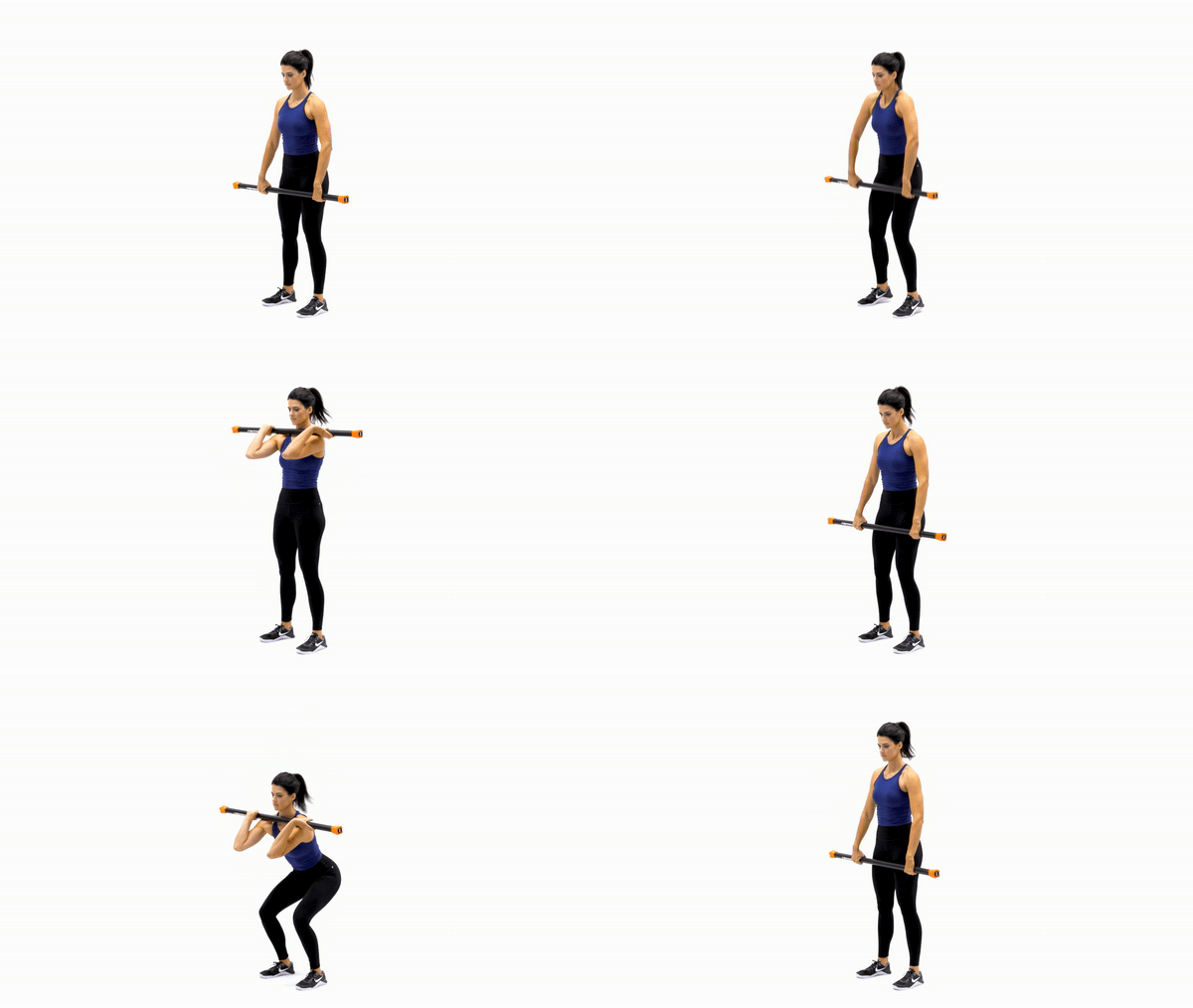
How Do You Do a Body Bar Good Morning?
The body bar good morning is a hip-hinge exercise that works your hamstrings, glutes, and lower back while teaching you to keep a strong, straight spine.
Muscles worked: Hamstrings, glutes, core, lower back, upper back stabilizers
Technique:
- Place the body bar across your upper back on the same shelf you use for squats, not directly on your neck. Grip the bar lightly with both hands.
- Stand with your feet about hip-width apart, knees slightly bent, and core gently braced.
- Push your hips back while you hinge forward, keeping your spine long and your chest open. Keep your knees in roughly the same slightly bent position throughout the movement.
- Lower your torso until you feel a noticeable stretch in your hamstrings, stopping well before your back rounds.
- Drive through your feet and bring your hips forward to return to standing. Exhale at the top and squeeze your glutes.
Pro tips:
- Think "long spine, soft knees" to avoid locking out your legs or rounding your back.
- Start with a very light bar or even just body weight if you have a sensitive lower back.

For machine-based glute work, explore our best Smith machine exercises for glutes.
What Are the Best Coaching Tips for Body Bar Glute Training?
Choosing the right bar weight, logging your sessions, and moving with control are the habits that make body bar glute training most effective.
- Choose the right amount of weight for your fitness level. A RitFit weighted workout body bar makes it easy with color-coded end caps so you can recognize the load at a glance.
- Write down how much weight you use, how many sets and reps you complete, and how the workout feels each week. When your sets feel easier and you can complete 2-3 extra reps with great form, increase the load by about 5 percent. RitFit weighted body bars come in sizes from 5 lb to 25 lb to support that progression.
- Move with control rather than speed. A 2-3 second lowering phase and a strong, crisp lifting phase help your glutes work hard without stressing your joints.
- Focus on a mind-muscle connection with your glutes. At the top of each hinge, squat, or lunge, pause for a brief moment and consciously squeeze your glutes.
For more lower-body ideas, browse our leg exercises guide, or explore the bars and plates collection for your training setup.
FAQs About Body Bar Exercises for Glutes
How often can I do this body bar glute workout?
Start with 2-3 sessions per week using a lighter bar. Rest at least one day between workouts so your glutes and hamstrings can recover and grow. If you are new, begin with 2 sessions weekly and add a third once recovery feels easy.
Is this routine suitable for beginners?
Yes. These moves are beginner-friendly as long as you start with a light bar, move slowly, and stop if you feel joint pain instead of normal muscle burn. Begin with 1-2 circuits of 10-12 controlled reps and rest 30-60 seconds between exercises.
When will I start seeing glute results?
Most people feel their glutes working within a few sessions as they learn the hinge and squat patterns. Visible changes usually take 4-8 weeks of consistent training and a balanced diet. Steady progress comes from adding small loads over time.
How should I warm up before these exercises?
Warm up for 3-5 minutes with light cardio and bodyweight moves such as marching, leg swings, and 10-15 bodyweight squats. Then do a light set of each exercise before working sets. Focus on form rather than speed or heavy weight.
What kind of pain means I should stop?
A slight muscle burn is normal. Sharp pain, tingling, numbness, or pinching in your joints is not normal. If that happens, stop immediately and talk to a professional before continuing. Do not push through sharp or joint pain, because that signals an injury risk rather than a training response.
Conclusion
Six weighted body bar exercises, including squats, lunges, deadlifts, Romanian deadlifts, snatches, and good mornings, can build stronger glutes at home without heavy gym machines. Start light, warm up for 3-5 minutes, and train 2-3 times per week for steady, joint-friendly progress.
Choose a bar you can control for every rep, log your sessions, and add load only when your form stays solid. For a complete home setup, browse the RitFit sales page for equipment that supports your routine and helps maintain bone mineral density in the hip and spine[3].
Disclaimer
This article is for educational purposes only and is not a substitute for professional medical or fitness advice. Consult a qualified healthcare or fitness professional before starting any new exercise program, especially if you have a history of hip, knee, or lower-back pain.
References
1. Zhang W, Chen X, Xu K, et al. Effect of unilateral training and bilateral training on physical performance: A meta-analysis. Front Physiol. 2023;14:1128250. doi:10.3389/fphys.2023.1128250
2. Dicus JR, Ellestad SH, Sheaffer JE, Weber CA, Novak NC, Holmstrup ME. A comparison of muscle recruitment across three straight-legged, hinge-pattern resistance training exercises. Int J Exerc Sci. 2023;16(4):12-22. doi:10.70252/ZAOJ6139
3. Massini DA, Nedog FH, de Oliveira TP, et al. The effect of resistance training on bone mineral density in older adults: A systematic review and meta-analysis. Healthcare (Basel). 2022;10(6):1129. doi:10.3390/healthcare10061129





