Dip belts are a simple way to add weight to bodyweight exercises like dips and chin-ups once your own bodyweight stops feeling challenging. A padded belt clips around your waist and holds plates on a chain so you can keep progressing with strength training.
This guide covers what a dip belt is, which exercises benefit most, and how to choose and use one safely. You will learn whether a dip belt earns a spot in your home gym routine.
Quick Answer: A dip belt is worth it for anyone who can complete 10 or more bodyweight reps, because it adds load for dips, chin-ups, and belt squats while keeping the spine unloaded. Choose a padded, fully adjustable belt with strong chains to train safely in lower rep ranges.
Key Takeaways
- Progressive overload: A dip belt adds load for dips, chin-ups, and belt squats once bodyweight reps get easy.
- Three main exercises: Weighted dips and chin-ups build chest, triceps, and back power, while belt squats target the legs.
- Spine-friendly loading: Belt squats unload the spine and shift stress to the legs, ideal for back or upper-body injuries.
- Real-world strength: A dip belt builds functional pushing and pulling strength that carries into everyday life.
- Simple purchase decision: Buy a padded, adjustable belt with reinforced chains to keep plates secure and setup fast.
What Is a Dip Belt?
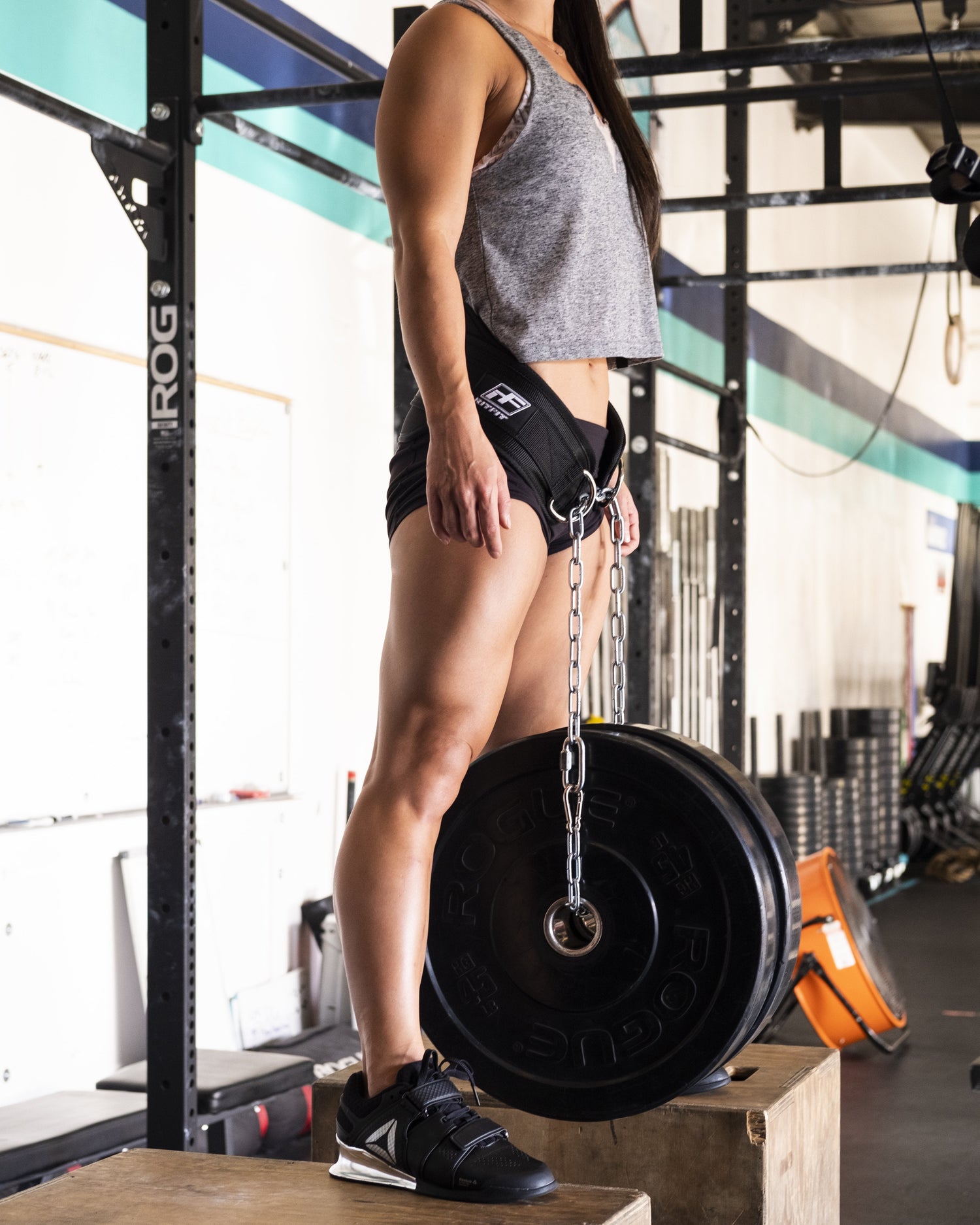
A dip belt is a padded waist strap with a length of chain that holds weight plates between your legs. It lets you add external load to bodyweight movements while keeping the weight close to your center of gravity.
- Padded waistband: Spreads the load across your hips so added weight stays comfortable during long sets.
- Chain and carabiner: Secures plates below your hips and swings free so dips and chin-ups keep a natural bar path.
This design differs from a weightlifting belt, which supports your core under a bar rather than hanging load from your waist.
Which Exercises Work Best With a Dip Belt?
The three main dip belt exercises are weighted dips, weighted chin-ups, and belt squats. Weighted dips and chin-ups build power in your triceps, chest, and back, while belt squats shift the load to your legs.
- Weighted dip: Targets your triceps, chest, and shoulders with a full range of motion.
- Weighted chin-up: Develops your lats, biceps, and grip with added resistance.
- Belt squat: Loads your legs while keeping the spine neutral and unloaded.
Pair these with a dips workout plan and learn which muscles dips work to build a balanced upper-body routine.
Why Use a Dip Belt for Belt Squats?
A dip belt makes belt squats easier on your spine by hanging the weight at your hips instead of on your back. This setup lets you keep squatting even with back or upper-body injuries, because the legs do the work.
If you want a dedicated setup for this movement, the RitFit AT03 belt squat attachment mounts to a power rack for stable belt squatting. Review the belt squat form guide before you load up heavy.
What Should You Look For When Buying a Dip Belt?
Look for a padded dip belt with strong carabiners, an adjustable chain, and a contoured waistband. The chain should be rustproof and reinforced so it holds plates securely for years of training.
- Strong carabiners: Hold plates safely and release quickly between sets.
- Adjustable chain: An extra 11-inch chain lets you add or remove plates to match your load.
- Contoured padding: Keeps the belt tight around your waist without digging in.
- Compact design: Folds away into a gym bag for easy storage.
Learn more about when and how to wear a weightlifting belt so you pair the right support with each lift.
How Do You Use a Dip Belt Safely?
Slip the belt around your waist, run the chain through a plate, and connect the clip-on end to the other ring so the weight swings free between your legs. Loop the chain through the eye before bringing it through the plate so the load tightens the belt around your waist.
- Step 1: Slip the belt around your waist and run the chain through a weight plate.
- Step 2: Connect the clip-on end to the other ring so the plate hangs between your legs.
- Step 3: Check that the belt is snug and the plate swings freely before you start.
Review the key benefits of wearing a weightlifting belt to understand how belt support fits into your training plan.
FAQs About Dip Belts
Do dip belts help build muscle?
Yes.
A dip belt adds progressive overload once bodyweight dips and chin-ups stop challenging you.
Weighted dips and chin-ups build strength in your triceps, chest, and back, and belt squats add leg volume.
That extra load drives more muscle growth across the upper body and legs.
Can you do belt squats with a dip belt?
Yes.
A dip belt works well for belt squats because the weight hangs at your hips instead of on your spine.
This unloads your lower back and puts the stress on your legs, which makes it a good choice for lifters with back or upper-body injuries who still want to squat.
How much weight should you start with on a dip belt?
Start with one light plate, around 10 to 15 pounds, until you can control the movement through a full range of motion. Add weight in small jumps only after you complete 10 or more clean reps. This keeps your joints safe as you progress.
Is a dip belt the same as a weightlifting belt?
No. A weightlifting belt supports your core and spine during heavy squats and deadlifts, while a dip belt hangs weight from your waist for dips and chin-ups. Both protect the lower back, but they serve different lifts and are not interchangeable.
Are dip belts safe for your back?
Yes, when used correctly.
A dip belt keeps the load close to your hips, which protects your spine during weighted dips and chin-ups.
Keep your core braced, start light, and stop if you feel sharp pain to protect your lower back.
Does a dip belt work for pull-ups?
Yes.
A dip belt attaches below your hips, so it works for weighted pull-ups and chin-ups as well as dips.
The chain holds the plate between your legs and keeps your natural bar path, letting you build lats and biceps with added resistance.
Conclusion
A dip belt is worth it when bodyweight dips and chin-ups no longer challenge you. It adds progressive overload for three proven exercises and protects your spine during belt squats.
Start light, use the three-step setup, and add weight in small jumps. Shop the RitFit sales page to find dip belts and rack attachments for your home gym.
Disclaimer
This guide is for general information only and does not replace advice from a qualified fitness or medical professional. Consult a doctor before starting weighted training if you have existing back, shoulder, or joint injuries.