








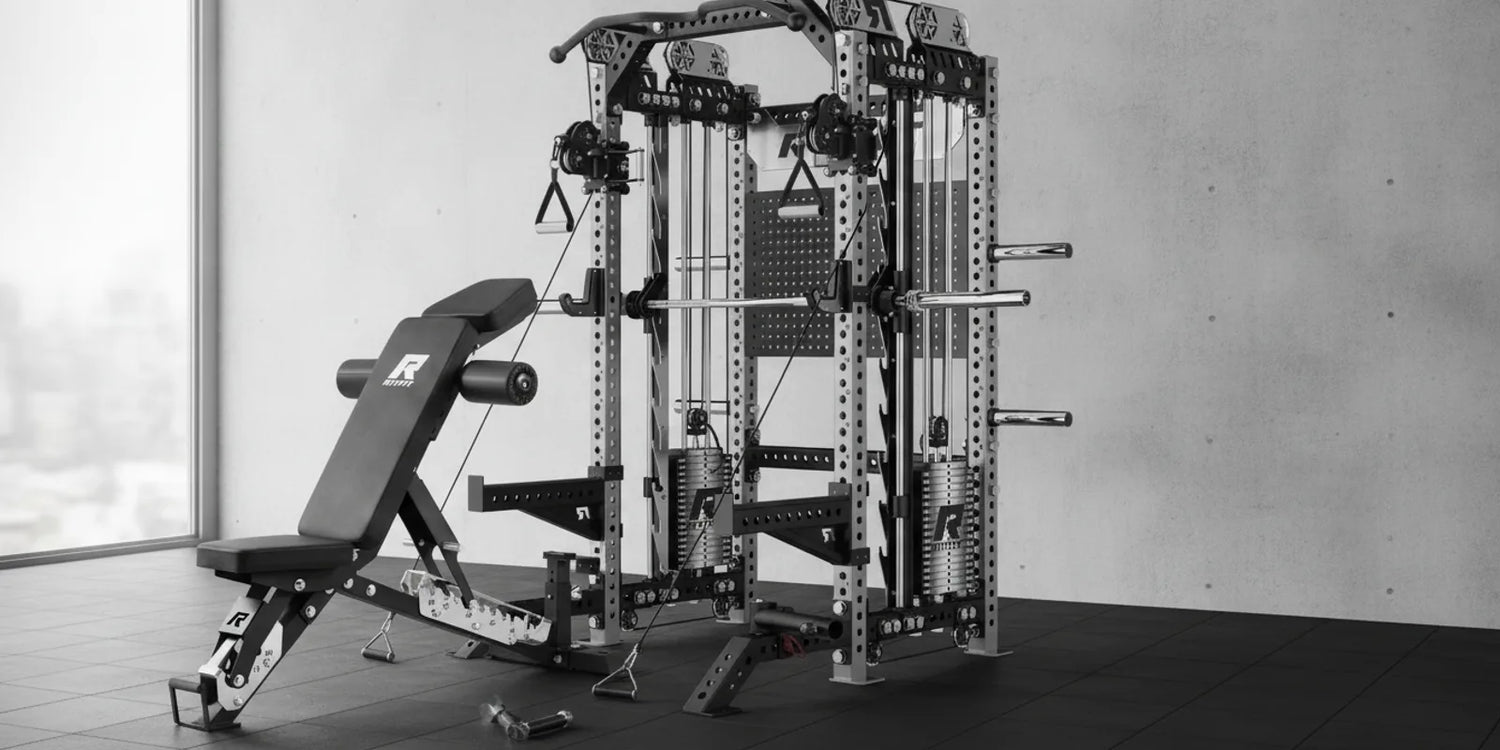
Choosing the right bench for cable machine use is one of the most overlooked decisions in a home gym setup. The wrong bench height misaligns your pulling angle, shifts tension away from the target muscle, and limits how many cable exercises you can actually perform safely.
This guide covers the exact specs that matter for cable machine bench pairing, the key exercises you can perform, how to position the bench correctly for each movement, and which RitFit bench setup best fits your training goals.
Quick Answer: The best bench for cable machine use is an adjustable FID bench with a seat height of 16 to 18 inches, a weight capacity of at least 600 lbs, and an 11-gauge steel frame with anti-slip feet. These specs keep your arms aligned with the cable angle, hold the bench stable under lateral pull forces, and support both flat and incline cable exercises.
Key Takeaways
- Seat Height Matters: A bench seat height of 16 to 18 inches aligns your torso correctly with most cable pulley positions for pressing, rowing, and pulling movements.
- Weight Capacity is Non-Negotiable: Cable exercises generate lateral and angular forces in addition to vertical load, so choose a bench rated at least 600 lbs with 11-gauge steel construction.
- Adjustability Unlocks More Exercises: An adjustable FID bench lets you target upper chest with incline cable flyes, mid-chest with flat cable press, and lower chest with decline variations using the same machine.
- Bench Alignment Determines Muscle Load: A 2022 biomechanics study found that cable resistance direction follows the cable line, not gravity, meaning bench angle and position directly control which muscle fibers are loaded.[1]
- Pair Bench to Your Cable Setup: For home gym cable systems like the RitFit M3 Power Rack Cable Crossover, an FID bench with a compact footprint that fits inside or beside the rack uprights gives you the most exercise options.
Why Does Bench Choice Matter for Cable Machine Training?
Bench choice matters for cable machine training because the direction of cable resistance follows the cable line, not vertical gravity, so bench height and angle directly determine which muscle fibers are loaded throughout each movement. A bench that is too low or too high shifts tension away from the target muscle group and reduces the effectiveness of every set you perform.
- Cable resistance is directional: Unlike dumbbells, where gravity pulls straight down, cable resistance pulls along the cable path. Your bench position must align your working limbs with that cable angle for correct muscle targeting.
- Seat height affects pulley alignment: A seat that is too low forces your arms into a downward angle during cable rows, reducing lat activation. A seat that is too high converts a cable lat pulldown into a triceps pushdown.
- Frame stability prevents energy leakage: When a bench slides or tips under lateral cable pull forces, your core compensates rather than the target muscle contracting. Anti-slip rubber feet and heavy-gauge steel keep the bench grounded.
- Angle range determines exercise variety: A flat-only bench limits you to flat presses and rows. An FID bench that adjusts from decline to 85 degrees opens up incline cable flyes, upright cable curls, and angled pulldowns from the same starting position.
A 2022 peer-reviewed biomechanics study confirmed that cable pulley exercises produce significantly larger maximum absolute moments at the shoulder joint than bench press exercises, and that a combination of both training methods is recommended for full range-of-motion chest development.[1] This means the bench position you choose for cable work carries real mechanical consequences for which structures are loaded.
What Specs Should You Look for in a Bench for Cable Machine Use?
The most important specs for a bench used with a cable machine are seat height between 16 and 18 inches, a weight capacity of at least 600 lbs, 11-gauge steel frame construction, anti-slip rubber feet, and an adjustable back pad with at least flat and incline positions. These specs collectively ensure the bench stays stable under lateral pull forces, aligns your body correctly with the cable angle, and supports the full range of exercises a cable system enables.
What seat height works best for cable machine use?
A seat height of 16 to 18 inches fits the majority of cable pulley configurations and keeps your feet flat on the floor during seated rows and pressing movements. This height places your torso at the right level for mid-pulley exercises and prevents the back-rounding compensation that occurs when a bench is too low.
How much weight capacity does a cable machine bench need?
A minimum weight capacity of 600 lbs is recommended for any bench used with heavy cable exercises. Cable pulls, rows, and presses create angular and lateral forces on the bench frame, so a frame rated only for traditional pressing loads may flex or rock during heavy cable rows.
Why does frame gauge matter for cable bench stability?
11-gauge steel (approximately 1/8-inch thick) provides the rigidity needed to resist both vertical loading and the lateral forces generated during cable rows, lat pulldowns, and cable flyes. Lighter 14-gauge frames are common on budget benches but can flex noticeably under heavy cable loading, reducing stability and wasting force.
Does footprint affect usability inside a cable machine setup?
Footprint directly determines whether your bench fits within the working space of your cable machine. For integrated systems like a power rack with cable attachment, the bench must slide inside the rack uprights with enough clearance to lie flat and perform pressing movements.
Should you choose a flat bench or an adjustable FID bench for cable work?
An adjustable FID bench is the better choice for cable machine training because it lets you change the back pad angle to match different cable exercise demands. A flat bench handles cable flyes and flat presses well, but an FID bench also supports incline cable flyes for upper chest development, upright seated positions for cable curls, and decline angles for abdominal cable work, all without repositioning the cable machine itself.
Which Cable Machine Exercises Can You Do With a Bench?
A bench paired with a cable machine unlocks a full range of compound and isolation exercises for the chest, back, shoulders, biceps, and core, with the bench providing the stable base needed for controlled cable movements that would otherwise require a dedicated machine seat. A 2023 systematic review and meta-analysis confirmed that machine-based resistance training, including cable systems, produces comparable muscle hypertrophy to free-weight training, making cable bench exercises a legitimate primary training method.[2]
Cable bench press
Position the bench flat between the two cable columns with pulleys set to the lowest point, grab the D-handles, and press upward and slightly inward. Cables maintain constant tension at the top of the press where dumbbells go slack, providing a stronger chest contraction through the full range of motion.
Seated cable rows
Face the cable stack, sit on the bench with a soft knee bend, and use dumbbells or plates on the floor as a foot platform if your bench has no attached footrest. Maintain a neutral spine, lean slightly forward at the start, and pull the bar to just above the navel while retracting the shoulder blades to fully engage the lats and rhomboids.
Incline cable flyes
Set the bench to a 30-45 degree incline, position it between the cable columns with pulleys at the lowest setting, and perform the fly movement with a slight elbow bend. The incline angle shifts the resistance toward the upper pectoral fibers and anterior deltoid, complementing flat cable press work and addressing a common weakness in pressing routines.
Cable lat pulldown seated on bench
Set the pulley to the highest position and sit on the bench facing the cable machine, gripping the lat bar with an overhand grip just outside shoulder width. Pull the bar down to upper-chest height while leaning slightly back and keeping the elbows tracking toward the hips to maximize lat activation.
Decline cable crunches
Set the bench to a slight decline, face away from the high pulley, and hold a rope attachment above your head with both hands. Crunch forward and downward, contracting the abs at the bottom of each rep. The cable provides constant resistance through the full crunch range, unlike floor crunches where tension decreases at the top.
A 10-week controlled study found that cable-based isolation movements produced comparable hypertrophy to barbell equivalents, confirming that pairing a bench with your cable machine delivers real muscle-building results across multiple movement patterns.[3]
Watch this tutorial for a clear demonstration of proper bench setup and technique for seated cable rows:
How Should You Position Your Bench for Cable Exercises?
Bench positioning for cable exercises requires centering the bench between the cable columns for pressing and fly movements, or facing the bench toward the cable stack for rowing and pulldown movements, with height and pulley setting adjusted so your working limbs align with the cable direction. Correct alignment ensures consistent resistance through the full range of motion and reduces unwanted shoulder joint stress.
Step-by-step positioning guide for cable bench press
- Center the bench: Place the bench directly between the two cable columns, perpendicular to both uprights, so you are equidistant from each pulley when lying back.
- Set pulleys to lowest position: Both pulleys should be at the lowest anchor point before you pick up the handles. This creates an upward cable angle that matches the pressing movement path.
- Align arms with cables: Lie back and position your hands so your arms point in the same direction as the cable path from floor to pulley. This straight alignment removes lateral shoulder stress and keeps resistance on the pectorals.
- Check bench height: Your feet should be flat on the floor with knees bent at approximately 90 degrees. If the bench is too tall, place plates on the floor as a foot platform for stability.
- Brace before pressing: Squeeze the shoulder blades together and plant them into the pad before initiating each rep to create a stable base for pressing force.
Setup for seated cable rows on a standalone bench
- Face the cable stack: Position the bench so you sit facing the cable machine with the pulley at approximately waist height when seated.
- Create a foot platform: If the bench has no built-in footrest, place two dumbbells or weight plates flat on the floor directly in front of the bench to brace your feet during the row.
- Attach correct handle: Use a V-bar or close-grip handle for maximal lat engagement, or a wide bar for more rhomboid and mid-trap emphasis. Connect cable machine attachments before sitting down.
- Sit with a neutral spine: Hinge slightly forward at the start of each rep to fully stretch the lats, then initiate the row by retracting the scapula before pulling with the arms.
What are the most common bench positioning mistakes?
- Bench too far from the machine: Excessive distance increases the cable angle, shifts tension to the anterior deltoid during chest exercises, and makes it harder to control the weight at full extension.
- Pulley height not adjusted: Leaving the pulley at the wrong height for the exercise you are doing creates a misaligned pull path that loads the wrong muscle groups and increases shoulder joint stress.
- Unsecured bench on smooth flooring: Benches without rubber anti-slip feet will slide toward the cable machine during rowing movements. Place the bench on a rubber mat or use a weight plate behind a rear leg to prevent forward slide.
- Bench placed off-center: Positioning the bench even a few inches to one side creates unequal cable tension between the two arms during bilateral exercises, creating a rotational imbalance in chest and shoulder loading.
- Starting weight too heavy: Cables provide constant tension throughout the entire range, so even moderate loads feel harder than equivalent dumbbell weights. Start with 30-40% less than your dumbbell equivalent when transitioning to cable work.
Jeff Cavaliere, MSPT, CSCS, addresses bench alignment directly in his cable bench press guidance. His instruction applies equally to any cable pressing or rowing setup:
"Position an adjustable bench directly between the two columns of the cable machine and set the pulleys at the lowest level. Make sure your arms line up with the cables. This keeps the path of resistance clean and shoulder-friendly."
Jeff Cavaliere, MSPT, CSCS, Physical Therapist and Strength Coach, former Head Physical Therapist for the NY Mets, Athlean-X
Which RitFit Bench Works Best for Cable Machine Training?
The right RitFit bench for cable machine training depends on your primary cable exercises, available floor space, and whether you want a dedicated cable-only setup or a full pressing and pulling station. The table below outlines how to match your training profile to the best option within the RitFit lineup.
| Training Profile | Recommended Option | Key Reason |
|---|---|---|
| Cable rows and flat cable press only | Flat utility bench with high weight capacity | Simpler setup, lower cost, no angle adjustment needed for these movements |
| Full cable program (press, fly, row, curl, pulldown) | Adjustable FID bench | Angle range covers all cable exercise demands without repositioning the machine |
| All-in-one cable + Smith + power rack system | FID bench sized to fit inside rack uprights | Must clear the rack frame when flat for pressing and when upright for seated work |
Match bench dimensions to your cable machine frame clearance before purchasing. Bench footprint affects which exercises are physically possible inside an integrated rack system.
Is an adjustable bench worth the cost for cable machine use?
An adjustable FID bench is worth the additional cost over a flat bench if you plan to use your cable machine for more than rows and flat pressing. The ability to set an incline angle of 30-45 degrees adds upper chest cable fly and incline cable press movements that are not possible on a flat bench, meaningfully expanding your exercise library without requiring additional equipment.
What is the long-term upgrade path for a cable bench setup?
Starting with a quality adjustable bench paired with a standalone cable machine gives you a functional training station that can later integrate with a power rack system. Many integrated systems are designed to accommodate standard FID benches within the rack footprint, so the bench you buy for a cable-only setup can carry over into a full rack system without replacement.
Upgrade the cable exercise variety further by adding purpose-built cable machine handles, including RitFit exercise handles for single-arm work, a rope attachment for triceps and face pulls, and lat pulldown attachments for wide-grip pulling variations. These accessories extend the exercise options your bench-cable combination can support without adding floor space.
For lifters who also want to incorporate smith machine movements, pairing your adjustable weight bench with a system that includes both cable and smith functionality provides pressing, rowing, and pulldown coverage from a single equipment footprint. The Smith machine collection at RitFit includes integrated options that accept standard FID benches for this purpose.
FAQs About Bench for Cable Machine
What seat height should a bench be for cable machine exercises?
A seat height of 16 to 18 inches works best for most cable machine exercises. This height keeps your feet flat on the floor, aligns your torso with mid-pulley positions, and gives you a stable base for pressing and rowing movements without compromising your cable angle or joint alignment.
Can I use a flat bench for cable machine exercises?
Yes. A flat bench works well for cable flyes and cable bench press when positioned between two cable columns with pulleys at the lowest setting, but an adjustable FID bench is more versatile, supporting incline cable flyes for upper chest and variable angles for pulling movements.
How much weight capacity does a bench need for cable machine use?
Look for a bench rated at least 600 lbs for cable machine training. Cable exercises generate lateral and angular forces in addition to vertical load, which stresses the bench frame differently than pure pressing, so a heavier-rated 11-gauge steel bench with rubberized feet is the right choice.
How should I position my bench for cable machine exercises?
Center the bench between the cable columns for pressing and fly movements, or face it toward the cable stack for rows and pulldowns. Adjust the pulley height so your arms align with the cable direction at the working position, which ensures consistent resistance and reduces shoulder strain.
What cable machine exercises can I do with a bench?
With a bench and cable machine you can perform cable bench press, incline cable flyes, seated cable rows, cable lat pulldowns, decline cable crunches, and cable chest flyes. The bench provides the stable base needed for controlled cable pressing and isolation movements that would otherwise require a dedicated machine seat.
Does bench angle matter for cable exercises?
Yes. Bench angle changes which muscle fibers are emphasized, with a flat position targeting the mid-chest, a 30-45 degree incline shifting emphasis to the upper pectorals and anterior deltoids, and a decline angle emphasizing the lower chest and enabling different crunch and rowing cable variations.
Conclusion
Selecting the right bench for cable machine use comes down to four factors: seat height in the 16-18 inch range, a weight capacity of at least 600 lbs, 11-gauge steel frame rigidity, and adjustable back pad angles. These specs determine whether your bench stays stable, aligns with cable resistance correctly, and supports the full movement library a cable system enables.
Browse the RitFit bench collection, match your bench to your cable setup using the specs and positioning steps above, and add the cable handle accessories that extend your exercise options from day one.
Disclaimer
The information in this article is intended for general fitness education purposes only and does not constitute medical advice, injury rehabilitation guidance, or a substitute for assessment by a qualified fitness or healthcare professional. Always consult a licensed professional before beginning a new exercise program, particularly if you have pre-existing conditions affecting your joints, spine, or cardiovascular system.
Save on your next RitFit order
Tap the button to copy your code, then paste it at checkout.
References
1. Schütz P, Zimmer P, Zeidler F, et al. Chest Exercises: Movement and Loading of Shoulder, Elbow and Wrist Joints. Sports (Basel). 2022;10(2). doi:10.3390/sports10020019
2. Haugen ME, Vårvik FT, Larsen S, Haugen AS, van den Tillaar R, Bjørnsen T. Effect of free-weight vs. machine-based strength training on maximal strength, hypertrophy and jump performance - a systematic review and meta-analysis. BMC Sports Sci Med Rehabil. 2023;15(1):103. doi:10.1186/s13102-023-00713-4
3. Nunes JP, Jacinto JL, Ribeiro AS, et al. Placing Greater Torque at Shorter or Longer Muscle Lengths? Effects of Cable vs. Barbell Preacher Curl Training on Muscular Strength and Hypertrophy in Young Adults. Int J Environ Res Public Health. 2020;17(16). doi:10.3390/ijerph17165859





