








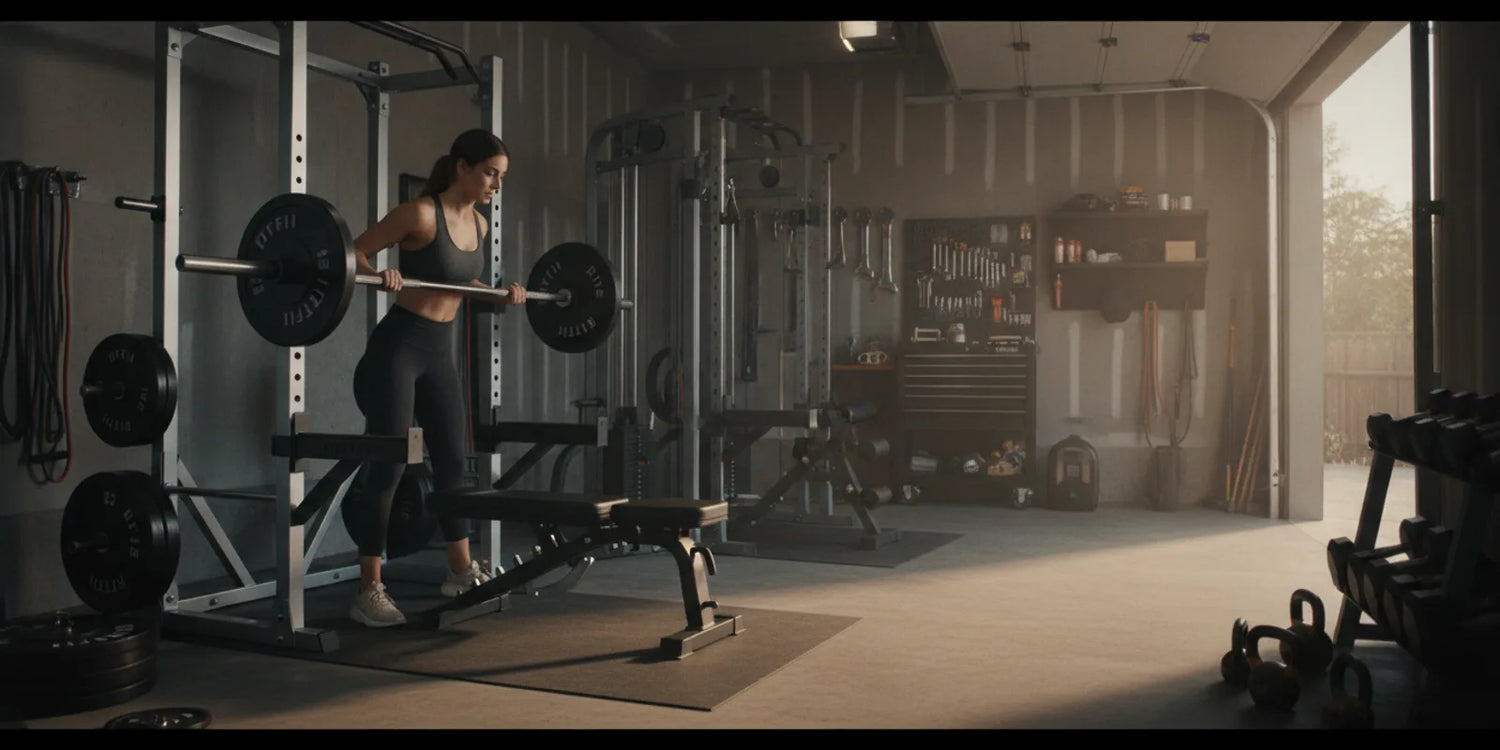
A weight lifting starter kit bundles a barbell, weight plates, an adjustable bench, and a rack or squat stand into one purchase for a beginner's first months of training. This guide breaks down what belongs in that kit and what it costs.
It also covers space planning, long-term upgrade costs, and the common buying mistakes that force an early re-purchase. Read on to find the configuration that fits your budget and goals.
Quick Answer: A complete weight lifting starter kit should include a barbell, weight plates, an adjustable bench, and either a power rack or squat stand for safety, covering every major compound lift. Most beginners spend between three hundred and one thousand dollars depending on whether they choose a budget barbell setup or a full all-in-one Smith machine package.
Key Takeaways
- Core components: A starter kit needs a barbell, plates, an adjustable bench, and a rack or squat stand to cover every major lift.
- Budget range: Budget builds start around $300 to $500, while a full rack and bench package runs $800 to $1,000.
- RitFit options: RitFit's BPC06 all-in-one Smith machine packages compress the rack, bench, and guided bar path into one compact purchase.
- Space first: Measure floor space and ceiling height before buying to avoid a kit that does not fit your room.
- Avoid the top mistake: Skipping the barbell and plates in favor of dumbbells or machines first limits exercise variety later.
What should be in a weight lifting starter kit?
A weight lifting starter kit should include a barbell, weight plates, an adjustable bench, and a power rack or squat stand. Together these four pieces let a beginner squat, bench press, deadlift, and overhead press without needing anything else right away.
- Barbell: A 7-foot Olympic barbell with standard 2-inch sleeves fits nearly every rack and plate on the market.
- Weight plates: A 300 lb starter set is enough to progressively overload most major lifts for 12 to 18 months before you need more weight.
- Adjustable bench: A folding bench unlocks flat press, incline press, and step-ups in addition to floor-based lifts.
- Power rack or squat stand: Safety bars let you train squats and bench press alone without a spotter.
A randomized trial in novice males compared machine-based and free-weight resistance training, giving beginners evidence that either equipment style is a valid way to start.[1] One buying guide suggests a barbell with plates, a power rack, an adjustable bench, and rubber flooring form the minimum viable starter setup, with combined costs commonly falling in the $550 to $1,000 range.
Browse the full range of weight plates and sets to size your first purchase, and see the complete home gym equipment guide for how these pieces fit into a bigger setup.
Which starter kit fits your budget and goals?
The right starter kit depends on your budget, space, and how serious you are about building a permanent home gym. RitFit offers three internal configurations that match a budget-conscious beginner, a space-constrained lifter, and a serious home gym builder.
| Lifter Type | Recommended Setup | Why It Fits |
|---|---|---|
| Budget-Conscious Beginner | Barbell, plate set, and adjustable bench | Lowest upfront cost and the most flexible footprint |
| Space-Constrained Beginner | RitFit BPC06 All-in-One Smith Machine with a 260 lb weight stack | Compact footprint with a guided bar path for safe solo training |
| Serious Home Gym Builder | RitFit BPC06 Smith Machine Home Gym Package | Most complete package, with room to add attachments long term |
Comparison limited to RitFit's own starter configurations, not third-party brands.
This budget garage gym build from the RitFit Sports channel shows how a beginner can stretch a starter kit budget across the essentials.
Is a weight lifting starter kit worth the investment?
A starter kit is worth the investment for anyone who plans to train consistently for more than a few months, since it usually pays for itself compared to an ongoing gym membership. Barbell-based programs are also built to work for genuine beginners from day one.
In a 16-week supervised barbell training program study, 68% of the 43 adult participants were classified as novices with no prior resistance training history.[2] That finding supports starting directly with a barbell-based kit rather than waiting to gain experience elsewhere.
- Gym membership offset: A mid-range starter kit commonly breaks even with a gym membership in under two years.
- No commute: Training at home removes travel time, which is often the biggest barrier to consistency.
- Full ownership: The equipment is available any time, with no waiting for a rack or bench.
What does it cost to upgrade a starter kit later?
Upgrading a starter kit later typically means adding more plates, a pull-up attachment, or accessory bars rather than replacing the core equipment. Planning for these additions upfront keeps long-term spending predictable.
One home-gym guide estimates that roughly 300 lb of starter plates provides about 12 to 18 months of progressive overload before a beginner needs to add more weight.
Popular first upgrades include a multi-grip lat pull down bar for pulling variety and additional pieces from the weight lifting accessories collection.
How much space does a weight lifting starter kit need?
A basic barbell and rack setup typically needs about 6 by 8 feet of floor space, plus roughly 8 feet of ceiling height to fully extend an overhead press. Measuring your room before buying prevents costly returns.
- Measure floor-to-ceiling height: Leave at least 12 inches of clearance above a fully locked-out overhead press.
- Check doorway width: Confirm a 7-foot barbell and rack frame can actually get into the room.
- Mark the footprint: Tape out the rack's base dimensions on the floor before ordering to confirm walking room around it.
For a deeper breakdown of footprint and safety-bar clearance, see the best all-in-one power rack guide.

What mistakes do beginners make when buying a starter kit?
The most common mistake is buying dumbbells or machines before a barbell and plates, which limits how many exercises the kit supports. Skipping a bench or rack early on is the second most common error.
- Starting with dumbbells only: Dumbbell-only kits cannot load the biggest lifts as heavy as a barbell can.
- Skipping the bench: Without a bench, flat press, incline press, and step-ups are not possible.
- Ignoring compatibility: Plates, bar sleeves, and rack J-hooks must match in size, or pieces bought separately will not fit together.
- Underestimating space: Buying a full rack before measuring ceiling height is a common reason for returns.
See where to buy free weights and where to buy an adjustable weight bench for sourcing tips on each component.
How should a beginner start training with a new starter kit?
A beginner should start with light weight on a simple three-lift routine, adding small amounts of weight only after completing all planned sets with good form. This approach builds strength safely while learning the barbell, bench, and rack together.
A 20-week supervised resistance training study in previously untrained lifters used a consistent three-session weekly protocol to build measurable strength over time.[3] That structure mirrors how most starter-kit routines are designed for beginners.
- Start light: Begin with a weight you can lift for the full set with 2 to 3 reps left in reserve.
- Add weight gradually: Increase the bar by 5 to 10 lb once every set feels controlled.
- Rest between sets: Take 2 to 3 minutes between heavy compound sets to recover fully.
- Stop if form breaks down: Reduce the weight immediately if your back rounds or knees cave inward.
"I think with any athlete, the most important step is buy-in. Excitement about and investment in the process. That's especially true for beginners. You're usually dealing with someone who has a great deal of initial resolve and excitement, but it's much more fragile because training hasn't become part of their identity yet."
Greg Nuckols, Powerlifter and Strength Coach, Stronger by Science
FAQs About Weight Lifting Starter Kits
What should be included in a weight lifting starter kit?
A complete weight lifting starter kit should include a barbell, weight plates, an adjustable bench, and either a power rack or squat stand for safety. These four pieces cover every major compound lift, including squats, bench press, deadlifts, and overhead press, giving beginners a full-body training foundation without needing extra equipment right away.
How much does a beginner weight lifting starter kit cost?
Budget beginner kits with a barbell, plates, and flooring typically start around three hundred to five hundred dollars, while a complete setup with a power rack and adjustable bench usually falls between eight hundred and one thousand dollars. Spreading purchases across a few months can make the total cost easier to manage.
Do I need a power rack for a starter weight lifting kit?
A power rack is not strictly required to start lifting, but it lets you train heavy lifts like squats and bench press safely without a spotter. Beginners training alone at home benefit most from including a rack or squat stand in their starter kit rather than adding it later.
Is it better to buy an all-in-one kit or individual pieces?
Buying an all-in-one starter kit often costs less than purchasing a barbell, plates, bench, and rack separately, and it guarantees the pieces work together in size and weight capacity. Individual pieces can offer more flexibility for specific goals, but kits reduce compatibility mistakes for first-time buyers.
How much space do I need for a weight lifting starter kit?
A basic barbell and rack setup typically needs about six by eight feet of floor space plus enough ceiling height to fully extend an overhead press, generally eight feet or more. Measuring your space before buying prevents returns and helps you choose the right footprint for your kit.
What is the biggest mistake beginners make when buying a starter kit?
The most common mistake is buying dumbbells or machines first instead of starting with a barbell and plates, which limits the number of exercises available. Skipping a bench or rack early on also forces beginners to upgrade sooner than expected, adding extra cost down the line.
Conclusion
A weight lifting starter kit built around a barbell, plates, an adjustable bench, and a rack covers every major lift a beginner needs. Matching that core setup to your budget and space, rather than buying pieces at random, is what prevents an expensive early upgrade.
Start with the configuration that fits your goals today, then add accessories as your training advances. Browse the full RitFit equipment collection to compare every starter option side by side.
Disclaimer
This article is for general informational purposes and does not replace personalized fitness or medical advice. Consult a qualified trainer or physician before starting a new strength training program, especially if you have an existing injury or health condition.
Save on your next RitFit order
Tap the button to copy your code, then paste it at checkout.
References
1. Aerenhouts D, D'Hondt E. Using Machines or Free Weights for Resistance Training in Novice Males? A Randomized Parallel Trial. Int J Environ Res Public Health. 2020;17(21). doi:10.3390/ijerph17217848
2. Martinez Kercher VM, Watkins JM, Goss JM, Phillips LA, Roy BA, Kercher KA. Psychological needs, self-efficacy, motivation, and resistance training outcomes in a 16-week barbell training program for adults. Front Psychol. 2024;15:1439431. doi:10.3389/fpsyg.2024.1439431
3. Drigny J, et al. Impact of a 20-Week Resistance Training Program on the Force-Velocity Profile in Novice Lifters Using Isokinetic Two-Point Testing. J Funct Morphol Kinesiol. 2024;9(4):222. doi:10.3390/jfmk9040222





