
The best angle for the incline Smith machine chest press is about 30 degrees for most lifters who want a bigger upper chest. That number comes from muscle activation measurements, and it carries over to the Smith machine because the bench sets the angle either way.
This guide covers what each angle band emphasizes, what the fixed bar path changes about your setup, and which bench and machine details make the angle repeatable.
Quick Answer: The best angle for the incline Smith machine chest press is about 30 degrees when the goal is upper chest. An EMG study across five bench angles found the clavicular head of the pectoralis most active at 30 degrees while angles steeper than 45 degrees shift work toward the front delts, and bench placement under the bar decides whether that angle actually loads the chest.
Key Takeaways
- Angle: 30 degrees gives the upper chest its largest measured share of the work across five tested bench angles.
- Steep limit: past 45 degrees, anterior deltoid activation rises significantly and pectoral performance drops.
- Smith variable: the fixed bar path makes bench placement and track orientation, not bar steering, the deciding setup factors.
- Equipment: a fine-increment adjustable bench such as the RitFit GATOR makes the chosen angle repeatable.
- Muscle outcome: machines and free weights built similar muscle across 13 training studies.
What Angle Is Best for the Incline Smith Machine Chest Press?
For most lifters, 30 degrees is the best angle for the incline Smith machine chest press. An EMG study of 30 trained adults pressing at 60% of 1RM tested five bench angles and found the upper portion of the pectoralis major most active at 30 degrees.[1] Lower angles lean the press toward the middle and lower chest, while angles steeper than 45 degrees shift the effort toward the front delts.
- Upper chest focus: 30 degrees produced the peak upper-pectoral reading in the five-angle trial, so it is the default setting for an upper chest day.
- Shoulder-biased pressing: 45 degrees and steeper turns the movement into more of an incline shoulder press with less chest contribution.
- Flat bias: at 0 degrees the middle and lower chest do the most work, which is why a barely raised bench stops being an incline press.
The angle comes from the bench, not the machine, so the lever you actually control is the bench notch. Pair the press with equipment from the Smith machine collection and set the bench before you load any plates.
"Arrived today and took less than an hour to put together. Very good directions! Will be breaking it in tomorrow."
Diane L. Verified Buyer, RitFit Gorilla 2-in-1 Chest and Shoulder Press Machine
How Each Bench Angle Changes the Muscle Emphasis
Each bench angle reallocates work between the chest and the front delts. The same EMG trial showed the middle and lower portions of the pectoralis major most active on a flat bench, similar triceps activity at every angle, and significantly higher anterior deltoid activation above 45 degrees.
| Bench angle | What it emphasizes | Best for |
|---|---|---|
| 0 degrees | Middle and lower chest | Flat pressing strength |
| 15 degrees | Chest with a mild upward shift | Transition angle off flat pressing |
| 30 degrees | Upper chest peaks | Upper chest emphasis |
| 45 degrees | Shared chest and front delt work | Shoulder-biased upper day |
| 60 degrees | Front delts dominate | Shoulder press bias with little chest |
Angle emphasis summary from a five-angle EMG trial at 60% of one-repetition maximum in 30 trained adults.
A systematic review of bench press EMG studies reaches the same broad conclusion: muscle emphasis moves with execution variables such as bench angle and equipment, which is why a fixed angle choice deserves a fixed reason.[2]
"There's a little bit of confusion around what the best angle is for the bench on an incline bench press to hit the upper chest. It's pretty conclusive. 30 degrees is a really good place for most of us! The steeper you go the more the effort gets shifted towards the front delts."
Jeff Cavaliere, MSPT, CSCS, Physical Therapist and Strength Coach, former Head Physical Therapist for the NY Mets, Athlean-X, ATHLEAN-X Instagram Reel
What the Fixed Bar Path Changes on a Smith Machine
On a Smith machine, the bench position decides where the bar meets your chest, because the bar can only travel along its fixed track. With a free barbell you steer the bar toward the upper chest, but on a Smith machine a bench a few inches out of position sends every rep to the neck or the mid-chest.
- Touch point: lower the empty bar and roll the bench until it lands just below the collarbones with your forearms vertical.
- Angled track: face the bench so the bar moves back over your shoulders as it rises, the way a free bar does.
- Unrack and re-rack: twist the bar off the hooks at the top, and twist it back onto the nearest hook after the last rep.
- Safety stops: set the stops just below the touch point so a missed rep rests on the pins instead of your chest.
Recheck the touch point whenever you change the bench notch, because changing the angle moves the contact point too. If you want the full form walkthrough, the step-by-step incline Smith machine press guide covers grip, descent, and rep execution in detail.
Matching the Angle to Your Goal
Your goal picks the angle, and the angle picks the setup. Thirty degrees is the upper chest setting, a 15 degree bench sits close to flat pressing, and anything steeper than 45 degrees belongs to shoulder day more than chest day.
- Upper chest priority: hold 30 degrees and let the fixed track feed the same line into the clavicular head on every rep.
- Overall chest volume: alternate a 15 degree session with a 30 degree session instead of chasing one perfect notch.
- Shoulder-friendly days: if steep angles bother your shoulders, drop back toward 15 to 30 degrees and let the chest carry the set.
A meta-analysis of 13 training studies found machines and free weights produced similar hypertrophy, so the fixed-track press remains a legitimate chest builder.[3] One training guide also describes an 8-week Smith machine trial at 44 degrees that reported greater upper chest growth than flat Smith pressing.
How Heavy Should You Go at Each Angle
Start lighter than your free-weight incline press, because the Smith bar weight itself is an unknown until you check it.
- Bar weight: one guide notes that counterbalanced Smith bars often start at 10 to 20 lb (5 to 10 kg), while bars without a counterweight can weigh 45 lb (20 kg) or more, so read the label on the frame and log it the same way every session.
- First working sets: pick a load you can press for 8 to 12 controlled reps at your chosen angle before adding plates.
- Angle effect: the steeper the bench, the less chest help you get, so expect steeper angles to use lighter loads than 30 degrees.
How to Progress and When to Change the Angle
Progress the load only after the position is stable, because a notch change resets your numbers.
- Add reps first: when every set at the same notch reaches the top of your rep range, add 5 lb per side and drop back to the bottom of the range.
- Keep the bench constant: note the bench position and notch in your log, since moving the bench changes both the angle and the touch point.
- When to stop and adjust: persistent shoulder discomfort or a bar line drifting toward the neck are signals to lower the angle and recheck bench placement before the next set.
Which Bench and Machine Setup Makes the Angle Repeatable
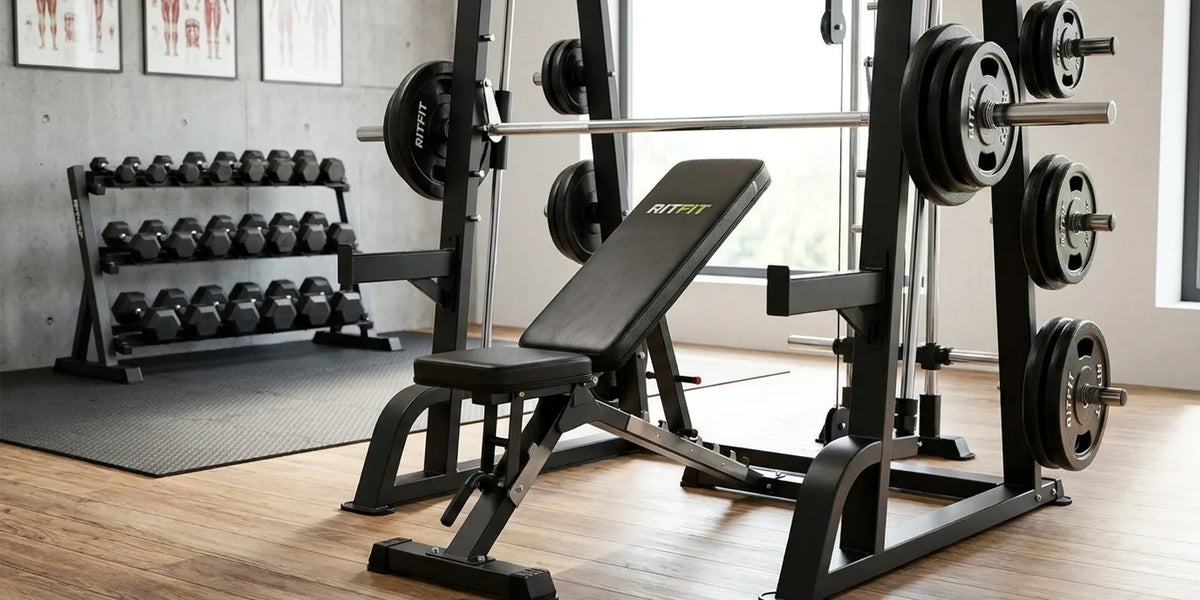
The repeatability of your angle depends on two pieces of equipment, the bench that sets the degrees and the machine that sets the track. A bench with small adjustment steps lets you hold 30 degrees session after session instead of drifting between notches.
- Bench increments: the RitFit GATOR adjustable weight bench gives you fine seat and backrest steps, so a logged notch stays the same notch next week.
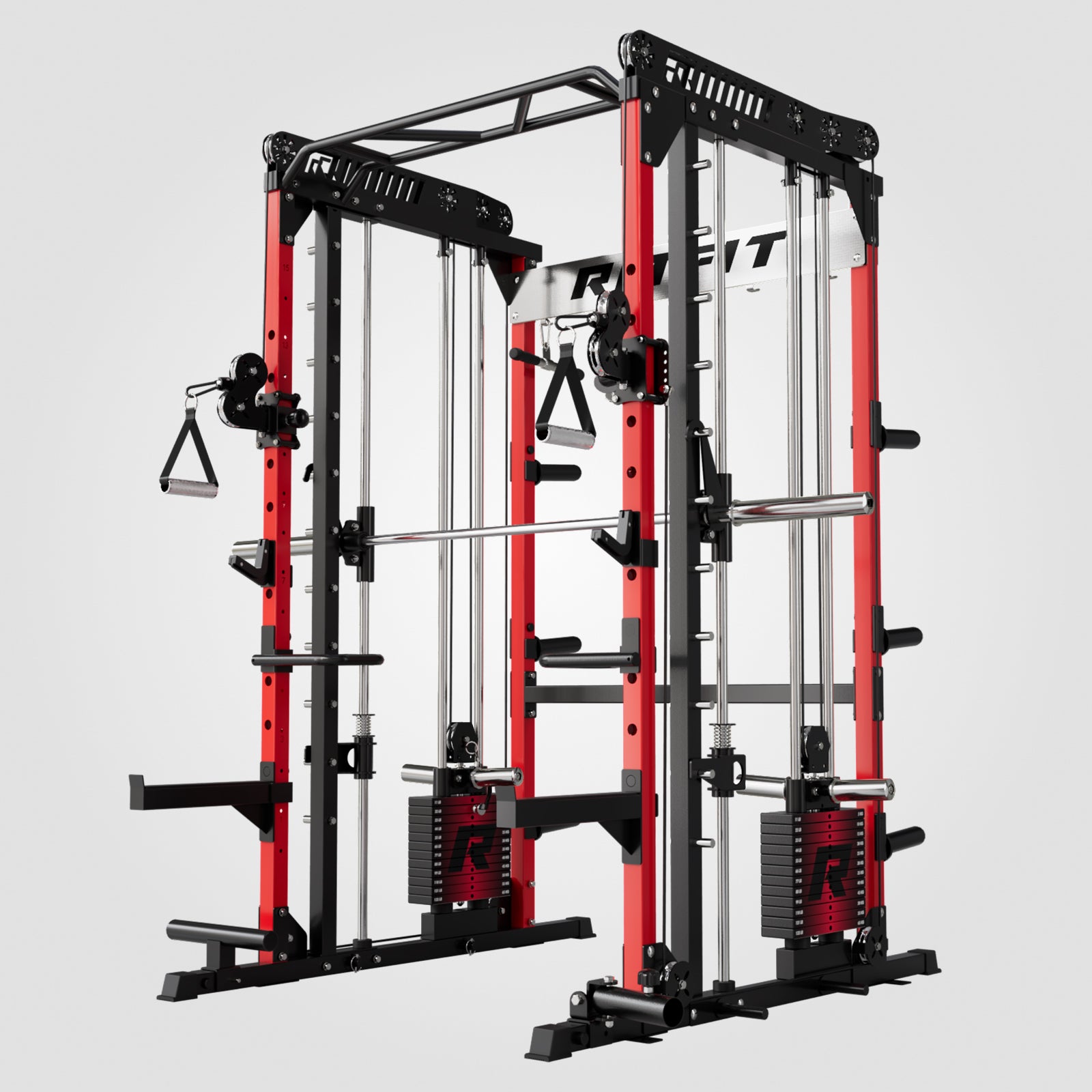
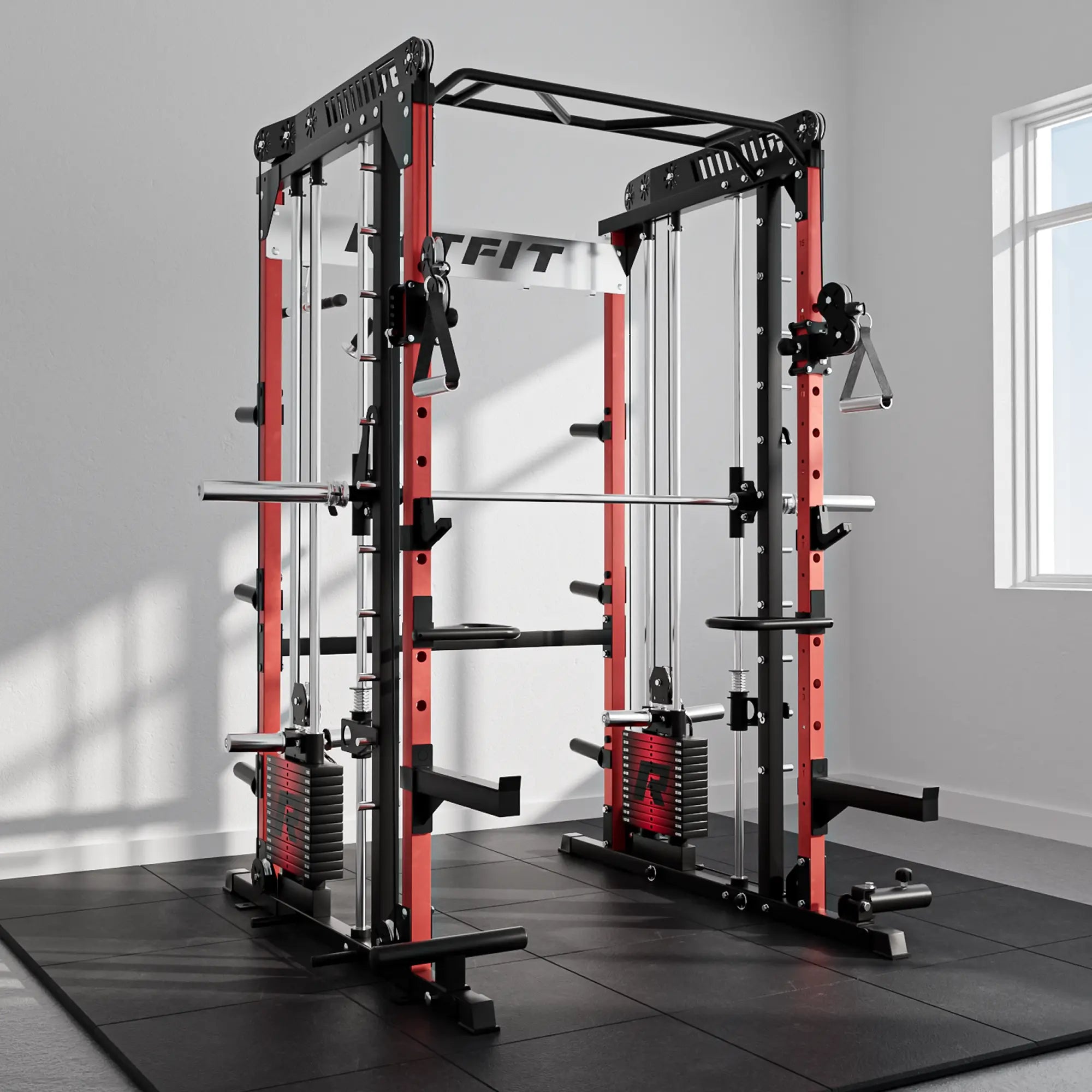
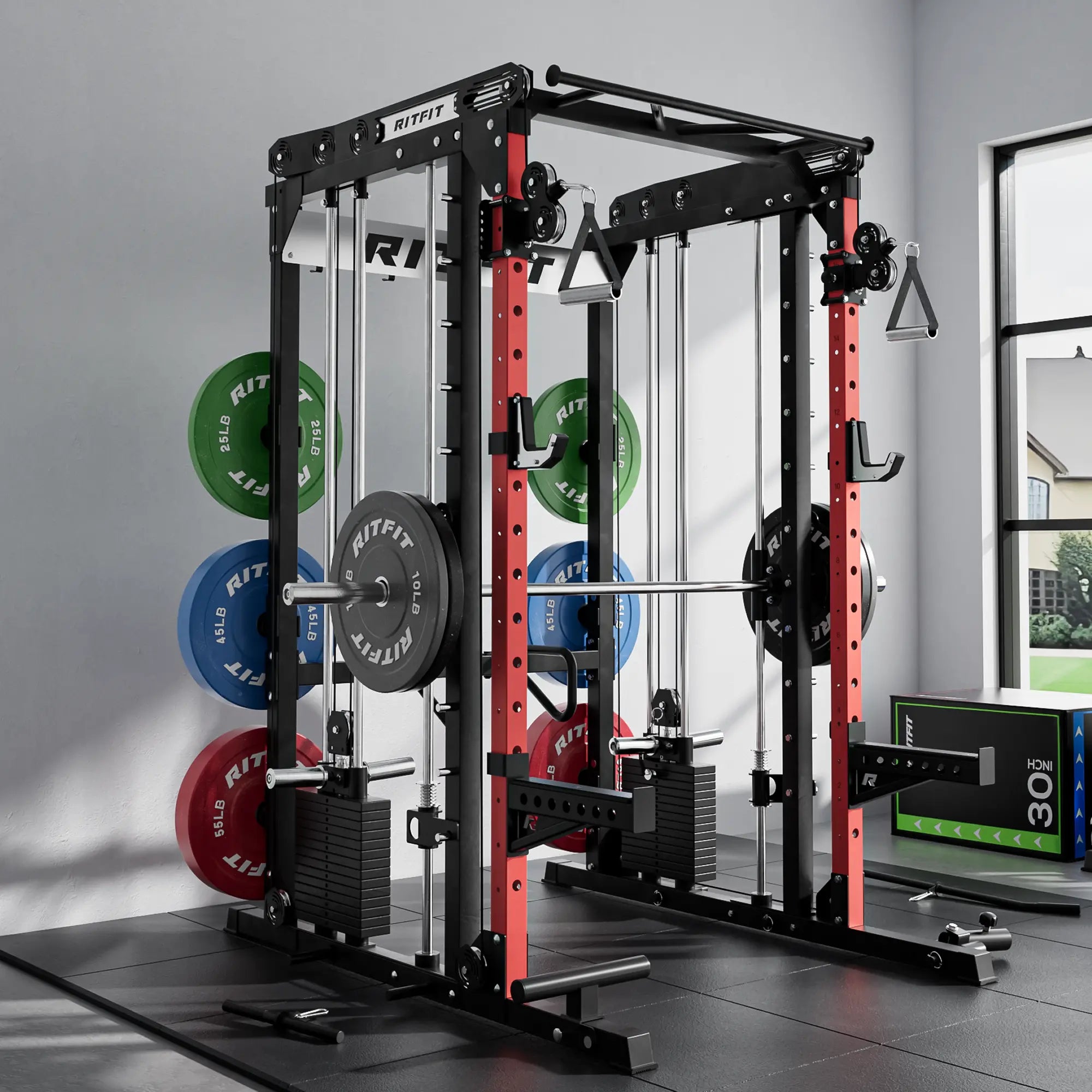
- Fixed-track machine: a dedicated unit such as the RitFit PSR05 multifunctional Smith machine keeps the bar on one vertical line, which is what makes bench placement the only variable you need to manage.
- Home setups: compact options like the RitFit M1 or the RitFit M3 follow the same rule, set the bench under the bar before loading.
If you also press with free weights, the free-weight incline bench angle guide handles the same question for a barbell and dumbbells, and the incline bench press upper chest guide covers that variation in detail. Treat the Smith machine press as the angle you can reproduce alone, and the free-weight press as the skill that carries over to barbell strength.
FAQs About the Incline Smith Machine Chest Press Angle
What angle should the bench be for the incline Smith machine chest press?
Around 30 degrees works best for most lifters who want upper chest emphasis. An EMG study of five bench angles found the clavicular head of the pectoralis most active at 30 degrees, while flat pressing favored the middle and lower chest and angles steeper than 45 degrees shifted work to the front delts.
Is 45 degrees too steep for an incline Smith machine press?
Forty five degrees sits right at the edge of a useful upper chest angle. The measured shift toward the anterior deltoid becomes significant above 45 degrees, and pectoral performance drops there, so treat 45 degrees as a shoulder-biased pressing angle rather than a true upper chest builder.
Why does bench placement matter more on a Smith machine?
A Smith bar only travels along its fixed track, so the bench, not your steering, decides where the bar meets your chest. With a free bar you move the bar to the upper chest, but on a Smith machine a bench a few inches off puts every rep on the neck or the mid-chest.
Does the incline Smith machine press build the upper chest?
Yes. A meta-analysis of 13 training studies found machines and free weights built similar muscle, and one training guide describes an 8-week Smith machine trial at 44 degrees that reported greater upper chest growth than flat Smith pressing, which supports the low to moderate incline range.
Can you do the incline Smith machine chest press without a spotter?
Yes, and that is one of the angle decision's practical advantages. The rotating hooks and adjustable safety stops catch a missed rep, so you can train close to failure alone, provided the stops sit just below your touch point before you load plates.
How much does the bar weigh on a Smith machine?
It depends on the machine. One guide notes that counterbalanced Smith bars often start at 10 to 20 lb, while bars without a counterweight can weigh 45 lb or more, so check the label on the frame and log the bar the same way every session.
Conclusion
Set the incline Smith machine chest press at about 30 degrees when the upper chest is the goal, keep 15 degrees for a flatter chest session, and save angles steeper than 45 degrees for shoulder work. On a Smith machine, lock in bench placement and track orientation first, then progress the load at that fixed notch, and visit the RitFit discount guide before you upgrade your setup.
Disclaimer
This article is for general fitness information and does not replace individual coaching or medical advice. Consult a qualified professional before changing your training, especially if you have a shoulder or chest injury history.
References
1. Rodríguez-Ridao D, Antequera-Vique JA, Martín-Fuentes I, Muyor JM. Effect of Five Bench Inclinations on the Electromyographic Activity of the Pectoralis Major, Anterior Deltoid, and Triceps Brachii during the Bench Press Exercise. Int J Environ Res Public Health. 2020;17(19). doi:10.3390/ijerph17197339. PMCID: PMC7579505
2. Stastny P, Gołaś A, Blazek D, et al. A systematic review of surface electromyography analyses of the bench press movement task. PLoS One. 2017;12(2):e0171632. doi:10.1371/journal.pone.0171632. PMCID: PMC5295722
3. Haugen ME, Vårvik FT, Larsen S, Haugen AS, van den Tillaar R, Bjørnsen T. Effect of free-weight vs. machine-based strength training on maximal strength, hypertrophy and jump performance - a systematic review and meta-analysis. BMC Sports Sci Med Rehabil. 2023;15(1):103. doi:10.1186/s13102-023-00713-4. PMCID: PMC10426227