








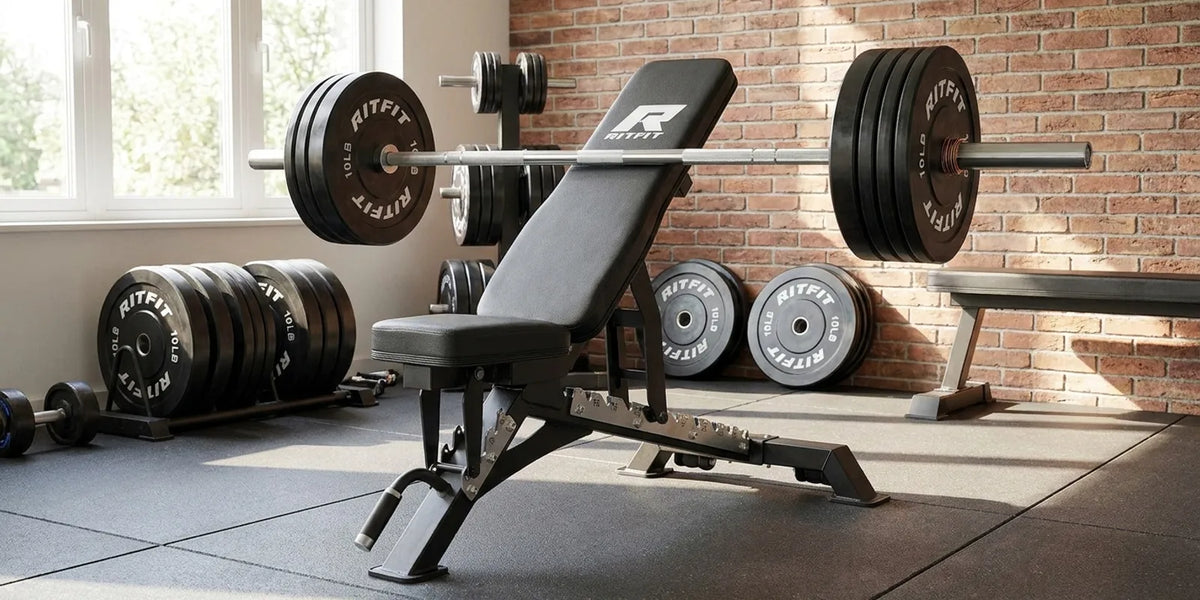
The best bumper plates for home gym training have one core job, absorbing the drop so your floor, your barbell, and the plates themselves all survive the workout. This guide breaks the purchase into six dimensions that separate a set you keep for a decade from one that cracks at the collar in a year.
You will not find set-building math or rubber versus iron debates here, just the plate specs that decide quality. Read it before you spend, and you will know exactly which numbers matter and which finishes fit your room.
Quick Answer: Bumper plates are rubber-encased Olympic plates built to absorb overhead drops, and the best bumper plates for home gym use combine virgin or high-grade rubber, a durometer near 90 Shore A, a tight 50mm collar fit, and the standard 450mm outer diameter on the 45s. Match those specs to your drop volume, noise limits, and budget, then choose the finish that fits your space.
Key Takeaways
- Material: Virgin rubber is denser, more uniform, and holds its collar longer, while recycled rubber costs less and covers moderate drop volume well.
- Hardness: Equipment guides typically recommend a durometer of 85-95 Shore A, where softer plates deaden the bounce and harder plates survive more drops.
- Diameter: Every 45 lb bumper shares the 450mm outer diameter of the IWF specification, so thickness, not diameter, decides how many plates load onto the bar.
- Bar fit: Plates are built for 50.8mm holes on 50mm sleeves, and tight tolerance plus a stainless or chrome-moly collar insert keeps the load quiet and intact.
- Color coding: Colored plates make weights identifiable at a glance, and competition schemes follow international weightlifting standards.
- Value: Urethane runs two to three times the price of comparable rubber, so rubber plates are the value anchor for most home gyms.
Virgin Rubber vs Recycled Rubber Bumper Plates
Virgin rubber is the material to pick when your bar hits the floor from overhead hundreds of times weekly, and recycled rubber is the value pick for moderate home training. One buyer's guide explains that virgin rubber is denser, more uniform, and handles repeated drops without deforming at the collar, while recycled rubber costs less, compresses less consistently, and can smell noticeably at unboxing.
- Virgin rubber: The denser, more uniform compound holds its collar shape under heavy drop volume and carries less smell out of the box.
- Recycled rubber: The budget-friendly compound handles squats, presses, and pulls well, with some off-gassing and softer compression behavior.
- Decision anchor: Match the material to your drop volume rather than the price tag, because overhead work punishes weak collars fastest.
Most rubber bumper plates fall into one of these two material camps, and that single split shapes price, smell, and collar life more than any other spec on the listing.
"Quality rubber plates with steel sleeves plates easy on the hardwood floors I don't normally drop my weights, but it's nice to know you can"
Ed, Verified Buyer, RitFit Olympic Bumper Weight Plates - 2-inch
How Durometer Hardness Shapes Bounce and Noise
A durometer between 85 and 95 Shore A is the right hardness zone for home gym bumper plates, because it balances bounce control against drop durability. Equipment guides typically recommend that 85-95 range for general training, since most plates sit somewhere between 80 and 95 Shore A overall.
- Softer plates, lower Shore A: They absorb more energy, bounce less, and suit garages under low ceilings or beside close neighbors.
- Harder plates, higher Shore A: They survive more high-rep drops but rebound unpredictably, which fits a dedicated lifting platform more than a shared garage.
- Dead bounce: A minimal-rebound plate stays close to where it lands, which keeps the bar within reach for the next weightlifting rep.
| Durometer band | Bounce behavior | Best home gym fit |
|---|---|---|
| Softer end of 80-95 | More dead bounce, quieter impact | Low ceilings, close neighbors, shared spaces |
| Mid-range 85-95 | Balanced rebound and durability | General home training and mixed lifts |
| Harder end of 80-95 | Longest life under high-rep drops, unpredictable rebound | Dedicated platforms and overhead specialists |
Bands follow the 80-95 Shore A range that most bumper plates occupy, per equipment buyer's guides.
Bumper Plate Thickness and How Many 45 lb Plates Fit One Barbell
Roughly four 45 lb plates fit on each side of a standard Olympic barbell before the 16 to 17 inch sleeve runs out of room. Every 45 lb bumper shares the 450mm outer diameter that matches the IWF specification, so thickness, not diameter, decides how much weight loads onto the bar. One guide explains that budget plates run thicker than competition plates because recycled rubber is less dense and needs more material to reach the target weight.
- Sleeve budget: A standard barbell offers approximately 16 to 17 inches of loadable sleeve per side, which is the hard ceiling on plate count.
- Plate width: A recycled rubber 45 runs roughly 1.25 to 1.5 inches wide, so four per side puts about 360 lbs of bumper plates on the bar.
- Slimmer options: Denser virgin rubber plates and competition-spec plates run thinner, which frees up sleeve space once your working weights climb.
Olympic bumper plates keep the same footprint on the floor at every quality tier, so the honest capacity question is always how many plates your sleeve holds, never how wide they stand.
"These things are beautiful. Must have for home gym, I was having trouble fitting enough weight on my machines with the thick bumper plates, these make a huge difference, i wish i would have bought these from the jump."
Corey, Verified Buyer, RitFit Silver Steel Strip Olympic Plates 2-Inch
Bar Fit: 50mm Center Hole, Sleeve Tolerance, and Collar Inserts
Bumper plates are molded for 50.8mm center holes that slide onto the 50mm sleeves of an Olympic barbell, and the tolerance of that hole decides how tight the pairing feels. Loose tolerance introduces wobble and sleeve stress, and plates from different brands may differ by half a millimeter or more in actual collar diameter. The steel collar insert is the failure point on budget plates, so insert quality matters as much as the rubber itself.
- Tight tolerance: Plates that load cleanly and do not rattle during a lift protect both the bar sleeve and your focus.
- Insert quality: Guides suggest looking for stainless or chrome-moly inserts over unspecified steel, and thicker inserts with larger bonding surfaces last longer.
- Mixed brands: When you build a set plate by plate, load the tightest-tolerance plates closest to the collar so they stabilize the stack.
Barbell bumpers and the bar itself age together, so treat the pairing as one system rather than two separate purchases.
"The standard bar length is a little over 7 feet, has '2-inch'/50mm diameter sleeves for loading the plates on, and weighs 20kg/44.1lbs. For home gym purposes, a 28.5 or 29mm bar will be the most durable and provide the best service over time. NEVER buy a 32mm bar. They are either junk, or a specialty squat bar that a home gym doesn't need."
Mark Rippetoe, Strength Coach and Author of Starting Strength, Starting Strength, How to Build a Home Gym
Color-Coded Bumper Plates: Training Colors vs Competition Colors
Color-coded bumper plates exist to make loading faster, because you identify the weight at a glance instead of reading stamped numbers between sets. Training colors follow the brand's own scheme for quick plate ID, while competition schemes follow the international weightlifting standard that assigns a fixed color to each weight class.
- Black plates: The classic training look keeps a garage gym clean, and it usually carries the lowest price in a rubber lineup.
- Training colors: The RitFit Color Olympic Bumper Weight Plates cut plate-ID time mid-session and make pair matching obvious.
- Design lines: The RitFit Pink Olympic Bumper Weight Plates treat the gym as a designed space where the plates match the rack instead of hiding from it.
For a themed build, our guide to the best American flag bumper plates for home gyms walks the full patriotic setup.
"Love the color bumper weights the coating on them makes it easier to handle. The steal weights dug in my wife's hands when moving them around the bumper plates are way more safe on your floor and toes lol plus safer and easy to move around we will never go back to steel plates"
Clifford J. Verified Buyer, RitFit Color Olympic Bumper Weight Plates - 2-Inch
Bumper Plate Prices: What You Actually Pay For
Bumper plate prices track material, insert quality, and finish, so the honest comparison is what each dollar buys in durability and fit rather than the sticker alone. A bumper plate is a weight plate purchase measured in years, which is why cost per year of use beats cost per pound. Buying a matched bumper plates set from one production run also reduces variance in collar fit compared with piecing plates together across brands.
- Rubber source: Virgin rubber commands the premium, and the premium pays off under heavy drop volume rather than casual use.
- Insert and tolerance: Stainless or chrome-moly inserts and tight machining cost more upfront and fail least at the collar.
- Finish: Color, fleck, and print finishes usually price above plain black because of extra molding and pigment work, not extra performance.
- Premium ceiling: Urethane runs two to three times the price of comparable rubber, which frames how much value the rubber tier protects.
Spec-per-dollar buyers will notice that the rubber lines deliver most of the urethane benefits while staying far below that premium ceiling.
"Considering the quality and performance, these plates offer excellent value for money. They are competitively priced compared to other high-end bumper plates on the market, yet do not compromise on quality and functionality."
Tyrone C. Verified Buyer, ToughFit Black Bumper Plates
Which RitFit Bumper Plates Are Best for Your Home Gym
The best RitFit bumper plates for your home gym are the line that matches your budget and your room's look, since every line shares the same Olympic dimensions. The full RitFit bumper plates collection spans black rubber, colored rubber, a fleck finish, design-driven lines, and steel builds, so the matrix below maps each line to the buyer it fits.
| RitFit line | Best for | Why it fits |
|---|---|---|
| RitFit Olympic Bumper Weight Plates, black | All-purpose training baseline | Quiet matte black look, the anchor pick for budget garage builds |
| RitFit Color Olympic Bumper Weight Plates | Faster plate ID | Color-coded by weight for quicker loading mid-session |
| RitFit High-Grade Color Bumper Plates | Upgraded color finish | Tighter finish on the same color-coding logic |
| RitFit Fleck Olympic Bumper Weight Plates | Texture over plain black | Speckled fleck finish with a distinct look |
| RitFit Pink Olympic Bumper Weight Plates | Design-first home gyms | Pink line for styled spaces where the rack is part of the decor |
| RitFit Pink Leopard Print Olympic Bumper Plates | Boldest aesthetic | Statement print finish for the loudest rooms |
| RitFit Patriotic Color Bumper Plates | Red, white, and blue themes | American flag color theme for patriotic builds |
| RitFit Silver Steel Strip Olympic Plates | Metal plate preference | Steel construction for lifters who prefer metal over rubber |
| RitFit Vintage Color-Coded Steel Olympic Plates | Color coding in steel | Vintage color-coded logic on a steel build |
Lines as listed in the current RitFit bumper plates collection.
For the classic garage build, the RitFit Olympic Bumper Weight Plates in black are the anchor pick, and the RitFit Fleck Olympic Bumper Weight Plates add texture when plain black feels too quiet.
Lifters who prefer metal can step into the RitFit Silver Steel Strip Olympic Plates or the RitFit Vintage Color-Coded Steel Olympic Plates for the same color logic in a steel build.
"The RitFit Olympic Rubber Bumper Plates are a solid budget-friendly option for home gym owners who want durable bumper plates without paying premium-brand prices. They offer low bounce, Olympic-standard sizing, and a durable rubber construction that works well for strength training, CrossFit-style workouts, and Olympic lifting practice."
Tiffany, Verified Buyer, RitFit Olympic Bumper Weight Plates - 2-inch
Long-Term Costs: Flooring, Barbells, and Growing Your Setup
The real long-term costs of bumper plate ownership sit under and around the plates, in the flooring and the setup you grow into. Guides commonly recommend 3/4-inch rubber stall matting under a home lifting area, because it handles moderate drop volume while thin rubber over concrete transmits enough force to crack plates at the collar. The bar matters too, since a true Olympic bar with 50mm sleeves protects the tolerance you paid for in the plates.
- Flooring first: Solve the surface before adding more plates, because the matting and the plates protect each other over years of drops.
- Bar quality: A durable Olympic bar keeps collar fit tight, while a bent or thin sleeve turns tight tolerance into rattle.
- Expansion path: Add plates in pairs as your working weights climb, and let the build grow toward the M1 multi functional home gym smith machine when the barbell alone stops covering your programming.
- Guided builds: The home gym guide walks the full layout, from flooring and racks to plate storage.
FAQs About Bumper Plates for Home Gym
What durometer should home gym bumper plates be?
Most bumper plates fall between 80 and 95 Shore A, and equipment guides typically recommend a durometer of 85 to 95 for general home training. Softer plates absorb more energy and bounce less, which helps when you train under low ceilings or near neighbors. Harder plates survive more drops but bounce less predictably, so a mid-range rating near 90 balances durability and control.
How thick are 45 lb bumper plates?
A 45 lb bumper plate in recycled rubber runs roughly 1.25 to 1.5 inches wide depending on the manufacturer, while denser virgin rubber and competition plates run slimmer. Every 45 lb plate still shares the same 450mm outer diameter that matches the IWF specification, so thickness is about how many plates fit your sleeve, not about lifting feel. Thicker budget plates simply leave less room on the bar.
Will bumper plates fit any barbell?
Bumper plates are manufactured for 50.8mm holes that fit 2-inch Olympic sleeves, while the standard barbell sleeve measures 50mm, so they fit any true Olympic bar. What varies is tolerance, because plates from different brands may differ by half a millimeter or more in actual collar diameter. Staying within one brand keeps the fit tight and keeps plates from rattling during a lift.
How many 45 lb bumper plates fit on one barbell?
A standard Olympic barbell offers approximately 16 to 17 inches of loadable sleeve per side. With recycled rubber 45 lb plates at roughly 1.25 to 1.5 inches wide, that works out to about four plates per side, or 360 lbs of bumpers plus the bar. Slimmer virgin rubber or steel plates fit more, which matters once your working weights climb past that range.
Are color bumper plates better than black plates?
The rubber is the same, so color coding is about function and style rather than performance. Colored plates let you identify weights at a glance and load the bar faster, and competition color schemes follow IWF weightlifting standards. Black plates keep a garage gym looking clean and usually cost the least, so the best choice depends on whether speed or budget leads your setup.
Is virgin rubber worth it for a home gym?
If you drop the bar overhead hundreds of times a week, equipment guides note that virgin rubber is the defensible choice, because it is denser, more uniform, and holds its collar shape longer. For moderate drop volume from squats, presses, and pulls, recycled rubber handles the load for less money, with a bit more smell at unboxing. Match the material to your drop volume, not to the marketing.
Do bumper plates protect a concrete floor?
Bumper plates absorb the energy of a drop instead of transferring it to the floor, so they protect concrete far better than iron. Still, guides commonly recommend 3/4-inch rubber stall matting under a home lifting area, because thin rubber over bare concrete transmits enough force to crack plates at the collar over time. The plates and the flooring protect each other.
Conclusion
The best bumper plates for home gym use come down to six checks, and they are virgin or recycled rubber matched to your drop volume, a durometer near the middle of the 85-95 Shore A band, honest thickness expectations per sleeve, a tight 50mm collar fit with a quality insert, color coding that speeds your loading, and a price that reflects those specs rather than a logo.
Run the checks, pick your RitFit line, and build from there. Before you check out, browse the current RitFit discount guide so your plate budget stretches further.
Disclaimer
This article is for general fitness information only and does not constitute medical, health, or professional training advice. Consult a qualified physician or certified trainer before starting any new lifting program, especially if you have a pre-existing injury or health condition.





