The best cardio machine for weight loss is the one you can use consistently, progress safely, and fit into your home gym. Treadmills usually lead for calorie output, rowers offer low impact full body work, bikes are beginner friendly, and ellipticals help users train longer with less joint stress.
Use this guide to compare cardio machines by calorie demand, joint impact, space needs, training style, and long term adherence. For the best body composition results, pair cardio with strength training instead of relying on cardio alone.
Key Takeaways
- Best for maximum calorie burn: A treadmill is usually the strongest choice for users who enjoy walking, incline work, jogging, or running.
- Best low impact full body option: A rowing machine trains the legs, hips, core, back, and arms while keeping impact low.
- Best for beginners: An exercise bike is easy to start, quiet, compact, and simple to adjust.
- Best for joint comfort: An elliptical supports longer cardio sessions with minimal impact.
- Best long term setup: Combine cardio with strength training using equipment such as RitFit dumbbells, a bench, or a full home gym system.
What Makes a Cardio Machine Good for Weight Loss?
A good cardio machine helps you burn energy, repeat workouts consistently, and increase intensity over time. The right choice depends on your body, space, budget, injury history, and training preference.
Calorie Burn
Calorie burn matters, but it should not be judged by generic numbers alone. Body weight, speed, incline, resistance, workout duration, and fitness level all change how much energy a session uses.
Consistency
The most effective cardio machine is the one you will actually use several times per week. A lower intensity workout done consistently beats an intense workout that feels unpleasant and gets skipped.
Joint Impact
Joint comfort is essential because pain quickly reduces adherence. Bikes, rowers, and ellipticals are usually easier to tolerate than running for users with knee, hip, or ankle concerns.
Progression Options
A strong weight loss machine should let you increase speed, incline, resistance, cadence, or workout duration. Progression keeps the workout challenging as your fitness improves.
Space and Noise
Home gym equipment must fit your room and lifestyle. A quiet bike or compact rower may work better in an apartment, while a treadmill may suit a garage gym with more floor space.
Best Cardio Machines for Weight Loss Compared
Cardio machines differ in how they challenge the body. A study comparing seven indoor cardio machines found treadmill exercise produced the highest energy expenditure, oxygen consumption, and heart rate in recreationally active middle aged men, followed by stair climber and elliptical training.[1]
| Machine | Best For | Impact Level | Space Need | Weight Loss Value |
|---|---|---|---|---|
| Treadmill | Incline walking, jogging, running, intervals | Low to high depending on use | Medium to large | Highest calorie output potential |
| Rowing Machine | Low impact full body cardio | Low | Medium, often vertical storage | Excellent total body efficiency |
| Exercise Bike | Beginners, small spaces, joint comfort | Low | Small to medium | Strong adherence and interval value |
| Elliptical | Low impact steady cardio | Very low | Medium to large | Good for longer sessions |
| Stair Climber | Lower body conditioning | Medium | Medium to large | High effort with strong leg demand |
1. Treadmill: Best for Maximum Calorie Output
A treadmill is usually the best cardio machine for users who want the highest calorie output and enjoy walking, incline work, jogging, or running. It is especially useful because you can scale intensity from easy walking to hard intervals without learning a new movement pattern.
- Why it works: Walking and running use large lower body muscles and can be progressed with speed or incline.
- Best use: Use incline walking if running bothers your joints, and use short intervals only after building a base.
- Buying focus: Look for stable construction, adequate deck size, incline options, cushioning, and a motor that matches your training style.
- Main limitation: Running impact can bother knees, hips, ankles, or lower back if volume rises too quickly.
Research comparing treadmill, elliptical, and rowing exercise found treadmill training produced greater maximal fat oxidation in the studied conditions, which supports its value as a strong cardio option when it feels comfortable and sustainable.[2]
2. Rowing Machine: Best Low Impact Full Body Option
A rowing machine is one of the best cardio machines for weight loss when you want low impact training that also involves the upper body. Each stroke uses the legs, hips, trunk, back, and arms, which makes rowing efficient for short home workouts.
- Why it works: Rowing combines cardiovascular demand with repeated pulling and hip drive.
- Best use: Start with technique first, then add intervals or longer steady sessions.
- Buying focus: Compare resistance type, seat comfort, monitor quality, handle feel, noise level, and storage style.
- Main limitation: Poor form can shift stress to the lower back, so beginners should learn the drive, finish, recovery sequence before increasing intensity.
3. Exercise Bike: Best for Beginners and Joint Friendly Training
An exercise bike is often the easiest cardio machine to use consistently at home. It is quiet, compact, low impact, and easy to adjust for steady cardio or short intervals.
- Why it works: Cycling lets users raise heart rate without repeated foot strike impact.
- Best use: Use moderate rides for recovery days and controlled intervals for higher intensity sessions.
- Buying focus: Check seat adjustability, handlebar position, resistance smoothness, pedal stability, and whether the machine works without a subscription.
- Main limitation: Bikes train mostly the lower body, so they should be paired with strength work for a more complete home program.
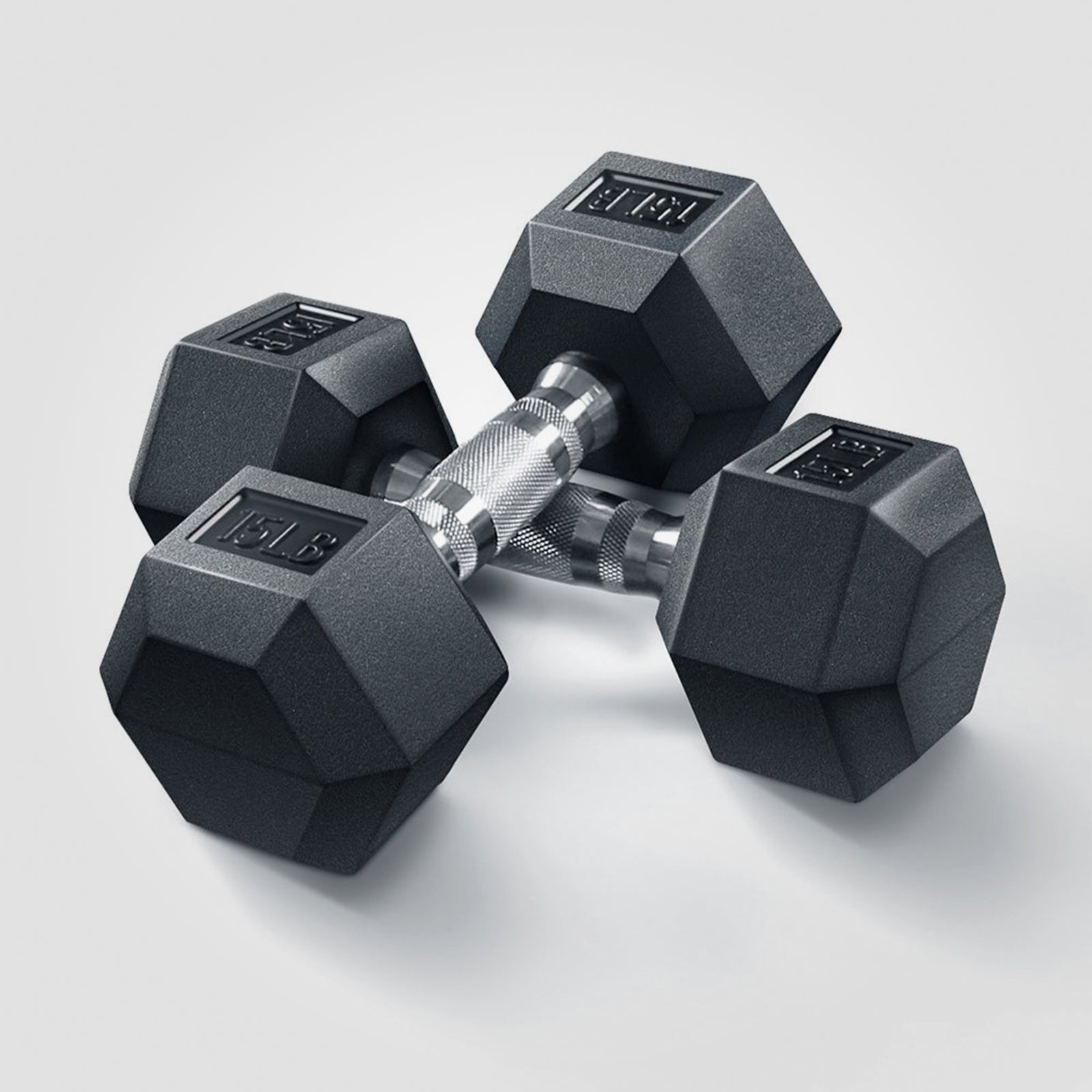
For users building a complete home gym around cycling or other cardio, strength equipment such as RitFit Hex Rubber Dumbbells can support full body resistance training without taking over the room.
4. Elliptical: Best for Comfortable Steady State Cardio
An elliptical is a strong option for users who want a low impact cardio machine that feels smoother than walking or running. It is especially helpful for longer steady sessions because the feet stay supported on the pedals.
- Why it works: Elliptical motion reduces impact while still allowing the heart rate to rise.
- Best use: Use moderate effort sessions when you want longer calorie burning workouts with less joint stress.
- Buying focus: Compare stride length, pedal comfort, handle design, resistance range, and total machine stability.
- Main limitation: Some compact ellipticals have short stride paths that may feel unnatural for taller users.
5. Stair Climber: Best for Lower Body Conditioning
A stair climber can be highly demanding because it keeps the legs working against gravity. It is a good option for users with healthy knees who want cardio that also challenges the glutes, quads, calves, and conditioning capacity.
- Why it works: Climbing raises heart rate quickly and creates strong lower body fatigue.
- Best use: Use short controlled sessions first, then add time gradually.
- Buying focus: Check step stability, handle placement, speed control, ceiling clearance, and total footprint.
- Main limitation: Stair climbing can irritate knees if intensity, depth, or volume increases too fast.
HIIT vs Steady State Cardio for Weight Loss
HIIT can be time efficient, but it is not automatically better than steady state cardio for fat loss. A systematic review and meta analysis found that HIIT improved body composition compared with control conditions, with cycling based HIIT showing favorable outcomes in the included studies.[3]
Another systematic review found HIIT was not superior to continuous aerobic training for reducing body fat percentage or abdominal visceral fat in adults with excess body weight. This means the better choice is usually the method you can recover from and repeat consistently.[4]
- Choose HIIT if: You already have a cardio base, limited time, and no major joint or cardiovascular concerns.
- Choose steady state if: You are a beginner, returning after a break, managing joint discomfort, or building consistency.
- Best mix: Use one or two interval sessions per week and two or three moderate sessions if recovery is good.
Cardio Machine Selection Matrix
The best cardio machine depends on the problem you are trying to solve. Use this matrix to match your goal with the most practical machine type.
| Goal | Best Option | Why It Fits |
|---|---|---|
| Maximum calorie demand | Treadmill | Speed and incline make progression simple. |
| Low impact full body cardio | Rowing machine | Uses legs, hips, core, back, and arms. |
| Beginner friendly training | Exercise bike | Easy to start and simple to adjust. |
| Joint comfort | Elliptical or bike | Reduces repeated foot strike impact. |
| Lower body conditioning | Stair climber | Challenges glutes, quads, calves, and endurance. |
| Complete body composition plan | Cardio plus strength training | Supports calorie burn, muscle retention, and long term progress. |
Cardio Machine vs Strength Training for Weight Loss
Cardio helps burn energy during the workout, while strength training helps preserve and build lean muscle during a weight loss phase. A complete home gym plan should include both if your goal is better body composition, not just a lower scale number.
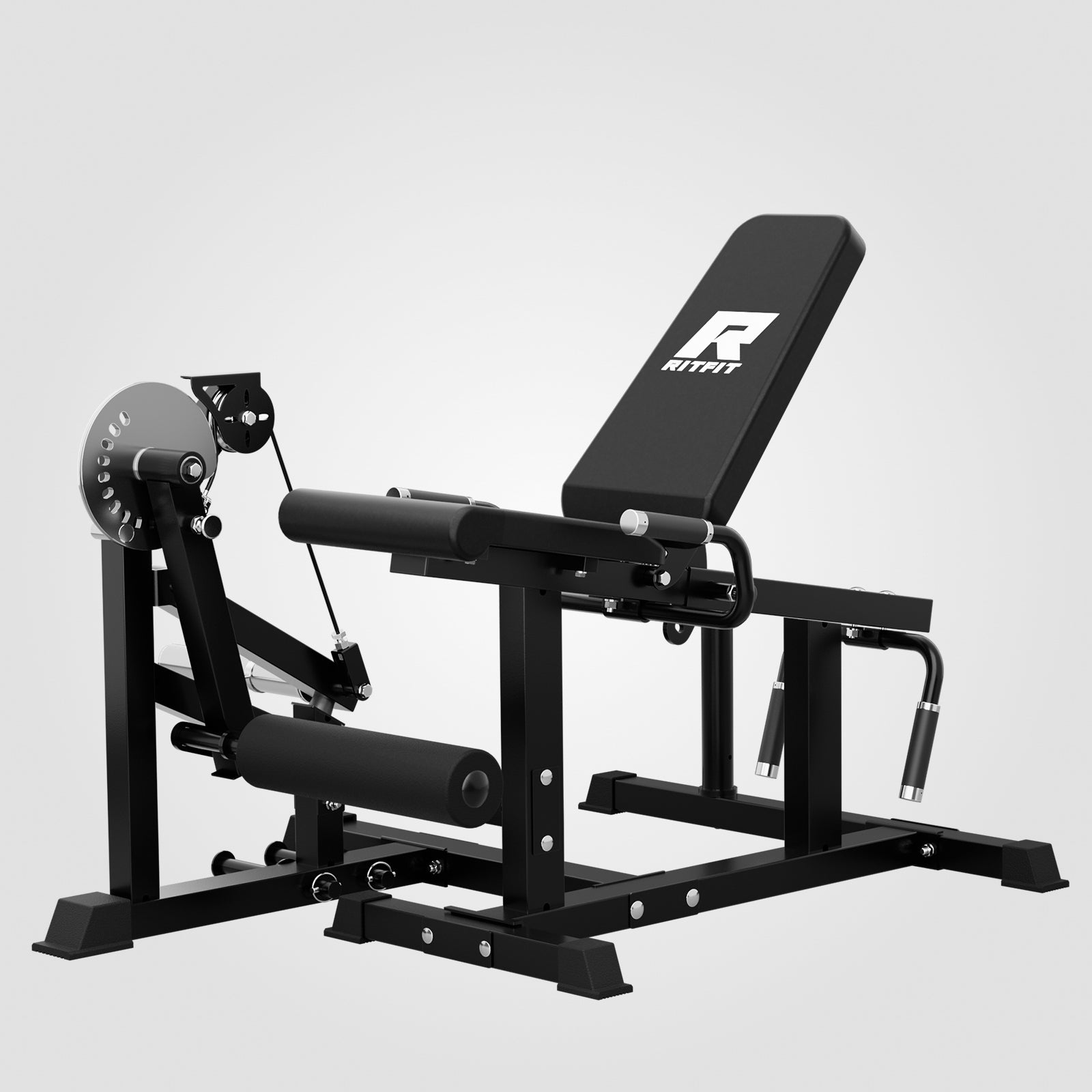
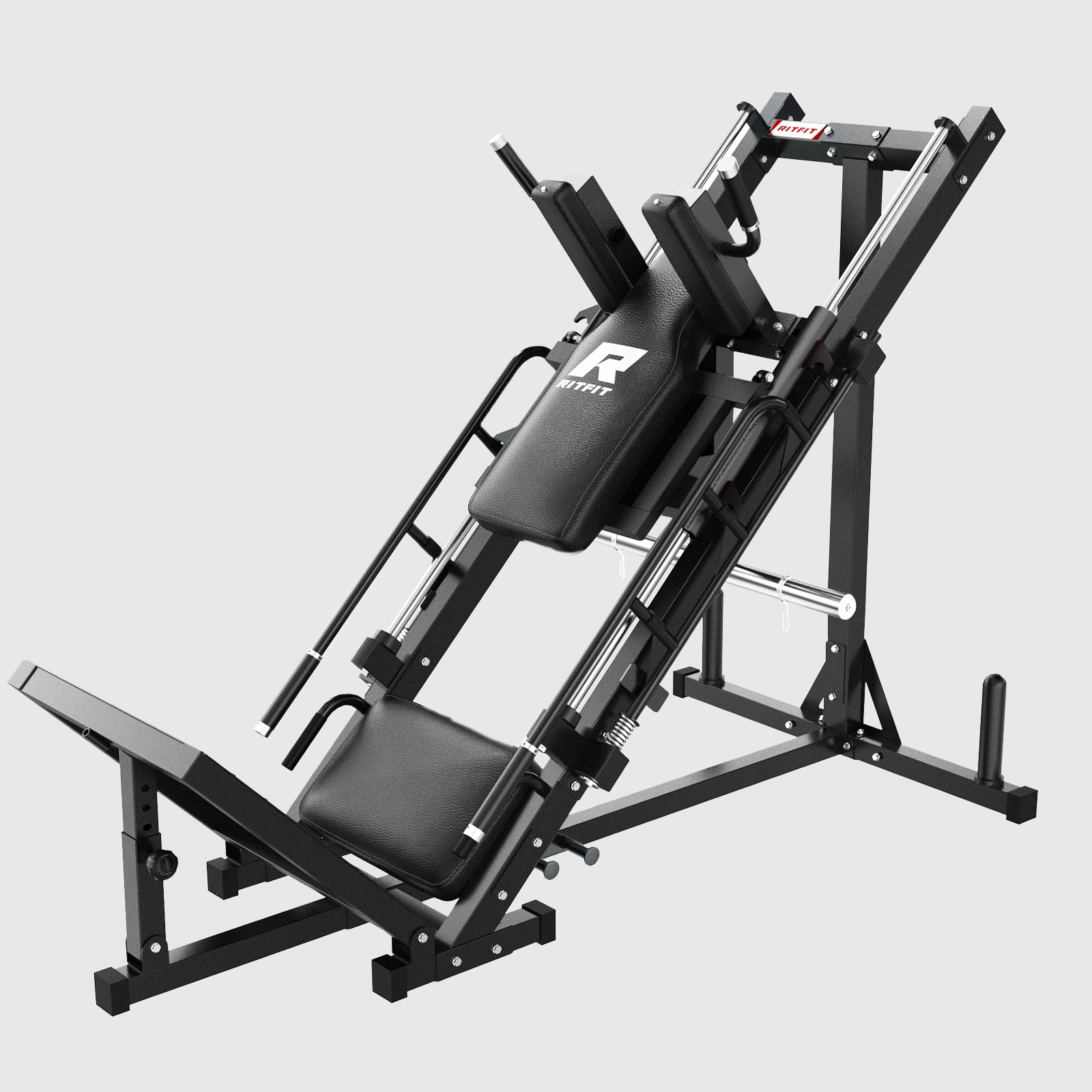
That is why many home gym users pair one cardio machine with strength tools such as RitFit weight benches, RitFit strength machines, or a compact RitFit Smith machine setup.
Best Home Gym Setup for Weight Loss
The best home gym for weight loss does not need every cardio machine. It needs one cardio option you enjoy, one strength setup you can progress, and enough open space to move safely.
- Small space setup: Choose an exercise bike or compact rower, then add dumbbells and a bench.
- Garage gym setup: Choose a treadmill or rower, then add a rack, bench, plates, and dumbbells.
- Joint friendly setup: Choose a bike or elliptical, then use controlled strength training to build muscle around the hips and knees.
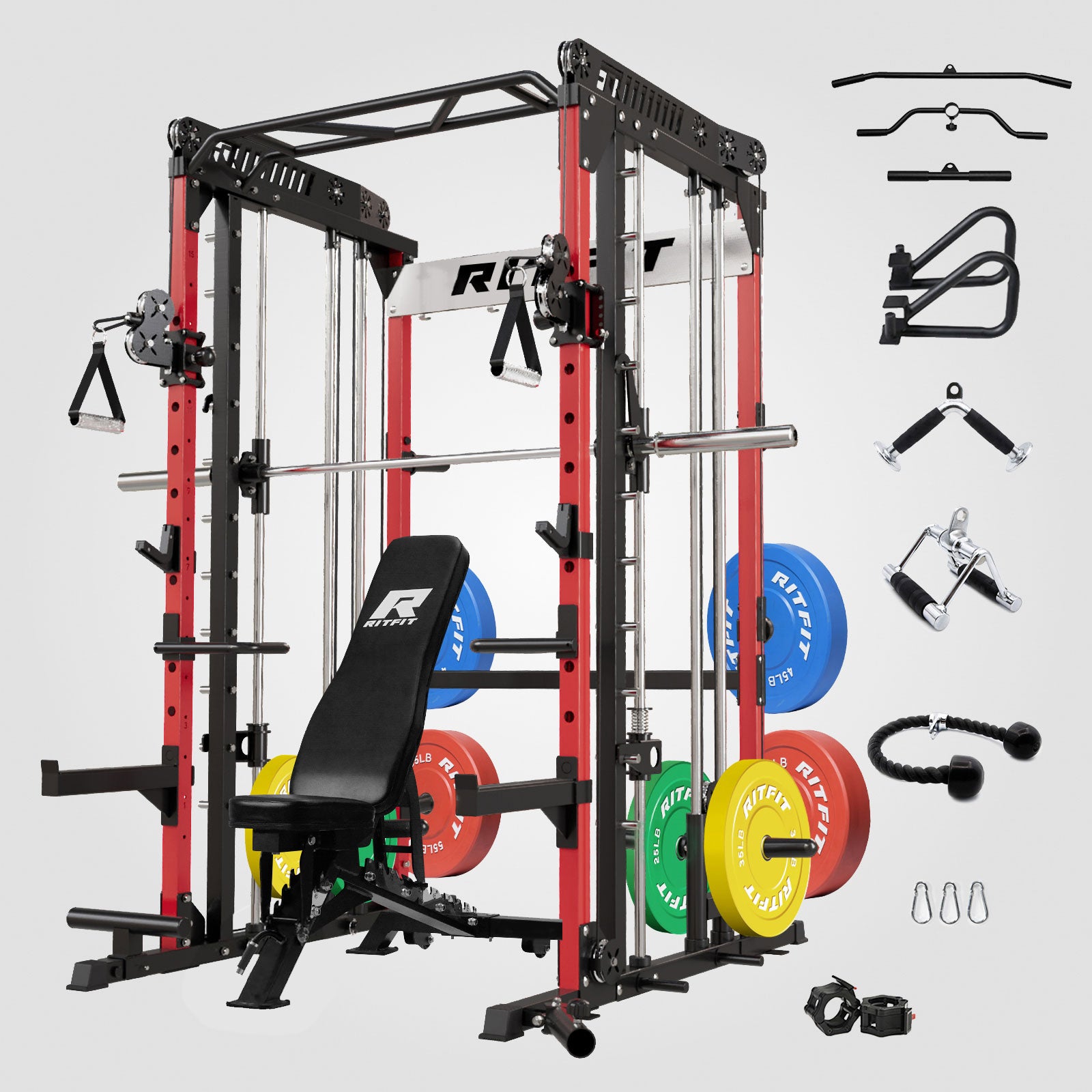
- Full body setup: Pair cardio with an all in one strength station such as the RitFit M1 PRO Smith Machine Weight Stack Home Gym Package.
If your goal is a stronger body and better home training consistency, start with the machine you will use most often and add resistance equipment over time. The RitFit GATOR Adjustable Weight Bench can support pressing, rows, split squats, step ups, and dumbbell circuits in a compact strength area.
Sample Weekly Weight Loss Plan for a Home Gym
A practical weekly plan should balance cardio intensity, strength training, and recovery. Exercise alone can create less weight loss than expected because some people compensate through appetite, movement, or energy balance changes, so nutrition and consistency still matter.[5]
| Day | Workout | Focus |
|---|---|---|
| Monday | 30 minutes incline walking plus full body strength | Calorie burn and muscle retention |
| Tuesday | Bike intervals or rowing intervals | Cardio intensity |
| Wednesday | Light walk, mobility, or rest | Recovery |
| Thursday | Dumbbell or Smith machine strength workout | Progressive resistance training |
| Friday | Steady bike, elliptical, or rower session | Low impact endurance |
| Saturday | Optional cardio plus core training | Extra volume if recovery is good |
| Sunday | Rest or easy outdoor walk | Consistency and recovery |
What to Avoid When Buying a Cardio Machine for Weight Loss
The wrong machine is usually the one that does not fit your body, room, budget, or habits. Avoid buying based only on calorie estimates because long term use matters more than a perfect ranking.
- A machine you dislike using: Enjoyment and comfort strongly affect adherence.
- Oversized equipment: Measure floor space, ceiling height, storage path, and walking clearance before buying.
- Subscription dependent features: Make sure the machine still works well without a paid app.
- Unstable frames: Wobble affects safety, confidence, and workout quality.
- No strength plan: Cardio supports calorie burn, but resistance training supports muscle and long term body composition.
For more strength focused home gym planning, read the RitFit guide to choosing the best home weight machine or explore beginner friendly options in RitFit weighted bar exercises for beginners.
FAQs
What is the best cardio machine for weight loss at home?
The best cardio machine for weight loss at home is the one you can use consistently. A treadmill usually offers the highest calorie demand, while a rower, bike, or elliptical may be better if you need lower impact, quieter workouts, or a smaller footprint.
Which cardio machine burns the most calories?
A treadmill often burns the most calories because speed and incline can raise total effort quickly. Actual calorie burn depends on body weight, workout intensity, fitness level, and duration, so a machine you use regularly may outperform a harder machine you rarely use.
Is a treadmill or rowing machine better for weight loss?
A treadmill is often better for maximum calorie output, while a rowing machine is better for low impact full body training. Choose a treadmill if you enjoy walking or running, and choose a rower if you want legs, hips, core, back, and arms involved.
Can an exercise bike help with weight loss?
Yes. An exercise bike can help with weight loss when it is used consistently and paired with nutrition control. Bikes are low impact, quiet, and beginner friendly, which makes them useful for steady cardio, intervals, recovery days, and small home gym spaces.
What cardio machine is best for bad knees?
The best cardio machine for bad knees is usually a bike, elliptical, or rower because these options reduce repeated impact. Knee comfort depends on setup, range of motion, resistance, and prior injury, so start gently and stop if pain increases.
How often should I use a cardio machine to lose weight?
Most people can start with three to five cardio sessions per week, depending on fitness level and recovery. Beginners should begin with shorter moderate sessions, then increase time, resistance, incline, or intervals gradually while keeping soreness and joint pain under control.
Should I do cardio or strength training first for weight loss?
Do strength training first if your main goal is muscle retention, lifting performance, or better body composition. Do cardio first if your main goal is endurance or a dedicated cardio session, and keep hard intervals away from heavy lower body strength days when possible.
Can cardio machines help lose belly fat?
Yes. Cardio machines can help reduce belly fat as part of overall fat loss, but they cannot target only the stomach. Combine regular cardio, strength training, enough protein, sleep, and a sustainable calorie deficit for better long term body composition results.
Conclusion
The best cardio machine for weight loss is not always the machine with the highest calorie estimate. Choose the option you can use consistently, progress safely, and combine with strength training for better long term body composition.
A treadmill is strongest for calorie demand, a rower is best for low impact full body work, a bike is easiest for beginners, and an elliptical is ideal for joint friendly steady cardio.
Disclaimer: This article is for general fitness education only and is not medical advice. If you have heart disease, joint pain, pregnancy, a history of disordered eating, or any medical condition, speak with a qualified healthcare professional before starting a new weight loss or high intensity exercise program.
References
- Prieto González P, Yagin FH. Energy expenditure, oxygen consumption, and heart rate while exercising on seven different indoor cardio machines at maximum and self selected submaximal intensity. Front Sports Act Living. 2024;6:1313886. doi:10.3389/fspor.2024.1313886
- Filipovic M, Munten S, Herzig KH, Gagnon DD. Maximal fat oxidation: comparison between treadmill, elliptical and rowing exercises. J Sports Sci Med. 2021;20(1):170-178. doi:10.52082/jssm.2021.170
- Khodadadi F, Bagheri R, Negaresh R, Moradi S, Nordvall M, Camera DM, Wong A, Suzuki K. The effect of high intensity interval training type on body fat percentage, fat and fat free mass: a systematic review and meta analysis of randomized clinical trials. J Clin Med. 2023;12(6):2291. doi:10.3390/jcm12062291
- Kramer AM, Martins JB, de Oliveira PC, Lehnen AM, Waclawovsky G. High intensity interval training is not superior to continuous aerobic training in reducing body fat: a systematic review and meta analysis of randomized clinical trials. J Exerc Sci Fit. 2023;21(4):385-394. doi:10.1016/j.jesf.2023.09.002
- Flack KD, Hays HM, Moreland J, Long DE. Exercise for weight loss: further evaluating energy compensation with exercise. Med Sci Sports Exerc. 2020;52(11):2466-2475. doi:10.1249/MSS.0000000000002376