The best flooring for a home gym protects your subfloor, muffles dropped weights, and gives you a stable base for everything from deadlifts to jump rope. This guide breaks down the top options so you can match a surface to how you actually train.
You will learn how rubber, cork, foam, and stall mats compare, what thickness you need, and how to measure your room. Use this to plan a workout room that is safe, quiet, and built to last.
Quick Answer: Rubber is the best flooring for a home gym because it is durable, grippy, and protective under dropped weights, while cork suits only light, quiet rooms. Use 3/4-inch rubber mats or tiles in lifting zones and lighter foam tiles for bodyweight and cardio areas.
Key Takeaways
- Rubber wins: Rubber is the most durable home gym flooring and handles dropped dumbbells and barbells without damaging your subfloor.
- Match thickness: Choose at least 3/8-inch rubber for Olympic lifting and 1/2 to 3/4 inch for regular heavy drops.
- Cork is niche: Cork is comfortable and eco-friendly but only suits light training such as yoga, stretching, and bodyweight sessions.
- Foam has limits: EVA foam tiles are cheap and soft for cardio and play areas but compress permanently under heavy equipment.
- Plan first: Measure your room, add about 10 percent extra for cuts, and match flooring type to your training style.
What Is the Best Home Gym Flooring?
Rubber is the best flooring for a home gym for most lifters because it absorbs impact, grips the surface, and lasts for years. For bodyweight and cardio training, foam or cork tiles work fine and cost less.
- Heavy lifting and deadlifts: Rubber mats at 3/4-inch thickness protect concrete from dropped bars and plates, so the floor stays level under a loaded rack.
- Bodyweight and cardio: Foam or cork tiles cushion jump rope, HIIT, and yoga while keeping the room quiet and warm underfoot.
- Multi-use family room: Interlocking rubber tiles give a clean look, hide seams, and survive equipment moving around the space.
- Renters and upstairs gyms: Lightweight tiles lay flat without adhesive and can be pulled up and reinstalled when you move.
Pair your floor with the right setup, whether that is a complete home gym plan or a smaller space that starts with a single rack. When in doubt, start with rubber in the lifting zone and layer lighter material where you stretch or do cardio.
Why Home Gym Flooring Matters
Home gym flooring matters because it protects your subfloor from impact and noise while giving your feet a stable surface to push against. A bare floor leaves your home at risk and sends the shock of every drop straight through your body.
- Impact protection: Research found that a firm training surface can create impact forces of three to four times body weight during high-intensity moves, and that more compliant surfaces lower the rate at which landing forces load the legs [1][2].
- Subfloor safety: Rubber absorbs the shock of dropped plates so concrete and wood floors avoid cracks, chips, and permanent dents.
- Noise control: A layer of dense rubber dulls the clang of plates and keeps neighbors and family from hearing every rep.
- Traction and stability: A grippy, non-slip surface keeps your feet planted during squats and prevents racks and benches from sliding mid-set.
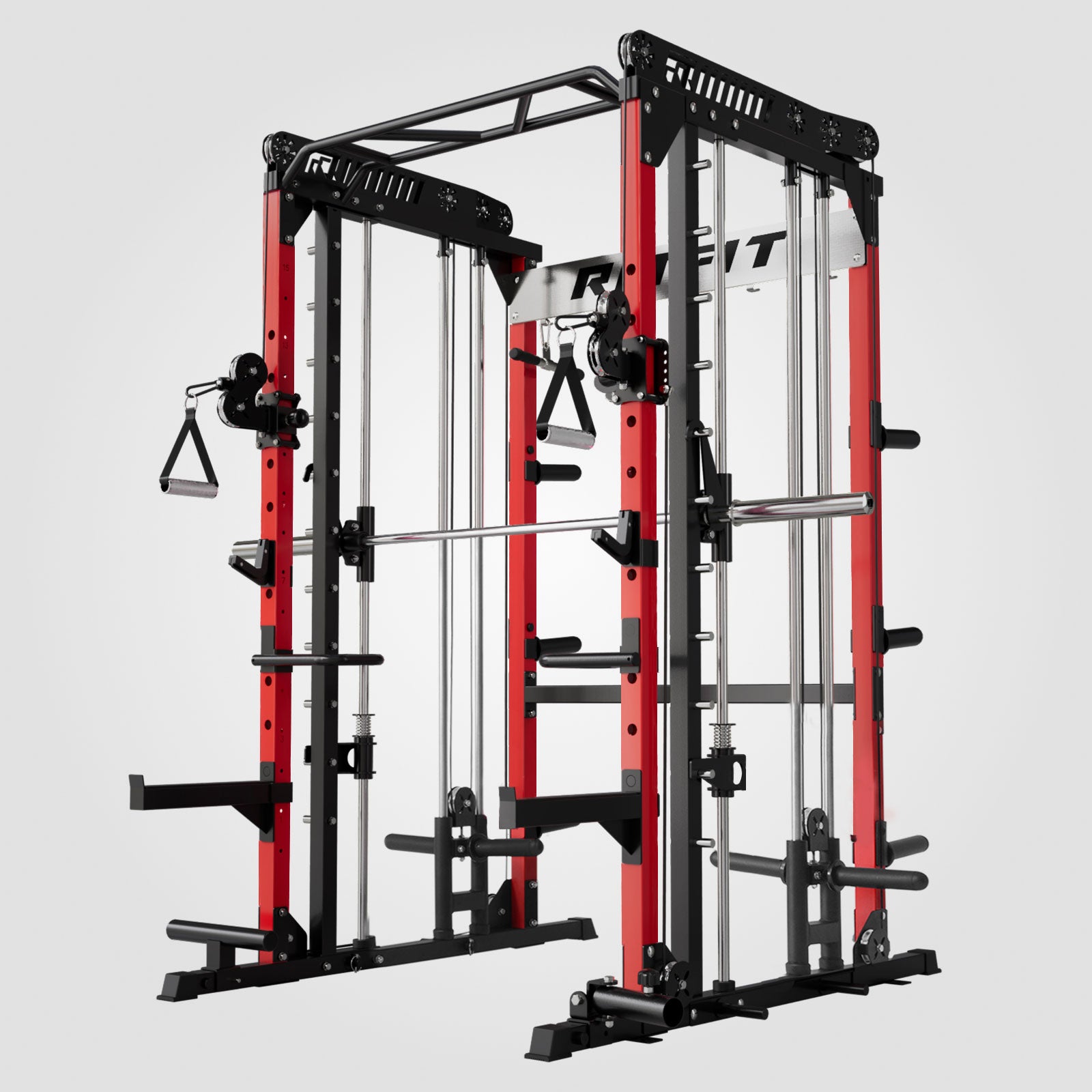
That protective layer also extends the life of your RitFit P3 Power Cage and other equipment by keeping heavy frames level on a flat, cushioned base.
Home Gym Flooring Types Compared
Each flooring material trades off durability, comfort, cost, and installation effort, so the right pick depends on what you train. Rubber leads for strength work, while foam, cork, and turf serve lighter or multi-use rooms.
| Flooring Type | Best For | Typical Cost | Key Trade-offs |
|---|---|---|---|
| Rubber mats (3/4 in) | Heavy lifting, deadlifts, rack zone | About $2-3 per sq ft | Most durable, handles dropped weights |
| Rubber interlocking tiles | Small rooms, clean look, racks | About $2.50-4.50 per sq ft | Easy DIY install, removable, color options |
| Rubber rolls | Large dedicated rooms | Varies by thickness | Seamless look, needs adhesive or tape |
| EVA foam tiles | Bodyweight, yoga, cardio, playroom | About $1-2 per sq ft | Soft and cheap, not for heavy weights |
| Cork flooring | Light training, yoga, quiet rooms | Higher cost | Eco-friendly and warm, low-impact only |
| Vinyl or turf | Cardio, sled work, multi-use | Varies | Easy to clean, less impact protection |
Costs are typical retail ranges for residential materials in 2026; thickness and density change the final price.
Rubber Flooring: The Best Choice for Lifting
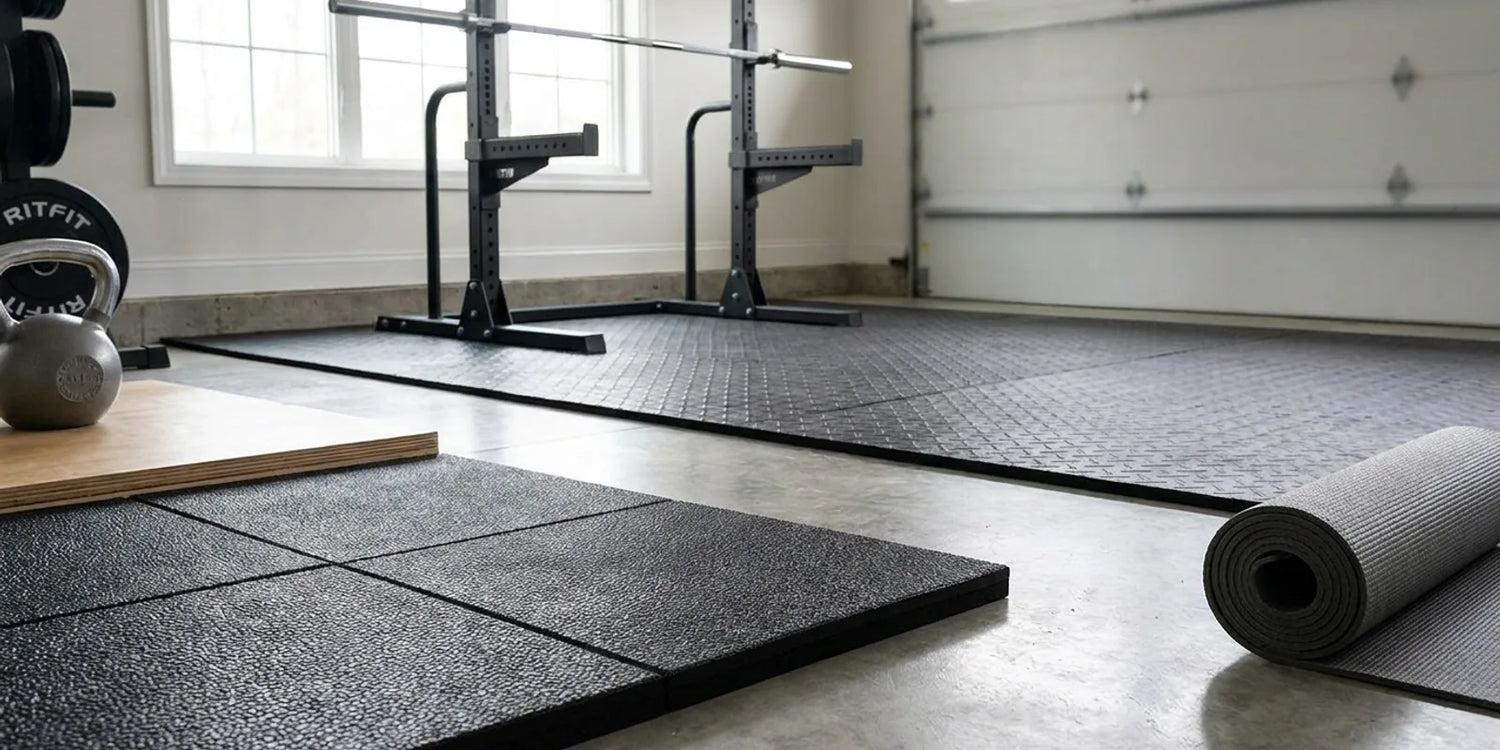
Rubber is the standard in gyms because it is dense enough to absorb impact without losing shape under a loaded bar. It comes in mats, tiles, and rolls, so you can cover a single deadlift zone or a full room.
- Durability: Quality 3/4-inch rubber mats typically last a decade or more under heavy residential use, while interlocking tiles run about 5 to 8 years.
- Installs flat: Mats lay down without adhesive and stay put from their own weight, while tiles click together like a puzzle.
- Easy to clean: Rubber resists sweat and water, so a broom or damp mop keeps it looking fresh.
If you want a ready-made surface, the high-density rubber interlocking gym flooring mats from RitFit cover a training zone quickly and stay locked during heavy sets.
Is Cork Flooring Good for Home Gyms?
Cork is good for a home gym only when your training is low-impact, such as yoga, stretching, or bodyweight circuits. Its natural elasticity feels comfortable and warm underfoot, but it is not dense enough to survive dropped iron.
- Pros: Eco-friendly, comfortable, naturally antimicrobial, and reduces noise in quiet workout rooms.
- Cons: Dents under heavy equipment, punctures easily, and absorbs moisture if it is not sealed well.
Treat cork as a finishing layer for a calm studio-style room, not a protective surface under a squat rack or dumbbell station.
Foam Tiles for Bodyweight and Cardio
EVA foam tiles are the cheapest option and shine for cardio, mobility work, and playroom spaces. They soften landings and are safe for kids, but they compress permanently under heavy gear.
- Great value: Foam costs the least per square foot and installs in minutes with no tools.
- Real limits: Loaded bars and dropped dumbbells create permanent divots, so foam never sits under a rack or deadlift zone.
Horse Stall Mats: The Budget Workhorse
Horse stall mats are thick vulcanized rubber sold at farm supply stores, and they deliver commercial-grade impact protection for a low price. They are heavy and smell at first, but many lifters use them to cover a garage floor for under a few hundred dollars.
- Best value per square foot: A 4x6-foot, 3/4-inch mat typically costs about $50, and six mats cover a full training area.
- Watch the seams: Edges can curl and gaps collect debris, so tape or weigh the seams down after installation.
How Thick Should Home Gym Flooring Be?
Home gym flooring should be at least 8 millimeters thick for general training, with 3/8 inch as the minimum for Olympic lifting and 1/2 to 3/4 inch for regular heavy drops. Thicker rubber absorbs more impact and noise, so match the depth to the heaviest thing you drop.
- 8 millimeters: The most common thickness for general home gyms, fine for bodyweight, cardio, and moderate dumbbell work.
- 3/8 inch and up: The floor CrossFit and Olympic lifting need, since barbells come down with force from overhead.
- 1/2 to 3/4 inch: Best for zones where you regularly drop heavy dumbbells or kettlebells, giving your subfloor the most protection.
Research indicates compliant flooring can reduce hip impact forces by roughly 16 to 51 percent compared with a rigid surface, which is why a thick rubber layer matters in rooms above garages or basements [3]. Lay a lifting platform or an extra mat in the drop zone if you deadlift or clean with bumper plates.
How to Choose the Right Flooring for Your Home Gym
To choose the right flooring for your home gym, match the material and thickness to your training style, your space, and your budget. Start with the heaviest activity you plan to do, then plan coverage for the whole room.
Match Flooring to Your Training Style
Your training style decides how much impact protection you need, so list your top three activities before you shop.
- Strength and powerlifting: Use 3/4-inch rubber mats under the rack and deadlift zone for stability and impact protection.
- Bodyweight, yoga, and cardio: Foam or cork tiles give a comfortable, quiet surface for jump rope, HIIT, and mobility work.
- Mixed home gym: Cover lifting zones in rubber and add foam or a yoga mat where you stretch, so each surface matches the activity.
Plan Your Space and Budget
Set a budget per square foot first, because it changes which option makes sense for your room size. A large garage gym is often cheaper to cover with stall mats, while a small, polished room may justify interlocking rubber tiles.
- Small spaces: Tiles are lighter, easier to cut, and can be reinstalled if you move, making them ideal for spare rooms and apartments.
- Large rooms: Rolls or stall mats cover more area for less money, with the trade-off of heavier handling during installation.
- Long-term cost: Rubber lasts a decade or more and survives relocation, while foam tiles may need replacing every few years as they compress.
Building a complete setup from scratch? Browse the gym accessories collection for mats and finishing touches, and pair your floor with an M1 Multi Functional Home Gym Smith Machine for a full strength station.
"If your space is limited, a good set of adjustable dumbbells might be your better option. They will allow you to progress to heavier weight as you get stronger."
Jeff Cavaliere, MSPT, CSCS, Physical Therapist and Strength Coach and Creator of ATHLEAN-X, Ultimate Total Body Dumbbell Workout
How Much Flooring Do You Need?
To find how much home gym flooring you need, measure the length and width of your workout space in feet, multiply them for square footage, and add about 10 percent for cuts and mistakes. That extra covers trimming around walls, doors, and equipment.
- Measure the room: Use a tape measure along the two longest walls and record length times width in feet.
- Mark the drop zone: Give the rack and deadlift area a slightly larger footprint than the equipment, at least a few feet past the bar ends.
- Order with buffer: Add 10 percent to your total and keep offcuts for future repairs or a small stretching area.
For a typical single-car garage around 200 square feet, that means ordering roughly 220 square feet of material. Double-check tile pack counts and roll lengths before you buy, since tile edge designs and roll widths change the layout.
Common Home Gym Flooring Mistakes to Avoid
The most common home gym flooring mistakes come from picking a surface that is too thin or too soft for the activity. Avoid these five before they cost you a subfloor.
- Using foam under heavy weights: Loaded bars and dropped dumbbells crush foam tiles permanently, so keep foam out of lifting zones.
- Choosing too-thin rubber: An 8-millimeter mat will not save concrete from a heavy barbell drop, so step up to 3/4 inch where plates fall.
- Skipping the buffer: Ordering exact room footage leaves no room for cutting errors or tricky corners, and a second order may not match.
- Ignoring seam prep: Curled edges on rolls and tiles collect debris and trip you up, so tape or weigh seams down from day one.
- Forgetting the subfloor: Placing rubber directly on rough concrete can grind both surfaces, so clean and level the base before laying anything.
Plan your full space before you buy, then build out the room step by step using home gym ideas for layout inspiration and a RitFit Home Gym Package M1 or PSR05 package for the equipment that sits on top.
FAQs About Home Gym Flooring
Is cork flooring good for home gyms?
Cork is comfortable, warm, and eco-friendly, and its natural elasticity absorbs low-impact shock, making it nice for yoga, stretching, and bodyweight sessions. However, cork is not dense enough for heavy dumbbell or barbell drops, so it is best for lighter, quieter home workout rooms.
What is the best flooring for a home gym?
For most home gyms, rubber flooring is the best all-round choice because it is durable, grippy, and protective under dropped weights.
Use at least 3/4-inch rubber mats or tiles in lifting areas, and lighter foam tiles in cardio or stretching zones.
Match thickness to how you train.
How thick should home gym flooring be?
For general workouts, 8-millimeter rubber flooring is the most common choice.
If you plan Olympic lifting or drop weights overhead, choose at least 3/8-inch thickness, and use 1/2 to 3/4-inch rubber where you regularly drop heavy dumbbells or kettlebells.
Thicker flooring absorbs more impact and noise.
Are rubber tiles or rubber rolls better for a home gym?
Rubber tiles are better for small rooms and complex layouts because they install in sections and can be removed and reused, while rubber rolls suit large open rooms with a seamless surface and fewer seams. For most home gyms, interlocking 3/4-inch tiles offer the best balance of cost and easy installation.
What flooring handles dropped weights?
Thick rubber flooring handles dropped weights best, since dense vulcanized rubber absorbs impact without cracking your subfloor. Use at least 3/4-inch mats or tiles in any drop zone, stepping up to a thicker mat or lifting platform for heavy barbell drops, since foam and cork cannot handle this impact.
Can I use foam tiles for a home gym?
Yes, foam tiles work well for bodyweight training, yoga, cardio, and play areas because they are soft, cheap, and easy to install.
They are not suitable for heavy weights, since permanent compression, tearing, and instability under loaded bars are common.
Use rubber flooring in any zone where weights drop.
How much home gym flooring do I need?
Measure the length and width of your workout space in feet and multiply them to get the square footage.
Order about 10 percent extra to cover cutting, trimming around obstacles, and mistakes.
For a rack and deadlift zone, plan a slightly larger footprint than the equipment itself.
Conclusion
Rubber remains the best flooring for a home gym because it protects your subfloor, muffles dropped weights, and holds a stable base for heavy lifts. Match the thickness to your heaviest activity and layer foam or cork only where you train lightly.
Measure your room, add a 10 percent buffer, and start with the lifting zone. For deals on mats and equipment to complete the setup, check the RitFit sales page.
Disclaimer
This guide is for general information and does not replace professional advice about flooring, building codes, or personal training. Consult a qualified contractor or trainer before installing heavy equipment or modifying your home.
References
1. Malisoux L, Gette P, Urhausen A, Bomfim J, Theisen D. Influence of sports flooring and shoes on impact forces and performance during jump tasks. PLoS One. 2017;12(10):e0186297. doi:10.1371/journal.pone.0186297. PMCID: PMC5636165
2. Arazi H, Eston R, Asadi A, Roozbeh B, Saati Zarei A. Type of Ground Surface during Plyometric Training Affects the Severity of Exercise-Induced Muscle Damage. Sports (Basel). 2016;4(1). doi:10.3390/sports4010015. PMCID: PMC5968928
3. Sittichoke C, Buasord J, Boripuntakul S, Sungkarat S. Effects of Compliant Flooring on Dynamic Balance and Gait Characteristics of Community-dwelling Older Persons. J Nutr Health Aging. 2019;23(7):665-668. doi:10.1007/s12603-019-1211-0. PMCID: PMC12280383