








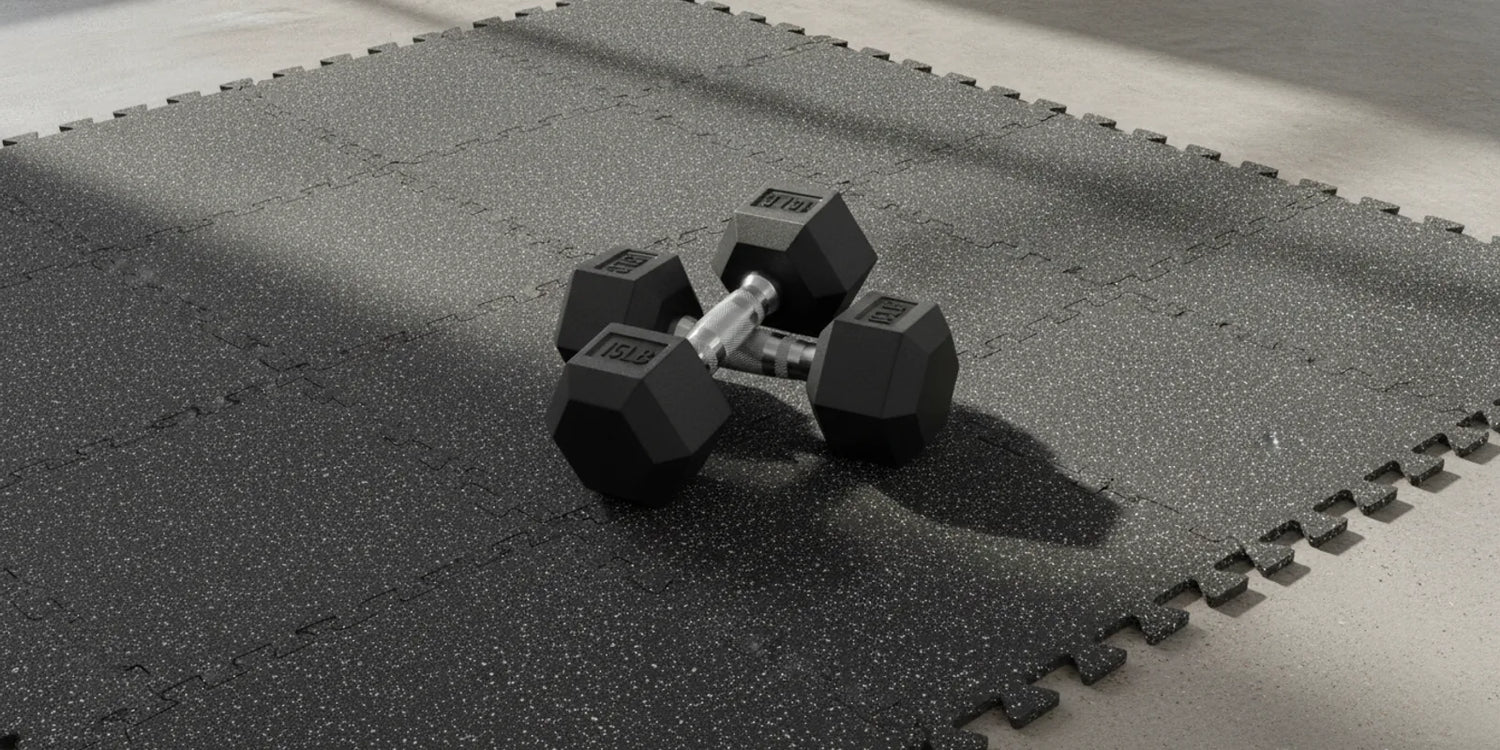
Finding the best flooring for a home gym over concrete comes down to three decisions: material, thickness, and moisture control. This 2026 guide walks through each one so you can buy once and install it right.
It also covers carpeted rooms, where stability matters more than cushioning. You will get a material decision matrix, thickness rules by training style, measuring steps, and the installation mistakes that ruin otherwise good floors.
Quick Answer: The best flooring for a home gym over concrete is 3/8 inch rubber mats or rolls for general strength training, 8 mm rubber or EVA foam for cardio-only spaces, and 1/2 inch or thicker rubber for barbell work with dropped weights. Over low-pile carpet, rubber tiles work directly; over plush carpet, add a plywood sublayer first.
Key Takeaways
- Best overall: 3/8 inch rubber mats or rolls are the best home gym flooring over concrete for most lifters, balancing shock absorption, durability, and cost.
- Heavy lifting: Choose 1/2 inch or thicker rubber anywhere you drop bumper plates or heavy dumbbells.
- Over carpet: Rubber tiles sit fine on low-pile carpet, but plush carpet needs a 1/2 inch plywood sublayer for stability.
- Moisture rule: Seal basement or garage concrete, or lay a 6 mil vapor barrier, before any mat goes down.
- Budget pick: 3/4 inch horse stall mats deliver the lowest cost per square foot for heavy lifting zones.
Why Do Concrete and Carpet Both Need a Real Gym Floor?
Concrete and carpet both fail as home gym surfaces, but for opposite reasons. Bare concrete cracks under dropped weights and returns every pound of impact to your joints, while carpet hides an unstable, compressible base that lets racks and benches rock.
- Concrete is too hard: Dropped plates chip slabs, dumbbells bounce unpredictably, and the surface offers zero shock absorption for jumping movements.
- Carpet is too soft: Pile compresses under load, so a loaded power rack can tilt and a bench can wobble mid-set.
- Both hide moisture risk: Concrete wicks ground moisture, and carpet padding traps sweat, so either surface can grow mold under equipment.
Surface choice is a researched safety factor, not just comfort: a 2022 systematic review examined shock-absorbing flooring for fall-related injury prevention[1], and a 2022 study tested a shock-absorbing metamaterial floor and measured its influence on gait and balance[2]. Engineered surfaces change how your body interacts with the ground, so the material under your feet deserves the same planning as the iron on your rack, as our home gym guide and the benefits of a home gym explain.
Which Home Gym Flooring Type Fits Your Training?
Rubber is the best all-around home gym flooring material for lifters, EVA foam suits cardio and bodyweight spaces, horse stall mats win on budget, and vinyl tiles fit light multi-use rooms. Your training style, not the room, should pick the material.
| Material | Best For | Typical Thickness | Shock Absorption | Watch Out For |
|---|---|---|---|---|
| Rubber mats or rolls | General strength training, all-around use | 8 mm to 1/2 in | High | Heavy to move, higher upfront cost |
| EVA foam tiles | Cardio, bodyweight work, light dumbbells | 1/2 in to 1 in | Moderate | Compresses under racks, dents from drops |
| Horse stall mats | Budget barbell and heavy lifting zones | 3/4 in | High | Strong initial odor, rough texture, size variance |
| Vinyl or PVC tiles | Multi-use spare rooms, light training | 4 mm to 8 mm | Low to moderate | Less impact protection, slick when sweaty |
Thickness ranges reflect common retail specifications for home gym flooring in 2026.
- Cardio and HIIT only: 8 mm rubber or EVA foam gives enough cushion and cleans easily.
- Dumbbell and kettlebell strength: 3/8 inch rubber handles occasional drops without fuss.
- Barbell training: 1/2 inch rubber minimum where plates hit the floor repeatedly.
- Budget garage gym: 3/4 inch horse stall mats cost the least per square foot.
Whatever material you pick, plan the whole room before ordering. Our guide on how to choose the best home gym flooring pairs well with the thickness rules below.
How Thick Should Home Gym Flooring Over Concrete Be?
Home gym flooring over concrete should be about 8 mm thick for cardio, 3/8 inch for general strength training, and 1/2 inch or thicker for barbell work with dropped weights. Thickness buys shock absorption, and concrete gives you none for free.
Cardio and Light Dumbbells (8 mm / 5/16 in)
Thin rubber or quality EVA foam absorbs the repetitive low-grade impact of intervals and step work. Keep expectations realistic, because 8 mm will not protect the slab from a dropped 50 lb dumbbell.
General Strength Training (3/8 in)
This is the sweet spot for most home gyms with racks, benches, and dumbbell sets. It deadens noise, grips equipment feet, and tolerates occasional accidental drops.
Heavy Barbell Work and Dropped Weights (1/2 in or Thicker)
Thick rubber earns its cost here: a 2017 study found that sports flooring absorbed between 19% and 45% of peak impact force compared with bare concrete during jump tasks[3], which illustrates why a cushioned layer matters whenever force spikes. Pair thick mats with quality barbells and weight plates, and drop on the mat, never beside it.
See what repeated drops look like in this durability test of RitFit bumper plates, then decide how much rubber you want under your own bar.
Can You Install Gym Flooring Over Carpet?
You can install gym flooring over low-pile, firm carpet directly, but plush or high-pile carpet needs a 1/2 inch plywood sublayer before any mat goes down. The goal is a rigid, level base that cannot rock under load.
- Low-pile commercial carpet: Interlocking rubber tiles or stall mats sit directly on top with no prep beyond vacuuming.
- Plush residential carpet: Lay 4x8 ft plywood sheets first, stagger the seams, then install rubber on the wood.
- Thick padding: Remove it in the lifting zone if possible, because padding under plywood still compresses.
- Heavy machines: A full setup like the RitFit M1 home gym package concentrates hundreds of pounds on small feet, so the rigid sublayer is not optional.
Stability is the whole game over carpet. If a loaded rack shifts when you push it, stop training and rebuild the base before adding more weight.
How Do You Measure and Plan Your Space?
Measure the room length and width in feet, multiply for square footage, then add a margin for cuts and waste. Plan the lifting zone first and let the rest of the room follow.
- Measure twice: A 10x12 ft room is 120 square feet, so order about 132 square feet of material.
- Map the heavy zone: Mark where the rack, bench, and barbell will live, because that area gets the thickest mats.
- Check door swing: Rubber up to 3/4 inch thick can block a low-clearance door, so measure the gap first.
- Leave an expansion gap: Keep about 1/4 inch from walls so mats can expand without buckling.
If you are still sizing the room itself, our best home gym size guide covers footprints for common setups, and these home gym ideas show real layouts.
What Common Mistakes Should You Avoid When Installing Gym Flooring?
The most damaging home gym flooring mistakes are skipping the moisture barrier on concrete, installing over plush carpet without plywood, and leaving gaps that become trip hazards. Every one of them is cheap to prevent and expensive to fix.
- Skipping the vapor barrier: Seal the slab or lay 6 mil polyethylene sheeting in basements and garages before matting.
- Ignoring moisture symptoms: If mats ever smell musty or feel damp underneath, pull them up, dry the slab, and reinstall over a barrier.
- Gapping tiles: Butt seams tight, because raised edges catch toes during lunges and box steps.
- Gluing too soon: Dry-fit the whole room first; most home gyms need no adhesive at all.
- Mixing thicknesses carelessly: Transition strips or ramped edges belong anywhere thick mats meet thin flooring.
One more mistake is treating flooring as an afterthought once equipment arrives. Heavy pieces like the M1 multi-functional Smith machine should go in after the floor is finished, not before.
"The floor is the foundation of your gym. Getting it right with proper mats under your equipment protects your investment in both the floor and the equipment itself."
Jeff Cavaliere, MSPT, CSCS, Physical Therapist and Strength Coach, Athlean-X (paraphrased from public commentary)
FAQs About Home Gym Flooring Over Concrete
What is the best flooring for a home gym over concrete?
For most home gyms over concrete, 3/8 inch rubber mats or rolls offer the best balance of shock absorption, durability, and cost. Lifters dropping barbells should step up to 1/2 inch or 3/4 inch rubber, while cardio-only spaces can use 8 mm rubber or quality EVA foam tiles.
Can you put gym flooring over carpet?
Yes, but only over low-pile, firm carpet, where rubber tiles can sit directly on the surface. Over plush or high-pile carpet, lay a 1/2 inch plywood sublayer first so racks and benches stay stable and do not rock during lifts.
How thick should home gym flooring be over concrete?
Match thickness to your training. About 8 mm works for cardio and light dumbbells, 3/8 inch covers general strength training and kettlebells, and 1/2 inch or thicker rubber is the safer choice for heavy deadlifts, Olympic lifts, and any dropped bumper plates.
Do I need a moisture barrier under gym flooring on concrete?
In basements and garages, yes, because concrete wicks ground moisture that gets trapped under rubber and can grow mold. Seal the slab or lay a 6 mil polyethylene vapor barrier first, then install your mats with a small expansion gap around the room edges.
Are horse stall mats good for home gym flooring?
Horse stall mats are a proven budget option, and a 4x6 ft, 3/4 inch mat costs far less than branded gym tiles while handling dropped weights well. Downsides are a strong rubber smell for the first weeks, slight size variation, and a rougher surface texture.
Will rubber gym flooring damage my concrete or carpet?
Rubber will not damage concrete, but trapped moisture can stain or mold both surfaces over time, so use a vapor barrier on concrete. Over carpet, rubber can leave indentation marks under heavy racks, so rotate equipment positions or add plywood under the heaviest pieces.
Conclusion
The best home gym flooring over concrete is rubber, sized to your training: 8 mm for cardio, 3/8 inch for general lifting, and 1/2 inch or more under a barbell. Over carpet, build a rigid plywood base first.
Measure your room this week, order a little extra for cuts, and seal the slab before anything touches it, then start with the latest RitFit deals to build out the rest of the space.
Disclaimer
This article is for general informational purposes and does not replace professional advice on construction, moisture remediation, or training safety. Consult a qualified contractor or certified professional before modifying your space or starting a new exercise program.
Save on your next RitFit order
Tap the button to copy your code, then paste it at checkout.
References
1. Drahota A, Felix LM, Raftery J, et al. The SAFEST review: a mixed methods systematic review of shock-absorbing flooring for fall-related injury prevention. BMC Geriatr. 2022;22(1):32. doi:10.1186/s12877-021-02670-4. PMCID: PMC8739972
2. Tatemoto T, Sugiura T, Kumazawa N, et al. Shock-absorbing effect of flooring-adopted mechanical metamaterial technology and its influence on the gait and balance of older adults. Inj Prev. 2022;28(5):410-414. doi:10.1136/injuryprev-2021-044450. PMCID: PMC9510406
3. Malisoux L, Gette P, Urhausen A, Bomfim J, Theisen D. Influence of sports flooring and shoes on impact forces and performance during jump tasks. PLoS One. 2017;12(10):e0186297. doi:10.1371/journal.pone.0186297. PMCID: PMC5636165





