The best leg exercises for leg day are movements that train your quads, hamstrings, glutes, calves, and stabilizers through heavy compound lifts and targeted isolation work. A complete leg day should include a squat pattern, a hip hinge, a single leg movement, a knee extension exercise, a hamstring curl pattern, and calf training.
This guide shows you the best leg exercises, how to organize them, and how to build an effective lower body workout at home or in the gym.
Key Takeaways
- Best overall leg exercises: Squats, leg presses, hack squats, Romanian deadlifts, lunges, leg extensions, leg curls, hip thrusts, and calf raises cover the full lower body.
- Best for quads: Squats, hack squats, leg presses, split squats, and leg extensions place the strongest emphasis on knee extension.
- Best for glutes and hamstrings: Romanian deadlifts, hip thrusts, lunges, Bulgarian split squats, and leg curls train the posterior chain effectively.
- Best for home gyms: A Smith machine, leg press machine, adjustable bench, dumbbells, barbell, and weight plates can support a complete leg day setup.
- Best progression method: Add reps, weight, sets, or better control over time while keeping form consistent and pain free.
What Makes a Great Leg Exercise?
A great leg exercise trains a major lower body movement pattern with enough load, range of motion, and control to create useful strength and muscle stimulus. Muscle growth is supported by repeated exposure to high quality tension, smart volume, and consistent progression over time.[1]
- Squat pattern: This trains knee and hip extension together, making it ideal for quads, glutes, and total leg strength.
- Hip hinge pattern: This targets the hamstrings, glutes, and spinal stabilizers through controlled hip movement.
- Single leg pattern: This improves balance, side to side strength, and real world lower body control.
- Isolation pattern: This lets you target quads, hamstrings, or calves without needing as much whole body coordination.
- Progressive loading: This helps the body keep adapting instead of repeating the same stimulus every week.
Best Leg Exercises for Your Leg Day Workout
The best leg day workout combines heavy compound exercises with targeted accessory work. Different loads can build muscle when effort, technique, and volume are managed well.[2]
1. Squat
The squat is one of the best leg exercises because it trains the quads, glutes, adductors, core, and lower body coordination in one movement.
- Best for: Total lower body strength and muscle size.
- Muscles worked: Quads, glutes, adductors, hamstrings, calves, and core.
- How to do it: Stand with your feet about shoulder width, brace your core, bend your knees and hips, then drive back up through your midfoot.
- Sets and reps: Use 3 to 5 sets of 5 to 10 reps.
- Common mistake: Avoid collapsing your knees inward or cutting depth so short that the legs do not receive enough range of motion.
2. Leg Press
The leg press is a strong choice for loading the quads and glutes while reducing the balance demand of free weight squats.
- Best for: Heavy quad and glute training with stable body support.
- Muscles worked: Quads, glutes, adductors, hamstrings, and calves.
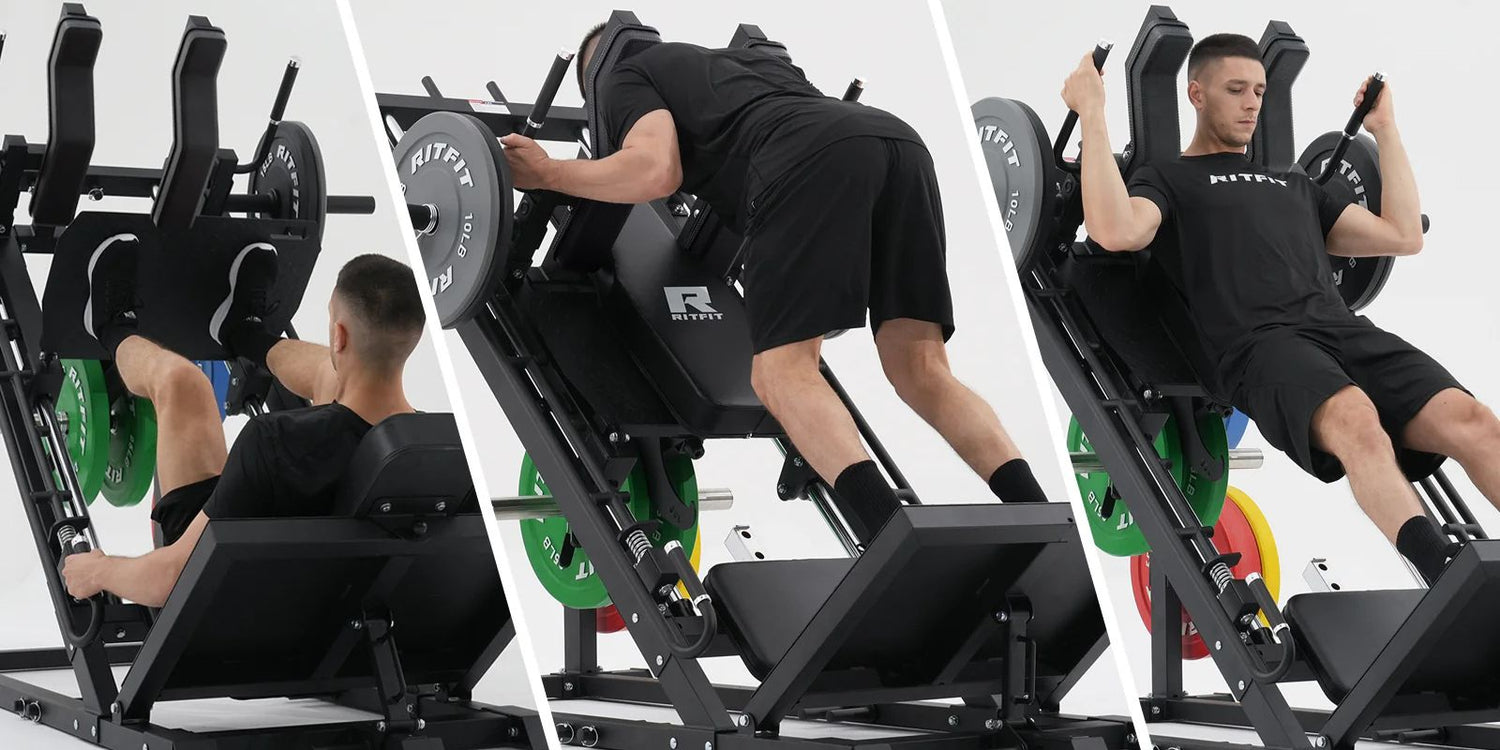
- How to do it: Place your feet on the platform, lower the sled under control, then press through your full foot without locking the knees aggressively.
- Sets and reps: Use 3 to 4 sets of 8 to 15 reps.
- Training note: A systematic review found that leg press variations can strongly activate the quadriceps, especially with deeper knee flexion.[3]
- Home gym option: Explore the RitFit GAZELLE PRO leg press and hack squat machine if you want a dedicated lower body machine for home training.
3. Hack Squat
The hack squat is excellent for quad focused leg training because the guided path helps you load the legs without as much torso stability demand.
- Best for: Quad size, controlled depth, and machine based leg day training.
- Muscles worked: Quads, glutes, adductors, hamstrings, and calves.
- How to do it: Set your feet securely, keep your back against the pad, lower with control, then drive up without bouncing at the bottom.
- Sets and reps: Use 3 to 4 sets of 8 to 12 reps.
- Home gym option: For a compact lower body setup, compare the RitFit BLP01 3 in 1 leg press and hack squat machine.
4. Romanian Deadlift
The Romanian deadlift is one of the best leg exercises for hamstrings and glutes because it loads hip extension through a long controlled range.
- Best for: Hamstrings, glutes, posterior chain strength, and hip hinge mechanics.
- Muscles worked: Hamstrings, glutes, spinal erectors, adductors, and grip.
- How to do it: Hold a barbell or dumbbells, push your hips back, keep a neutral spine, and stop when you feel a strong hamstring stretch.
- Sets and reps: Use 3 to 4 sets of 6 to 12 reps.
- Common mistake: Do not turn the movement into a squat by bending the knees too much.
- Useful equipment: Build your hinge work with RitFit barbells and weight plates for progressive loading.
5. Bulgarian Split Squat
The Bulgarian split squat builds quads, glutes, and single leg control with less total equipment than many machine based exercises.
- Best for: Balance, unilateral strength, glutes, quads, and home gym training.
- Muscles worked: Quads, glutes, adductors, hamstrings, calves, and core.
- How to do it: Place one foot behind you on a bench, lower the back knee toward the floor, then drive through the front foot.
- Sets and reps: Use 2 to 4 sets of 8 to 12 reps per side.
- Useful equipment: Pair dumbbells with a stable RitFit adjustable weight bench for a clean home setup.
6. Walking Lunge
The walking lunge is a practical leg day movement that trains the quads, glutes, balance, and hip stability at the same time.
- Best for: Athletic lower body control, glute strength, and finishing volume.
- Muscles worked: Quads, glutes, hamstrings, calves, adductors, and core.
- How to do it: Step forward, lower until both knees bend, then push through the front foot and continue into the next step.
- Sets and reps: Use 2 to 4 sets of 8 to 16 steps per side.
- Common mistake: Avoid taking steps so short that the front knee jams forward without hip contribution.
7. Leg Extension
The leg extension is one of the best isolation exercises for targeting the quads after heavier compound movements.
- Best for: Quad isolation, finishing volume, and strengthening the front of the thighs.
- Muscles worked: Rectus femoris, vastus lateralis, vastus medialis, and vastus intermedius.
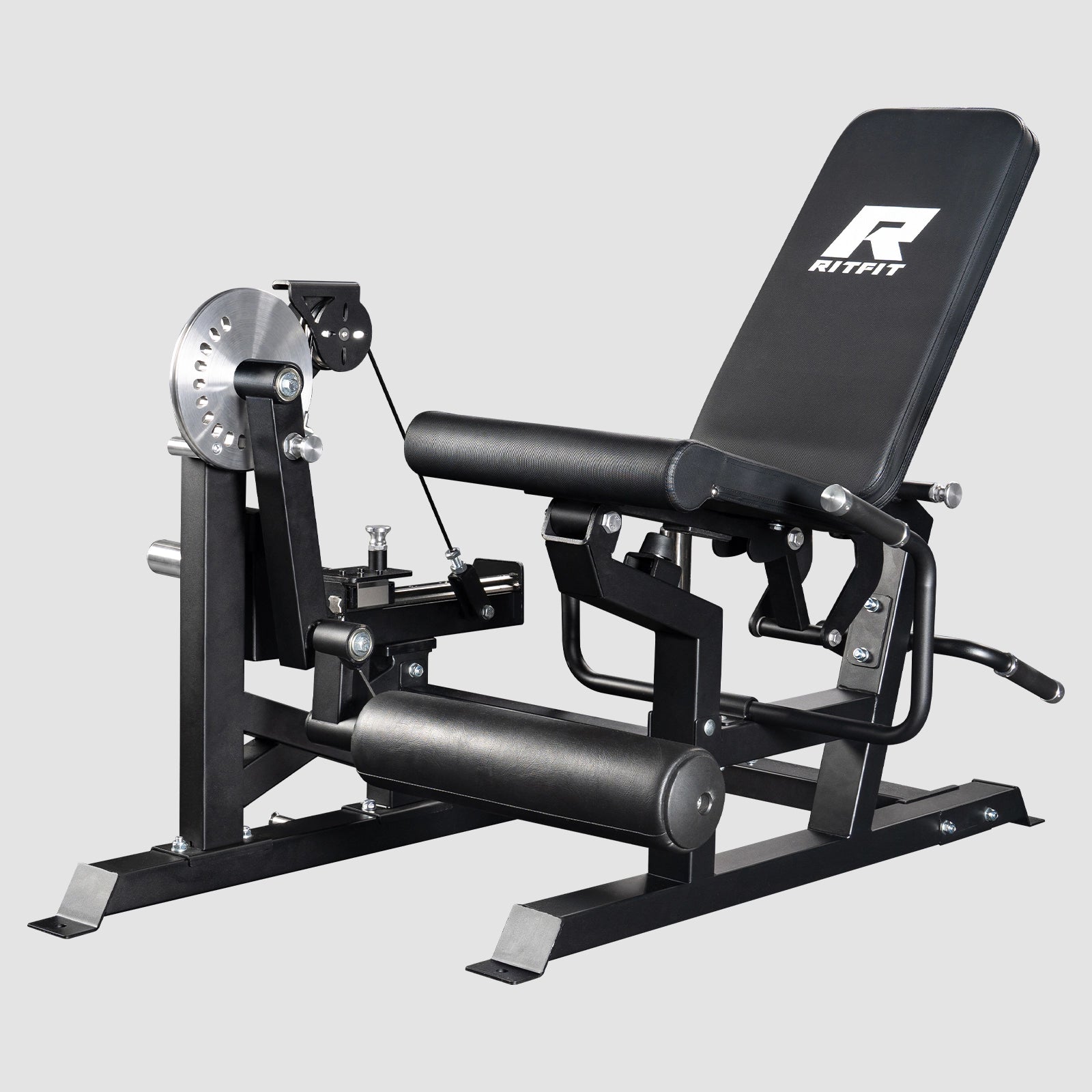
- How to do it: Sit tall, align the pad above your ankles, extend the knees smoothly, then lower with control.
- Sets and reps: Use 2 to 4 sets of 10 to 15 reps.
- Common mistake: Avoid swinging the weight or using a load that forces your hips to lift off the seat.
8. Leg Curl
The leg curl targets knee flexion and helps train the hamstrings in a way Romanian deadlifts cannot fully replace.
- Best for: Hamstring isolation, knee flexion strength, and balanced leg development.
- Muscles worked: Biceps femoris, semitendinosus, semimembranosus, and gastrocnemius.
- How to do it: Set the pad near the lower calf, curl the heels toward the body, squeeze briefly, then lower slowly.
- Sets and reps: Use 2 to 4 sets of 10 to 15 reps.
- Home gym option: Consider RitFit leg extension and curl machine guidance if you want quad and hamstring isolation at home.
9. Hip Thrust
The hip thrust is a top glute exercise because it loads hip extension directly while keeping the movement easy to scale.
- Best for: Glute growth, hip extension strength, and posterior chain development.
- Muscles worked: Gluteus maximus, hamstrings, adductors, and core.
- How to do it: Place your upper back on a bench, keep your ribs down, drive the hips up, and finish with a strong glute squeeze.
- Sets and reps: Use 3 to 4 sets of 8 to 15 reps.
- Useful guide: Read the dumbbell hip thrust guide for a simple home gym variation.
10. Standing Calf Raise
The standing calf raise trains the calves through plantar flexion and should be included if you want a complete leg day workout.
- Best for: Calf strength, lower leg size, ankle control, and balanced aesthetics.
- Muscles worked: Gastrocnemius and soleus.
- How to do it: Stand tall, rise onto the balls of your feet, pause briefly, then lower until you feel a controlled calf stretch.
- Sets and reps: Use 3 to 5 sets of 10 to 20 reps.
- Common mistake: Avoid bouncing through the reps because the calves respond better when the full range is controlled.
Best Leg Day Workout Plans
The best leg day workout depends on your training level, available equipment, and recovery capacity. Progression can come from adding load or adding repetitions over time, and both methods can support muscular adaptations when applied consistently.[4]
Beginner Leg Day Workout
This beginner leg day workout uses simple patterns that build coordination before heavy loading.
- Goblet squat: 3 sets of 10 reps.
- Dumbbell Romanian deadlift: 3 sets of 10 reps.
- Step up: 2 sets of 10 reps per side.
- Hip thrust: 3 sets of 12 reps.
- Standing calf raise: 3 sets of 15 reps.
Home Gym Leg Day Workout
This home gym leg day workout works best with a Smith machine, dumbbells, bench, and a leg press or hack squat machine.
- Smith machine squat: 4 sets of 6 to 10 reps.
- Leg press: 3 sets of 10 to 12 reps.
- Dumbbell Romanian deadlift: 3 sets of 8 to 10 reps.
- Bulgarian split squat: 3 sets of 8 to 10 reps per side.
- Leg curl: 2 sets of 12 to 15 reps.
- Calf raise: 3 sets of 12 to 20 reps.
Advanced Leg Day Workout
This advanced leg day workout uses more volume and should be reserved for lifters who recover well from hard lower body training.
- Barbell squat or hack squat: 4 sets of 5 to 8 reps.
- Leg press: 4 sets of 8 to 12 reps.
- Romanian deadlift: 4 sets of 6 to 10 reps.
- Bulgarian split squat: 3 sets of 8 to 10 reps per side.
- Leg extension: 3 sets of 12 to 15 reps.
- Leg curl: 3 sets of 10 to 15 reps.
- Calf raise: 4 sets of 12 to 20 reps.
Key Equipment Considerations for Home Leg Day
The right equipment should let you train heavy, train safely, and cover every major lower body movement pattern. For a home gym, prioritize equipment that gives you squat, hinge, lunge, leg press, hack squat, curl, extension, and calf raise options.
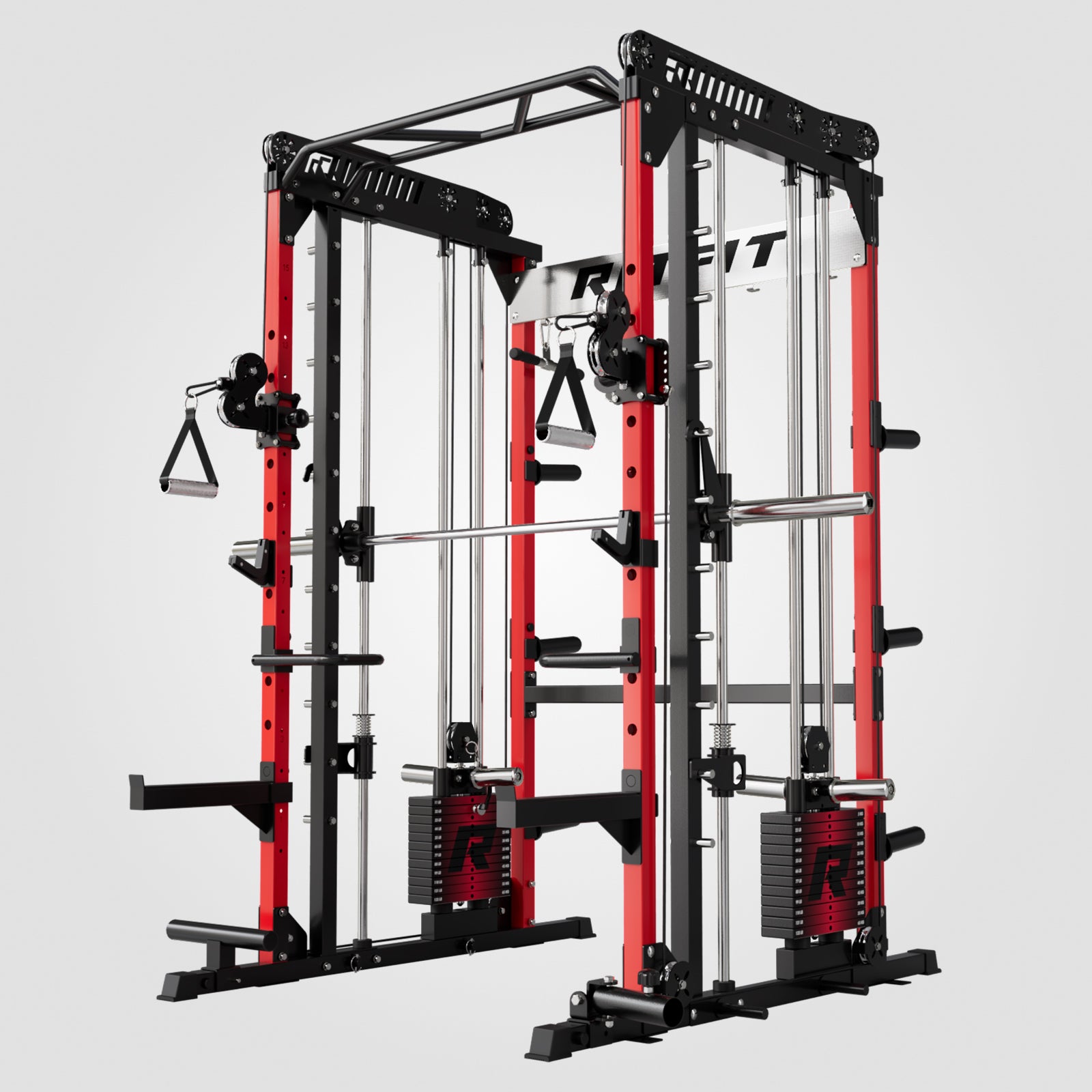
- Smith machine: A Smith machine supports guided squats, split squats, Romanian deadlifts, calf raises, and hip thrusts. Start with the RitFit Smith machine collection if you want guided bar training for solo sessions.
- Leg press and hack squat machine: This gives your leg day a dedicated lower body strength station. Browse RitFit strength machines to compare lower body machine options.
- Dumbbells: Dumbbells are ideal for goblet squats, lunges, split squats, step ups, and Romanian deadlifts. Use the RitFit dumbbells collection for scalable home leg workouts.
- Bench: A bench supports Bulgarian split squats, hip thrusts, step ups, and seated calf raise variations. Choose a stable model that matches your space and loading needs.
- Barbell and plates: A barbell and plates let you progress squats, Romanian deadlifts, hip thrusts, and calf raises over time. They are especially useful for lifters who want measurable strength progression.
Training Techniques and Best Practices
Good leg training is built on controlled reps, stable joints, progressive overload, and enough recovery to repeat high quality sessions. Time efficient strength training can still work well when you prioritize large compound lifts and smart accessory work.[5]
- Warm up first: Use 5 to 8 minutes of light movement and 2 to 4 ramp up sets before heavy leg work.
- Train close enough to effort: Most working sets should finish with about 1 to 3 reps left in reserve.
- Control the lowering phase: Lower the weight smoothly to maintain tension and reduce sloppy movement.
- Use full usable range: Move through the deepest safe range you can control without pain or joint collapse.
- Rest enough: Use 2 to 3 minutes after heavy compound sets and 60 to 90 seconds after isolation sets.
Nutrition and Recovery for Better Leg Day Results
Leg day creates a large recovery demand, so your progress depends on food, sleep, hydration, and planned training stress. You do not need a complicated diet, but you do need enough protein, carbohydrates, fluids, and total calories to support your goal.
- Protein: Include a protein source at each meal to support muscle repair and growth.
- Carbohydrates: Eat enough carbohydrates around hard leg sessions to support training performance.
- Hydration: Drink water throughout the day and add electrolytes when sessions are long or sweaty.
- Sleep: Prioritize consistent sleep because poor recovery can reduce training quality.
- Deloads: Reduce volume or load for a week when performance drops, joints feel irritated, or fatigue builds.
Common Leg Day Mistakes to Avoid
The most common leg day mistakes are using too much weight, skipping movement patterns, and turning every set into sloppy fatigue. A better approach is to train hard while preserving technique and joint control.
- Only training quads: Add hamstring curls, Romanian deadlifts, hip thrusts, and calf raises to avoid an incomplete program.
- Going too heavy too soon: Use loads you can control before chasing heavier numbers.
- Skipping single leg work: Include split squats, lunges, or step ups to improve balance and side to side strength.
- Rushing reps: Slow down the lowering phase and keep tension on the target muscles.
- Ignoring pain signals: Muscle fatigue is normal, but sharp joint pain is a reason to stop and adjust.
How to Progress Your Leg Day Workout
The safest way to progress leg day is to change one variable at a time. Add reps first, then load, then sets, and only increase difficulty when form stays consistent.
- Week to week reps: Add 1 to 2 reps per set until you reach the top of your target rep range.
- Load increase: Add weight once every set reaches the top of the rep range with clean form.
- Set increase: Add one set to a priority exercise when recovery is still strong.
- Range improvement: Improve depth and control before increasing load.
- Exercise rotation: Change variations only when progress stalls or joints need a different stress pattern.
RitFit Equipment Recommendations for Leg Day
RitFit equipment works well for home leg day because the product ecosystem covers guided bar training, lower body machines, dumbbells, benches, barbells, and plates. The best choice depends on whether your priority is heavy machine work, compact training, or versatile full body home gym use.
- Best for machine based leg training: Choose the RitFit GAZELLE PRO if you want leg press and hack squat patterns in one dedicated lower body station.
- Best for compact leg day setups: Consider the RitFit BLP01 if you want leg press, hack squat, and calf raise training in a smaller home gym layout.
- Best for guided barbell leg exercises: Use a RitFit Smith machine for squats, lunges, Romanian deadlifts, hip thrusts, and calf raises.
- Best for low equipment training: Pair dumbbells with a bench for goblet squats, split squats, lunges, step ups, and hip thrusts.
- Related training guide: Build more exercise variety with the RitFit Smith machine leg workout guide.
- Dumbbell training guide: For a simpler setup, use the ultimate dumbbell leg workout guide.
Frequently Asked Questions
What are the best leg exercises for a leg day workout?
The best leg exercises are squats, leg presses, hack squats, Romanian deadlifts, lunges, leg extensions, leg curls, hip thrusts, and calf raises. This mix trains the quads, hamstrings, glutes, calves, and stabilizers, so the workout builds strength, size, and balanced lower body development.
How many leg exercises should I do on leg day?
Most lifters should do four to seven leg exercises on leg day. A strong session usually includes one squat pattern, one hip hinge, one single leg move, one quad isolation move, one hamstring isolation move, and one calf exercise, with volume adjusted to recovery.
Can I build strong legs at home without a full gym?
Yes. You can build strong legs at home with dumbbells, a Smith machine, a leg press, a bench, and progressive weight plates. The key is choosing exercises that cover squat, hinge, lunge, extension, curl, hip thrust, and calf raise patterns.
Is leg press enough for a complete leg day workout?
No. Leg press is excellent for quads and glutes, but it should not be the only exercise in a complete leg day workout. Add a hip hinge for hamstrings, a single leg movement for balance, and calf raises for lower leg development.
What leg exercises are best for quads?
The best quad exercises are squats, hack squats, leg presses, split squats, and leg extensions. These movements load knee extension heavily, which makes them useful for building the front of the thighs when performed with controlled depth and steady progression.
What leg exercises are best for glutes and hamstrings?
The best glute and hamstring exercises are Romanian deadlifts, hip thrusts, walking lunges, Bulgarian split squats, and leg curls. These moves train hip extension and knee flexion, which are essential for stronger posterior chain development and better lower body balance.
Should beginners use machines or free weights for leg day?
Beginners should use both machines and free weights when they can perform each movement safely. Machines provide control and confidence, while free weights build coordination and stability, so a mixed approach usually creates better long term leg strength.
How often should I train legs for muscle growth?
Most people can train legs two times per week for muscle growth if recovery is managed well. One session can focus on heavier squat and leg press work, while the second can emphasize hamstrings, glutes, single leg exercises, and calves.
Conclusion
The best leg day workout trains every major lower body pattern, not just one favorite exercise. Combine squats, leg presses, hip hinges, single leg work, isolation movements, and calf training to build stronger quads, glutes, hamstrings, and calves.
For home gym lifters, RitFit equipment can help turn these exercises into a complete lower body training system that is practical, scalable, and easier to repeat consistently.
Disclaimer
This article is for general fitness education only and is not medical advice. Stop any exercise that causes sharp pain, dizziness, numbness, or unusual discomfort, and consult a qualified healthcare or fitness professional before starting a new training program if you have injuries, medical conditions, or exercise restrictions.
References
- Krzysztofik M Wilk M Wojdała G Gołaś A. Maximizing muscle hypertrophy: a systematic review of advanced resistance training techniques and methods. Int J Environ Res Public Health. 2019;16(24):4897. doi:10.3390/ijerph16244897
- Schoenfeld BJ Grgic J Van Every DW Plotkin DL. Loading recommendations for muscle strength, hypertrophy, and local endurance: a re examination of the repetition continuum. Sports. 2021;9(2):32. doi:10.3390/sports9020032
- Martín Fuentes I Oliva Lozano JM Muyor JM. Evaluation of the lower limb muscles electromyographic activity during the leg press exercise and its variants: a systematic review. Int J Environ Res Public Health. 2020;17(13):4626. doi:10.3390/ijerph17134626
- Plotkin D Coleman M Van Every D Maldonado J Oberlin D Israetel M Feather J Alto A Vigotsky AD Schoenfeld BJ. Progressive overload without progressing load? The effects of load or repetition progression on muscular adaptations. PeerJ. 2022;10:e14142. doi:10.7717/peerj.14142
- Iversen VM Norum M Schoenfeld BJ Fimland MS. No time to lift? Designing time efficient training programs for strength and hypertrophy: a narrative review. Sports Med. 2021;51(10):2079-2095. doi:10.1007/s40279-021-01490-1