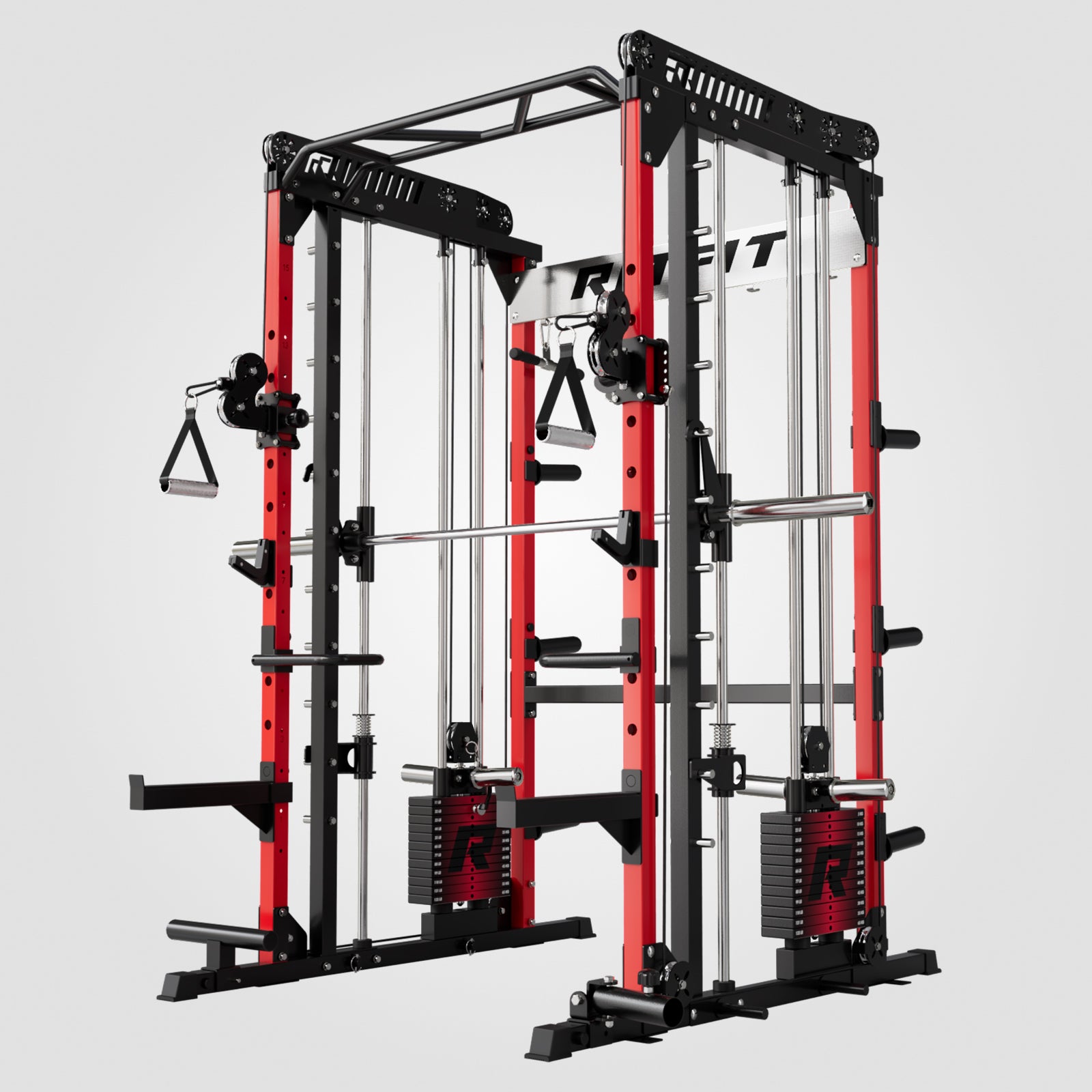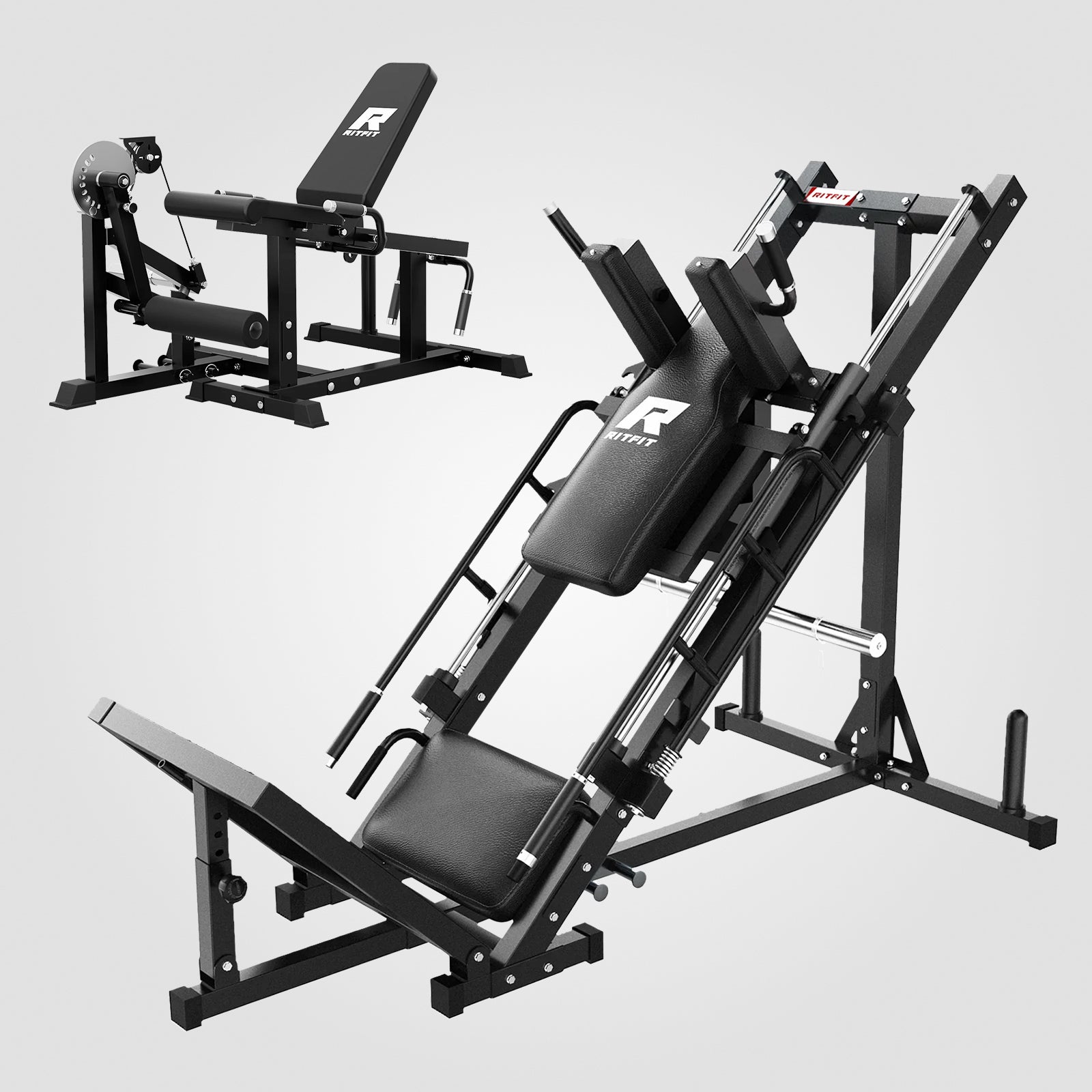

The best leg press machine for beginners at home is one you can learn in a single session, load safely on your own, and still grow into a year later. This guide compares the home leg press machine types, spells out a realistic beginner starting weight, and shows where each RitFit model fits.
You will see how a garage gym, a basement, and a spare room change the right pick, plus what to measure before you order. This is general information, so check with a qualified professional if you have a current injury.
Quick Answer: The best leg press machine for beginners at home is a guided 45 degree or 3-in-1 press you can load in small steps and enter alone, and the RitFit BLP01 at $799.99 is the tight space pick while the GAZELLE and GAZELLE PRO cover heavier loading. Start light, learn the full path, and add plates only when every rep stays controlled.
Key Takeaways
- Type before model: A 45 degree rail, a vertical or seated press, and a rack attachment each solve a different beginner problem, so settle the type first.
- Starting weight: A press number is not a barbell number, because the carriage, the plates, and your body weight all count toward the effective load.
- Space: Budget the working zone rather than the base, since a machine that fits on paper can still be awkward in a small room.
- Fit inside one line: In the RitFit lineup the BLP01 suits tight rooms at a 1200 lb weight capacity, while the GAZELLE reaches 1500 lb and 40.6 inches of rail travel.
- Value check: Confirm plate compatibility, warranty length, and the upgrade path before checkout so the machine still works after your beginner phase.
What Makes a Leg Press Machine Good for Beginners at Home?
A good beginner leg press machine lowers the learning curve while still leaving room to progress. The machine itself matters less than the fit between its adjustment range, your room, and the way you actually train.
One randomized trial compared machine based, free weight based, and mixed resistance training in novice males while tracking strength and body composition outcomes, so guided equipment is a reasonable starting point.[1]
The Criteria That Lower the Learning Curve
- Repeatable setup: Seat, backrest, and footplate positions should reset the same way every session, so you spend energy on reps instead of hunting for the right setting.
- Working safety stops: Lockout pins let a solo lifter end a hard set without a training partner standing by.
- A guided path: A fixed carriage removes the balance demand of holding a barbell across your upper back.
- Simple loading: Two inch plate holes match the Olympic plates most home gyms already own.
The Criteria That Keep the Machine Useful Later
- Progression range: The load ceiling should sit far above what you press in month one so the machine does not become obsolete.
- Footprint value: One base that covers leg press, hack squat, and calf work earns its floor space better than a single pattern machine.
- Adjustability that grows: Multiple footplate angles and backrest positions keep the setup workable as your mobility and strength change.
Browse the full category on the home leg press machines page if you want to see how the types look side by side before reading further. The rest of this guide explains what separates them in a real garage or basement.
"What can i say hack squat and leg press in one stop shop. Makes leg day fun, easy to switch from one to the other and looks good in my gym"
William, Verified Buyer, RitFit BLP01 3-in-1 Leg Press and Hack Squat Machine
Home Leg Press Machine Types: 45 Degree vs Vertical vs Seated
Home leg press machines fall into four practical types, and the rail angle decides both how the machine feels and how much room it eats. Matching the type to your space is the single biggest decision in this purchase.
| Machine Type | How It Moves | Best For | Main Trade Off |
|---|---|---|---|
| 45 degree rail | The carriage travels along an angled rail while you lie back | Squat style pressing plus hack squat work from one base | Needs a long footprint and ceiling room for hack squat mode |
| Vertical or seated | The carriage pushes straight ahead from an upright or seated position | Tight rooms and lifters who want simple entry and exit | Less squat like feel and often fewer movement patterns |
| Rack attachment | A foot plate mounts to a rack or squat stand you already own | Small spaces and buyers who already have a rack | Lighter feel and less dedicated support than a full machine |
| 2-in-1 or 3-in-1 combo | A rail machine adds hack squat and calf raise stations | Covering most of leg day from one station | More assembly, more floor space, and a higher price |
Type descriptions are category level. See the RitFit leg machines category for current models and specifications.
45 Degree Rail Leg Press Machines
A 45 degree machine drives the carriage along an angled rail while you lie back, which puts the press pattern closer to a squat than a seated push does. RitFit builds this layout with a hack squat station on the same frame, so one base covers two pressing patterns.
- Feel: The angled path loads the quads through a longer range than most seated presses.
- Room cost: The rail needs clear space behind the carriage, so measure depth first.
- Beginner fit: The guided path removes balance from the equation while you learn depth.
Vertical and Seated Leg Press Machines
A vertical or seated press pushes the carriage straight ahead from an upright position, which makes getting in and out simpler for most beginners. The trade is a shallower feel and usually fewer functions per square foot.
- Feel: The straight path is easy to read but feels less like a barbell squat.
- Room cost: The forward travel still needs clearance, even though the base is shorter.
- Beginner fit: Good when your priority is a low effort setup you will repeat.
Rack Attachments and 2-in-1 or 3-in-1 Combo Machines
A rack mounted foot plate is the smallest way to press at home, while a 2-in-1 or 3-in-1 combo turns one frame into a full lower body station. Buyers with a rack already installed often start with the attachment and outgrow it, which is why many later add the combo.
- Attachment path: Cheapest entry and the smallest footprint, but the least dedicated support.
- Combo path: Leg press, hack squat, and calf raise from one machine and one purchase.
- Beginner fit: Combo units suit solo lifters who want variety without buying three machines.
How Much Should a Beginner Leg Press at Home?
A beginner should start with the empty carriage plus one light plate per side, then add load only when every rep stays controlled and the hips stay on the pad. A workable first working set is one 10 lb plate per side pressed for 10 clean reps with at least two reps left in reserve.
Why a Leg Press Number Is Not a Squat Number
A 2018 study on leg press loading treated the effective resistance as the moving seat or carriage weight plus the plates plus your body weight.[2] That is why a 200 lb leg press number is not comparable to a 200 lb barbell squat, and why the first sessions should be judged by control rather than by the number.
- Carriage weight counts: The sled and seat add resistance before you load a single plate.
- Machine differences: Carriage mass changes between models, so the same plate stack feels different on two machines.
- Body weight matters: Your own mass is part of the effective load in the calculation.
How to Add Load Without Stalling
Add weight in small, repeatable jumps instead of chasing a big number early. Slow, boring progress on the leg press almost always beats one heroic session followed by a week of soreness.
- Step size: Move up by 5 to 10 lb per side once you clear the top of your rep range with control.
- Rep range first: Start around 8 to 12 reps for the main press before you push into heavier territory.
- Change one thing: Add reps or add load, never both in the same session.
- Plate system: Keep loading consistent with the rest of your gym by matching RitFit color bumper plates to the sleeves you own.
How Much Space Does a Home Leg Press Machine Need?
A home leg press machine needs its base footprint plus clear space behind the carriage, a loading aisle on both sides, and enough ceiling height for the hack squat position. For scale, a compact RitFit rail machine measures 75.6 by 40.6 by 55.9 inches with a 20.3 sq ft footprint, while a taller RitFit 3-in-1 machine measures 82.7 by 45.1 by 70.9 inches with a 25.9 sq ft footprint.
Measure the Working Zone, Not Just the Base
- Base footprint: The compact rail machine covers 20.3 sq ft and the taller 3-in-1 covers 25.9 sq ft, so the larger model needs roughly six extra square feet.
- Rear clearance: The carriage travels backward as you press, and the taller 3-in-1 needs clearance for 40.6 inches of rail travel.
- Plate aisles: Leave room on both sides to slide plates on and off without stepping over the frame.
- Entry path: You should be able to sit down, set your feet, and stand up without twisting around a wall or a rack.
Ceiling Height, Floor Protection, and Plate Loading Room
The hack squat position sets your height requirement, not the leg press position. That is why a low basement ceiling can rule out a tall rail machine even when the leg press mode would clear it.
- Headroom: The compact rail frame tops out at 55.9 inches and the taller 3-in-1 at 70.9 inches, so compare the tallest frame against your ceiling before you buy.
- Floor protection: Rubber mats or tiles under the machine reduce noise and protect a finished floor.
- Storage: Weight storage pegs keep spare plates off the floor and out of your walking path.
- User height: The compact rail model lists an ideal user range of about 4.10 ft to 6.4 ft for the leg press and 5.8 ft to 6.4 ft for the hack squat, so check the spec sheet against the tallest person who will use it.
How to Use a Leg Press Machine Safely at Home
A beginner should treat the first leg press session as a setup session, testing the path, the stops, and the depth with almost no load. Build a repeatable entry and exit before you chase heavier sets.
Setup Sequence for a First Session
- Set the pads: Adjust the backrest and footplate angle so your hips and lower back stay in contact with the pad.
- Check both stops: Confirm every safety pin engages on both sides before you add a single plate.
- Run the carriage empty: Push the sled through the full path unloaded and listen for anything rough or uneven.
- Add one light pair: Load a small plate pair, then press for 10 controlled reps with two reps left in reserve.
A 2020 systematic review of leg press variants found the vastus lateralis and vastus medialis produced the greatest activation, and quadriceps activity rose as knee flexion angle increased.[3] That context matters for depth decisions, because a slightly deeper controlled rep changes the training stimulus more than a small plate jump does.
Common Beginner Mistakes and Fixes
- Hips lifting off the pad: Cut the range until your pelvis stays planted, then rebuild depth over several weeks.
- Knees slamming into lockout: Finish the rep just short of a hard lockout and keep tension on the quads.
- Bouncing out of the bottom: Slow the lowering phase and remove the rebound so the set stays controlled.
- Loading past the dynamic rating: Stay under the machine limit, since a compact rail machine may list a lower in motion capacity than its static weight capacity.
A 2020 study in young trained females found the inclined leg press targeted the vastus medialis regardless of foot rotation or stance width, so comfort and control matter more than forcing an extreme foot angle.[4] Start with a shoulder width stance and adjust only when a change genuinely feels better.
"Squats are my favorite exercise, but a lot of people can't do them because of various lower-back issues.
In that case, the leg press is also a really good exercise for building the thigh.
It baffles me that so many people don't think the leg press is useful.
"
John Meadows, IFBB Pro Bodybuilder and Coach (Mountain Dog Training), Mountain Dog Diet, in Mountain Dog Training for Legs (Muscle & Fitness)
Which RitFit Leg Press Machine Fits Your Home Gym?
The RitFit leg press line covers three different rooms and budgets with one shared rail design. Your best pick depends on available depth, how much load you want in reserve, and how much variety you need, and this comparison stays inside the RitFit lineup because those are the machines we describe from our own published specifications.
| RitFit Model | Listed Price | Weight Capacity | Footprint | Best For |
|---|---|---|---|---|
| BLP01 45 Degree 3-in-1 | $799.99 | 1200 lb, 572 lb dynamic | 20.3 sq ft | Tight rooms, basements, and apartment setups |
| GAZELLE 3-in-1 | $969.99 | 1500 lb static, 900 lb dynamic | 25.9 sq ft | More rail travel and heavier loading |
| GAZELLE PRO 3-in-1 | $1399.99 | 2000 lb | See the product page | The highest load ceiling in the lineup |
Prices and capacity figures come from the RitFit product pages and were checked on October 8, 2026, so confirm current pricing before you order.
RitFit BLP01 45 Degree 3-in-1 Leg Press Hack Squat for Tight Spaces
The RitFit BLP01 45 degree 3-in-1 leg press and hack squat machine is the compact pick, and its 20.3 sq ft footprint is the smallest of the three rail machines here. It lists a 1200 lb weight capacity, a 572 lb overall dynamic capacity, 33.43 inches of range of motion, and a linear bearing slide.
- Space fit: The 75.6 by 40.6 by 55.9 inch frame is shorter than the other two models, so it clears a low basement ceiling that rules out taller frames.
- Loading: Two inch plate holes take standard Olympic plates, and the spec sheet lists a 1200 lb weight capacity.
- Steel: The compare table lists roughly 12 gauge steel and one pair of counterweight rods.
- Depth control: Three lockout positions and 33.43 inches of range of motion keep depth adjustable while you learn the movement.
- Price: At $799.99 it is the lowest priced machine in this lineup.
The RitFit product page shows an overall rating of 4.8 out of 5 from 369 reviews as of October 8, 2026, which is the clearest signal of how buyers react once the machine is assembled at home.
RitFit GAZELLE and GAZELLE PRO 3-in-1 Machines for Heavier Loading
The RitFit GAZELLE 3-in-1 leg press hack squat machine steps up to a 1500 lb static load and a 900 lb dynamic load on reinforced 2x2 inch steel tubing, with 40.6 inches of rail travel and a 25.9 sq ft footprint.
- Longer travel: The 40.6 inch guide rail travel is about seven inches more than the compact model, which gives a longer pressing path.
- Grip and glide: Rock textured non slip footplates and industrial grade roller bearings address footing and carriage smoothness.
- Adjustments: Four hack squat angles, three leg press settings, and five safety stop levels cover a wide beginner to intermediate range.
- Footprint: The 82.7 by 45.1 by 70.9 inch frame needs more depth and more ceiling height than the compact model.
If you want the top of the range, the RitFit GAZELLE PRO 3-in-1 leg press and hack squat machine lists a 2000 lb weight capacity and roughly 11 gauge steel, with an octagon shaped back pedal at $1399.99. It makes sense when you expect to keep adding plates for years rather than months.
"The Gazelle Pro arrived in two different shipments, took 30minutes to open and place the parts and 3 hours to completely build. It's very helpful to have the manual and the video for confirmation on the steps. I am very happy with the Gazelle Pro as an addition to my small home gym."
Tim J. Verified Buyer, RitFit GAZELLE PRO 3-In-1 Leg Press and Hack Squat Machine
Beginner Leg Press Workout Plan for Home Gyms
A beginner leg press plan works best with two or three lower body sessions a week and one main press each day, rather than several pressing variations stacked together. A 2021 review on time efficient training programs found focused weekly plans can still build strength and size, which is why a short list beats an endless rotation.[5]
A Three Day Lower Body Template
- Day A: Leg press, 3 sets of 8 to 10 reps, then split squats and simple core work.
- Day B: Hack squat, 3 sets of 8 to 10 reps, then calf raises and a hamstring movement.
- Day C: Lighter leg press, 3 sets of 10 to 12 reps, then glute bridges and single leg balance work.
Keep the same load for a full session and change only one variable at a time. If the last rep slows down before you reach the target number, hold the weight and add reps next week instead.
What to Add Around the Leg Press
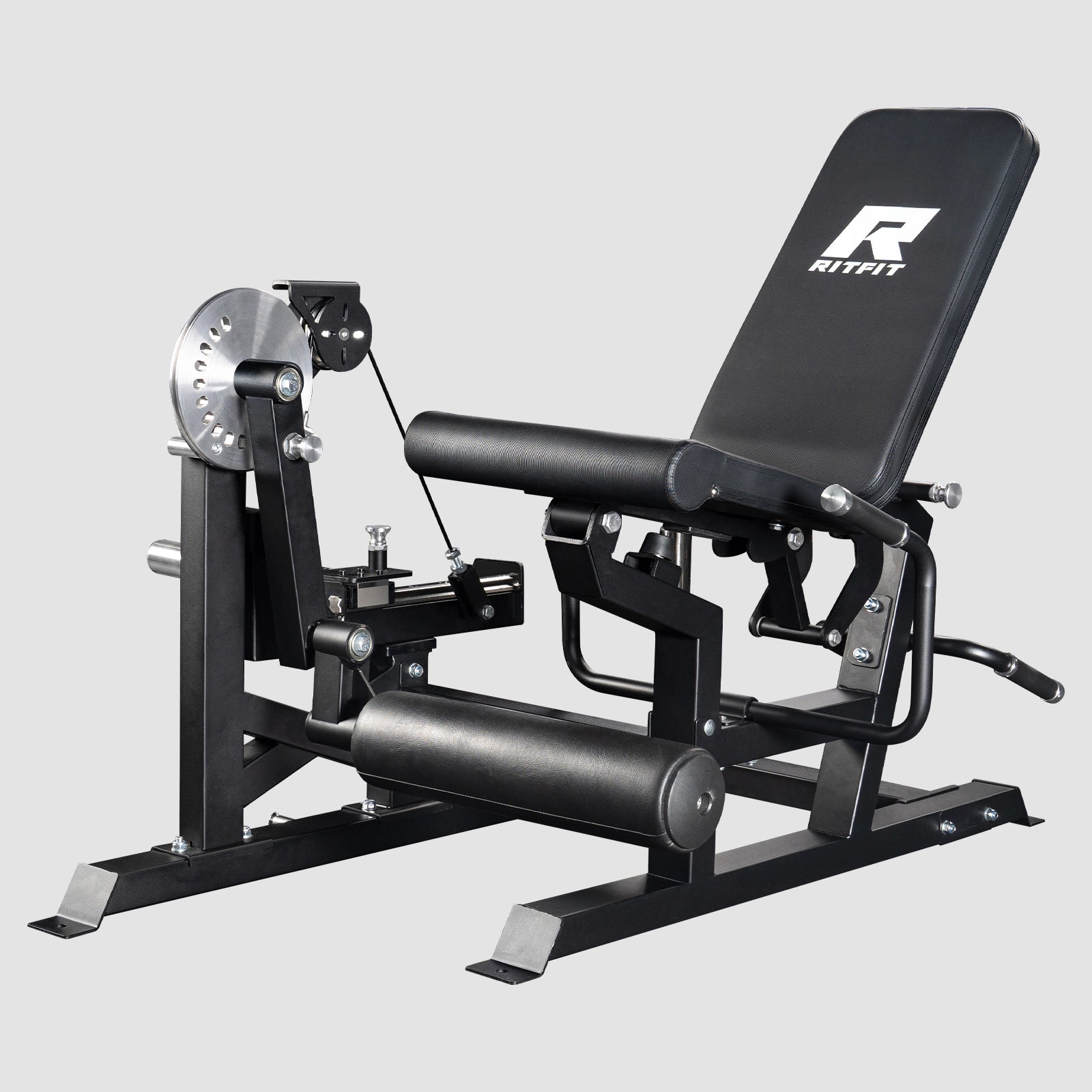
A press pattern covers quads and glutes well but leaves gaps, so one isolation piece and one hinge fill them at a modest cost. The RitFit PLC01 leg extension curl machine adds direct knee extension and knee flexion work from a small footprint.
- Knee isolation: Leg extension and leg curl cover the quad and hamstring work a press cannot isolate on its own.
- Hip work: The RitFit hip abductor and adductor machine handles adductor and abductor training if you have the extra floor space.
- Hinge pattern: A Romanian deadlift or a light barbell hinge keeps the posterior chain in the plan.
Buying Checklist: Value, Upgrades, and Support
Before checkout, confirm plate compatibility, the warranty terms, and the upgrade path so the machine still fits your training two years from now. A beginner purchase that has to be replaced within a year is poor value no matter how low the price looked.
What to Check Before You Buy So It Still Works Later
- Plate system: Two inch plate holes take standard Olympic plates, so the machine works with the plates you already own.
- Working zone: Recheck depth, side clearance, and ceiling height against the specific frame you are buying.
- User height: Compare the listed ideal user range against everyone who will actually train on it.
- Dynamic rating: Check the in motion capacity, not only the static number, because real reps are dynamic.
- Bundle value: If you also need plates, the RitFit BLP01 full leg workout package pairs the machine with a matching plate set in one order.
Warranty, Returns, and Long Term Cost
The RitFit warranty page lists 3 years on the frame and welding, 1 year on bushings and bearings, and 6 months on parts and pads, with refund requests open for 35 days after purchase. Framing cost that way makes the higher capacity models easier to judge, because a longer frame warranty spreads a bigger price across more years of training.
- Frame coverage: Three years on the frame and welding covers the structure that matters most long term.
- Wear items: Bushings, bearings, and pads carry shorter windows, so treat them as periodic maintenance.
- Return window: The 35 day refund window is your test period for fit, noise, and carriage feel.
- Upgrade path: Plan for plates first and an isolation machine second, so the press is not doing every job alone.
FAQs About Best Leg Press Machine for Beginners at Home
Is the RitFit BLP01 a good leg press machine for complete beginners at home?
Yes. The RitFit BLP01 can be a strong beginner option because the guided path helps reduce setup complexity and makes solo lower body training feel more controlled. It is still best for buyers who have enough floor space, realistic loading goals, and time to learn proper setup before pushing hard sets.
How much space does a home leg press machine like the RitFit BLP01 need?
It depends. You need enough room for the machine footprint, plate loading on both sides, and safe entry and exit around the sled. A tight room can make a combo machine frustrating even if the machine itself technically fits, so measure the full training area, not just the base dimensions.
Can the RitFit BLP01 replace barbell squats for beginners?
No. The RitFit BLP01 can cover a lot of lower body work, but it does not replace every benefit of barbell squats. It is better viewed as a guided lower body strength station that can help beginners build confidence, train hard safely, and add volume without needing advanced squat skill.
What muscles does the RitFit BLP01 leg press machine work most?
The RitFit BLP01 mainly trains the quadriceps, glutes, and calves, with some hamstring contribution depending on setup and exercise choice. Foot placement, range of motion, and whether you use the leg press or hack squat pattern will change where you feel the work most during each set.
How much weight should beginners use on the RitFit BLP01?
Start lighter than you think you need. Beginners should first learn the full path, seat position, stance, and depth with a very manageable load, then add weight only when every rep stays controlled. A useful starting target is a load that leaves a little room in reserve after a clean set.
Is a leg press and hack squat combo better than a compact attachment for home gyms?
It depends. A combo machine usually gives you a more dedicated lower body experience, better support, and a more stable feel than many compact attachments. A smaller attachment may still be the better buy if your room is tight, your budget is limited, or you already own a rack based setup.
Do I need Olympic plates for the RitFit BLP01 leg press machine?
Not always. Plate compatibility depends on the sleeve setup you choose or already own, so check the current product details before ordering extra weight. If you already train with Olympic plates across your home gym, matching that system usually makes loading, storage, and future upgrades simpler.
What is the difference between a 45 degree leg press and a seated leg press?
A 45 degree leg press drives the carriage along an angled rail while you lie back, while a seated or horizontal leg press pushes straight ahead from an upright seat. The angled path usually feels closer to a squat pattern, and the seated path tends to feel simpler to enter and exit when space is tight.
Can you build leg muscle with a leg press machine alone?
Yes. A leg press can drive meaningful quadriceps, glute, and hamstring growth when you train it hard and progress the load over time. That said, most home lifters still add a hinge or isolation movement so the hamstrings and calves get direct work too.
How much does a home leg press machine cost?
Prices vary with build, loading, and how many functions you get. RitFit home models run from the BLP01 at $799.99 up to the GAZELLE PRO at $1399.99, so decide your ceiling before you compare listings and remember that plates are a separate cost.
Conclusion
The best leg press machine for beginners at home is the one that fits your room, loads in small steps, and still has capacity left when you outgrow your first month of training. Match the machine type to your space first, then pick the load ceiling you can grow into.
Choose the compact rail model for a tight basement or spare room, and step up when you want more rail travel and higher capacity. Check the RitFit discount guide before you order so the price you compare is the price you pay.
Disclaimer
This article is general information about home gym equipment and is not medical or individualized coaching advice. If you have current pain, a prior injury, or concerns about exercise tolerance, consult a qualified healthcare or training professional before starting a new lower body program.
References
1. Aerenhouts D, D'Hondt E. Using Machines or Free Weights for Resistance Training in Novice Males? A Randomized Parallel Trial. Int J Environ Res Public Health. 2020;17(21). doi:10.3390/ijerph17217848. PMCID: PMC7662789
2. Migliaccio GM, Dello Iacono A, Ardigò LP, et al. Leg Press vs. Smith Machine: Quadriceps Activation and Overall Perceived Effort Profiles. Front Physiol. 2018;9:1481. doi:10.3389/fphys.2018.01481. PMCID: PMC6206431
3. Martín-Fuentes I, Oliva-Lozano JM, Muyor JM. Evaluation of the Lower Limb Muscles' Electromyographic Activity during the Leg Press Exercise and Its Variants: A Systematic Review. Int J Environ Res Public Health. 2020;17(13). doi:10.3390/ijerph17134626. PMCID: PMC7369968
4. Martín-Fuentes I, Oliva-Lozano JM, Muyor JM. Muscle Activation and Kinematic Analysis during the Inclined Leg Press Exercise in Young Females. Int J Environ Res Public Health. 2020;17(22). doi:10.3390/ijerph17228698. PMCID: PMC7700405
5. Iversen VM, Norum M, Schoenfeld BJ, Fimland MS. No Time to Lift? Designing Time-Efficient Training Programs for Strength and Hypertrophy: A Narrative Review. Sports Med. 2021;51(10):2079-2095. doi:10.1007/s40279-021-01490-1. PMCID: PMC8449772