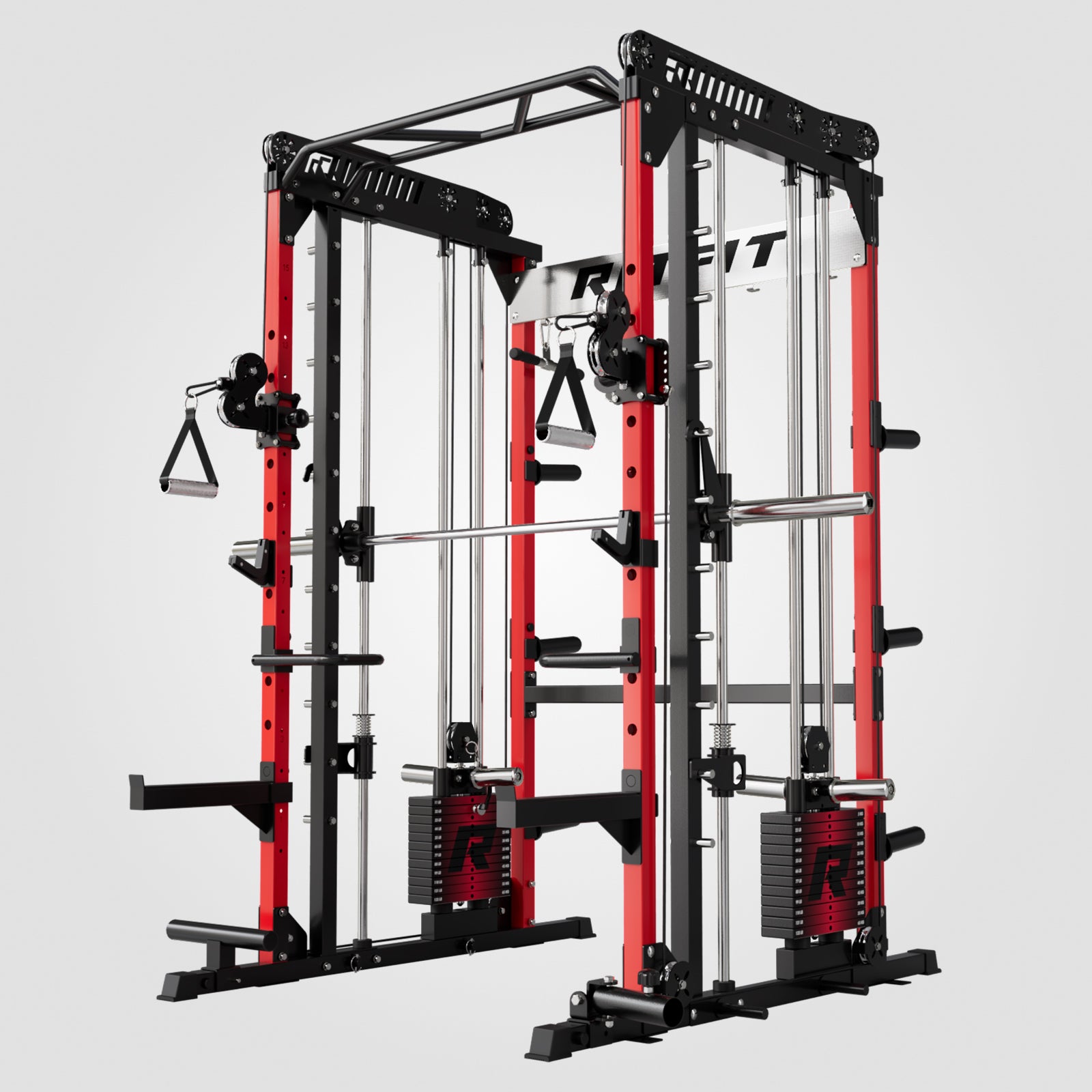
The best multigym is the all-in-one machine that matches your room size, budget, and training goals, letting you press, pull, and squat from a single frame. Choosing well saves both floor space and the cost of buying separate pieces.
This guide walks you through space and clearance needs, the specs that truly matter, and which RitFit multi-gym fits your setup, so you can buy once and train for years.
Quick Answer: The best multigym for home use is the one that fits your available floor space and ceiling clearance while covering the stations you train most, such as a Smith bar, cable pulleys, lat pulldown, and leg work. Match your room and budget to a machine with an 11-gauge steel frame for lasting stability.
Key Takeaways
- Match space first: Measure floor footprint and ceiling clearance before comparing models, since lat pulldowns and pull-ups need roughly 84 to 90 inches of vertical room.
- Frame quality is safety: An 11-gauge steel frame stays stable under heavy loads, while thinner frames can flex or wobble.
- Cables build real muscle: Studies show cable stations recruit target muscles and drive hypertrophy comparably to free weights.
- One frame saves money: A multi-gym combines a rack, cables, and often a Smith bar, cutting both cost and floor space versus separate pieces.
- Buy for your goals: Pick the RitFit machine whose stations and stack match how you actually train, not the biggest option available.
What Counts as a Multi-Gym and What Stations to Look For?
A multi-gym is a single frame that combines several strength stations, typically a Smith bar or rack, cable pulleys, a lat pulldown, and a leg station. The best units let one machine replace three or four separate pieces of equipment.
Cable-based stations are not a compromise. Researchers observed that a cable resistance system produced the highest pectoralis major activation during chest press, the highest latissimus dorsi activation during lat pulldown and row, and the highest glute activation during squats, mirroring how traditional resistance exercises recruit those muscles.[1]
- Smith or rack station: Handles heavy pressing and squatting with built-in safety catches for solo training.
- Cable pulleys: Deliver constant tension for rows, flys, curls, and functional movements.
- Lat pulldown and low row: Build back and pulling strength you cannot easily load with dumbbells alone.
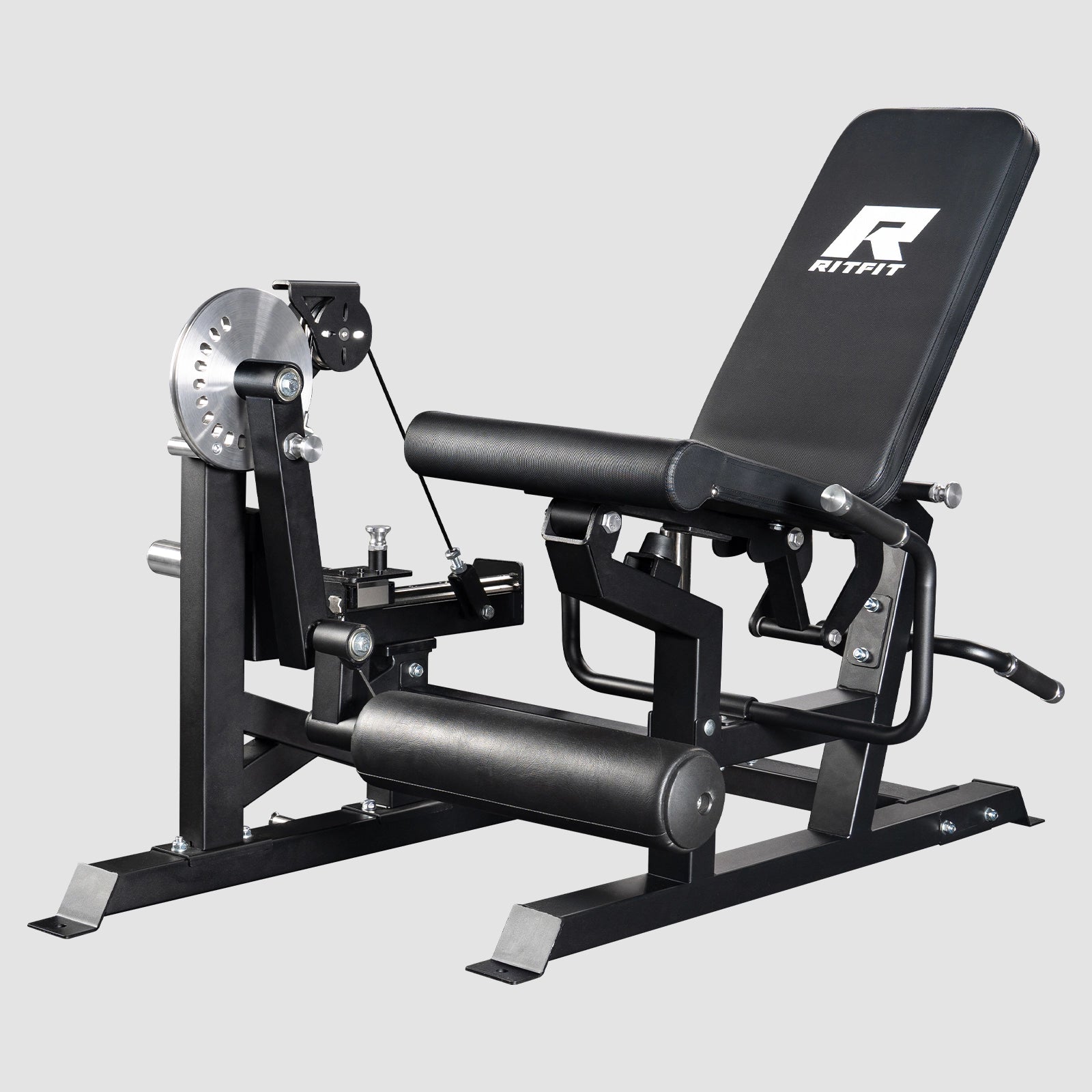
- Leg station: Adds leg press, curl, or extension work so lower-body training is not neglected.
If you want to understand one core station in depth, our guide to the benefits of a Smith machine for your home gym explains why it anchors most all-in-one setups. For planning the whole room, start with the Home Gym Guide.
How Much Space Do You Really Need?
You need to measure both floor footprint and ceiling height before buying any multi-gym. Compact single-stack units typically fit in about 6 by 8 feet, while a Smith machine cage often needs closer to 8 by 10 feet plus clearance on every side.
How much floor and clearance does each size need?
Machine size drives how much room you must leave around the frame for cables and benches to move freely.
- Compact single-stack: Plan for roughly 6 by 8 feet of floor plus 2 to 3 feet behind and beside it for cable travel.
- Smith or multi-station cage: Plan for about 8 by 10 feet plus 3 to 4 feet of clearance on all sides for the bar and bench.
How much ceiling height do lat pulldowns and pull-ups need?
Most all-in-one units need about 84 to 90 inches of ceiling clearance for full function. Leave an extra 6 to 12 inches of head clearance above the machine so pull-ups and chin-ups do not hit the ceiling.
Once you know your footprint, a station-specific read like our best home gym lat pulldown machine guide helps confirm the pulldown height works in your room.
Which Specs Actually Matter?
The specs that matter most are frame steel gauge, resistance type, and cable pulley ratio, because they decide stability, load ceiling, and how each exercise feels. Prioritize these over accessory count or looks.
How important is steel gauge and frame stability?
An 11-gauge steel frame is the benchmark for a stable multi-gym under heavy loads. Thinner 12 or 14 gauge frames can flex or wobble when you re-rack a heavy squat or perform dynamic pull-ups, which is a genuine safety issue rather than a minor annoyance.
How do weight stack, plate-loading, and pulley ratio differ?
Weight stacks let you change resistance in seconds, while plate-loaded arms handle higher loads for serious lifters. Cable angle and pulley setup also matter, since research found that switching a hinge movement from gravity-based to a cable pull-through changed which muscles were activated.[3]
- 2 to 1 pulley ratio: Longer cable travel that suits functional training and lighter isolation work.
- 1 to 1 pulley ratio: Heavier resistance well suited to lat pulldowns and rows.
- Aircraft-grade cables: Look for high tensile ratings so cables stay reliable under repeated shock loads.
For a cable-heavy setup, browsing the RitFit Smith machine collection shows how frame and cable options pair together.
Which RitFit Multi-Gym Fits Your Space and Budget?
The right RitFit multi-gym depends on your room size, budget tier, and training goals. Use the table below to match your setup to a machine, comparing only within the RitFit line so the choice stays focused on your needs.
| RitFit Option | Best For | Space and Notes |
|---|---|---|
| M1 Multi-Functional Home Gym Smith Machine | Medium rooms, budget to mid tier, all-around strength training | Needs about 8 by 8 feet with 84 to 90 inches of ceiling clearance |
| M3 Home Gym Smith Machine | Full-room setups, mid to premium, lifters wanting more stations | Needs a larger footprint plus full clearance on all sides |
| RitFit Home Gym Package M1 Smith Machine | Buyers wanting a complete, ready-to-train kit in one purchase | M1 frame bundled with bench and plates |
| BPC06 All-in-One Smith Machine Home Gym Package | Value-focused buyers wanting a full setup in one order | All-in-one Smith package with included accessories |
The video below shows a full-body session on an all-in-one home gym, which helps you picture how these stations flow together in a real workout.
Is a Multi-Gym Worth It Versus Buying Pieces Separately?
A multi-gym is worth it for most home users because one frame combines a rack, cable stations, and often a Smith bar, saving both floor space and the cost of buying each piece individually. It also lowers setup friction, which helps you train more consistently.
The results hold up too. A 10-week study comparing cable-pulley and barbell preacher curl training found similar increases in biceps thickness, about 7 percent for cable versus 8 percent for barbell, showing cable stations build muscle comparably to free weights.[2]
- Choose a multi-gym if: You want varied stations in a fixed space and value quick setup between exercises.
- Choose separate pieces if: You train almost entirely with free weights and prefer a barbell and rack over cables.
"You don't have to go to a gym with a hundred different pieces of big equipment to do it."
Andy Galpin, PhD, Professor of Exercise Science and Human Performance, Parker University
What Long-Term Upgrade and Expansion Costs Should You Expect?
Long-term costs come from added weight, accessory stations, and conditioning gear rather than the base frame. Budgeting for these upfront keeps your multi-gym useful as you get stronger.
- More resistance: Plan for extra weight plates or a stack upgrade as your lifts progress beyond the starting load.
- Accessory stations: Attachments like a back extension bench expand training variety over time.
- Conditioning add-ons: A cardio piece rounds out the setup, and our best rowing machine for home gyms guide covers strong options.
Because a quality 11-gauge frame lasts for years, most spending shifts toward resistance and accessories rather than replacing the machine itself.
Which Buying Mistakes Should You Avoid?
The most common mistake is buying for the frame footprint alone and ignoring the clearance a machine needs to actually use. A machine that fits the floor but not the ceiling leaves half its stations unusable.
- Skipping ceiling measurement: Always check floor-to-ceiling height, not just floor space, before ordering.
- Underrating frame gauge: A thin frame that wobbles under load undermines both safety and progress.
- Buying more stations than you use: Match stations to how you train so you are not paying for idle hardware.
- Ignoring cable ratio: Pick a pulley ratio that fits whether you prioritize heavy pulling or functional range of motion.
FAQs About Multi-Gyms
How much space do I need for a multi-gym?
It depends on the machine type. Compact single-stack units typically need around 6 by 8 feet of floor space, while a Smith machine cage often needs about 8 by 10 feet plus extra clearance on all sides. Always measure your ceiling height too, since lat pulldowns and pull-ups need roughly 84 to 90 inches of vertical clearance.
Is a multi-gym worth it compared to buying equipment separately?
For most home users a multi-gym is worth it because one frame combines a rack, cable stations, and often a Smith bar, saving both floor space and the cost of buying each piece individually. It also reduces setup friction, which helps you train more consistently. If you only want free weights, separate pieces may suit you better.
What steel gauge should a good multi-gym have?
Look for an 11-gauge steel frame for the best stability under heavy loads. Thinner 12 or 14 gauge frames can flex or wobble when you re-rack heavy squats or perform dynamic pull-ups. A denser, heavier frame is a genuine safety feature, not a luxury, so prioritize build quality over a lower price tag.
Can you build real muscle on a cable multi-gym?
Yes. A 10-week study comparing cable-pulley and barbell preacher curls found similar increases in biceps muscle thickness between the two, and other research shows cable stations recruit target muscles much like free weights. With progressive overload and consistent training, a quality multi-gym can drive real strength and size gains at home.
What cable pulley ratio is best for a home multi-gym?
A 2 to 1 ratio gives longer cable travel that suits functional movements and lighter isolation work, while a 1 to 1 ratio delivers heavier resistance ideal for lat pulldowns and rows. Many buyers prefer a 2 to 1 setup for versatility, but the right choice depends on whether you prioritize heavy pulling or functional range of motion.
Conclusion
The best multigym is the one sized to your room and stocked with the stations you train most, built on a stable 11-gauge frame. Measure your space first, then match budget and goals to the right RitFit machine.
Ready to plan your setup? Compare the RitFit home gym collection and pick the multi-gym that fits your space and training goals.
Disclaimer
This article is for general informational purposes only and does not replace professional fitness or medical advice. Consult a qualified trainer or healthcare provider before starting a new strength training program.
Save on your next RitFit order
Tap the button to copy your code, then paste it at checkout.
References
1. Gomez D, Browne JD, Almalouhi A, et al. Muscle Activity During Immersive Virtual Reality Exergaming Incorporating an Adaptive Cable Resistance System. Int J Exerc Sci. 2022;15(7):261-275. doi:10.70252/MACS7628
2. Nunes JP, Jacinto JL, Ribeiro AS, et al. Placing Greater Torque at Shorter or Longer Muscle Lengths? Effects of Cable vs. Barbell Preacher Curl Training on Muscular Strength and Hypertrophy in Young Adults. Int J Environ Res Public Health. 2020;17(16). doi:10.3390/ijerph17165859
3. Dicus JR, Ellestad SH, Sheaffer JE, Weber CA, Novak NC, Holmstrup ME. A Comparison of Muscle Recruitment Across Three Straight-Legged, Hinge-Pattern Resistance Training Exercises. Int J Exerc Sci. 2023;16(4):12-22. doi:10.70252/ZAOJ6139