








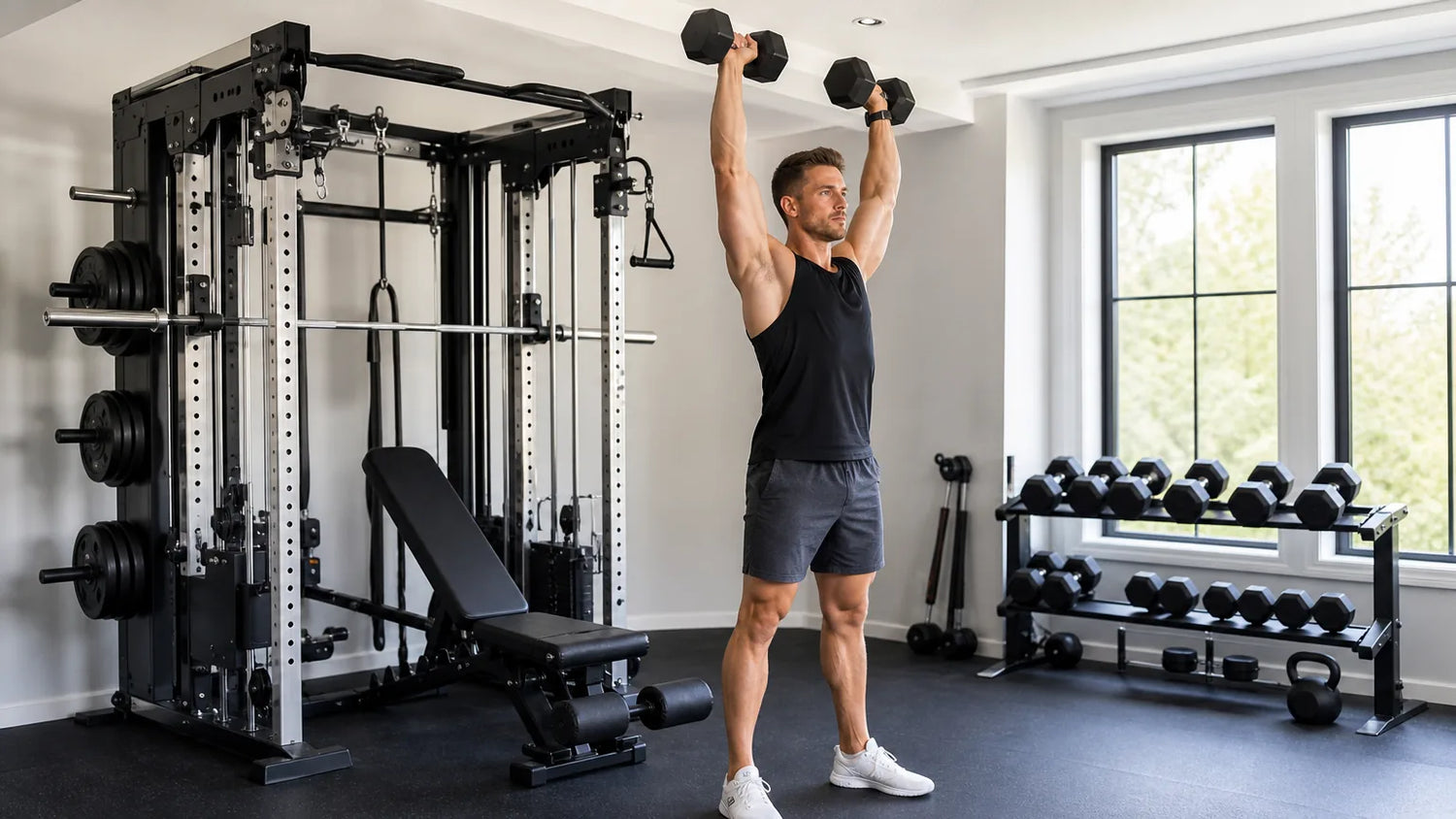
The best muscle groups to pair with shoulders are chest and triceps, grouped together on a push day. All three drive the same pressing pattern, so training them in one session makes recovery and programming simpler.
This guide explains why the push-day trio works, gives you a sample chest, shoulders and triceps session, and shows how often to train delts safely across the week.
Quick Answer: Shoulders pair best with chest and triceps on a push day because all three share the same pressing pattern and recover together. Back and arms can join a shoulder day when you sequence pulling first and trim delt volume, and a dedicated shoulder day also works, the best option depends on your weekly split.
Key Takeaways
- Best pairing: Train shoulders with chest and triceps on a push day, since all three share the pressing movement pattern.
- Push over pull: Shoulders on pull day steal energy from rows and pulldowns, so keep pulling for back and biceps.
- Sequencing matters: Alternate chest-first and shoulder-first between sessions so each pressing group gets priority once.
- Frequency: Training shoulders one to two times per week suits most intermediate lifters when weekly sets are matched.
- Side delts recover fast: Lateral raises tolerate more frequent work than heavy overhead pressing.
| Brand | RitFit Sports |
|---|---|
| Featured Products | Adjustable dumbbells for presses, raises and pushdowns |
| Best Pairing | Shoulders + chest + triceps on a push day |
| Key Specs | 1-2 shoulder sessions per week, 3 sets of 8-15 reps per exercise |
| Best For | Intermediate lifters on push, pull, legs or upper, lower splits |
Quick reference for the push-day pairing covered in this guide.
Which muscle groups can you pair with shoulders?
Chest and triceps are the best muscle groups to pair with shoulders because every press trains all three and they recover in step. Which muscle you should train with shoulders beyond that depends on your goal and split, so weigh each option below before you build the day.
Which is the best muscle group to pair with shoulders?
Chest earns the top spot because bench and incline presses already recruit the front delts, so the two muscle groups train together and recover together. If you are unsure what to pair with a shoulder workout, a chest-first push session is the default answer.
Why do triceps make the second-best partner?
Triceps finish every press you do for chest and shoulders, so the two share the same pushing synergy and need little extra warm-up. If you are choosing what muscle group to train with shoulders after chest, triceps are the safe second pick.
Can back share a day with shoulders?
Back can share a day with shoulders only when rows and pulldowns come first and your delt volume is trimmed, because pressing before pulling drains the energy your back needs. Keep this pairing for a back and shoulder day when the schedule leaves no other slot.
Where do biceps and arm work fit?
When lifters ask what to pair a shoulder day with, biceps and other arm work are the flexible answer, since they barely interfere with delt training. A shoulders and arms session still needs a set cap, because small muscles like biceps and side delts add up quickly.
Should legs ever pair with shoulders?
Legs usually deserve their own day, since squats and hinges demand recovery that heavy overhead pressing can blunt. The exception is a full-body session, where lighter shoulder work after your leg compounds keeps the week balanced.
Is a dedicated shoulder day an option?
A dedicated shoulder day is also valid when weekly volume demands it, the dedicated shoulder day FAQ below explains when it fits.
Where do shoulders fit in a weekly split?
Where shoulders fit changes with the weekly split you run, and the best split with shoulders is one that gives your pressing work a clear priority slot.
- Push day: Shoulders sit beside chest and triceps, the pairing this guide recommends.
- Upper-lower split: Train shoulders on both upper days or divide the delt volume between them.
- Push pull legs: Delts go on push day in a standard push pull legs (PPL) split.
- Shoulders and arms: A dedicated shoulders and arms day suits lifters who want more delt focus.
Why do chest, shoulders and triceps belong together?
Chest, shoulders and triceps belong together because they all fire during pressing movements. When you bench press or push overhead, the chest drives the weight, the deltoids stabilize and lift, and the triceps extend the elbow to finish the rep.
- Shared movement pattern: Overhead presses, bench presses and dips recruit all three muscles as a coordinated pushing unit.
- Efficient recovery: Because they work together, training them on the same day lets them rest together instead of being hit indirectly across scattered sessions.
- Less overlap conflict: Pressing on a push day keeps your delts fresh for pulling work later in the week.
One 8-week trial of trained lifters grouped pectorals, deltoids and triceps on the same low-frequency training day and found similar lean-mass and strength gains to a higher-frequency plan when total sets were equal.[1] Explore the 7 major muscle groups explained for the full anatomy picture.
What does a sample push day look like?
A push day pairs a heavy compound press with supporting isolation work for delts and triceps. Lead with your biggest press, then move to shoulders and finish with triceps so fatigue does not limit your main lift.
How should you sequence the exercises and pick weights?
Order the session by priority, alternating chest-first and shoulder-first between your two weekly push days so each group leads once. Choose a weight that leaves one to two reps in reserve on compound lifts.
- Barbell or dumbbell bench press: 3 sets of 6-8 reps, your heaviest press of the day.
- Overhead shoulder press: 3 sets of 8-10 reps with a pair of dumbbells or a barbell.
- Incline press: 3 sets of 10-12 reps to bias the upper chest and front delts.
- Lateral raises: 3 sets of 12-15 reps to target the side delts directly.
- Triceps pushdown or overhead extension: 3 sets of 10-15 reps to finish.
A complete dumbbell and rack package covers every press and raise in this session. See more delt options in this shoulder workout with dumbbells.
What swaps work if you lack equipment?
Substitute based on the equipment you own while keeping the same movement pattern. Any vertical or horizontal press can replace another as long as it trains the same pushing muscles.
- No barbell: Swap barbell bench for a dumbbell floor press or push-up variation.
- Shoulder discomfort overhead: Replace strict overhead press with a landmine press or seated dumbbell press.
- Limited space: Use a single set of adjustable dumbbells for the entire session.
How often should you train shoulders each week?
Training shoulders one to two times per week suits most intermediate lifters. What matters more than the exact frequency is hitting your target weekly sets with good form, spread across your push sessions.
An umbrella review reported that when total weekly training volume is equated, frequency does not meaningfully change muscle growth, so pairing delts on a push day once or twice per week works well.[2]
Do side delts and pressing delts recover differently?
Side delts recover faster than the front delts you tax with heavy overhead pressing. That is why many lifters add lateral raises to both push days while keeping heavy presses to one focused session.
- Side delts: Small muscle, quick recovery, tolerates frequent lateral raise volume.
- Pressing delts: Front delts share load with chest work, so avoid stacking two heavy overhead days back to back.
When should you add weight or progress?
Add weight once you can complete all prescribed reps with clean form across every set. A narrative review notes that in real training a higher frequency usually lets you accumulate more weekly volume, which tends to drive greater strength and size.[3]
- Progress compounds first: Add small increments to presses before chasing heavier raises.
- Use two push days: Split total shoulder volume across sessions to keep quality high. This pairs well with a 4-day split hitting each muscle twice a week.
- Track your sets: A structured 4-day split workout routine makes weekly volume easy to plan.
What are the most common pairing mistakes?
The most common mistake is putting shoulders on pull day, which drains energy from your rows and pulldowns. Other errors include stacking too much overhead pressing and ignoring early joint pain.
- Shoulders on pull day: Pressing delts before rows leaves less power for back and biceps work.
- Too many overhead presses: Front delts already work hard during chest pressing, so extra heavy overhead volume can overload them.
- Neglecting rear delts: Balance your pushing focus with rear-delt work on pull day for shoulder health and posture. See this major muscle groups guide for balanced strength.
- Skipping volume planning: Read how many shoulder exercises per workout to set the right number of sets.
When does shoulder pain mean stop or scale back?
Stop or scale back when you feel sharp, pinching or radiating pain rather than normal muscle fatigue. Pushing through joint pain risks the rotator cuff and can sideline your whole push day.
- Sharp or pinching pain: End the movement, reduce range or load, and switch to a pain-free press variation.
- Persistent discomfort: Choose shoulder-friendly options in these weight bench workouts without shoulder pain.
- Pair the pull side: Build a balanced physique with these best back and bicep workouts.
"There's no discussion about muscles like side delts which you cannot train hard enough to only be able to train once a week. So shoulder day is dumb because your shoulders can be trained every day no problem, definitely every other day for maximum gains."
Dr. Mike Israetel, PhD, Co-founder, Renaissance Periodization
Is it OK to train shoulders with chest, back, or triceps on the same day?
Yes, it is OK to train shoulders with chest, back or triceps on the same day as long as the priority muscle trains first and total pressing volume stays in check. The best combination for a shoulder workout is usually chest and triceps, but every pairing below works under the right conditions.
Are shoulders and triceps good to work out together?
Yes, this pairing works well because pressing and elbow extension train the same pushing pattern and neither muscle derails the other's recovery. If you are asking whether shoulders and triceps are a good split choice, the answer stays yes, just watch the front delt volume that heavy pressing already creates.
Are chest and shoulders good to work out together?
Yes, chest and shoulders make the classic push day combination, and one well-ordered session trains both without extra recovery cost.
You can train chest and shoulders together as long as the heavier lift goes first, so the bench press or main overhead press precedes any accessory raises.
Can you train back and shoulders on the same day?
Training back and shoulders on the same day is possible, but the pulling work must come first and the shoulder volume should be trimmed to match.
This order keeps the pairing from repeating the pull-day mistake of pressing before rows and pulldowns.
FAQs About Pairing Muscle Groups With Shoulders
Should I train shoulders with chest or back?
For most lifters, shoulders pair best with chest and triceps on a push day because all three drive pressing movements like the bench press and overhead press. Training shoulders on pull day steals energy from your rows and pulldowns, so save pulling work for back and biceps instead.
Can I train shoulders on their own day?
Yes, a dedicated shoulder day works if your weekly volume and recovery allow it, though it is not required. Because side delts recover quickly, many lifters get better results spreading delt work across two push sessions rather than cramming it into one isolated day that must match your recovery.
How often should I train shoulders each week?
Training shoulders roughly one to two times per week suits most intermediate lifters, since research shows that when weekly volume is equated, frequency has little independent effect on growth. Choose the frequency that lets you hit your target sets with good form, because side delts tolerate more frequent work than heavy overhead pressing.
What order should I do exercises on a push day?
Lead with the heaviest compound press, alternating chest-first and shoulder-first between sessions so each group gets priority once, then move to isolation work like lateral raises and triceps pushdowns. This order keeps you fresh for the most demanding movements and reduces the risk of early fatigue limiting your main lifts.
Do I need to train shoulders on both push days?
No, but adding light lateral raises to both push days helps most lifters grow their side delts, which recover quickly enough to handle the extra volume. Keep your heaviest overhead work to one focused day so you avoid overloading the front delts you already tax during heavy pressing.
What is the best workout to pair with shoulders?
A push day built around chest, shoulders and triceps is the best workout to pair with shoulders, because one session covers every pressing muscle and leaves your back and legs fresh for their own days. If chest already has its own slot in the week, a shoulders and arms session is the next most practical shoulder workout combination.
What should I do after a shoulder workout?
What to do after a shoulder workout comes down to giving the delts a full recovery window before their next hard session, so schedule back or legs as your next training day. Sleep, food and easy movement support that recovery window better than any extra exercise.
Can I train shoulders and arms on the same day?
Yes, shoulders and arms can share a session because biceps and triceps work does not limit delt training when the order is right. Start with shoulder presses and raises while you are fresh, then finish with arm work, and cap the total number of sets so the small muscles are not overtrained.
Conclusion
The best muscle groups to pair with shoulders are chest and triceps on a push day, because all three share the pressing pattern and recover on the same schedule. Lead each session with your heaviest press, alternate which group goes first, and train delts one to two times per week.
Start by building a simple push day around a pair of quality dumbbells, then progress your load as your form and volume improve.
Disclaimer
This article is for general educational purposes only and does not replace personalized coaching or medical advice. Consult a qualified fitness or healthcare professional before starting a new training program, especially if you have a shoulder injury or existing condition.
Save on your next RitFit order
Tap the button to copy your code, then paste it at checkout.
References
1. Thomas MH, Burns SP. Increasing Lean Mass and Strength: A Comparison of High Frequency Strength Training to Lower Frequency Strength Training. Int J Exerc Sci. 2016;9(2):159-167. PMC4836564.
2. Bernardez-Vazquez R, Raya-Gonzalez J, Castillo D, Beato M. Resistance Training Variables for Optimization of Muscle Hypertrophy: An Umbrella Review. Front Sports Act Living. 2022;4:949021. PMC9302196. doi:10.3389/fspor.2022.949021
3. Iversen VM, Norum M, Schoenfeld BJ, Fimland MS. No Time to Lift? Designing Time-Efficient Training Programs for Strength and Hypertrophy: A Narrative Review. Sports Med. 2021;51(10):2079-2095. PMC8449772. doi:10.1007/s40279-021-01490-1





